
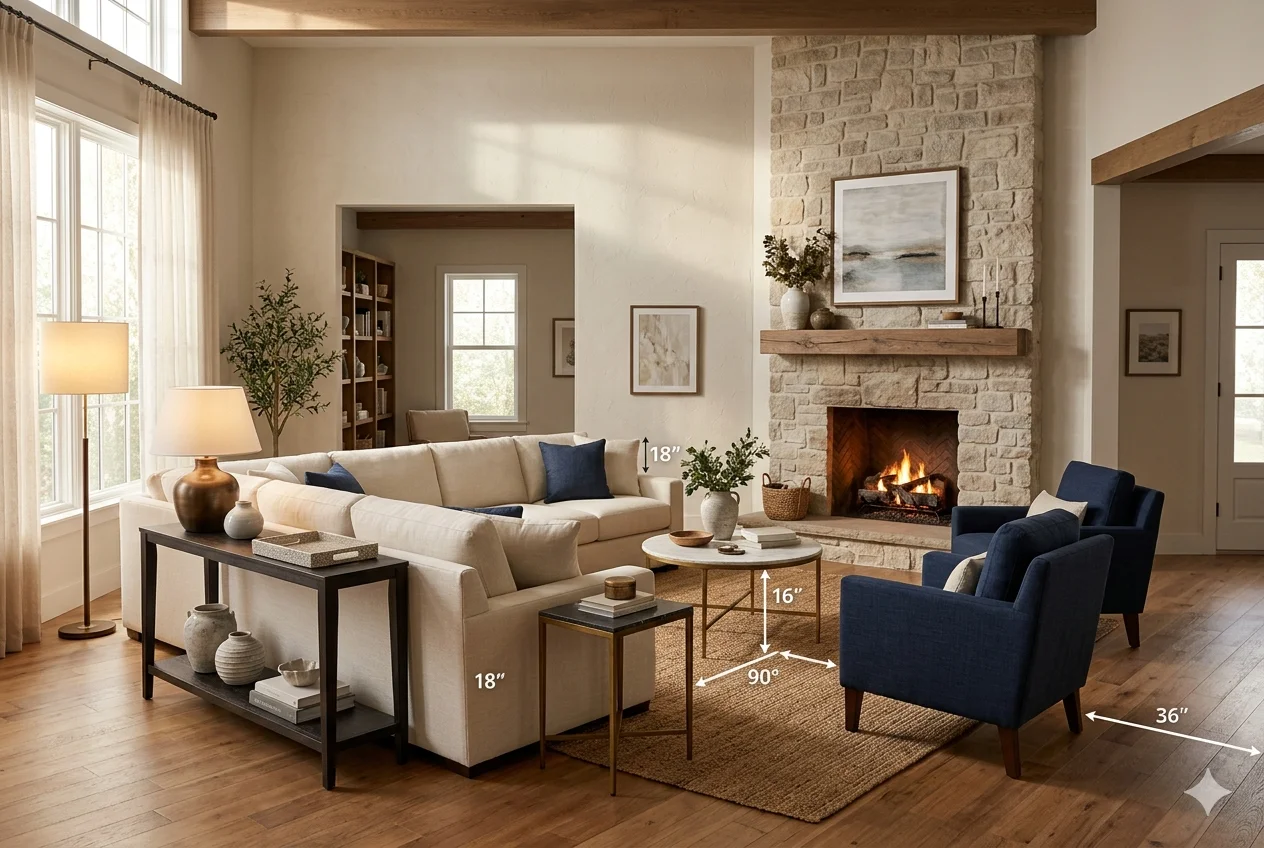
How to Arrange Furniture: 15 Easy Layout Ideas for a Stylish Home
Most furniture arrangement problems are not furniture problems. The sofa is fine. The coffee table is a perfectly good coffee table. The chairs, the lamps, the sideboard, all of them are individually adequate. The problem is that they have been arranged in a configuration that works against the room rather than with it, creating the specific uncomfortable quality that people notice without always being able to name: a room that is furnished but not quite livable, filled but not quite functional, decorated but not quite designed.
Understanding how to arrange furniture is one of those practical skills that transforms the experience of every room you inhabit without requiring a single new purchase. The same furniture that currently makes a room feel crowded or cold or oddly proportioned will, in a different arrangement, make the same room feel spacious and warm and genuinely inviting. This is not a small thing. The specific quality of your daily home life is substantially determined by whether the rooms you spend that life in were arranged with understanding or simply filled with available furniture placed where it seemed to fit.
Furniture arrangement tips from professional interior designers consistently reveal that most homeowners make the same handful of mistakes regardless of their furniture quality or room size. They push furniture against walls. They choose rugs that are too small. They arrange furniture without reference to a focal point. They prioritize individual piece placement over the overall spatial composition. And they rarely measure before they move, which means they discover that the arrangement they envisioned does not actually fit only after they have rearranged an entire room.
This guide presents 15 practical furniture layout ideas that professional designers use to create rooms that feel genuinely stylish and comfortable, covering every room type and every common arrangement challenge with specific, immediately actionable guidance.
Start with Your Room’s Focal Point
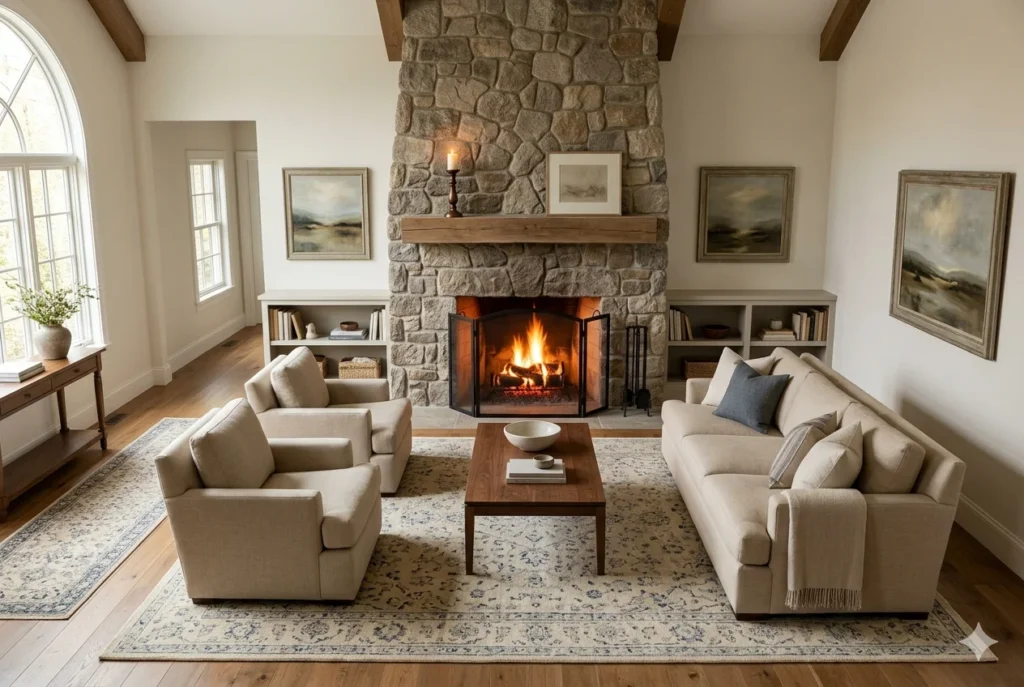
Every successful furniture arrangement begins with identifying the room’s focal point and arranging furniture in relationship to it rather than in relationship to the walls. This single principle, properly understood and consistently applied, resolves more furniture arrangement problems than any other guidance available.
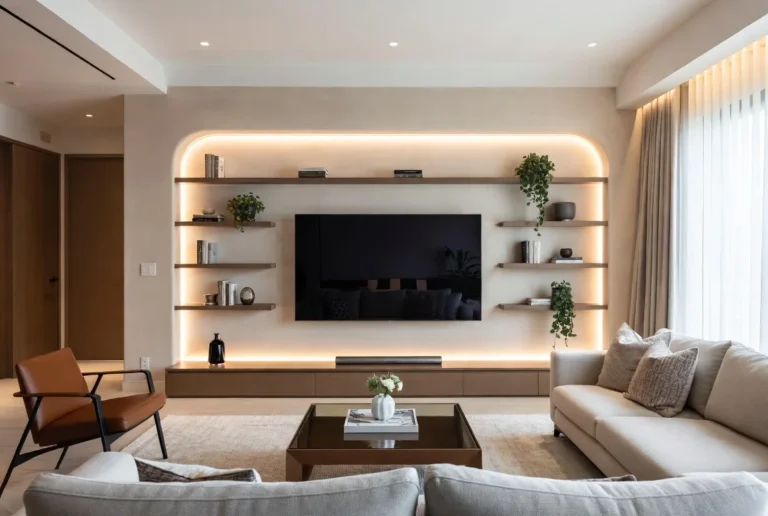
A focal point furniture arrangement uses the room’s most visually prominent or architecturally significant feature as the organizational anchor for the complete furniture grouping. In living rooms this is most commonly a fireplace, a large window with an attractive view, a media console and television, or an architecturally significant feature like an exposed brick wall or built-in shelving. The focal point’s role in furniture arrangement is to establish where the primary seating should face, which in turn establishes the orientation of the entire furniture grouping around the primary seating. A sofa positioned to face the fireplace creates a clear organizational principle from which all other furniture decisions follow logically.
Furniture arrangement tips for rooms without obvious architectural focal points involve creating one through design choice rather than waiting for the room to provide it. A large piece of statement artwork hung at the appropriate height and scale on the room’s most visible wall creates an immediate focal point that can organize the furniture arrangement around its visual prominence. A dramatic light fixture positioned above the primary seating area or dining table creates a vertical focal point that draws the eye and anchors the furniture grouping below it. Understanding that the focal point determines the furniture arrangement’s organizational logic transforms the approach to room layout from a search for available wall space into a thoughtful spatial composition anchored by the room’s most significant visual element.
Measure Before You Move a Single Piece
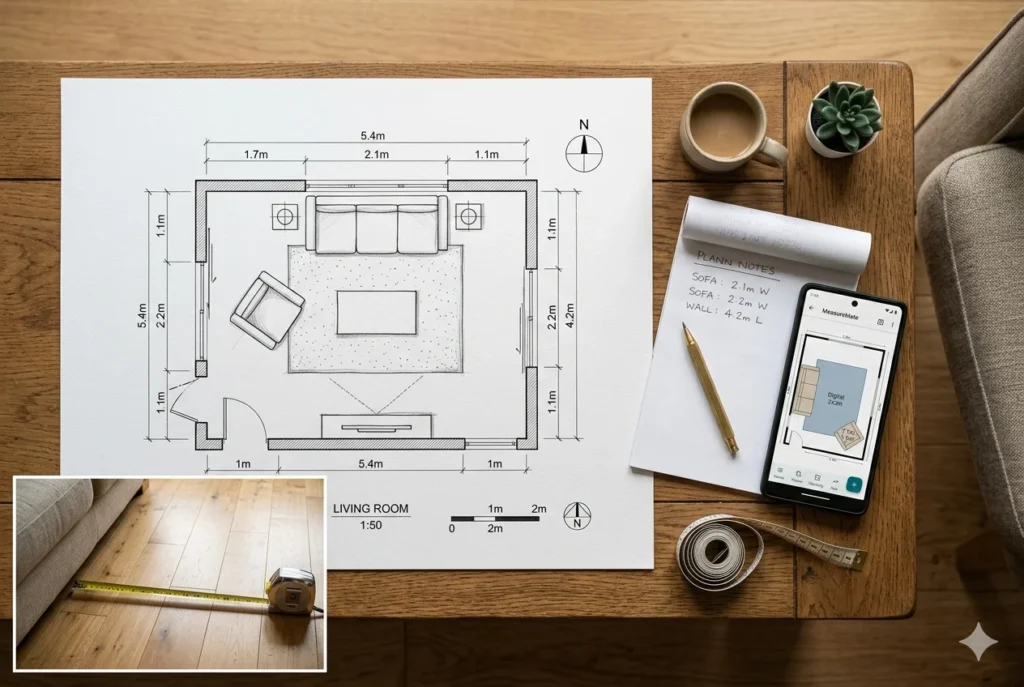
The most reliable way to avoid the exhausting and frequently disappointing experience of rearranging an entire room only to discover the configuration you envisioned does not actually work is to measure everything before you move anything. This sounds obvious. Most people skip it anyway and spend hours discovering through physical trial and error what a few minutes of measurement would have revealed sitting down with paper and a pencil.
How to measure furniture placement correctly involves two measurements: the room itself including the location of doorways, windows, and architectural features, and each furniture piece you are considering for the arrangement. With these measurements recorded, you can test proposed arrangements on paper or using free online room planning tools before you move a single sofa. The specific value of this approach is discovering in advance that the sectional you want in the living room leaves only 28 inches of passage to the dining room, which is not enough for comfortable daily circulation, and adjusting the plan before the physical labor of moving has already been invested.
Furniture placement guide measurements should include not just the room’s perimeter dimensions but the specific location and swing direction of every door, the placement and height of every window, the position of electrical outlets that determine where lamps can be placed, and any fixed features including fireplaces, radiators, and built-in elements that limit furniture placement options. The room layout that emerges from working with these constraints rather than discovering them during physical rearrangement is significantly more likely to succeed in practice and significantly less likely to require immediate revision upon implementation.
Float Furniture Away from Walls
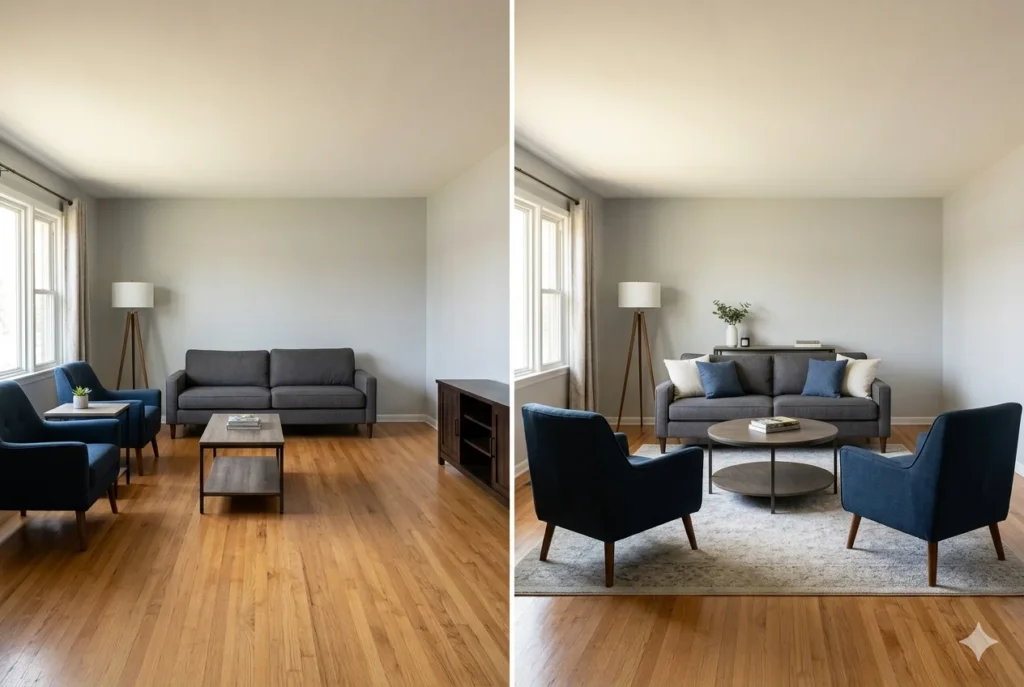
This is the single most commonly violated furniture arrangement rule and the single most impactful correction available in most rooms: push furniture away from the walls. In most homes, the sofa is against one wall, the chairs are against another wall, and all the furniture points inward toward an empty center from its perimeter position, creating a room that feels like a waiting room rather than a living room.
Floating furniture arrangement moves the primary seating group toward the room’s center, creating a genuine conversation area in the room’s interior rather than arranging seating against the walls in the pattern that most people instinctively adopt because it seems like it uses the room’s space more efficiently. In practice, furniture pulled away from walls uses the room’s space more effectively even though it technically occupies more of the floor area, because it creates a defined and comfortable seating zone with clear traffic paths around it rather than a perimeter of furniture with an empty center that serves no functional purpose.
Sofa placement tips for floating furniture arrangements suggest positioning the primary sofa at least 8 to 12 inches away from the wall behind it, with 18 to 24 inches providing even better spatial results in rooms of adequate size. The console table or narrow sofa table placed behind the floating sofa serves multiple purposes: it fills the gap between sofa and wall with a functional surface for lamps and decorative objects, it reinforces the visual boundary of the seating zone, and it prevents the floating sofa from appearing to drift in the room without architectural grounding. The complete transformation that floating furniture creates in most rooms is so consistent and so dramatic that interior designers universally identify it as their most reliable furniture arrangement improvement available in homes that have not already implemented it.
Create Dedicated Conversation Areas
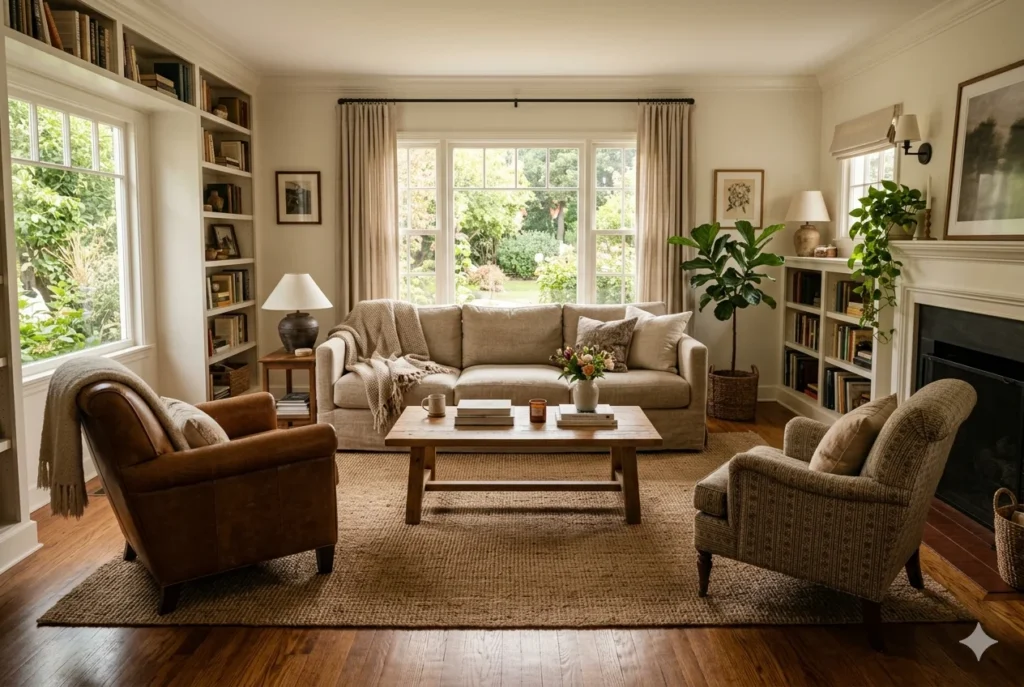
Conversation furniture arrangement creates seating groups where people can actually talk to each other comfortably, which sounds like the obvious purpose of all furniture arrangement but is routinely undermined by seating positions that place people at angles or distances that make comfortable conversation genuinely difficult.
The furniture grouping ideas that create effective conversation areas position seating so that no seat is more than 8 feet from any other seat in the group, because research on conversation behavior consistently confirms that comfortable social interaction deteriorates rapidly at distances beyond 8 feet where the voice must be raised and eye contact becomes effortful rather than natural. This 8-foot maximum conversation distance creates a practical constraint on seating group size that most large living rooms fail to respect, with seating positioned for visual symmetry or room coverage purposes at distances that make actual conversation between those seats genuinely uncomfortable.
Room layout ideas for conversation areas use U-shaped, L-shaped, and facing arrangements of two sofas to create the enclosed social geometry that draws people into conversation rather than the side-by-side or distant seating arrangements that passive co-presence rather than active social engagement. The U-shape created by one sofa and two chairs facing each other creates the most socially inclusive arrangement, with every seat position having clear visual and conversational access to every other seat in the group. The L-shape created by a sofa and a chair at 90 degrees creates the most flexible arrangement, accommodating both intimate conversation between adjacent seats and broader group conversation when additional seating is added.
Establish Clear Traffic Paths Through Every Room
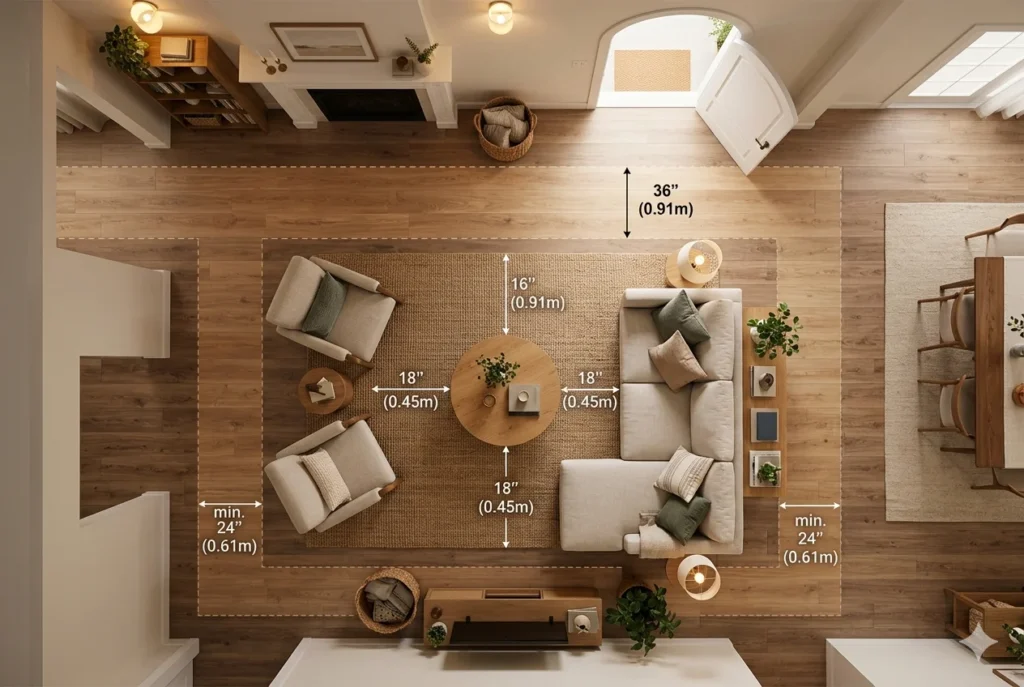
Traffic flow furniture arrangement addresses one of the most functionally critical and most frequently neglected considerations in furniture placement: the need for people to move through rooms comfortably without navigating obstacle courses of furniture that the arrangement’s designer thought of as visual elements rather than physical objects that occupy space through which people must pass.
Furniture spacing rules for traffic paths specify minimum widths for comfortable circulation: 36 inches is the minimum for main traffic pathways through rooms, 24 inches is the minimum for secondary paths between furniture pieces that people occasionally navigate, and 18 inches is the minimum clearance between furniture pieces that are positioned purely for visual composition with no expectation of regular human passage between them. Measuring the actual path widths in a proposed furniture arrangement frequently reveals that what seemed like adequate space in a paper plan creates physically uncomfortable navigation in practice, particularly in arrangements that create circulation paths through the middle of seating groups rather than around their perimeters.
How to arrange furniture in rooms with multiple doorways requires mapping the natural circulation paths between those doorways before positioning any furniture, because furniture that blocks natural movement paths creates the specific daily frustration of living in rooms that require people to navigate around furniture rather than moving intuitively through the space. The furniture arrangement that respects natural circulation paths places furniture to the sides of these paths rather than across them, creating rooms where movement feels effortless and rooms feel genuinely comfortable to inhabit throughout daily use rather than only when seated in a specific position.
Use the Right Area Rug to Anchor Your Arrangement
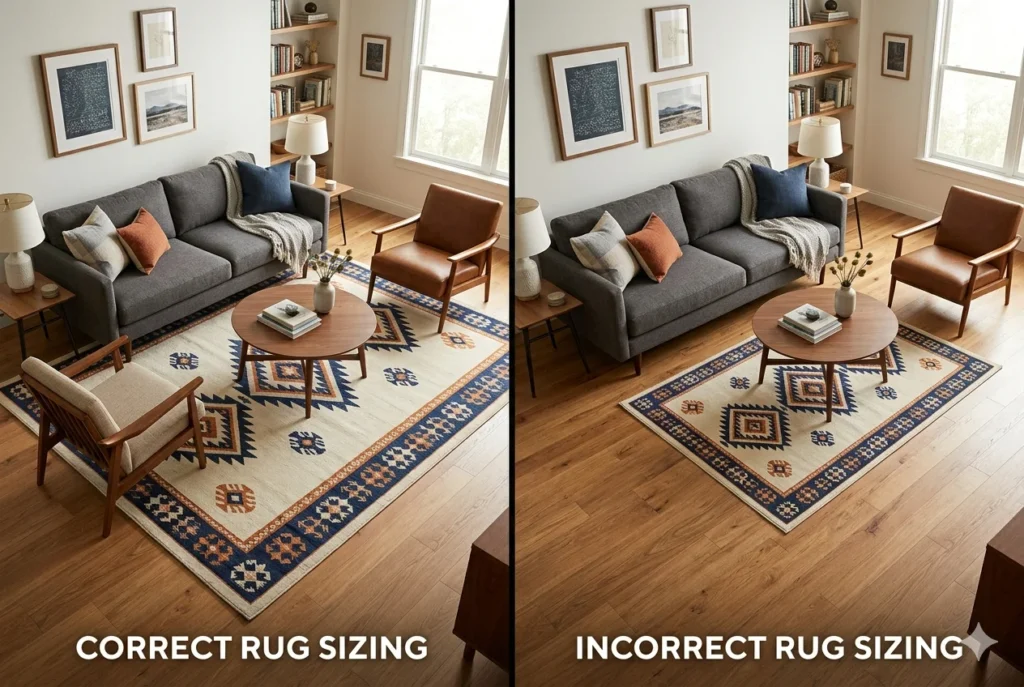
Furniture arrangement with rug is one of the most misunderstood aspects of room layout, with the vast majority of homeowners choosing area rugs that are too small for their furniture groupings and creating the visual fragmentation that makes furniture arrangements feel incomplete and rooms feel smaller than they actually are.
The correct sizing principle for how to arrange furniture with a rug is that all primary seating pieces should have at least their front legs resting on the rug, creating the visual connection between furniture pieces that anchors them as a unified seating group rather than individual pieces sharing a floor area without organizational relationship. For living room arrangements, this typically requires an 8 by 10 foot rug minimum and often a 9 by 12 or larger rug to adequately anchor furniture groupings of typical residential scale. The common instinct to choose a smaller rug that fits comfortably between the furniture without extending beneath it creates the specific inadequately-anchored quality that makes even well-chosen furniture arrangements feel unresolved.
Furniture placement guide principles for rug positioning suggest centering the rug under the furniture grouping rather than under the room, because the rug’s purpose is to anchor and unify the furniture group rather than to cover the floor’s center. A conversation area positioned toward one end of a long living room should have its rug centered on that furniture grouping rather than centered on the room’s total floor area, creating a defined zone that looks deliberate and resolved rather than a rug floating in the room’s geometric center without meaningful relationship to the furniture it is supposed to organize.
Balance Symmetry and Asymmetry
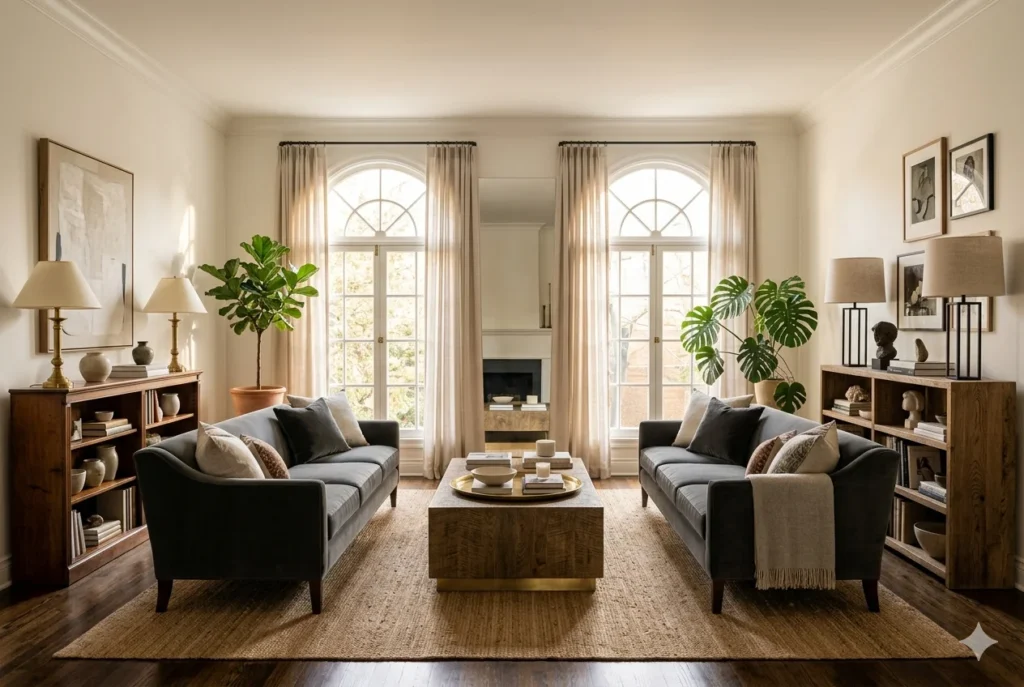
Symmetrical furniture arrangement creates the most immediately formal and visually organized room compositions, with matching furniture pairs placed in mirror positions on either side of a central axis creating the balanced harmony that formal living rooms, traditional dining rooms, and master bedrooms have traditionally favored for the specific qualities of order and intentionality that symmetrical balance communicates.
Asymmetrical furniture arrangement creates more relaxed and more visually dynamic compositions that suit casual living rooms, eclectic interiors, and contemporary design contexts where the rigid formality of perfect symmetry would feel inconsistent with the overall design direction. The challenge of asymmetrical furniture arrangement is achieving visual balance through weight and proportion rather than through mirrored placement, with asymmetrical groupings balancing a large sofa against two smaller chairs, or a tall bookcase against a lower console table with an artwork above it, in arrangements where visual balance emerges from compositional logic rather than simple repetition.
Room layout ideas that successfully combine both approaches use symmetrical organization for the furniture grouping itself while asymmetrically positioning that grouping within the room, or use symmetrical placement for the primary seating pieces while introducing asymmetrical variation through accessory elements including different lamp styles, varying plant sizes, and deliberately mismatched decorative objects. This combined approach creates rooms that read as formally organized at first impression while rewarding closer attention with the visual variety and personal character that purely symmetrical arrangements cannot provide through their inevitable visual predictability.
Arrange Living Room Furniture for Maximum Comfort
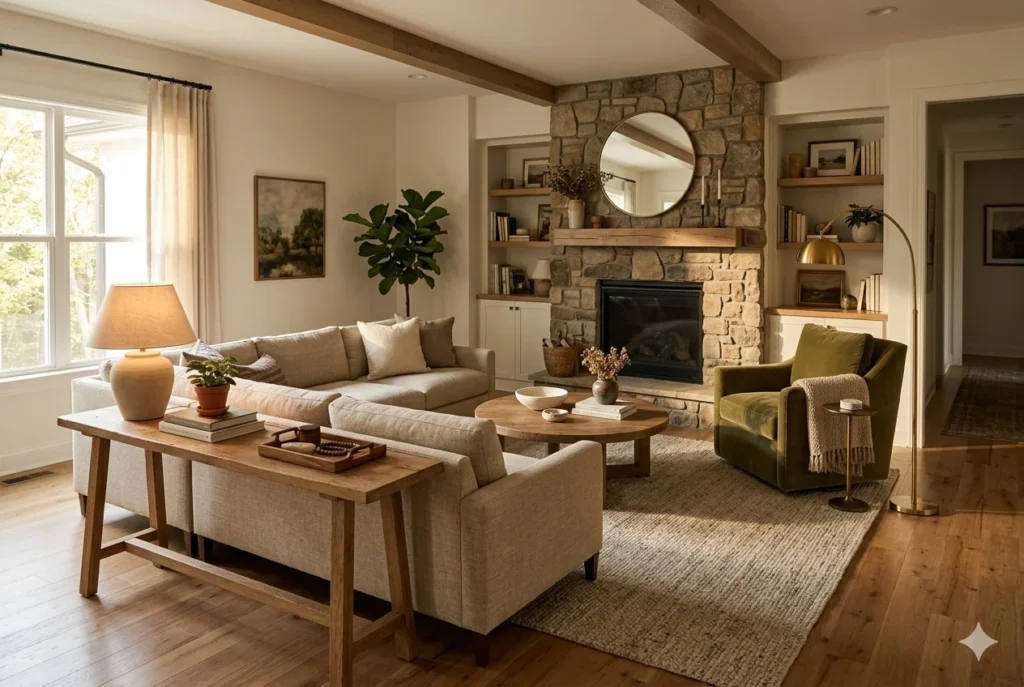
How to arrange living room furniture requires balancing the multiple competing demands that living rooms must simultaneously serve: comfortable seating for family members, adequate space for social entertaining, clear orientation toward the room’s entertainment or focal point, and the specific quality of inviting warmth that makes people want to spend time in the room rather than simply pass through it.
Furniture arrangement tips specific to living rooms begin with the sofa as the room’s primary furniture piece, positioned to face the focal point at an appropriate distance of 6 to 10 feet from a fireplace or 8 to 12 feet from a television for comfortable viewing without neck strain. The primary sofa’s position determines everything else in the arrangement: the chairs must relate to the sofa in conversation-appropriate positions, the coffee table must be accessible from all seating at a distance of 14 to 18 inches from sofa front, and the secondary and accent furniture must support the seating group without disrupting its circulation perimeter.
Sofa placement tips for living rooms with multiple potential seating orientations recommend testing the arrangement toward each possible focal point before committing to one direction, because the choice of primary seating orientation determines not just the furniture arrangement but the room’s entire daily experience including which views are seen from seated positions, which natural light falls where during the day, and which circulation patterns feel natural throughout regular family use. The arrangement that feels slightly less elegant in a room plan but creates the best daily experience in actual use is always the better furniture arrangement choice.
Arrange Bedroom Furniture for Restful Function
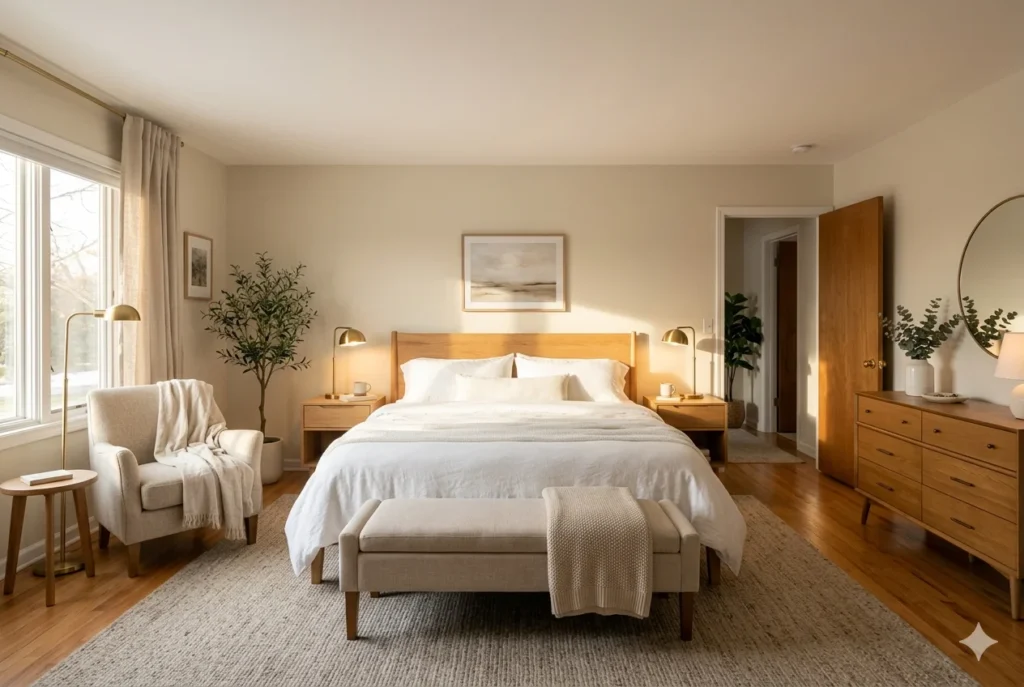
Furniture arrangement bedroom design follows a different logic than living room arrangement because bedroom furniture serves more specific and more individually varied functions, with the bed’s absolute centrality to bedroom function establishing the primary placement constraint from which all other bedroom furniture decisions follow.
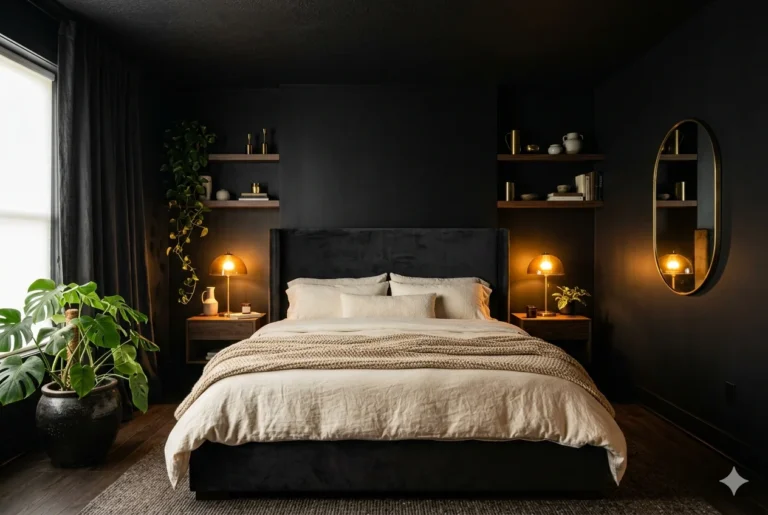
How to arrange bedroom furniture begins with the bed positioned against the wall that creates the most balanced and functionally appropriate placement in the specific room. The wall opposite the primary doorway is often called the command position in design thinking, placing the bed’s occupants with a clear view of the room’s entry while the bedside tables and lamps on both sides create the bilateral symmetry most associated with fully considered bedroom arrangement. The specific wall used for bed placement should leave adequate space on both sides of the bed for easy access, with a minimum of 24 inches on each side and a preferred 30 to 36 inches creating comfortable movement around the bed during daily use without the cramped navigation that inadequate clearance creates.
Room layout ideas for bedrooms beyond the bed placement include the dresser positioned where its mirror does not create unflattering light conditions during use, the wardrobe or closet positioned for accessible daily use without blocking circulation paths, and any seating including the bedside reading chair or bench at the foot of the bed positioned to serve its specific function without creating the visual clutter that furniture placed without clear purpose creates in bedroom environments. The bedroom that functions well in these practical terms inevitably feels more restful and more genuinely restorative than one arranged primarily for visual appearance at the expense of daily functional ease.
Layout Dining Room Furniture for Comfortable Meals
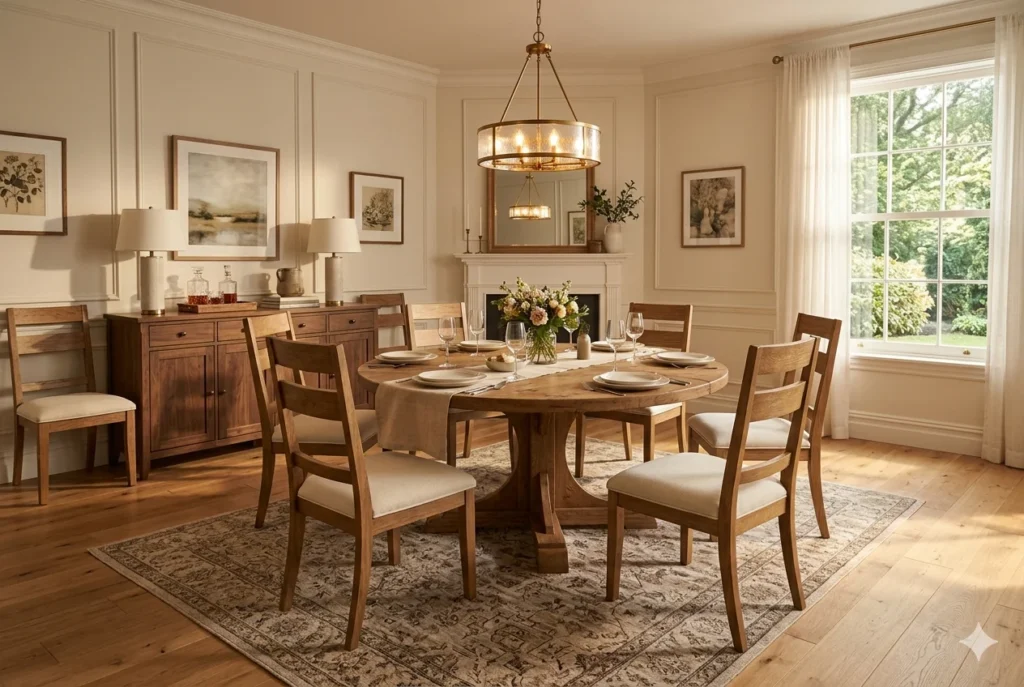
How to arrange dining room furniture revolves around the table as the room’s sole required furniture piece, with the table’s size, shape, and position determining both the number of diners the room can comfortably accommodate and the traffic circulation space available around the table for comfortable daily use and social entertaining.
Furniture arrangement rules for dining rooms specify minimum clearances of 36 inches between the table edge and any wall or fixed obstacle for comfortable chair movement and passage around occupied chairs, with 48 inches preferred for comfortable server access during formal dining occasions. These clearance requirements dramatically limit the maximum table size that any given dining room can accommodate comfortably, which is the primary reason dining rooms consistently feel crowded: tables are chosen for their seating capacity rather than their appropriate scale for the room’s actual dimensions. A dining table that seats eight in theory but requires chairs to be pulled directly against the wall behind them whenever someone sits down seats eight in uncomfortable practice.
Furniture arrangement tips for dining rooms beyond the table and chairs include the buffet or sideboard positioned for serving convenience along a long wall or behind the host position, the bar cart positioned for access during entertaining without blocking traffic paths during meal service, and any decorative furniture including console tables and display pieces positioned where they contribute to the room’s visual character without reducing the critical circulation clearances that comfortable dining and entertaining require throughout the rooms daily and occasional formal use.
Handle Awkward Room Shapes Confidently
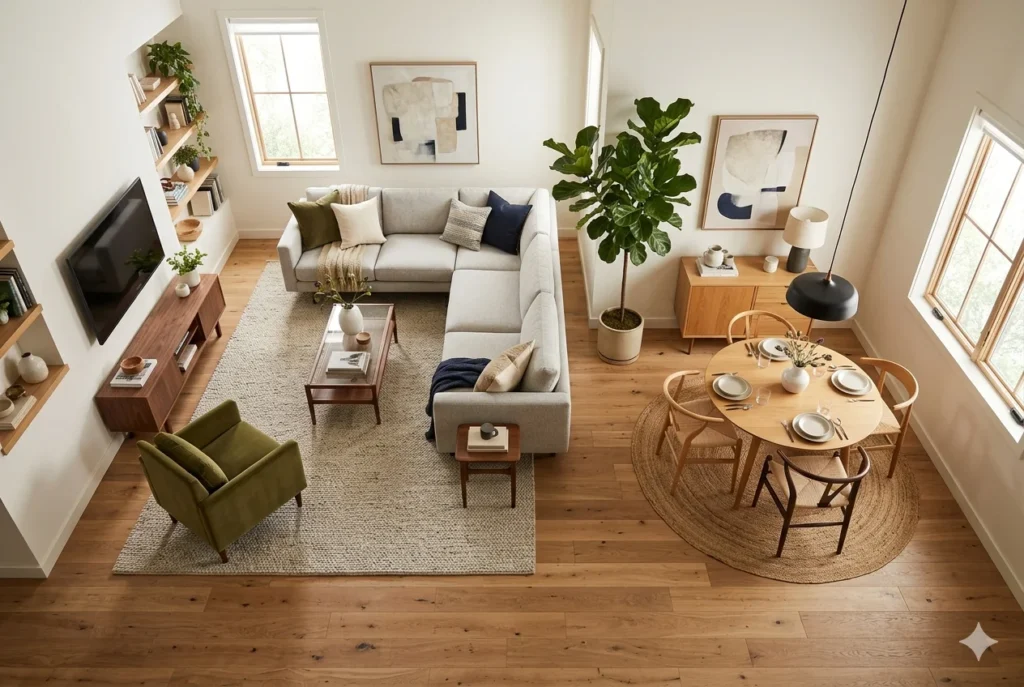
How to arrange furniture in awkward room configurations including L-shaped rooms, rooms with architectural protrusions, rooms with multiple doorways, and rooms with poorly proportioned dimensions requires specific strategies that accommodate the room’s irregular geometry rather than pretending the awkward features do not exist and arranging furniture as if the room were a simple rectangle.
L-shaped rooms provide the most common awkward room challenge, with the two perpendicular zones of the L requiring either separate functional treatment as two distinct areas or unified treatment as a single large space that incorporates the L-shape into its organizational logic. Furniture grouping ideas for L-shaped rooms typically use the two zones for distinct functions, with the larger zone accommodating the primary living room seating group and the smaller zone accommodating a reading corner, home office function, or secondary social seating that complements the primary zone without competing with it. The visual connection between the two zones is maintained through consistent flooring, coordinated color palette, and the placement of furniture that bridges both zones including corner shelving units and plant specimens positioned at the L-junction.
Furniture arrangement for small rooms with difficult proportions including long narrow rooms and very low-ceiling rooms requires specific optical strategies that modify perceived proportion rather than accepting the room’s spatial challenges as unchangeable. Long narrow rooms benefit from furniture arrangement that emphasizes width, with the primary sofa placed against the long wall and accent chairs positioned on the short wall to create a width-emphasizing orientation. Low-ceiling rooms benefit from furniture with low profiles that leave more visible ceiling height, with low-slung sofas, platform beds, and furniture on legs rather than solid bases creating the vertical breathing room that makes low ceilings more comfortable.
Arrange Furniture in Open Plan Spaces
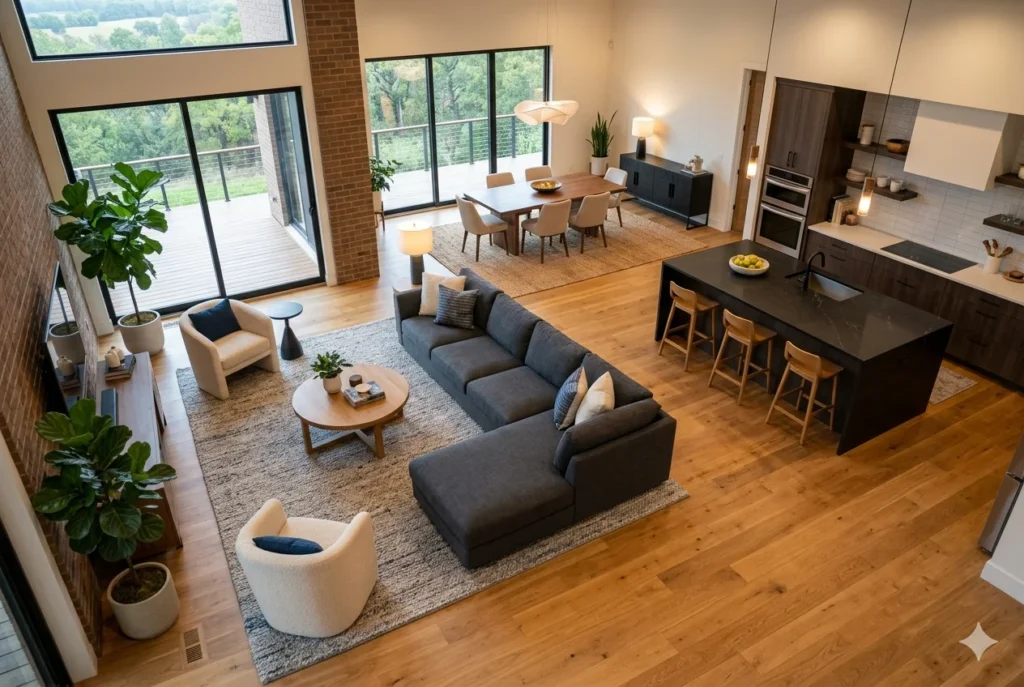
Furniture arrangement open plan spaces represent the most complex and most rewarding furniture arrangement challenge available in residential design, requiring the creation of defined functional zones within spaces that lack the architectural walls that conventionally define room boundaries and organize furniture accordingly.
Room layout ideas for open plan living and dining areas use furniture itself as the primary room-dividing element, with the back of a sofa creating a visual and psychological boundary between the living zone and the dining zone, a bookcase creating a semi-transparent division that maintains light flow between zones while providing visual separation, and coordinated area rugs of different sizes and styles defining each functional zone’s floor area without requiring any architectural intervention. The key to successful open plan furniture arrangement is creating zone separation that is clear enough for the zones to function distinctly while maintaining the visual connection that makes the open plan feel spacious rather than divided.
Floating furniture arrangement is particularly important in open plan spaces because furniture pushed against walls in an open plan creates an isolated perimeter arrangement that makes the open space feel more like multiple disconnected rooms along walls rather than a unified open living environment. Sofas and chairs grouped in the interior of the open space with traffic paths around their perimeters create the clearly defined living zone that makes the open plan legible and comfortable while maintaining the circulation flow that open plan design requires for its characteristic spatial generosity.
Avoid the Most Common Furniture Arrangement Mistakes
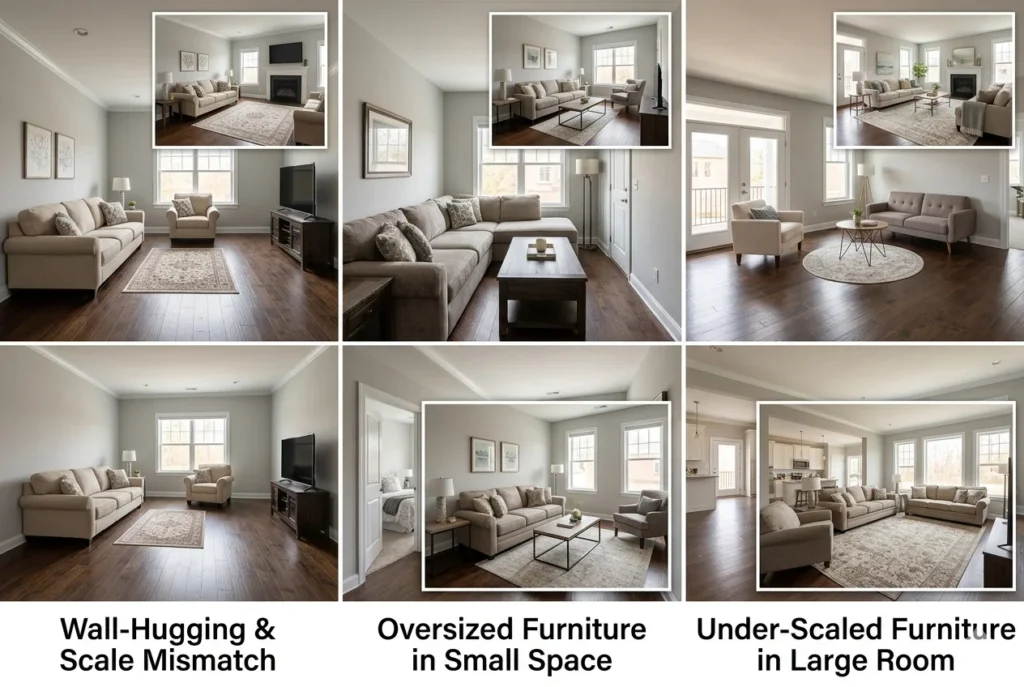
Furniture arrangement mistakes are strikingly consistent across different homes, different furniture styles, and different room sizes, suggesting that the errors arise from universally shared furniture arrangement instincts that, while understandable, consistently produce unsatisfying results.
The most consistently made furniture arrangement error is the wall-hugging arrangement already discussed, but the second most common error is furniture at the wrong scale for the room. Oversized furniture in small rooms is obvious and frequently addressed. Undersized furniture in large rooms is equally problematic and frequently overlooked, with small sofas and delicate chairs lost in generous living rooms that require furniture of commensurate scale to anchor the space and create the visual weight that makes large rooms feel furnished rather than empty despite the presence of furniture.
Furniture layout ideas addressing scale begin with the room’s ceiling height as the primary calibration point: rooms with 8-foot ceilings suit furniture of moderate scale with average seat heights and back heights, while rooms with 9-foot or higher ceilings can accommodate larger furniture including taller sofas, more substantial bookcases, and larger dining tables that would overwhelm lower-ceilinged spaces. Furniture arrangement tips for achieving appropriate scale suggest using the sofa as the primary scale-setting piece and choosing all other furniture in relationship to that anchor piece rather than selecting individual pieces independently and hoping they work together at the room’s actual scale.
Use Furniture Arrangement to Improve Small Rooms
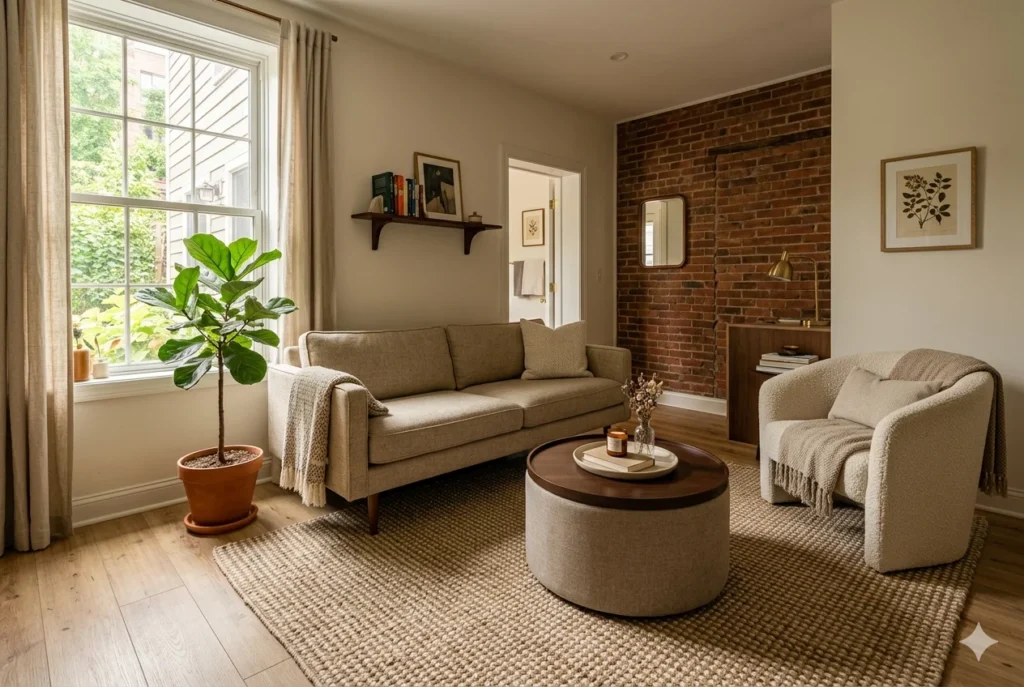
Furniture arrangement for small rooms follows specific principles that work against the instincts most people bring to small space challenges. The instinct is to minimize, to choose small furniture, to push everything to the perimeter, and to avoid patterns and visual complexity that might make a small room feel busier. These instincts are largely counterproductive.
How to arrange furniture in genuinely small rooms benefits from one larger piece of furniture at the correct scale rather than multiple small pieces that collectively create visual clutter without individually creating presence. A small bedroom with one substantial bed of appropriate width rather than a twin bed feels more resolved and more restful despite the full bed’s larger footprint, because the scale relationship between furniture and room is more legible and more confident. Furniture arrangement tips for small spaces recommend multi-function furniture that serves multiple purposes within the limited floor area, with storage beds replacing both the bed and the dresser, dining benches that store household items within their seats, and console tables that provide display surface while storing items in drawers below.
Apartment furniture arrangement applies small space principles at their most concentrated, with studio and one-bedroom apartments requiring the most creative furniture arrangement thinking to create the sense of multiple defined functional zones within genuinely limited square footage. The zone creation principles from open plan arrangement apply directly to apartment furniture arrangement, with rugs, lighting, and furniture orientation creating the living zone, dining zone, and sleeping zone boundaries that make a small apartment feel like a complete home rather than a single undifferentiated room containing all the functions that residential life requires.
Experiment with Diagonal and Non-Traditional Arrangements
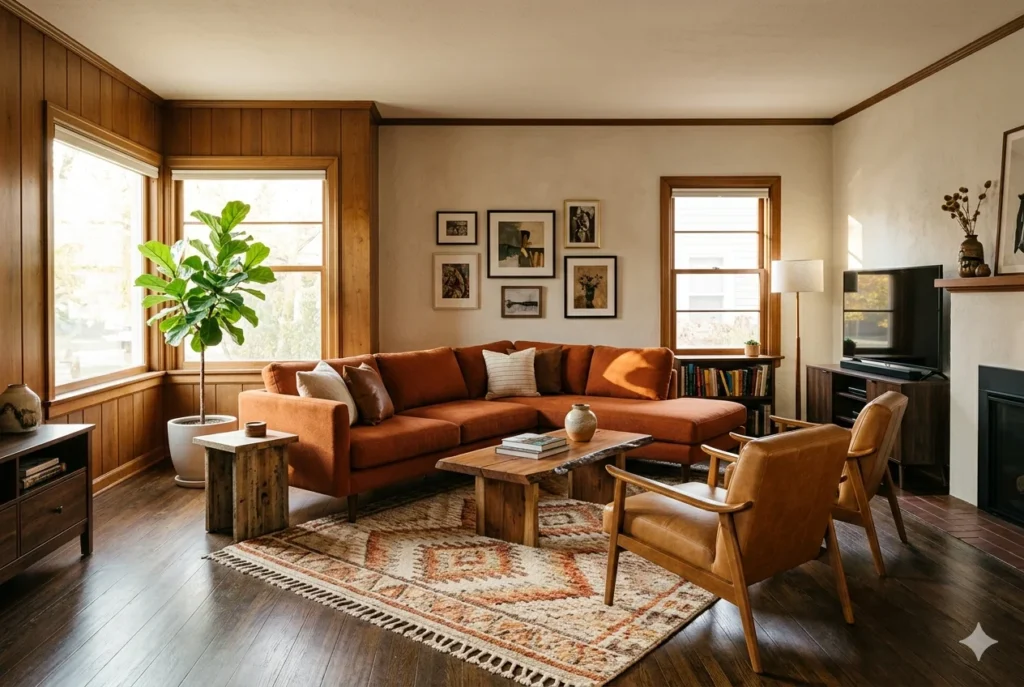
The furniture arrangement principles covered throughout this guide represent reliable starting points, not rigid rules that every room must follow regardless of its specific character, proportions, and the preferences of the people who inhabit it. The permission to experiment with diagonal, non-traditional, and personally driven arrangements is an essential counterpoint to the principle-based guidance that precedes it.
Furniture arrangement tips encouraging experimentation note that diagonal sofa placement in square rooms creates a more dynamic and visually interesting arrangement than the conventional parallel-to-wall options that square room geometry suggests, and that this arrangement often creates more useful corner spaces while making the room feel less predictable and more personally designed. A bed placed at a diagonal in a square bedroom creates an unexpectedly dramatic and intimate sleeping arrangement that departures from the conventional against-the-wall placement in ways that photographs beautifully and functions comfortably in the right room configuration.
Room layout ideas for non-traditional arrangements work best when they serve a genuine functional purpose rather than being unconventional for its own sake. The diagonal sofa that creates a better conversation area than either conventional arrangement available in the room’s dimensions is a good diagonal sofa. The diagonal sofa that creates an awkward traffic path and uncomfortable viewing angle simply to appear different is not. Furniture placement guide thinking that evaluates every arrangement option, conventional and unconventional, against the same functional criteria of traffic flow, conversation distance, focal point relationship, and scale appropriateness consistently produces the best furniture arrangement for each individual room regardless of which arrangement conventions it follows or departs from.
Conclusion
Furniture arrangement is ultimately a spatial problem-solving skill that improves consistently with practice and with the application of the principles that distinguish furniture arrangements that merely fill rooms from arrangements that genuinely create them. The 15 furniture layout ideas explored throughout this guide collectively demonstrate that most furniture arrangement improvements require no new furniture, no renovation, and no professional assistance. They require the willingness to measure before moving, to float furniture away from walls, to anchor arrangements with appropriately sized rugs, to create genuine conversation areas, and to evaluate every arrangement decision against the functional criteria of traffic flow, focal point relationship, and the specific quality of livability that rooms must provide throughout daily use to earn the description of genuinely stylish and comfortable homes.
The single most valuable perspective to carry from this guide is that furniture arrangement is always provisional. Every arrangement is a working hypothesis about how a room should function, and there is no shame in discovering through living with an arrangement that a different configuration would serve the room and its inhabitants better. Professional interior designers frequently rearrange rooms multiple times before settling on arrangements that feel genuinely right, because the only true test of a furniture arrangement is how the room feels to inhabit it over time under the real conditions of daily family life.
Begin with the principle that matters most for your specific room’s current situation, whether that is identifying the focal point, measuring for traffic clearances, or simply pulling the sofa away from the wall and discovering whether the room you already have in your furniture might be the room you always wanted, waiting in a different arrangement.
Frequently Asked Questions
What is the most important rule of furniture arrangement?
Identifying and orienting furniture toward a focal point furniture arrangement is consistently the most impactful single furniture arrangement principle, because all other decisions about seating orientation, traffic flow, and furniture grouping follow logically once the focal point has been established and the primary seating positioned to face it. Rooms without a clear focal point relationship between furniture feel disorganized regardless of how carefully other arrangement principles have been applied.
Should furniture be pushed against the wall?
No. Floating furniture arrangement away from walls consistently creates more comfortable, more functional, and more professionally designed-looking rooms than the instinctive wall-hugging arrangement that most people default to. Furniture pulled 8 to 24 inches from walls creates defined seating zones with clear traffic paths around them, and the gap between sofa and wall is easily filled with a console table that provides both function and visual grounding for the floating arrangement.
How do I arrange furniture in a small living room?
Furniture arrangement for small rooms benefits from one sofa and one chair rather than multiple seating pieces competing for limited floor space, a coffee table on legs that allows visual floor continuity beneath it, an appropriately sized rug with all front furniture legs on its surface, and furniture floated away from walls to create defined zones rather than pushed to the perimeter creating an empty center that feels smaller than furniture grouped in the room’s interior.
What size rug should I use under my furniture?
Furniture arrangement with rug requires at minimum all front legs of primary seating pieces resting on the rug, which in most living rooms means an 8 by 10 foot minimum and often a 9 by 12 or larger rug for complete furniture groupings. The most common rug mistake is choosing a size that fits between furniture pieces rather than beneath them, creating visual fragmentation rather than the anchoring unity that correctly sized rugs provide.
How do I create conversation areas in my living room?
Conversation furniture arrangement positions seating so no seat is more than 8 feet from any other seat in the group, using U-shapes, L-shapes, or facing sofa arrangements that create enclosed social geometries where comfortable eye contact and normal speaking volume support genuine conversation. Seating pushed against walls at distances exceeding 8 feet between seats creates the specific uncomfortable quality of rooms that look like living rooms but function like waiting rooms.
One Comment