
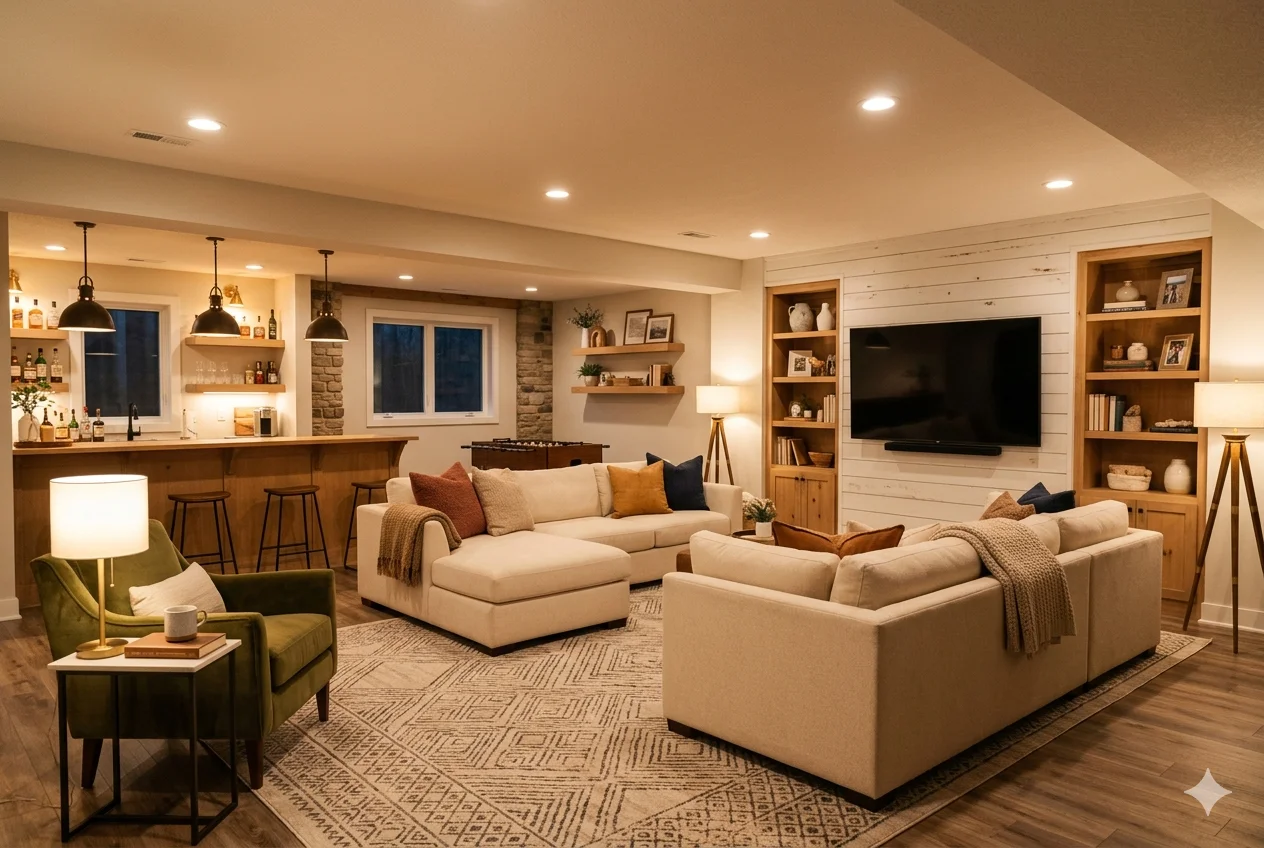
20 Cozy Basement Ideas for a Warm and Inviting Family Space
There is a specific kind of house that families consistently love more than their square footage would seem to explain, and when you spend time in these homes you eventually find your way downstairs to understand why. The basement that has been properly finished, thoughtfully designed, and genuinely invested in as a family space transforms a house in ways that no above-grade renovation quite matches, because it creates something rare and genuinely valuable: a dedicated room where family life can happen on its own terms, separated from the domestic machinery of cooking, cleaning, and daily routine that consumes the main floor.
Cozy basement ideas work because basements have inherent spatial qualities that designers spend considerable money trying to recreate in above-grade spaces. The natural insulation of surrounding earth creates consistent temperatures. The absence of exterior windows on most walls creates opportunities for controlled lighting environments impossible to achieve in windowed rooms. The separation from street noise and household activity creates acoustic conditions ideal for movies, music, and concentrated play. These are not limitations to be overcome. They are genuine design advantages waiting to be exploited.
Basement family room ideas that succeed in creating genuinely warm and inviting spaces share a common understanding that the basement’s below-grade character requires specific design responses rather than simply applying the same approaches that work in above-grade rooms. The lighting must be more thoughtfully layered because natural light is limited. The flooring must feel warmer because concrete subfloors create cold underfoot conditions. The color palette must work harder to create warmth because natural light does not do that work automatically. When these specific considerations are addressed with genuine design intelligence, the result is consistently one of the most beloved rooms in the house.
This guide presents 20 cozy basement ideas covering every dimension of basement family space design from flooring and lighting through seating, entertainment, storage, and the finishing personal touches that transform a finished basement from a functional room into a genuinely beloved family destination.
Choose Warm Flooring That Feels Good Underfoot
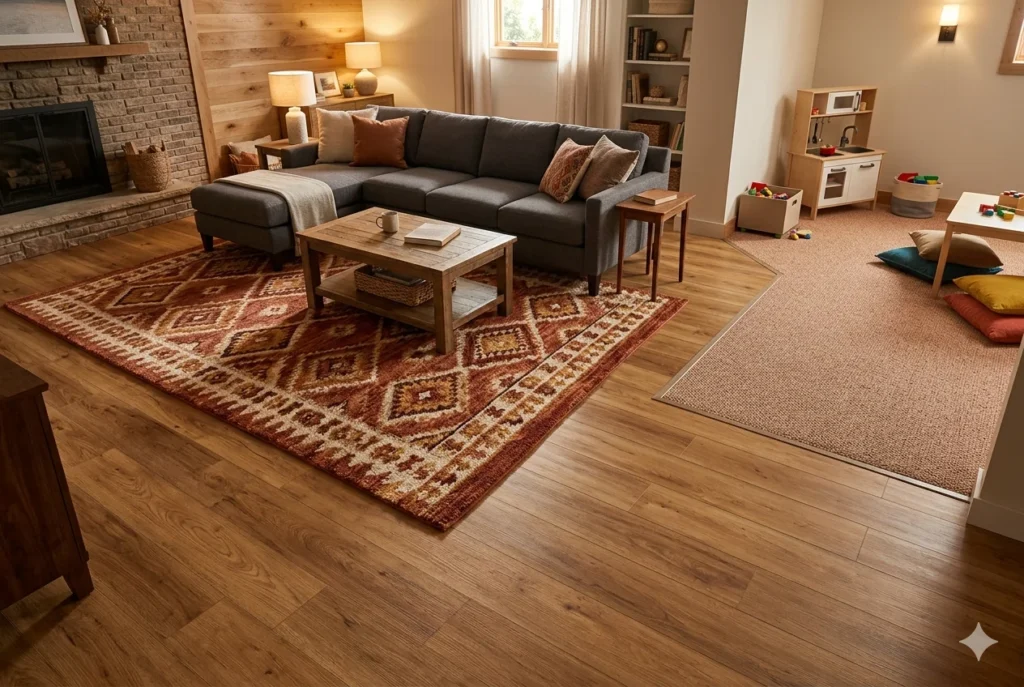
Basement flooring ideas represent the single most impactful comfort decision in any cozy basement design project, because the floor is the surface that family members interact with most physically and most continuously, and cold hard flooring is the single most reliable way to make a basement feel like a basement rather than a warm and inviting family room.
Luxury vinyl plank has become the most popular basement flooring choice for excellent and well-documented reasons. It installs directly over concrete without the moisture concerns that wood flooring requires, creates a convincingly warm wood-look aesthetic in every finish from pale Scandinavian oak through warm honey maple through rich dark walnut, and provides the specific resilience underfoot that makes standing and walking comfortable for extended periods. The waterproof construction of quality luxury vinyl plank makes it genuinely appropriate for the moisture conditions that even well-managed basements occasionally experience, providing the peace of mind that eliminates the specific anxiety of investing in expensive flooring in a space with any moisture history.
Basement flooring ideas for maximum warmth and comfort use carpet or carpet tiles as an alternative to hard surface materials, with carpet providing the specific tactile warmth that no hard surface can replicate regardless of its visual quality or installation sophistication. Finished basement ideas using carpet in the primary seating and entertaining zone with luxury vinyl in transition areas and any wet areas create the best of both worlds, with carpet providing warmth and acoustic softening precisely where family members spend the most time sitting and lying on the floor during movies and play, and durable easy-clean hard surface handling the traffic zones where carpet’s maintenance demands and vulnerability to spills create ongoing practical problems.
Layer Lighting to Eliminate the Cave Feeling
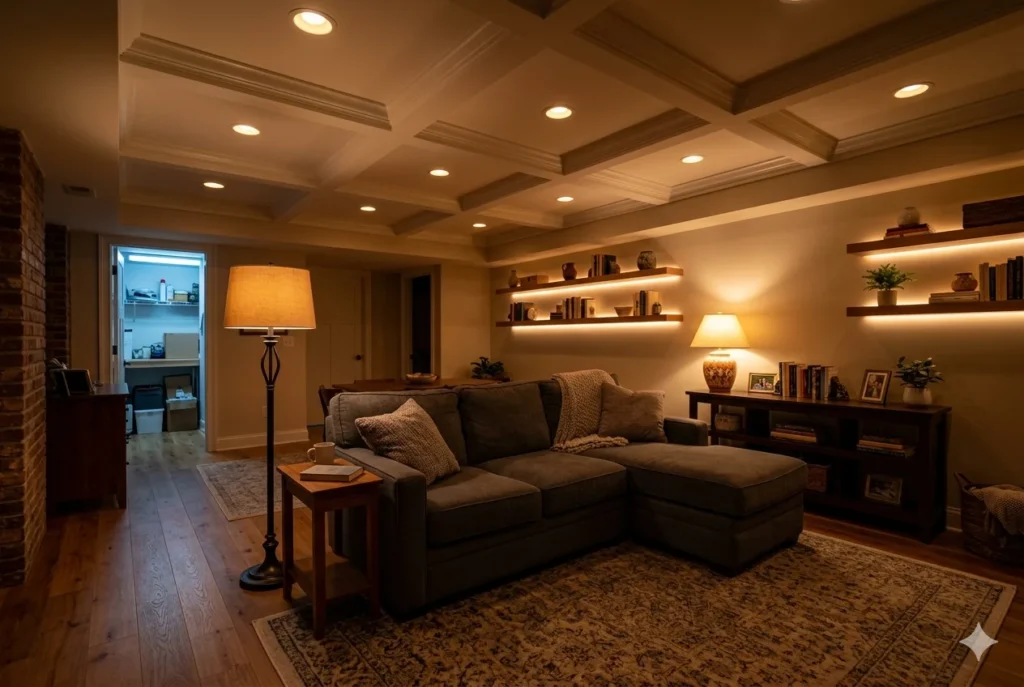
Nothing undermines a cozy basement design faster than a single overhead fluorescent fixture, and nothing transforms a basement from cave-like to genuinely inviting faster than a well-considered layered lighting approach that treats the ceiling and walls as opportunities rather than the absence of windows as a limitation. Basement lighting ideas that create warm, welcoming environments use the same principles that premium hospitality design applies to windowless interior spaces in hotels and restaurants, where artificial light is the complete story and the quality of that story determines everything about how the space feels.
Basement family room ideas for lighting begin with warm color temperature as the non-negotiable foundation. Every light source in a cozy basement should produce warm white light in the 2700 to 3000 Kelvin range, creating the amber warmth that reads as comfortable and inviting rather than the cool white that reads as institutional and uncomfortable. This single specification, consistently applied to every fixture and every bulb in the basement, creates a warmth quality that many homeowners report as transformative in spaces that previously felt cold and uninviting despite adequate illumination levels.
Cozy basement ideas for lighting layer multiple source types at varying heights to create dimensional interest that single-source overhead lighting cannot provide. Recessed ceiling lights provide the background ambient level. Floor lamps positioned beside primary seating create warm side lighting at human height that reads as genuinely domestic. Table lamps on side tables and consoles create intimate accent pools. LED strip lighting along built-in shelving undersides or along ceiling soffits creates architectural glow that adds dimension to the space’s perception of depth and complexity. Together these sources create the layered illumination landscape that makes basements feel warm and inhabited rather than adequately but flatly lit.
Create a Dedicated Home Theater Experience
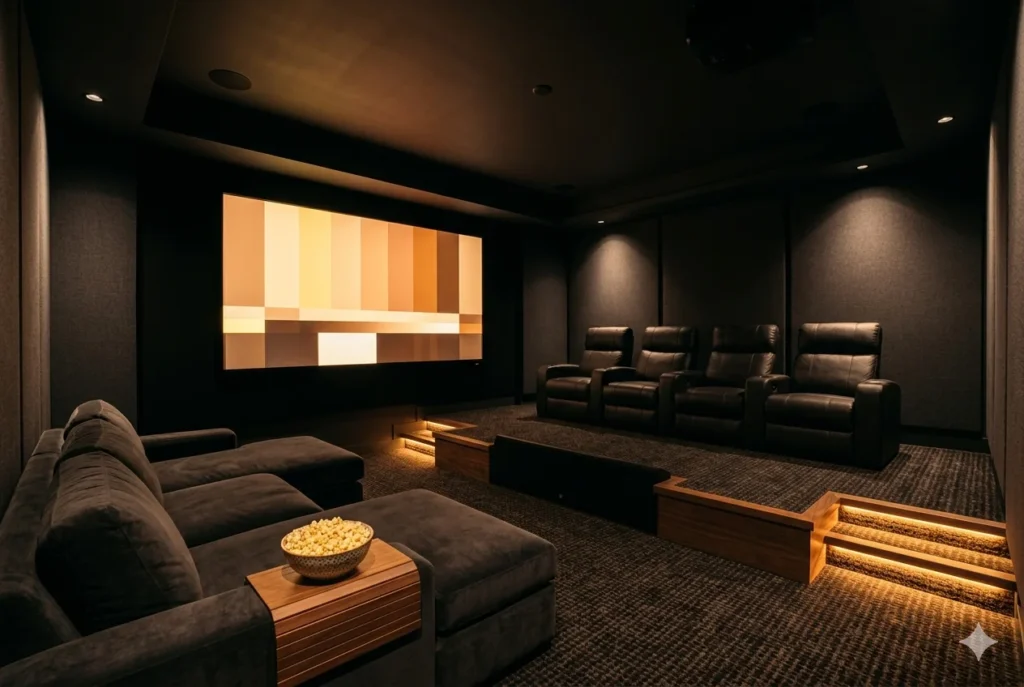
Basement home theater design transforms the most consistently underutilized space in most homes into the most enthusiastically used room in the house, because the basement’s inherent qualities of darkness control, acoustic isolation, and consistent temperature create genuinely superior movie-watching conditions compared to above-grade living rooms where natural light management and noise intrusion create ongoing compromises in the viewing experience.
Basement entertainment room design for home theater begins with the projection and display decision, which determines the room’s entire spatial organization. A large format television in the 75-inch to 100-inch range suits most basement spaces without the projection screen, projector installation, and complete darkness requirements of true projection systems. A dedicated projector setup with a 100-inch to 150-inch screen creates the most genuinely cinematic experience but requires careful ambient light management and the projector installation planning that ceiling-mounted projector housings require. Finished basement ideas using acoustically treated wall panels, sound-absorbing carpet, and appropriately upholstered seating create the acoustic environment that makes dialogue clarity and cinematic sound genuinely excellent rather than the muddy or echoey audio that hard-surfaced spaces without acoustic treatment consistently produce.
Cozy basement home theater seating using a combination of a large comfortable sectional in the front row and stadium-elevated platform seating in the back creates the genuine cinema layout that family movie watching requires for every family member to have unobstructed sightlines to the screen. The elevated back row requires specific structural planning in the basement’s floor and ceiling height relationship, but the specific experience of sitting in properly elevated seating with a genuinely large screen in a controlled-light acoustic environment creates a movie-watching environment that makes families genuinely reluctant to leave home for commercial theaters.
Design a Family Game Room for All Ages
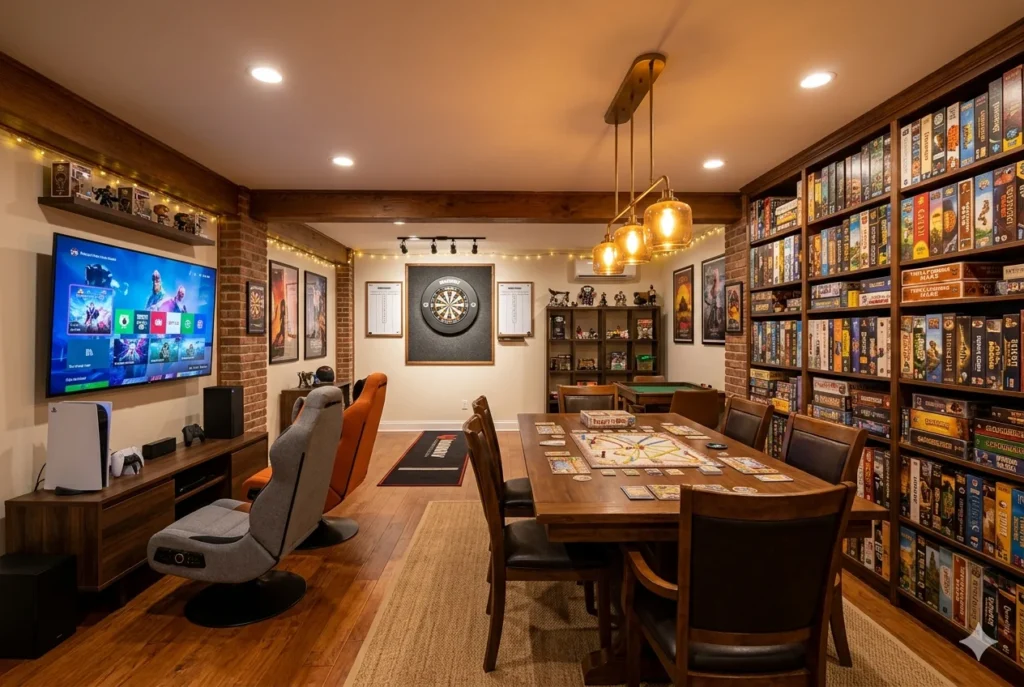
Basement game room design creates the most actively used and most multigenerational basement family space possible, because games engage family members across age ranges in ways that passive entertainment cannot, and the basement’s separation from the main house’s quieter spaces creates the appropriate acoustic buffer for the noise that genuinely enthusiastic game playing inevitably generates.
Basement rec room ideas for game room applications should consider the specific games that the family actually plays rather than the games that seem like they should be appropriate, because a pool table that nobody genuinely uses occupies floor space that a comfortable seating arrangement would use daily. Actual family game inventories typically include board games requiring table space, video game consoles requiring television proximity and comfortable seating, card games requiring a dedicated table, and potentially one large game like pool or ping pong if space genuinely accommodates it without creating the cramped circulation that undersized game room floor plans impose on their daily usability.
Cozy basement design for game rooms uses flexible furniture and multi-purpose surfaces to accommodate multiple game types within the same floor plan. A dedicated game table that seats six to eight serves board games, card games, and puzzle sessions while its central position and accessible seating also serve snack and social gatherings that happen naturally around game playing. Built-in shelving along game room walls provides organized storage for the game collection that most families accumulate while the display of game boxes creates visual evidence of the room’s playful purpose that makes the space inviting rather than requiring any purely decorative treatment.
Build a Comfortable Basement Bar
Basement bar ideas create the social anchor that transforms finished basements from simply furnished spaces into genuine entertaining destinations, providing the beverage service infrastructure that makes hosting guests downstairs genuinely convenient rather than requiring constant trips to the main floor kitchen for drinks and ice.
Finished basement ideas for bar design range from simple wet bar counter installations with a single sink and undercounter refrigerator through fully equipped home bars with multiple refrigerators, ice maker, dishwasher, and dedicated spirits storage in a complete entertainment-grade installation. The appropriate investment level depends directly on how frequently the family entertains downstairs and the specific beverage service expectations those entertaining occasions create. A family that hosts occasional game nights with beer and wine is genuinely well-served by a simple counter with a bar refrigerator and some open shelving. A family that hosts frequent dinner parties and larger gatherings benefits from the more complete installation that eliminates every trip to the main kitchen during hosting.
Cozy basement design for bar areas uses warm materials including natural wood bar countertops, brick or stone accent walls behind the bar, warm pendant lighting above the bar counter, and upholstered bar stool seating that communicates the specific hospitality quality of a well-considered private bar rather than the utilitarian character of a basement utility installation. The bar’s visual design should reflect the same warmth and intentionality as the surrounding basement family space, creating a continuous design language throughout the basement rather than the jarring transition between a designed seating area and an undesigned utility counter that many basement bar additions create.
Add a Kids’ Playroom Zone for Family Harmony
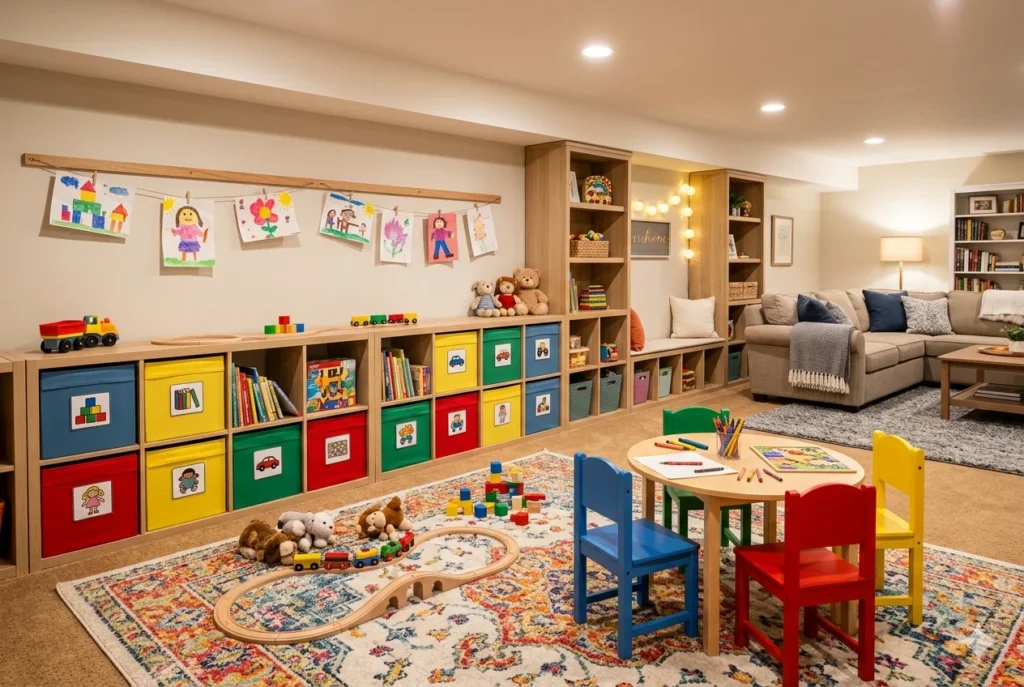
The specific genius of basement playroom ideas is the acoustic and physical separation they create between children’s enthusiastic play and the adult portions of the home where that enthusiasm can be disruptive to work, rest, and the quiet activities that adults legitimately need access to during the same hours that children need access to active and noisy play. A properly designed basement playroom zone gives everyone in the family the space they need simultaneously.
Basement family room ideas incorporating dedicated playroom zones use either separate room construction with a proper door for complete separation or clearly defined zones within an open basement plan through area rugs, furniture arrangement, and built-in storage that create distinct areas without full walls. The separate room approach creates maximum acoustic isolation and maximum toy containment when the door is closed, which parents consistently identify as the single most valuable practical quality of a proper basement playroom. Cozy basement ideas for playroom design prioritize durable easy-clean surfaces including sealed concrete, luxury vinyl plank, or low-pile carpet throughout the play zone, built-in toy storage that makes cleanup genuinely accessible to the children rather than requiring adult intervention, and flexible open floor space that accommodates the varied active play that children’s physical development requires.
Basement playroom design for longevity should consider the ages the space needs to serve as children grow, since a playroom designed exclusively for toddlers requires complete redesign when the family’s youngest child reaches eight or nine. Building in flexibility through neutral background surfaces, adjustable storage, and furniture that ages appropriately allows the playroom zone to evolve from imaginative play focus through school-age activities through teen hangout space without requiring complete renovation at each developmental transition.
Install Cozy Basement Seating That Invites Lingering
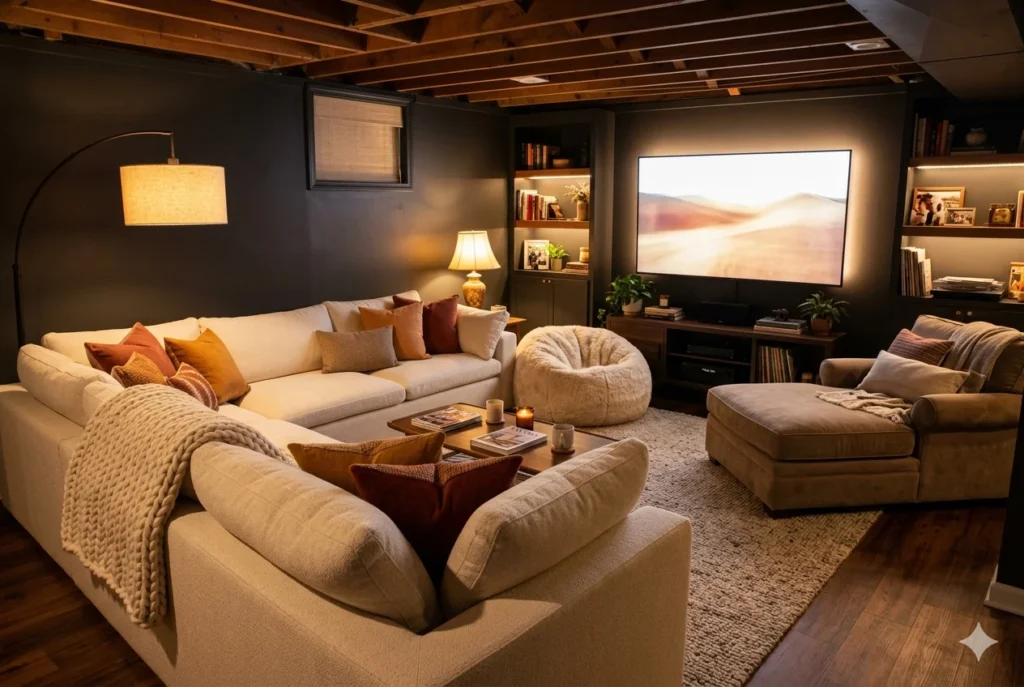
Basement seating ideas determine whether the family actually uses the basement space consistently or treats it as an occasional room that seems nice but never quite draws them downstairs for daily use. The specific quality of seating comfort in a basement family room determines how long people stay once they arrive, which is the ultimate measure of a basement design’s success as a genuine family gathering place.
Cozy basement design seating should prioritize deep comfort over stylistic perfection, because the basement’s function as the home’s most casual gathering space means that seating will be used in every position from formal upright through sideways lounging through fully horizontal movie-watching positions that no dining chair or formal sofa adequately accommodates. Large sectional sofas with deep seats and generous cushion depth provide the most complete seating comfort for the range of positions that basement family use actually requires, and their L or U shape configurations create the natural conversation circles and screen-viewing arrangements that basement entertainment use demands.
Basement family room ideas for seating beyond the primary sectional include bean bags and floor cushions for children who prefer floor-level seating during movies and games, an oversized chaise or daybed for the family member who prefers to read or nap during family basement time, and a couple of armchairs positioned at the conversation periphery for adults who want to be present in the family space without committing to the primary seating arrangement’s viewing orientation. This variety of seating types acknowledges the genuinely varied ways that family members use shared space and makes the basement welcoming to every family member rather than optimizing for one use pattern that excludes others.
Select a Warm Color Palette for Basement Walls
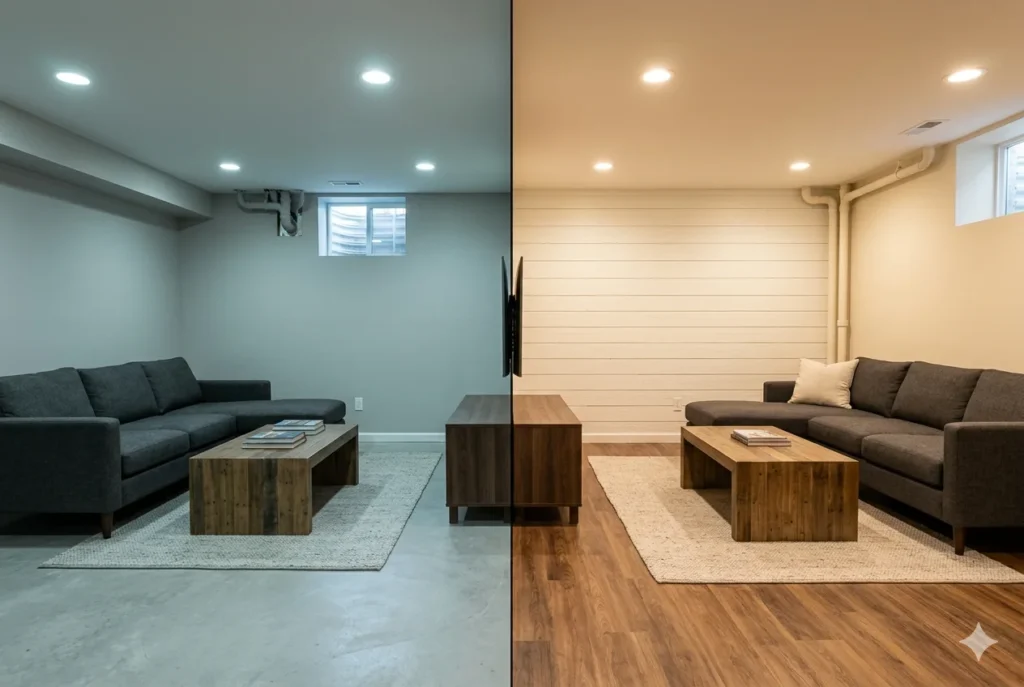
Basement color ideas require specific consideration that above-grade room color selection does not demand, because the limited or absent natural light in most basements means that colors must create warmth entirely through their own character rather than benefiting from the natural light that warms colors in windowed rooms throughout the day. Colors that appear warm and inviting in a sample chip or in a windowed room can appear flat, dull, or muddy in basement conditions where artificial light sources are the complete illumination story.
Warm basement ideas for wall color consistently favor colors in the warm neutral spectrum including warm cream, soft greige, warm taupe, and earthy terracotta rather than the cooler grays and blues that can look sophisticated in naturally lit rooms but feel cold and hospital-adjacent in basement artificial light conditions. Cozy basement design using warm white as the primary wall color with warmer accent colors introduced through an accent wall, built-in furniture, and decor elements creates the maximum light reflection that helps basement spaces feel brighter and more open while the warm white’s undertones prevent the clinical quality that purely cool white creates in windowless spaces.
Basement accent wall treatments using shiplap, board and batten, brick veneer, or stone create the textural warmth that flat paint cannot provide in basement spaces where the absence of window-adjacent visual interest means that wall surfaces carry more of the room’s visual character than they do in rooms with naturally interesting window views. A shiplap accent wall behind the primary seating or entertainment wall creates immediate visual warmth through the material’s texture and horizontal line interest, establishing the design character of the entire basement space through the treatment of its most prominent architectural surface.
Address Basement Ceilings Creatively
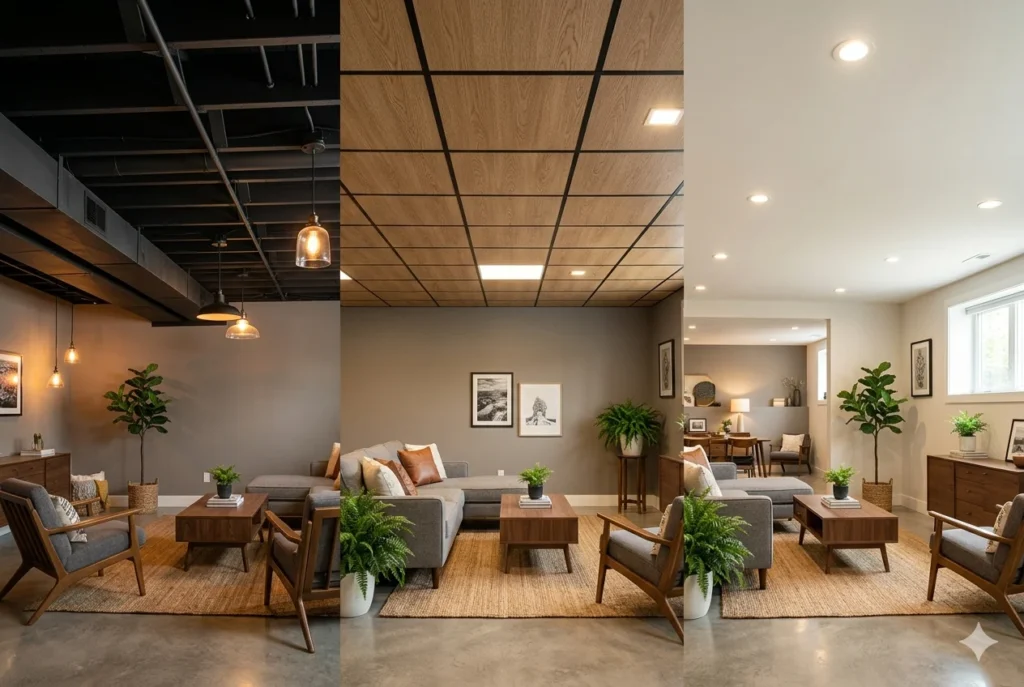
Basement ceiling ideas present the most consistently challenging design problem in finished basement projects because the mechanical systems including ductwork, pipes, and electrical conduit that run through basement ceiling spaces create visual complexity that most homeowners want to manage without the expense of full drywall ceiling installation that concealing all mechanical requires.
Cozy basement design approaches to ceiling treatment include painted exposed ceilings where all mechanical systems are painted uniformly in flat black or dark charcoal, creating the urban industrial aesthetic that makes the mechanical complexity appear intentional and designed rather than unresolved and unfinished. This approach has gained significant design legitimacy over the past decade, with flat black exposed ceilings appearing in premium residential and commercial design contexts that have normalized industrial aesthetic thinking in family home environments. Basement family room ideas using exposed painted ceilings work best when all mechanical elements are consistently painted including the joists, the pipes, the ductwork, the electrical conduit, and even the subfloor above, with any element left unpainted creating the inconsistency that makes the exposed treatment look unfinished rather than intentional.
Drop ceiling systems using acoustic tile grids have been the traditional response to basement ceiling challenges, and while classic acoustic tile creates an undeniably dated aesthetic, premium alternatives including wood-look acoustic panels, tin-look stamped metal tiles, and clean white micro-perforated acoustic panels create drop ceilings of considerably higher visual quality that maintain the practical access to mechanical systems that drywall eliminates while providing a finished ceiling surface appropriate for genuinely designed basement family rooms.
Create a Reading Nook or Quiet Zone
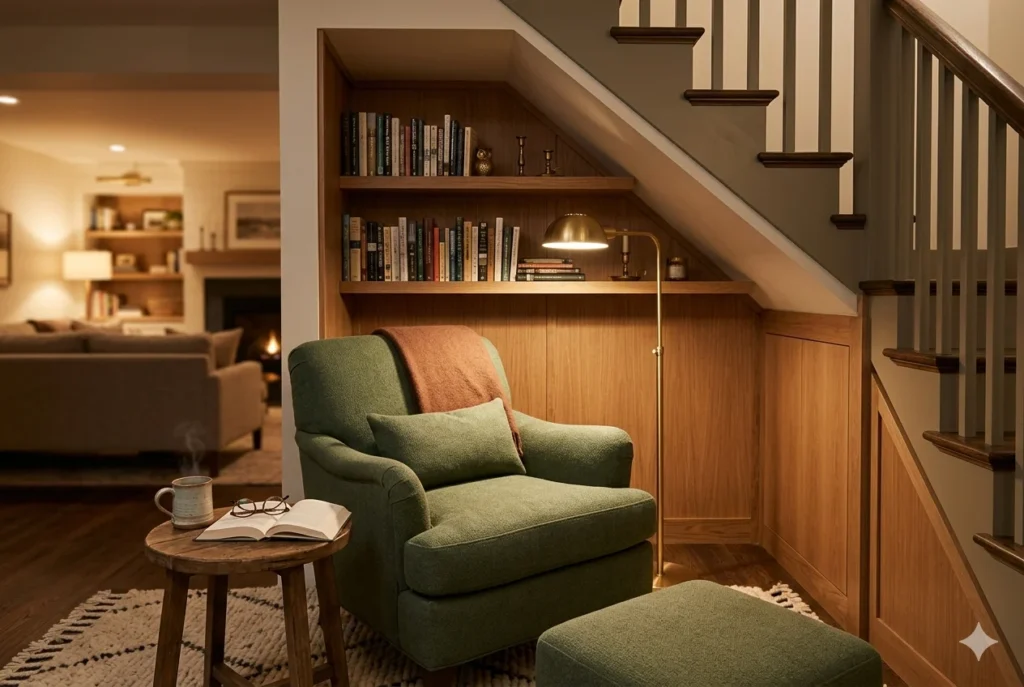
Basement reading nook design within the larger family space creates the specific zone that acknowledges an important truth about family life: not everyone in the family wants to do the same thing at the same time, and a basement space that accommodates only one activity excludes family members whose preferred activity is different. A reading nook or quiet zone within the basement plan allows a family member to read, work, or simply sit quietly in comfortable proximity to the family gathering without having to either participate in the noisy activity or retreat entirely to another floor.
Cozy basement reading nook design uses the basement’s own architectural features as organizational elements for nook creation. Spaces under stairs, alcoves created by HVAC mechanical room walls, and corner positions between perpendicular built-in storage walls each create natural nook geometries that require only comfortable seating, dedicated lighting, and surface treatment to complete the zone. A built-in window seat bench over a small basement egress window creates both natural light access and the most spatially efficient reading seating available, using a position that would otherwise be architecturally awkward and converting it into the most desirable reading spot in the house.
Basement family space reading zones benefit from acoustic consideration that the rest of the basement entertainment zones do not require, with soft materials including thick carpet, upholstered wall panels, and heavy curtains creating the sound absorption that makes reading comfortable adjacent to television or game room activity. This acoustic specificity can be achieved through design choices that serve dual decorative and functional purposes, with the reading nook’s textile abundance contributing to the zone’s warm and inviting character while simultaneously absorbing the sound that would otherwise make quiet reading impossible adjacent to a family movie or game session.
Design a Basement Home Office or Study Zone
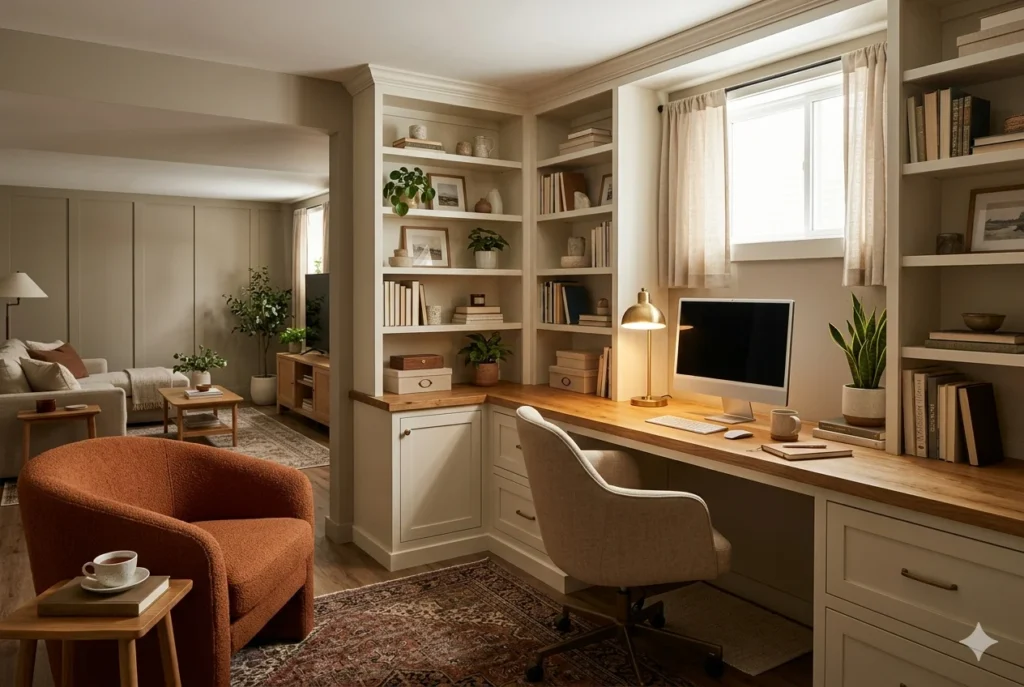
Finished basement ideas increasingly incorporate dedicated work and study zones that address the practical reality of modern family life where remote work, homework completion, and focused individual activity regularly compete for quiet space within homes that may not have adequate above-grade rooms dedicated to these purposes. The basement’s acoustic separation from the main house makes it genuinely appropriate for this purpose in ways that many above-grade room conversions cannot match.
Cozy basement design for home office applications uses warm materials and domestic design language rather than the corporate aesthetic that many home office designs inappropriately adopt from commercial office environments. A built-in desk and shelving in warm painted wood with warm lighting, comfortable task chair in fabric rather than plastic and mesh, and nearby comfortable seating for breaks and small group collaboration creates a workspace that feels like a genuinely pleasant room to spend time in rather than a utilitarian function stripped of the residential warmth that the surrounding family space provides. Basement family room ideas that incorporate office zones should design the office area with visual separation from entertainment and play zones so that children playing or watching television in the basement’s entertainment area do not create distraction for the working family member while still allowing shared basement occupancy during overlapping schedule hours.
Study zone design for children in basement family spaces creates the homework-completion support that families with school-age children consistently identify as one of their most practically valued basement features, because the basement study zone allows children to work on homework while remaining within earshot of parents occupied downstairs and provides dedicated study surfaces and storage that prevent the homework-spreading-across-dining-table situation that disrupts family meal preparation and dining in homes without dedicated homework space.
Add a Basement Fireplace for Ultimate Warmth
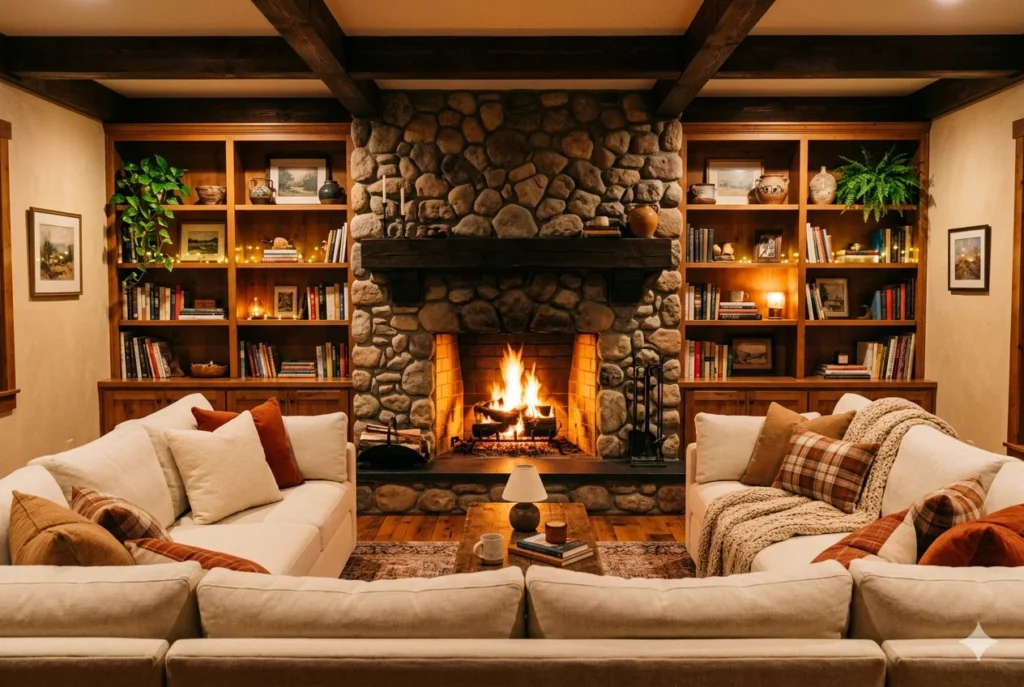
Basement fireplace ideas address the most fundamental challenge of cozy basement design in the most satisfying possible way, providing genuine heat at the level where heat is most needed while creating the specific visual and atmospheric warmth of actual flame that no amount of warm paint color, soft lighting, or comfortable seating can fully replicate in creating the genuine coziness that families associate with their most beloved gathering spaces.
Finished basement ideas for fireplace installation include gas fireplace inserts that can be incorporated into built-in surround and mantel designs without the chimney infrastructure that wood-burning fireplaces require, making basement fireplace installation practically feasible in a much wider range of basement situations than traditional fireplace thinking would suggest. Electric fireplace inserts provide the most installation-flexible option, requiring only electrical service and creating genuinely realistic flame visuals in premium models while producing meaningful supplemental heat through their heating element systems. Warm basement ideas using fireplace installation should consider the fireplace as the room’s primary visual focal point around which all seating arranges and toward which the room’s complete design attention flows, because a basement fireplace that is treated as merely one feature among many misses the specific dramatic and organizational impact that fireplace design can provide.
Basement accent wall incorporating a fireplace surround in brick, stone, or shiplap creates the room’s strongest design statement, establishing the basement’s aesthetic character through the fireplace wall’s material choices and establishing the primary seating orientation through the fireplace’s natural draw. The combination of basement fireplace and flanking built-in shelving creates the classic living room composition in basement format, providing the complete visual organization and practical storage that makes the fireplace wall the basement’s most completely resolved and most photographically satisfying design achievement.
Install Built-In Storage for Organized Family Life
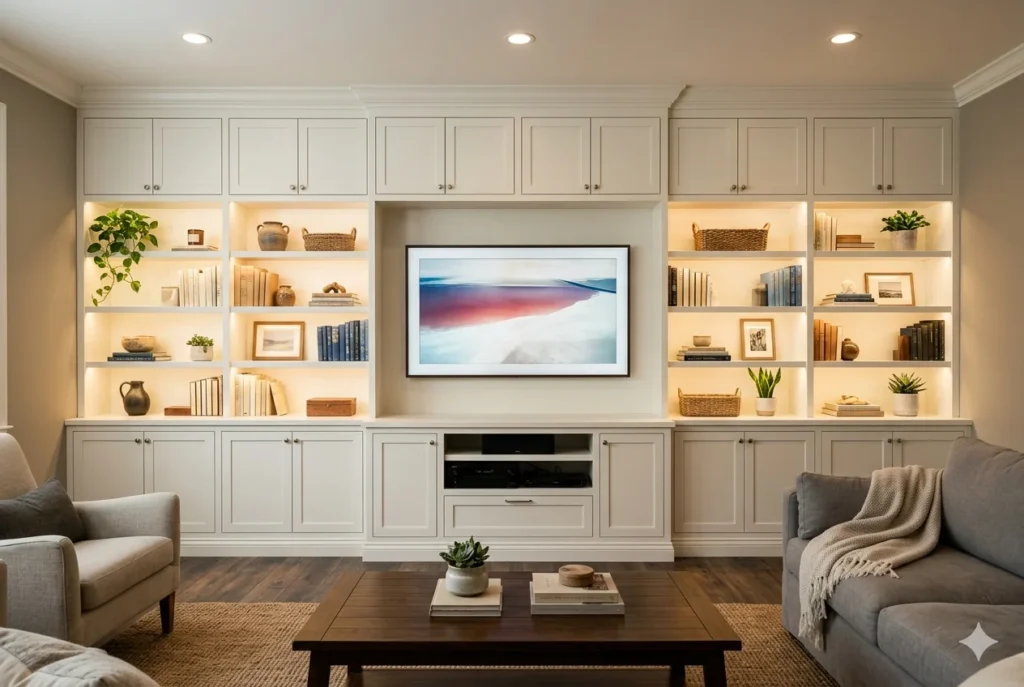
Basement storage ideas address the practical reality that family life generates enormous quantities of equipment, supplies, and belongings that need organized homes within reach of the activities they support, and that a basement without adequate storage quickly becomes a dumping ground that undermines the design quality and practical usability of the space regardless of how well the primary room elements were designed and installed.
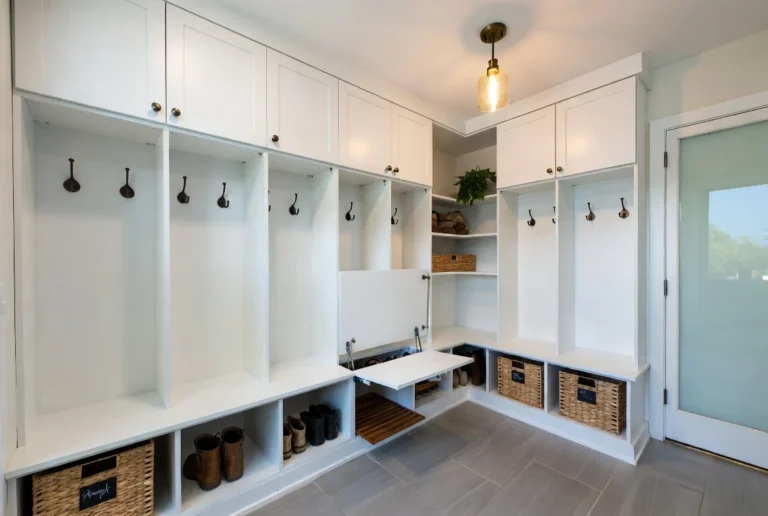
Cozy basement design incorporates storage as a design feature rather than treating it as a purely functional afterthought, with built-in bookshelves, built-in entertainment centers, built-in toy cubbies, and built-in bar and bar supply storage each providing the specific organizational capacity that the basement’s uses require while contributing to the room’s architectural completeness and visual richness. Built-in storage in finished basement ideas creates the specifically designed-for-this-room character that freestanding storage furniture can never achieve, with the built-ins fitting the room’s specific dimensions and use requirements in ways that catalog furniture selections necessarily compromise.
Basement family space storage organization should assign specific categories to specific storage locations based on use frequency and proximity to use point, with daily-use game controllers, remote controls, and entertainment accessories stored at immediate access positions near the primary seating, weekly-use game boxes and movie collections stored in accessible but not prime positions within built-in shelving, and seasonal and infrequently needed items stored in the dedicated basement mechanical room or storage area rather than competing for space in the family room’s designed storage locations.
Use Rugs to Define Zones and Add Warmth
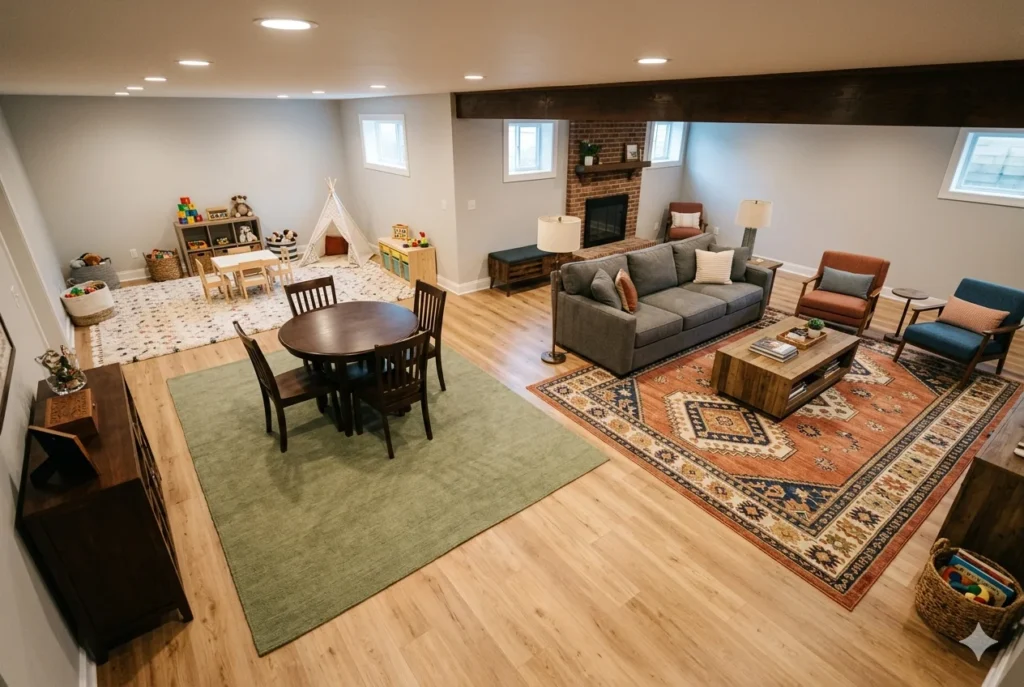
Cozy basement ideas using area rugs as primary zone-definition and warmth-creation tools apply the most immediately effective and most readily implementable transformation available to existing basement spaces, with the right rug selection capable of transforming a cold-feeling finished basement into a genuinely warm and inviting family space through a single purchase and placement decision.
Basement family room ideas for rug selection prioritize generous sizing over the too-small rugs that most homeowners default to from an understandable but counterproductive instinct toward caution in large floor area coverage investments. A rug sized to anchor all primary seating with furniture legs resting on the rug surface creates the visual organization and zone definition that rugs are designed to provide, while a rug sized to fit only beneath the coffee table creates visual fragmentation that makes the space feel smaller and less organized rather than defining it as a cohesive seating zone. Cozy basement design uses rugs to create distinct functional zones within an open basement plan, with different rug sizes and styles for the entertainment seating zone, the game table area, and the children’s play zone creating visual differentiation that helps family members intuitively understand the spatial organization of the open plan without requiring architectural division.
Low-pile rugs in performance materials including polypropylene and nylon suit basement family space applications through their cleanability, durability, and moisture resistance that natural fiber alternatives cannot provide in basement environments where occasional moisture events and heavy family use with children and pets create maintenance demands that premium natural fiber rugs cannot sustainably meet.
Bring Natural Textures and Organic Materials
The specific challenge of cozy basement design is creating warmth in a space that lacks the natural connection to outdoor environments that above-grade rooms achieve through windows, natural light, and the visual relationship to trees, sky, and landscape that most rooms in most homes maintain through their exterior window orientation. Natural textures and organic materials address this challenge directly by bringing the sensory qualities of natural materials into the basement environment regardless of the space’s physical relationship to the outdoors.
Warm basement ideas using natural materials include exposed wood beam elements that can be installed below existing ceiling structure to create the rustic warmth of timber framing in the ceiling plane, natural stone or brick veneer on accent walls, woven rattan and wicker furniture and accessory pieces, natural fiber baskets for toy and accessory storage, and the layered textile warmth of linen, cotton, and wool in upholstery and soft furnishing selections. Basement decor ideas centered on natural material richness create the organic warmth that prevents finished basement spaces from reading as hermetically sealed interior environments disconnected from the natural world, instead creating spaces that feel grounded in natural material traditions despite their below-grade position.
Cozy basement design using wood plank accent walls in warm stained or natural-finish wood creates the most immediately impactful natural material introduction available as a single installation decision, with the wood’s grain, texture, color variation, and warm material character transforming wall surfaces from simply painted architectural boundaries into warm material features that contribute to the room’s character throughout every hour of family use.
Design a Basement Bedroom for Guests or Teens
Basement bedroom ideas within family-oriented basement designs acknowledge the practical reality that many families need guest sleeping accommodations or teenager private spaces that the main house’s bedroom inventory cannot always provide without significant above-grade addition. A well-designed basement bedroom creates genuinely comfortable sleeping and private living space while maintaining the basement’s overall family-use character.
Finished basement ideas for bedroom creation must address the building code requirements for sleeping rooms that include minimum egress window sizing, minimum ceiling heights, and appropriate ventilation that sleeping room designation triggers in most jurisdictions. Meeting these requirements may require specific construction investment in egress window enlargement and bedroom ventilation that non-sleeping basement spaces do not require, making the legal bedroom designation decision an important early-stage planning consideration in any basement renovation. Basement family space designs that need flexible accommodation without formal bedroom designation often use comfortable sleeper sofa configurations in dedicated studio-style areas that create effective sleeping accommodation without triggering the code requirements that legal bedroom certification demands.
Cozy basement teenager suite design creates one of the most genuinely beloved and most frequently requested basement family space configurations available, with teenagers who have their own below-grade private space gaining the independence and personal territory that adolescent development genuinely requires while remaining physically within the family home in a configuration that maintains appropriate proximity for family connection and parental awareness.
Create an Exercise or Wellness Zone
Basement family space design increasingly incorporates dedicated exercise and wellness zones as the wellness-oriented domestic lifestyle values that contemporary families consistently identify as priorities find expression in the home spaces where dedicated equipment and consistent practice are practically supported by having the right space available without scheduling gym visits or weather dependence that outdoor exercise requires.
Finished basement ideas for exercise zone design use durable rubber flooring in the exercise equipment area that protects both the floor and the equipment while providing the cushioning and traction that active exercise requires, with adjacent finished flooring in the family space zone creating a clear material transition that defines the exercise zone without requiring architectural walls that reduce the basement’s open plan flexibility. Cozy basement design for wellness zones includes not just the exercise equipment space but the recovery and relaxation zone adjacent to it, with comfortable floor seating, a small sound system for workout music, mirror wall panels that serve both functional fitness monitoring and space-expanding visual purposes, and the warm lighting that makes the exercise zone feel like a genuine wellness environment rather than a utility room with equipment in it.
Yoga and meditation spaces within basement family room designs serve the adult family members whose wellness practice requires quiet, clear floor space, and the specific atmosphere of intentional calm that dedicated design can create even within a larger multipurpose family space. A defined corner with clear floor area, a small shelf for candles and accessories, warm dimmable lighting, and acoustic consideration creates a genuine wellness corner that makes regular practice genuinely accessible within the family’s daily domestic schedule.
Add a Snack Station or Mini Kitchen
Finished basement ideas incorporating dedicated snack and beverage stations address the practical reality that basement family use involving movies, games, and extended social gatherings generates regular food and beverage needs that are most comfortably served without the constant stair-climbing that main floor kitchen service requires. A dedicated basement snack station creates the specific convenience infrastructure that makes extended basement use genuinely comfortable rather than requiring the either-or choice between staying downstairs hungry or heading upstairs to interrupt the family time.
Basement bar ideas adapted to snack station rather than bar format create food service capability appropriate for family use including children, with a mini refrigerator for drinks, snacks, and child-appropriate food storage, a small microwave for popcorn and quick warming needs, a dedicated cabinet for snack supplies and serving pieces, and a counter surface for food preparation and serving at the point of use rather than requiring kitchen counter access upstairs. Cozy basement design for snack stations uses warm materials and integrated design language consistent with the surrounding basement family space rather than the utilitarian counter-and-appliance configuration that treats food service as purely functional, with warm wood countertops, quality hardware, and consistent lighting creating a snack station that contributes to the basement’s overall warmth rather than creating a utilitarian interruption within it.
Basement family space snack stations serve the practical value of keeping family members downstairs and engaged rather than creating the drift-away pattern where family members who go upstairs for drinks and snacks get absorbed into main floor activities and never return to the basement gathering that was supposed to be the family’s shared time.
Personalize with Art, Collections, and Family Character
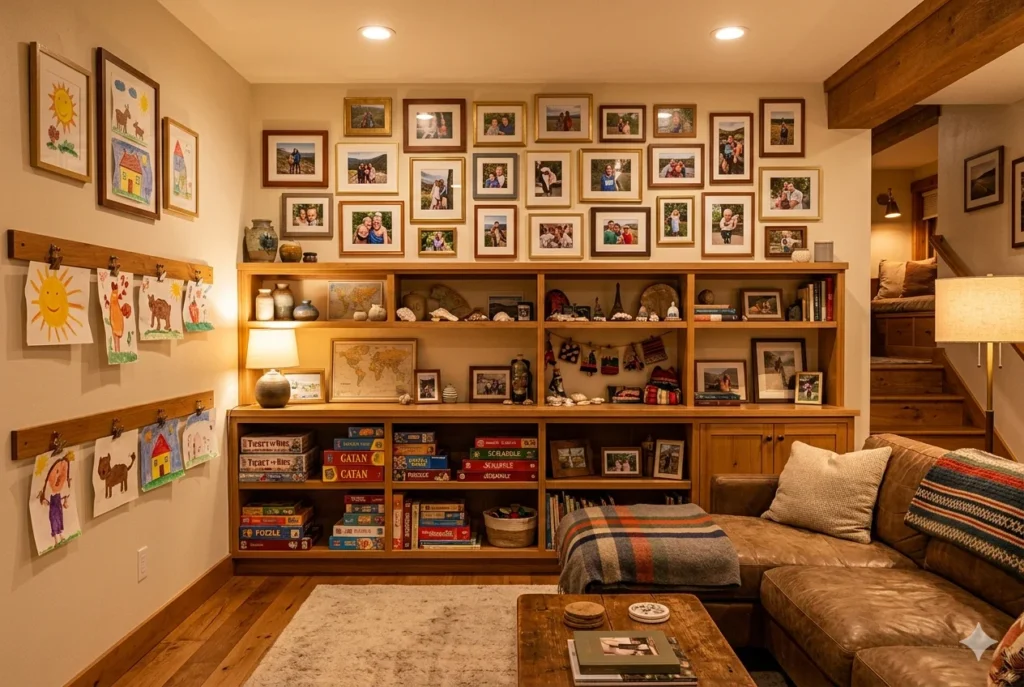
The final quality that separates a genuinely beloved basement family space from a competently designed but impersonal finished basement is the presence of authentic personal character expressed through art, collections, family photographs, and the specific objects that communicate who this family is and what they value in the one room of the house where that expression can be most relaxed and most genuinely personal.
Basement decor ideas that create genuine personal character use family photographs in generous quantities and with genuine editing intention, displaying the images that represent actual joyful family moments rather than the formally posed portraits that feel appropriate for above-grade living spaces but slightly stiff for the casual family gathering character that cozy basement environments are designed to support. A large gallery wall of informal family photographs, children’s artwork framed with the same consideration as purchased art, and collected objects from family travels and shared experiences creates a basement that feels unmistakably like this specific family’s space rather than a generically designed room that happened to be finished below their main house.
Cozy basement design personalization through children’s artwork display creates the specific quality of family investment and childhood celebration that parents consistently identify as among the most emotionally resonant aspects of their home environments. Dedicated display space for current artwork, rotating exhibitions of favorite pieces, and archival storage for the collection’s full history creates an ongoing relationship between the basement space and the family’s creative output that makes the basement feel genuinely alive and continuously connected to the family’s current life rather than statically designed and thereafter unchanged.
Conclusion
The cozy basement that becomes the family’s favorite room in the house is not the result of the most expensive finishes or the most elaborate technology installation. It is the result of thoughtful attention to the specific qualities that make below-grade spaces feel warm and welcoming rather than cave-like and neglected, combined with genuine investment in the specific activities and comforts that the family actually wants to use rather than the generic basement amenities that catalogs and renovation shows consistently present as universally desirable.
The 20 cozy basement ideas explored throughout this guide collectively demonstrate that basement family room success comes from understanding the space’s genuine characteristics rather than fighting against them, using thoughtful lighting to create warmth that natural light does not provide, choosing flooring that feels good underfoot rather than defaulting to whatever is easiest to install over concrete, selecting seating that genuinely invites the full range of family comfort positions rather than furniture that looks appropriate in photographs but proves uncomfortable in extended use.
The families who use their basements most consistently are the ones whose basements were designed for how they actually live rather than how renovation shows suggest they should live. Begin by identifying the two or three activities your family genuinely wants to do in a dedicated downstairs space, design those activities first with the quality they deserve, and let everything else in the basement serve those primary family experiences rather than competing with them for floor space, visual attention, and design investment.
Frequently Asked Questions
How much does it cost to finish a basement as a family room?
Basement renovation ideas for basic family room finishing including framing, drywall, flooring, and lighting typically cost 25 to 50 dollars per square foot. More complete finished basement ideas with built-ins, bar installation, and home theater run 50 to 100 dollars per square foot. Full custom basement renovations with premium finishes, dedicated home theater, wet bar, and complete custom built-ins can reach 100 to 200 dollars per square foot depending on material selections and local labor costs.
What flooring works best in a basement family room?
Luxury vinyl plank consistently performs best in basement flooring applications because of its complete moisture resistance, warm appearance, comfortable feel underfoot, and installation compatibility with below-grade concrete subfloors. Carpet creates superior warmth and acoustic comfort but requires careful moisture management. Engineered hardwood suits basements with verified dry conditions but remains vulnerable to moisture damage that basements occasionally experience despite their owners’ best preventive measures.
How do I make a basement feel less like a basement?
Warm basement ideas for overcoming the basement feel include warm color temperature lighting throughout eliminating cool institutional light quality, warm paint colors in the cream and taupe range rather than cool grays, generous textile use in carpets rugs and upholstery absorbing the hard surface echo quality, full-height drywall ceiling where feasible eliminating exposed mechanical visual complexity, and personal decorative elements creating specific family character that generic basement designs lack. Addressing ceiling height with recessed lighting and minimal ceiling bulk creates as much perceived height as actual dimensions allow.
What is the best way to soundproof a basement family room?
Basement family room ideas for sound management include acoustic insulation batts between floor joists above the basement ceiling, mass-loaded vinyl membrane on ceiling surfaces before drywall installation, resilient channel mounting for drywall that decouples ceiling drywall from structure, soft materials including carpet, upholstered furniture, and fabric wall panels within the basement space absorbing airborne sound, and solid core doors with proper seals at basement entry points. Complete professional soundproofing is expensive but meaningful acoustic improvement is achievable through strategic material selection in standard renovation budgets.
How do I handle moisture in a basement family room?
Finished basement ideas require moisture management before any finish work begins, with a professional assessment of any existing moisture issues through foundation waterproofing, exterior grading correction, window well drainage, and sump pump installation preceding any interior finishing that moisture would damage. Interior basement waterproofing systems including drain tile and sump systems manage groundwater that exterior waterproofing cannot completely eliminate. Continuous interior humidity monitoring and appropriate dehumidification during humid months protects finished basement materials from the moisture damage that finished basement warranties typically exclude from coverage.
You May Also Like This Post:
16 Brilliant Basement Bar Ideas for a Stylish Dream Home Bar
One Comment