
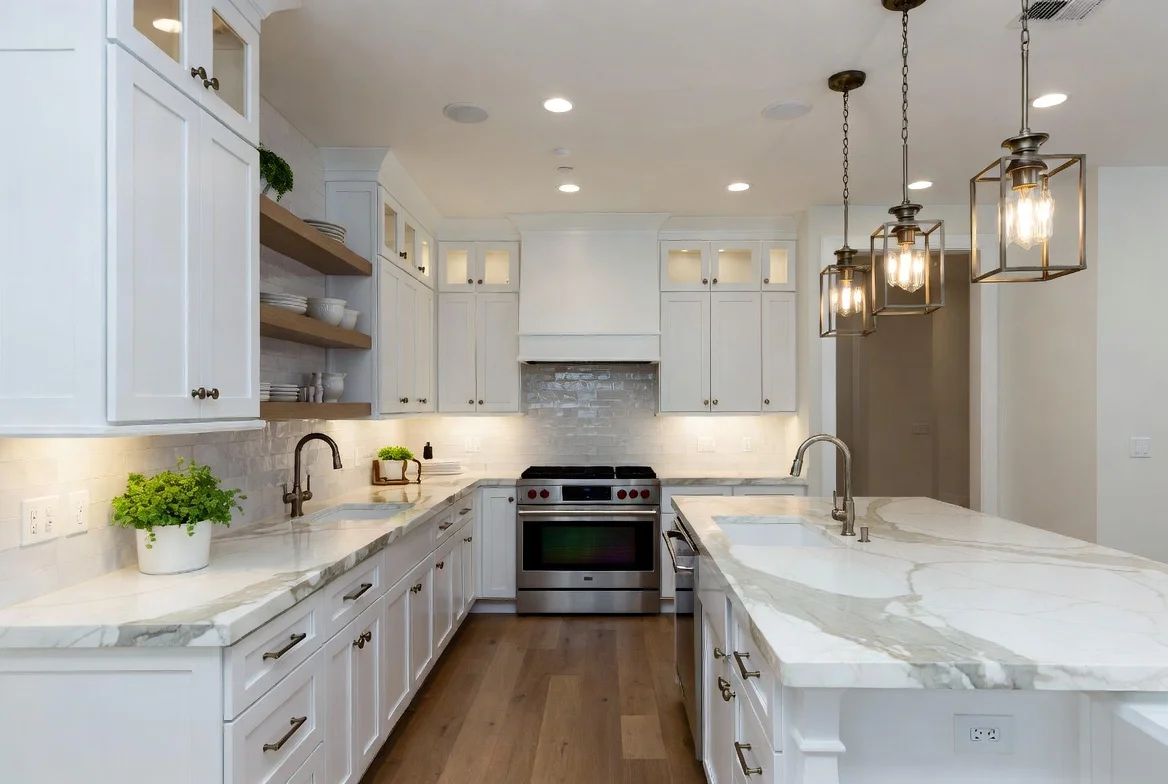
16 White Kitchen Ideas That Make Your Space Look Bigger and Brighter
White kitchens have been pronounced trends that will fade, styles that peaked, and aesthetics that would inevitably be replaced by something bolder and more current approximately once per decade for the past fifty years. They remain the most consistently requested, most broadly beloved, and most reliably satisfying kitchen design choice available to homeowners at every budget level and in every architectural context. This is not an accident of fashion persistence. It is the predictable result of white kitchens actually delivering on the specific promises that kitchen design must fulfill: making the most used room in the home feel generous, bright, clean, and genuinely beautiful in daily use rather than only in professional photography.
White kitchen ideas work because they exploit the fundamental physics of light reflection and spatial perception rather than fighting against them. White surfaces reflect available light throughout the kitchen environment, multiplying its presence and eliminating the visual weight that darker materials add to walls and cabinet surfaces that together define most of a kitchen’s visual field. The specific brightness, spatial generosity, and visual clarity of well-designed white kitchens create environments that feel genuinely pleasant to cook, eat, and gather in across every time of day and every lighting condition, which is precisely what the most used room in any home needs to do consistently rather than occasionally.
This comprehensive guide presents 16 white kitchen ideas that leverage the full potential of white in kitchen design, covering every element from cabinet selection and countertop pairing through backsplash, hardware, lighting, and the specific design decisions that determine whether a white kitchen feels luminous and beautifully designed or simply pale and undifferentiated. Whether you are designing a complete white kitchen renovation or refreshing an existing space through targeted updates, these ideas will help your kitchen achieve its brightest, most spacious, and most stylish potential.
Choose the Right Shade of White for Your Kitchen
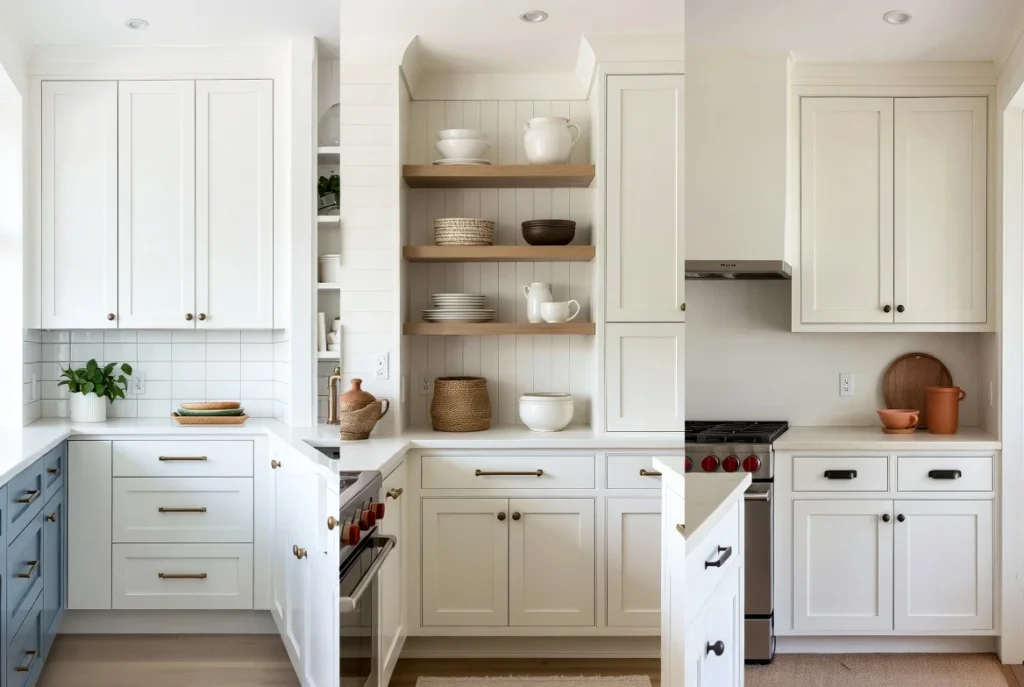
The single most consequential and most frequently underestimated decision in any white kitchen design is the specific white selected for cabinets and walls, with the dozens of white paint and finish options available ranging from warm creamy tones to cool stark whites creating dramatically different kitchen atmospheres that suit different lighting conditions, architectural styles, and personal aesthetic preferences with very different success rates.
Bright white kitchen designs using pure or near-pure whites in Benjamin Moore Chantilly Lace, Sherwin-Williams Extra White, and similar high-reflectance formulations create the most immediately striking and spatially generous white kitchen effects, with their maximum light reflectivity creating kitchens of extraordinary luminosity particularly effective in rooms with abundant natural light that would wash out warmer tones toward an undifferentiated pale glow. These crisp whites suit modern white kitchen aesthetics with their emphasis on clean geometric precision and the cool sophisticated character associated with contemporary kitchen design in architectural photography. All white kitchen designs using pure white throughout cabinet, wall, and countertop surfaces create the most dramatic and comprehensive spatial expansion effect, with the continuous white creating near-seamless visual boundaries that read as expansive rather than enclosed.
White farmhouse kitchen designs and traditional or transitional kitchen aesthetics benefit from warmer white tones including soft cream, warm ivory, and linen whites that reference the specific historical palette of American domestic architecture without the stark brightness that pure white brings to architectural contexts where its coolness would create visual inconsistency with the warmer materials and natural wood elements that farmhouse and traditional kitchen styles favor. White kitchen cabinets in warm white tones complement natural wood open shelving, butcher block countertop sections, and aged brass hardware with the specific material harmony that cool pure whites disrupt through their temperature contrast with warm organic materials.
Install Classic White Shaker Cabinets
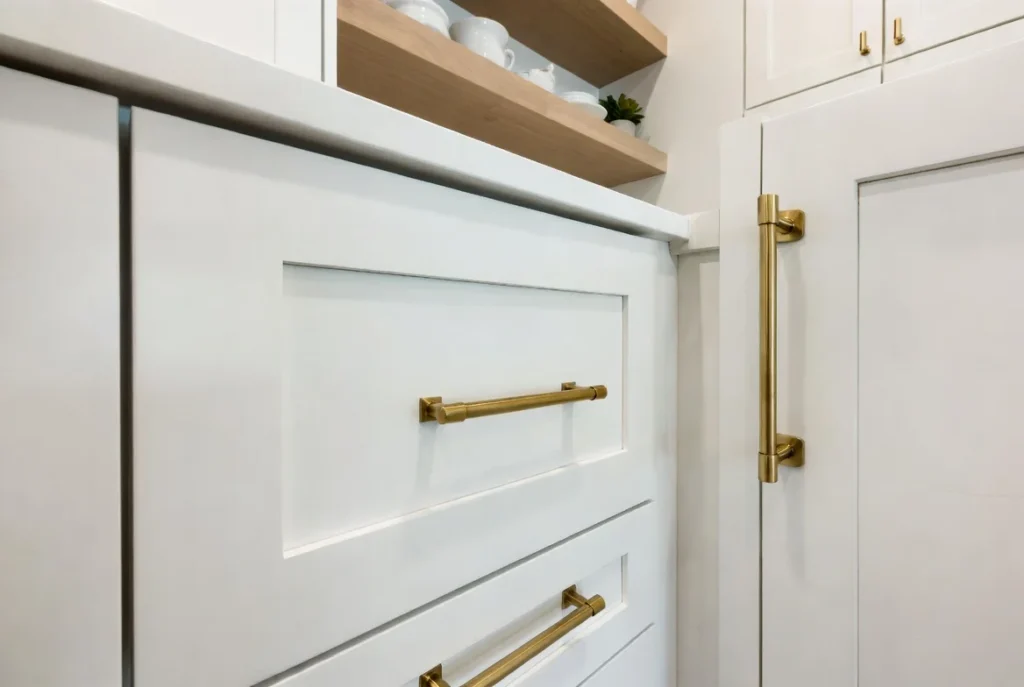
White shaker kitchen design represents the most enduringly popular and broadly applicable white kitchen cabinets choice available, with the shaker door profile’s characteristic flat center panel and simple frame construction creating a cabinet face of clean geometric elegance that suits traditional, transitional, farmhouse, and contemporary kitchen aesthetics with equally authentic results in each design direction.
The specific appeal of shaker cabinets in white kitchen applications extends beyond their visual character to their functional versatility as a design framework that accommodates hardware changes, countertop material shifts, and backsplash pattern variations while maintaining consistent cabinet-level aesthetic appropriateness. A white shaker kitchen with brushed brass hardware reads as warm and transitional, with matte black hardware reads as bold and contemporary, and with simple nickel bar pulls reads as clean and modern, with each hardware swap creating a substantially different overall kitchen aesthetic from the identical cabinet foundation. This design flexibility makes white shaker cabinets the highest-return white kitchen renovation investment available, providing cabinet-level design quality that remains compatible with evolving aesthetic preferences without requiring cabinet replacement as the broader kitchen design direction shifts over time.
White kitchen with wood accents typically uses white shaker cabinets as the primary cabinetry with natural wood or wood-look elements including floating shelves, island top sections, and decorative range hood structures creating the specific warm contrast that prevents all-white kitchen environments from feeling sterile or overly clinical. The pairing of white shaker cabinetry with warm oak or walnut wood accents has emerged as one of the defining kitchen aesthetics of contemporary residential design, creating white kitchen ideas of extraordinary warmth and material sophistication that neither material achieves independently.
Pair White Cabinets with Marble Countertops
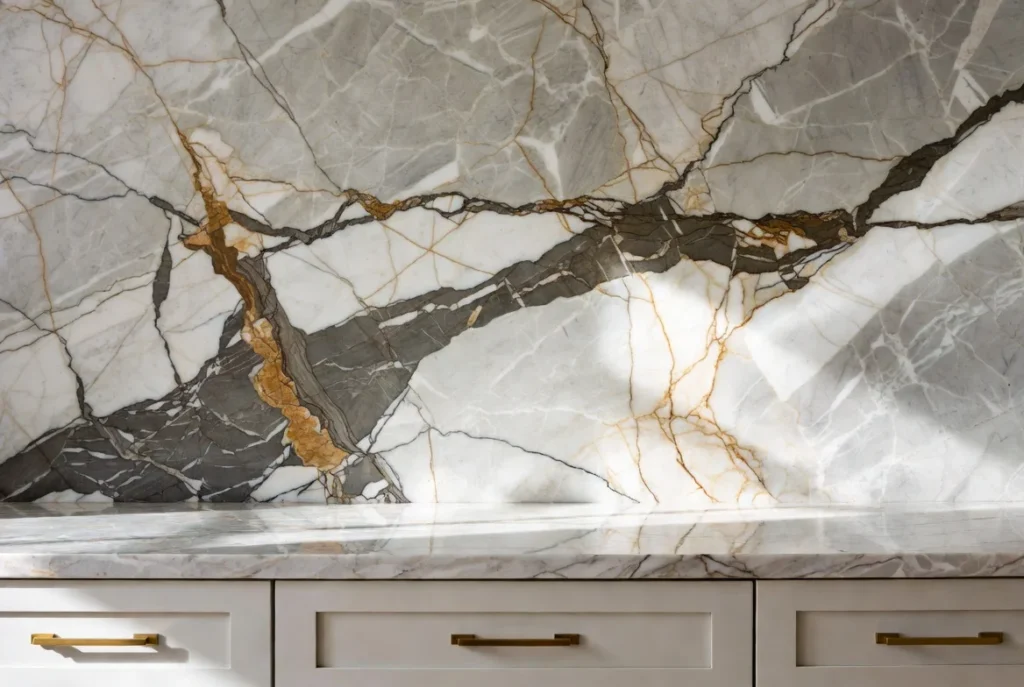
White kitchen countertops in natural or engineered marble represent the most luxurious and photographically stunning pairing available for white kitchen cabinets, with the marble’s characteristic white base and dramatic gray or warm-toned veining creating countertop surfaces of genuine material artistry that elevate the entire kitchen’s perceived quality and aesthetic ambition beyond what cabinet selection alone can achieve.
Calacatta marble with its warm gold and dramatic gray veining on bright white ground creates the most opulent white kitchen countertop pairing available, the specific combination of white cabinet and Calacatta marble creating kitchens of unmistakable luxury that appear consistently across the highest-budget residential kitchen imagery globally. The investment in genuine Calacatta marble represents premium pricing that reflects the material’s genuine geological rarity and aesthetic superiority over alternatives, with the specific warmth of Calacatta’s gold veining creating countertop surfaces of distinctive beauty that engineered stone alternatives replicate with increasing quality but never quite perfectly match in the specific way that makes stone connoisseurs consistently prefer genuine marble despite its maintenance requirements. White kitchen with dark accents using Calacatta marble with gray veining as the visual bridge between white cabinets and darker hardware or flooring creates design sophistication through material connection rather than direct color matching.
Engineered quartz in white marble-look finishes including Caesarstone Calacatta Nuvo, Silestone Eternal Calacatta, and similar formulations provide the most practically appropriate white kitchen countertops for households where genuine marble’s porosity and staining susceptibility conflict with cooking intensity and maintenance preferences. These engineered alternatives provide marble-adjacent aesthetics at competitive price points with dramatically superior practical performance, making them the most specified white kitchen renovation countertop choice in contemporary residential kitchen design across all budget tiers above entry level.
Design a Stunning White Kitchen Island
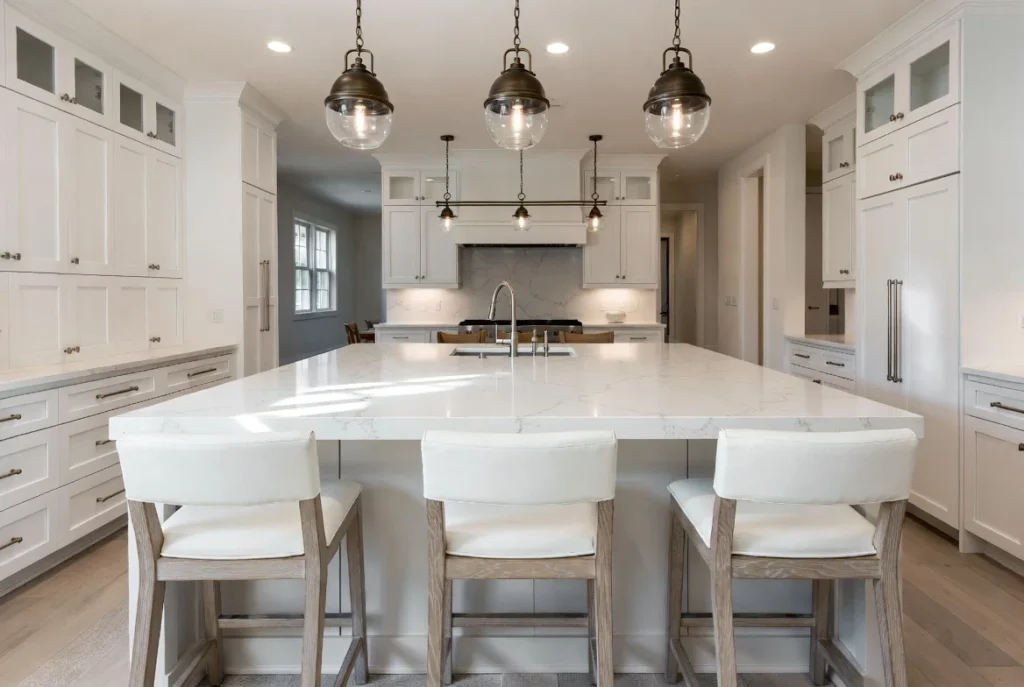
White kitchen island ideas create the kitchen’s most significant spatial and social focal point, with island design, proportion, and finish choices determining the kitchen’s overall character and functional organization more completely than any other single design element in the space.
All-white island designs using matching cabinetry and countertop materials create the seamless visual continuity that makes kitchens feel most spacious and unified, with the island’s volume reading as part of the overall kitchen composition rather than as a separate furniture piece placed within it. White and grey kitchen island designs using light gray quartz or white marble countertops on white cabinet bases create the subtle tonal variation that adds visual interest without disrupting the spatial expansion that pure white achieves throughout the kitchen. Contrasting island designs using darker cabinet colors, natural wood surfaces, or contrasting countertop materials against the surrounding white kitchen create the visual focal point and spatial organization that makes open-plan kitchen environments feel architecturally defined without physical barriers.
White kitchen island ideas with seating using counter-height overhangs on one or two sides create the social kitchen focal point that contemporary open-plan living demands, with the island serving simultaneously as food preparation surface, informal dining location, homework station, and social gathering point during cooking and entertaining occasions. The specific proportion of island seating overhang at twelve to fifteen inches for bar stool seating and twenty-four inches for knee clearance determines the comfort and practicality of the seating function that the island’s primary cooking and preparation function must accommodate without spatial conflict between these simultaneous use requirements.
Select a White Kitchen Backsplash That Shines
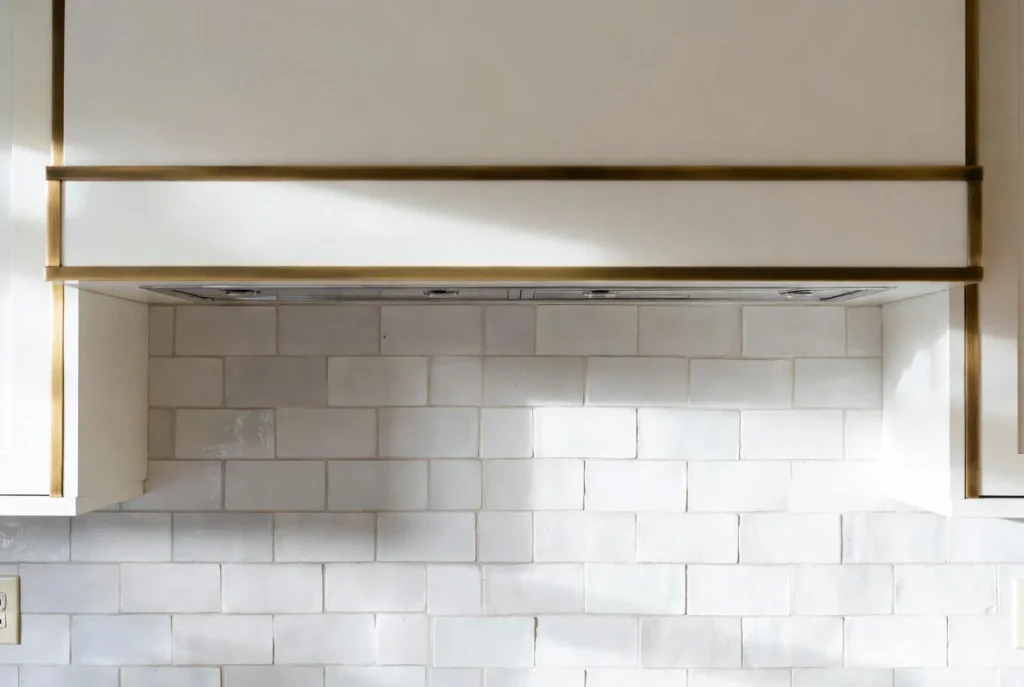
White kitchen backsplash selections create the vertical surface between countertop and upper cabinets that contributes both practical splash protection and significant aesthetic character to the kitchen’s overall design composition, with backsplash material, pattern, and grout color choices producing dramatically different results in kitchens that share identical cabinet and countertop selections.
Subway tile in bright white with narrow grout lines in matching white or pale gray creates the most classically resolved and enduringly popular white kitchen backsplash application, the simple rectangular tiles and clean grid pattern creating backsplash character of genuine restraint that suits farmhouse, transitional, and contemporary white kitchen aesthetics with equal appropriateness. The specific variation between handmade subway tile with slight dimensional variation and factory-precision subway tile with perfect uniformity creates meaningfully different aesthetic characters within the same basic format, with handmade tiles adding artisanal warmth and organic character that machine-perfect alternatives cannot replicate. White farmhouse kitchen designs consistently favor handmade or hand-glazed subway tiles in warm off-white tones that complement natural wood elements and vintage-inspired hardware in the material authenticity most associated with farmhouse kitchen design tradition.
Large format white marble or porcelain slabs used as white kitchen backsplash surfaces create the most contemporary and architecturally sophisticated backsplash treatment, with slabs reaching from countertop to upper cabinet bottom or extending to ceiling height eliminating the grout line interruptions of tiled alternatives and creating seamless vertical surface continuity of extraordinary visual elegance. This slab backsplash approach suits luxury white kitchen and modern white kitchen design directions where the clean uninterrupted surface quality of slab materials complements the precise geometric character of contemporary cabinet design with the architectural consistency that tiled alternatives cannot match.
Add Warmth with Wood Accents and Natural Materials
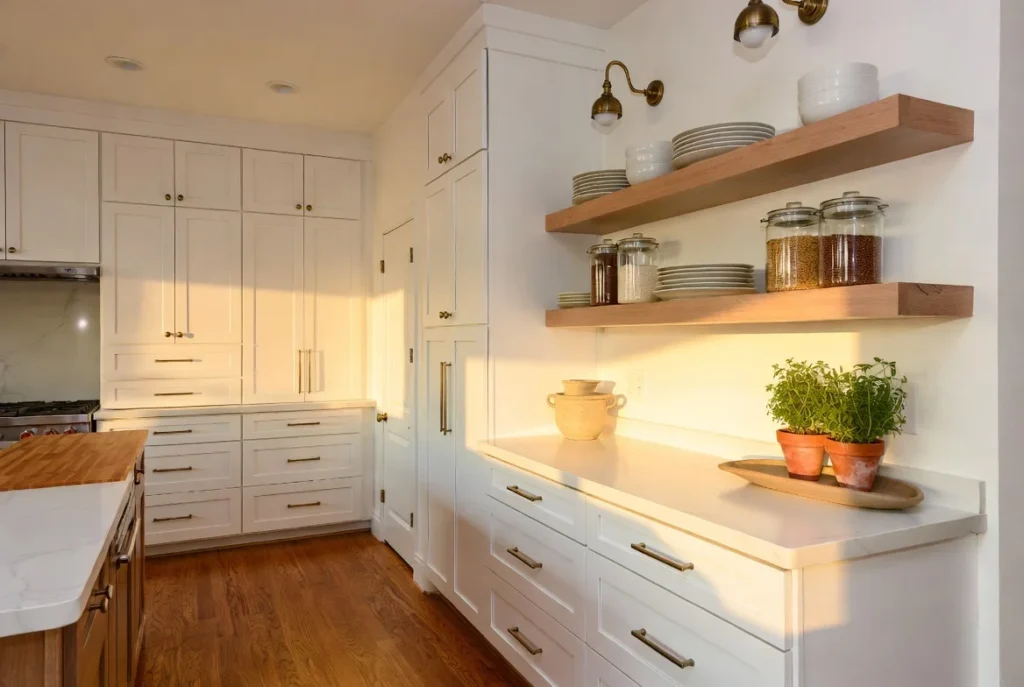
White kitchen with wood accents design represents the most successful contemporary resolution of the historical tension between white kitchen brightness and the organic warmth that many homeowners find necessary for kitchens to feel genuinely inviting rather than clinically sterile in daily use.
Floating open shelves in natural white oak or warm walnut positioned above lower white cabinets or in lieu of upper cabinet sections create the most immediately impactful and versatile wood accent addition available in white kitchen ideas, with the combination of white cabinet foundation and natural wood shelving creating the specific warm brightness that defines the Scandinavian-influenced organic modern kitchen aesthetic currently at peak design prominence globally. White Scandinavian kitchen design uses this white-cabinet-and-wood-shelf combination as its defining organizational principle, with the open shelves creating both display and accessible storage for daily-use items while the white cabinet base provides the concealed storage that makes kitchens genuinely functional for organized cooking households. The styling opportunity of open shelving, displaying beautiful ceramics, organized glassware, potted herbs, and curated kitchen objects on warm wood shelf surfaces, creates the personalized kitchen character that closed cabinet environments cannot achieve regardless of their hardware or finish quality.
Butcher block countertop sections on kitchen islands paired with stone or engineered quartz on perimeter countertops create the material variety of white kitchen with wood accents at the countertop level, with the warm organic wood island surface contrasting beautifully against surrounding white cabinetry while providing the specific cutting surface functionality that butcher block excels in delivering. White kitchen renovation projects using this mixed countertop approach achieve the sophisticated material layering of high-budget kitchen designs through strategic rather than comprehensive material investment, concentrating premium natural materials in the visually prominent island position while using more economical alternatives on the less visible perimeter countertop runs.
Choose the Perfect White Kitchen Hardware
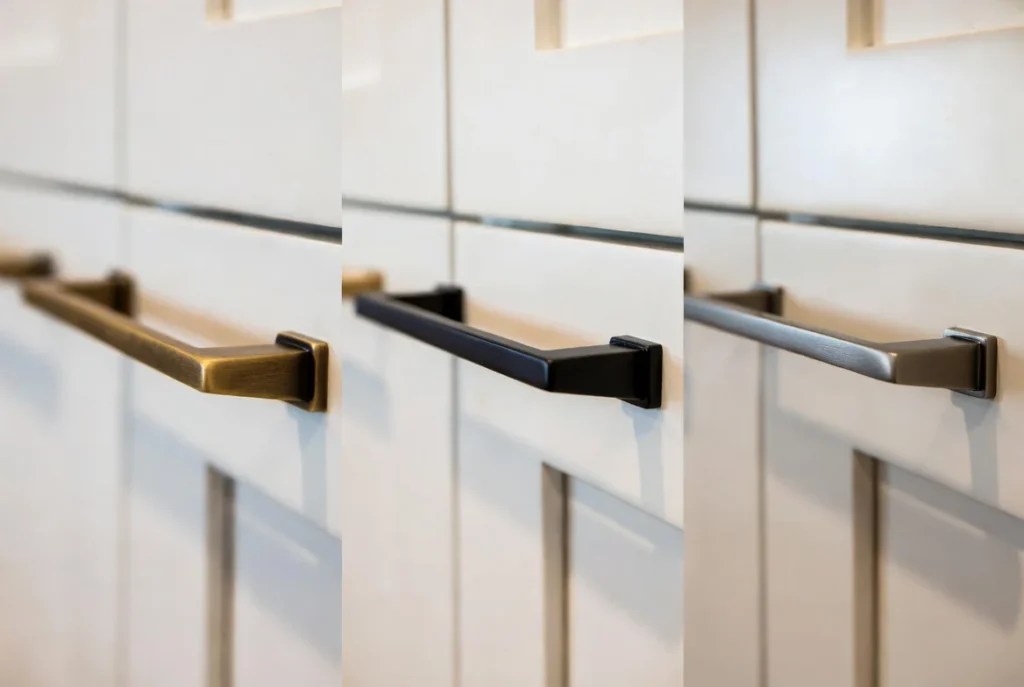
White kitchen hardware selections determine the metallic accent language that unifies the white kitchen’s individual elements into a coherent design composition, with hardware finish creating the visual connective tissue between cabinet, countertop, backsplash, lighting, and appliance finishes throughout the kitchen environment.
Brushed brass hardware on white kitchen cabinets creates the warm and sophisticated kitchen aesthetic most strongly associated with contemporary transitional and organic modern kitchen design, the brass warmth complementing white cabinet surfaces and natural wood accents in material harmony of considerable elegance. The specific warmth of brushed rather than polished brass creates a more relaxed and contemporary aesthetic than the high-gloss traditional brass that characterized earlier decades of kitchen design, making brushed brass simultaneously warm and thoroughly modern in its design associations. White farmhouse kitchen hardware using unlacquered brass that develops natural patina over time creates the most authentically aged and organically beautiful hardware character available, with the natural aging process producing a unique and irreplaceable quality that factory-finished alternatives cannot replicate.
Matte black hardware on white kitchen cabinets creates the most dramatically graphic and contemporary contrast available in white kitchen ideas, the stark opposition between bright white cabinet surfaces and deep black hardware creates visual impact of immediate graphic force that suits bold contemporary and transitional kitchen designs. White kitchen with dark accents using matte black hardware in cabinet pulls, faucet, light fixtures, and window frames creates a unified dark accent language that provides visual structure throughout the white kitchen environment through consistent finish repetition rather than the decorative variety that mixed metal approaches introduce. This unified dark accent approach is particularly effective in modern white kitchen design where the graphic precision of black-and-white composition suits the clean architectural clarity of contemporary kitchen aesthetics.
Maximize Light with Strategic Kitchen Lighting
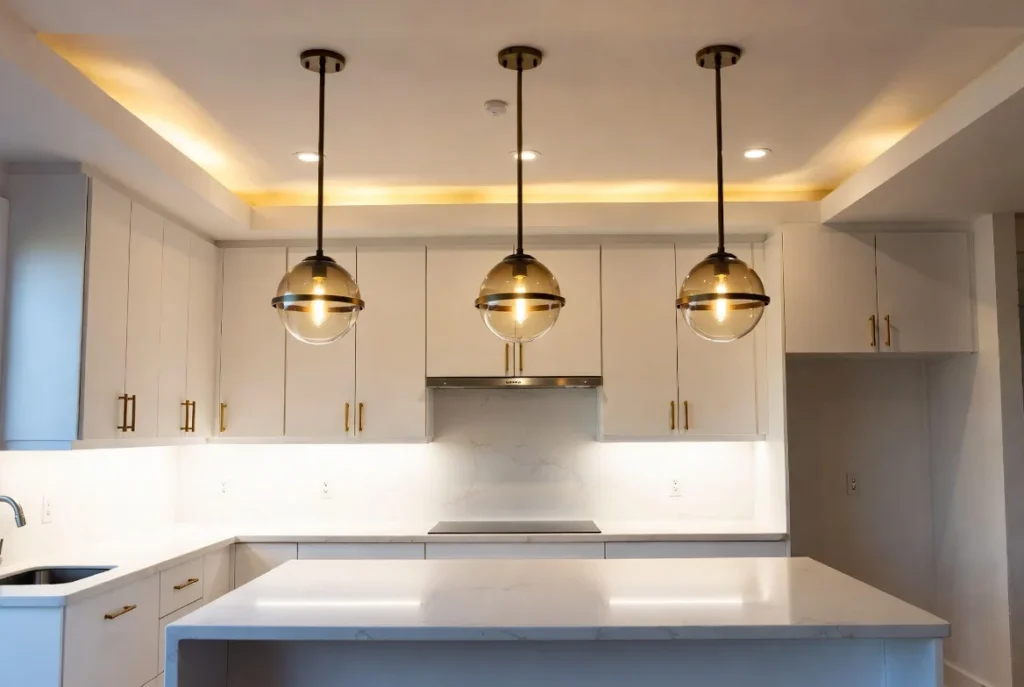
White kitchen lighting design amplifies the specific light-reflecting qualities that make white kitchens so appealing by ensuring adequate illumination reaches every surface whose reflectivity contributes to the kitchen’s characteristic brightness, with inadequate lighting making white kitchens feel dim and uninspired while appropriate layered illumination creates environments of extraordinary luminosity and genuine visual pleasure.
Under-cabinet LED lighting directed onto countertop work surfaces creates the most practically essential illumination improvement available in white kitchen ideas, with the specific warm light directed onto white countertop surfaces creating task illumination of excellent quality while simultaneously highlighting the countertop material’s color and texture in ways that overhead lighting from ceiling fixtures cannot approach from its oblique downward angle. Bright white kitchen environments using warm white under-cabinet lighting in 2700 to 3000 Kelvin color temperature create the warm-bright combination most associated with premium kitchen photography, with the warm light color enhancing the specific warmth of white kitchen materials rather than the cool white tones that clinical 4000 Kelvin sources impose on the same surfaces. The visual effect of well-lit countertops in a white kitchen design extends beyond the work surface itself to the reflected light bouncing from the countertop surface upward onto the undersides of upper cabinets and the backsplash surface, creating ambient light contribution from the countertop zone that multiplies throughout the kitchen environment.
Pendant lights above kitchen islands in white kitchen ideas provide both practical task illumination for island activities and significant decorative focal point contribution to the kitchen’s overall visual composition, with pendant light selection offering one of the most design-expressive opportunities in otherwise restrained all white kitchen environments. Pendant forms including industrial wire cage, contemporary globe, artisanal ceramic, and sculptural metal each create distinct aesthetic characters appropriate to different overall white kitchen design directions, with the pendant’s visibility from multiple viewing angles and positions within the kitchen making it the most influential single decorative element in kitchen environments that use it.
Design a Farmhouse White Kitchen with Character
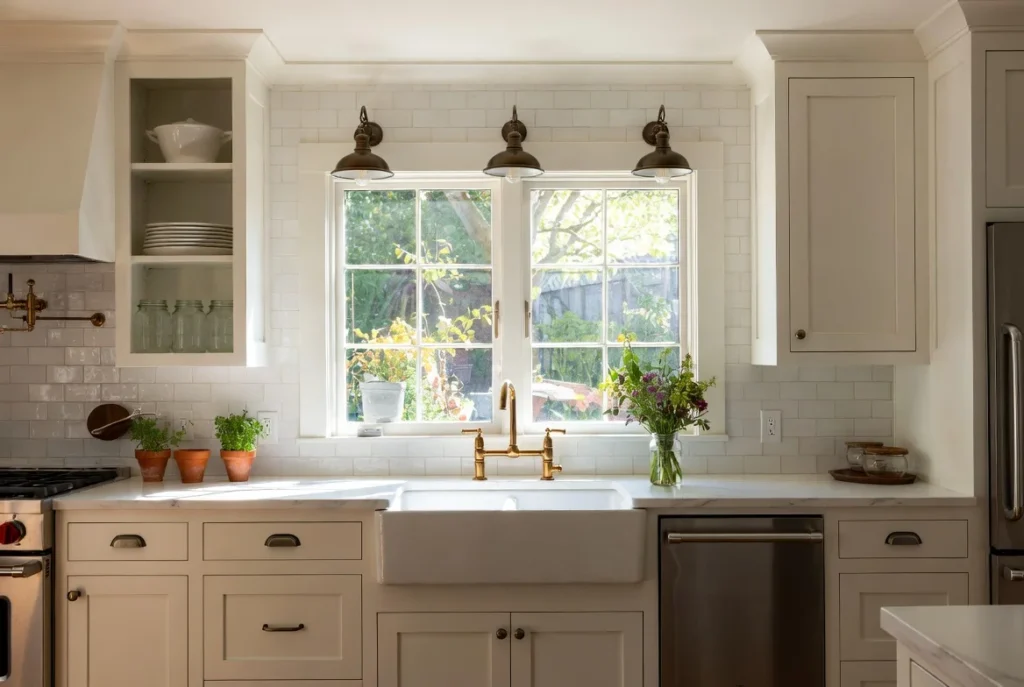
White farmhouse kitchen design creates the most warmly inviting and authentically character-rich interpretation of the white kitchen ideal, combining the brightness and spaciousness that white delivers universally with the specific organic materials, handcrafted details, and layered warmth that define farmhouse domestic aesthetics at their most genuinely beautiful.
The apron front or farmhouse sink in white fireclay or porcelain represents the single most immediately recognizable farmhouse kitchen element, with its characteristic exposed front apron and generous basin depth referencing centuries of domestic utility sink design in the specific form that modern farmhouse kitchen renovations almost universally incorporate as the primary plumbing fixture. White farmhouse kitchen design uses the apron sink as its aesthetic anchor, organizing surrounding design decisions including cabinet profile selection, hardware finish, faucet style, and open shelving placement around the sink’s established farmhouse character. Bridge faucets in vintage-inspired two-handle configurations in unlacquered brass, matte black, or brushed nickel create the period-appropriate faucet forms that complete the farmhouse sink installation with full historical authenticity.
Open shelving in white farmhouse kitchen designs displays the specific collection of beautiful practical objects that farmhouse kitchen tradition celebrates, with stacked white ceramic dishes, clear mason jar storage for dry goods, fresh herb pots in terracotta, and woven basket storage creating the specifically curated practical display that distinguishes farmhouse open shelving from simple kitchen storage through the careful selection of display-worthy objects that make daily kitchen objects genuinely beautiful in their organization. White kitchen decor in farmhouse interpretation emphasizes the beauty of utility, displaying cooking tools, storage vessels, and practical objects as decorative elements through their material quality and organizational thoughtfulness rather than concealing them as conventional kitchen storage philosophy traditionally demands.
Create a Modern Minimalist White Kitchen
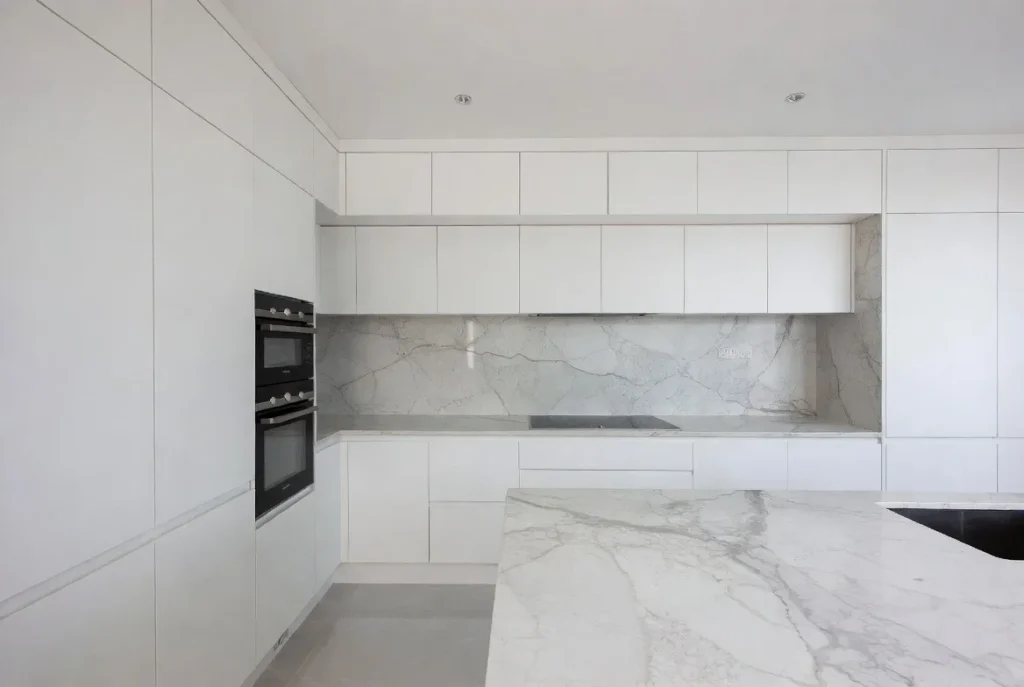
Minimalist white kitchen design applies the most rigorous design discipline to the white kitchen ideal, creating kitchen environments of extraordinary visual calm and architectural clarity through the elimination of all decorative excess and the precise organization of every functional element into compositions of geometric precision that suit contemporary architectural contexts demanding design integrity at the highest level.
Handle-less cabinet designs in minimalist white kitchen applications eliminate the visual interruption of hardware from the cabinet door surface, creating continuous uninterrupted white cabinet planes of maximum visual simplicity that reduce the kitchen’s visual complexity to the most essential geometric elements of door, drawer, and horizontal surface lines. Push-to-open mechanisms, integrated finger-pull channels recessed into door edges, and J-pull integrated profiles each provide access mechanisms that maintain the clean surface continuity of handleless cabinet design while providing the functional opening assistance that traditional hardware delivers through visible projecting pulls and knobs. Modern white kitchen designs using handleless cabinets with matching white appliance integration behind matching cabinet fronts create the most completely resolved minimalist kitchen environments, with refrigerator, dishwasher, and oven hidden behind continuous cabinet plane surfaces that read as unified architectural composition rather than appliance collection.
White kitchen layout ideas for minimalist applications prioritize clean sight lines and visual calm through deliberate furniture and equipment arrangement that minimizes the clutter potential inherent in busy cooking environments. Integrated appliances, concealed storage maximizing closed cabinet proportion over open display, and careful countertop discipline that limits permanent objects to essential cooking tools create the specific visual serenity that distinguishes genuinely minimalist kitchen design from simply underfurnished spaces whose visual calm reflects absence rather than design intention.
Layer White Kitchen Textures for Visual Depth
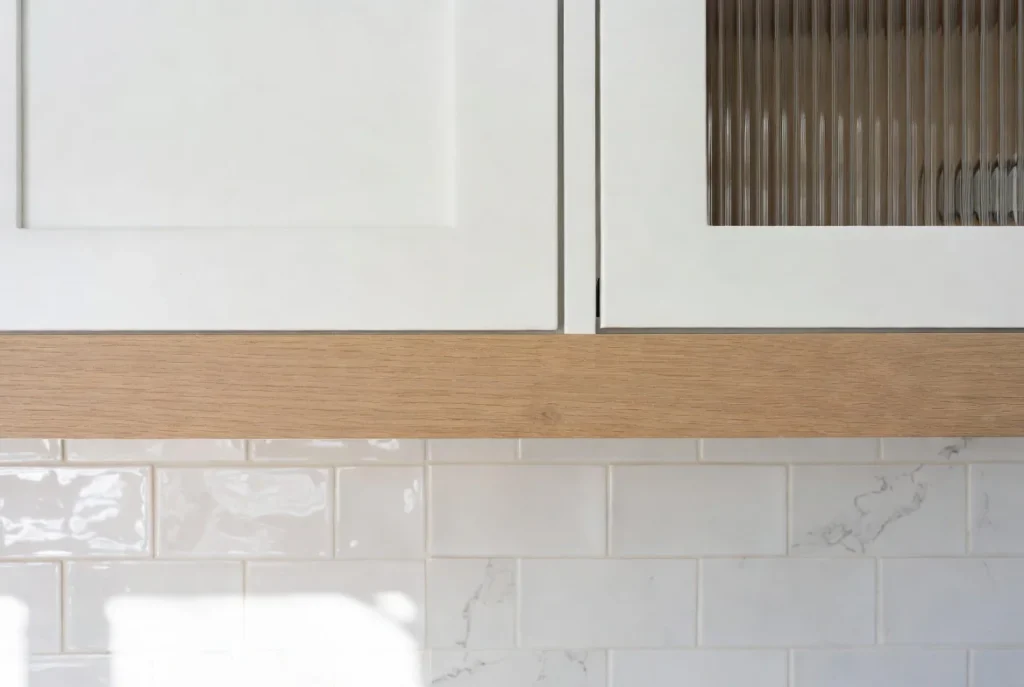
The greatest design risk in all white kitchen environments is the potential for visual monotony that results from the uniformity of a single color applied across multiple surfaces without adequate variation in material texture, reflectivity, and dimensional quality to create the visual interest and depth that makes spaces feel deliberately designed rather than uniformly pale.
White kitchen design that successfully avoids this monotony introduces texture variation throughout the kitchen’s material composition, pairing the smooth painted finish of cabinet doors against the slight dimensional variation of subway tile backsplash against the crystalline depth of quartz countertop against the warm grain texture of wood shelving accents in material layering that creates visual richness within the unified white palette through surface quality variation rather than color variation. The specific reflectivity differences between matte painted cabinet surfaces, semi-gloss or high-gloss paint, polished stone countertops, and ceramic tile backsplash create the light interaction variety that gives white kitchen environments their characteristic depth and spatial interest in different lighting conditions throughout the day. White kitchen decor using varied texture accessories including woven basket storage, ceramic canister collections, linen window treatments, and warm metallic accents continues this texture-within-white strategy through the accessory layer that provides the finishing material richness completing the kitchen’s design composition.
Fluted glass cabinet inserts in selected upper cabinet doors create dimensional surface interest within the white cabinet plane, the ribbed glass profile creating shadow lines and light diffusion that solid door alternatives eliminate while the glass front creates partial display capacity for the cabinet interior without the complete exposure of open shelving. White kitchen cabinets using fluted glass on a selection of upper doors while maintaining solid doors on surrounding cabinets creates selective transparency and textural variation that breaks the potential monotony of all-solid white cabinet walls without the organizational demands of comprehensive open shelving applications.
Incorporate White Kitchen Open Shelving
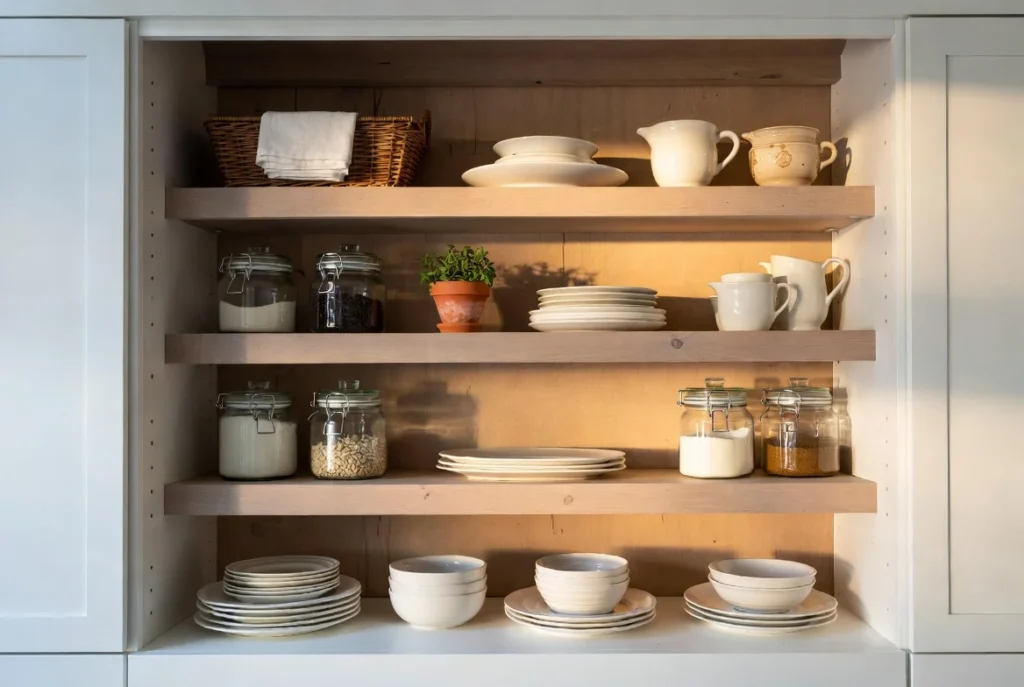
White kitchen open shelving balances the display-oriented organizational philosophy that farmhouse and organic modern kitchen aesthetics favor with the practical storage requirements that cooking households genuinely need, creating the specific combination of accessible convenient storage and beautiful personal expression that closed cabinets cannot achieve regardless of their hardware quality or finish excellence.
White kitchen with wood accents using floating shelves as the primary upper storage strategy in place of conventional upper cabinets creates the most dramatically spatial and visually open kitchen environment available in residential design, with the elimination of upper cabinet mass creating the impression of significantly more ceiling height and spatial generosity than the same kitchen with conventional upper cabinet installation. The specific visual benefit of floating shelves over upper cabinets in small white kitchen ideas is substantial, with the open wall above the countertop zone reading as architectural space rather than cabinet volume and creating the tall-ceilinged quality that makes kitchens feel generous regardless of their actual ceiling heights. This visual ceiling-raising effect of floating shelf installation makes open shelving the most impactful structural visual change available in compact kitchen environments where ceiling height limitation is the primary spatial constraint.
The styling discipline required by open shelving represents both its primary design opportunity and its significant practical commitment, with the permanent visibility of everything stored on open shelves demanding either beautiful practical items worthy of display or regular thoughtful curation that maintains the styled appearance that makes open shelving genuinely attractive in kitchen environments. White kitchen open shelving succeeds most beautifully when the styled items including white ceramic dish collections, clear glass storage jars filled with dry goods, woven baskets for produce storage, and small potted herbs create the specifically practical-yet-beautiful display that domestic open shelving design has celebrated since the farmhouse kitchen tradition established the aesthetic framework most contemporary open shelving reference.
Select the Best White Kitchen Flooring
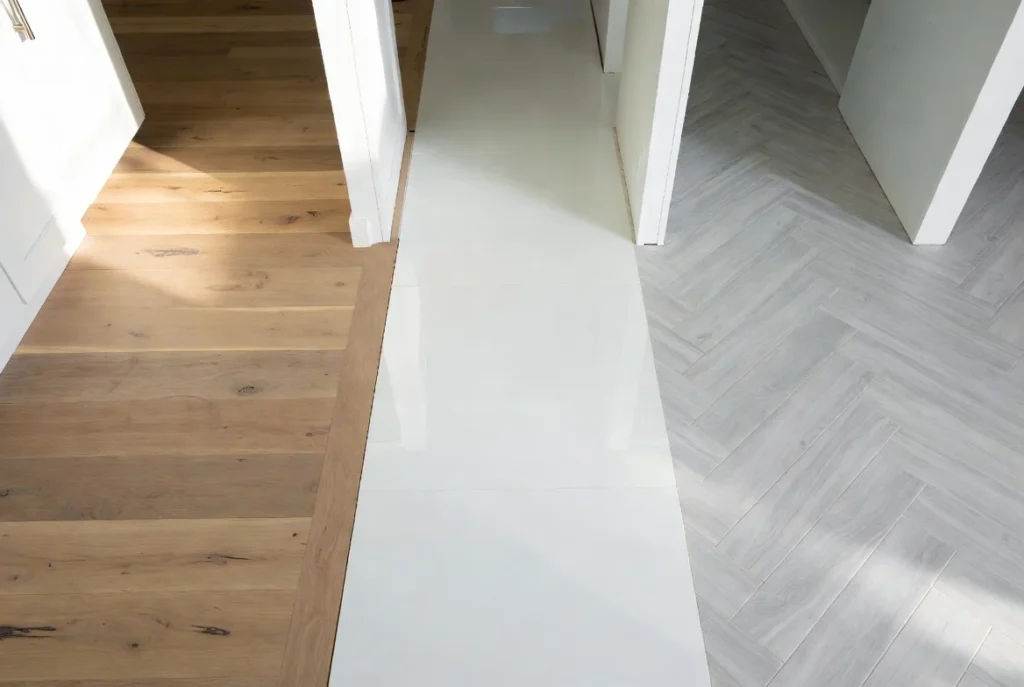
White kitchen flooring ideas must balance the aesthetic cohesion of light flooring that extends the white kitchen’s spatial expansion throughout the floor plane with the practical requirements of kitchen environments where food, liquid, and traffic create the most demanding cleaning and durability conditions applied to any residential flooring surface.
White oak hardwood flooring in natural or very lightly stained finish creates the warmest and most materially authentic floor surface available for white kitchen design, with the wood grain and natural color variation providing the organic warmth that pure white tile flooring cannot achieve while the light natural wood tone maintains the brightness that extends the white kitchen’s spatial quality throughout the floor surface. White kitchen with wood accents design contexts particularly benefit from white oak or natural wood flooring that creates floor-level continuity with the wood accent elements at counter and shelf height, creating a cohesive natural material story throughout the kitchen’s complete surface palette. Engineered hardwood in white oak or natural wood tones provides the practical advantage of dimensional stability in kitchen environments where moisture from cooking and cleaning creates the humidity variation that solid hardwood responds to with seasonal expansion and contraction.
Large format white or light gray porcelain tile in 24-by-24-inch or larger formats creates the most spatially expansive kitchen floor surface available in white kitchen ideas applications, with the minimal grout lines of large format tiles creating near-continuous white or light stone floor planes of extraordinary visual generosity that make kitchen floor areas appear significantly larger than smaller format tile installations with proportionally more grout line interruption across equivalent floor areas. Polished white porcelain floor tiles create the most reflective and luminous floor surface in bright white kitchen environments, with the polished tile surface reflecting overhead and natural light upward into the kitchen space and creating the bright-from-below quality that amplifies the overall kitchen luminosity beyond what matte surfaces of identical color would produce.
Design a Small White Kitchen That Feels Spacious
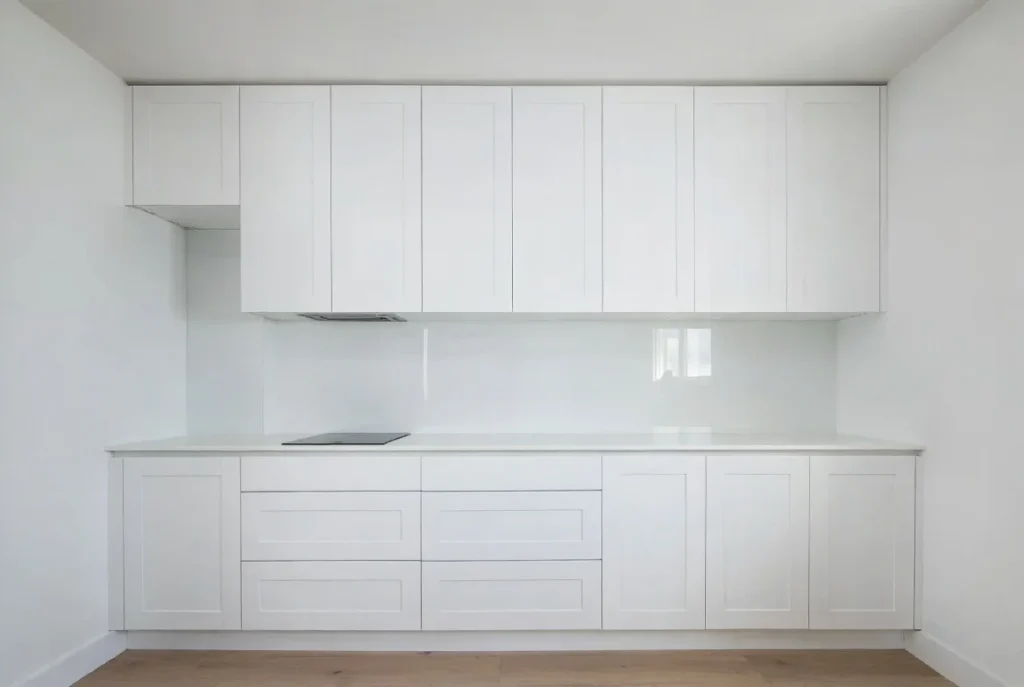
Small white kitchen ideas face the specific challenge of delivering full kitchen functionality within dimensional constraints that demand every design decision be evaluated for its spatial cost alongside its functional contribution, creating the most concentrated application of the spatial intelligence principles that white kitchen design exploits throughout its broader application range.
White painted cabinets in small kitchen environments create the most powerful individual spatial expansion contribution available, with the white surface color’s maximum light reflectivity creating the illusion of greater square footage than darker cabinet colors of equivalent actual dimensions through the specific mechanism of light reflection making walls appear further away from each other than they actually are. Small white kitchen ideas amplify this effect by eliminating transitions between wall color and cabinet color through matching paint selections that create visual continuity between cabinet face and surrounding wall surface, making the cabinet installation read as part of the wall architecture rather than as furniture placed against it. This cabinet-wall color continuity eliminates the visual boundary that contrasting wall and cabinet colors create, reducing the number of distinct surfaces the eye must process and thereby reducing the visual complexity that makes small rooms feel smaller than their actual dimensions.
Mirrored or glass tile backsplash installations in small white kitchen ideas create the light-multiplying and depth-creating effects of mirror surfaces applied to the kitchen’s most visible vertical surface between countertop and upper cabinet, with the reflected light and apparent depth behind the glass surface creating the impression of kitchen extension beyond the actual wall boundaries. White kitchen renovation projects in small kitchen contexts should prioritize this backsplash mirror or glass tile strategy as one of the highest-impact spatial expansion investments available at relatively accessible cost within the full kitchen renovation budget.
Add Personality with White Kitchen Decor Accents
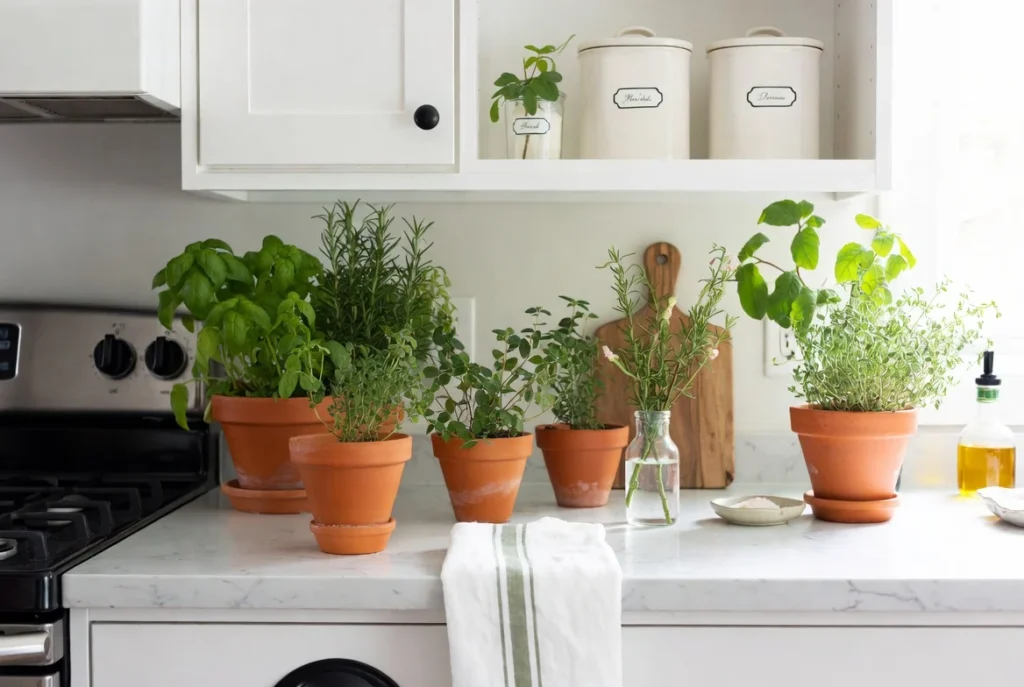
White kitchen decor styling creates the personalized character and living warmth that distinguishes beautifully inhabited white kitchens from clinical showroom environments through the thoughtful selection and arrangement of plants, ceramics, artwork, textiles, and the specific objects that communicate the personality and aesthetic sensibility of the household occupying the space.
Fresh herbs in terracotta pots positioned on countertops, windowsills, or open shelving bring organic life and practical value to white kitchen ideas simultaneously, with the green botanical color providing the natural accent most harmonious with white kitchen materials and the herbs themselves contributing the fresh fragrance and cooking convenience that no purely decorative plant provides. The specific combination of white kitchen environment with living green plant accents creates the organic bright freshness most strongly associated with kitchen environments that feel genuinely alive and personally invested rather than staged and impersonal. White kitchen decor using botanical accents extends beyond potted herbs to fresh flower arrangements in clear glass or white ceramic vases, cut branches in tall vessels, and the seasonal botanical changes that keep kitchen styling feeling current and personally maintained throughout the calendar year.
Ceramic accessories in complementary warm or neutral tones including handmade pottery mugs displayed on open shelves, artisanal canister sets for dry goods storage, and decorative ceramic objects on counter surfaces create the specific handcrafted warmth and material authenticity that distinguishes white kitchen decor with genuine design personality from the generic styling of unoccupied kitchen photography. The collection quality of displayed ceramics, objects accumulated through personal selection over time rather than purchased as coordinated sets, creates the lived-in authenticity that makes white kitchens feel genuinely beautiful rather than simply pale and available for styling with whatever is photographically convenient.
Integrate Appliances Seamlessly in White Kitchens
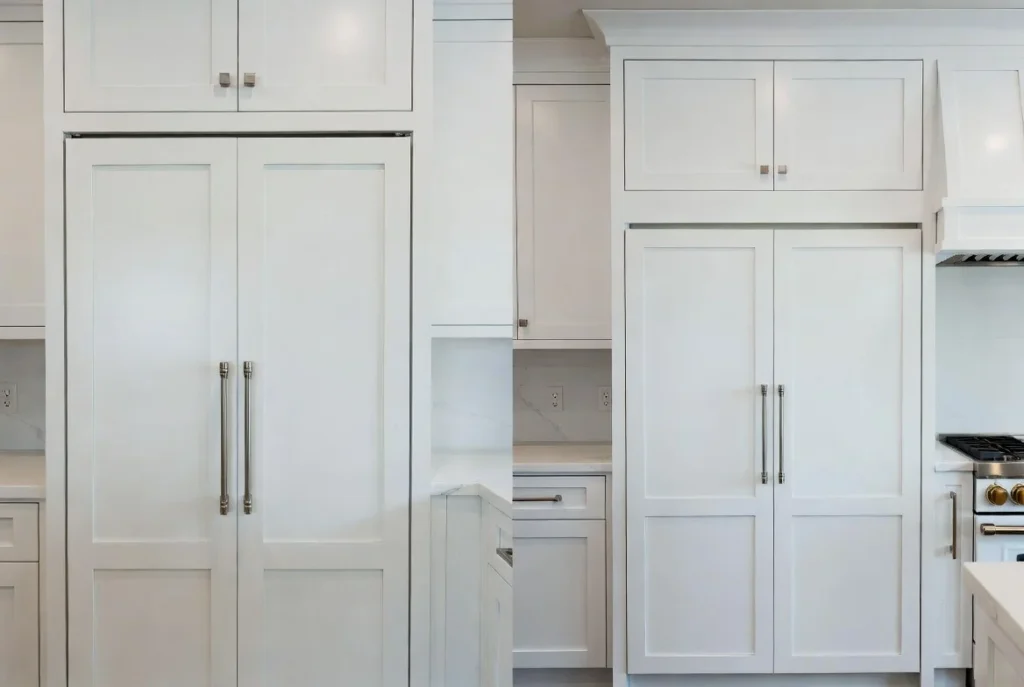
White kitchen appliances and appliance integration strategies determine whether the kitchen’s functional equipment contributes to or disrupts the visual coherence of the white kitchen’s aesthetic composition, with appliance finish and integration approach creating significantly different visual outcomes in kitchens that share identical cabinet and countertop selections.
Integrated appliances concealed behind matching cabinet door fronts create the most completely resolved minimalist white kitchen aesthetic, with refrigerator, dishwasher, and microwave hidden behind cabinet panel fronts that match surrounding cabinetry in profile, finish, and hardware, making the kitchen’s appliance inventory invisible in the unified cabinet wall composition. This integration level requires specific appliance models designed to accommodate panel overlay fronts and requires the coordination between cabinet maker and appliance specifications that custom kitchen design facilitates more readily than stock cabinet programs. White kitchen renovation budgets that accommodate integrated appliance specification typically prioritize dishwasher and refrigerator panel overlay as the highest-visibility integration investments, with these two appliances positioned in the most prominent kitchen sight lines where their integration creates the greatest visual coherence contribution.
White kitchen appliances in matching bright white finish create the most complete color coherence in all white kitchen designs, with refrigerators, range hoods, and dishwashers in white finish contributing to rather than disrupting the kitchen’s white compositional unity. Modern white kitchen designs using stainless steel appliances create the most common contemporary kitchen material combination, the silver metallic tone of stainless providing sufficient visual neutrality to suit white kitchen environments without the warm metallic character of brass or the dark graphic impact of black appliance finishes, making stainless the most universally compatible appliance finish for white kitchen ideas across the broadest range of design directions.
Conclusion
Creating a white kitchen that genuinely delivers on the promise of brightness, spaciousness, and enduring stylishness requires understanding that white is not a single design choice but a design framework within which dozens of specific decisions about shade, texture, material pairing, hardware, lighting, and personal styling create outcomes ranging from extraordinarily beautiful to disappointingly bland. The 16 white kitchen ideas explored throughout this guide collectively demonstrate that the most successful white kitchens share not a single aesthetic direction but a consistent commitment to design intelligence in every specific choice made within the white framework, from the specific undertone of the cabinet paint through the texture layering of countertop against backsplash against shelf material through the hardware finish that unifies the metallic elements into coherent accent language.
The most valuable practical insight from this comprehensive exploration of white kitchen design is that white’s specific power of light multiplication, spatial expansion, and visual clarity is amplified by every design decision that adds material richness, textural variety, and personal character within the white palette rather than defaulted into a generic pale kitchen through the absence of these specific qualities. The wood accents that add warmth, the marble that adds luxury, the open shelving that adds personality, and the carefully chosen hardware that adds metallic sophistication each contribute to white kitchen environments of genuine beauty precisely by working with white’s specific qualities rather than either against them or alongside them without compositional relationship.
Begin your white kitchen renovation or refreshment by identifying which of these 16 ideas most directly addresses the specific quality you most want your kitchen to achieve, whether that is maximum spatial brightness from a comprehensive white cabinet application, organic warmth from wood accents on floating shelves, farmhouse character from an apron sink and vintage-inspired hardware, or modern minimalism from handleless cabinets and integrated appliances, and build your complete kitchen vision from that foundational clarity of design direction.
Frequently Asked Questions
Are white kitchens still in style?
White kitchen design has maintained its position as the most consistently popular kitchen aesthetic choice across fifty years of changing design trends precisely because it delivers genuinely superior functional performance in light reflection, spatial expansion, and visual cleanliness rather than depending on trend relevance for its appeal. Contemporary white kitchen ideas incorporating natural wood accents, organic materials, and warm hardware finishes represent the evolution of white kitchen aesthetics into thoroughly current design language rather than a dated or static aesthetic.
How do I keep white kitchen cabinets clean?
White kitchen cabinets in painted wood or thermofoil finishes clean most effectively with mild dish soap diluted in warm water applied with a soft microfiber cloth, with immediate attention to grease splatter and food contact preventing the staining that delayed cleaning allows. Avoid abrasive cleaners that scratch painted surfaces and oil-based soaps that leave residue buildup. Semigloss or satin paint finishes clean more easily than flat or matte formulations and are recommended for cabinet applications specifically because of their superior cleanability.
What countertop looks best with white cabinets?
White kitchen countertops in Calacatta marble or high-quality marble-look engineered quartz create the most luxurious pairing with white cabinets through their dramatic veining and material quality. Butcher block adds organic warmth for farmhouse and natural kitchen directions. Quartz in concrete or warm gray tones creates contemporary sophistication. The most important countertop selection criterion is choosing a material whose color temperature, warm or cool, matches the undertone of the specific white cabinet finish to create tonal harmony rather than temperature contrast.
What hardware works best with white kitchen cabinets?
White kitchen hardware in brushed brass creates the warmest and most currently popular pairing for transitional and organic modern designs. Matte black hardware creates the boldest graphic contemporary contrast. Brushed nickel provides the most neutral and broadly compatible metallic option. Unlacquered brass develops beautiful patina over time for farmhouse and traditional applications. The most important hardware selection principle is choosing a single finish and applying it consistently across all kitchen hardware including pulls, knobs, faucet, and light fixtures for visual coherence.
How do I add color to a white kitchen without repainting?
White kitchen decor introduces color through living plants in varied green tones, fresh flower arrangements in seasonal colors, ceramic accessories in complementary warm or accent tones, colorful kitchen textiles including dish towels and window treatments, and curated open shelf displays incorporating colored objects within the overall white framework. A single consistently repeated accent color in three to five locations creates more design sophistication than multiple competing accent colors, with warm terracotta, deep sage green, warm navy, and natural earth tones each creating distinct character within all white kitchen environments without requiring any painted surface changes.
You May Also Like This Post:
15 Easy Ways to Make a Small Bedroom Look Bigger and More Stylish
One Comment