
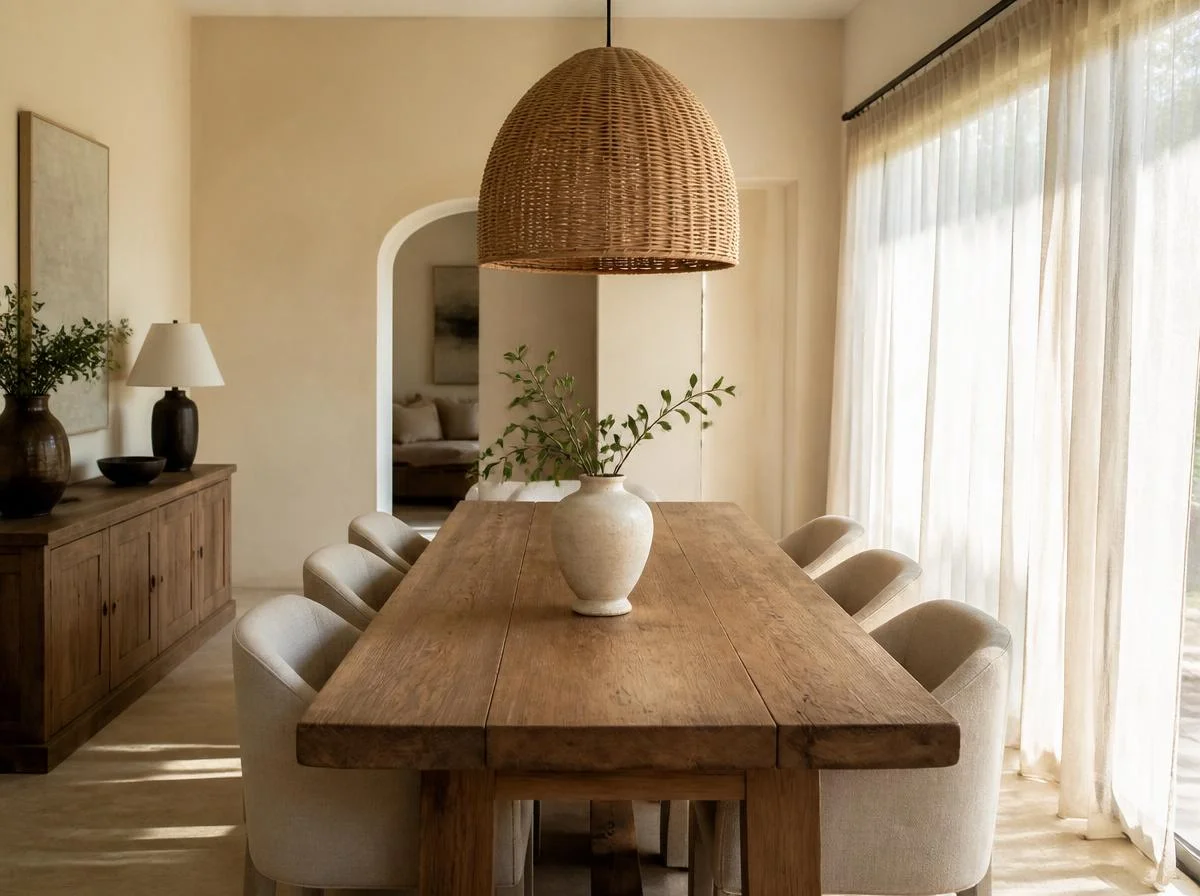
18 Minimalist Dining Room Ideas That Feel Calm, Stylish, and Inviting
There is a particular quality that the best dining rooms share, something that has nothing to do with how much money was spent or how many pieces fill the space. It is the quality of calm. You walk in, you sit down, and something in the room makes you want to stay. The conversation gets easier. The meal tastes better. The hour passes without anyone noticing.
That quality is almost always the result of restraint rather than abundance. A minimalist dining room is not a room with less personality. It is a room where every decision has been made deliberately, where each piece earns its presence, and where the empty space is treated as a design element rather than a failure to decorate. In an era of open plan living, constant visual noise, and overstimulated homes, the calm dining space is not a trend. It is an act of genuine intention.
This guide covers 18 minimalist dining room ideas that show exactly how restraint, material warmth, and considered lighting can create a dining space that feels welcoming rather than stark, and beautiful rather than bare.
A Solid Wood Dining Table as the Room’s Quiet Anchor
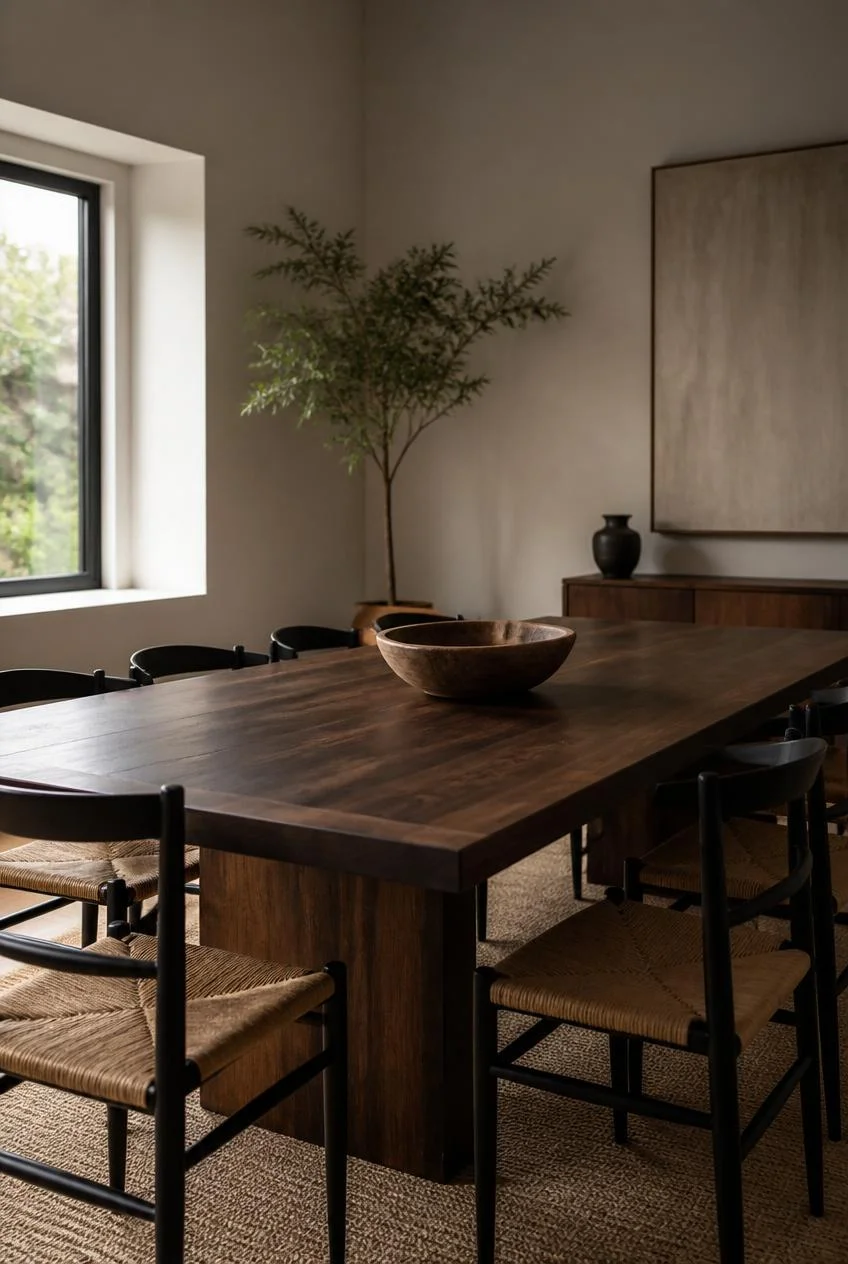
Every minimalist dining room needs one piece that carries the weight of the space, and a solid wood dining table does that job better than almost any other choice. The natural grain of real wood, whether walnut, oak, or ash, provides visual depth and warmth that manufactured materials consistently fail to replicate. A long, simple plank table with clean legs and no decorative detailing sits quietly in a room while still commanding it entirely.
The material honesty of solid wood suits the minimalist design philosophy perfectly. Nothing is hidden or applied. The grain pattern, the slight color variation across the surface, and the way the finish catches light at different hours all come from the wood itself rather than from anything added to it.
Choosing the Right Finish
A matte or low sheen oil finish allows the natural texture of the wood to remain visible and tactile, which suits a warm minimalist interior far better than a high gloss lacquer that reflects everything and feels more like a surface than a material.
Linen Upholstered Dining Chairs for Softness and Texture
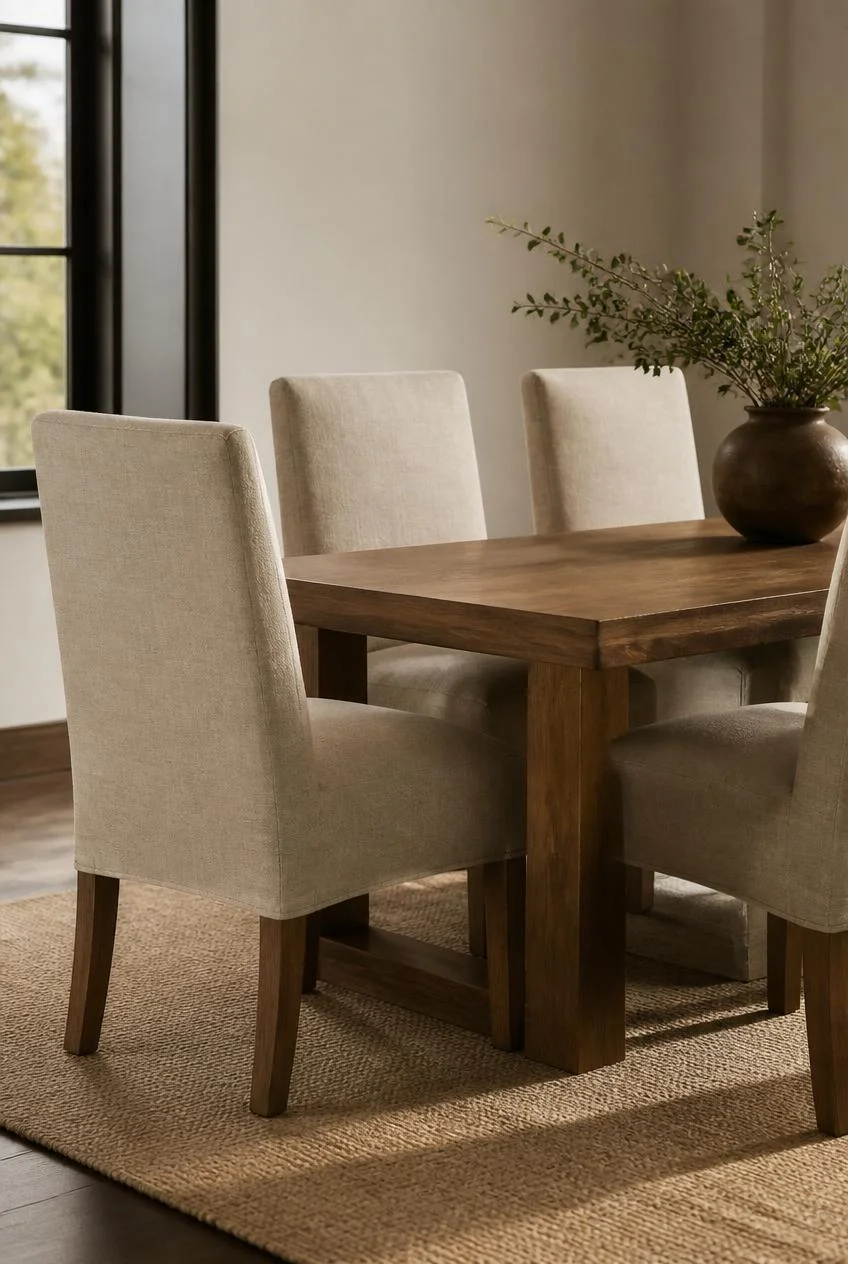
The most common mistake in a minimalist dining room is choosing chairs that are too hard, too cold, or too visually heavy for the space they occupy. Linen upholstered dining chairs in a warm cream, oatmeal, or natural tone introduce softness and tactile texture that wooden or metal chairs alone cannot provide, making the room feel genuinely inviting rather than simply tidy.
Linen is particularly well suited to this context because it wrinkles naturally, which gives the fabric a relaxed, lived in quality that perfectly complements the clean lines of minimalist furniture. It does not try to look perfect, which is exactly the quality that makes a calm dining space feel like a home rather than a showroom.
Care Consideration
Linen upholstery is best chosen in a slightly darker natural tone rather than pure white, since it develops character with regular use rather than simply looking soiled, and that shift in tone over time becomes part of the room’s story.
A Statement Pendant Light That Does the Work of Decoration
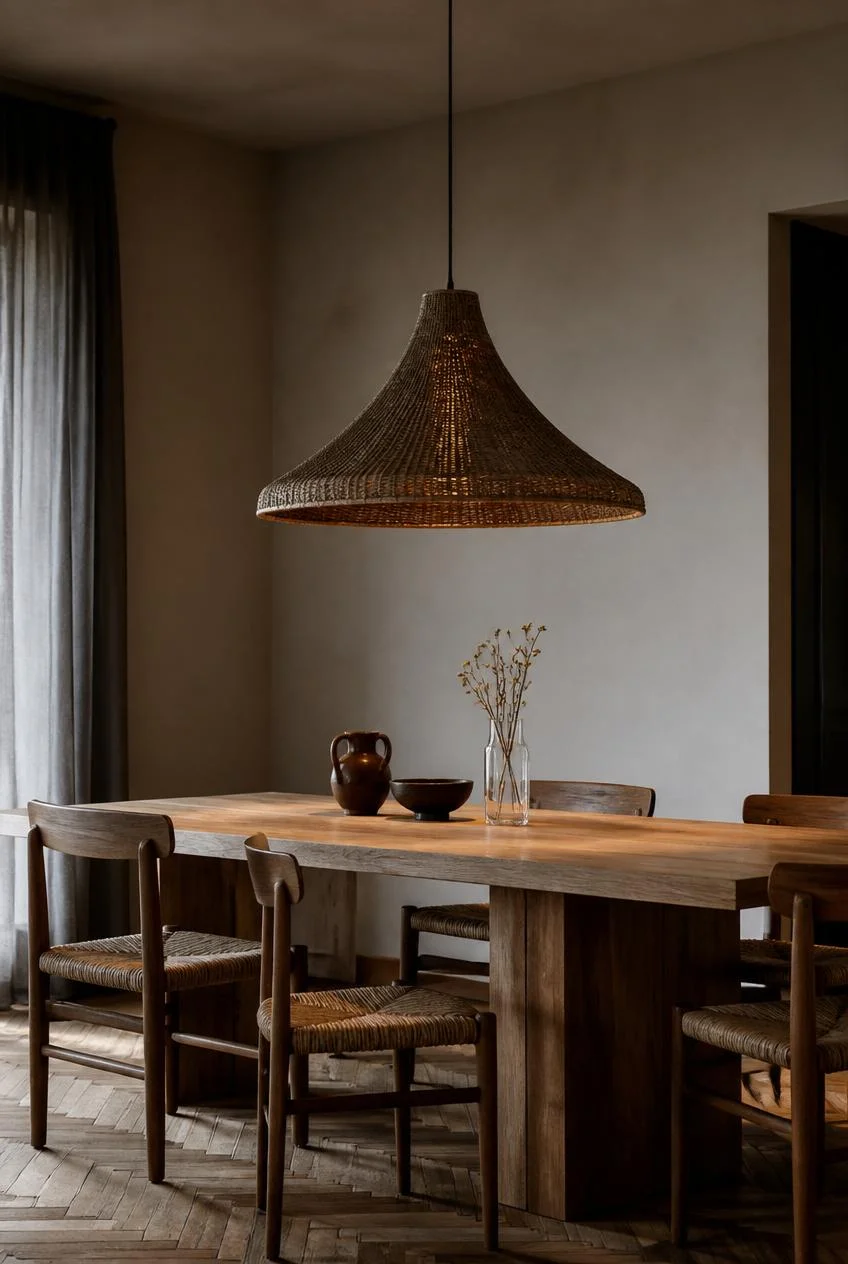
In a minimalist dining room, the pendant light above the table carries a disproportionate amount of decorative responsibility precisely because everything else is restrained. A sculptural pendant in rattan, aged brass, or matte ceramic becomes the room’s focal point without requiring anything else to compete with it.
The pendant should hang low enough over the table to create a sense of intimacy and enclosure above the dining surface, typically between 28 and 34 inches above the tabletop for standard ceiling heights. At that height, it pools light specifically onto the table rather than washing the whole room uniformly, which creates a warm atmosphere that shifts the dining experience from functional to genuinely pleasurable.
Scale Matters
A pendant that is too small for the table it hangs above tends to look uncertain rather than minimal. Choose a fitting whose diameter sits within about two thirds of the table width, so the proportions feel considered rather than accidental.
Bench Seating Along One Side of the Table
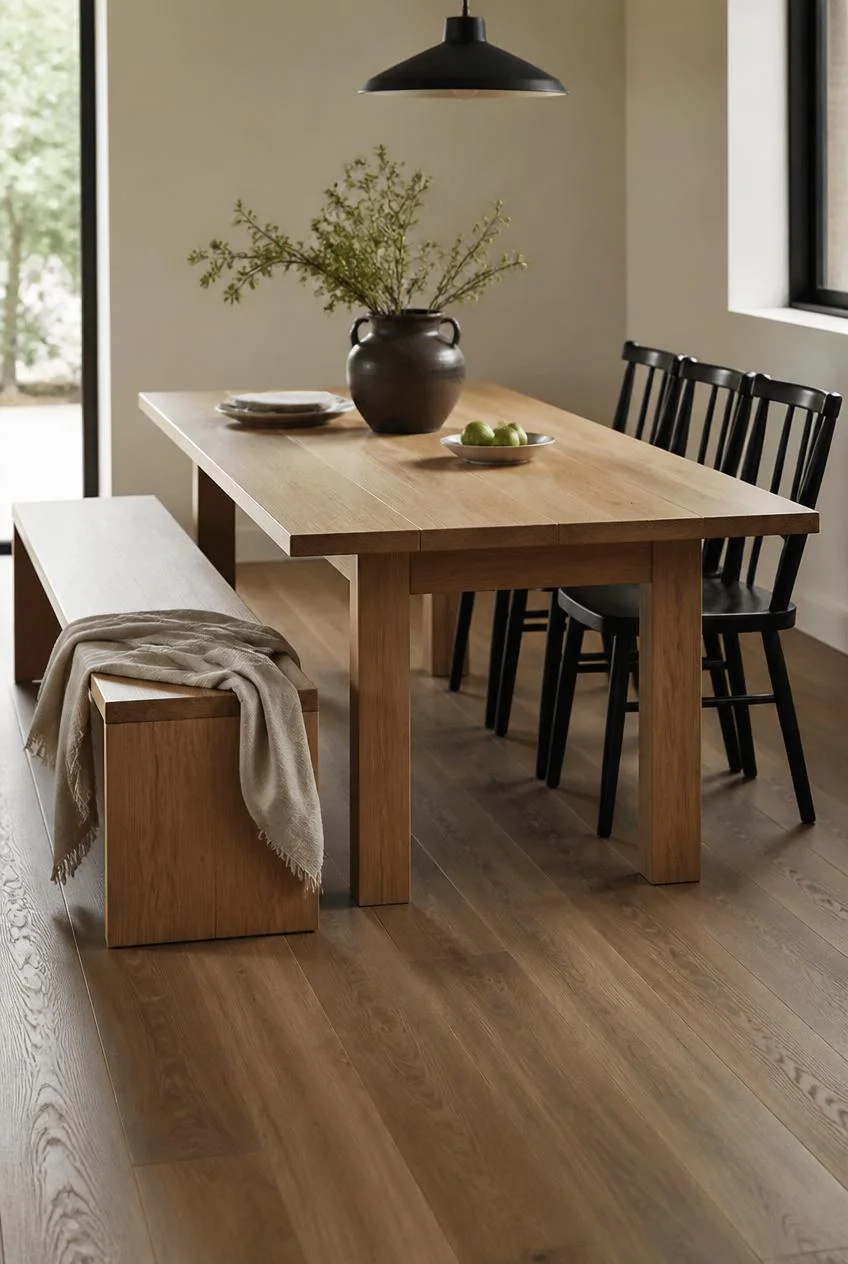
Replacing chairs on one or both sides of a minimalist dining table with a simple wooden or upholstered bench reduces visual clutter significantly. Chairs have four legs, a back, and often arms, all of which multiply the number of visual lines in a room. A bench is a single horizontal form that reads as one object rather than several, which keeps the room feeling simpler even when it is fully seated.
A backless bench in solid oak or walnut along one side of a rectangular table, paired with chairs on the opposite side, gives the room an asymmetry that feels relaxed rather than rigidly formal. It also accommodates more people than the same length of individual chairs, which makes it a genuinely practical choice as well as a visual one.
Styling Tip
A simple linen or sheepskin throw folded over one end of a bench introduces texture and warmth without adding any additional object to the room, since the textile remains part of the bench rather than becoming a separate decorative element.
A Neutral Color Palette Built From Three Tones
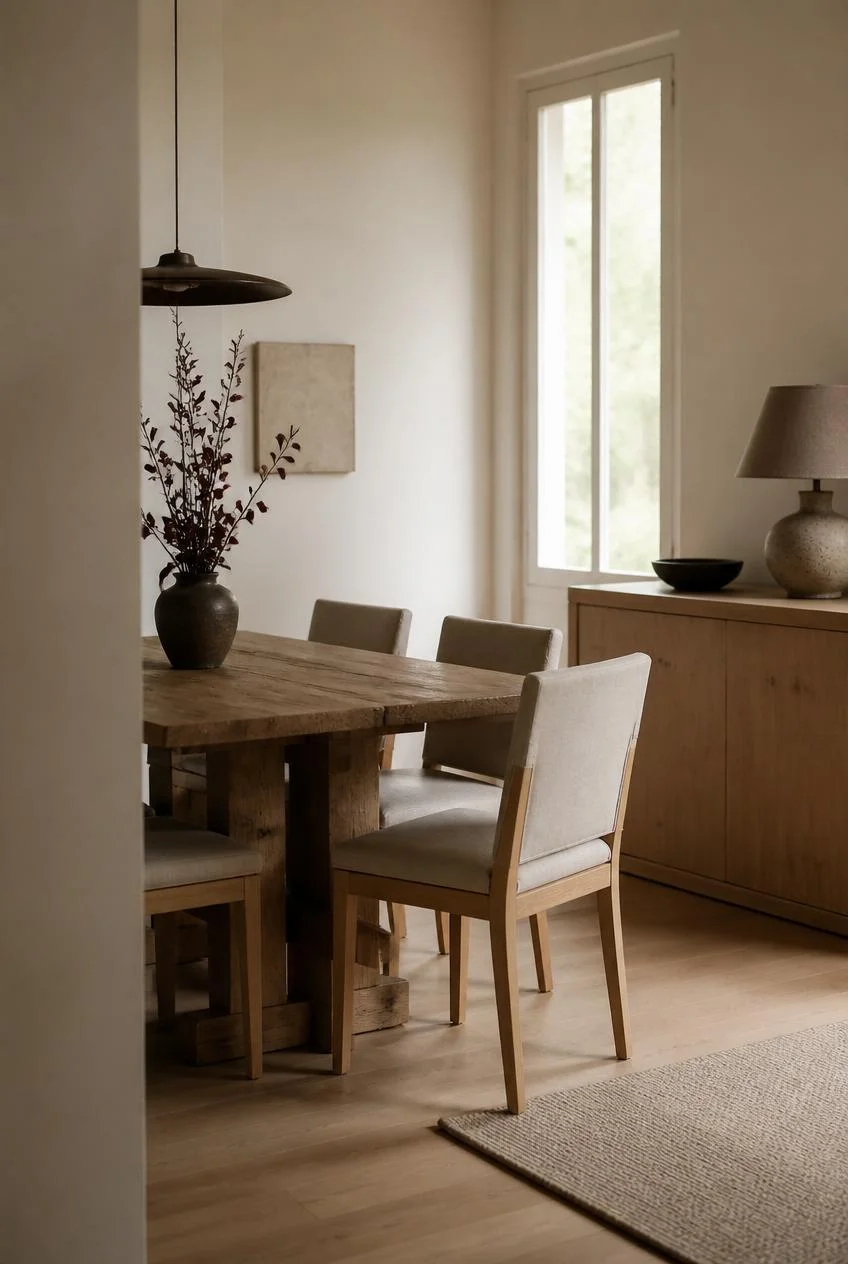
The most successful minimalist dining room color schemes are rarely pure white. They are built from two or three closely related neutral tones layered together: a slightly warm white on the walls, a natural wood tone in the furniture, and a soft textile tone in the upholstery or rug. This layered neutral palette gives the room depth and warmth without introducing color contrast that competes with the calm quality the space is designed to create.
Mushroom beige, warm ivory, and natural oak is one particularly resolved combination, since all three tones share the same warm undertone and move between them gradually rather than contrasting sharply.
What to Avoid
A neutral palette that uses too many different tones, even within the same family, can feel unresolved rather than calm. Commit to three tones maximum and allow each one to occupy enough surface area to register clearly.
A Slim Sideboard for Hidden Storage
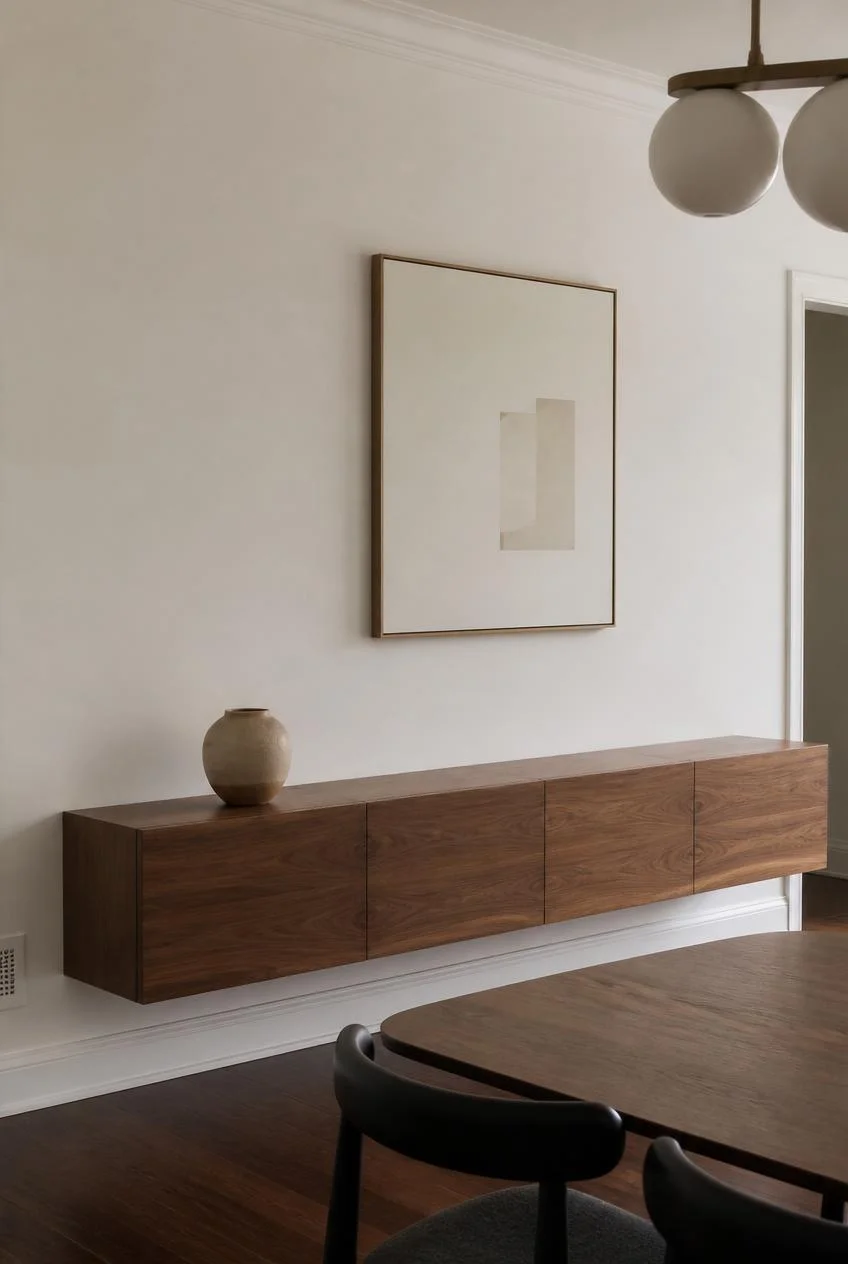
Clutter-free dining is not the same as storage-free dining. The key to maintaining a minimalist aesthetic in a room that needs to hold candles, serving pieces, table linens, and other dining essentials is a slim sideboard or credenza with closed doors that keeps everything out of sight without requiring a dedicated storage room.
A sideboard in a warm walnut or matte lacquered finish with flush hardware or no visible handles maintains the clean surface quality of a minimalist room. Its horizontal line also adds a strong architectural element to the wall it occupies, giving the room a sense of structure without filling it with objects.
Proportional Note
The sideboard should sit at approximately the same height as the dining table or slightly lower, so it reads as part of the same horizontal conversation as the table rather than as a separate, taller piece of furniture competing with the room’s sightlines.
Japandi Style Dining Room With Organic Shapes
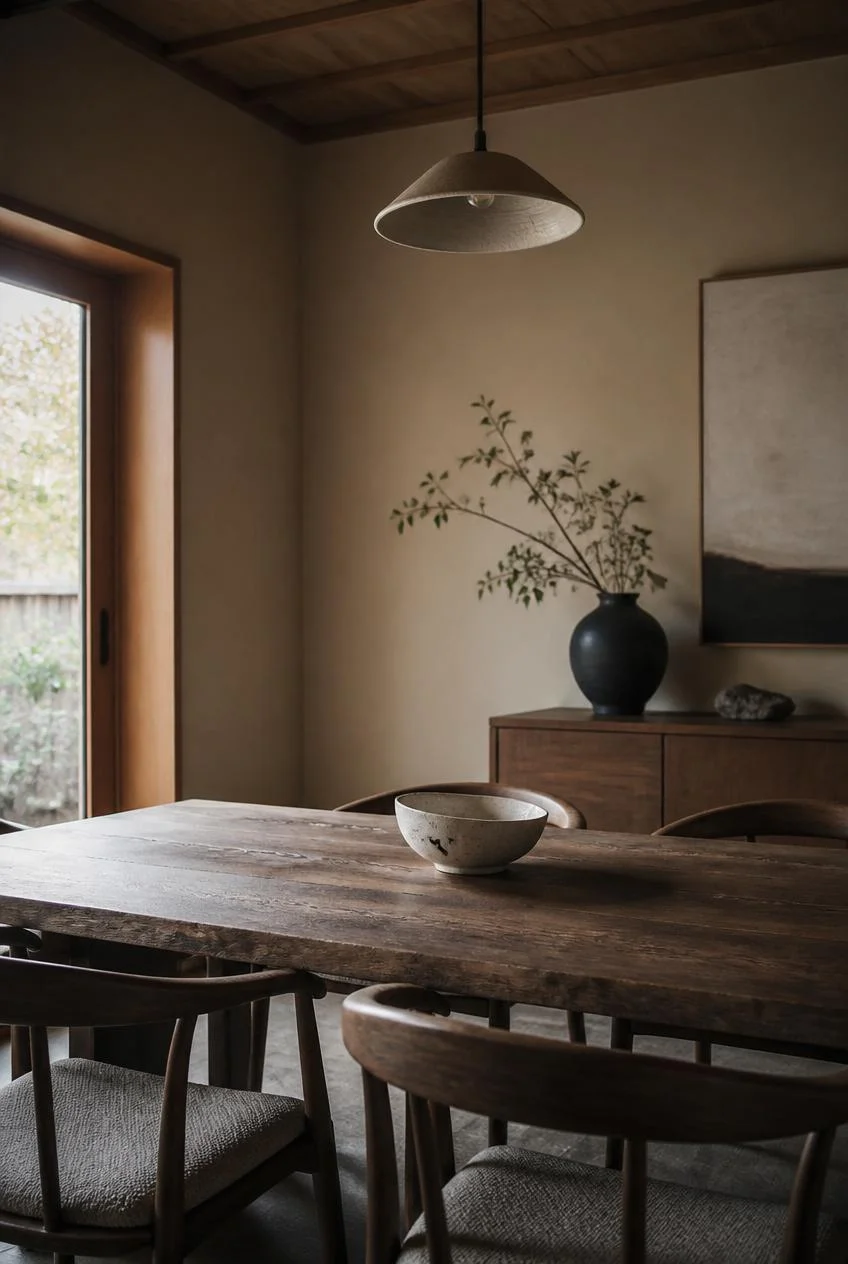
Japandi interior design, the combination of Japanese and Scandinavian minimalist philosophies, produces some of the most resolved and quietly beautiful dining rooms currently in practice. The style values organic shapes, natural materials, handcrafted objects, and a color palette built around warm earthy neutrals and muted greens or browns. A Japandi dining room typically features a low slung solid wood table, chairs with slightly curved backs in organic forms, a single ceramic vessel as a centerpiece, and nothing else on the table surface.
The philosophy behind this approach treats empty space as something precious rather than something to fill, which is the same quality that makes meals eaten in these rooms feel deliberately unhurried.
Decorating Within Japandi
Choose handmade or artisan objects with slight imperfections, such as a wheel thrown ceramic bowl or a hand poured glass vessel, over machine made alternatives. The subtle irregularity of handmade objects introduces warmth and humanity that perfect factory production cannot replicate.
Maximizing Natural Light Through Uncluttered Windows
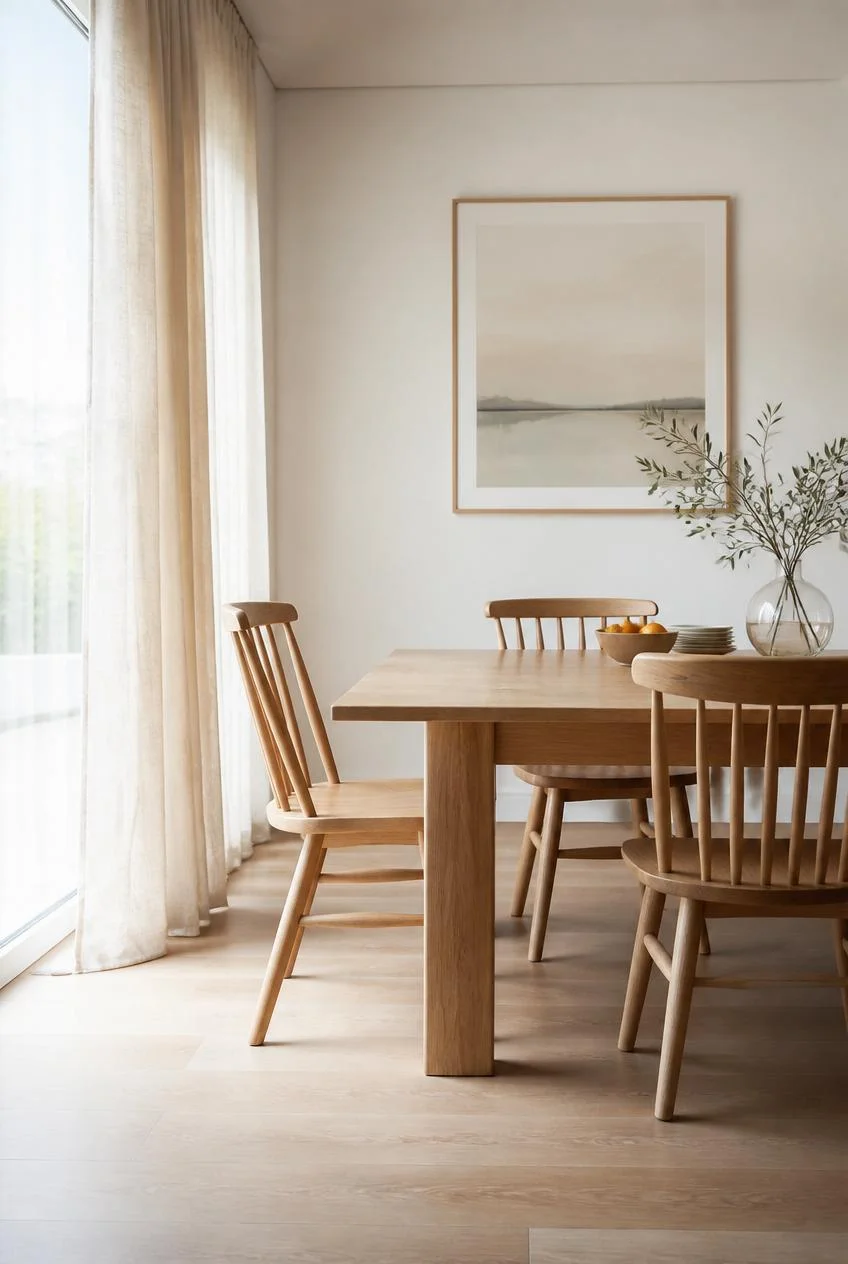
Natural light is one of the most powerful tools available in a minimalist dining room, and the simplest way to maximize its effect is to stop blocking it. Heavy curtains, decorative window treatments, and objects placed on windowsills all reduce the amount of daylight that enters the room and compete with the clean visual field that minimalist interior design is built around.
Sheer linen curtains hung from ceiling to floor on a simple rod, or no curtains at all where privacy allows, let daylight fill the room fully and make the space feel considerably larger and more open than its square footage would otherwise suggest. The changing quality of natural light throughout the day, from the cooler tones of morning to the amber warmth of late afternoon, becomes a design feature in itself rather than something the room needs to compensate for.
A Practical Addition
Sheer linen panels that can be pushed fully to one side when not needed offer the option of privacy when required while still allowing full daylight access during meals.
A Round Dining Table for Intimate Gatherings
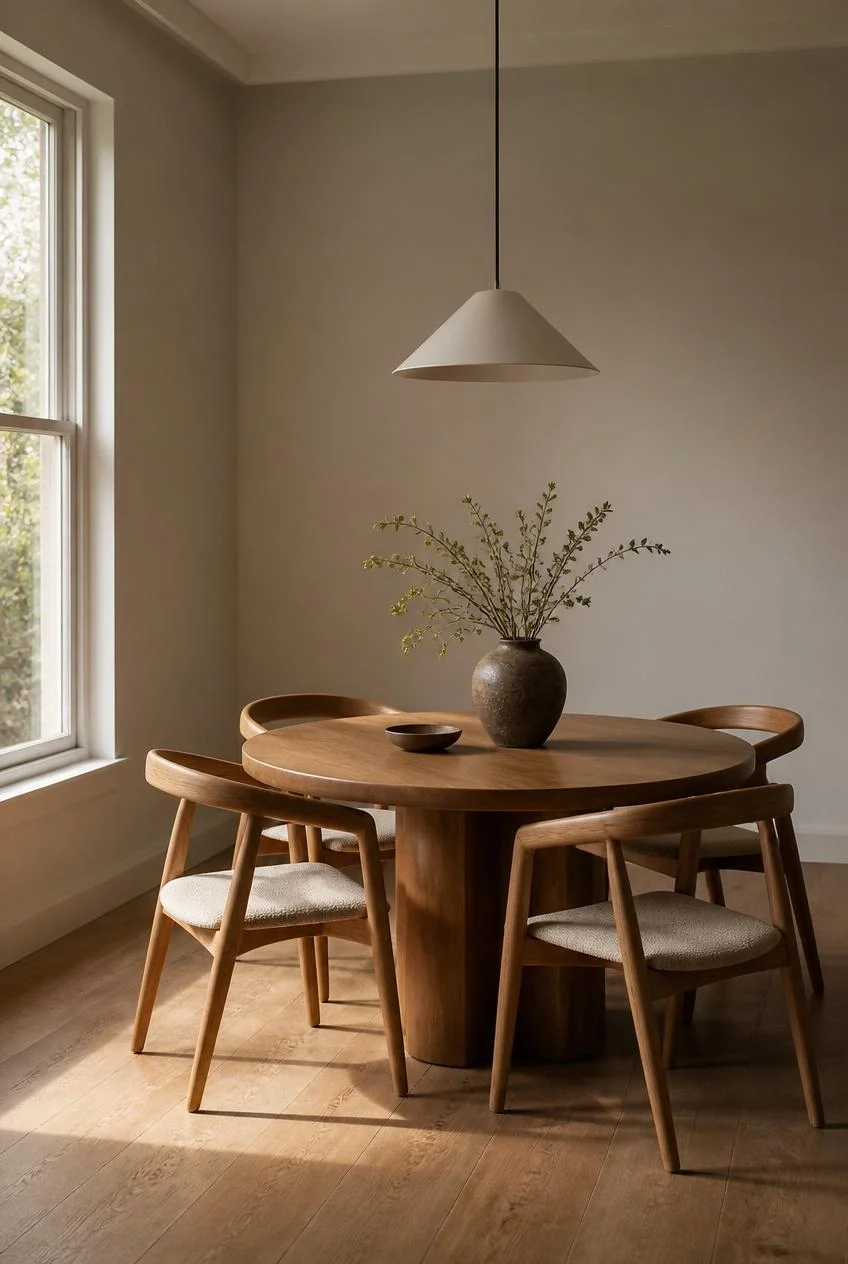
A round dining table in a minimalist dining room does two things simultaneously. It softens the geometry of a rectangular room by introducing a curved form, and it changes the social dynamic of the space by ensuring that everyone seated can see and speak to everyone else equally. There is no head of the table. There is no hierarchy implied by the shape itself.
In a small minimalist dining room, a round table also navigates the space more gracefully than a rectangular one, since it has no corners to catch passing people and sits more naturally in a square floor plan without creating awkward dead zones in the surrounding space.
Sizing Guidance
A round table of 48 inches in diameter seats four comfortably and allows for a single centerpiece with clear surface space around it. Moving to 60 inches accommodates six without feeling crowded, which suits most household hosting scenarios well.
A Single Ceramic Vase as the Only Centerpiece
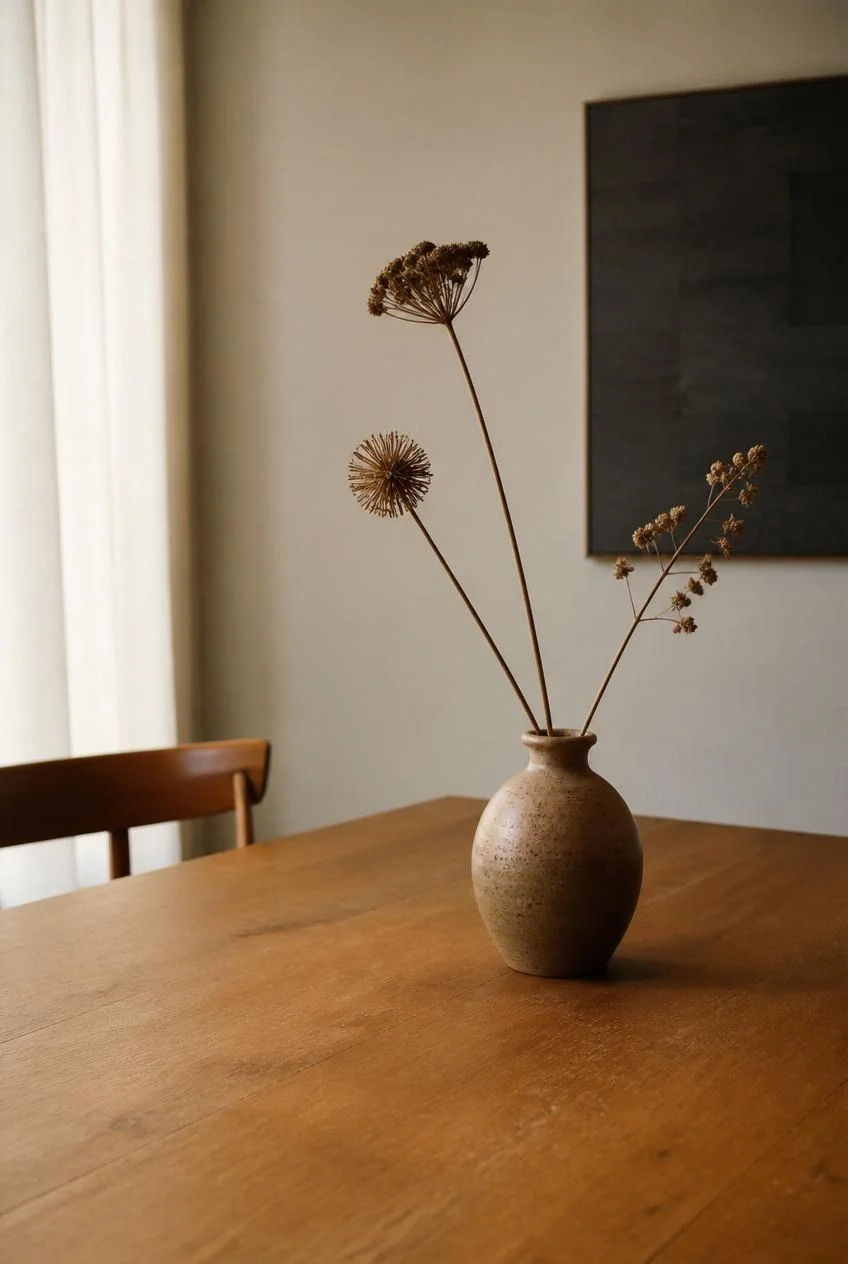
The dining table centerpiece is one of the most over designed elements in any dining room. A collection of candles, a fruit bowl, a decorative tray, and a floral arrangement placed together on the same surface creates visual noise that works against the calm dining atmosphere most people are actually hoping to create.
A single handmade ceramic vase in a warm earthy tone, holding three or four stems of dried botanicals or a simple seasonal branch, gives the table a centerpiece that reads as intentional without demanding attention. The vase itself carries enough visual interest through its form and glaze to stand alone without supporting objects around it.
Seasonal Rotation
Rotating what sits in the vase seasonally rather than replacing the vase itself keeps the table feeling current and alive without requiring new purchases or decorative decisions throughout the year.
Concrete or Stone Flooring for Understated Elegance
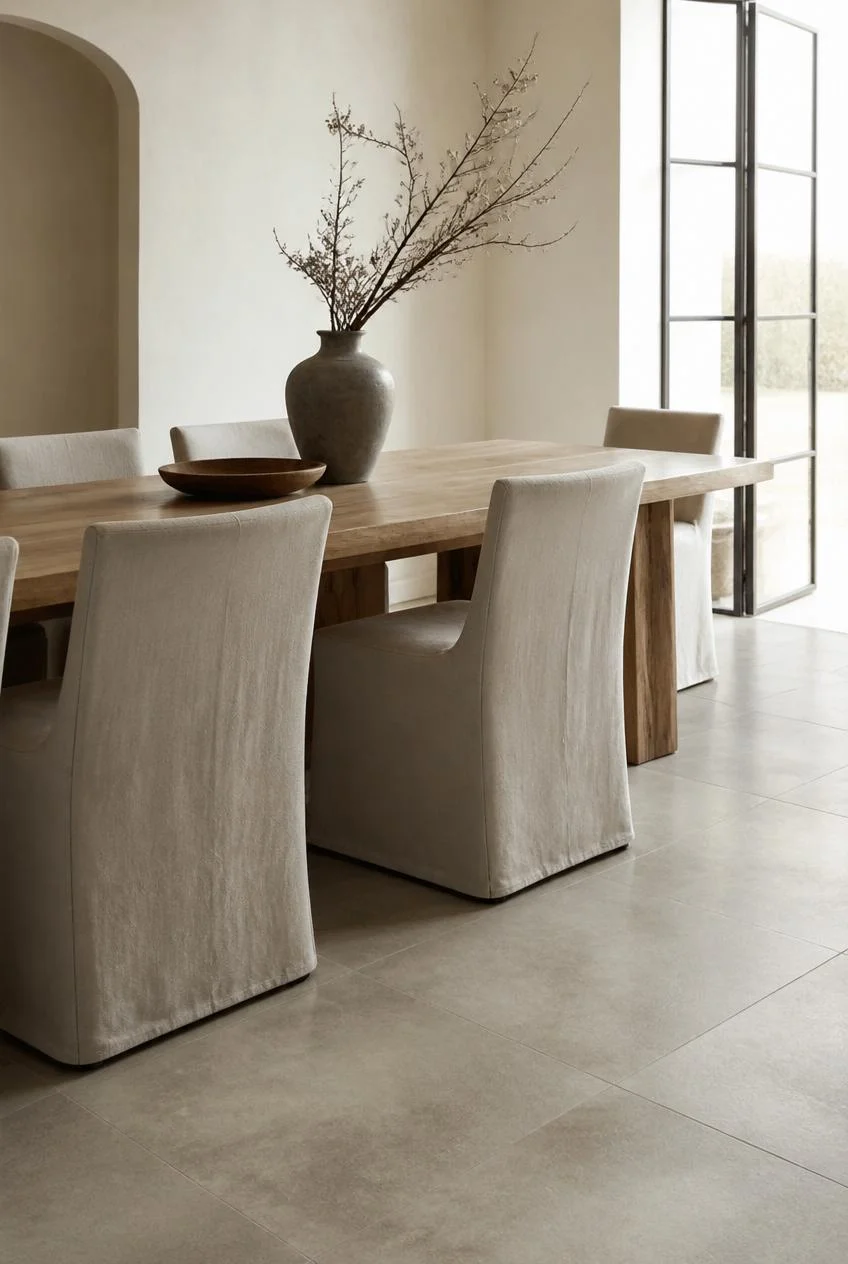
Polished concrete or large format stone flooring in a minimalist dining room creates a surface that recedes visually rather than advancing, allowing the furniture and the people using it to remain the focus of the room. The subtle variation in tone and texture across a concrete or stone floor provides enough visual interest to prevent the surface from feeling flat, while still maintaining the quiet, uninterrupted quality that suits a minimalist interior.
Large format stone look porcelain tiles in a warm grey or sand tone offer most of the same visual qualities as natural stone at better moisture resistance and considerably easier maintenance, which makes them a practical choice for a room where food and drink are present daily.
Pairing Note
Concrete or stone flooring pairs particularly well with warm wood furniture, since the coolness of the floor and the warmth of the wood create a complementary contrast that keeps the room from feeling either too cold or too uniform.
A Muted Accent Color Through Textiles Only
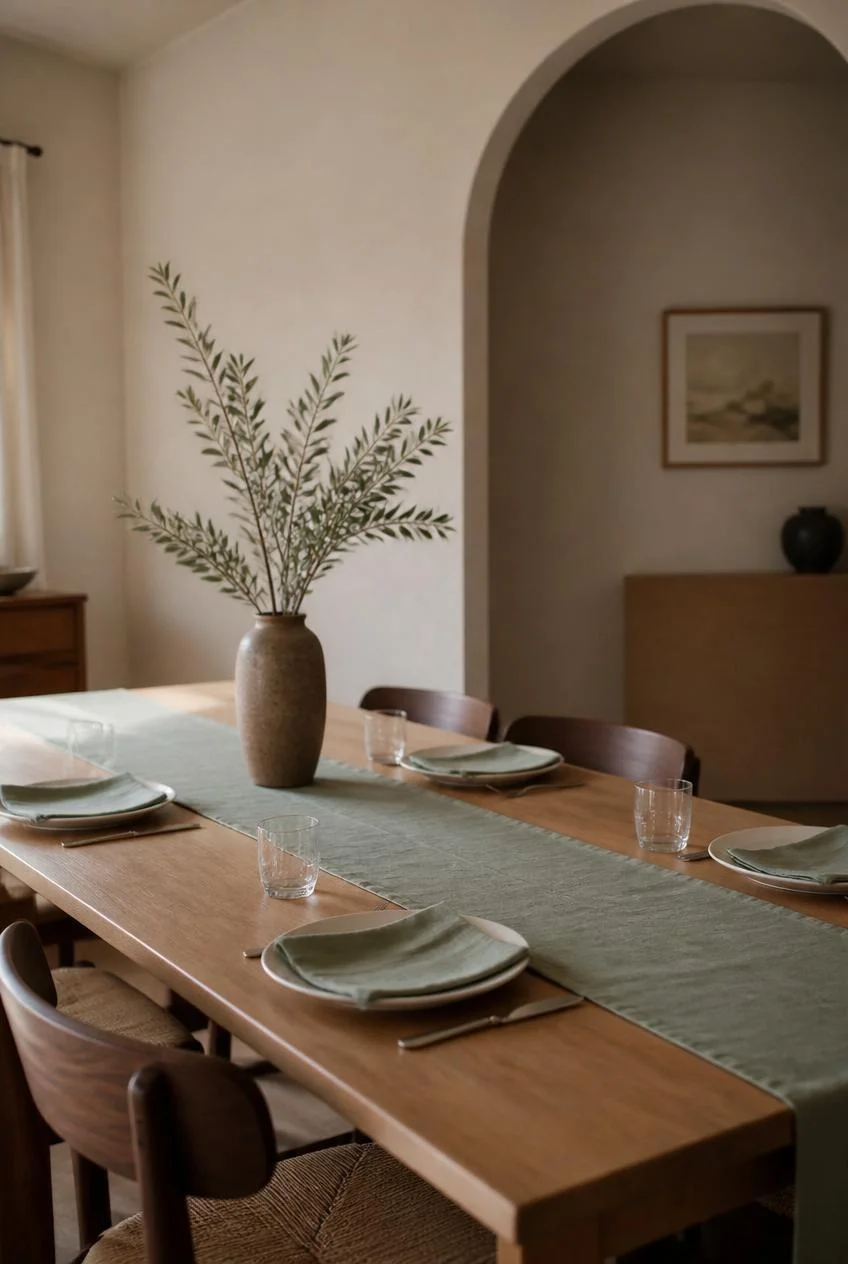
Absolute color neutrality in a minimalist dining room can occasionally tip from calm into clinical. Introducing one muted accent color, whether a dusty sage, a faded terracotta, or a soft slate blue, through textiles rather than through paint or furniture keeps the palette controlled while still giving the room a sense of considered personality.
A set of linen napkins in a muted olive tone, a single cushion on the bench in a faded dusty blue, or a runner in a soft terracotta stripe introduces enough color to prevent the room from feeling monochromatic without disrupting the overall calm of the neutral base.
Color Restraint
Limiting the accent color to textiles alone ensures it can be changed seasonally or gradually without requiring any furniture or paint decisions to be revisited.
Integrated Dining and Kitchen for Open Plan Continuity
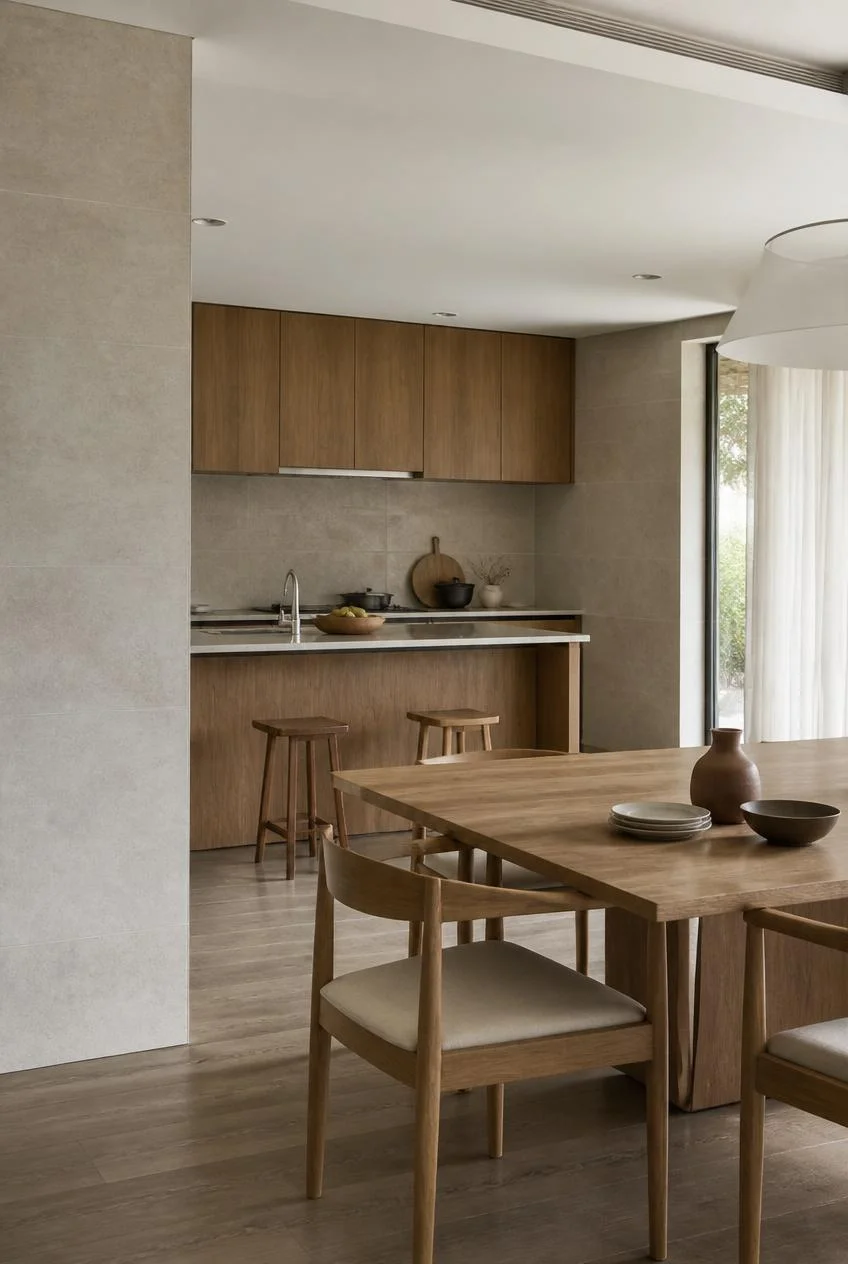
In open plan homes, the most resolved minimalist dining rooms treat the dining zone as a seamless continuation of the kitchen rather than as a separate room that happens to be nearby. Using the same flooring material across both zones, continuing the same wall treatment, and choosing a dining table that echoes the kitchen island in material or finish all reinforce a sense of the space being designed as a single unified whole rather than two adjacent rooms.
This continuity of material and tone is one of the most powerful tools in a minimalist open plan interior, since it prevents the visual fragmentation that happens when multiple different design decisions meet in a shared space.
Practical Benefit
An integrated kitchen and dining zone also reduces the surface area of decisions required, since the material palette of the kitchen does much of the work in defining the dining room as well.
A Low Profile Dining Chair With Organic Curved Back
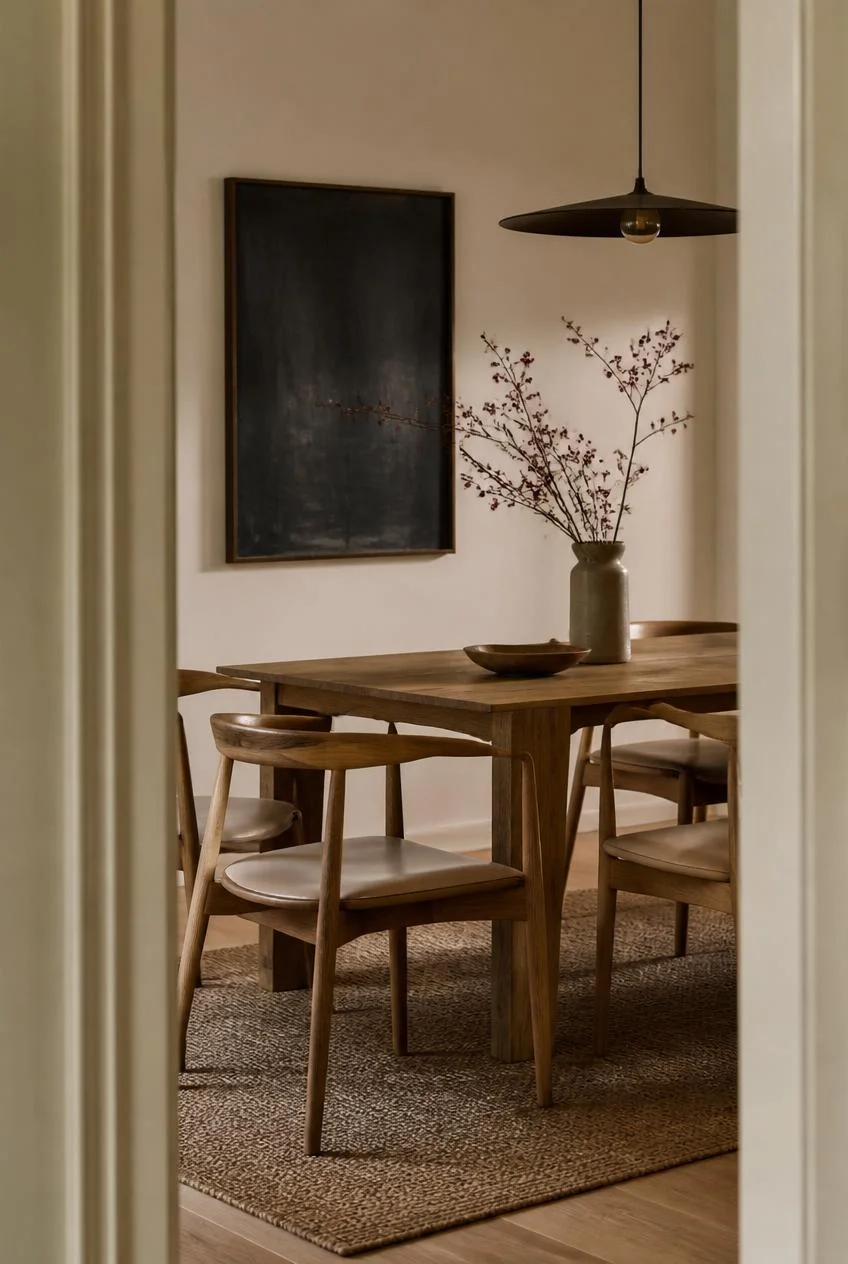
A low profile dining chair with a gently curved backrest in solid wood or molded plywood sits within a minimalist dining room with considerably more grace than a high backed upholstered alternative. The curve of the back introduces an organic form that softens the room’s geometry, while the low height keeps the chair from competing visually with the table it surrounds.
Scandinavian dining chair designs from the mid century period, including the forms that inspired much of today’s Japandi furniture, understood this principle intuitively. The curves were never decorative additions. They were structural responses to human posture that happened to produce beautiful objects.
Material Choice
Natural oiled oak or walnut in the chair frame suits a warm minimalist palette far better than painted or lacquered alternatives, since it maintains material honesty rather than concealing the wood behind a surface treatment.
A Simple Wool or Jute Rug to Anchor the Space
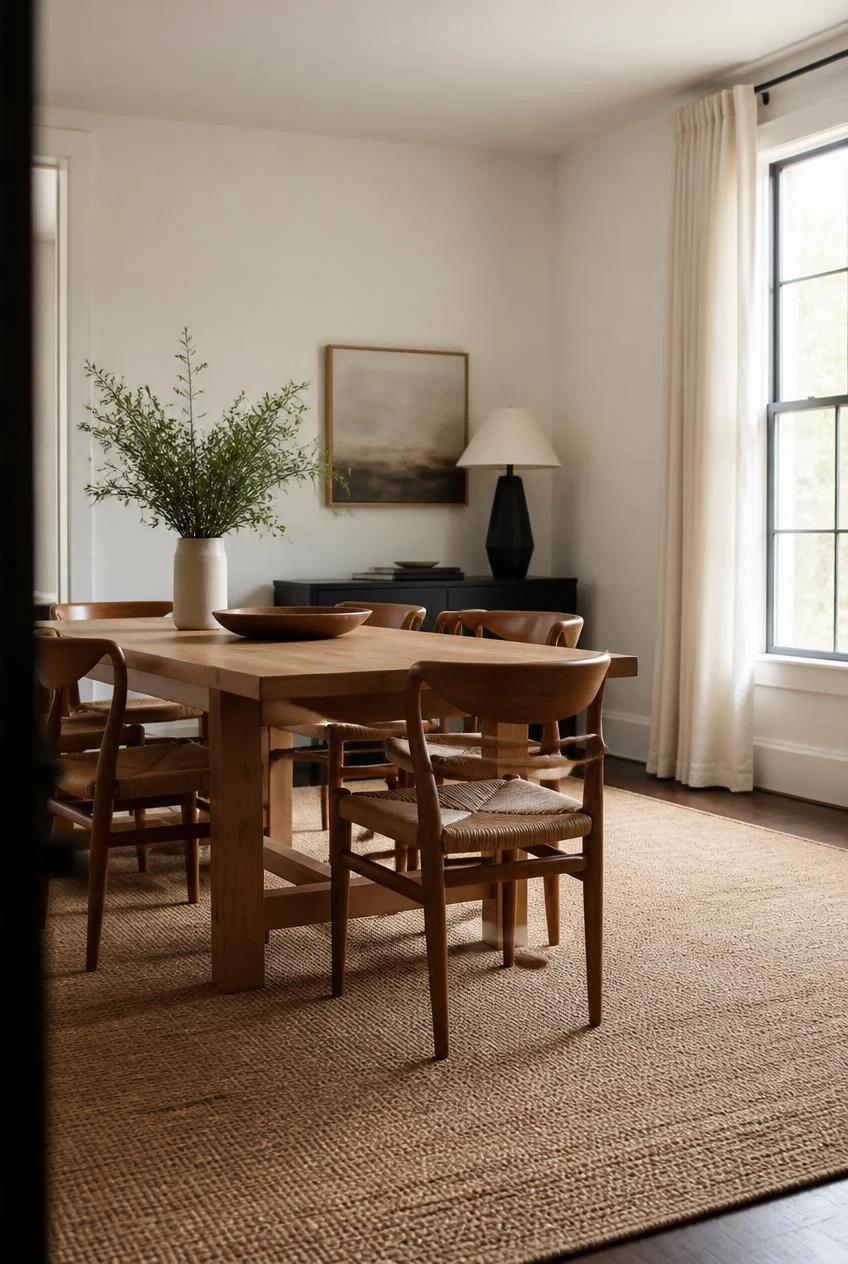
A wool or jute rug placed beneath the dining table and extending generously beyond the chairs on all sides grounds the seating arrangement within the room and introduces a layer of natural texture at floor level that concrete, stone, or wood flooring alone cannot provide. The rug defines the dining zone within a larger open plan space without requiring a wall or partition to mark the boundary.
Choose a flat weave wool rug in a warm neutral tone rather than a deep pile version, since a flat weave is easier to clean after meals, sits more stably beneath chair legs, and reads as more refined in a minimalist context than a heavily textured alternative.
Sizing Rule
The rug should extend at least 24 inches beyond the table on all sides so that chair legs remain on the rug when pulled out for seating. A rug that stops at the table edge forces chairs onto the hard floor, which disrupts both the visual definition of the zone and the practical comfort of movement.
Negative Space Used as a Design Decision
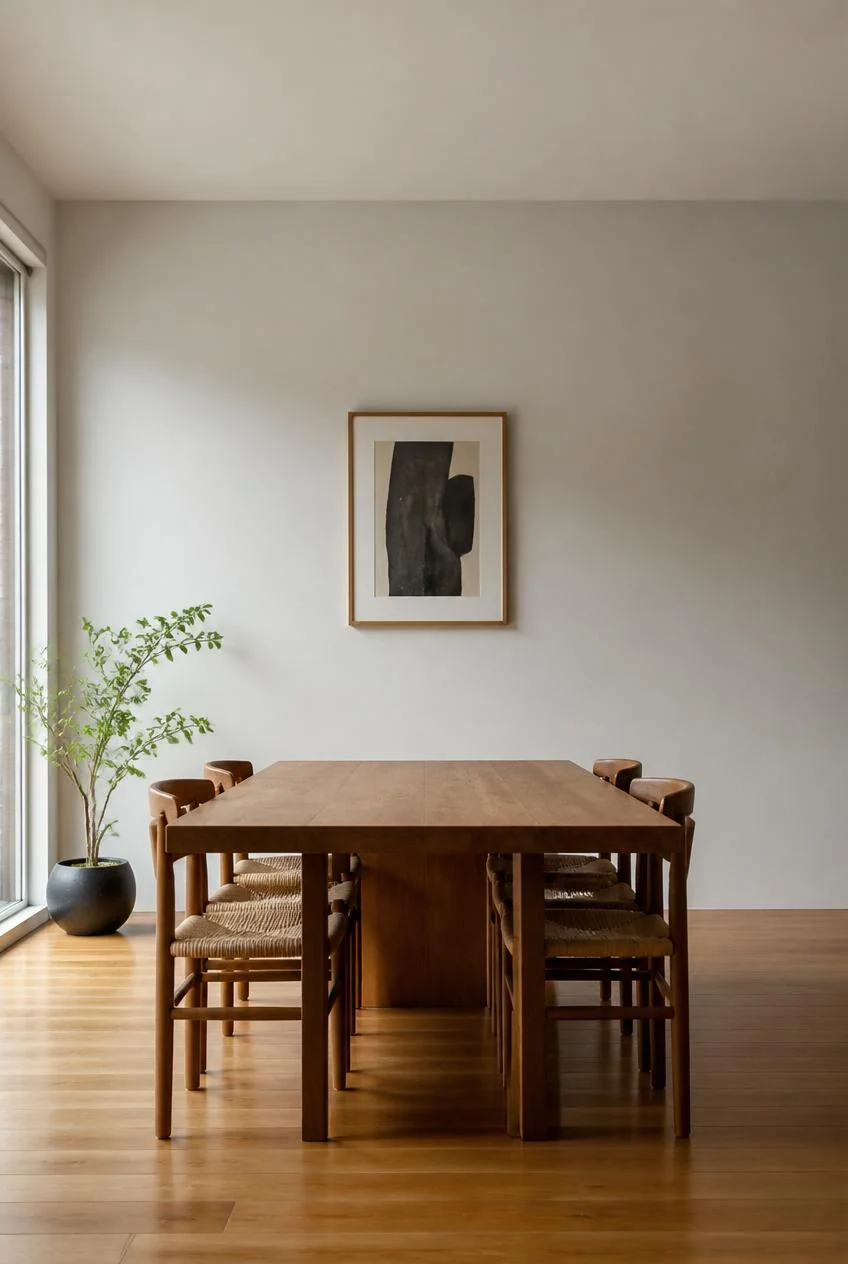
The walls, corners, and surfaces of a minimalist dining room that are left intentionally empty are not overlooked. They are chosen. Negative space in a well designed room functions as a visual rest point, a place where the eye can pause before moving to the next considered element in the composition. A dining room that fills every wall with art and every surface with objects leaves nowhere for the eye to settle, which creates the same sense of restlessness that a cluttered room produces, even when the objects themselves are beautiful.
In practice, this means resisting the impulse to fill a wall simply because it is bare. A single piece of art, hung where it will be seen clearly from the seated dining position, does more for the room than several pieces arranged without the same deliberate intention.
The Discipline of Negative Space
Before adding anything to a minimalist dining room, ask whether the space would be better served by the object’s presence or by its absence. The answer is often the latter.
Plants as a Single Natural Element
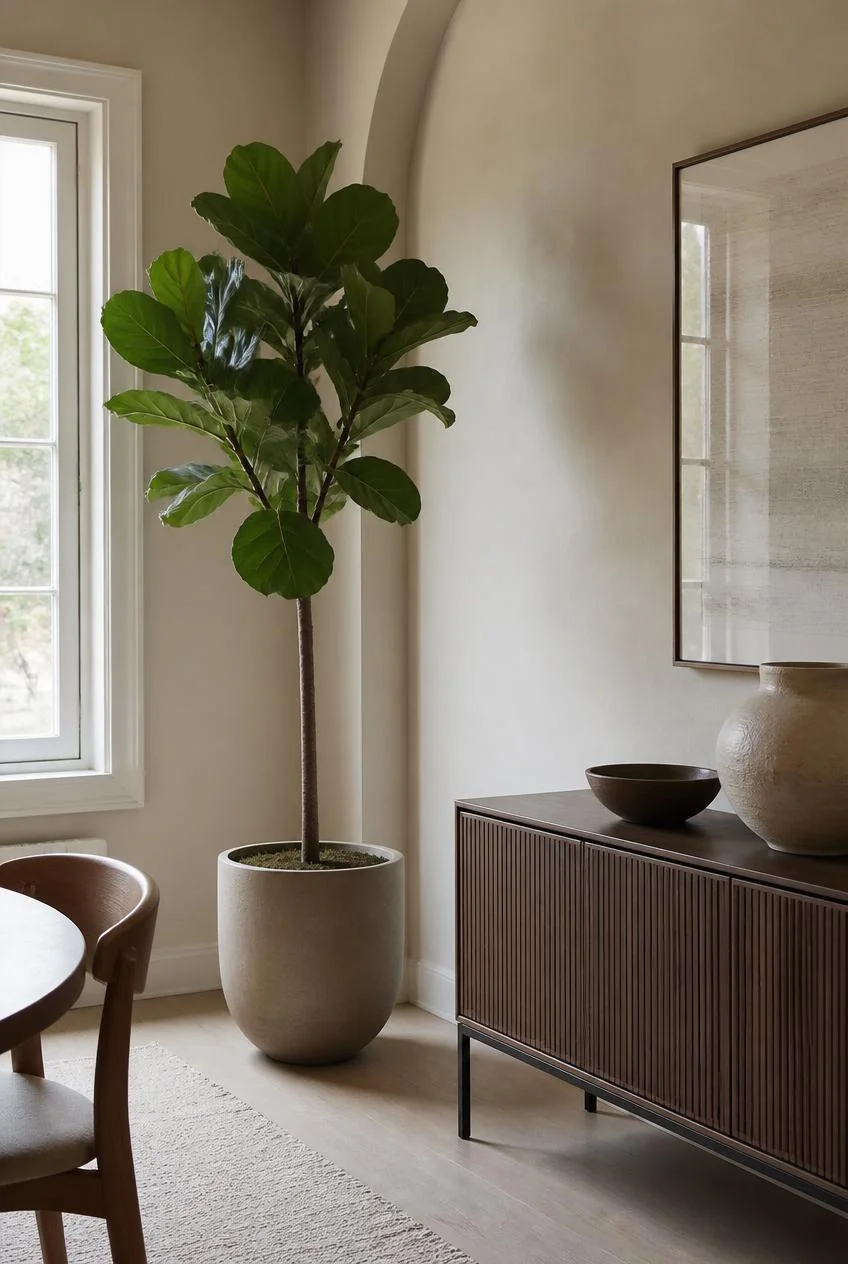
A single large potted plant in a simple ceramic pot, positioned in a corner or beside the sideboard, introduces a living, organic element to a minimalist dining room without adding clutter or complexity. The height of a tall plant, whether a fiddle leaf fig, a monstera, or an olive tree, draws the eye upward and gives the room a sense of vertical dimension that low furniture and horizontal surfaces alone cannot create.
The biophilic quality of plants, their connection to growth, seasonal change, and the natural world, also adds an emotional warmth to the room that purely inanimate decor does not produce. A room with a living plant in it feels cared for rather than simply furnished.
Plant Selection
Choose a plant whose form is simple and whose leaf shape is bold enough to read clearly from a seated position across the table. Large, graphic leaves suit a minimalist aesthetic far better than small, busy foliage that reads as visual noise from a distance.
Layered Lighting From Multiple Sources
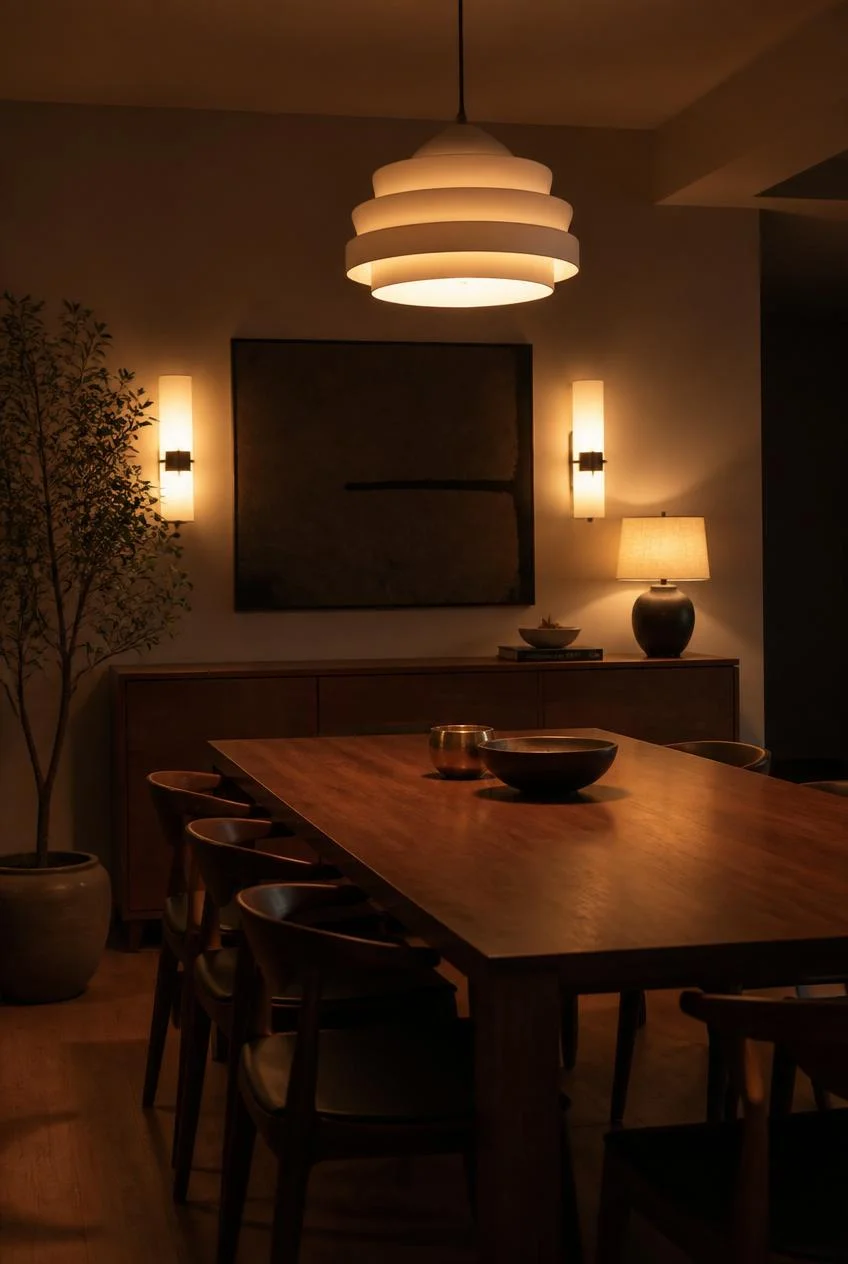
The difference between a minimalist dining room that feels warm and one that feels cold almost always comes down to lighting. A single overhead light source, regardless of how well chosen the fixture is, produces uniform illumination that flattens the room and removes the sense of depth and intimacy that a dining space needs.
Layered dining room lighting combines a statement pendant over the table with warm wall sconces positioned at a lower level, and possibly a table lamp on the sideboard for a third, softer source. Each layer adds a different quality of light, which together create a room that shifts in character and warmth as daylight fades and the artificial light takes over.
Bulb Temperature
Use warm bulbs in the 2700K to 3000K range throughout a minimalist dining room. Cooler bulbs shift the room toward the clinical end of the neutral palette, which works against the warmth and calm that the best minimalist interiors consistently achieve.
Bringing Minimalism and Warmth Together
The word minimalist has been used so often and in so many contexts that it has occasionally started to feel like a synonym for empty or uninviting. The dining rooms in this guide are none of those things. They are quiet, considered, and full of the kind of warmth that only comes from decisions made with genuine attention.
A solid wood table chosen for its grain, a linen chair chosen for its texture, a pendant chosen for its light rather than its appearance, a plant chosen for its height rather than its name. These are small decisions individually, but together they produce a room that feels entirely different from one assembled quickly and without thought. The calm minimalist dining room is not an absence of personality. It is personality expressed through the quality of what is chosen rather than the quantity of what is present. That distinction, once understood, changes how every design decision in the room gets made.
FAQs
How do I stop a minimalist dining room from feeling too cold or bare?
Introduce natural materials like solid wood, linen, and jute, and use warm bulbs in layered lighting. Texture, not color or quantity, is what makes a minimalist room feel genuinely warm.
What is the best table shape for a minimalist dining room?
Both round and rectangular tables work well. Round suits smaller spaces and intimate gatherings, while a long rectangular table suits open plan dining zones and larger households.
How many pieces of art should a minimalist dining room have?
One piece positioned where it can be seen clearly from the seated dining position is usually enough. The goal is a single considered focal point rather than a gallery of competing elements.
Can a minimalist dining room work for a family with young children?
Yes, with practical choices such as a sealed wood table, washable linen upholstery, and a flat weave rug that is easier to clean than deep pile alternatives.
What lighting works best above a minimalist dining table?
A single sculptural pendant hung 28 to 34 inches above the table surface, in a warm material like rattan, aged brass, or matte ceramic, suits most minimalist dining rooms and provides focused, intimate light over the table.
You May Also Like This Post:
23 Brown and Beige Bathroom Ideas That Feel Warm, Elegant, and Timeless
One Comment