23 Brown and Beige Bathroom Ideas That Feel Warm, Elegant, and Timeless
Walk into a bathroom dominated by cold gray tile and harsh white light, and you feel it immediately. Something clinical. Something that belongs in a waiting room rather than a home. Now imagine the opposite: warm stone underfoot, the grain of walnut wood across a vanity, soft beige walls that glow amber in the evening light. That second bathroom does not just look different. It feels entirely different to be inside.
Brown and beige bathroom ideas have moved well beyond the outdated earth tone bathrooms of decades past. Today’s interpretations are sophisticated, material rich, and deeply connected to the kind of spa-like bathroom experience that most people genuinely want from the space they use to start and end every single day. The palette is warm without being heavy, grounded without being dull, and flexible enough to work in everything from a compact powder room to a sprawling master ensuite.
This guide covers 23 ideas that show exactly how brown and beige can create a bathroom that feels warm, elegant, and built to last regardless of what trends happen around it.
A Walnut Vanity Against Soft Beige Plaster Walls
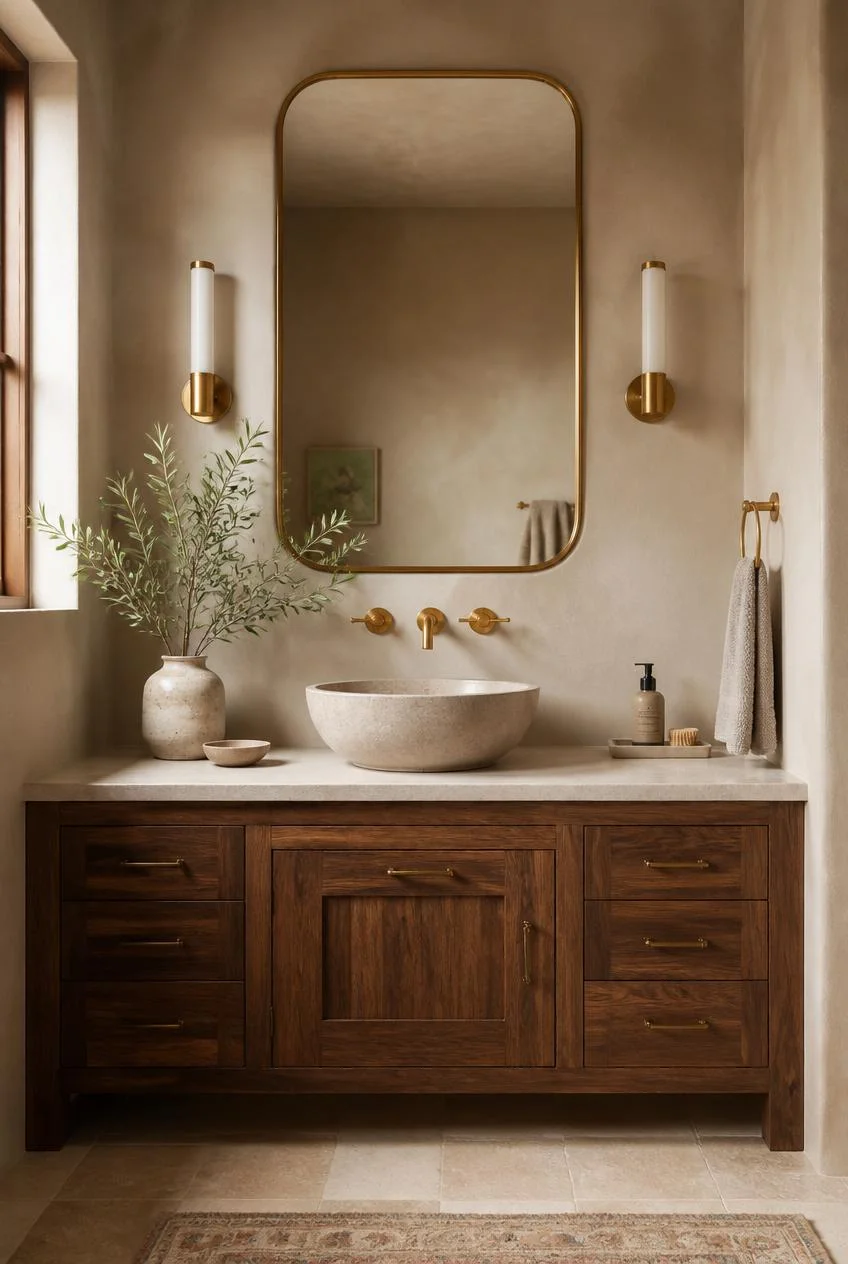
A walnut wood vanity paired with soft beige limewash plaster walls is one of the most quietly beautiful combinations available in this palette. The rich grain of walnut introduces depth and warmth that painted cabinetry simply cannot replicate, while the slightly textured, matte quality of limewash plaster gives the wall a lived in, artisanal character that feels closer to a boutique hotel than a standard renovation.
Keep the countertop in a honed white or cream stone to introduce a lighter tone that prevents the combination from becoming too uniform. Pair everything with brushed brass hardware to connect the warmth of the wood to the warmth of the wall without introducing a competing color.
Why It Works
The contrast between smooth stone, textured plaster, and natural grain keeps three different surfaces in dialogue without any of them overwhelming the others.
Beige Travertine Tile From Floor to Ceiling
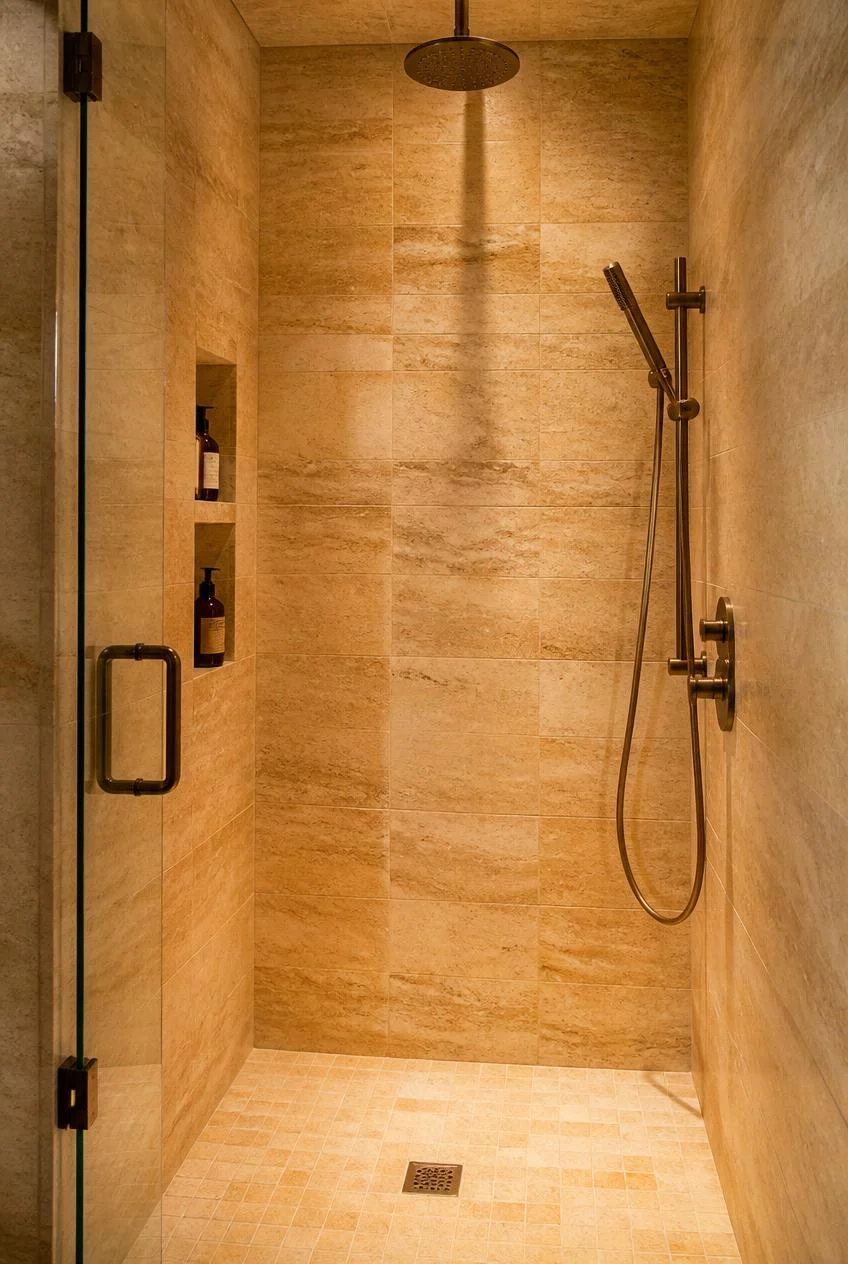
Few materials carry the weight and beauty of travertine tile in a bathroom. Its naturally occurring variations in tone, ranging from pale cream through warm honey to soft caramel, mean that no two installations look identical, and that organic unpredictability is exactly what makes natural stone flooring and walls feel so resolved.
Running travertine tile from floor to ceiling in a shower enclosure or across an entire bathroom wall creates an enveloping, almost geological quality that no ceramic or porcelain substitute fully replicates. The material is porous and does require proper sealing, but maintained correctly it develops a patina over years that only becomes more beautiful with time.
Design Insight
For smaller bathrooms, limit full height travertine to a single wall and use a coordinating beige tile on the remaining surfaces to keep the material story consistent without doubling the budget.
A Freestanding Soaking Tub as the Room’s Focal Point
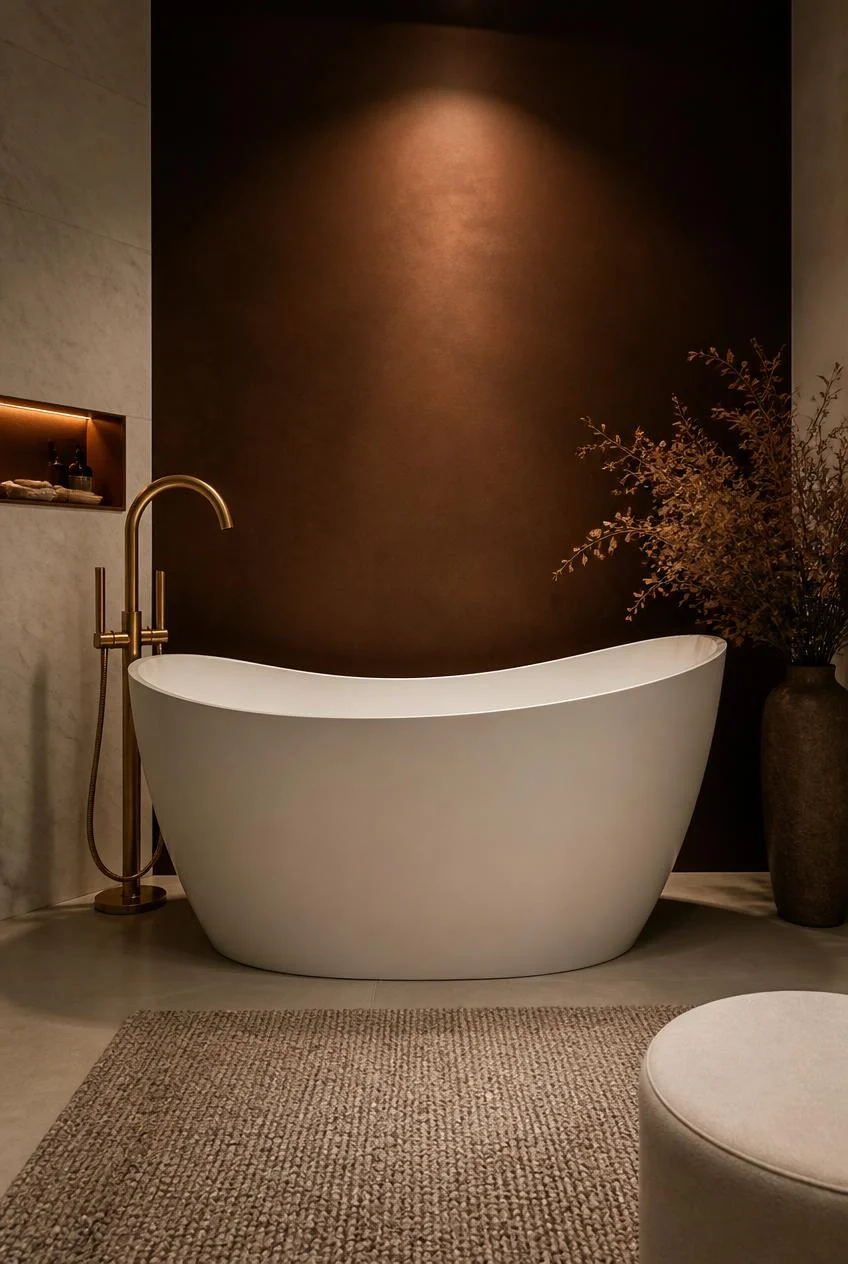
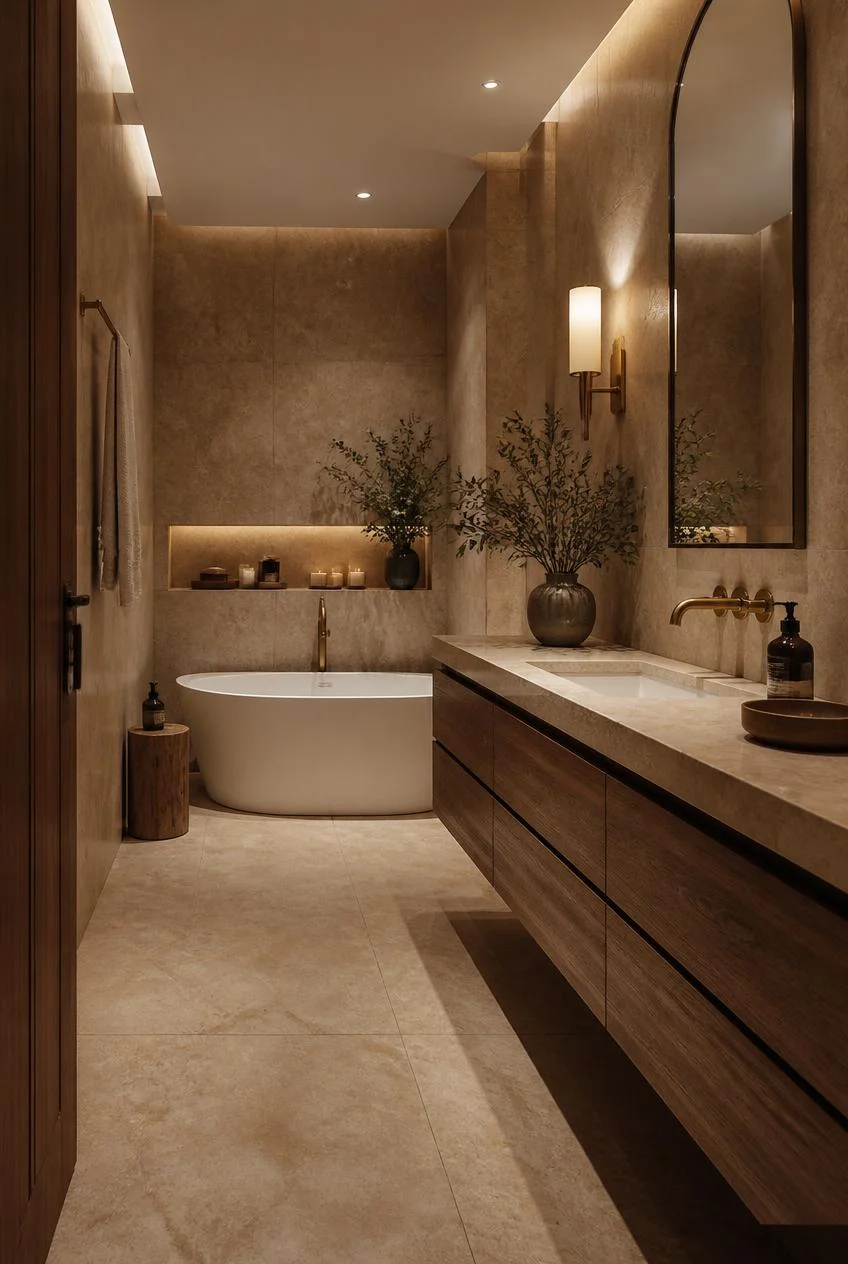
A freestanding soaking tub in matte white or warm stone composite, positioned against a dark brown or chocolate accent wall, creates an immediate focal point that gives the entire bathroom a sense of purpose and luxury. The silhouette of a freestanding tub is inherently sculptural, and that sculptural quality reads even more strongly when it sits against a deeply toned backdrop.
Brushed gold faucets positioned at floor level beside the tub complete the composition, while a simple wooden bath tray placed across the rim with a candle and a folded towel reinforces the spa-like bathroom atmosphere without requiring a single additional renovation.
Styling Tip
Keep the surrounding surfaces simple when a freestanding tub is the statement. Competing focal points in a bathroom tend to cancel each other out rather than add up.
Warm Brown Subway Tiles in a Herringbone Pattern
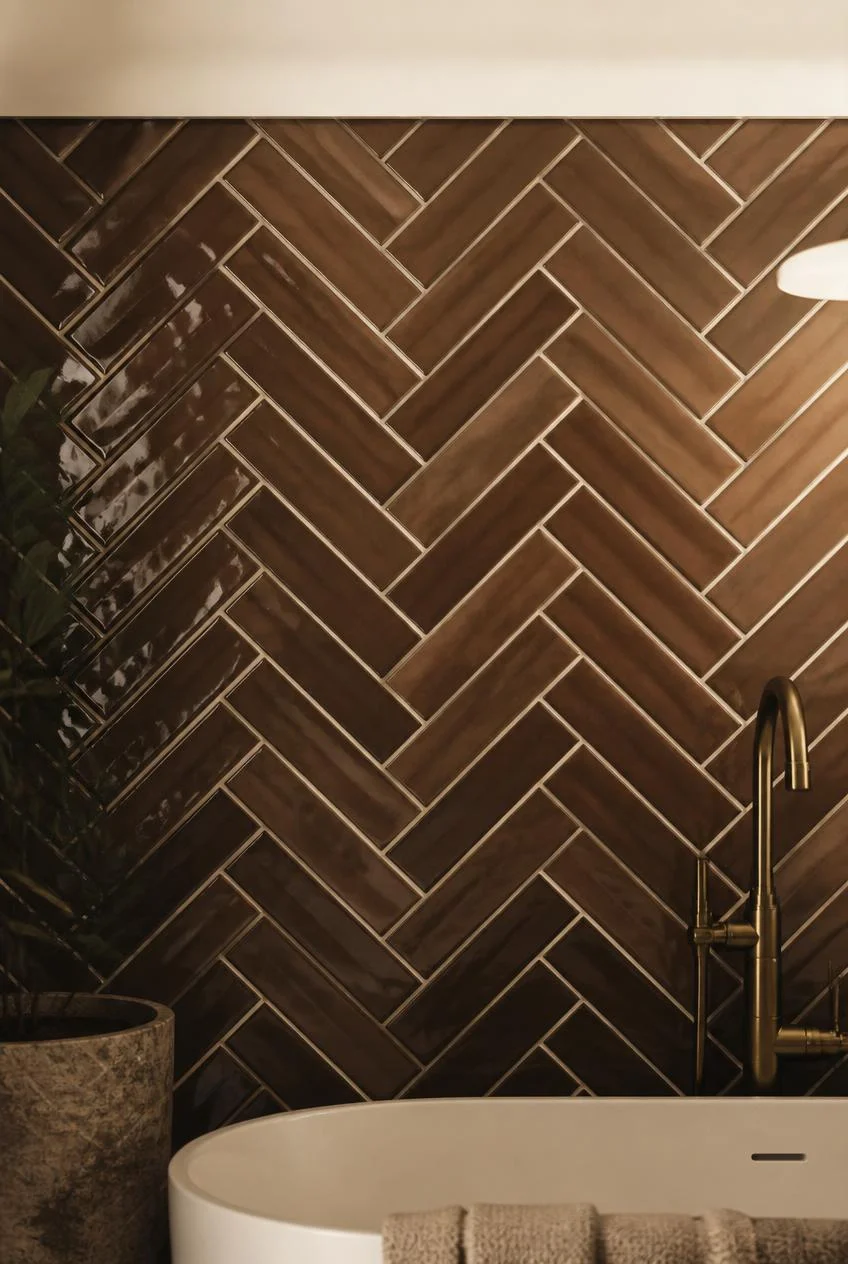
Brown subway tiles arranged in a herringbone pattern rather than the standard brick layout elevate what would otherwise be a simple choice into something genuinely considered. The diagonal lines of herringbone catch light at different angles throughout the day, giving the wall constant subtle variation that a straight grid does not produce.
Choose a warm chocolate or deep caramel glaze for the tile itself and pair it with a beige or warm grey grout that sits close to the tile color rather than contrasting sharply. This keeps the herringbone pattern legible without making the grout lines the dominant visual element.
Material Note
Handmade or artisan glazed tiles with slight surface variation suit this application particularly well, since the imperfection of each tile reinforces the organic warmth of the brown and beige palette.
A Double Vanity With Beige Quartz Countertops
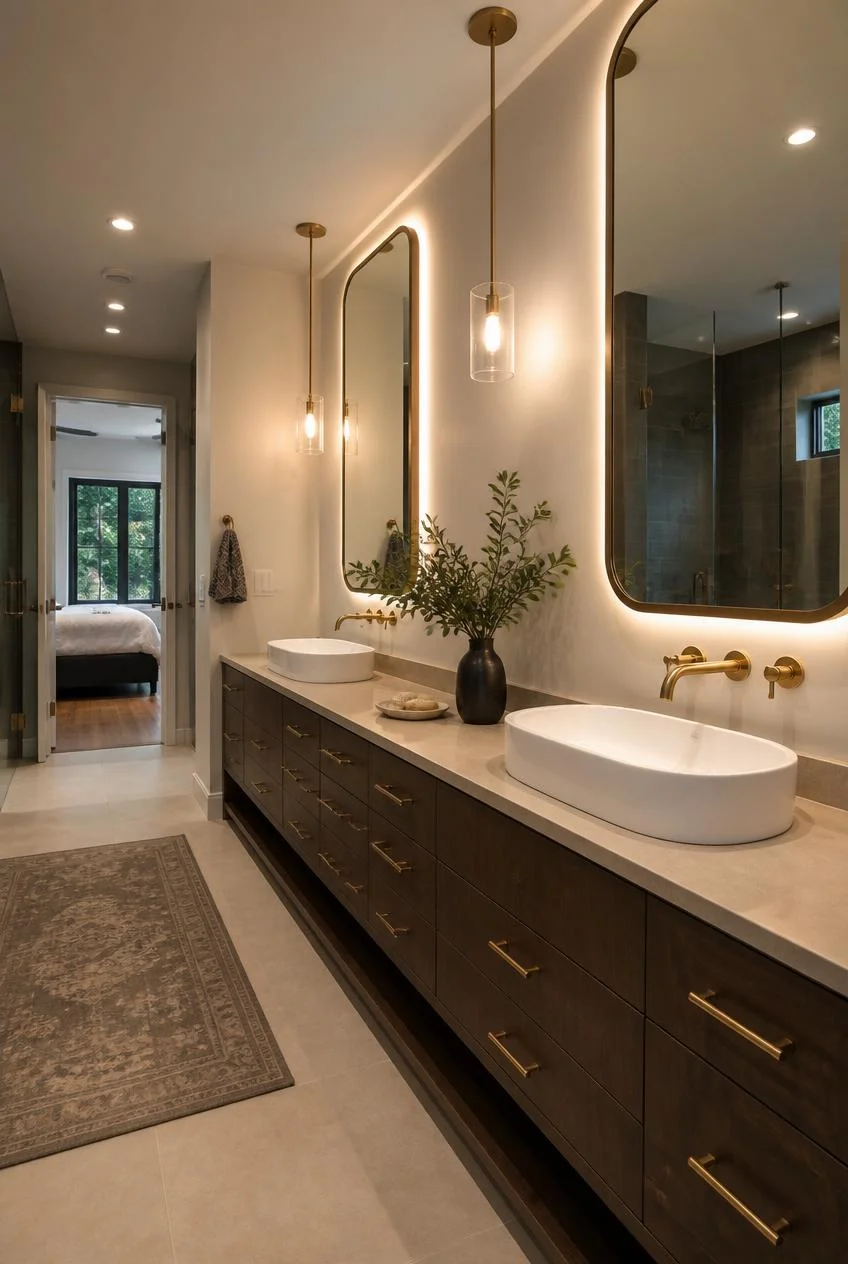
A double vanity with dark brown cabinetry topped with beige quartz countertops gives a master bathroom both the practical benefit of shared sink space and the visual benefit of a strong horizontal anchor that draws the eye across the full width of the room. Quartz in a warm beige tone offers the look of natural stone with better resistance to moisture and staining, which makes it a practical choice for a surface used daily.
Pair with backlit mirrors that run the full length of the vanity to ensure even, flattering light across the entire surface, and use gold or bronze fixtures rather than chrome to maintain the warmth of the overall palette.
Layout Insight
Position the double vanity opposite a window where possible so natural daylight reaches both sink positions equally, preventing one side from feeling darker or less pleasant to use.
A Chocolate Brown Accent Wall Behind the Bathtub
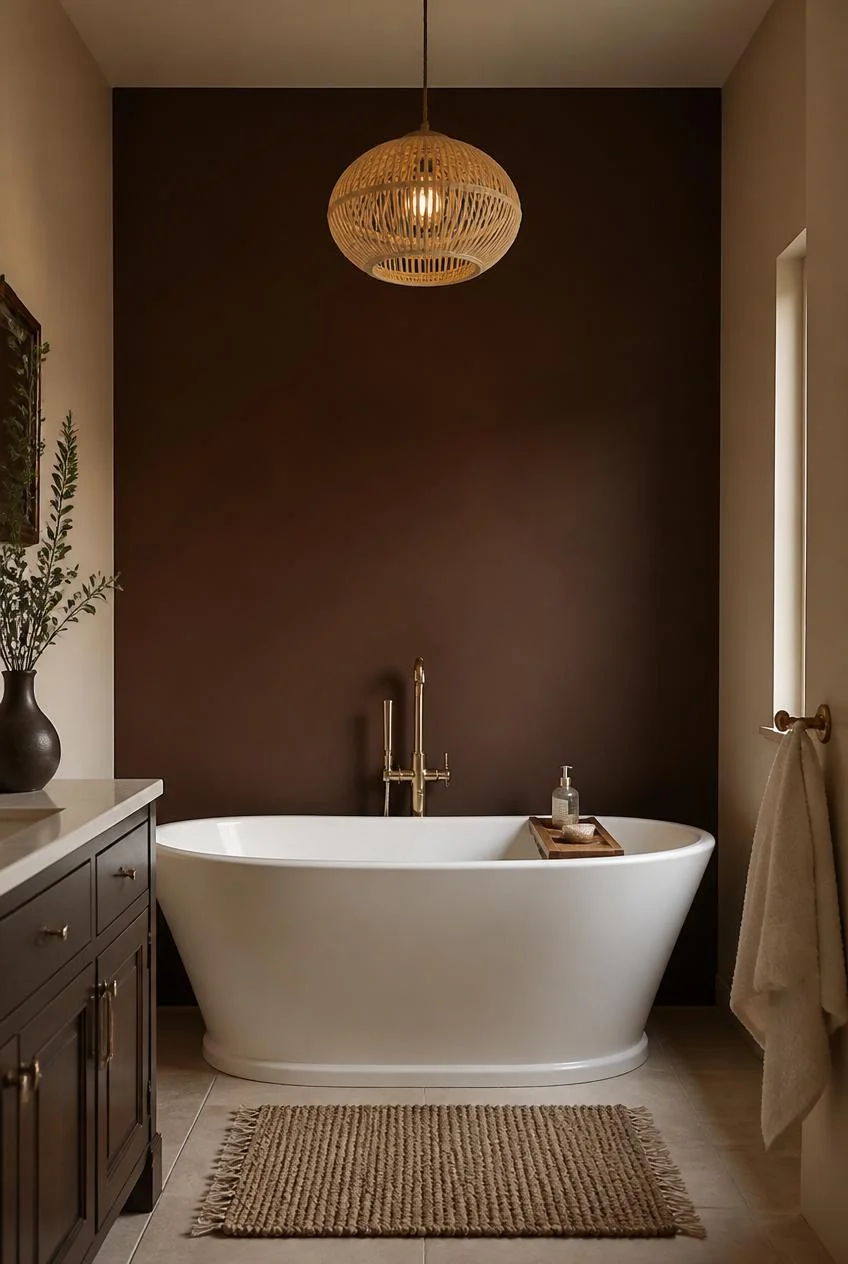
Painting or tiling a single wall in deep chocolate brown directly behind a bathtub creates a dramatic contrast that frames the tub and gives the room a sense of depth it would otherwise lack. This approach concentrates the boldest color decision in the space into a defined zone rather than distributing it across every surface, which keeps the room feeling balanced rather than heavy.
Matte or flat finish paint in a deep brown tone works well for this application, or alternatively, large format dark brown porcelain tiles give the same effect with far better moisture resistance.
Why It Works
A single dark accent wall in an otherwise light and beige bathroom creates the same visual effect as a shadow in a photograph, giving the whole composition more dimension and interest.
Zellige Tiles in Warm Amber and Caramel Tones
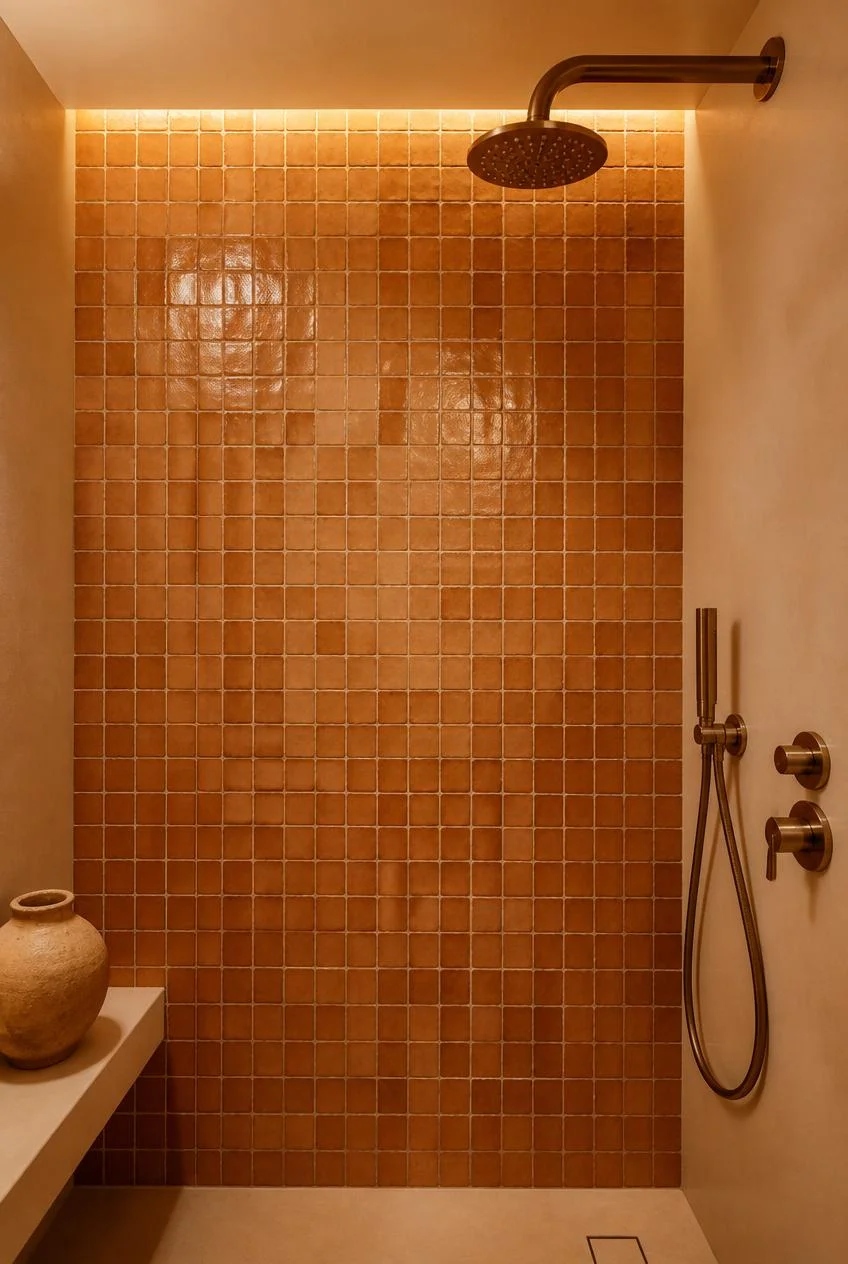
Zellige tiles, the hand cut Moroccan clay tiles known for their slightly irregular surface and rich glaze variation, bring a level of material depth to a brown and beige bathroom that machine made tiles genuinely cannot match. Each tile absorbs and reflects light differently depending on its unique surface, which means a wall of zellige in warm amber and caramel tones shimmers slightly rather than sitting flat.
Use them in a shower enclosure, behind a vanity, or as a full feature wall and keep the surrounding surfaces calm and matte to allow the texture of the zellige to remain the focal point.
Sourcing Insight
Genuine zellige tiles are imported and carry a higher price per square foot than domestic alternatives, but the visual result is distinctive enough that most designers treat them as an investment rather than a luxury.
Natural Wood Ceiling Panels for Overhead Warmth
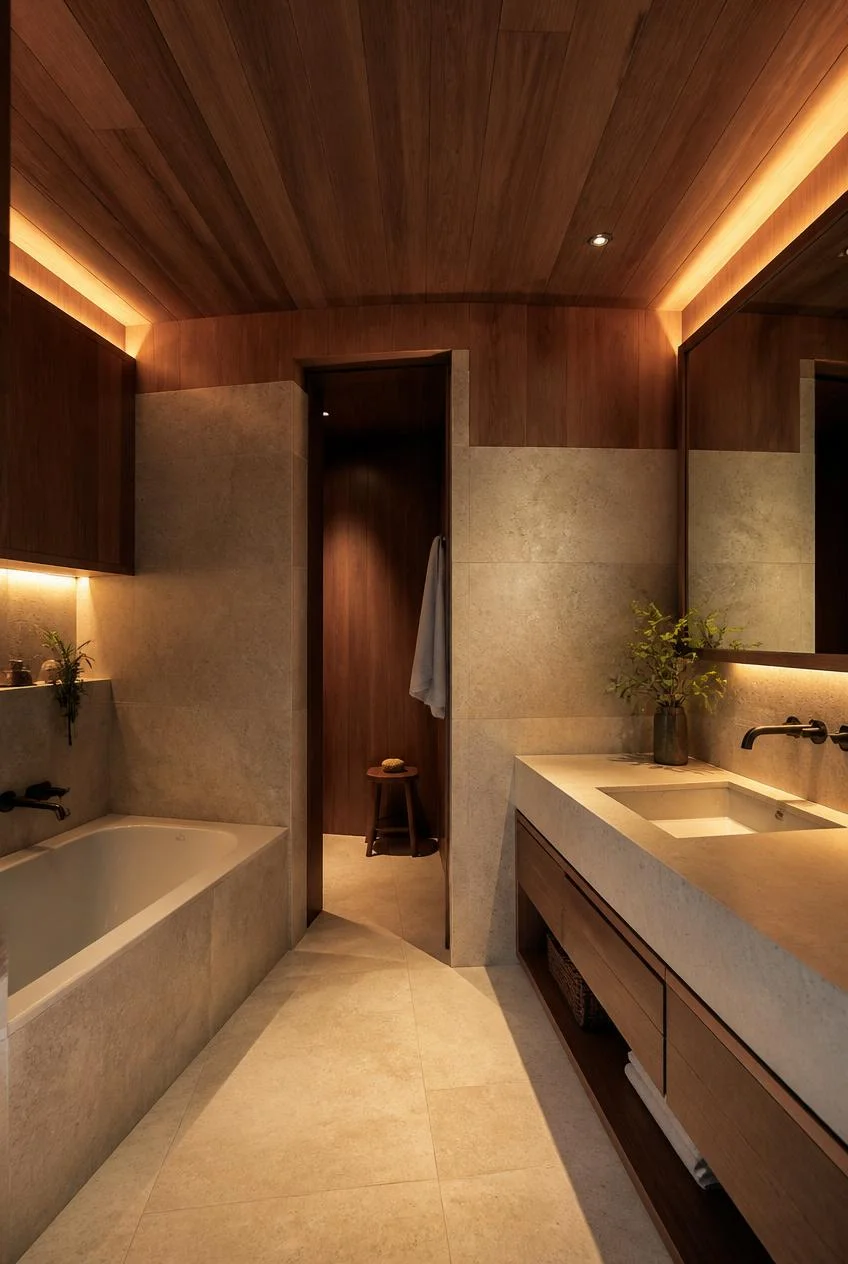
Most bathroom renovations focus entirely on walls and floors while leaving the ceiling as a plain painted surface. A wood paneled ceiling in warm cedar, teak, or pine changes the entire character of the room by introducing a natural material overhead that wraps the space in warmth from every direction rather than just from the surfaces underfoot and beside you.
This treatment works particularly well in bathrooms with exposed beam structures or in rooms where the ceiling height is generous enough to carry the additional visual weight of wood without feeling oppressive.
Practical Consideration
Only use properly sealed or moisture resistant wood for bathroom ceiling applications, since untreated timber will warp and discolor in the humidity of a regularly used bathroom.
A Terrazzo Floor in Warm Amber and Cream Speckles
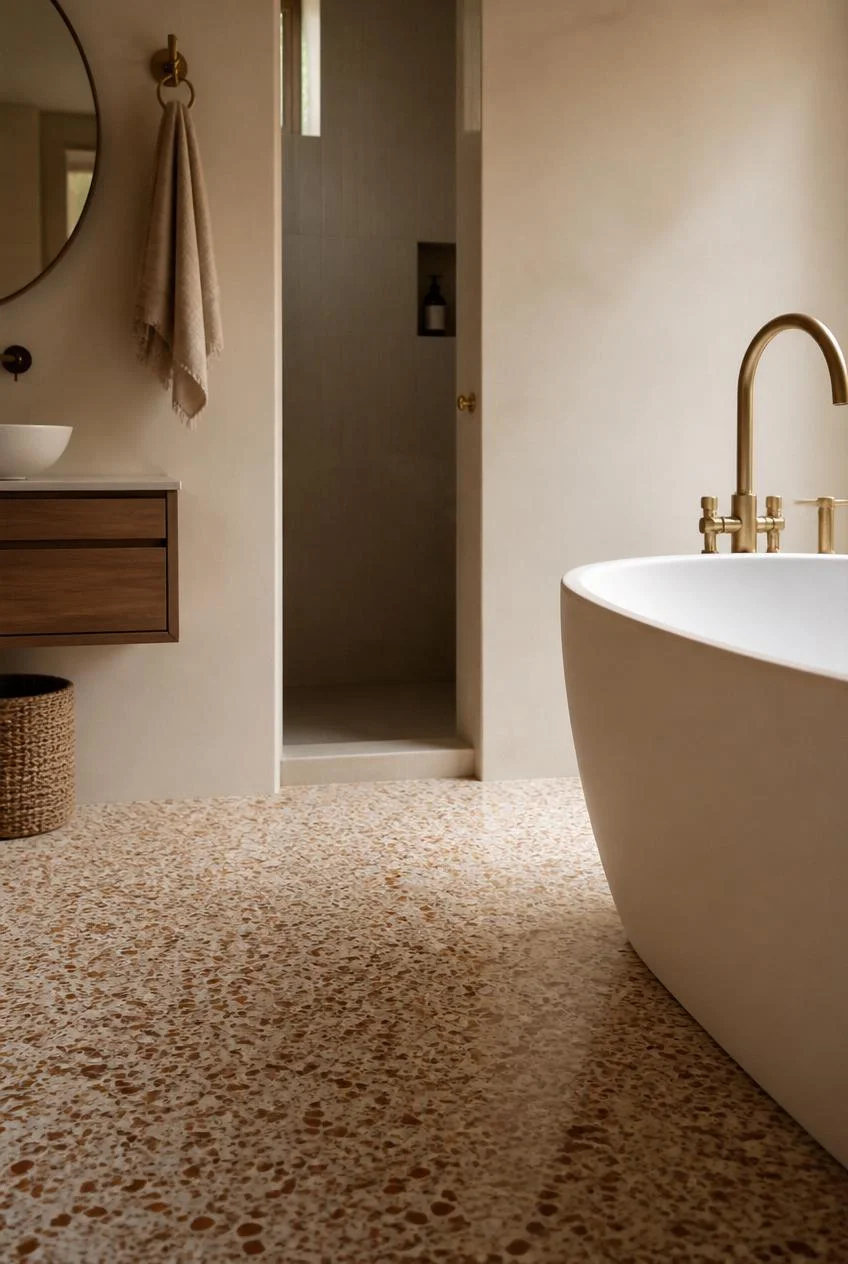
Terrazzo flooring has experienced a significant design revival, and the most current iterations move away from the cooler, grey dominant palettes of mid century originals toward warm amber, cinnamon, and cream speckle combinations that suit a brown and beige bathroom beautifully. The result is a floor that reads as almost a single warm tone from a distance but reveals layers of color and texture up close.
Pair a terrazzo floor with simple, smooth wall surfaces in a coordinating beige to allow the floor to remain the decorative focus, and use matte brass fixtures throughout to connect the warm metallic flecks within the terrazzo to the hardware elsewhere in the room.
Why It Works
Terrazzo is genuinely durable, non-slip when finished correctly, and virtually maintenance free, which means the investment in this flooring material pays dividends in longevity as well as appearance.
A Floating Brown Vanity for a Spacious Feel
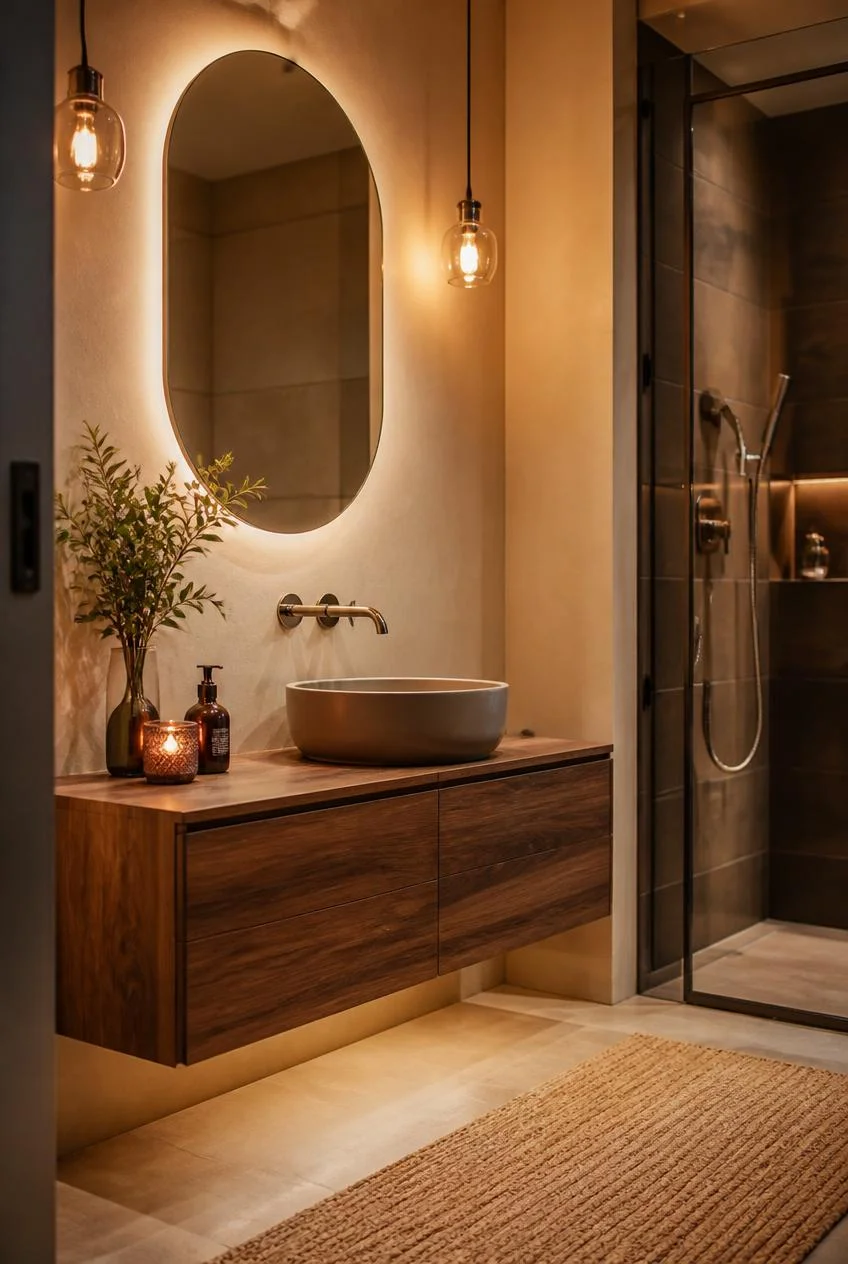
A floating vanity in a warm walnut or brown oak finish, mounted directly to the wall with visible floor space beneath, makes any bathroom feel larger than its square footage suggests. The exposed floor plane reads as continuous rather than interrupted, which gives the eye more room to travel and makes the overall space feel airier.
Pair a floating vanity with a vessel sink in a matte ceramic or stone composite finish to add height at the countertop level and introduce an organic, sculptural element above the clean horizontal line of the cabinet.
Styling Note
Keep plumbing connections as minimal and streamlined as possible in a floating vanity installation, since exposed pipe work beneath the vanity tends to disrupt the clean visual effect the format is designed to create.
Beige Marble With Chocolate Veining Throughout
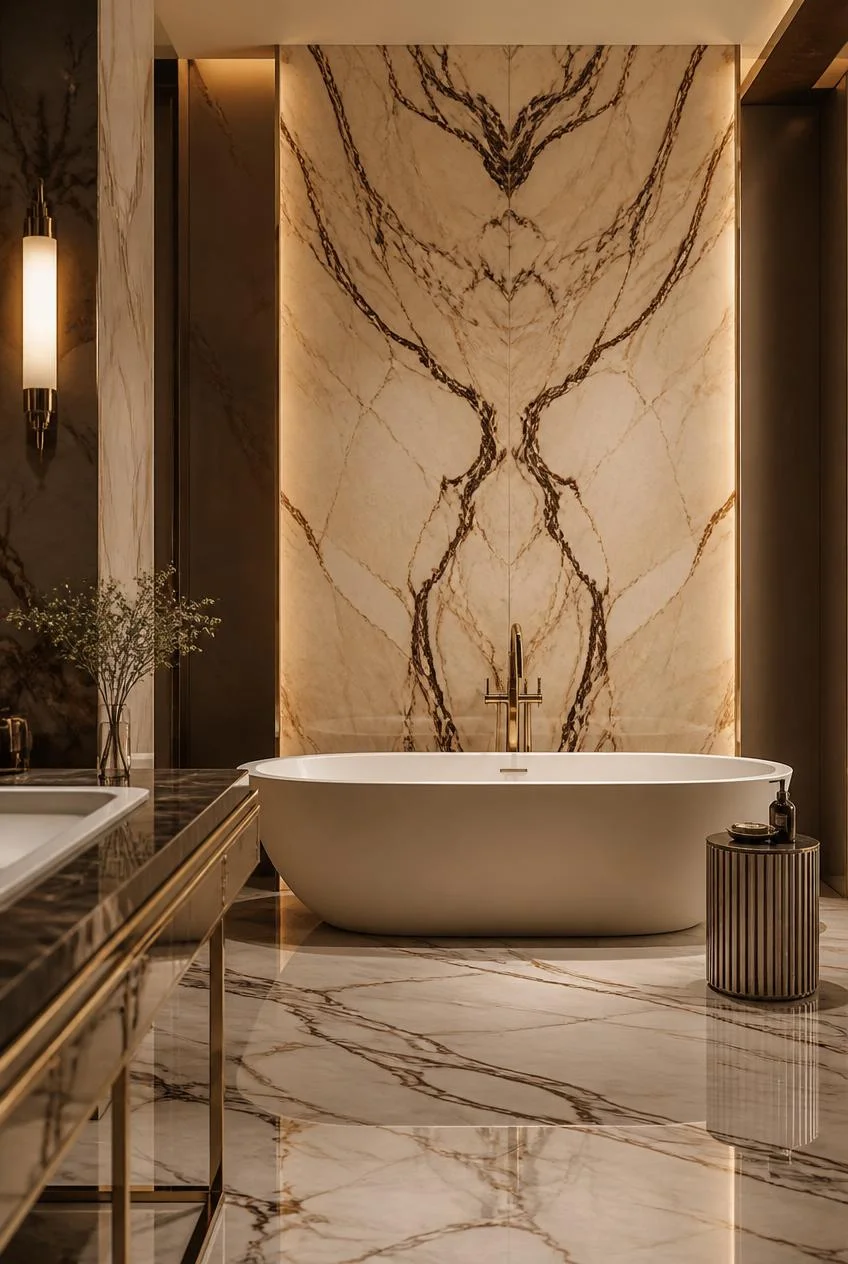
Beige marble with deep chocolate or walnut veining is one of the most enduringly luxurious material choices available in this palette. The veining introduces the depth and drama of a darker tone in a way that feels completely natural and inherent to the stone rather than applied or designed, which gives the bathroom a sense of organic sophistication.
Use bookmatched marble slabs on either side of a freestanding tub or a shower enclosure where the mirror-image vein pattern creates a symmetrical, almost painterly composition on the wall.
Design Insight
Marble requires regular sealing in wet bathroom applications, but the maintenance investment is considerably less burdensome than the renovation cost of replacing a beautiful material with something less demanding.
Rattan and Woven Accessories for Organic Texture
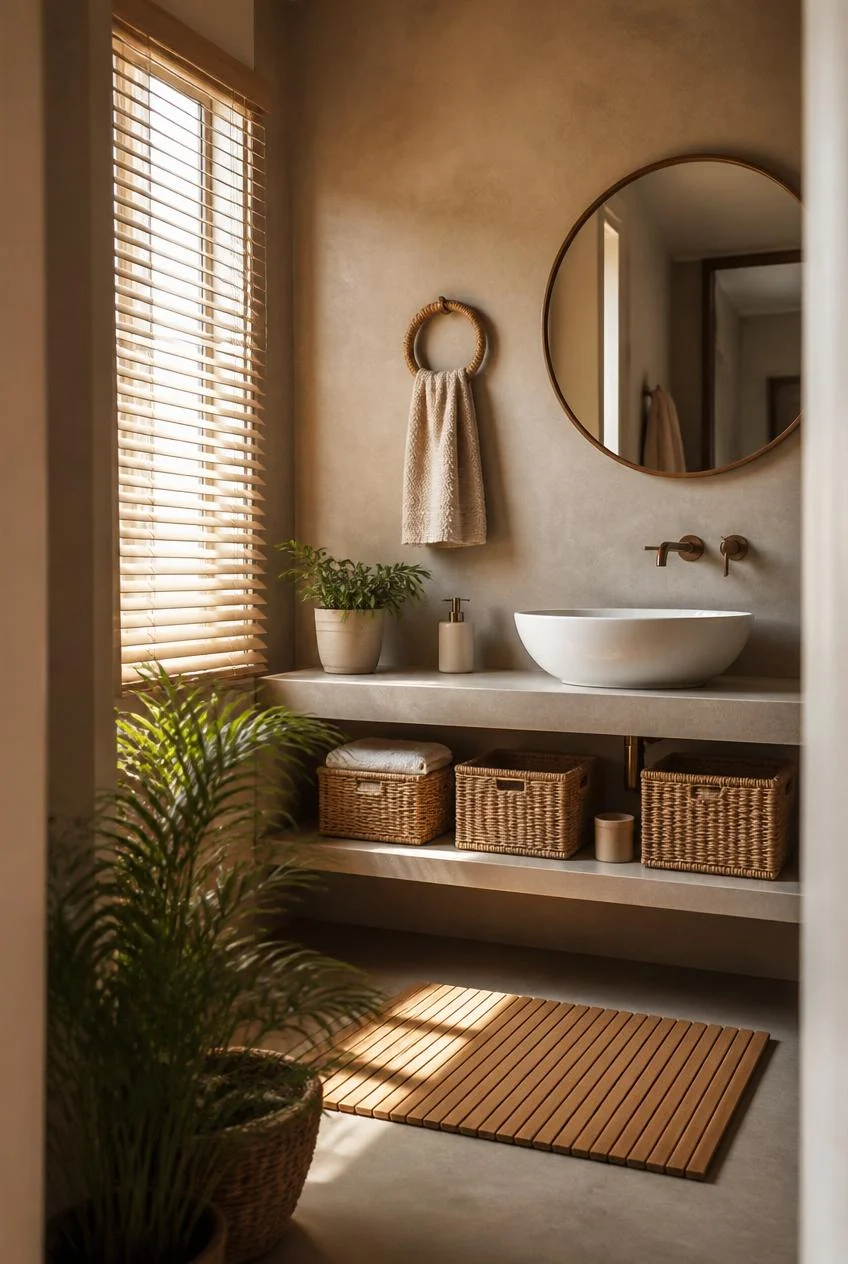
Rattan baskets, woven storage containers, and bamboo accessories introduce a layer of organic texture to a brown and beige bathroom that hard surfaces alone cannot provide. These materials sit naturally within the earthy color story of the palette and add a tactile dimension that makes the room feel genuinely collected and considered rather than assembled from a single showroom visit.
Use rattan storage baskets under a floating vanity, woven towel rings beside a shower, or a bamboo bath mat on the floor to layer natural texture at every level of the room.
Why It Works
Natural fiber accessories introduce an element of warmth and informality that softens the harder surfaces of tile and stone, preventing a beautifully finished bathroom from feeling too polished or clinical.
A Warm Beige Limewash Finish on the Walls
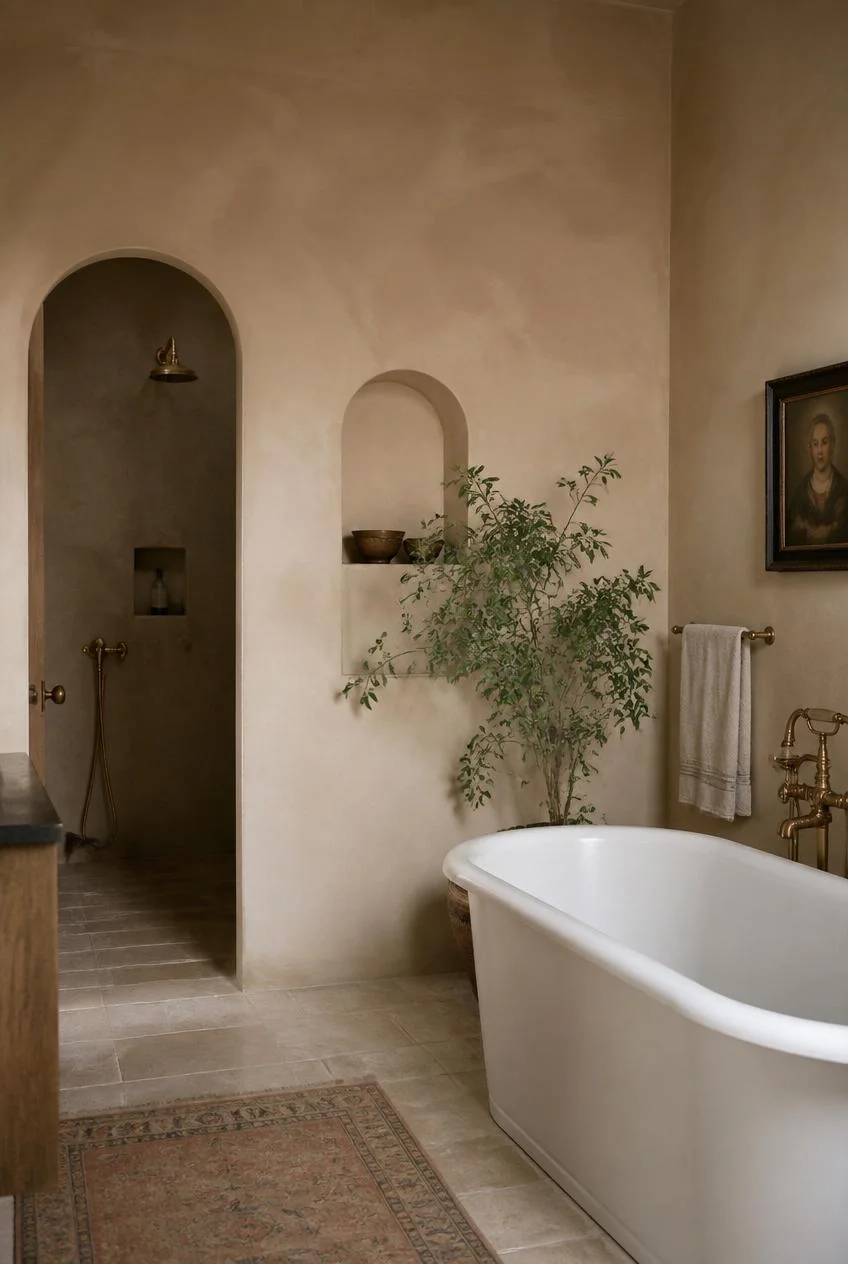
Limewash paint applied to bathroom walls creates a soft, layered, slightly translucent finish that looks significantly more expensive and considered than standard paint. The technique involves applying multiple thin coats that partially overlap, leaving intentional variation in tone that mimics the character of aged plaster or weathered stone.
In warm beige or ivory tones, limewash gives a bathroom a deeply residential, European influenced quality that pairs particularly well with natural stone floors, walnut vanities, and aged brass fixtures.
Application Note
Limewash performs well in bathrooms with adequate ventilation but should always be sealed with a moisture resistant topcoat in high-humidity areas such as directly beside a shower or bathtub.
Encaustic Cement Tiles as a Statement Floor
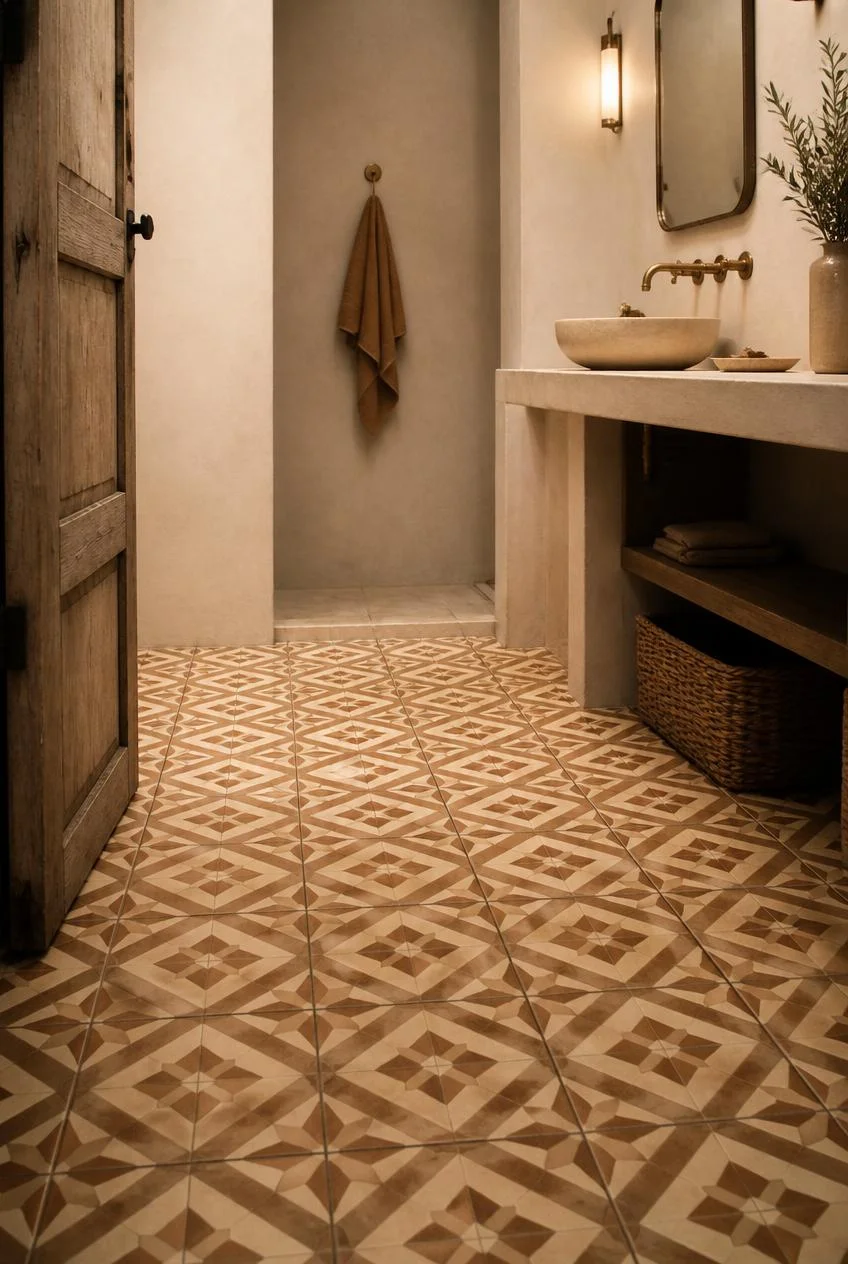
Encaustic cement tiles in brown and beige geometric patterns turn a bathroom floor into something closer to a piece of craft than a building material. The handmade quality of the tile, combined with the warmth of the earthy palette, gives even a small floor area a richness and visual complexity that plain tile simply cannot match.
Limit encaustic tile to the floor and keep walls in a coordinating smooth beige plaster or pale stone tile to allow the pattern to register clearly without the room feeling visually overloaded.
Practical Insight
Cement tiles are softer than porcelain and should be sealed before and after grouting to prevent staining and moisture absorption, particularly in bathroom applications.
A Spa Inspired Shower With Warm Stone Walls
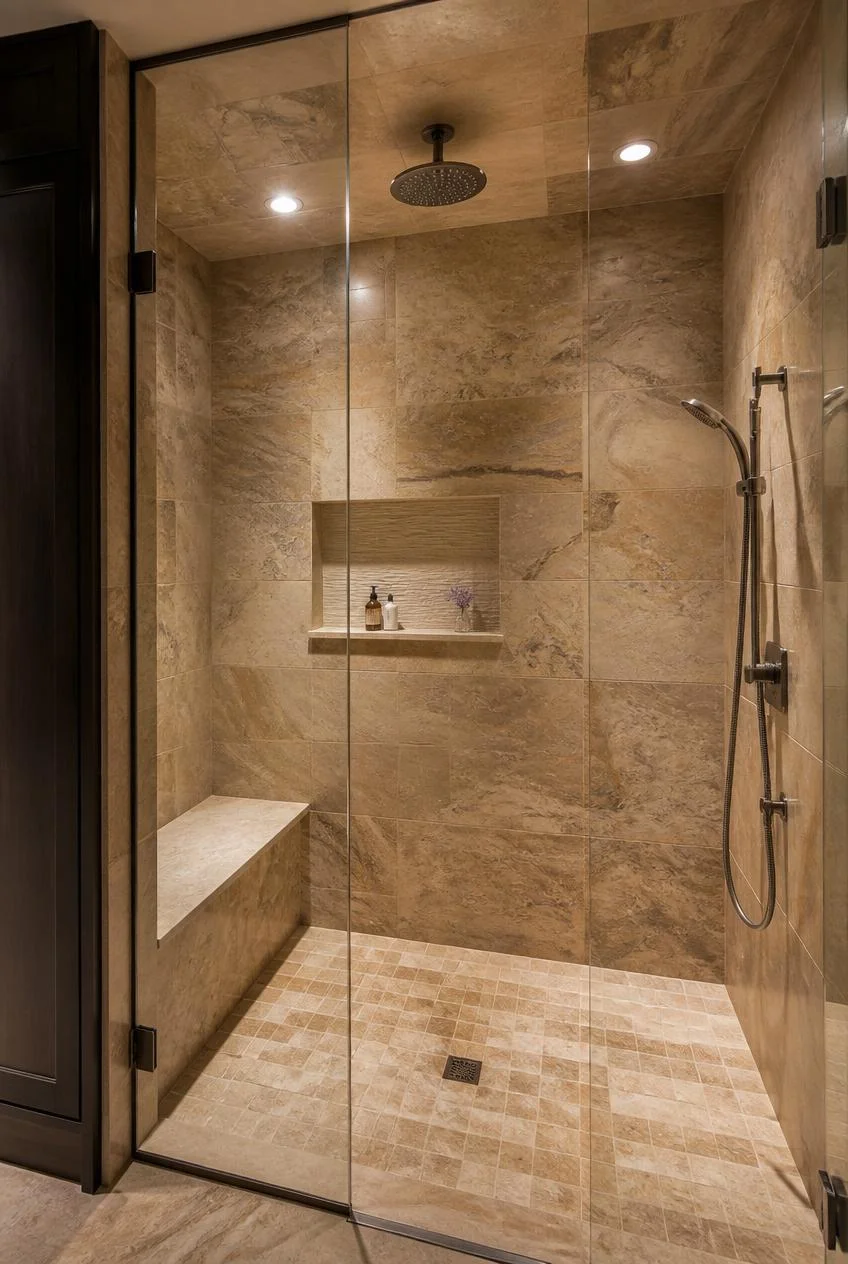
A walk-in shower enclosure lined with warm stone tile, whether travertine, sandstone, or a stone look porcelain in beige and brown tones, creates a shower experience that feels genuinely immersive rather than purely functional. Add a built-in stone bench, a recessed niche in a coordinating tile, and a rainfall showerhead overhead to complete the spa atmosphere.
Keep the shower glass frameless wherever possible, since heavy framing interrupts the visual continuity of the stone walls and reduces the sense of the shower as an architectural feature rather than a separate compartment.
Design Tip
Use the same tile inside the shower and on the bathroom floor to blur the boundary between the two zones, which makes even a modestly sized bathroom feel more cohesive and expansive.
Dark Brown Hexagonal Mosaic Tiles as an Accent
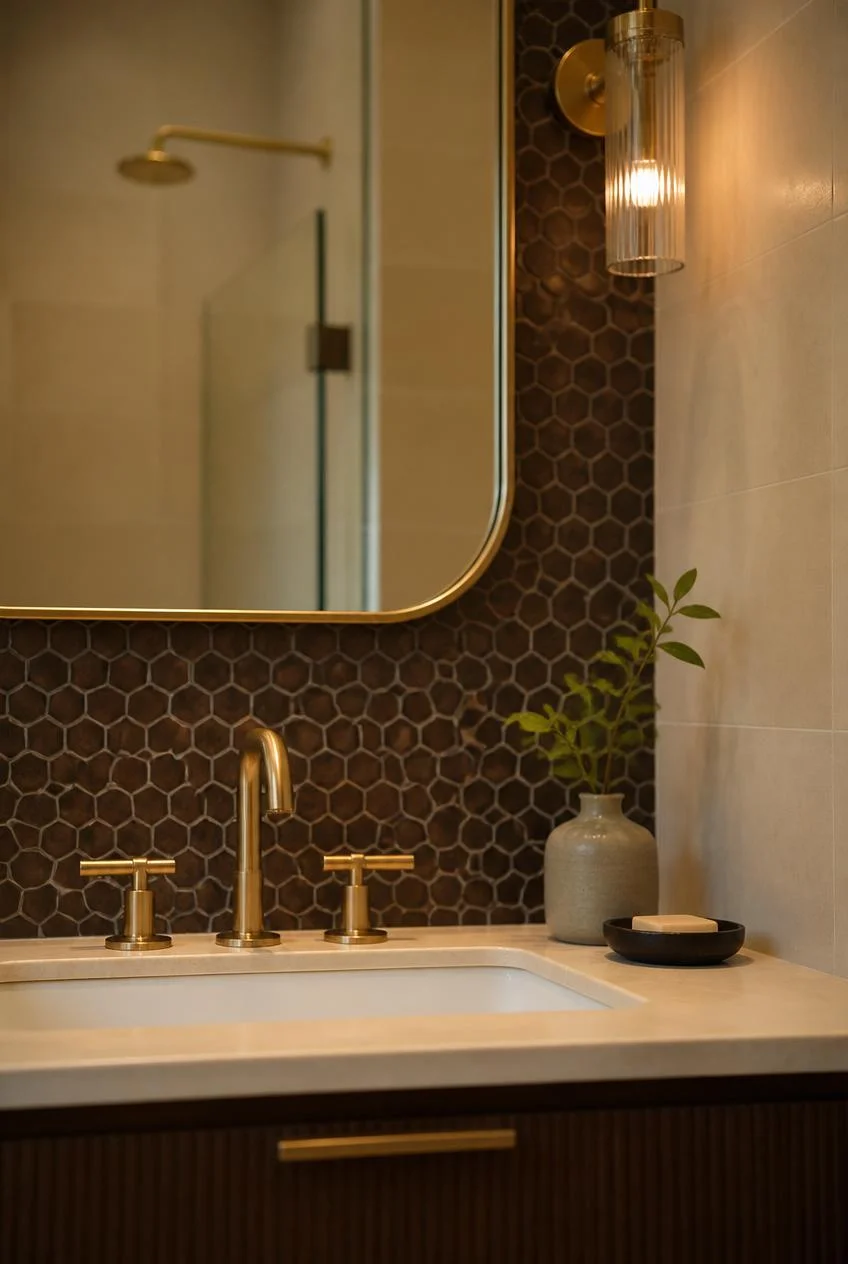
Dark brown hexagonal mosaic tiles used as a shower floor, a vanity backsplash, or a border detail introduce a geometric pattern that reads as both decorative and structural within a brown and beige bathroom. The small scale of mosaic hexagons suits detailed applications that larger format tiles cannot easily handle.
Pair dark brown hexagonal mosaics with pale beige field tiles on the surrounding surfaces, using the mosaic to define the transition between zones rather than to cover large areas.
Why It Works
The hexagonal shape adds a subtle nod to geometric design without moving the bathroom away from its warm, organic character, since the color palette does the tonal work while the shape provides the structure.
A Beige and Brown Ombre Tile Gradient
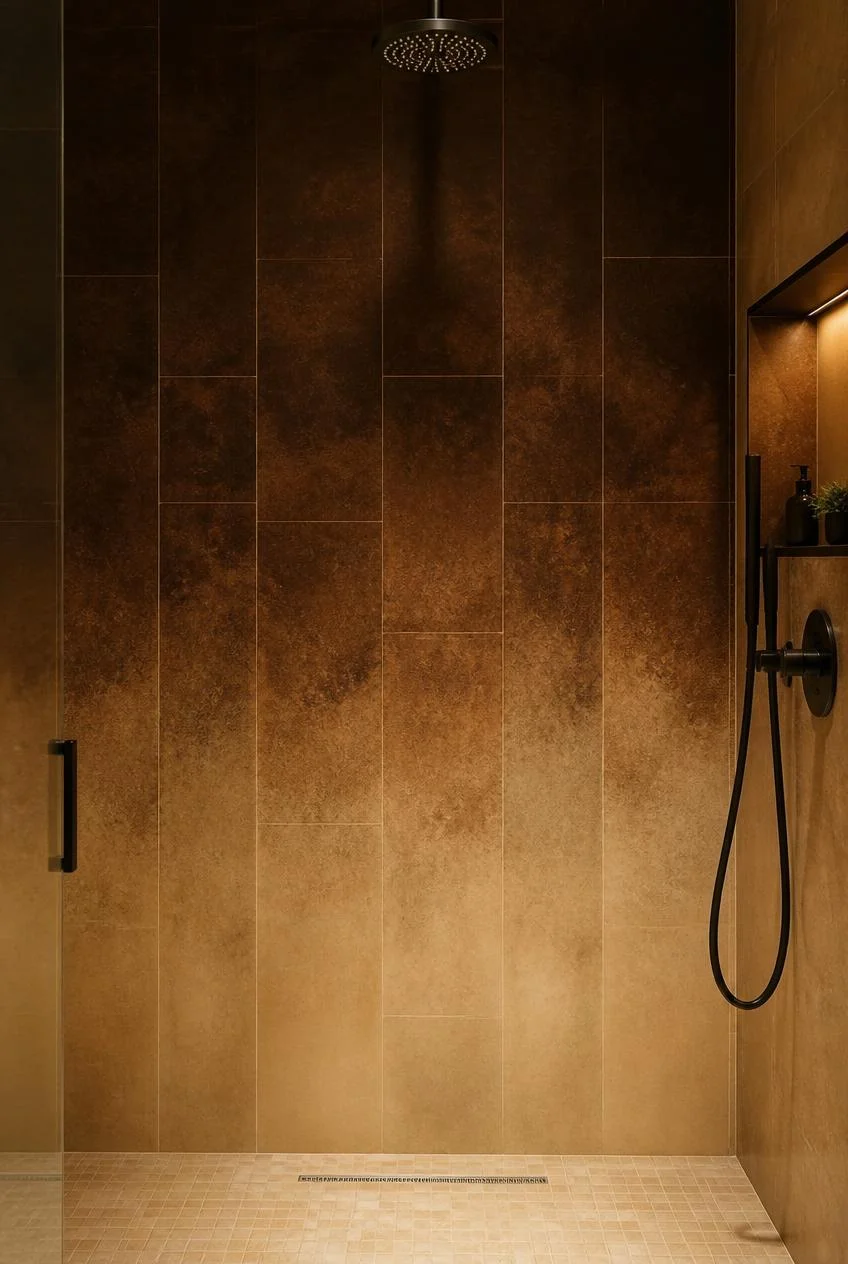
An ombre tile installation that transitions from pale cream beige at the bottom to rich chocolate brown at the top of a shower wall creates a sense of visual movement and drama that solid color tile simply cannot produce. This technique uses the same tile format throughout the installation, varying only the color, which maintains pattern cohesion while introducing a gradual tonal shift.
This effect works particularly well in large format rectangular tiles arranged vertically, since the portrait orientation reinforces the sense of upward movement suggested by the color gradient.
Design Insight
An ombre gradient on a single shower wall rather than all four sides concentrates the effect and prevents the room from feeling disorienting. One feature wall is enough.
Warm Brass Fixtures Throughout
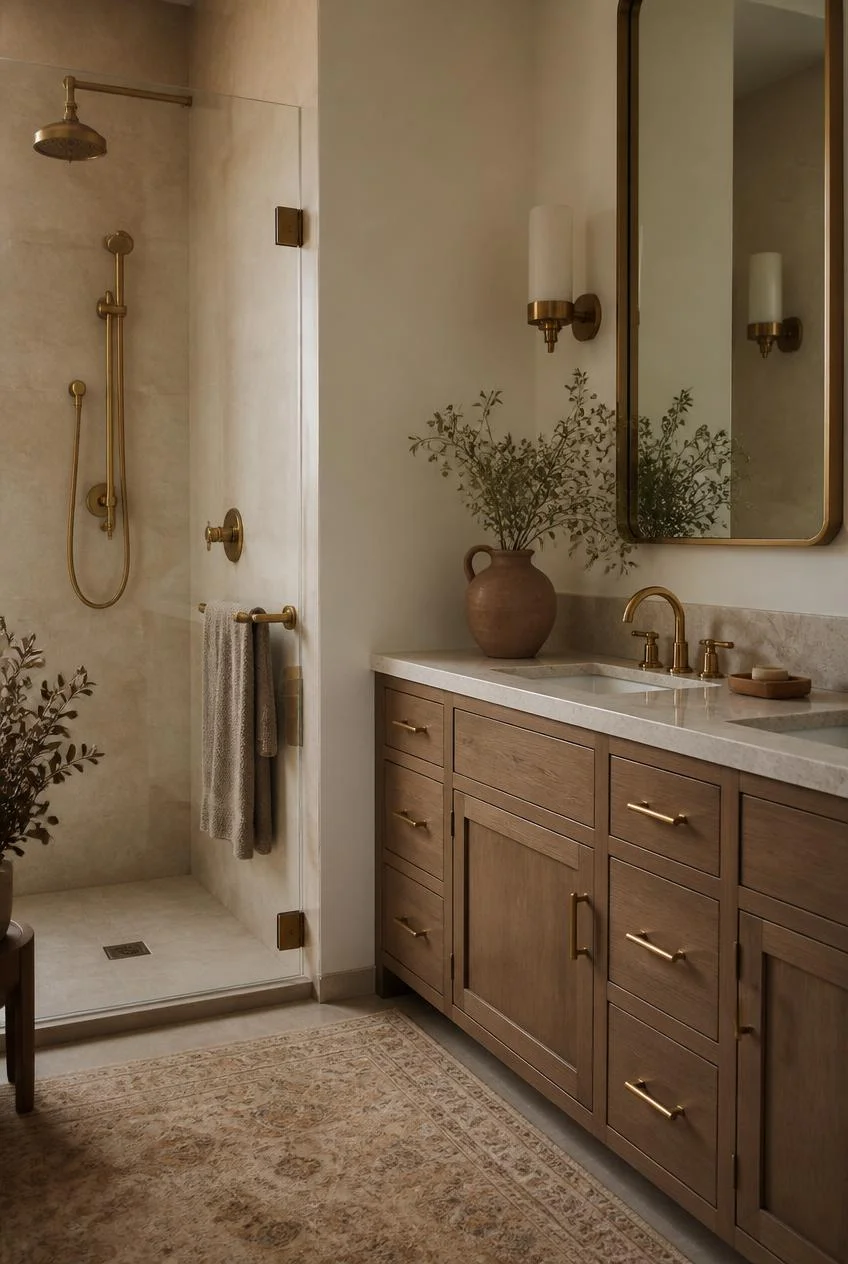
Warm brass or brushed gold fixtures used consistently across every hardware point in a brown and beige bathroom, including faucets, shower fittings, towel bars, cabinet handles, mirror frames, and light fixtures, create a cohesion that elevates the entire room. Brass belongs naturally within this palette because its warm golden tone shares the same underlying warmth as brown wood and beige stone.
Brushed brass rather than polished gold suits most contemporary bathroom styles better, since the matte surface finish reads as more sophisticated and shows water marks considerably less than a high polish finish.
Why It Works
Hardware is often underestimated as a design decision, but consistent finish choices across every metal surface in a bathroom have a cumulative effect that is immediately noticeable in the finished result.
A Beige Soaking Tub Surrounded by Stone
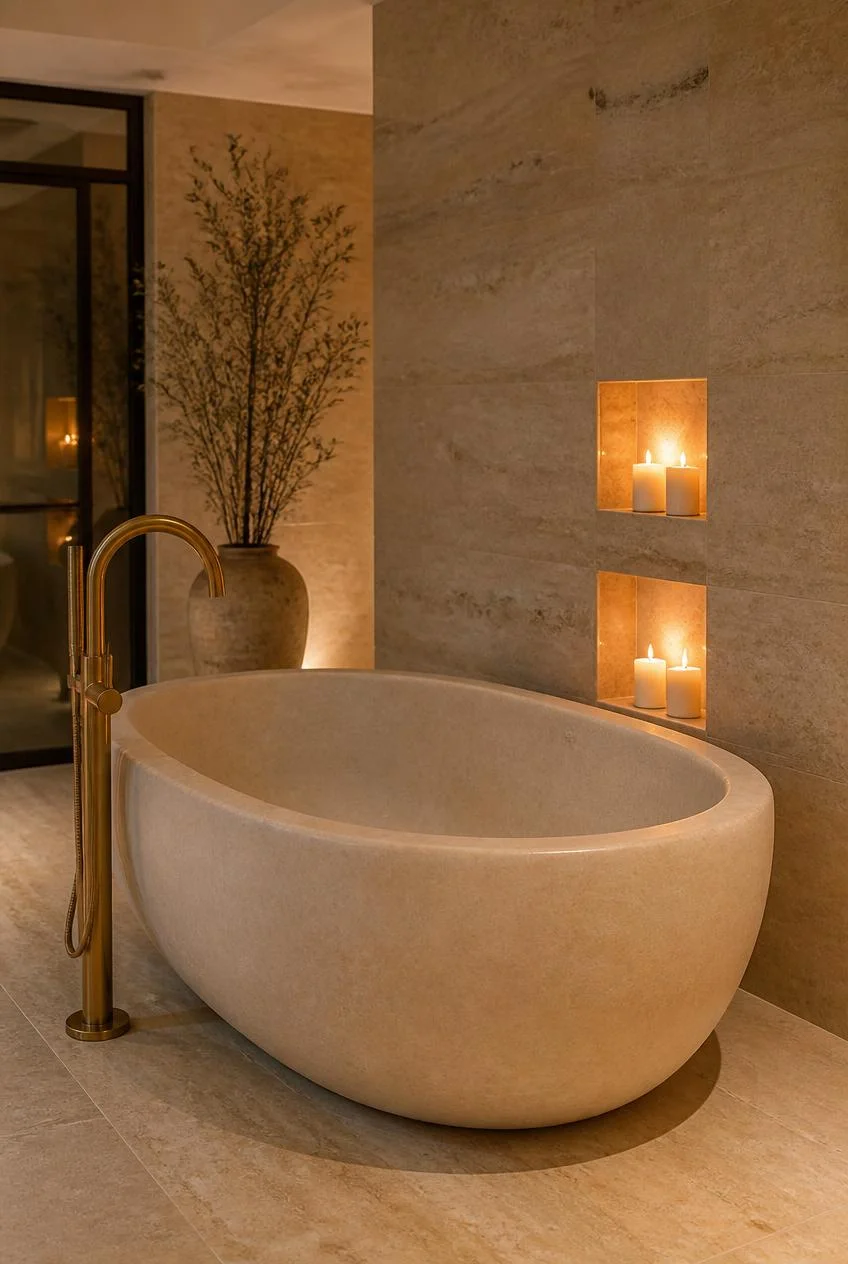
A soaking tub in a warm beige stone composite or cast stone finish, rather than a stark white version, sits within the brown and beige bathroom palette as a natural extension of the material story rather than a contrasting element that needs to be justified. Surrounding it with continuous travertine or limestone flooring that runs underneath and around the tub base reinforces that sense of the room being made from a single connected material.
Add recessed candle niches in the stone wall beside the tub and a matte brass floor mounted faucet beside it to complete a composition that reads as genuinely considered from every angle.
Styling Approach
A beige stone tub is best left completely unstyled on the tub itself and allowed to be surrounded by simple, minimal accessories so the material of the tub remains the focal point.
Wooden Floating Shelves for Open Storage
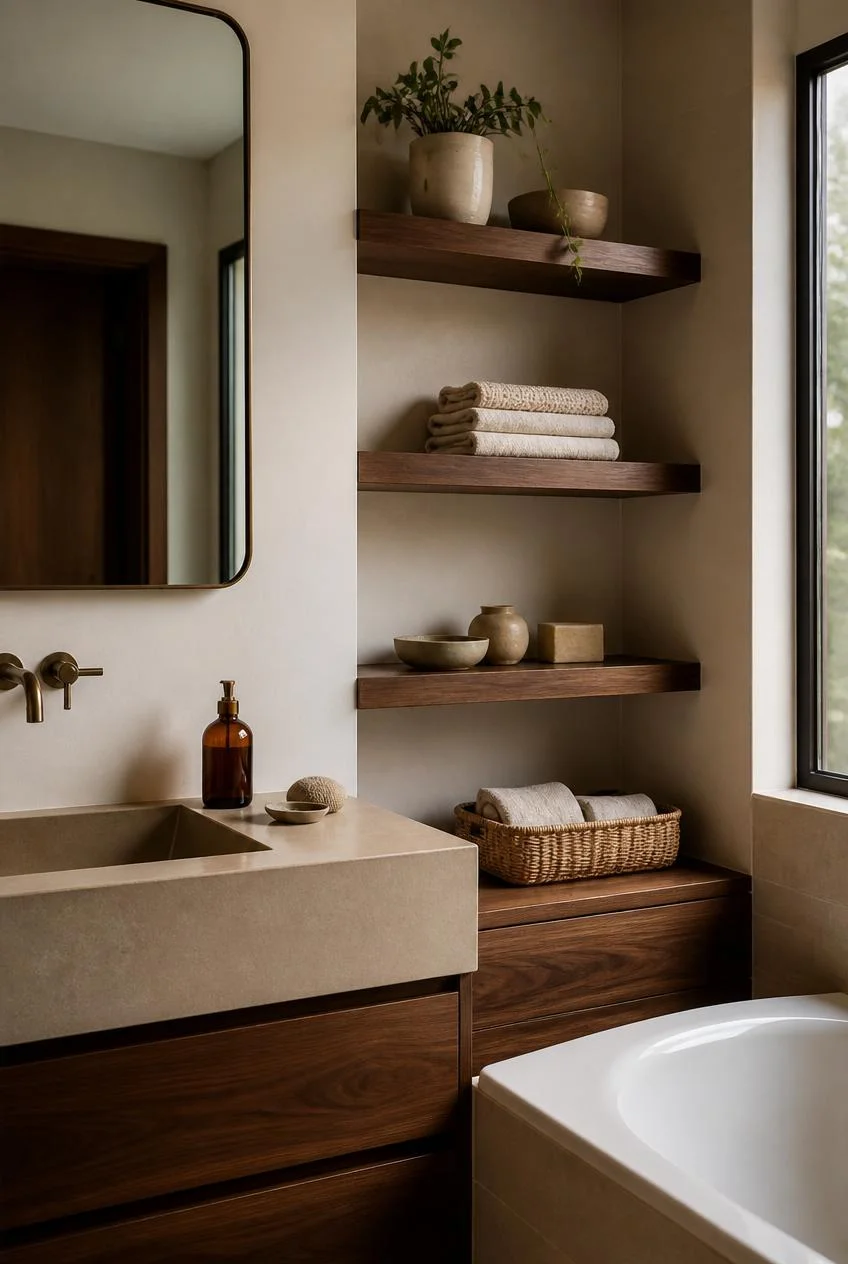
Wooden floating shelves in a warm walnut or oak finish, mounted beside a vanity or above a toilet, introduce both open storage and natural warmth to a brown and beige bathroom without requiring cabinetry. Displaying folded linen towels in cream and beige tones, ceramic soap dishes, small plants, and glass bottles on these shelves turns functional storage into a styled display that adds personality to the room.
Keep the shelf depth consistent with the vanity depth where possible so the horizontal lines of the room feel aligned and intentional rather than arriving at different depths across the wall.
Practical Note
Open wooden shelves in a bathroom should be positioned away from direct shower spray and sealed properly to prevent the wood from absorbing moisture over time.
A Biophilic Bathroom With Plants and Natural Light
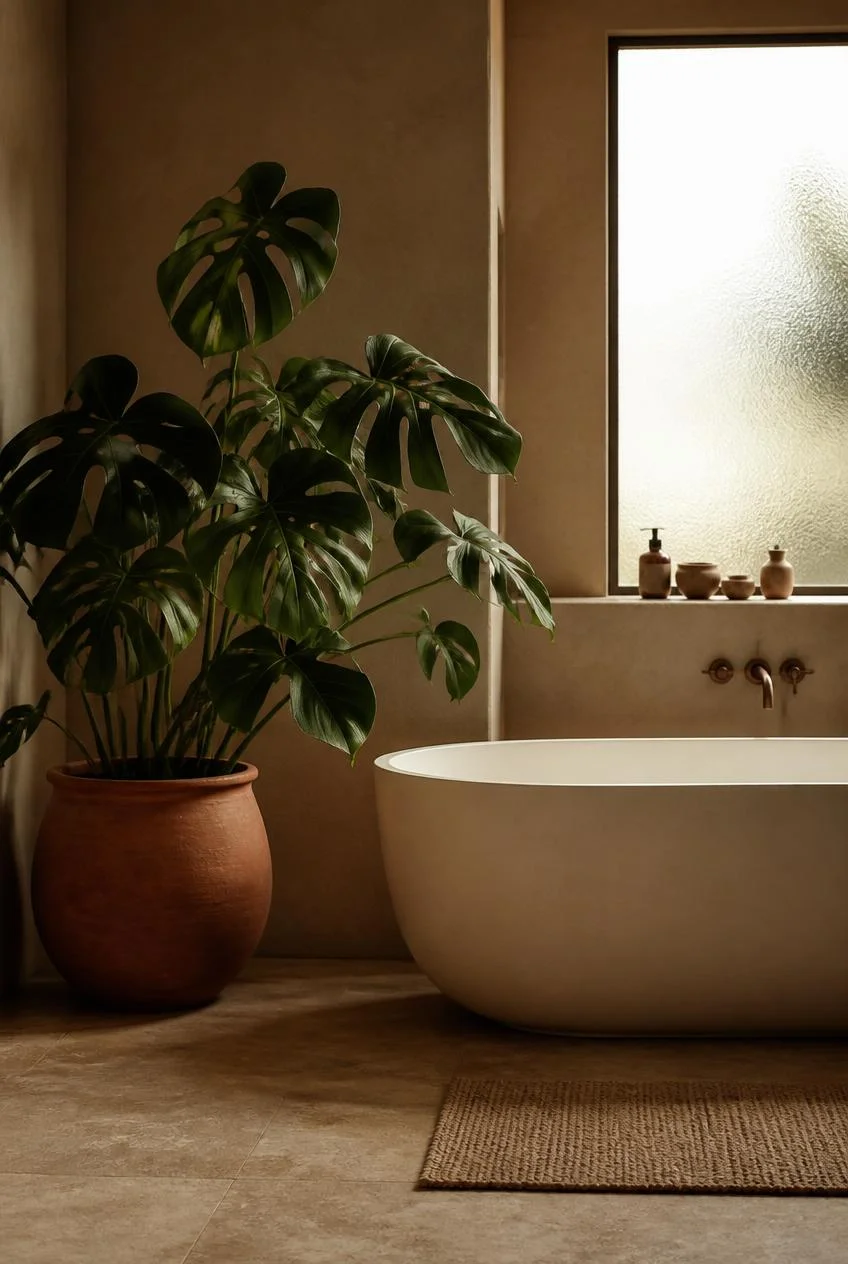
Biophilic design, the practice of bringing natural elements into interior spaces, finds one of its most natural expressions in a brown and beige bathroom where the palette already references wood, stone, and earth. Adding living plants to the space, whether a large monstera in a terracotta pot beside the tub, trailing pothos on a shelf, or a humidity loving fern near the shower, reinforces the organic character of the palette with a genuinely living element.
Maximize natural light through a frosted glass window or skylight positioned to flood the bathroom with daylight, since most plants suited to bathroom environments prefer bright indirect light.
Why It Works
Plants change over time in a way that inanimate decor cannot, which gives a bathroom a sense of being genuinely inhabited and cared for rather than simply finished and photographed.
Curved Organic Shapes in Fixtures and Mirrors
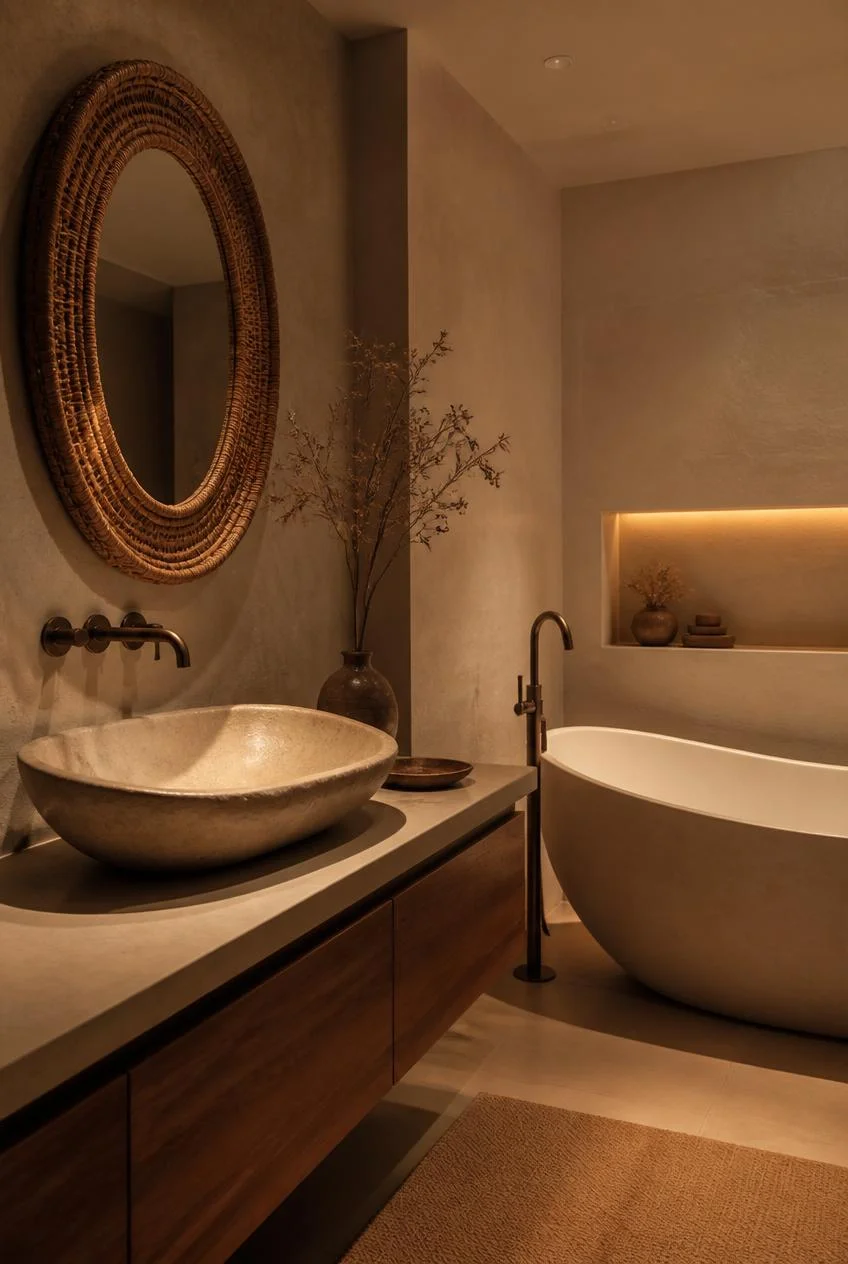
A curved vanity basin, an oval or arch-shaped mirror, and a freestanding tub with rounded sculptural lines together shift a bathroom away from the standard rectilinear format and toward something softer and more organic. In a brown and beige bathroom, these curved forms echo the shapes found in natural materials like stone and wood, reinforcing the connection to nature that the palette already suggests.
An asymmetrical or irregular shaped mirror in a warm rattan or wood frame sits particularly well in this context, since the organic silhouette of the frame mirrors the curves found elsewhere in the room.
Design Insight
Introducing curved forms does not require replacing all existing fixtures. A single curved basin, an arched mirror, or a rounded stool can shift the overall atmosphere of a bathroom considerably.
Layered Lighting for Warmth at Every Hour
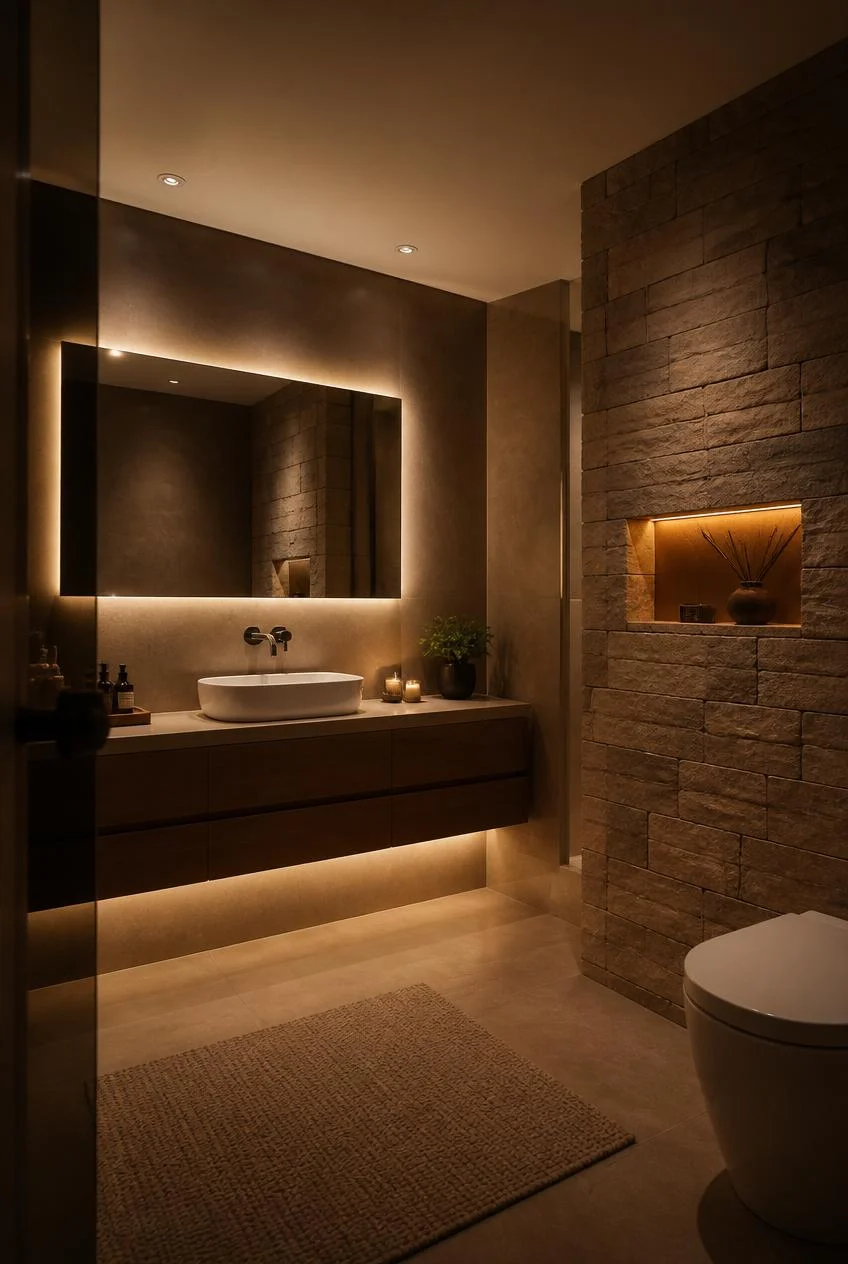
Layered bathroom lighting, combining recessed overhead lights, warm vanity mirror lights, and subtle accent lighting at lower levels, transforms a brown and beige bathroom from a well-designed space during daylight hours into something genuinely beautiful after dark. Warm bulbs in the 2700K to 3000K range deepen the richness of brown tones and make beige surfaces glow rather than look flat.
A backlit mirror at the vanity provides the most flattering light for daily tasks, while recessed LED strips below a floating vanity or within a shower niche add a secondary layer of soft ambient light that reads as particularly warm against natural stone and wood.
Practical Tip
Always install a dimmer switch on at least the main overhead circuit in a bathroom. The ability to lower the light level in the evening transforms the room from a functional space into a genuinely relaxing one.
Bringing the Palette to Its Full Potential
The strongest brown and beige bathrooms share one quality that has nothing to do with budget or square footage. Every material decision feels chosen for its texture and character as much as its color. The travertine floor was not simply selected because it is beige. It was selected because the natural variation in its surface does something that a uniform tile cannot. The walnut vanity was not chosen simply because it is brown. It was chosen because its grain makes the room feel anchored in something real.
That quality of material honesty is what separates a brown and beige bathroom that feels timeless from one that simply looks neutral. When every surface earns its place through texture, character, and craft rather than color alone, the room does not need a bold statement to hold attention. The materials themselves are the statement, and they will continue to make it beautifully for decades to come.
FAQs
Will a brown and beige bathroom feel dated in a few years?
No. Brown and beige are grounded in natural materials like stone and wood, which never follow a single trend cycle. When executed with quality materials and considered layering, this palette ages as well as any neutral scheme in residential design.
How do I prevent a brown and beige bathroom from looking too dark?
Balance darker brown tones on lower surfaces or accent walls with lighter beige on surrounding walls and ceilings. Layered lighting, particularly backlit mirrors and recessed accents, also keeps the palette feeling warm rather than heavy.
What fixtures work best with a brown and beige palette?
Warm brass, brushed gold, and bronze fixtures suit this palette most naturally. Matte black can also work as a contemporary contrast, though it shifts the room slightly cooler than warm metallic finishes.
Can I use brown and beige in a small bathroom without it feeling cramped?
Yes. Use lighter beige tones on walls and ceiling with brown reserved for a floating vanity, floor tile, or single accent surface. Keeping the upper half of a small bathroom light preserves the sense of height and openness.
What are the most durable flooring options for a brown and beige bathroom?
Porcelain tiles in a wood look or stone look finish offer the best combination of durability, moisture resistance, and aesthetic warmth. Natural stone is beautiful but requires sealing and more maintenance, which is worth considering before committing.
You May Also Like This Post:
26 Whimsical Apartment Ideas That Feel Playful Yet Sophisticated