
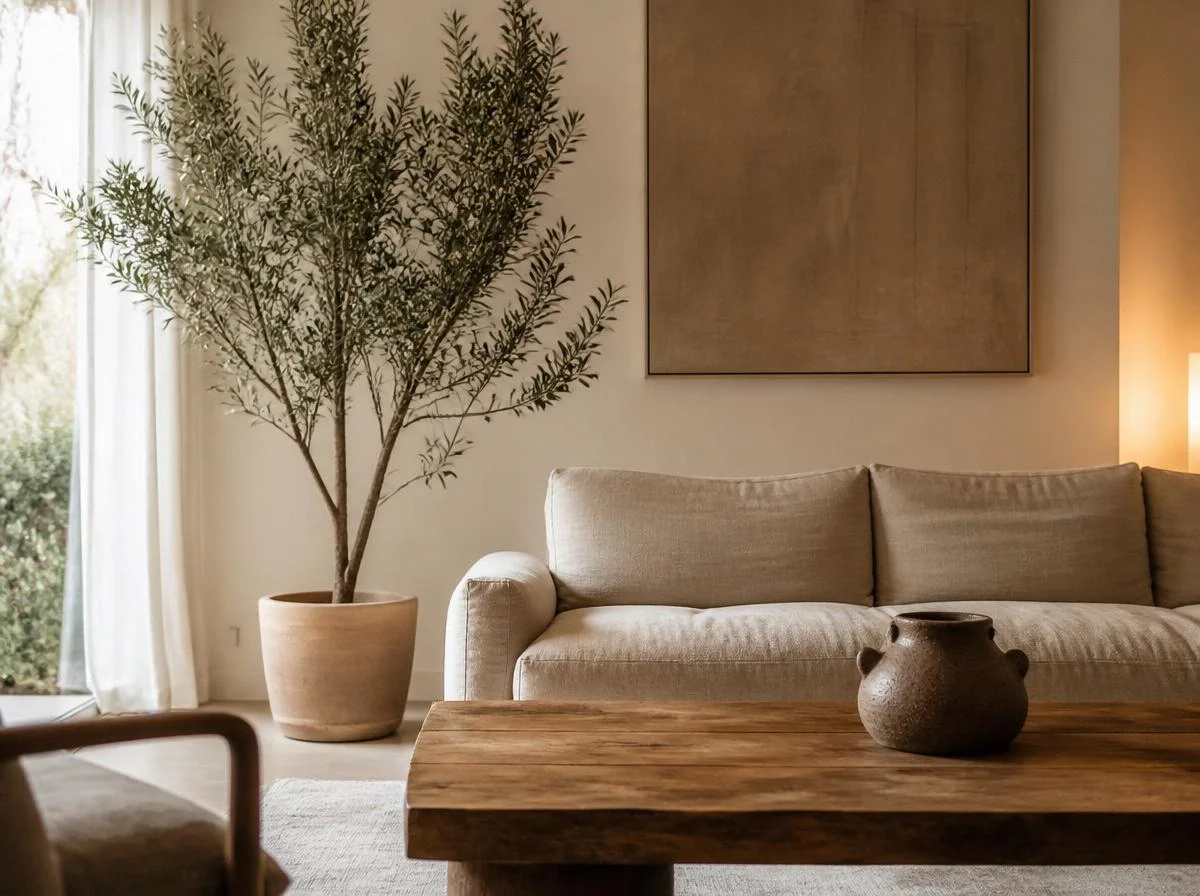
15 Minimalist Decor Ideas That Bring Effortless Beauty to Every Home
Most people who want a more beautiful home think the answer is adding something. A new cushion, another plant, a different piece of art. But the homes that consistently feel the most beautiful, the ones people walk into and immediately relax, almost always got there by removing something instead. The minimalist home decor approach understands that instinctively. It knows that clarity is more powerful than abundance, and that the right few things, chosen with genuine attention, will always outperform a room full of things chosen without it.
Minimalist decor has moved well past the cold, clinical version that defined it a decade ago. The current direction is warmer, more personal, and far more livable. Warm minimalism, as designers now call it, keeps the clean aesthetic and the disciplined restraint of traditional minimalism but layers in natural materials, soft textures, and a palette drawn from stone, wood, and earth. The result feels calm without feeling empty, beautiful without feeling staged, and distinctly personal without feeling cluttered.
This guide covers 15 minimalist home decor ideas that work across every room and every budget, with practical insight into why each one makes the home feel genuinely better rather than just differently styled.
A Warm Neutral Palette That Layers Rather Than Matches
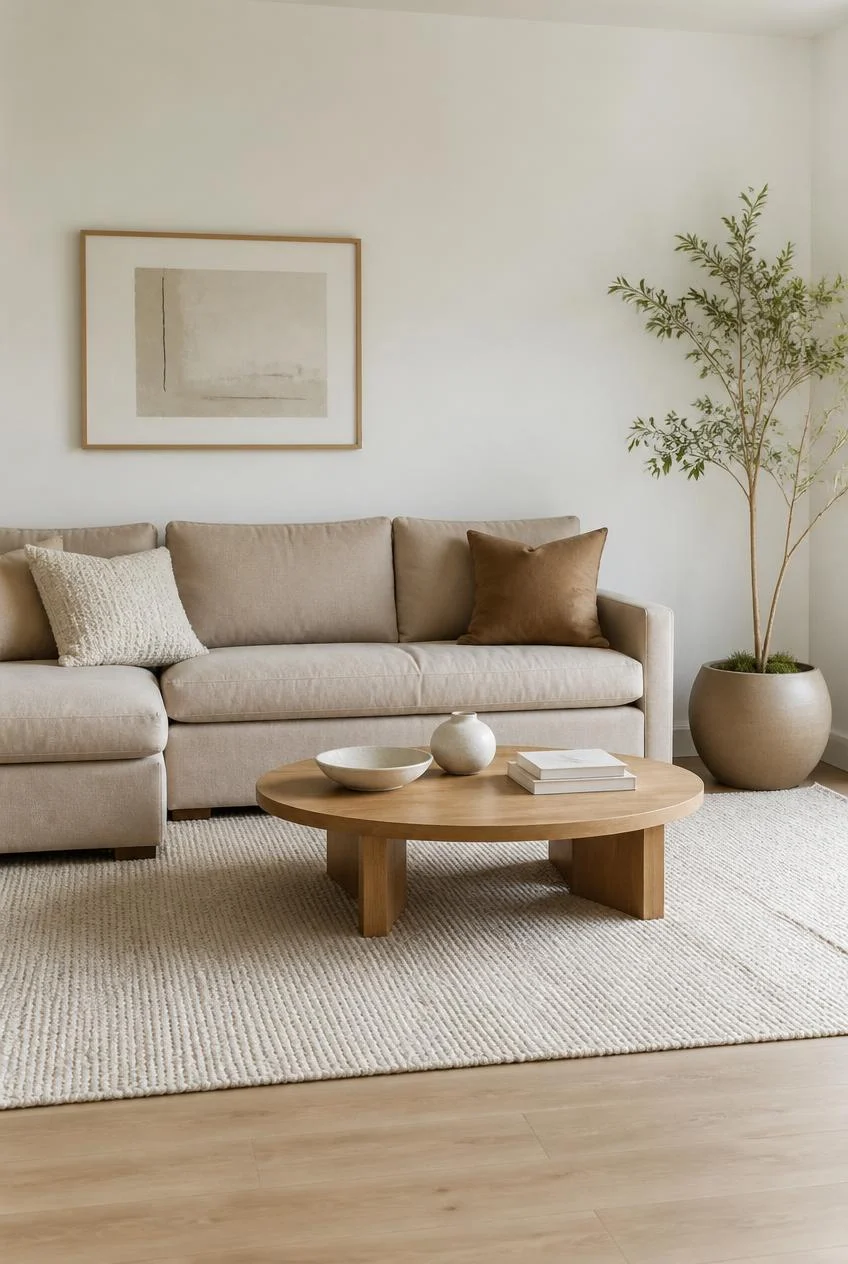
The foundation of any successful minimalist home decor scheme is color, and the most resolved version of this palette does not mean everything in the room is the same shade. It means every shade chosen belongs to the same underlying temperature family. Warm whites, mushroom beige, soft taupe, and oatmeal tones layered across walls, furniture, and textiles create a room that feels unified without feeling monotonous.
The layering is what separates a warm neutral palette from a simply beige one. A white wall, a linen sofa in a slightly warmer cream, a wool rug in a natural undyed tone, and a wood coffee table in a warm honey finish all speak the same tonal language while offering enough variation to hold visual interest. Nothing clashes. Nothing demands attention. The whole room simply settles into a calm, cohesive atmosphere that feels immediate and effortless.
How to Build the Layers
Start with the largest surface, the walls, in the lightest tone. Move the furniture one or two shades warmer. Keep the floor the warmest of all. This gradual shift from light at the top to warm at the bottom mirrors the natural world and gives a room an instinctively grounded, settled quality.
Sculptural Furniture That Earns Its Place
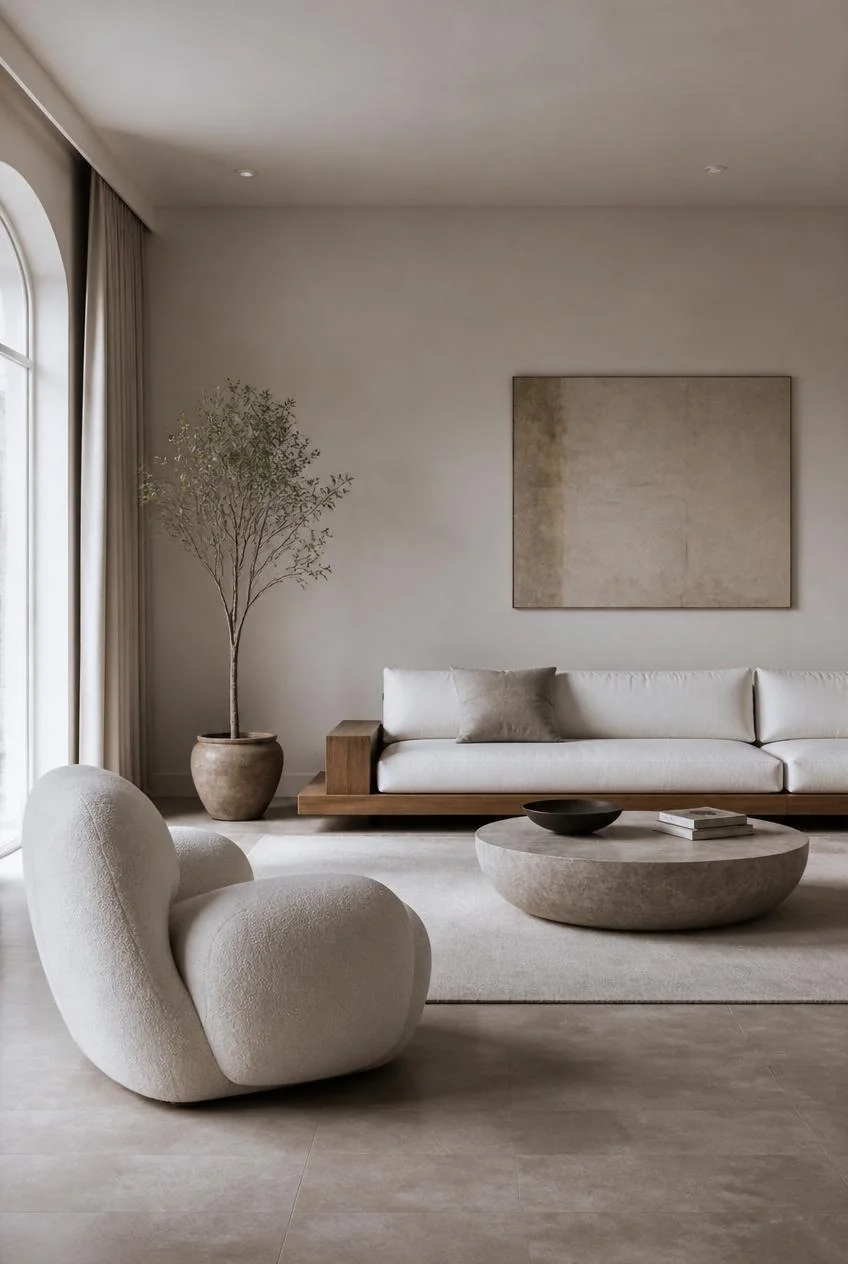
In a minimalist interior, furniture cannot hide behind decoration. It sits in open space, surrounded by breathing room, and it needs to earn that exposure entirely through the quality of its own form. Sculptural furniture, whether a curved armchair with an organic backrest, a coffee table in a rounded stone form, or a side table that looks more like a small piece of architecture than a surface to put things on, makes this adjustment well.
The key word here is intentional design. Each piece should have a silhouette that is interesting when viewed from multiple angles, since a minimalist room offers multiple unobstructed sightlines that a cluttered room never does. A solid wood dining chair with a gently curved back, a ceramic lamp base in an irregular organic form, or a sofa with a low profile and clean horizontal line all qualify as pieces that reward the open space surrounding them rather than disappearing into it.
One Piece at a Time
Introducing sculptural furniture works best as a gradual process. Identify the single most used or most viewed piece in each room and replace it first. The improvement in the room’s overall quality will be immediate and disproportionate to the single change made.
Handmade Ceramics as Quiet Everyday Art
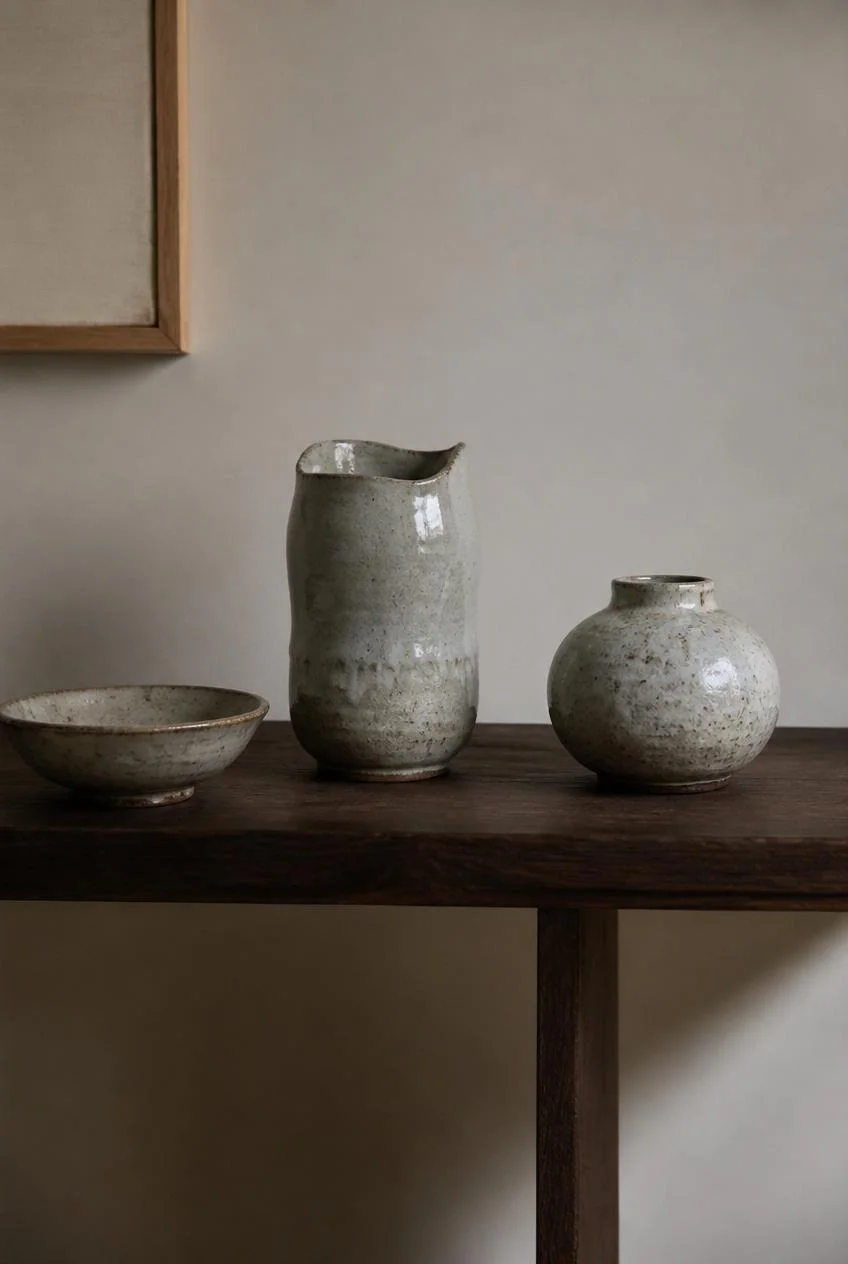
One of the most accessible and most impactful minimalist decor ideas is replacing generic, mass-produced decorative objects with handmade ceramics that carry actual visual character. A wheel thrown vase with a slightly irregular rim, a ceramic bowl with an ash glaze that pools differently across its surface, or a small sculptural object from an independent maker all do something that a factory-produced equivalent cannot. They hold the eye without demanding it.
In a minimalist home, where surfaces are largely clear, each object on display carries a responsibility the same object would not carry in a busier room. A beautiful handmade ceramic piece fulfills that responsibility naturally, since the variation in its form and finish provides the visual interest that a shelf full of competing objects would otherwise supply.
Where to Find Them
Independent ceramicists sell through handmade goods platforms and local craft markets at a wide range of price points. Even a single genuinely beautiful piece can shift the character of a room significantly without requiring additional purchases around it.
Negative Space as the Room’s Most Powerful Element
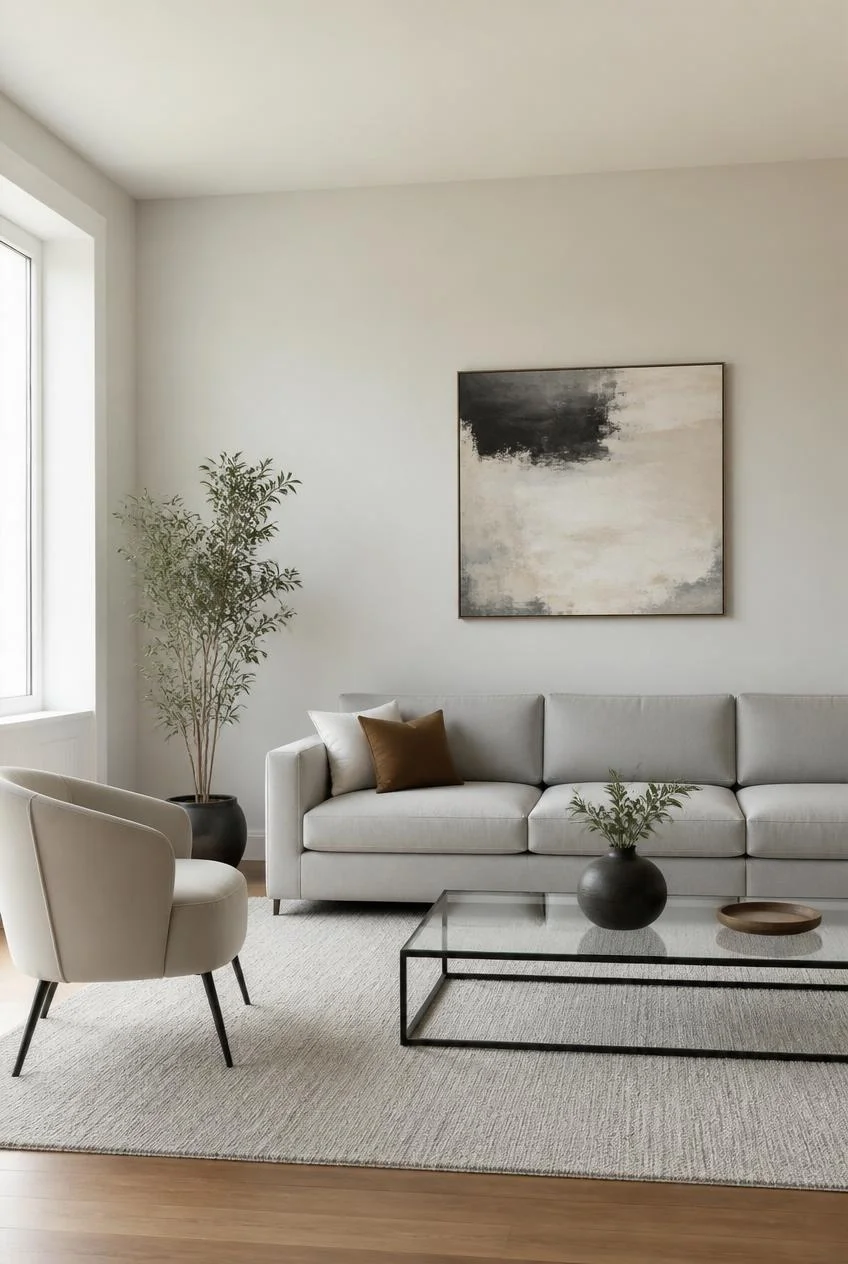
The negative space in a minimalist home, the empty wall, the clear countertop, the uncrowded shelf, is not a failure to decorate. It is a decision. And it is arguably the most powerful design decision in the room, because it determines how every other element reads. A single painting on a bare wall is a completely different visual experience from the same painting surrounded by five other pieces. The empty space around it is what gives it presence.
Understanding negative space as a deliberate element rather than an uncomfortable void changes how every surface in a minimalist home gets approached. Before adding anything to a shelf, a table, or a wall, the question is not what else belongs here, but whether what is already here is being served or diluted by what might be added.
The Practical Approach
Try removing everything from a single surface in your home and placing back only what genuinely needs to be there or what genuinely adds something beautiful. The restraint required in that process is exactly the exercise that minimalist decor asks of every room.
Natural Materials That Bring Texture Without Visual Noise
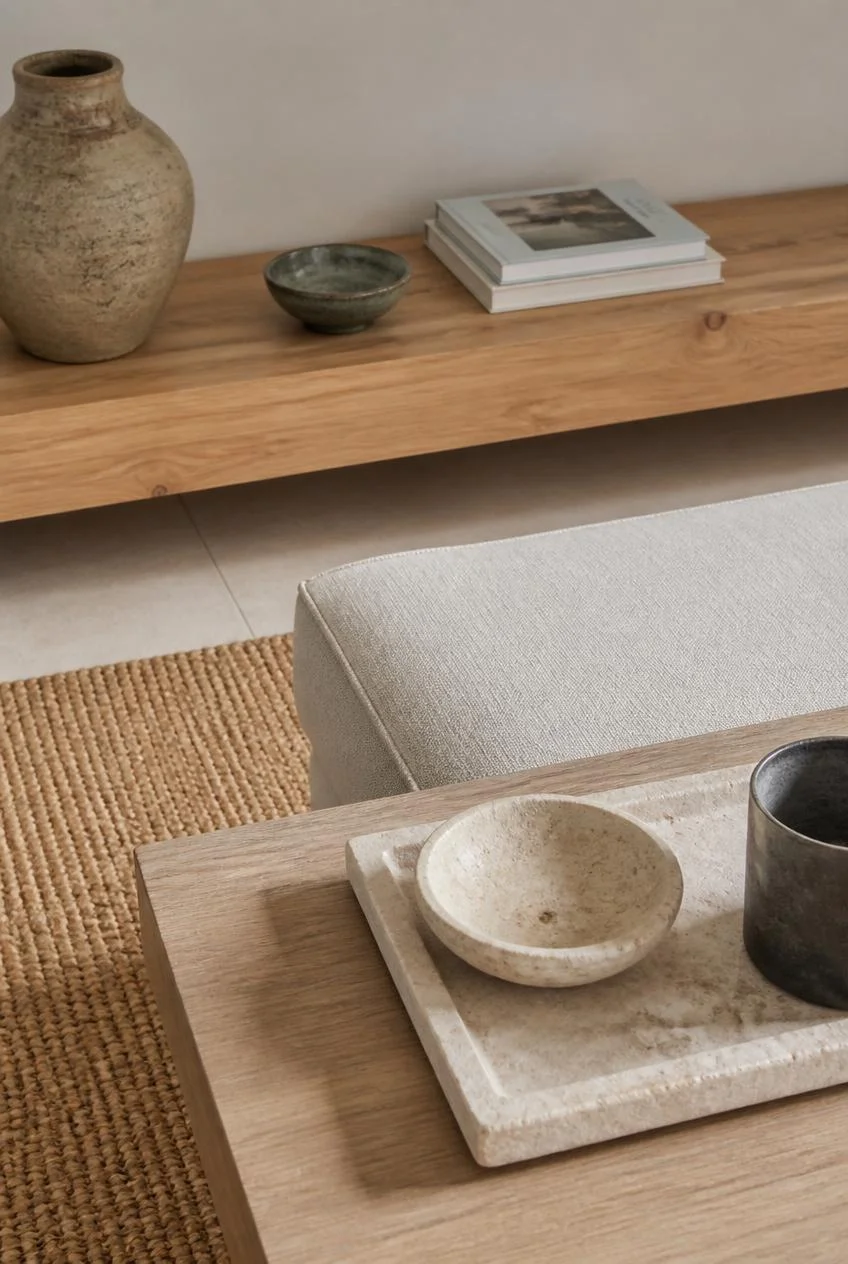
Natural materials solve one of the central challenges of minimalist decor, which is how to add enough visual and tactile interest to prevent a room from feeling sterile without adding clutter. Solid wood, natural stone, raw linen, undyed wool, rattan, and jute all introduce texture through their inherent material quality rather than through pattern, color, or quantity. They are interesting simply by virtue of what they are.
A solid oak shelf with visible grain, a travertine tray on a coffee table, a jute rug with a woven texture, and a linen cushion with a natural nub all add richness to a minimalist space without competing for attention. They give the eye something to notice and enjoy without demanding the kind of sustained focus that a bold pattern or bright color would require.
Material Consistency
Limiting a room to two or three primary natural materials, rather than mixing six or seven, keeps the clean aesthetic intact while still delivering the warmth and depth that a minimalist interior needs to feel livable rather than clinical.
A Single Statement Art Piece on a Bare Wall
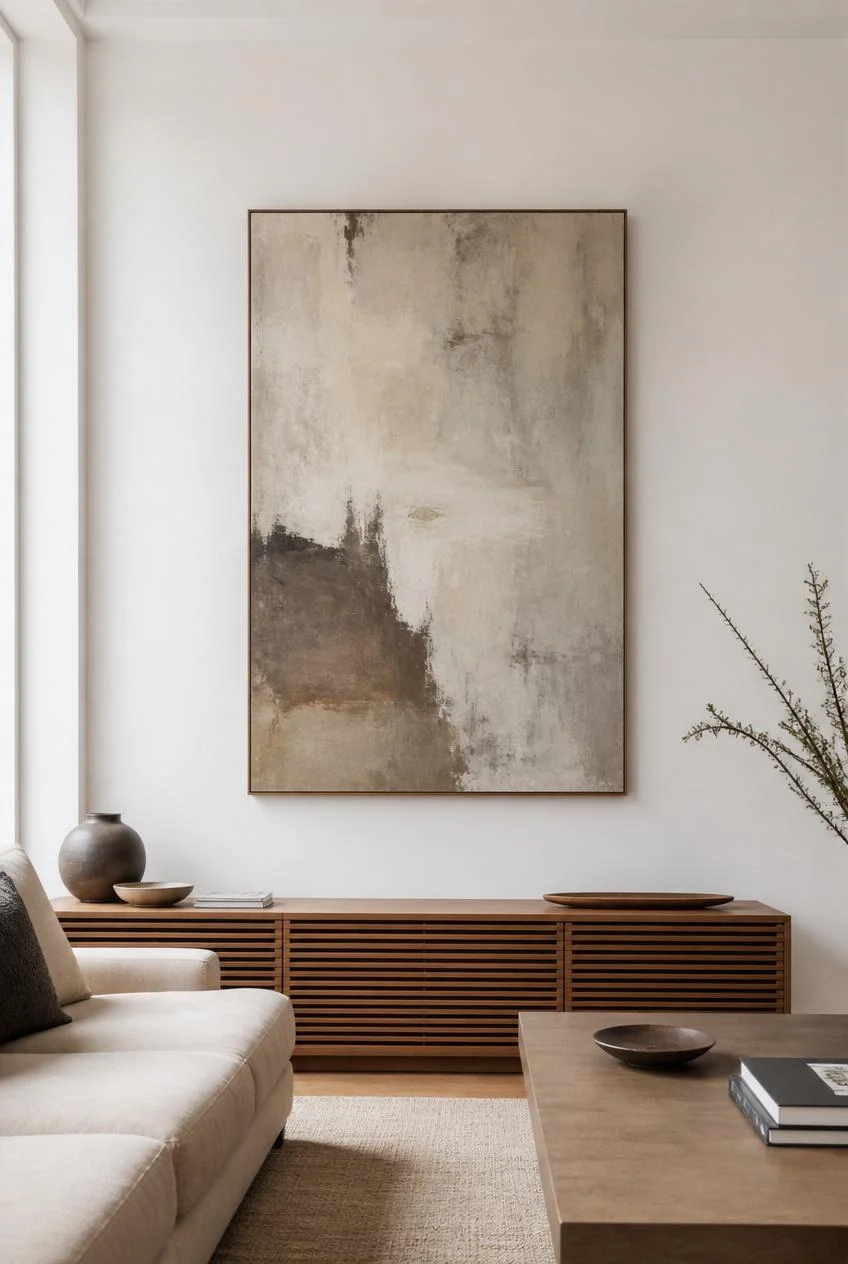
The minimalist approach to art is not to avoid it but to commit fully to it. One large scale artwork on a bare wall does exponentially more for a room than several smaller pieces arranged without the same conviction. The bare wall around it is not wasted space. It is the breathing room that gives the art its full visual weight.
Choose work in a format that suits the scale of the wall and the tone of the room. Abstract art in muted earthy tones, a large scale black and white photograph, or a simple botanical study in a refined frame all work within a minimalist palette without requiring the surrounding room to change to accommodate them. The piece should feel chosen rather than placed, meaningful rather than decorative.
Sizing Guidance
A common rule for statement wall art is to fill roughly two thirds of the available wall width. A piece that is too small for its wall reads as tentative. A piece that occupies its space confidently becomes the focal point the room was designed around.
Warm Metallic Accents in Brass or Bronze
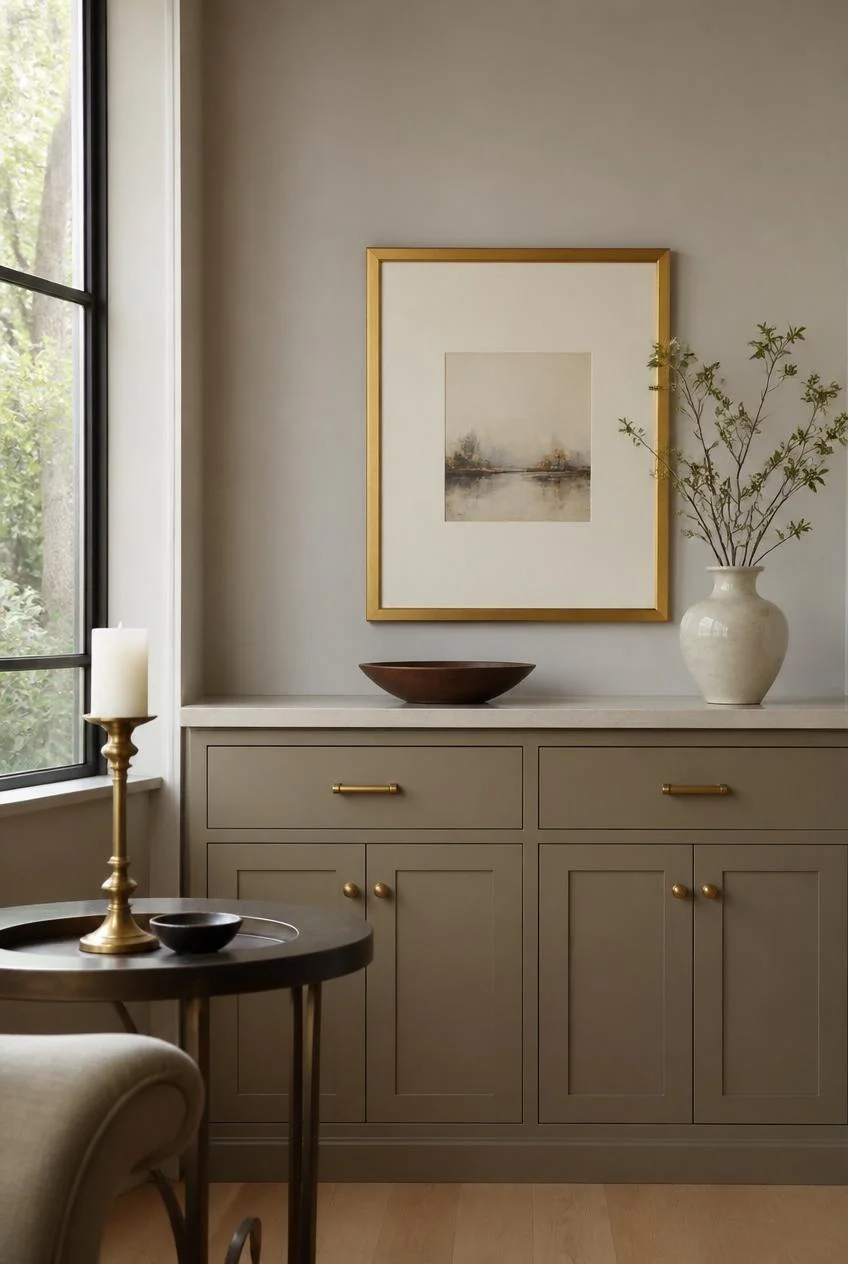
Warm metallic accents used sparingly in a minimalist home add a quiet sense of luxury without disrupting the palette or introducing visual complexity. Brushed brass hardware on a cabinet, a bronze candleholder on a side table, or a warm gold picture frame around a single piece of art each catch light differently throughout the day, giving the room a subtle variation that matte surfaces alone cannot provide.
The key is consistency and restraint. Choosing one metallic finish and using it across every hardware and accent point in a room, from the cabinet handles to the lamp base to the curtain rod, creates a cohesive, sophisticated interior that reads as designed rather than assembled. Mixing multiple metallic finishes in a single room tends to produce the opposite effect.
Why Warm Over Cool
Brushed brass and bronze suit the warm neutral palette of contemporary minimalism more naturally than chrome or silver, since they share the same underlying temperature as wood, linen, and stone and reinforce rather than interrupt the material story those surfaces are already telling.
Layers of Soft Textiles for Tactile Warmth
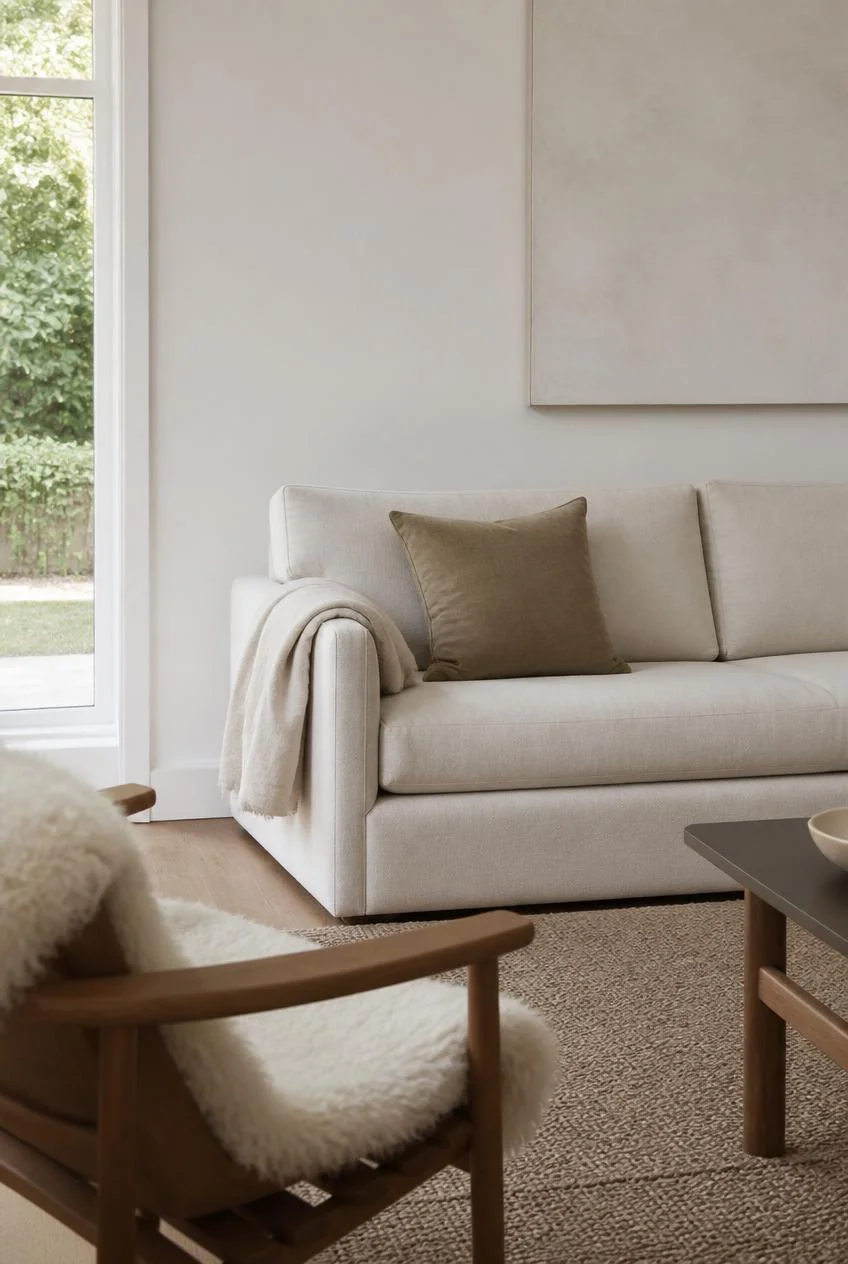
A minimalist home benefits enormously from the presence of soft textiles layered thoughtfully rather than piled indiscriminately. A linen throw folded once across a sofa arm, a wool cushion in a muted earthy tone, and a sheepskin draped over a chair each add tactile warmth without adding visual clutter, since each textile is positioned as a single element rather than as part of a collection that fills every available surface.
Natural fiber textiles in undyed or subtly dyed tones, linen, wool, cotton, and cashmere, suit the warm minimalist aesthetic most naturally. They wrinkle slightly in use, which gives them a lived-in quality that synthetic alternatives consistently lack, and that relaxed quality is exactly what prevents a minimalist room from feeling too controlled or too precious.
The Rule of Restraint
Two textiles per surface is usually the upper limit. A cushion and a throw on a sofa, a folded blanket and a sheepskin on a chair. Beyond that, the textiles begin to read as clutter rather than comfort.
Plants as the Only Decoration a Corner Needs
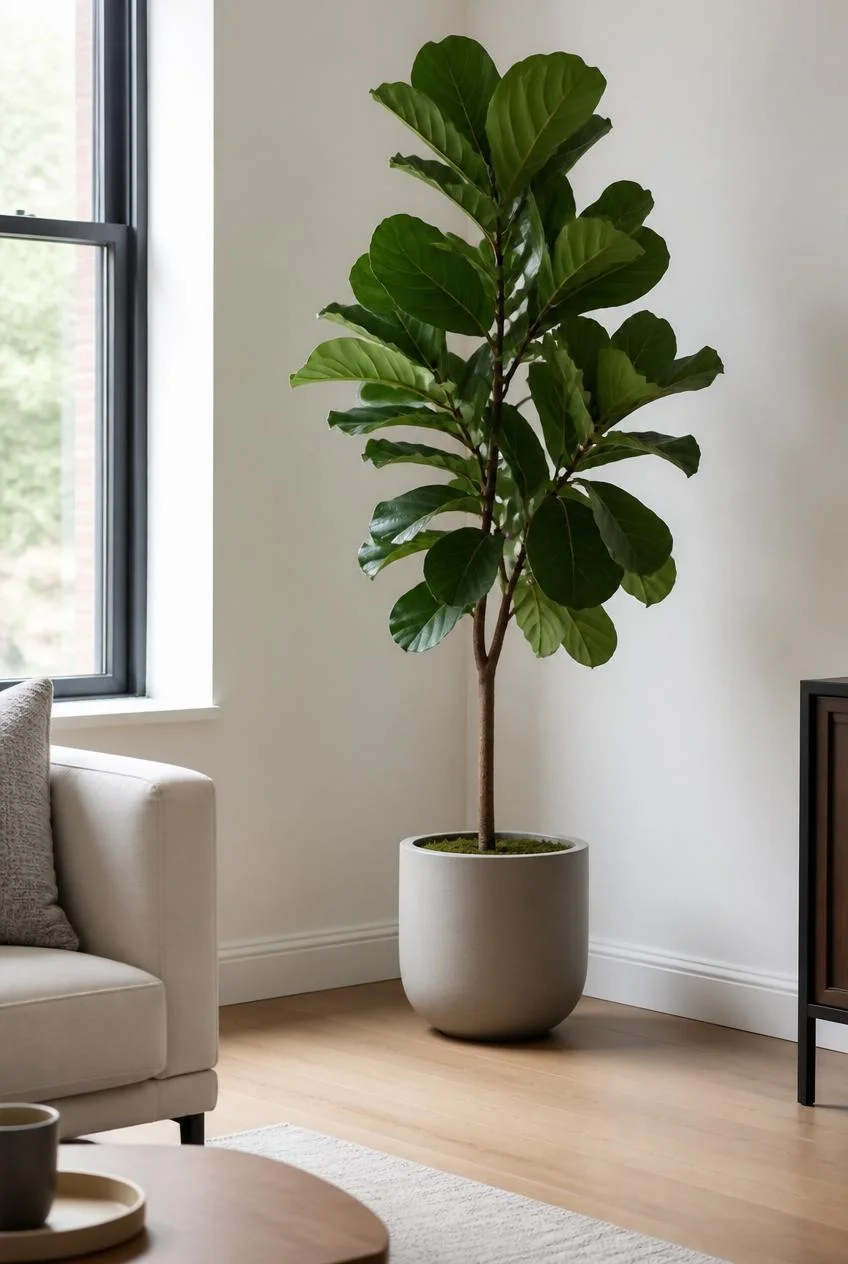
A well chosen indoor plant in a simple, well-made pot is one of the most complete minimalist decor solutions available for an empty corner, a bare shelf, or a windowsill that needs something. Unlike decorative objects, a plant introduces biophilic warmth, organic movement through leaf shape and trailing vines, seasonal change, and genuine life into a space. It does not compete with other elements in the room. It complements all of them.
In a minimalist interior, the plant’s form matters more than the species. A tall fiddle leaf fig with bold graphic leaves, a cascading string of pearls on a high shelf, or a large leafy monstera in a corner each provide enough visual interest to stand alone without requiring companion objects around them. The pot should be simple, matte, and in a tone that reads as part of the room rather than separate from it.
Choosing the Right Scale
One large plant in the right spot always looks more considered than three small plants grouped together in the wrong one. Let scale and placement guide the decision more than variety or quantity.
Floating Shelves With Intentional, Minimal Styling
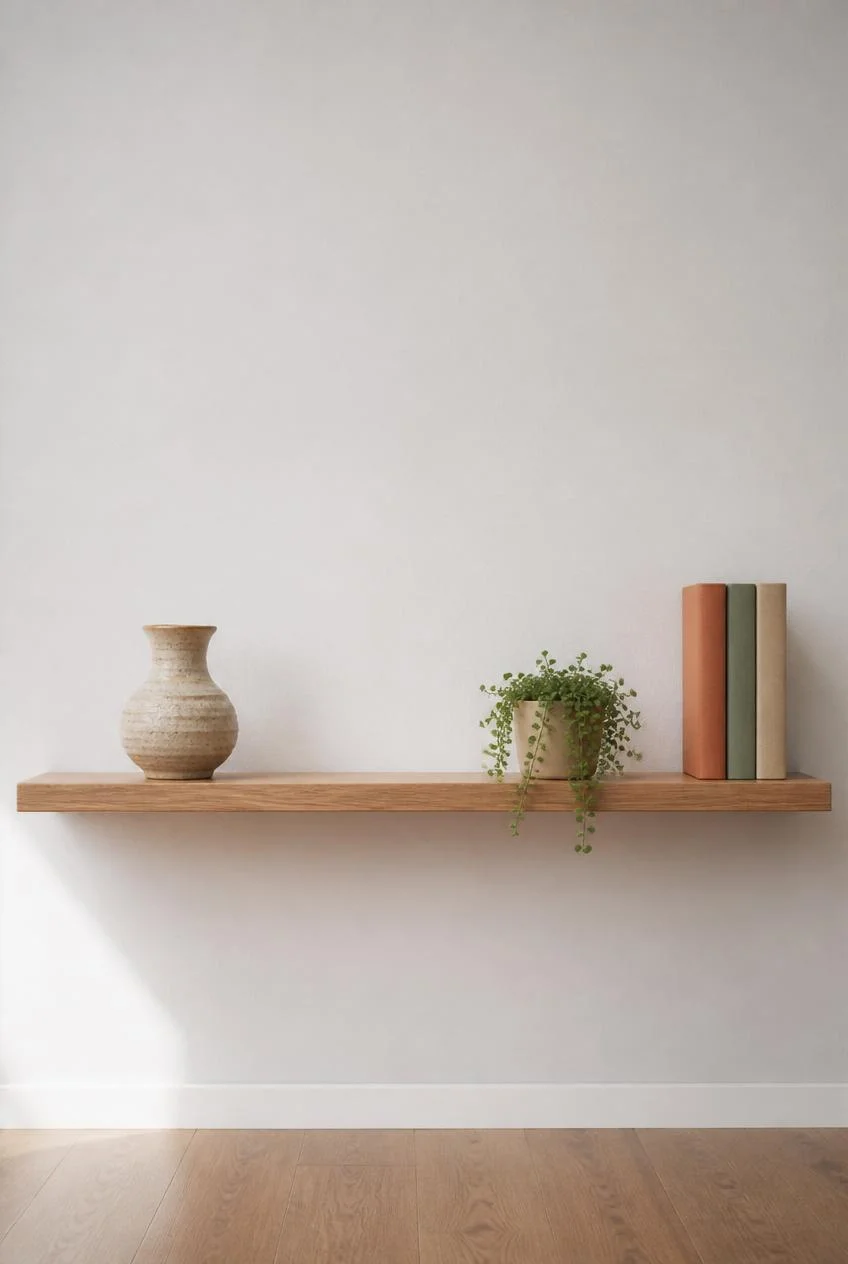
Floating shelves in a minimalist home serve a different purpose than shelves in most other interiors. They are not for storing things in plain sight. They are for displaying the two or three objects that genuinely deserve to be displayed, with enough empty space around each one that the object reads clearly rather than competing for attention.
A single shelf holding one handmade ceramic piece, one small plant, and a few books organized by spine color is a complete and resolved display. Adding more to it reduces rather than improves the effect. The discipline of stopping before the shelf feels full is exactly the habit that separates a well-styled minimalist shelf from one that simply holds things.
Arrangement Principle
Vary the height of objects on a shelf rather than keeping everything at the same level. A taller item, a medium item, and a lower item create a visual rhythm that reads as curated rather than flat, even when only three objects are present.
A Decluttered Entryway That Sets the Tone
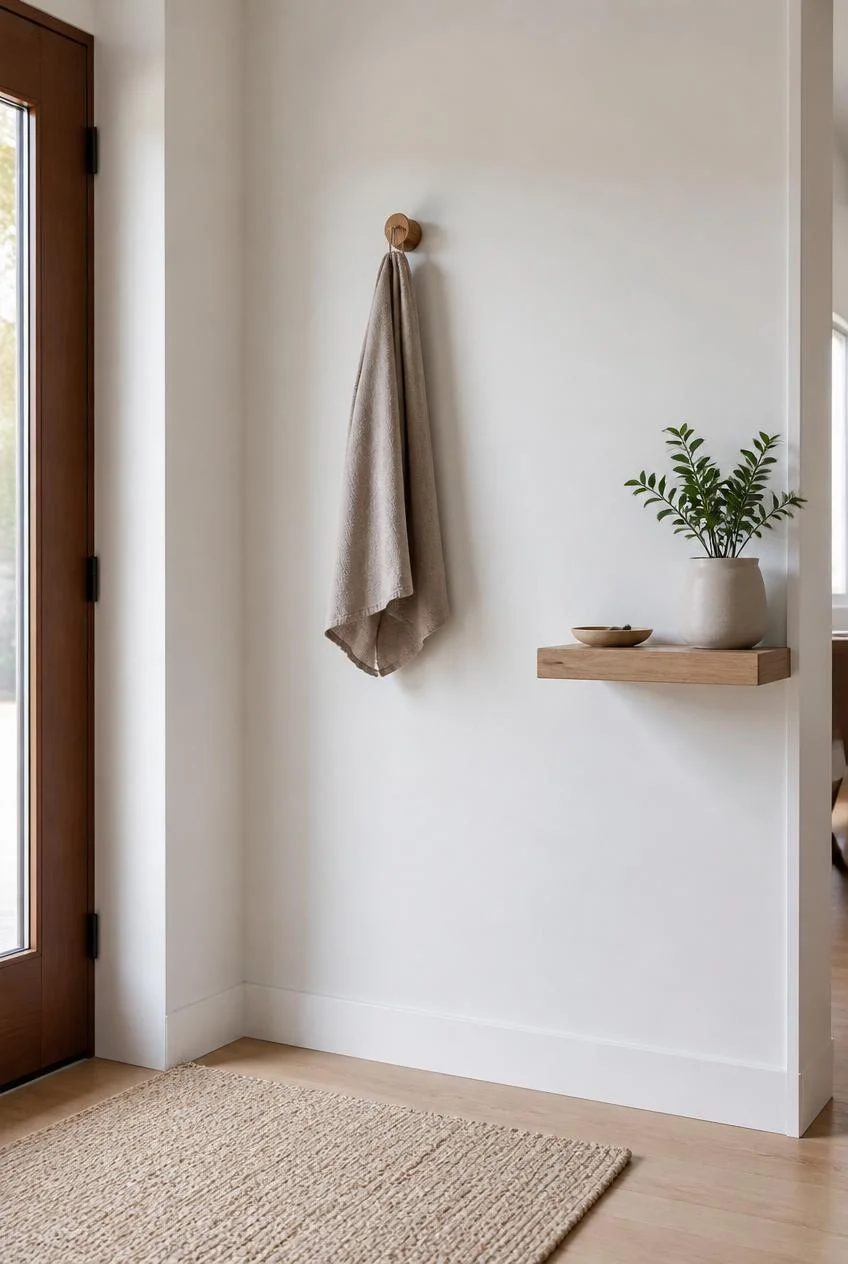
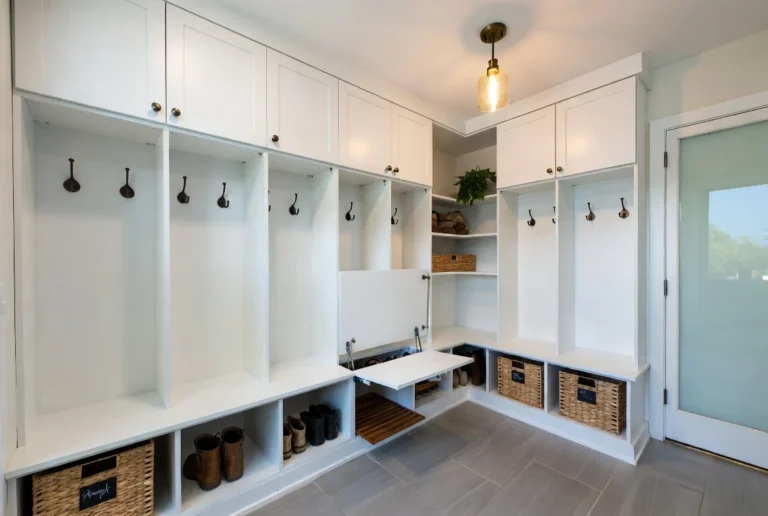
The entryway is the first experience of any home, and in a minimalist interior it carries a responsibility disproportionate to its often modest size. A coat hook with one or two items, a single shelf with nothing but a small plant and a ceramic tray for keys, and clear floor space establish the tone for every room that follows. A cluttered entry tells the brain that the rest of the house will be the same, regardless of how well designed those other rooms are.
Intentional entryway decor means deciding exactly what needs to be accessible at the door and providing a specific, beautiful place for each of those things rather than allowing them to accumulate on the nearest available surface.
The Single Tray Solution
A ceramic or stone tray placed near the door gives keys, a phone, and a wallet a designated home that keeps the surface clean while adding one considered object to the space. The tray itself, rather than the objects inside it, is what the eye lands on.
A Monochromatic Bedroom That Promotes Calm
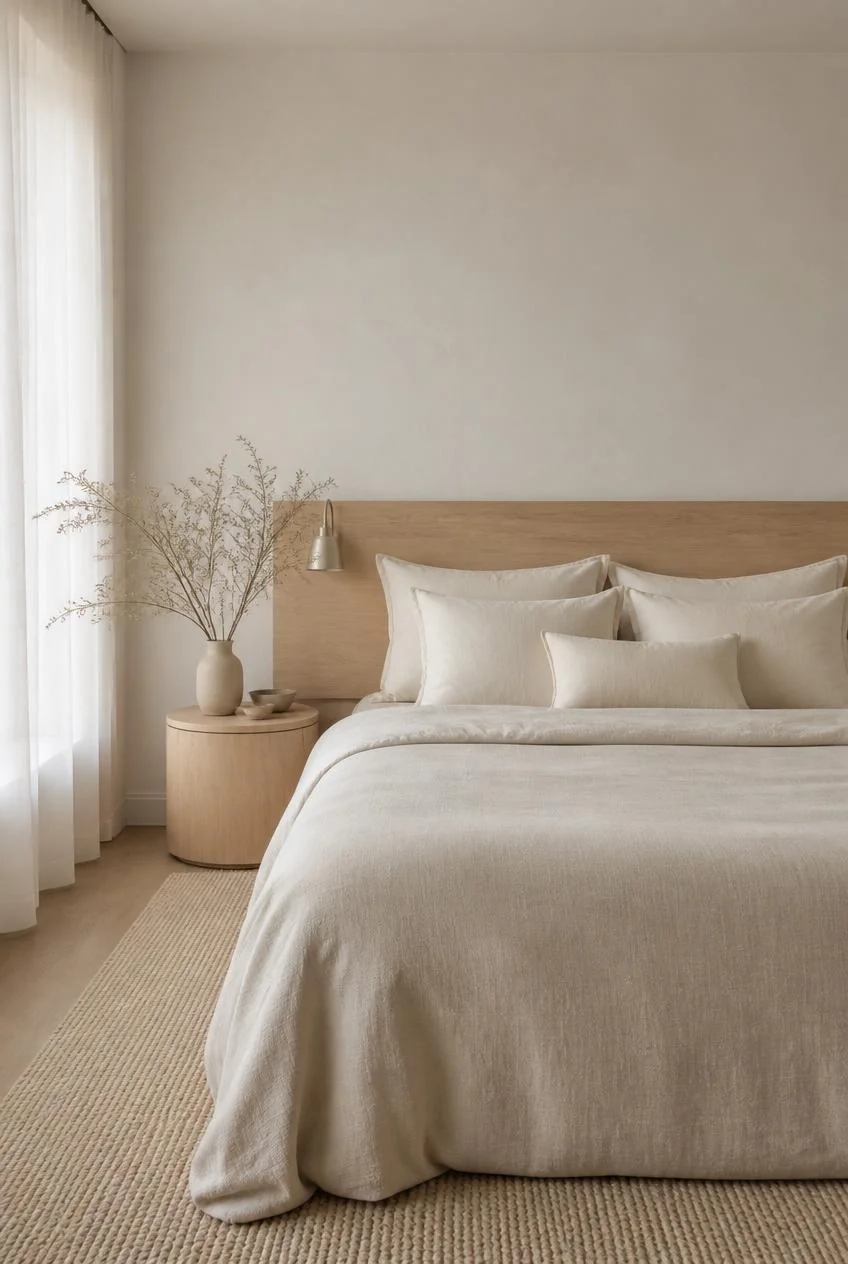
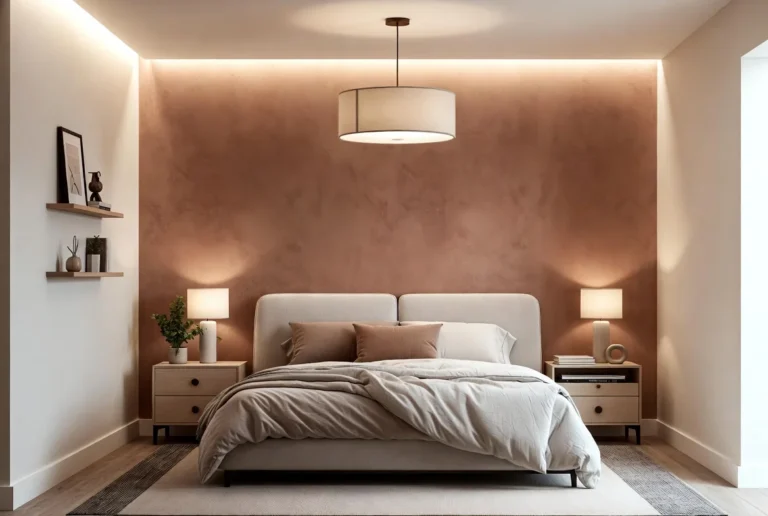
The minimalist bedroom benefits more than any other room from a monochromatic approach, where every surface, from the walls to the bedding to the furniture, sits within the same tight tonal range. This does not mean every element is the same color. It means the variation between them is subtle enough that the eye reads the room as a single unified atmosphere rather than a collection of separate decisions.
A soft white wall, cream linen bedding, a pale oak headboard, and a wool rug in a warm natural tone are all different shades, but they share an undertone and a temperature that makes the room feel resolved without being rigid. The result is a sleeping environment that communicates calm before a single breath is taken.
Window Treatment
In a minimalist bedroom, simple linen curtains in a tone close to the wall color are preferable to heavier treatments that create a visual interruption in an otherwise unified room. The curtains should filter light rather than block it, since natural daylight changes the quality of a monochromatic palette significantly throughout the day.
A Functional Kitchen That Prioritizes Surface Clarity
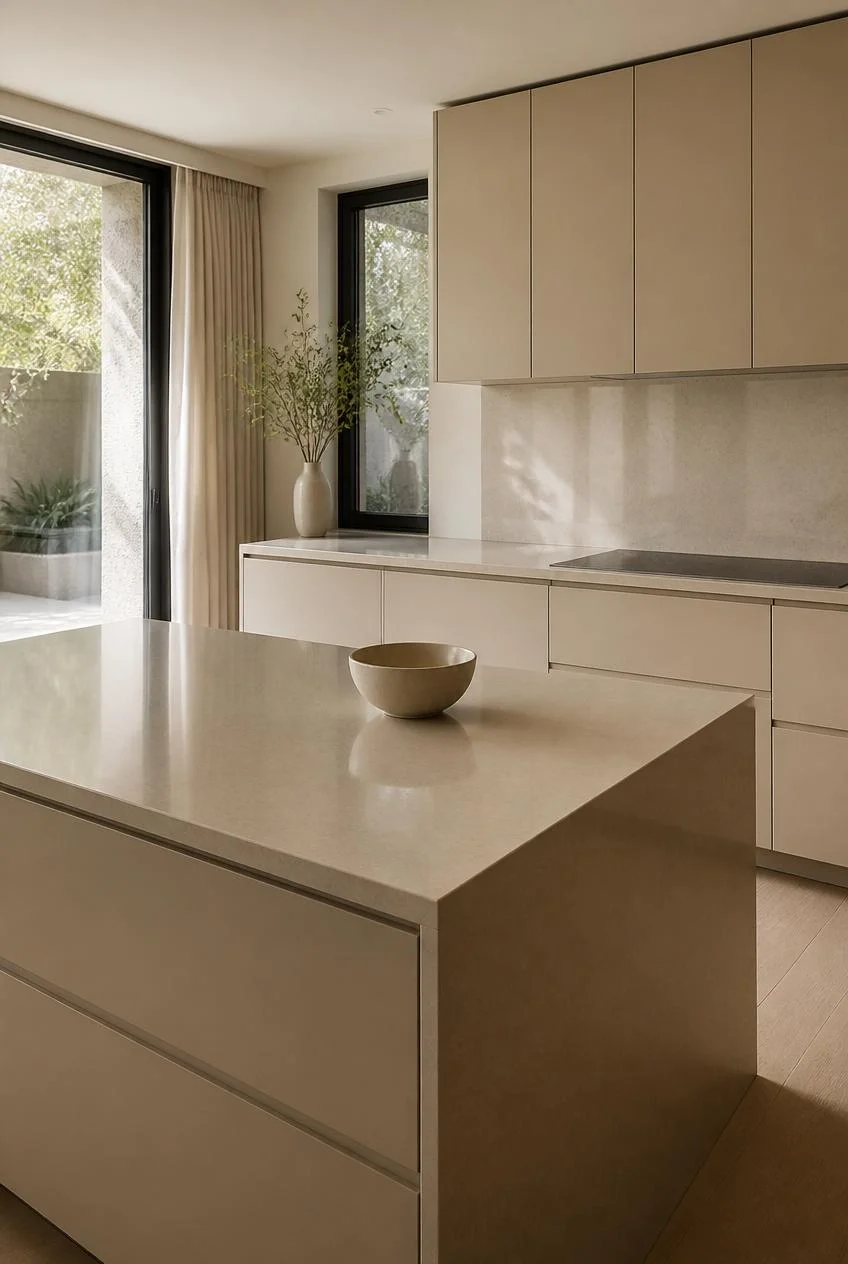
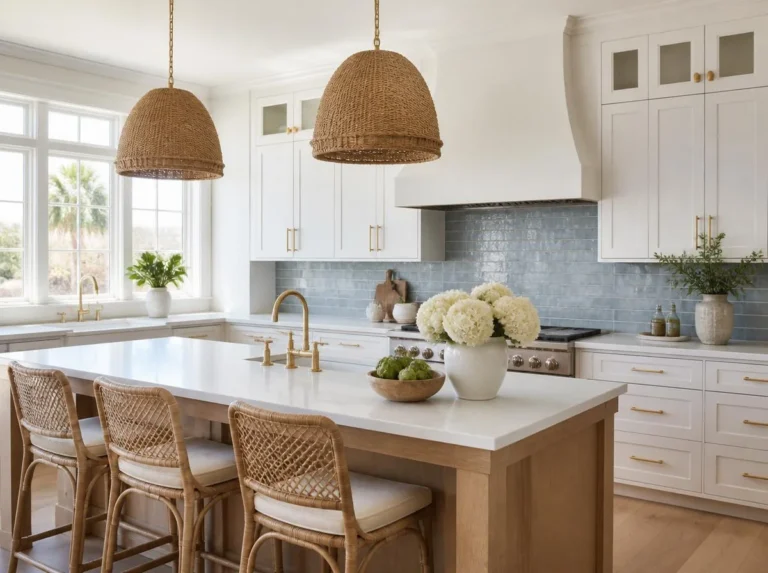
The minimalist kitchen is not about having fewer appliances or less capacity. It is about keeping every surface clear of anything that does not earn its presence. A countertop with nothing on it except what is used daily, cabinets that store everything else out of sight, and a single wooden chopping board or ceramic bowl left in view because it is genuinely beautiful as well as useful, achieves the calm visual clarity that makes a kitchen feel designed rather than simply functional.
Hidden storage solutions, such as cabinets with integrated handles or no visible hardware at all, contribute significantly to this effect. The surface of a minimalist kitchen should read as material, whether stone, wood, or concrete, rather than as hardware, which means every handle, hinge, and seam deserves careful consideration before it is specified.
The One Beautiful Object Rule
Allow one genuinely beautiful object to remain on the countertop at all times, whether a ceramic fruit bowl, a cast iron pot, or a stone mortar and pestle. This single object gives the eye something to land on and prevents the kitchen from feeling sterile while still maintaining the clarity that the minimalist approach requires.
Thoughtful Lighting That Shifts the Room’s Mood
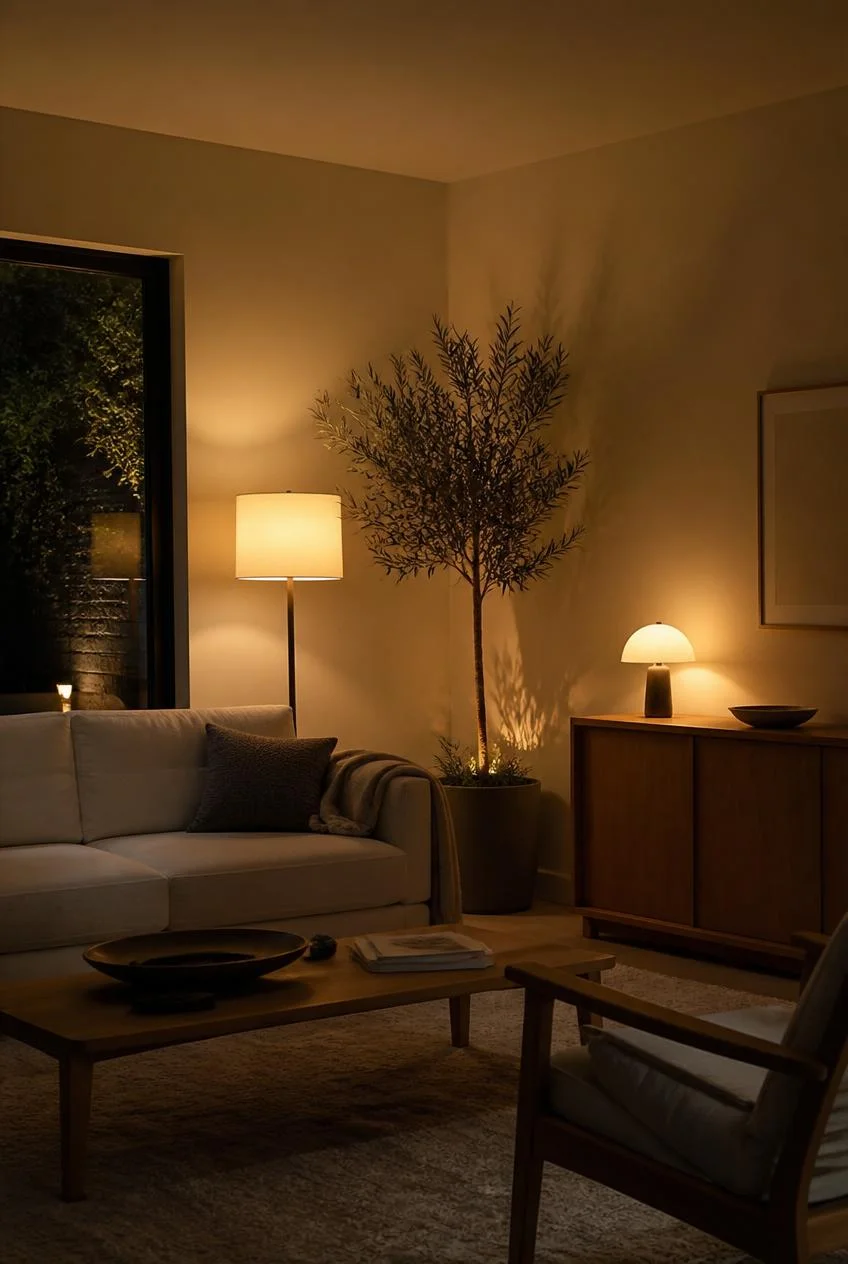
Layered lighting in a minimalist home is not about adding more fixtures. It is about using the right fixtures in the right positions to create a room that changes character from morning to evening without requiring any other adjustment. A warm ambient light source for the room overall, a focused task light for work surfaces and reading areas, and a soft accent light beside a plant, on a sideboard, or within a niche give the room three distinct qualities of light to work with.
Using warm bulbs consistently throughout the home, in the 2700K to 3000K range, ensures that the neutral palette looks warm and rich in the evening rather than flat and yellow or cool and institutional. The dimmer switch is one of the most underrated tools in a minimalist interior, since the ability to lower the light level completely changes the feeling of a room without changing a single piece of furniture or decor within it.
Natural Light First
Before investing in artificial lighting, maximize natural light by removing unnecessary window treatments and keeping surfaces near windows clear of objects that block or compete with daylight. Natural light is the foundation. Artificial lighting is the supplement.
The Philosophy of One Beautiful Thing Done Well
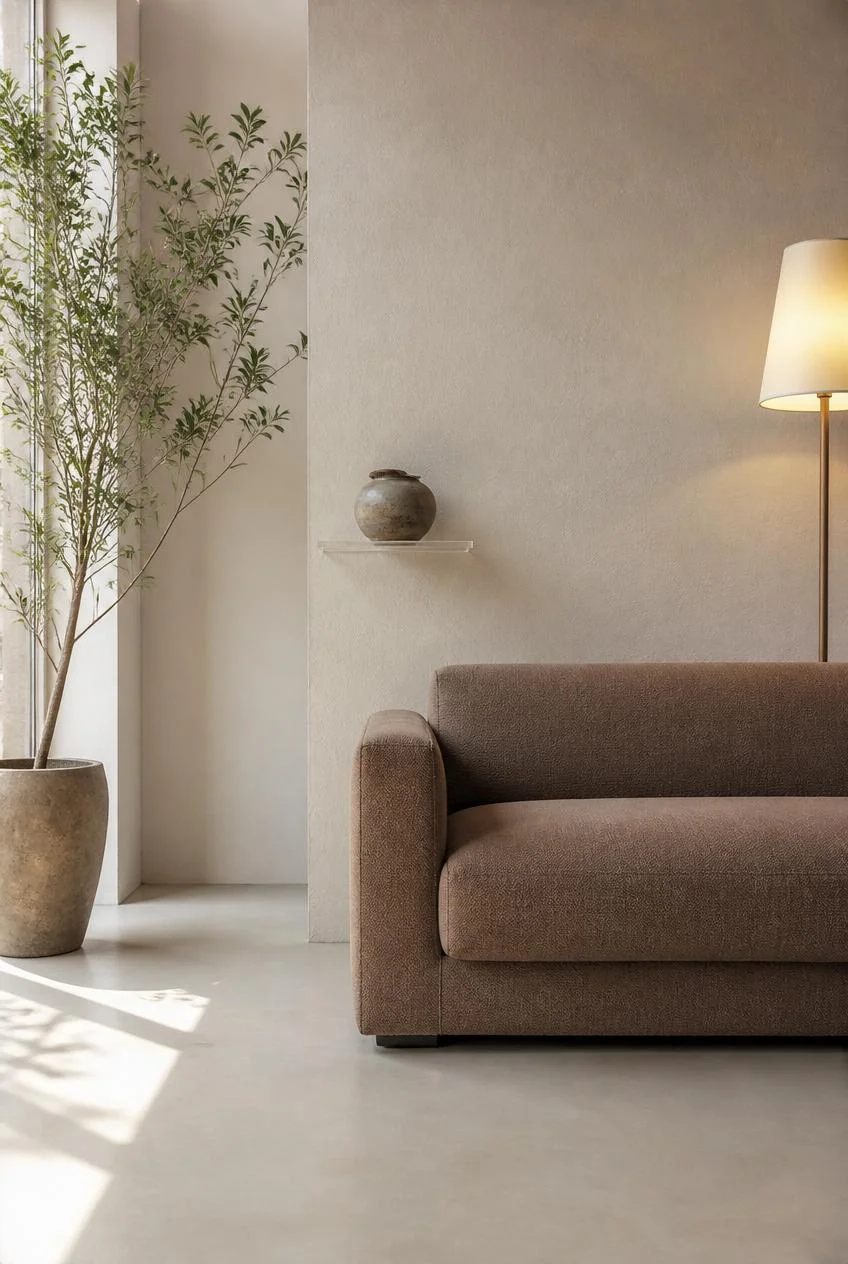
Every idea in this guide is an expression of a single principle that underlies all minimalist home decor: one beautiful thing done well is always more effective than several adequate things done adequately. One well chosen sofa, one genuinely beautiful handmade ceramic, one perfectly placed plant, one lamp with a warm quality of light. The decision is not whether to have things. The decision is to have fewer things that are each more considered.
This principle extends beyond aesthetics into how a home actually feels to live in. A home with fewer, better chosen objects is easier to keep tidy, easier to feel calm in, and easier to be genuinely proud of. The beauty is not incidental to the restraint. It is a direct result of it.
Bringing It All Together
Minimalist home decor is not a style that requires a renovation, an unlimited budget, or a complete replacement of everything currently in a home. It is a way of making decisions, a habit of asking whether each object, surface, and material genuinely earns its place. Practiced consistently, that habit produces homes that feel significantly better over time rather than simply different.
Start with the one room or the one surface where the clutter bothers you most. Clear it. Bring back only what is genuinely necessary or genuinely beautiful. Notice the difference. Then apply the same thinking to the next surface, and the one after that. The effortless beauty that defines the best minimalist interiors is never the result of a single dramatic decision. It is the cumulative effect of many small, careful ones made over time.
FAQs
How do I start decorating my home in a minimalist style without replacing everything?
Start by decluttering one room at a time rather than replacing furniture. Remove everything that does not serve a function or bring genuine joy, and resist adding new objects until the existing space settles.
Does minimalist decor have to be all white and neutral?
No. While neutral palettes are common, the current direction in minimalist decor favors warm earthy tones like taupe, mushroom, clay, and soft brown layered together rather than flat, cold whites.
How do I prevent my minimalist home from feeling cold or impersonal?
Natural materials like solid wood, linen, and jute, combined with warm lighting in the 2700K range and a few handmade objects, add the tactile and visual warmth that prevents a minimalist home from feeling sterile.
Can minimalist decor work in a small apartment?
Yes, and arguably better than in larger spaces. Fewer objects in a smaller room make it feel more spacious, and the restraint required by minimalism suits compact living particularly well.
How many decorative objects are appropriate in a minimalist home?
There is no fixed number, but a useful rule is to limit display surfaces to two or three objects each and ensure that every item genuinely adds beauty or serves a function. When in doubt, remove rather than add.
You May Also Like This Post:
18 Minimalist Dining Room Ideas That Feel Calm, Stylish, and Inviting

One Comment