
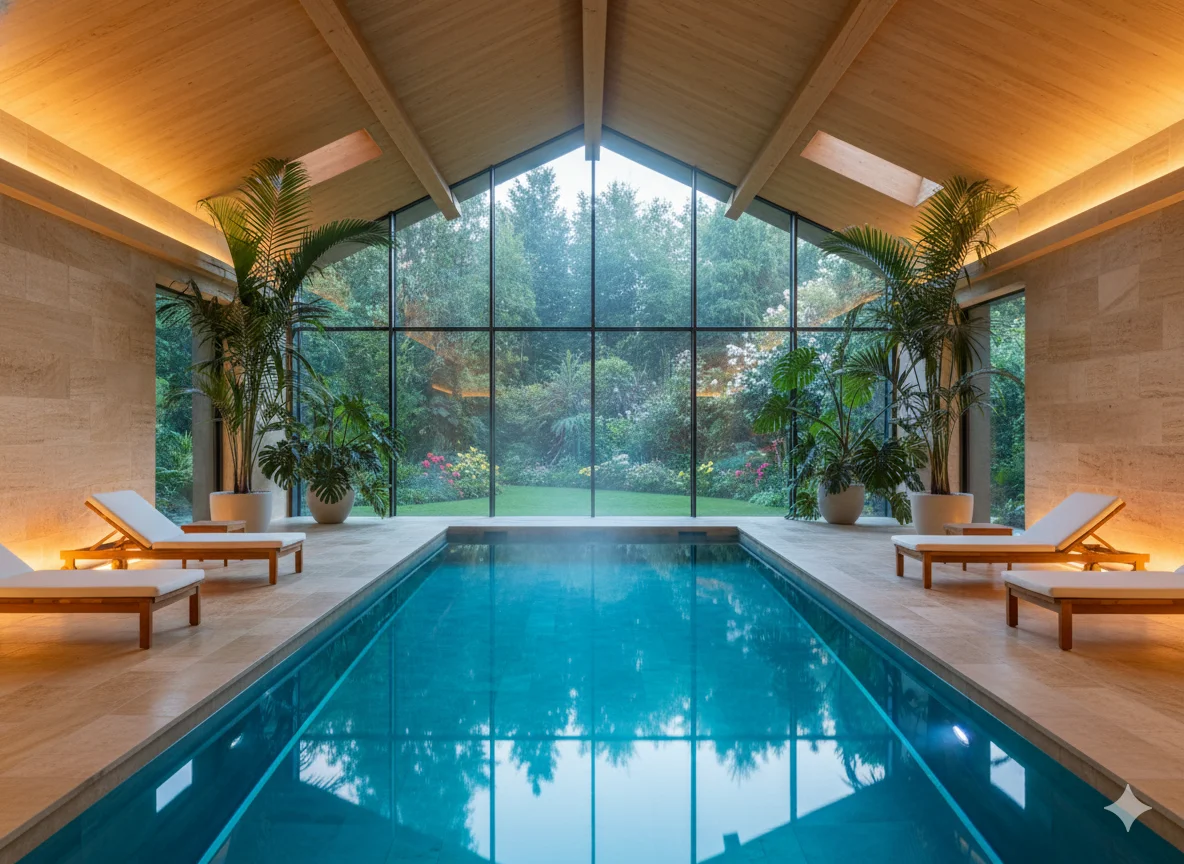
Modern Indoor Pool Designs: 15 Stunning Ideas for a Luxury Home
There is a category of home feature that moves beyond improvement into genuine transformation, a feature so fundamentally different from everything else available in residential design that its presence changes not just what a home contains but what kind of life that home makes possible every single day regardless of weather, season, or time of day. An indoor swimming pool is that feature, and when designed with genuine architectural ambition and material sophistication, it becomes the defining element of the most extraordinary residential environments currently being created anywhere in the world.
Modern indoor pool designs have evolved far beyond the utilitarian tiled rectangles that defined indoor pools in earlier residential applications, becoming genuine architectural centerpieces where the pool itself serves as the organizing design element around which entire architectural interventions are conceived and executed. The glass walls that blur interior and exterior boundaries, the skylights that draw natural light deep into below-grade pool spaces, the natural stone surrounds that create spa-like environments of extraordinary sensory richness, and the integrated lighting systems that transform pool rooms into theatrical spaces after dark collectively represent a design tradition that treats the residential indoor pool as a work of architecture rather than simply an amenity.
The decision to incorporate an indoor pool into a luxury home is simultaneously one of the most significant architectural commitments available and one of the most consequentially rewarding, delivering daily quality of life benefits across fitness, relaxation, family connection, and entertainment that no other single home feature quite matches. This comprehensive guide presents 15 stunning modern indoor pool designs covering every architectural approach, material philosophy, and design strategy that creates truly extraordinary indoor swimming environments in contemporary luxury homes.
Why Modern Indoor Pools Are the Ultimate Luxury Home Investment
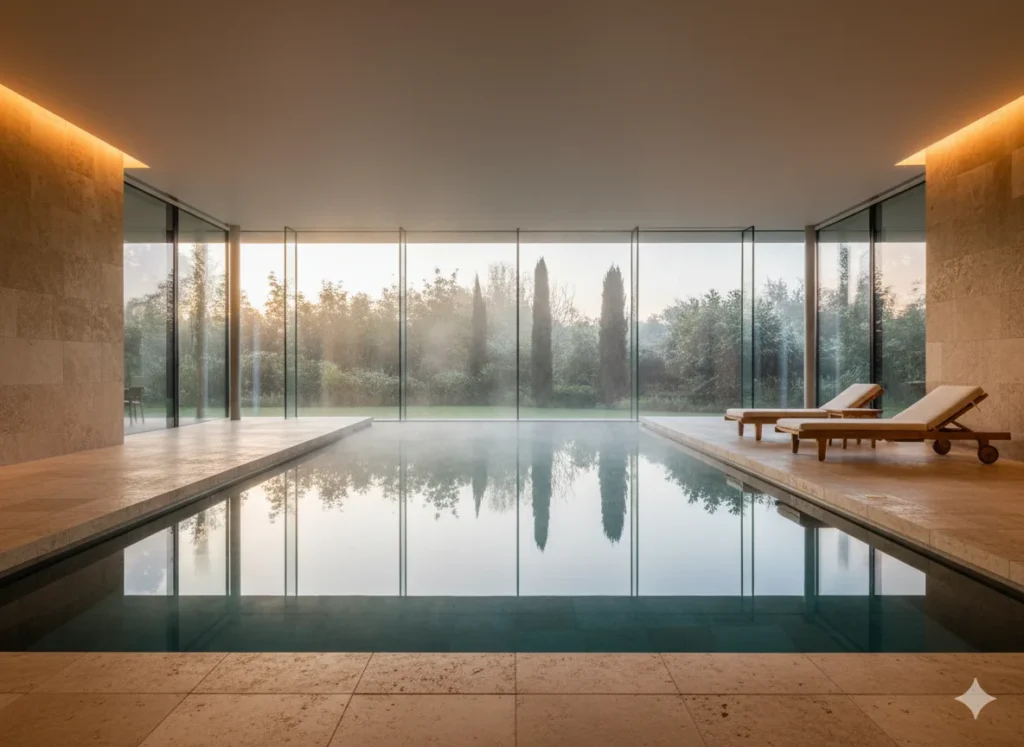
Understanding the complete value proposition of luxury indoor pool installations helps homeowners approach this exceptional investment with the confidence and architectural ambition it deserves and rewards.
Home indoor pool installations deliver value across dimensions that purely financial analysis consistently underestimates. The daily health and fitness value of having a lap pool immediately available regardless of weather conditions creates exercise accessibility that even the most committed gym membership cannot replicate, with research consistently confirming that home fitness facility availability dramatically increases exercise frequency among adults with demanding professional schedules. The entertainment and family connection value of an indoor swimming pool accessible year-round creates a home destination that draws family members together, provides children’s activity in every season, and creates entertaining capability that makes the home genuinely extraordinary for guests in ways that no other residential feature approaches.
Contemporary indoor pool design in its most sophisticated expressions also creates architectural quality of experience that elevates the entire residential property to a genuinely different category of luxury. The specific quality of light in a well-designed indoor pool room, the sound of water in an enclosed architectural space, and the visual drama of a beautifully designed pool body surrounded by premium materials create sensory environments of extraordinary richness that photographs consistently fail to capture and that must be experienced directly to be fully appreciated. This irreproducible experiential quality gives modern indoor pool designs an enduring value that trend-dependent luxury features lack, making the investment philosophically sound regardless of the considerable financial commitment it represents.
Glass Wall Indoor Pool Designs for Seamless Indoor-Outdoor Connection
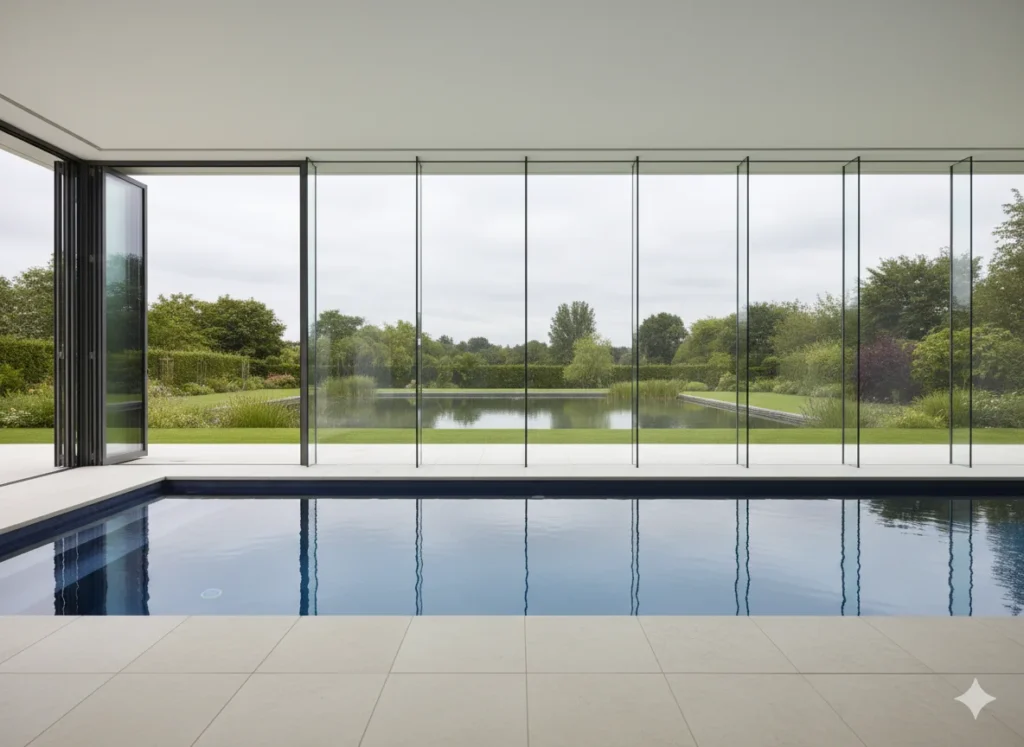
Glass wall indoor pool designs represent the most architecturally ambitious and visually spectacular approach to modern indoor pool design, dissolving the boundary between interior aquatic environment and exterior landscape in compositions of extraordinary visual continuity and spatial generosity.
Full-height structural glazing systems using floor-to-ceiling glass panels spanning the complete length of the pool room create the defining visual characteristic of glass wall indoor pool design, the sense of the pool floating within a glass pavilion that simultaneously occupies interior and exterior space without the boundary interruption that conventional wall construction introduces between inside and outside. The specific visual experience of swimming in a glass wall indoor pool looking directly into a garden, forest, mountain, or ocean landscape creates a qualitatively unique connection to the natural environment that no outdoor pool achieves with comparable intimacy given the contained architectural space surrounding the water on all sides except the glazed face. Indoor pool architecture using structural glass systems requires sophisticated engineering to manage the thermal and condensation challenges that large glazed areas create in heated pool environments, with thermally broken glazing systems, low-emissivity glass coatings, and integrated heating systems within the glazing frame each addressing specific technical requirements of the glass wall pool typology.
Sliding and folding glass wall systems that open the pool enclosure to exterior terraces during favorable weather create the most functionally flexible indoor pool room design available, transforming a fully enclosed indoor pool into a hybrid indoor-outdoor pool environment when conditions permit without requiring the permanent commitment to either purely indoor or purely outdoor pool configuration. These operable glazing systems suit pool installations in moderate climates where year-round indoor use is not required but seasonal extension of the outdoor swimming season through weatherproof enclosure provides the primary justification for indoor pool investment.
Skylights and Natural Light Design for Indoor Pool Rooms
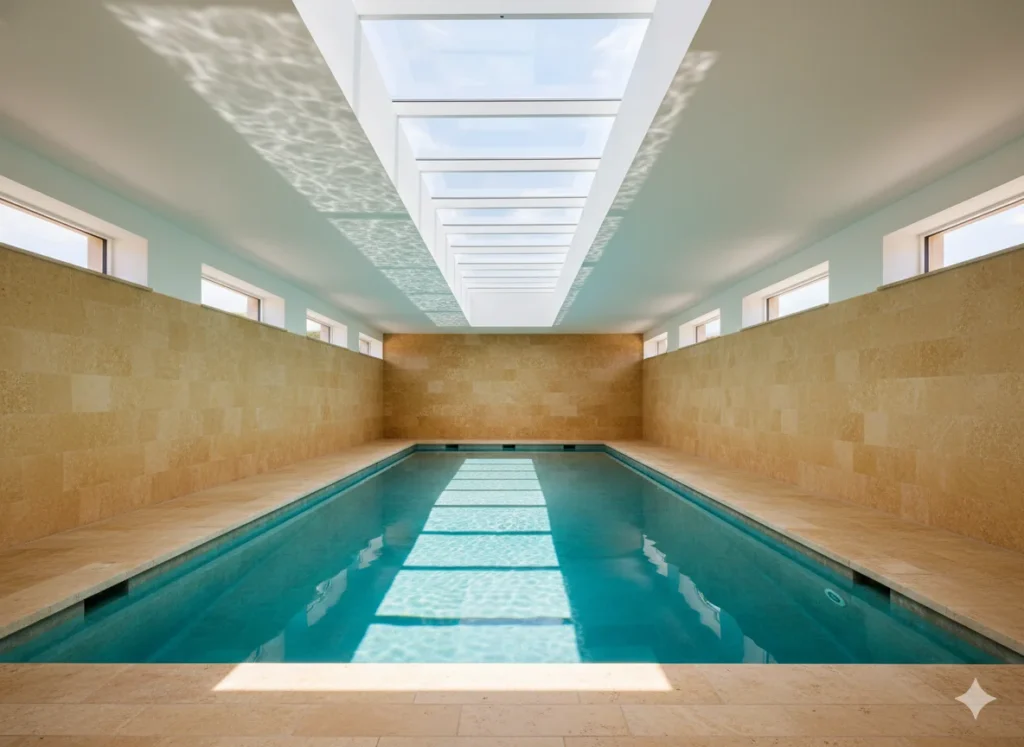
Indoor pool with skylights represents the most transformative natural light strategy available in indoor pool room design, addressing the fundamental challenge of creating genuinely luminous interior pool environments in spaces that large glazed walls alone cannot adequately illuminate from all directions.
Overhead natural light in indoor pool environments performs functions that side-lit glazing systems cannot achieve regardless of area or transparency. Light entering from directly above creates the specific sparkle and surface animation of pool water that has made the most memorable indoor pool photographs so consistently striking, with sunlight striking water surfaces from overhead angles creating the dancing light patterns projected onto surrounding walls, ceiling, and pool floor that define the specific visual character of luxury indoor swimming environments. Indoor pool designs using linear skylight systems running the full length of the pool body create the most dramatic and consistent natural light distribution, with the skylight positioned directly above the water creating continuous overhead illumination that follows the pool’s own linear geometry in compositionally satisfying spatial correspondence.
Diffused light strategies using frosted or translucent skylight glazing rather than clear glass create more even and controlled natural light in indoor pool with skylights designs, eliminating the harsh direct sun that can create visibility and safety issues in swimming environments while maintaining the quality and character of natural daylight throughout the pool room. Automated skylight systems with integral shading capacity allow natural light levels to be modulated throughout the day and year, providing full natural light during optimal conditions while managing heat gain, glare, and UV exposure during peak summer hours when unshaded skylights would create uncomfortable pool room conditions despite their luminous quality.
Indoor Lap Pool Designs for Health and Fitness
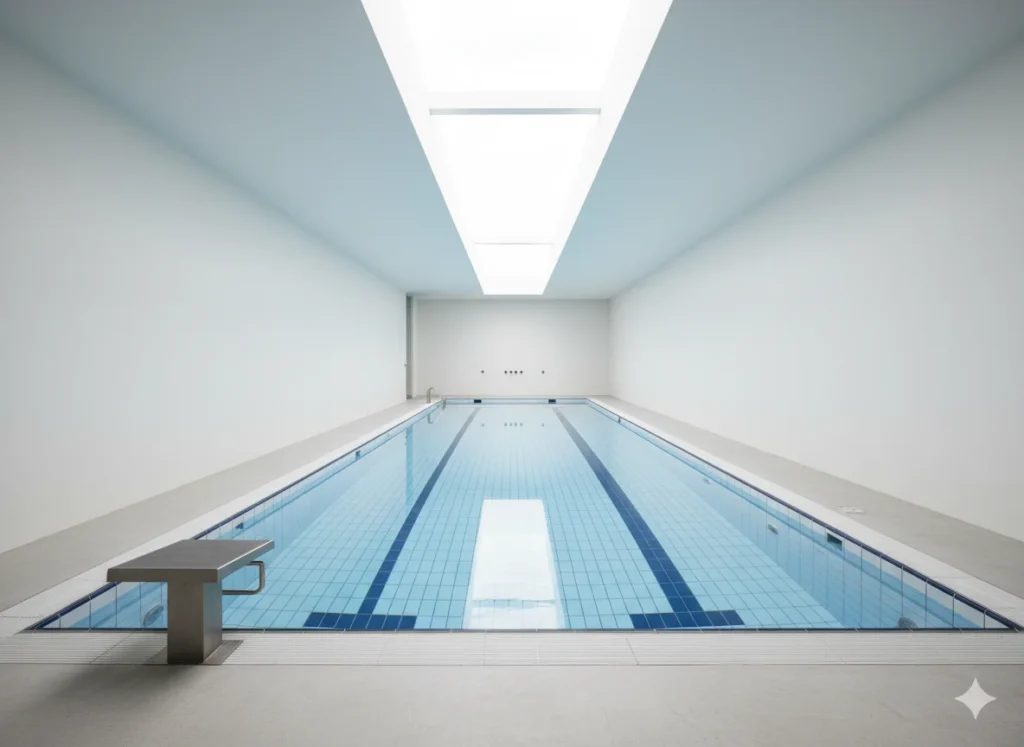
Indoor lap pool design serves the fitness-oriented residential pool user with dedicated purpose and specific proportional requirements that distinguish this pool typology from recreational swimming pool designs focused on leisure and entertainment rather than systematic athletic training.
The standard indoor lap pool specification of 25 meters or 25 yards in length with minimum 2-meter lane widths creates a training pool that accommodates serious competitive swimming practice as well as casual fitness lap swimming within the same spatial footprint. However, the practical residential indoor lap pool most frequently specified at 15 to 20 meters length and one to three lanes width provides a genuine training environment within architectural footprints manageable in luxury residential contexts without requiring the gymnasium-scale spaces that full competition pool dimensions demand. Modern indoor pool designs for lap pool applications address the specific aesthetic challenges of long narrow pool geometries through material choices, ceiling treatments, and end wall design that transform potentially institutional rectangular volumes into genuinely beautiful architectural spaces worthy of luxury residential contexts.
Resistance jet systems installed at one end of indoor lap pool designs create effectively limitless swimming resistance within pool bodies too short for continuous lap swimming, allowing comprehensive fitness swimming within pool lengths as short as 4 to 6 meters that would be impractical for traditional lap swimming regardless of the swimmer’s fitness level or technique. These swim-in-place systems suit residential contexts where available space genuinely cannot accommodate longer pool bodies while the fitness motivation justifies the significant cost of indoor pool installation over the more economical outdoor alternatives that additional space would permit.
Infinity Edge Indoor Pool Designs for Visual Drama
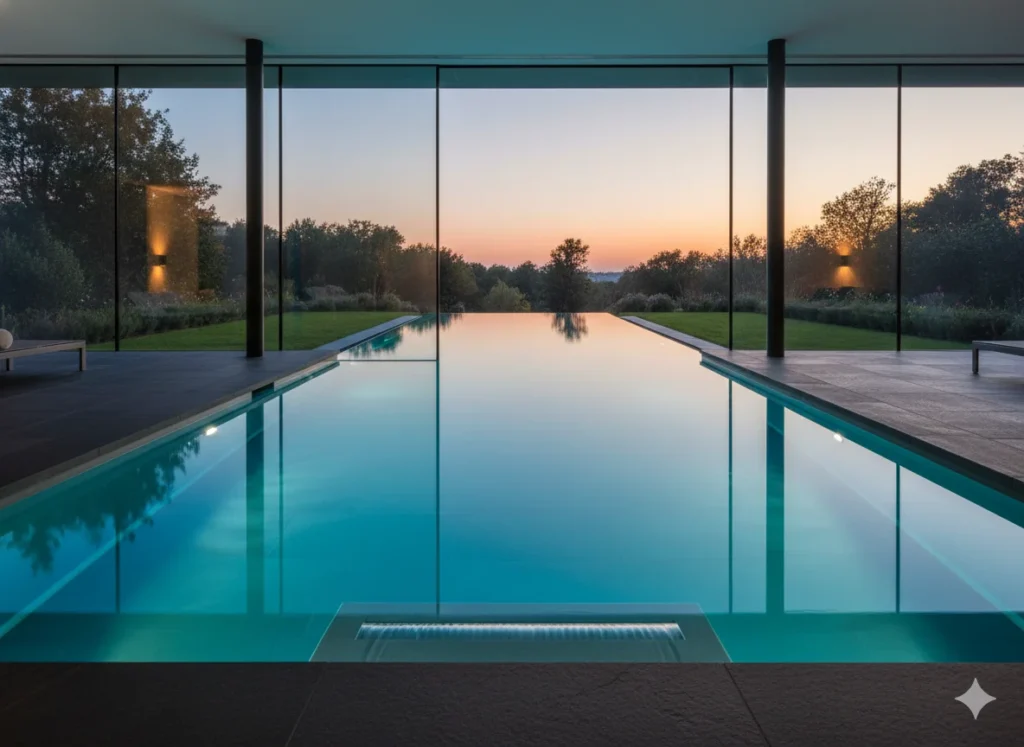
Indoor infinity pool designs bring the most visually dramatic of all pool typologies into interior architectural contexts, creating water features of extraordinary visual impact where the pool’s edge appears to dissolve into either exterior landscape or interior architectural void in compositions of remarkable spatial poetry.
The technical requirements of indoor infinity pool design are more demanding than conventional indoor pool installations, requiring precise level engineering to maintain the infinitely level water plane that creates the vanishing edge effect, adequate space for the catch basin that receives overflow from the infinity edge below the main pool level, and pump systems capable of continuously recycling overflow volumes from catch basin back to main pool body at sufficient flow rate to maintain the continuously flowing edge that defines the typology. Residential indoor pool installations with infinity edges oriented toward exterior glass walls create the most spectacular compositional combinations, with the pool water appearing to flow continuously through the glass into the landscape beyond in an illusion of spatial connection between interior water and exterior environment that represents architectural poetry of the highest order.
Interior-facing infinity edge indoor pool designs where the vanishing edge drops into an architectural void within the house create extraordinary interior spatial drama, with the pool appearing to float within the interior volume while the sound of falling water creates acoustic presence throughout adjacent interior spaces. These inward-facing infinity configurations require specific residential planning that positions the catch basin and associated mechanical systems below or beside the interior void while allowing the falling water to be visible and audible from adjacent living spaces as a genuine architectural water feature rather than simply a pool amenity.
Natural Stone Indoor Pool Surround for Organic Luxury
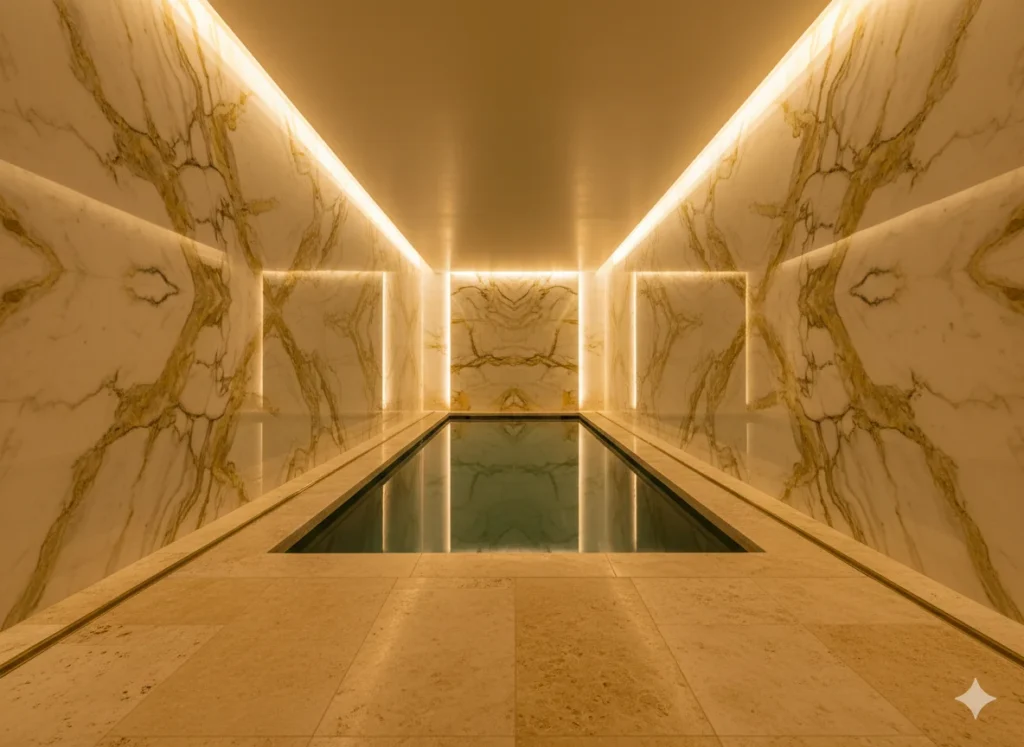
Indoor pool materials using natural stone for pool surround, coping, and wall surfaces create the most organically luxurious and materially sophisticated indoor pool environments available in residential design, with the specific combination of water and natural stone producing sensory environments of extraordinary richness that no manufactured material alternative fully replicates.
Travertine in its various finishes represents the most historically prestigious and consistently successful natural stone choice for indoor pool surround applications, its characteristic warm honey and cream tones creating the specific golden warmth most associated with luxury spa and thermal bath environments across centuries of premium aquatic architecture from ancient Rome through contemporary five-star hospitality design. Indoor pool flooring in honed travertine provides the non-slip surface texture essential for wet pool surround environments while the material’s natural thermal properties keep surround surfaces comfortable barefoot even in cool pool room temperatures. The characteristic unfilled pores and natural variation of travertine create surface interest and authentic geological character that perfectly uniform manufactured tiles cannot achieve regardless of their technical quality or surface treatment sophistication.
Marble in dramatic varieties including Calacatta Gold, Verde Issorie, and Nero Marquina creates indoor pool designs of extraordinary visual luxury where the pool surround becomes as architecturally significant as the pool body itself, with the natural stone’s veining patterns, color depth, and polished surface creating surfaces of genuine artistry surrounding the water. Indoor pool tiles using marble in book-matched panel configurations create pool enclosure walls of almost museum-quality decorative stone application, with the mirror-image symmetry of book-matched marble revealing the stone’s internal veining as unified artistic compositions around the pool body.
Indoor Pool Lighting Design for Dramatic Evening Atmosphere
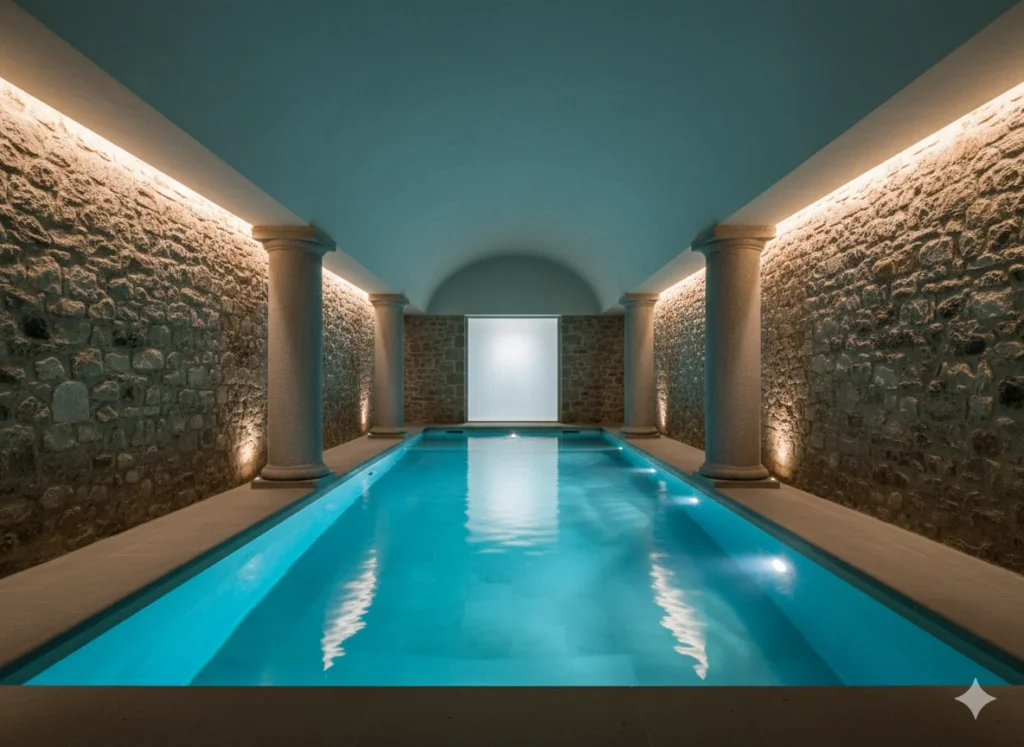
Indoor pool lighting design performs the most transformative function in the evening and nighttime experience of indoor pool environments, converting daytime aquatic spaces into genuinely theatrical atmospheric environments of extraordinary visual beauty that rival the most dramatic spaces in luxury hospitality design.
Underwater indoor pool lighting using color-changing LED systems creates the foundation of dramatic evening pool room atmosphere, with the specific quality of light emanating from within the pool body illuminating the water from below and projecting colored light throughout the surrounding architectural space in ways that overhead lighting sources cannot replicate. White underwater LED lighting creates the most timelessly elegant pool illumination, making pool water appear luminously blue-green through the light’s interaction with water chemistry in the specific visual effect most strongly associated with luxury pool environments across decades of aspirational imagery. Color-changing systems allow the same underwater lighting infrastructure to create completely different emotional atmospheres through color selection, from calm therapeutic blue through vibrant entertaining pink and purple to warm amber and white combinations that create the most flattering light quality for evening entertaining around the pool.
Indoor pool room design lighting beyond the pool body itself uses architectural lighting strategies including uplighting of stone walls and columns, illumination of ceiling structures and skylights from below after dark, wall-washing techniques that reveal textural qualities of pool surround materials invisible in unlit or poorly lit conditions, and concealed LED strip lighting at coping level that creates the floating water plane effect most strongly associated with contemporary luxury indoor pool designs. The combination of underwater pool lighting with architectural surround lighting creates the complete lighting composition that transforms indoor pool rooms from simply illuminated spaces into genuinely atmospheric environments of theatrical sophistication that make evening swimming and entertainment genuinely extraordinary experiences.
Small Indoor Pool Designs for Modest Footprints
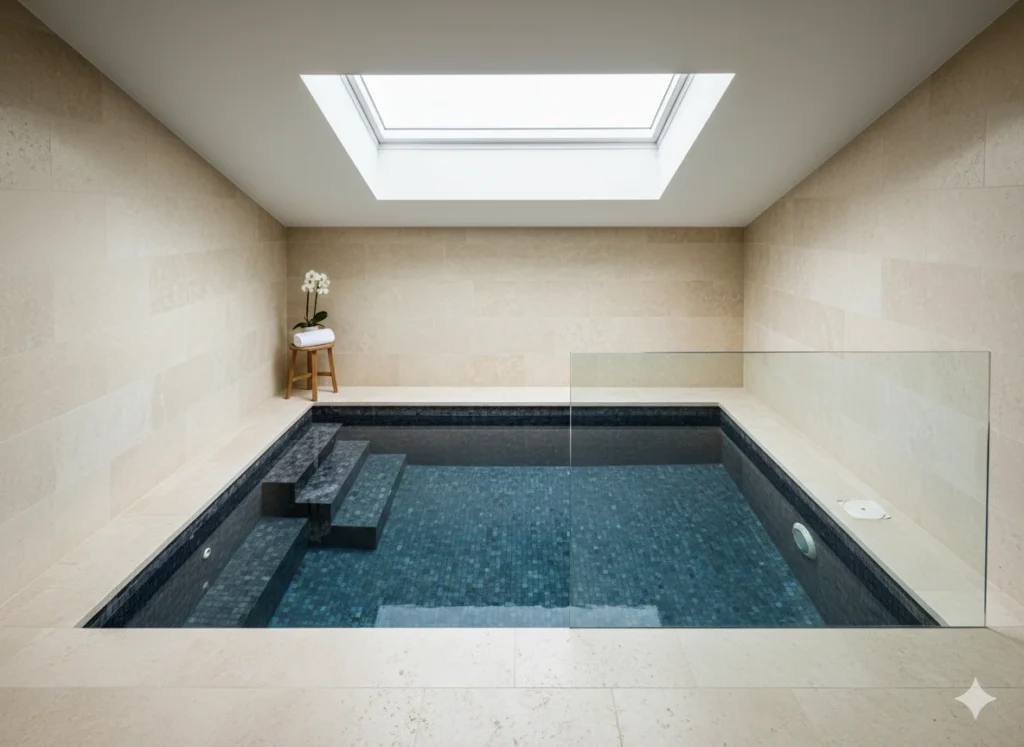
Small indoor pool design challenges the assumption that meaningful indoor aquatic environments require the substantial square footage and ceiling heights associated with full-scale residential indoor pool installations, proving that thoughtfully conceived compact indoor pools deliver genuine luxury experiences within architectural footprints that many luxury homes can accommodate without major structural compromise.
Plunge pool configurations in small indoor pool designs prioritize depth over length, creating pools of 3 to 5 meters length and 1.5 to 2 meters depth that accommodate the specific aquatic experiences of immersion, hydrotherapy, and temperature contrast therapy that many homeowners value more than lap swimming capability. These compact deep pools suit the wellness-oriented indoor pool user whose primary aquatic activities are relaxation, recovery, and therapeutic immersion rather than fitness swimming, creating complete luxury aquatic environments within footprints comparable to a generous bathroom rather than requiring the room-scale spaces that lap pools demand. Indoor pool ideas for small pool configurations gain maximum visual impact through material quality and design sophistication rather than dimensional generosity, with premium natural stone surrounds, dramatic architectural lighting, and sophisticated water features creating environments of genuine luxury that transcend their compact dimensions through design excellence.
Recessed pool designs that lower the pool level below the surrounding floor plane create small indoor pool visual impact beyond the pool’s actual dimensions by embedding the water within the floor surface rather than allowing it to occupy visible above-floor volume. The visual effect of a recessed pool seen from surrounding floor level creates the impression of looking down into a contained body of water rather than looking across a shallow above-floor installation, creating perceived depth and luxury of experience that above-floor small pools of equivalent volume cannot match.
Spa and Wellness Indoor Pool Design
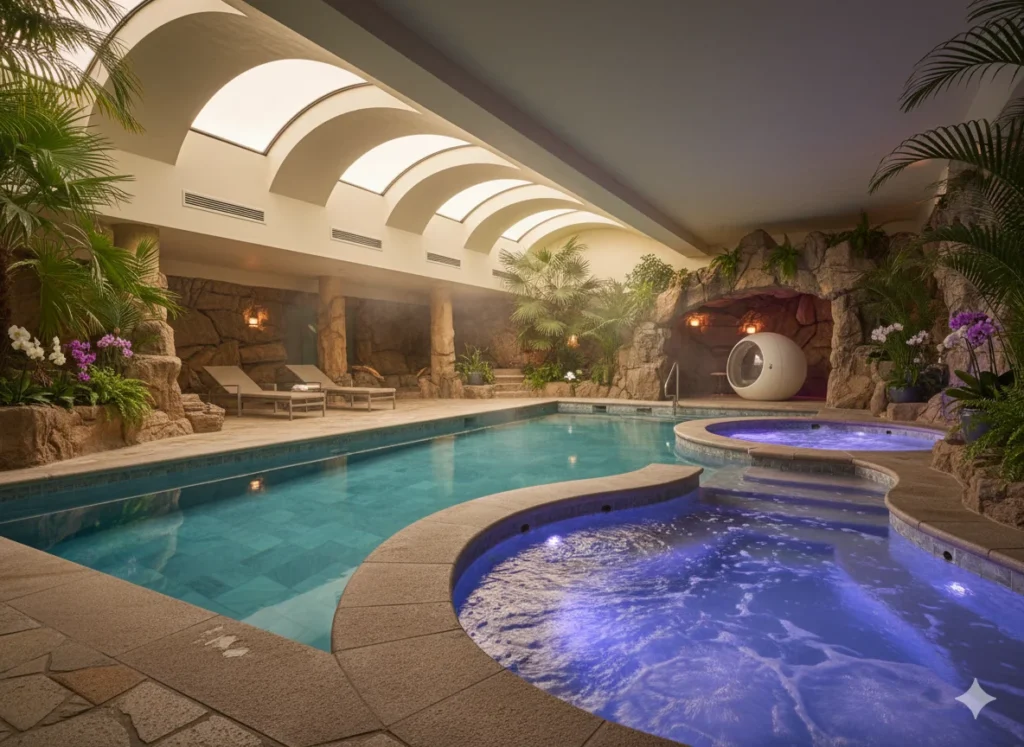
Spa indoor pool design integrates the luxury swimming pool experience with therapeutic and wellness functions, creating indoor aquatic environments that serve the comprehensive wellness needs of health-conscious homeowners across fitness swimming, hydrotherapy, relaxation, and recovery applications simultaneously.
Luxury indoor pool installations incorporating integrated spa zones position heated jet hydrotherapy areas adjacent to or connected with the primary swimming pool body, creating aquatic wellness environments where users can transition between swimming exercise and therapeutic massage jet immersion within a single architecturally unified water environment. The temperature differential between cooler exercise swimming pool water and heated hydrotherapy spa temperatures creates the contrast therapy benefit that wellness practitioners consistently identify as among the most potent recovery and circulation enhancement techniques available through domestic means. Indoor pool room design accommodating both swimming pool and spa elements requires careful spatial planning that positions these distinct water bodies in functional relationship while creating the architectural coherence that prevents combined installations from appearing as disconnected aquatic amenities sharing floor space without design unity.
Sensory deprivation and float pool elements integrated within broader spa indoor pool designs represent the emerging wellness frontier in residential aquatic design, with enclosed float pods or dedicated shallow salt water float pools creating complete sensory withdrawal experiences in private residential contexts that previously required specialist commercial wellness facilities. The integration of heated indoor pool swimming, hydrotherapy spa, and float therapy within a single architecturally resolved residential indoor aquatic environment creates the most comprehensively wellness-focused luxury home feature available at any investment level, delivering therapeutic capabilities that no other domestic amenity approaches in scope or intensity.
Indoor Pool Tiles and Coping Materials for Design Excellence
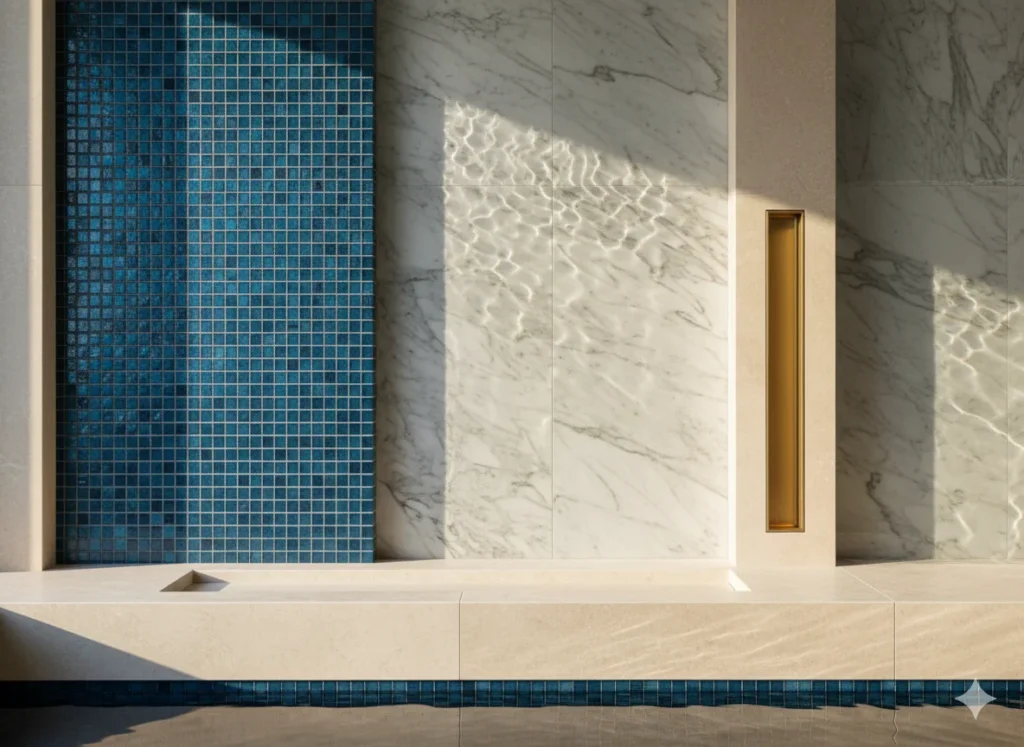
Indoor pool tiles represent the most visually prominent and most carefully scrutinized material element in any indoor pool design, covering the largest surface area of the pool body itself in materials that must simultaneously perform demanding technical functions and deliver the aesthetic character that defines the entire pool’s visual identity.
Glass mosaic tiles in premium Italian production represent the most luxurious and visually distinctive tile category for indoor pool designs, their small format creating surfaces of extraordinary visual richness through the subtle color variation, surface reflectivity, and light-catching quality of individual glass tile units that larger format ceramic and porcelain alternatives cannot replicate. The specific way that glass mosaic tile surfaces interact with water and underwater lighting in luxury indoor pool installations creates a shimmering vitality and visual depth that makes glass mosaic pool finishes immediately identifiable as premium design choices in pool photography and in person. Large format natural stone tiles in honed marble or travertine create indoor pool body surfaces of maximum material luxury and visual sophistication, with the natural stone’s authentic geological character creating pool interior surfaces of genuine artistry that manufactured alternatives cannot approach regardless of technical quality.
Pool coping in indoor pool design uses materials including natural limestone, travertine, granite, and precision-cut porcelain to create the edge condition where pool water surface meets surrounding dry pool surround, with the coping detail representing one of the most architecturally significant junctions in the entire pool room design. Flush coping designs where the surround material meets the water surface at exactly the same plane create the most elegant and contemporary coping condition, minimizing the visible edge profile and creating the impression of the water extending to meet the surrounding material without interruption. Recessed coping with integrated overflow channels creates the appearance of infinitely level water filling the pool body to its absolute maximum, creating the overflowing water plane effect most strongly associated with luxury contemporary indoor pool design in premium residential and hospitality contexts.
Indoor Pool Ventilation and Humidity Management
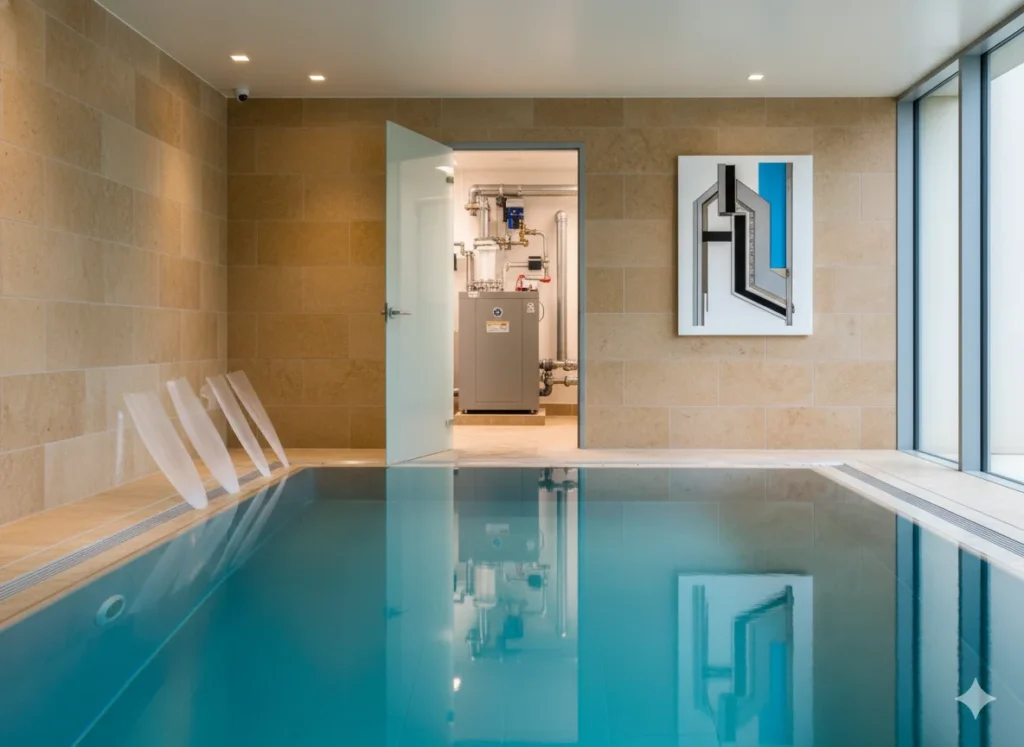
The technical infrastructure of indoor pool installations deserves serious design consideration alongside the architectural and aesthetic elements that more obviously define the character of these extraordinary spaces, as inadequate humidity and ventilation management creates the conditions that ultimately undermine the luxury experience of even the most beautifully designed indoor pool environments.
Indoor pool ventilation systems serve the critical function of controlling the elevated humidity levels that enclosed pool environments generate through water evaporation, preventing the condensation, mold growth, and structural deterioration that inadequately controlled indoor pool humidity produces in surrounding building materials including structural elements, mechanical systems, and interior finish surfaces. Dedicated pool dehumidification units sized to the specific volume of pool water surface and room air volume operate continuously to maintain pool room humidity within the 50 to 60 percent relative humidity range that prevents condensation while maintaining comfortable occupant conditions in the enclosed aquatic environment. Residential indoor pool installations require pool room envelope design that separates the humid pool environment from adjacent interior spaces through vapor-resistant construction assemblies, positive pressure ventilation management, and thermally adequate wall and ceiling construction that prevents condensation at interior surfaces in contact with exterior temperatures.
Pool room temperature management in heated indoor pool design balances water temperature, air temperature, and humidity in relationships that optimize both swimming comfort and the long-term performance of the building envelope surrounding the pool space. Pool water temperatures between 28 and 32 degrees Celsius for leisure swimming, combined with pool room air temperatures maintained 2 to 4 degrees above water temperature, minimize water evaporation rates while maintaining the comfortable warm room environment that makes indoor pool use genuinely pleasurable year-round regardless of exterior weather conditions.
Indoor Pool Architecture Using Concrete and Minimal Design
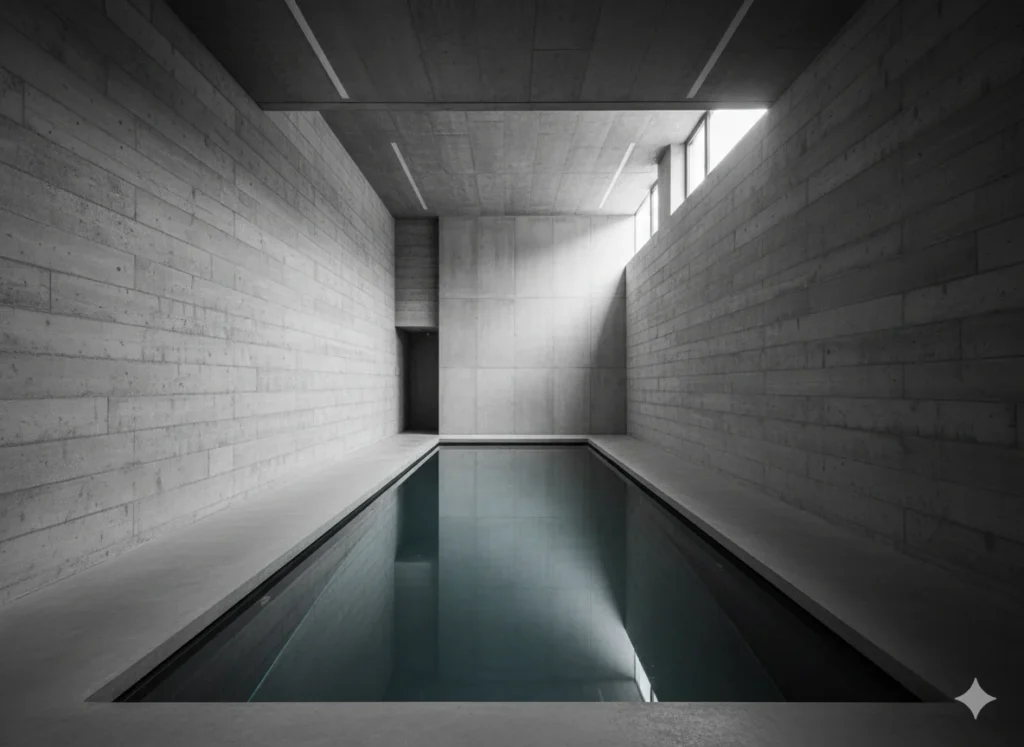
Contemporary indoor pool design using exposed concrete, minimal material palette, and architectural precision creates some of the most conceptually resolved and spatially powerful indoor pool environments in current luxury residential design, applying the design principles of architectural minimalism to aquatic space with results of extraordinary visual power and spatial clarity.
Board-formed concrete walls in pool enclosures retain the texture of the wooden formwork used in their casting, creating surfaces of distinctive visual character that combine industrial material honesty with genuine artisanal quality in the specific combination most associated with contemporary architectural concrete as a luxury material rather than a utilitarian one. Indoor pool architecture using board-formed concrete for pool room walls, ceiling structure, and pool deck surfaces creates environments of complete material unity where the same primary material appears in every surface position, creating the monolithic spatial quality most strongly associated with high-concept contemporary architecture. The specific color and texture of architectural concrete in modern indoor pool designs creates the ideal neutral backdrop for the blue-green water of the pool body, allowing the water’s color and movement to provide the only visual accent in otherwise monochromatic concrete environments of remarkable spatial purity.
Minimal indoor pool room design using strict geometric precision in pool body proportions, surround dimensions, and architectural element placement creates spaces where every measurement carries design significance and no element exists without purposeful relationship to the whole composition. The discipline of minimal indoor pool architecture requires the highest material quality and execution precision because the absence of decorative detail means that the quality of the materials themselves and the precision of their installation become the primary experiential qualities that occupants encounter and evaluate throughout their time in the pool environment.
Indoor Pool Decor and Surrounding Space Design
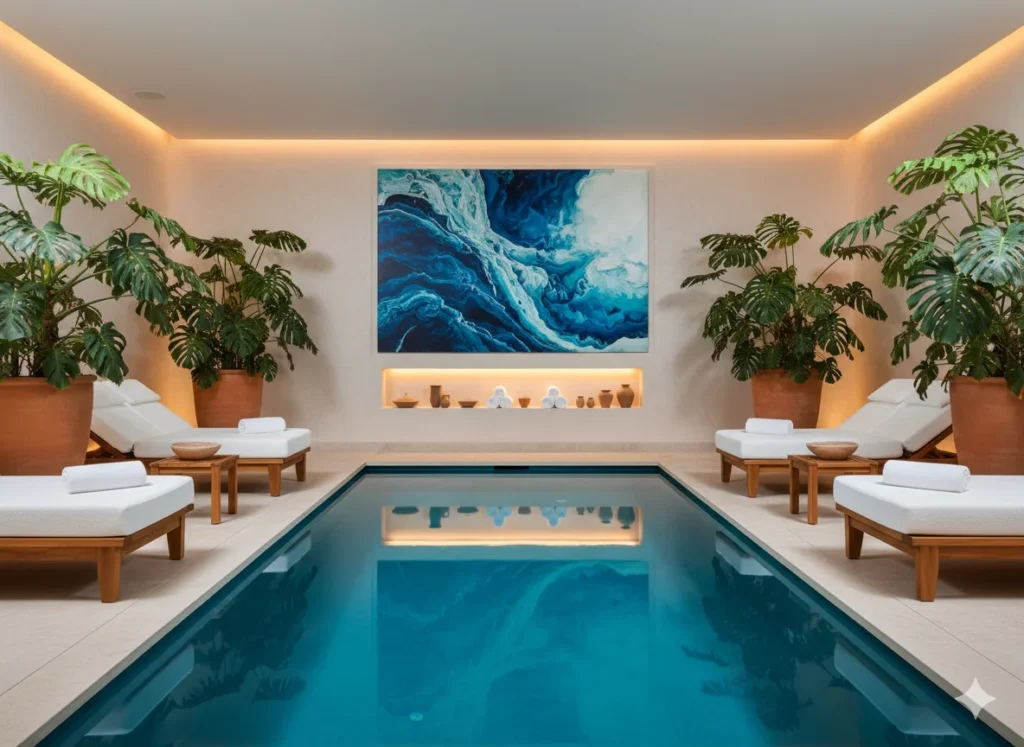
Indoor pool decor and the design of spaces immediately surrounding the pool body extend the luxury experience of indoor pool room design beyond the water itself into a complete architectural environment that serves relaxation, entertainment, and aesthetic enjoyment alongside the primary aquatic function.
Poolside furniture in indoor pool environments requires specific material performance that accommodates the moisture, chemical splash, and barefoot occupant conditions inherent in poolside settings while maintaining the aesthetic quality expected in luxury residential interiors. Teak and iroko hardwood sun loungers and poolside seating provide the warmest and most materially appropriate furniture choice for indoor pool surround areas, their natural wood tones creating organic warmth against stone and tile pool surround surfaces while their water resistance ensures lasting structural integrity through years of pool environment exposure. Upholstered poolside furniture using performance fabrics in solution-dyed acrylic construction provides the comfort and aesthetic softness of upholstered seating while resisting the moisture, UV, and chemical conditions of pool environments with the material resilience that conventional interior upholstery cannot match in aquatic settings.
Plant design within indoor pool room design uses carefully selected moisture-tolerant species to create the botanical warmth and organic vitality that purely architectural pool environments often lack despite their considerable spatial power. Large tropical specimens including Monstera deliciosa, Strelitzia reginae, and various palm varieties thrive in the warm humid conditions of indoor pool rooms while creating the lush botanical presence most associated with luxury resort pool environments globally. The combination of dramatic architectural materials with abundant tropical planting creates indoor pool environments that feel simultaneously sophisticated and genuinely paradisiacal, spaces that transport their occupants to genuinely extraordinary sensory experiences through the combination of water, light, stone, and living botanical abundance.
Indoor Pool House Design for Dedicated Aquatic Architecture
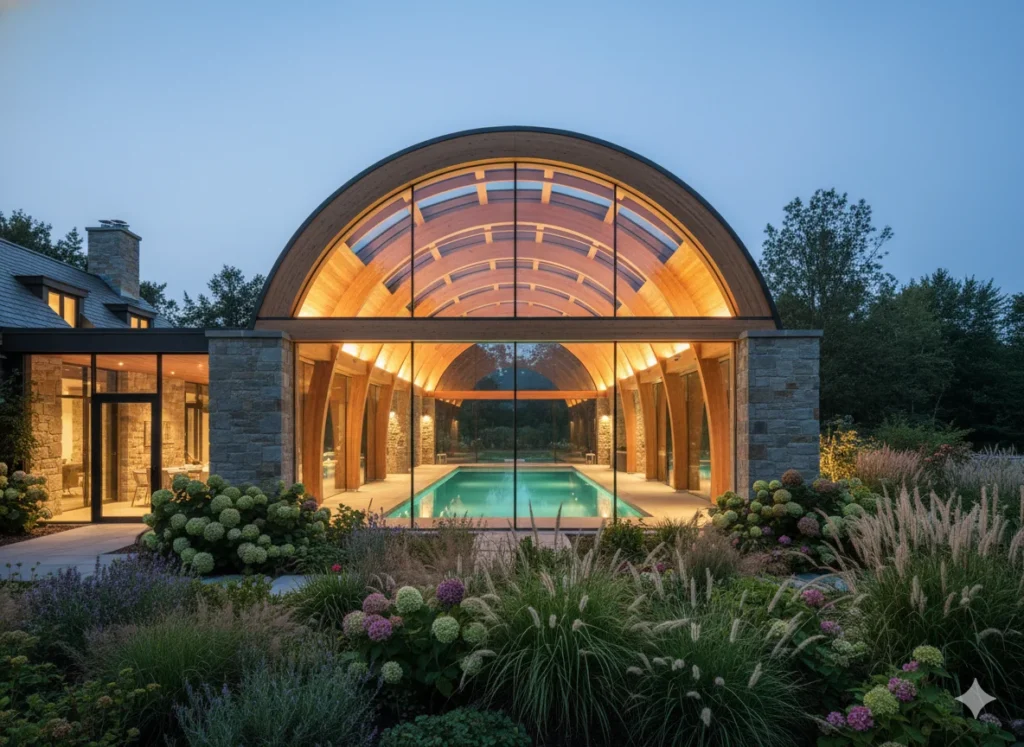
Indoor pool house design as a dedicated architectural structure separate from the main residence represents the most architecturally ambitious residential aquatic investment available, creating purpose-built buildings where every architectural decision serves the indoor pool experience without the compromises that integrating pool spaces within existing residential structures requires.
Dedicated indoor pool house structures allow architectural freedom unavailable in integrated pool room designs, with roof forms including dramatic barrel vaults, soaring shed roofs with clerestory glazing, and transparent glass pavilion structures all serving as genuine architectural expressions of the aquatic experience within rather than structural compromises that accommodate pool requirements within existing building frameworks. The barrel vault roof form in particular creates indoor pool house design of extraordinary historical resonance and spatial dignity, connecting contemporary residential aquatic architecture to the thermal bath traditions of antiquity while creating a structural form that accommodates the condensation management requirements of pool environments with particular architectural grace. The specific quality of light entering a barrel-vaulted indoor pool house through end clerestory windows creates moving light patterns throughout the day that animate both pool water and surrounding architectural surfaces in the specific dynamic quality of light and water that pool environments make uniquely available.
Home indoor pool house designs positioned at strategic relationships to the main residence create covered connection architecture including glazed bridge links, pergola-covered walkways, and landscape-integrated paths that make the pool house genuinely accessible in all weather conditions while the physical separation of the structures prevents the humidity and chlorine chemistry of the pool environment from affecting the main residential interior. This architectural separation also creates the experiential quality of traveling to a dedicated destination within the residential property, making the pool visit a distinct and deliberate act of transition rather than simply moving from one room of the same house to another.
Conclusion
Creating a truly magnificent modern indoor pool requires approaching the design challenge with the architectural ambition, material commitment, and technical sophistication that this exceptional residential feature deserves and rewards. The 15 modern indoor pool designs explored throughout this guide collectively demonstrate that the most extraordinary indoor swimming environments emerge not from the provision of aquatic function alone but from the elevation of that function to the status of genuine architecture, where the pool body, its surround, the enclosing space, its light, and its material composition create unified experiences of sensory luxury that transcend the simple provision of a place to swim.
The most valuable insight from this comprehensive exploration of indoor pool ideas and design strategies is that the greatest luxury indoor pools share a commitment to design integrity that subordinates individual trend-driven choices to the coherent architectural vision of the whole environment. The glass wall that creates seamless connection to landscape, the skylight that fills the pool room with living natural light, the natural stone surround that grounds the aquatic environment in geological permanence, and the theatrical lighting that transforms the evening pool experience each contribute to genuinely extraordinary environments only when they work together as unified architectural compositions rather than accumulated impressive features without organizing design logic.
Begin your luxury indoor pool design journey by identifying the primary experience and function you most want your indoor pool to deliver, whether athletic fitness, therapeutic wellness, family entertainment, architectural spectacle, or some specific combination of these distinct aquatic values, and design backwards from that clarity of purpose toward the specific architectural, material, and technical decisions that serve your vision most completely and authentically.
Frequently Asked Questions
What is the average cost of a modern indoor pool installation?
Residential indoor pool installations range from approximately 150,000 to 500,000 dollars for standard indoor lap pools with quality finishes and adequate mechanical systems, to 500,000 to over 2,000,000 dollars for fully architecturally resolved luxury indoor pool installations with premium natural stone surrounds, structural glazing, sophisticated lighting systems, integrated spa zones, and dedicated pool house structures. The specific cost determinants include pool body size and depth, structural requirements of the enclosing space, mechanical system specification, material quality throughout pool and surround, and the extent of architectural customization involved.
How do I control humidity in an indoor pool room?
Indoor pool ventilation and humidity control requires dedicated pool dehumidification equipment sized to the specific pool water surface area, pool room air volume, and desired humidity setpoint, typically maintaining 50 to 60 percent relative humidity through continuous dehumidification operation. Pool room envelope construction must include vapor-resistant assemblies preventing humid pool room air from migrating into adjacent building cavities where condensation would cause structural and mold damage. Professional mechanical engineering consultation during design development is essential for adequately specifying the dehumidification and ventilation systems that protect the building while maintaining comfortable pool room conditions.
What pool tiles work best for indoor pools?
Indoor pool tiles selection balances technical performance requirements including slip resistance, chemical resistance, and frost resistance in applicable climates with aesthetic objectives appropriate to the overall pool design direction. Glass mosaic tiles provide maximum visual luxury and light interaction quality for premium design applications. Large format porcelain tiles deliver contemporary minimal aesthetics with excellent durability. Natural stone in honed marble or travertine creates maximum material luxury at premium cost with specific sealing and maintenance requirements. All indoor pool tile selections must be specified as pool-rated with appropriate slip resistance for wet surround areas and chemical resistance for pool chemistry exposure.
Can I add an indoor pool to an existing home?
Adding an indoor swimming pool to an existing residence is architecturally feasible through either below-grade excavation within an existing footprint, conversion of an existing large room or garage structure to pool use, or construction of a new attached or detached indoor pool house addition. Each approach presents specific structural, mechanical, and cost challenges that require professional architectural and structural engineering assessment before design commitment. The humidity management requirements of indoor pools make proper envelope design of the pool space critical regardless of approach, as inadequate moisture control will damage surrounding building structures and interior finishes over time.
What natural light strategies work best for indoor pools?
Indoor pool with skylights positioned directly above the pool body provides the most effective natural light strategy for indoor pools, creating the overhead light angle that produces the characteristic sparkle and surface animation of pool water that side glazing alone cannot generate. Glass wall indoor pool designs maximize lateral natural light through full-height exterior glazing while skylights supplement this lateral light with overhead illumination in the most architecturally complete natural lighting strategy. Diffused or translucent glazing manages solar heat gain and glare while maintaining daylight quality in pool rooms where direct sun would create uncomfortable brightness and excessive heat during peak summer hours.
You May Also Like This Post:
18 Cozy Family Room Ideas for a Warm, Functional Space and Stylish Home
One Comment