
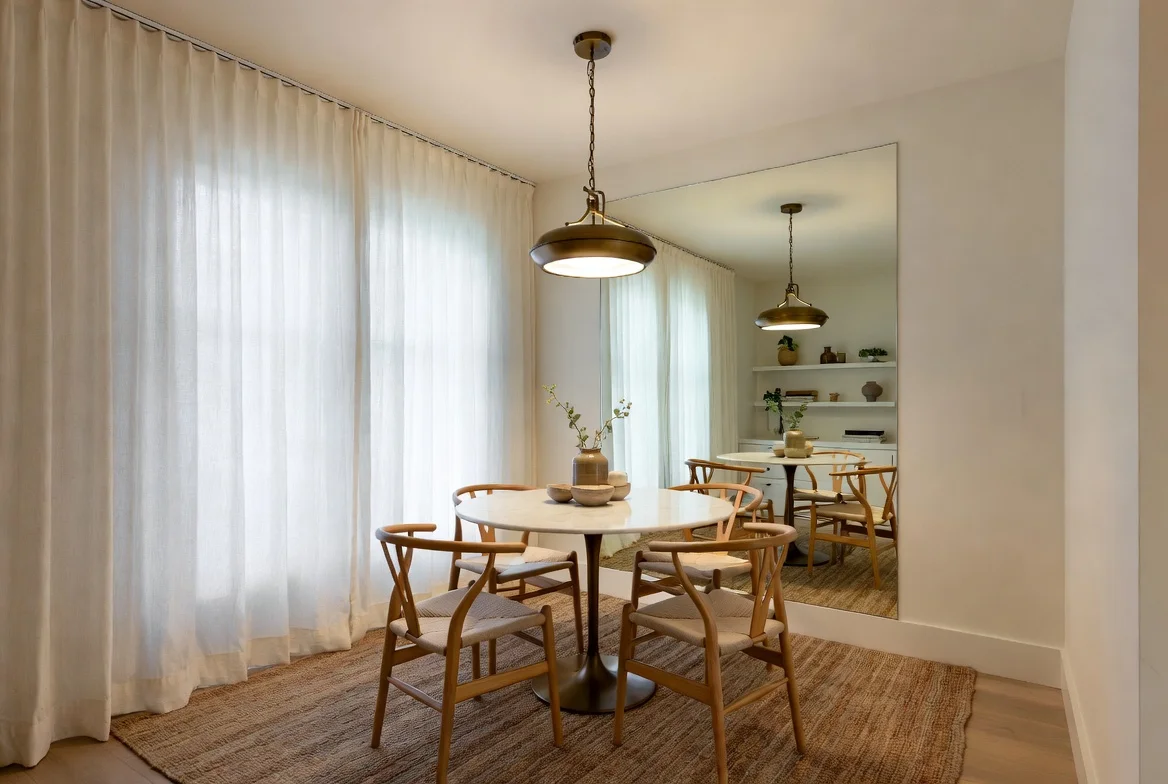
12 Small Dining Room Decor Ideas That Make Your Space Look Bigger and Stylish
Here is something that most homeowners with small dining rooms discover only after years of quietly tolerating an unsatisfying space: the room’s dimensions were never the actual problem. The problem was a collection of design decisions made without understanding how visual perception works, how furniture scale operates in confined spaces, and how the specific combination of color, light, and material creates spatial experiences that bear only a loose relationship to the actual square footage involved.
Small dining room decor ideas represent one of the most practically significant categories in residential interior design precisely because the dining room is among the most dimensionally constrained spaces in most homes while simultaneously serving social functions that demand a certain dignity and visual completeness that rooms feeling cramped and undersized fail to deliver. A dining room that makes guests feel crowded, where chairs scrape walls when pulled out, where the light fixture feels too low, and where the general impression is of furniture forced into inadequate space creates a hosting experience that no quality of food or company can fully overcome.
The fundamental insight that transforms small dining room ideas from compensatory workarounds into genuine design strategies is understanding that perceived spaciousness and actual spaciousness are genuinely different things that can be manipulated independently of each other. A small dining room designed with appropriate mirrors, vertically oriented elements, appropriately scaled furniture, light-reflective colors, and well-chosen lighting can feel significantly more generous than a larger dining room designed without these spatial awareness strategies. This guide presents 12 proven, modern, and genuinely beautiful approaches to small dining room decor that make your space look bigger, feel more welcoming, and express personal style with genuine confidence.
Choose the Perfect Dining Table Scale and Shape
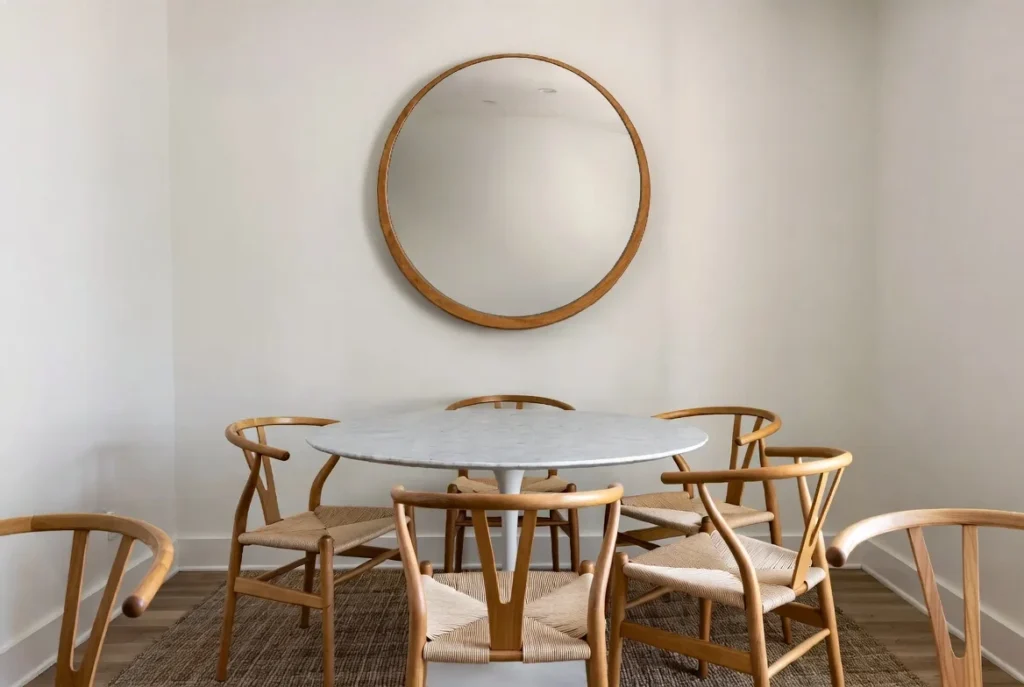
The dining table is the single most consequential furniture decision in any small dining room, with table scale, shape, and proportion determining more about the room’s perceived spaciousness and functional comfort than any other element in the space.
Round dining table small room configurations represent the most consistently recommended and genuinely effective table choice for compact dining spaces, and the reasons are both practical and visual simultaneously. Practically, round tables eliminate the corner zones that rectangular tables create, allowing more flexible chair positioning and easier circulation around the table in tight spaces where every inch of clearance matters for comfortable dining and movement. Visually, the absence of corners in round table forms creates a softer, more spatially generous visual impression than rectangular tables whose hard perpendicular corners emphasize the boundaries of confined spaces rather than softening them. A 36 to 42-inch diameter round table seats four people comfortably in a space that a rectangular table of equivalent seating capacity would dominate, making the round table form the default recommendation for any small dining room furniture selection in spaces below 100 square feet.
Extendable tables provide the most functionally intelligent solution for households oscillating between daily intimate dining for two to three people and occasional entertaining for larger groups, with compact everyday configurations expanding to accommodate guests without requiring permanent commitment to the larger furniture footprint that infrequent entertaining occasions demand. Small dining table ideas using drop-leaf or butterfly extension mechanisms create tables that function as compact two-person daily dining surfaces expanding to four or six-person party configurations through mechanical adjustment that takes under a minute to execute. The specific value of this flexibility makes extendable tables among the most practically intelligent small dining room furniture investments available, eliminating the constant compromise between daily functional comfort and entertaining capability that non-extending compact tables impose.
Use Mirrors Strategically to Double Your Perceived Space
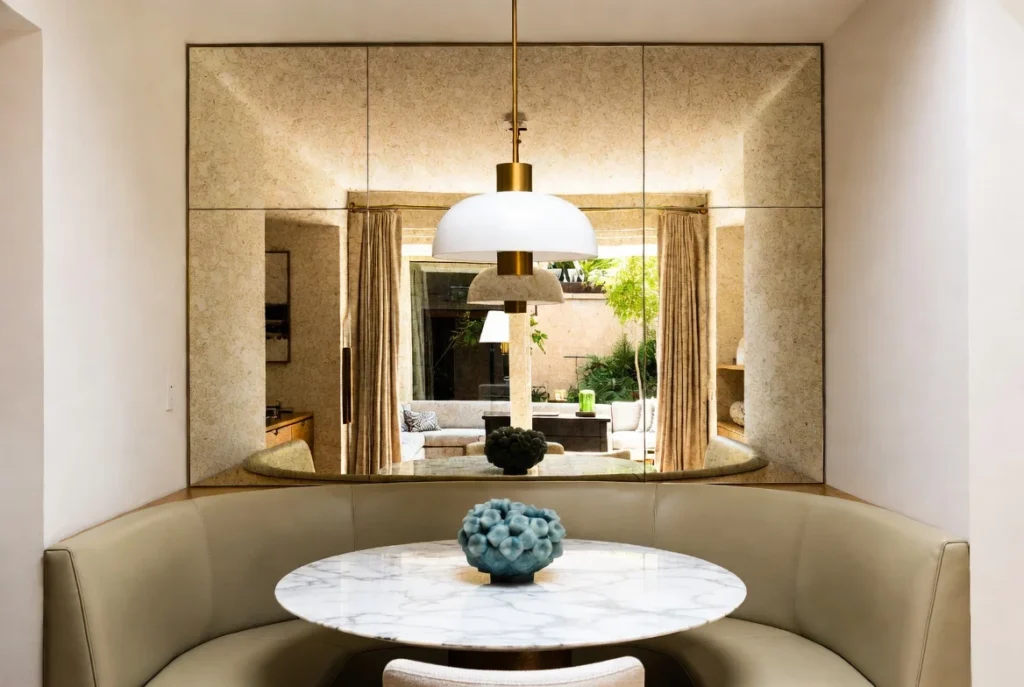
Dining room mirror ideas deliver the most dramatically effective space-expanding technique available in small dining room decor, with properly placed mirrors creating visual depth, multiplied light, and perceived spatial extension that literally changes how the room feels to everyone dining within it.
A large mirror occupying most of the wall behind the primary seating or on the wall opposite the room’s main light source creates the most powerful spatial expansion effect, visually doubling the perceived depth of the dining room through reflected space that the eye interprets as real extension rather than mere reflection. The specific position opposite windows maximizes this effect by reflecting the window itself and the outdoor view beyond, essentially creating the impression of a second window opening toward another outdoor space, a perceptual effect of significant spatial power particularly valuable in dining rooms with limited or single-direction natural light. Dining room mirror ideas using floor-to-ceiling mirror panels installed behind a banquette or built-in bench create the most architecturally resolved mirror application, with the mirror reading as a design feature rather than a compensatory spatial trick while delivering its full expansion effect throughout the dining experience.
Framed mirror selections for small dining room wall decor applications should prioritize large single mirrors over collections of smaller mirrors, as the visual fragmentation of multiple small mirrors creates the opposite spatial effect of unified large mirror surfaces, drawing attention to the collection of frames rather than allowing the eye to travel through the reflective surface into the perceived depth beyond. Ornate gold or brass frames in traditional and transitional dining rooms, simple black metal frames in contemporary and minimalist applications, and frameless or thin metal frames in modern and Scandinavian-influenced spaces each create distinct aesthetic characters while performing the same spatial expansion function that makes mirrors the most reliable tool in the small dining room decor ideas toolkit.
Embrace Light Colors and Strategic Paint Choices
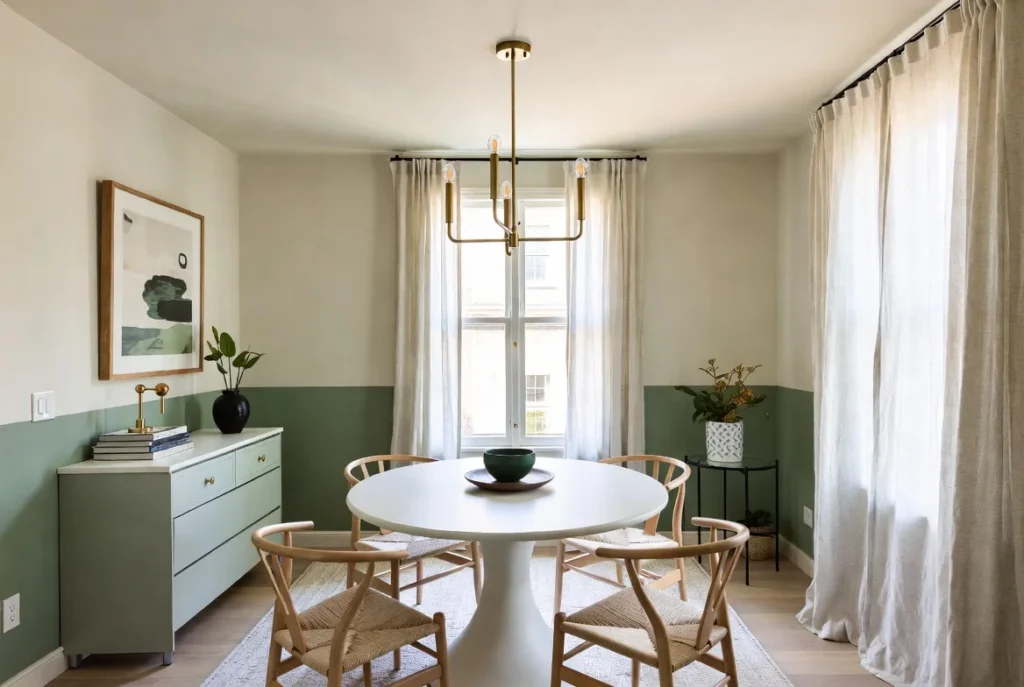
Small dining room color ideas that exploit the specific relationship between color, light, and perceived space create dining rooms that feel generously proportioned through design intelligence rather than architectural modification.
Light paint colors in soft white, warm cream, pale gray, and barely-there sage create the foundational spatial expansion effect of color selection in compact dining room design, reflecting available light throughout the room and eliminating the visual weight that deeper colors add to walls, ceiling, and floor surfaces in confined spaces. The specific warming quality of cream and off-white tones over stark pure white creates small dining room color ideas outcomes that feel simultaneously spacious and genuinely welcoming rather than the clinical brightness that purely white rooms sometimes create in spaces without strong natural light to balance their stark palette. Painting ceiling and walls the same continuous color in light tones eliminates the visual interruption of the wall-to-ceiling junction, creating a seamless surrounding envelope that makes the room feel taller and more expansive than distinctly painted ceilings of the same actual height.
Dining room accent wall small space applications using deeper or bolder colors on a single wall, typically the wall most visible upon entry or the wall behind a banquette seating installation, create directional design interest and perceived spatial depth through the visual recession that darker accent walls create in the visual field. The psychological effect of one wall appearing further away than the others creates a room that reads as longer and deeper than its actual dimensions, making the accent wall strategy one of the most effective small dining room color ideas available for rooms where pure lightness of palette would feel too austere or insufficiently defined for the design character the homeowner seeks.
Install Space-Saving Banquette or Built-In Seating
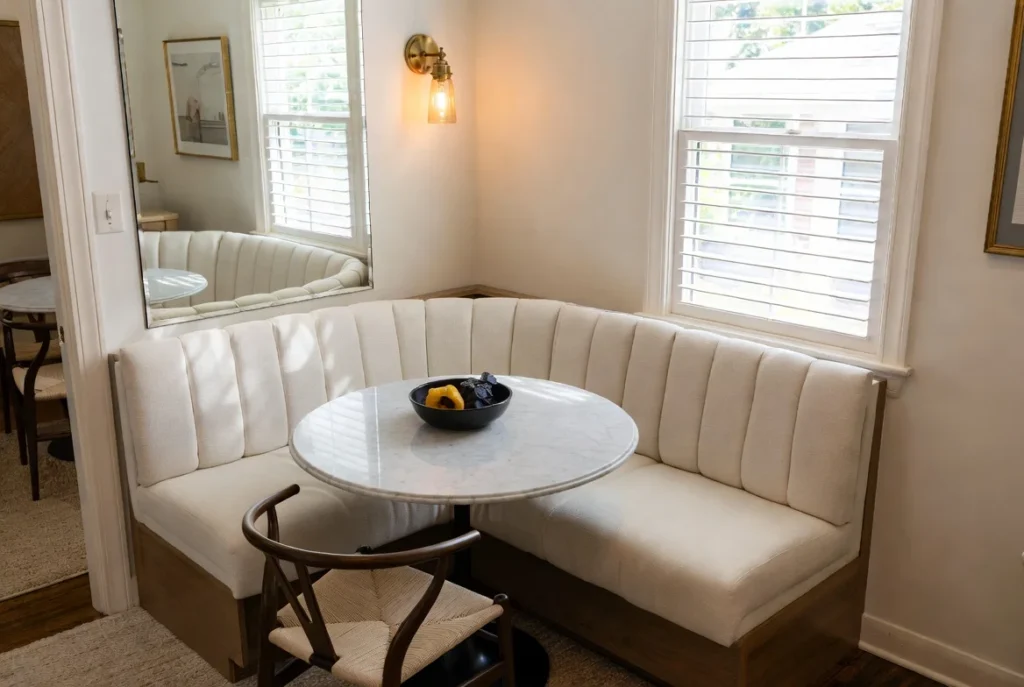
Banquette seating small dining room installations represent one of the most genuinely transformative small dining room decor ideas available, creating space-efficient seating solutions that simultaneously maximize seating capacity, provide hidden storage, and create the specific intimate restaurant-booth atmosphere that makes small dining rooms feel deliberately designed for cozy dining rather than simply constrained by limited dimensions.
Built-in dining seating against one or two walls of a corner or alcove dining space consumes no floor area beyond the bench structure itself, seating three to four people on a built-in bench that would require three individual chairs of considerably greater combined floor footprint to achieve equivalent seating capacity. The specific space efficiency of bench seating arises from the fact that diners at a bench slide in from the open end rather than pulling chairs away from the table, eliminating the chair clearance requirement of 36 inches that free-standing chair seating demands behind each seat position. Small dining room with bench installations in corner L-shape or straight wall configurations reduce the total floor area required for a four-person dining setting by 30 to 50 percent compared to equivalent capacity chair arrangements, a spatial saving of genuine significance in rooms where every square foot of clear floor area contributes meaningfully to the room’s livability.
Built-in dining seating also provides the most valuable hidden storage opportunity available in small dining room decor, with lift-top bench seats concealing substantial storage volume for dining linens, serving equipment, seasonal table accessories, and household overflow within a furniture form whose primary visible function is seating rather than storage. The organizational benefit of this concealed storage makes banquette seating among the most functionally intelligent investments available in compact dining spaces where dedicated storage furniture would consume the floor area that dining circulation requires.
Choose the Right Lighting to Elevate and Expand
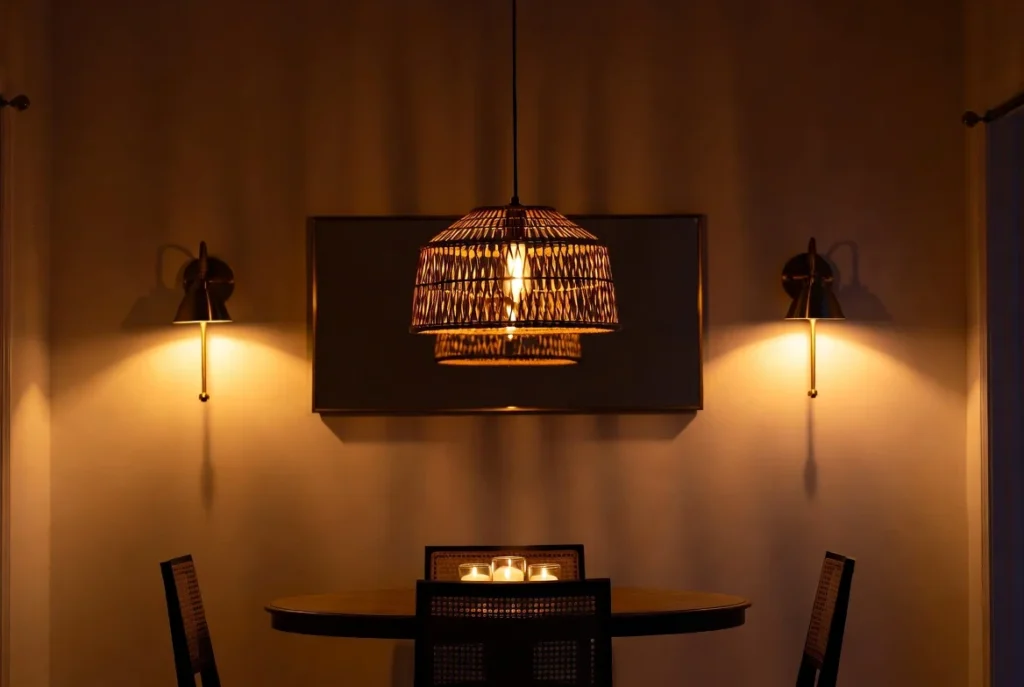
Dining room lighting for small spaces performs functions beyond simple illumination, with pendant height, fixture scale, and light quality each contributing to the perceived spatial character of the room in ways that incorrect lighting choices actively undermine while appropriate selections enhance significantly.
Pendant light fixtures hung at the correct height above dining tables create the specific visual focal point that organizes the dining room’s spatial composition around the table, drawing the eye to the center of the space rather than to its boundaries and creating the impression of a defined room within the room that reduces awareness of the surrounding space’s limitations. The standard pendant height recommendation of 30 to 34 inches above the table surface for fixtures of 12 to 24-inch diameter creates the specific relationship between light source and dining surface that makes both the food and the faces of dining companions beautifully illuminated while the fixture itself remains at comfortable eye level without interrupting conversation across the table. Small dining room decor ideas for lighting selection should prioritize single statement pendants or small coordinated pendant groupings over large chandelier formats that can overwhelm compact dining rooms through their sheer physical scale regardless of their individual design quality.
Warm white lighting in the 2700 Kelvin color temperature range creates the most flattering and atmospherically appropriate illumination for dining environments of all sizes, with the amber warmth of warm white light making food appear more appetizing, skin tones more flattering, and the overall dining atmosphere more intimate and genuinely pleasurable than the cooler white tones that clinical and commercial environments use for functional clarity rather than social warmth. Dining nook ideas incorporating multiple light sources including wall sconces flanking mirrors or artwork beside the pendant fixture create layered illumination that makes small dining spaces feel dimensionally rich rather than uniformly lit, with the varied light sources at different heights creating depth and visual interest that flat single-source lighting cannot achieve.
Maximize Walls with Smart Vertical Storage and Decor
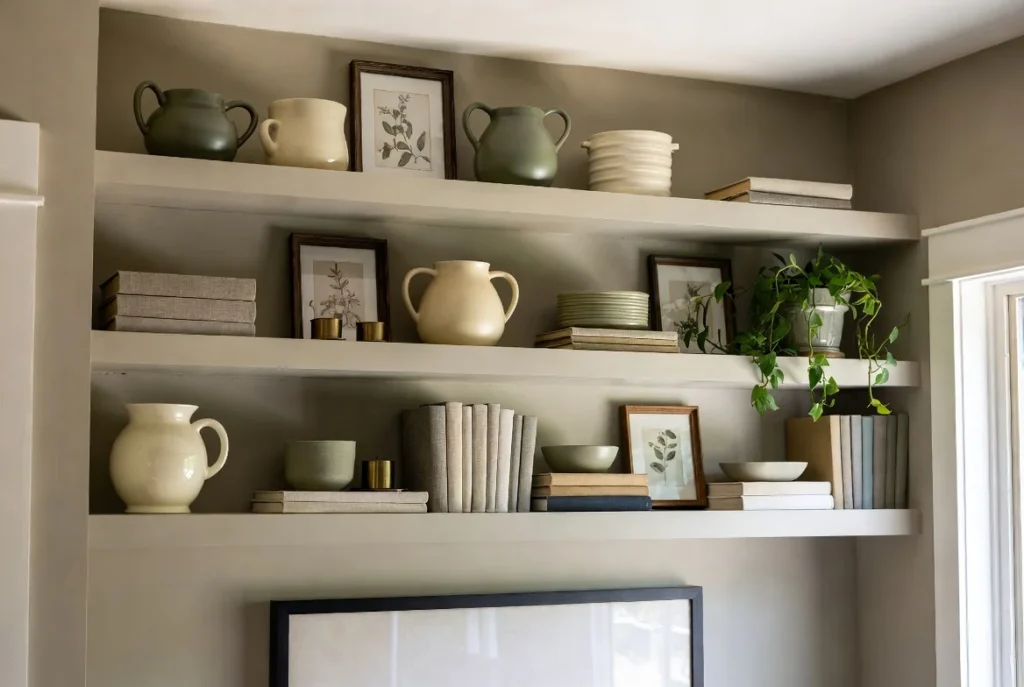
Small dining room wall decor that uses vertical space thoughtfully creates visual height, organizational capacity, and design character simultaneously, addressing the three most common deficiencies of underdesigned small dining rooms through a single coordinated wall strategy.
Floating shelves mounted above the dining table or along the primary wall of a compact dining room design create display and storage capacity without consuming floor space, with well-styled floating shelves adding the decorative richness and personal expression that empty walls in small rooms fail to provide while contributing to the perception of ceiling height through their vertical stack of elements at multiple heights. The specific visual effect of shelving extending from mid-wall to ceiling height draws the eye upward along the wall surface, creating perceived room height through vertical visual movement that horizontal room emphasis cannot achieve. Dining room storage ideas using floating shelves with a mix of open display sections and concealed storage through styled baskets or ceramic vessels create the organized-yet-personal aesthetic most associated with genuinely designed small dining spaces rather than simply storage-focused utility installations.
Gallery wall compositions in small dining room wall decor applications require specific scaling considerations that differ from larger room gallery wall guidelines, with oversized statement artwork in a single large piece more spatially effective than multiple small frames that create visual fragmentation in compact wall areas. A single large-scale artwork or print with strong visual presence creates the impression of a generous wall surface while multiple small frames emphasize the limited dimensions of the same wall area through their accumulation of individually small elements. Small dining room decor ideas for gallery walls should use three to five pieces maximum in coordinated frames rather than the abundant collections appropriate for larger dining rooms, with the restraint of a curated small selection creating more spatial generosity than ambitious overcrowded displays.
Select Space-Conscious Furniture With Visual Lightness
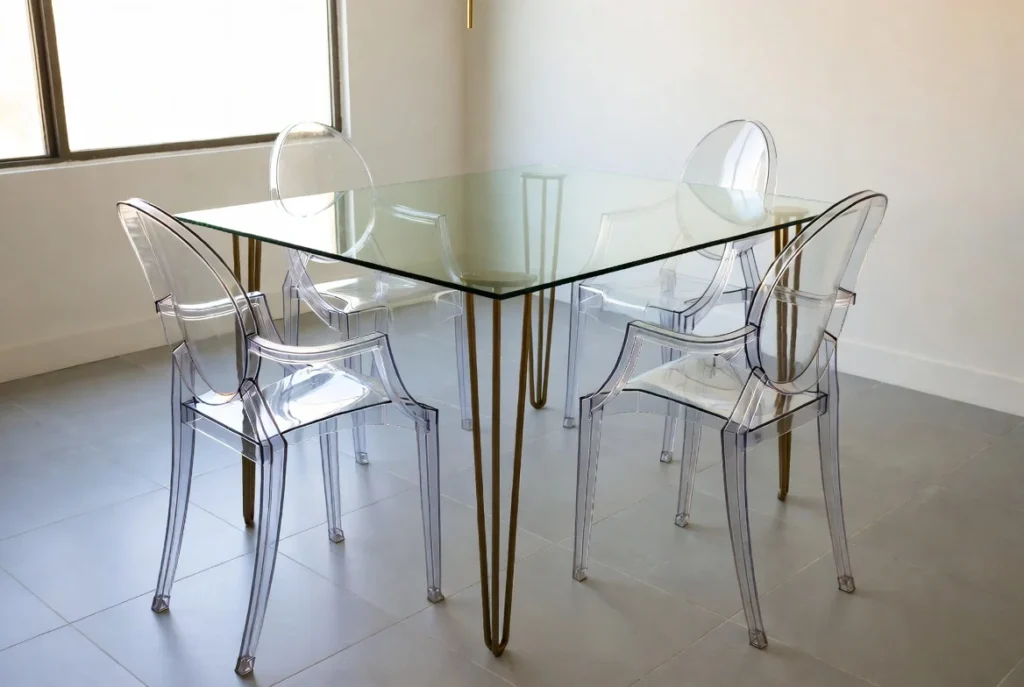
Small dining room furniture selections that prioritize visual lightness through material transparency, elevated profiles, and slim structural members create dining room compositions that feel significantly more open and spacious than solid, heavy furniture alternatives of equivalent functional capacity.
Transparent furniture in glass-top dining tables and acrylic or lucite chair forms creates the most complete visual lightness available in dining room space saving ideas, with the transparent materials occupying physical space without registering as visual mass in the way that solid opaque alternatives inevitably do in confined room compositions. A glass-top dining table on slender metal legs creates the impression of the floor continuing uninterrupted beneath and through the table, making the room’s floor area appear continuous rather than divided by solid furniture profiles that create visual barriers between floor sections. Small dining room furniture in transparent or semi-transparent forms suits contemporary, minimalist, and transitional dining room design directions with equal effectiveness while delivering the specific spatial openness that these forms provide in compact room contexts.
Metal furniture with thin structural profiles in powder-coated steel, brass, and bronze finishes creates visual lightness through slender member sections that occupy minimal visual weight despite their structural solidity, allowing the room to read as less furnished and more spatially generous than equivalent seating capacity in heavier wooden or upholstered forms. Small dining room furniture using wishbone chairs, hairpin-leg tables, and metal-frame dining chairs with open backs creates the airy visual character most associated with successful minimalist dining room ideas in small spaces, with the furniture’s formal discipline creating orderly composition that makes compact rooms feel intentionally scaled rather than simply limited.
Use Area Rugs to Define and Expand Your Dining Zone
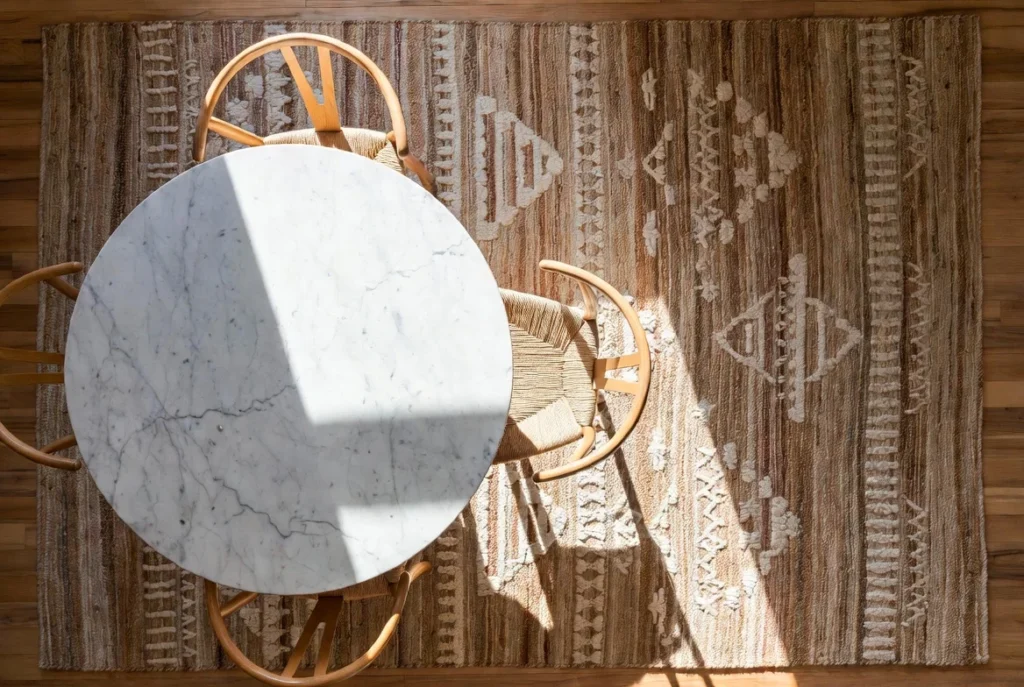
Dining room rug small space selection and placement follows principles that differ meaningfully from rug guidelines for larger dining rooms, with specific sizing, pattern, and material choices either expanding or contracting the perceived spatial character of compact dining areas significantly.
The most consequential dining room rug small space decision is sizing, with the near-universal tendency toward undersized rugs in small rooms creating exactly the opposite spatial effect of what homeowners intend. An undersized dining rug that allows chair legs to slide off the rug when pulled out creates the visual fragmentation most associated with inadequately designed small rooms, with the rug appearing as a small carpet within a larger undefined floor area rather than as the spatial definition tool that appropriately sized rugs provide. The minimum appropriate dining rug size requires the rug to extend at least 24 inches beyond the table edge on all sides, ensuring that chair legs remain on the rug surface even when chairs are pulled out for seating, with this generous extension creating the unified table-and-seating zone that makes the dining area feel like a complete room within the room rather than furniture floating on an undefined floor surface.
Patterned rugs in small dining room decor ideas applications perform specific spatial functions depending on pattern orientation and scale that homeowners can exploit deliberately for spatial benefit. Stripe patterns running lengthwise in the room’s longest dimension create visual extension that makes the room read as longer than its actual measurement. Geometric patterns with strong diagonal elements create dynamic visual movement that distracts the eye from room boundaries. Small-scale all-over patterns create visual texture that reads as a continuous surface rather than a pattern that could be counted and measured, preventing the spatial assessment that large-scale patterns in small rooms can inadvertently invite.
Create a Dining Nook for Cozy Intimacy
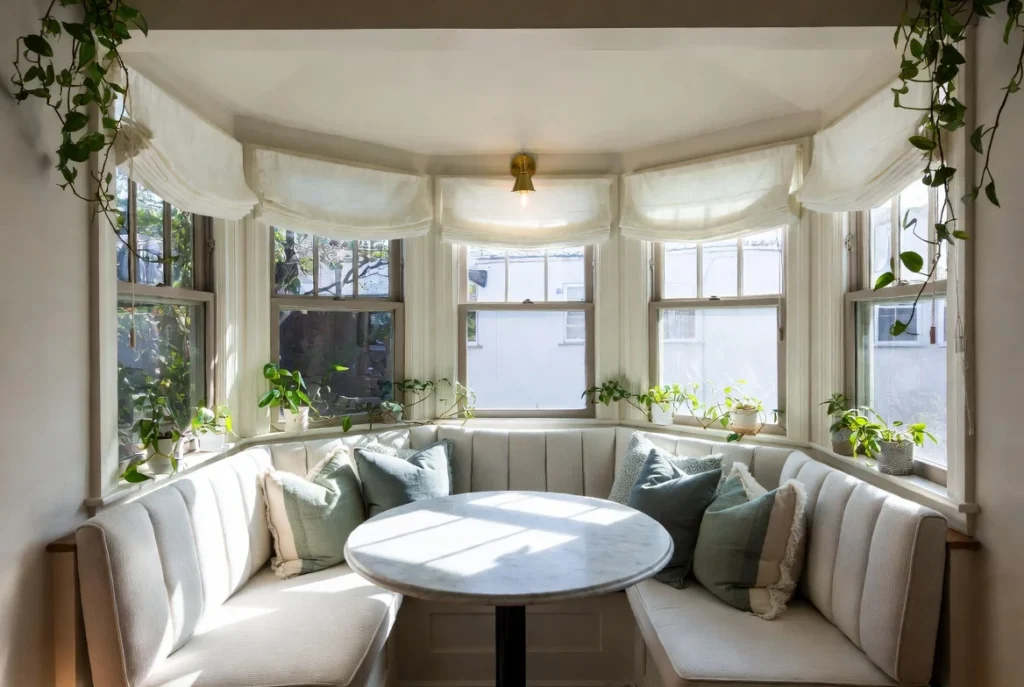
Dining nook ideas transform the spatial constraint of a small dining area into a deliberate design asset, creating intimate enclosed dining environments that feel purposefully designed for cozy gathered dining rather than compromised by dimensional limitations.
The specific psychological quality of an enclosed dining nook with defined walls, overhead definition through a lowered ceiling section or overhead canopy element, and seating that places diners within rather than beside the defined zone creates an intimacy of dining experience that open-plan dining areas of much greater dimensions rarely achieve. Restaurant design has exploited this quality through booth seating for decades precisely because diners consistently rate enclosed booth seating as the most desirable dining experience regardless of the restaurant’s overall spatial generosity, an insight that translates directly to residential dining nook ideas where the compact constraints of small dining spaces can be reframed as the intimate character of a thoughtfully designed private dining alcove.
Small dining area ideas using window alcoves as dining nook locations create the most spatially desirable and visually compelling small dining environments, positioning the dining table within the natural definition provided by the window bay’s architectural recess while the window itself provides the natural light, borrowed exterior view, and sense of spatial extension that makes window-adjacent dining so consistently pleasurable. Built-in banquette seating designed to the specific dimensions of the window alcove creates a furniture installation that appears architecturally inevitable rather than spatially compensatory, with the precise fit between built-in furniture and architectural recess communicating design intention that freestanding furniture in the same location cannot achieve.
Incorporate Multi-Functional Furniture for Maximum Versatility
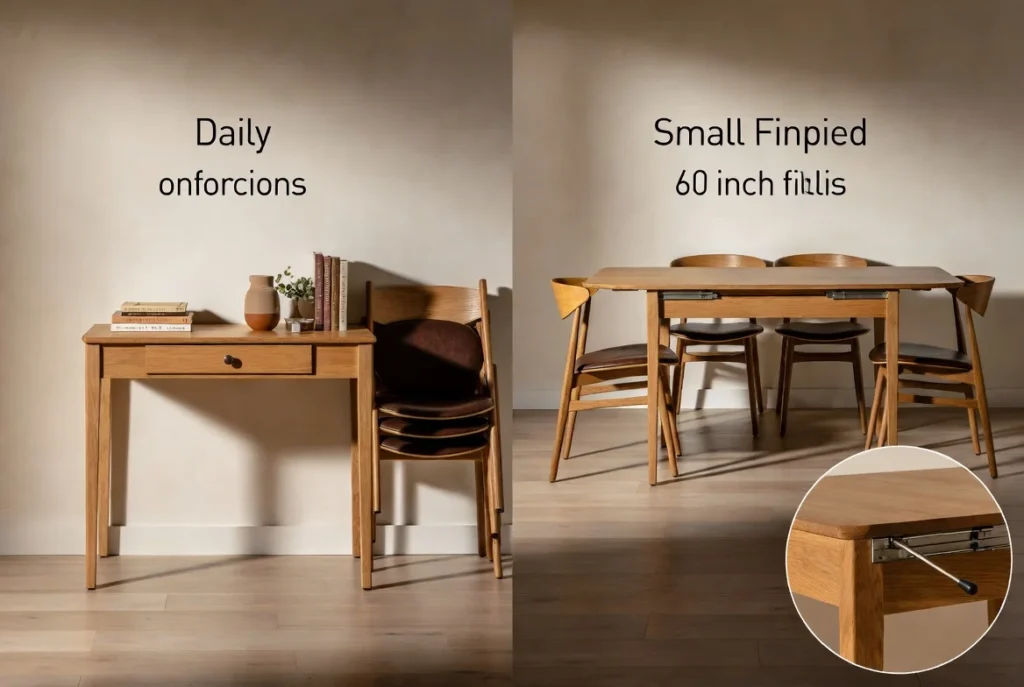
Dining room space saving ideas using multi-functional furniture that serves multiple purposes simultaneously or sequentially create the most practically efficient use of limited dining room square footage, transforming single-use furniture investments into comprehensive spatial solutions that address multiple functional requirements through single physical forms.
Console tables that convert to dining tables through extending mechanisms, drawer-mounted leaf extensions, or fold-up surface configurations create the most dramatically versatile small dining room furniture format available, serving as narrow entryway or display surfaces during non-dining hours and expanding to full dining table functionality when meals require the complete surface. These transforming pieces suit residential contexts where dedicated dining room space is genuinely limited but the desire for genuine dining experience during mealtimes justifies the mechanical complexity of furniture that serves multiple configurations. Small dining table ideas using transforming console-to-dining table designs accommodate up to six or eight diners in their expanded configuration while consuming the floor footprint of a narrow 12 to 14-inch deep console in their collapsed daily configuration.
Dining chairs with storage in seat cushion lift-top configurations, chairs that fold flat for wall-hung storage between uses, and seating ottomans with interior storage that serve as dining seating when needed each represent the specific multi-functional thinking that makes dining room space saving ideas genuinely rather than superficially effective in compact dining contexts. The discipline of questioning every furniture piece’s single-use assumption and seeking dual-function alternatives where functionally viable creates the cumulative spatial efficiency that transforms small dining rooms from rooms that barely accommodate their primary function to spaces that accommodate multiple functions with apparent ease.
Layer Textiles and Accessories for Warmth and Character
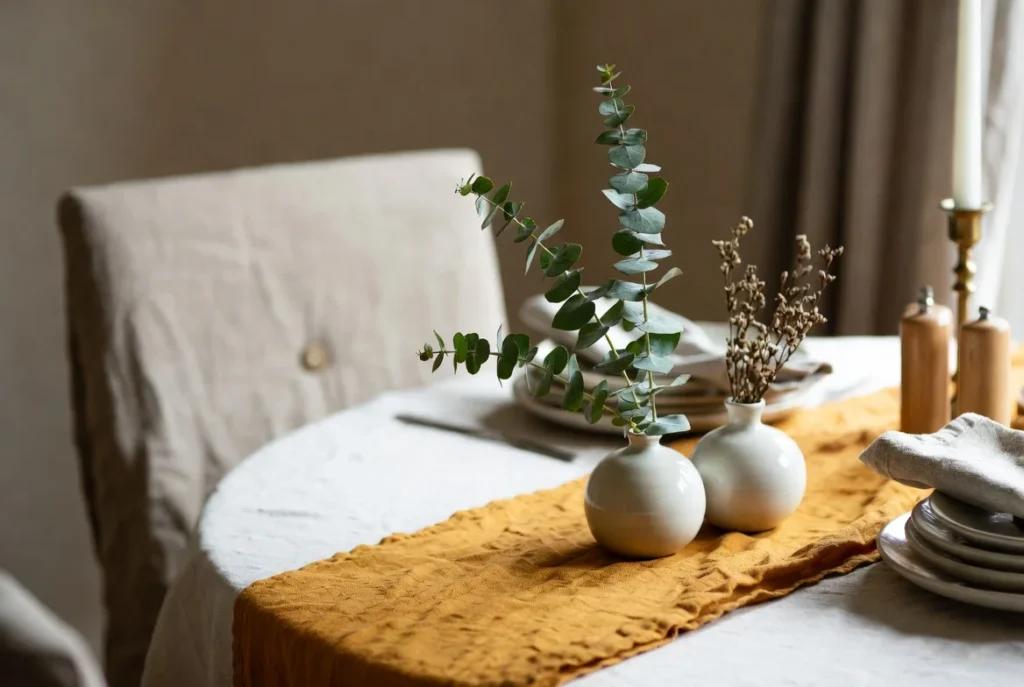
Cozy dining room ideas using thoughtfully layered textiles and personally meaningful accessories create small dining spaces of genuine warmth and distinctive character that transcend their dimensional constraints through the richness of their decorative expression rather than the generosity of their square footage.
Chair cushions in performance fabrics or indoor-outdoor materials add immediate visual softness and tactile comfort to compact dining room design while introducing the color and pattern accent that can establish the entire room’s design direction through the furniture accessories most frequently changed and updated as preferences evolve. The specific combination of solid upholstered seat cushions with patterned back cushions, or patterned seat cushions with solid backs, creates the layered textile interest that styled dining room photography consistently demonstrates in its most appealing examples. Small dining room decor ideas using cushion colors that reference the room’s accent wall color, pendant fixture finish, or art print palette create the visual coherence that makes small rooms feel intentionally designed rather than casually assembled from separate decisions.
Table styling through runners, placemats, and centerpiece arrangements creates the specific lived-in completeness that makes dining rooms feel genuinely ready for use rather than staged for photography. A simple linen table runner in warm natural tone, two ceramic bud vases with fresh stems or dried botanicals, and a small bowl of seasonal fruit or artfully arranged objects creates the minimum effective dining table styling that communicates a cared-for room without the elaborate arrangements that large formal dining tables require for visual completion. Small dining room wall decor continued through table accessories including framed prints that reference the tabletop ceramic colors or botanical arrangements that echo the wall art plant motifs creates the visual storytelling continuity that makes small dining spaces feel curated rather than incidentally decorated.
Design for Light Reflection and Surface Luminosity
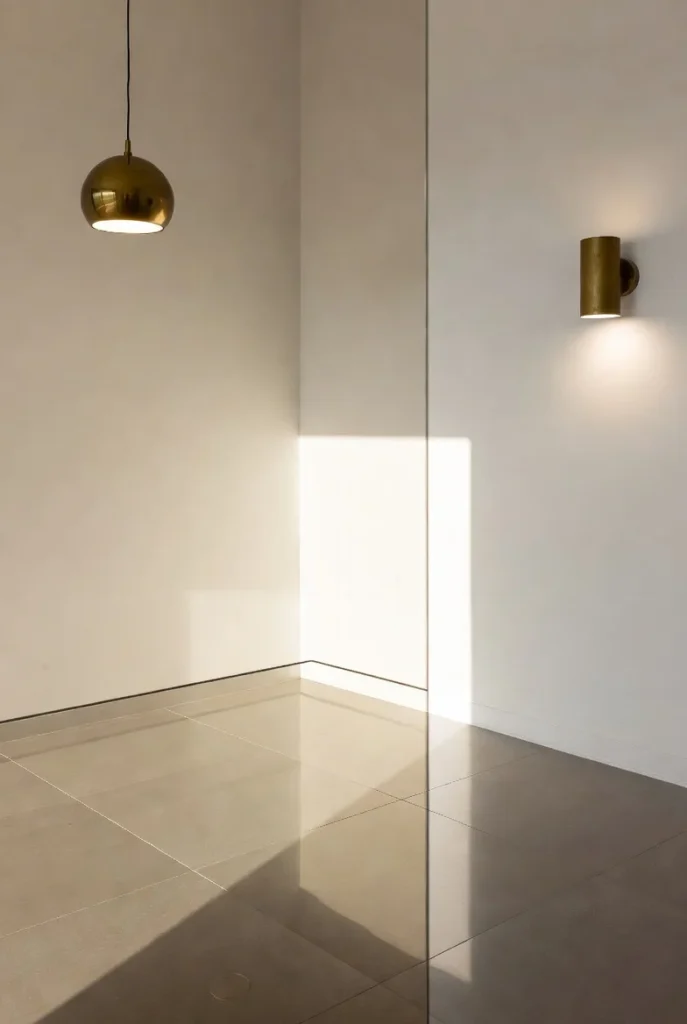
Compact dining room design that prioritizes reflective surfaces throughout the room’s material palette creates lighting conditions that make spaces feel brighter, larger, and more dynamically interesting than equivalent rooms finished in exclusively matte materials that absorb rather than reflect available light.
Glossy paint finishes on walls, specifically eggshell and satin rather than flat matte formulations, create measurably brighter room conditions through their partial light reflectivity, with the subtle sheen of eggshell paint in light colors creating room luminosity that flat paint of identical color cannot match in either natural or artificial light conditions. Small dining room color ideas using light tones in eggshell or satin finish on all walls create the most consistently bright and spacious-feeling small dining room environments, while the washability advantage of these finishes over flat paint makes them practically superior for dining environments where wall surface cleaning is periodically required. Polished or semi-polished floor surfaces in hardwood with satin finish, large format polished tile, or LVP with realistic wood sheen each reflect available light upward into the room, creating the brightness from below that matte floor surfaces eliminate while contributing the visual warmth that cold hard surfaces often lack in dining environments.
Dining nook ideas incorporating mirrored surfaces on banquette back walls, glass-front cabinet inserts in dining storage pieces, and metallic accessory finishes in pendant fixtures, hardware, and decorative objects create the cumulative reflective effect that transforms small dining rooms from simply decorated spaces into genuinely luminous environments where light sources multiply their impact through the reflective chain of surfaces they encounter throughout the room. The specific visual quality of a small dining room where multiple surfaces gently reflect both natural and artificial light creates a warmth and vitality of atmosphere that matte-finished rooms of comparable decoration quality cannot match regardless of their decorative ambition.
Conclusion
Creating a small dining room that genuinely looks bigger and feels stylish requires understanding that the design challenge is not compensating for limited square footage but rather deploying the specific visual strategies that shape spatial perception in ways that actual dimensions cannot. The 12 small dining room decor ideas explored throughout this guide collectively demonstrate that perceived spaciousness is as much a design achievement as a dimensional one, accessible to any room when mirrors are placed to double visual depth, furniture is scaled for visual lightness, colors are chosen to reflect rather than absorb light, and the specific combination of vertical elements and spatial definition tools creates the impression of generous volume that the room’s actual measurements might not suggest.
The most valuable insight from this comprehensive exploration of small dining room ideas is that restraint and intentionality consistently produce better results in compact dining spaces than the abundance and variety that larger rooms can accommodate without spatial penalty. A few well-chosen pieces of appropriately scaled furniture, a single large mirror rather than multiple small ones, one statement pendant rather than competing lighting elements, and a coherent material palette rather than a collection of independently attractive choices create the unified design intelligence that makes small spaces feel genuinely designed rather than simply furnished.
Begin your small dining room makeover by evaluating which of these 12 strategies most directly addresses the specific spatial frustrations your current dining room creates, starting with the highest-impact changes of furniture scale correction and mirror addition before progressing through the refinement strategies of lighting, color, and accessories that complete the transformation from cramped to genuinely cozy and stylish.
Frequently Asked Questions
What dining table shape is best for a small dining room?
A round dining table small room configuration consistently outperforms rectangular tables in compact dining spaces, with the absence of corners allowing more flexible chair positioning and easier circulation while the softer form creates a more spatially generous visual impression. For maximum flexibility, an extendable round table that expands to oval for entertaining combines everyday spatial efficiency with occasional entertaining capacity without permanent footprint compromise.
How do I make a small dining room feel more luxurious?
Small dining room decor ideas for luxury elevation prioritize material quality over quantity, with a single statement pendant in premium brass or sculptural form, genuine natural stone or quality ceramic tabletop accessories, linen or performance velvet chair cushions, and a large professionally framed artwork creating luxury impressions through quality of individual elements rather than abundance of decorative objects. Warm lighting at appropriate height above the table creates the most immediately luxurious transformation available at minimal cost.
What colors make a small dining room look bigger?
Light warm neutrals in soft white, warm cream, pale greige, and barely-there sage create the most consistently spacious-feeling small dining room color environments, reflecting available light and eliminating visual weight that deeper colors add to wall surfaces in confined spaces. Painting walls and ceiling the same continuous light color amplifies this effect by removing the visual interruption of the wall-to-ceiling boundary that makes rooms feel lower and more confined than continuous envelope painting creates.
Should I use a rug in a small dining room?
Yes, but correctly sized. A dining room rug small space must extend at least 24 inches beyond the table edge on all sides to maintain chair legs on the rug surface when pulled out for seating, creating the unified spatial zone that appropriately sized rugs provide. Undersized rugs create the opposite effect of what homeowners intend, fragmenting the visual field rather than defining and organizing it.
What lighting works best in a small dining room?
A single appropriately scaled pendant hung 30 to 34 inches above the table surface creates the most effective dining room lighting for small spaces, providing the focused warm illumination that makes dining genuinely pleasant while the vertical pendant form draws the eye upward, creating the impression of ceiling height. Supplementary wall sconces or a dimmer-controlled secondary light source layered with the pendant creates evening atmosphere of genuine intimacy appropriate to small dining spaces designed for gathered memorable meals.
You May Also Like This Post:
Modern Indoor Pool Designs: 15 Stunning Ideas for a Luxury Home
One Comment