
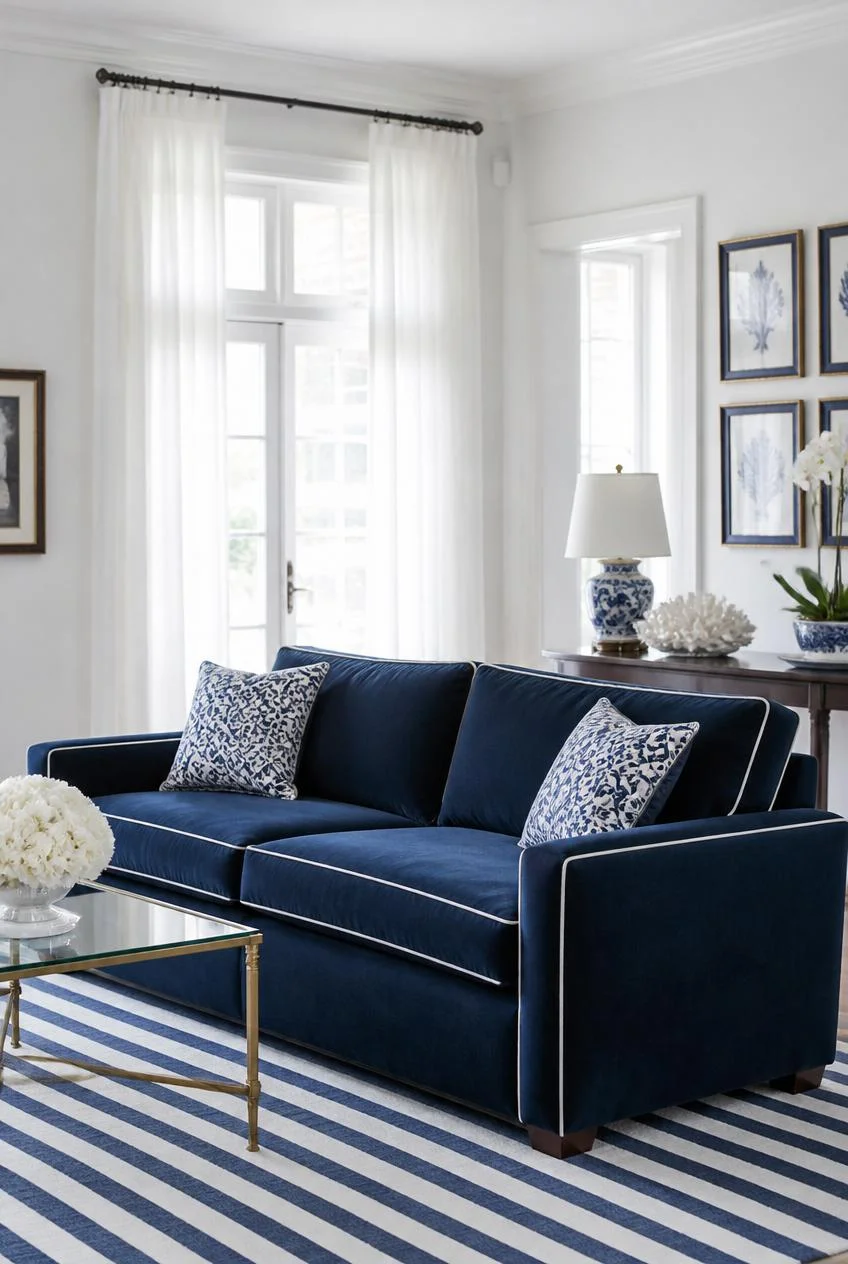
25 Blue and White Living Room Ideas That Get the Design Balance Just Right
Few color pairings have stayed in style as consistently as blue and white. It shows up in coastal cottages, city apartments, and traditional family homes alike, and it rarely looks dated a few years later the way trend driven palettes often do. The reason is balance. Blue brings calm and depth, while white brings light and breathing room, and together they create a living room that feels both composed and welcoming.
The challenge most people run into is not choosing blue and white as a concept, but getting the proportions right. Too much deep blue can feel heavy, while too little can leave the room looking like an afterthought rather than a deliberate palette. The best blue and white living rooms treat the combination as a relationship between shade, texture, and contrast, not just a color swap.
This guide walks through 25 blue and white living room ideas that show how to strike that balance, whether your style leans coastal, traditional, modern, or somewhere in between.
A Navy Sectional Sofa as the Room’s Anchor
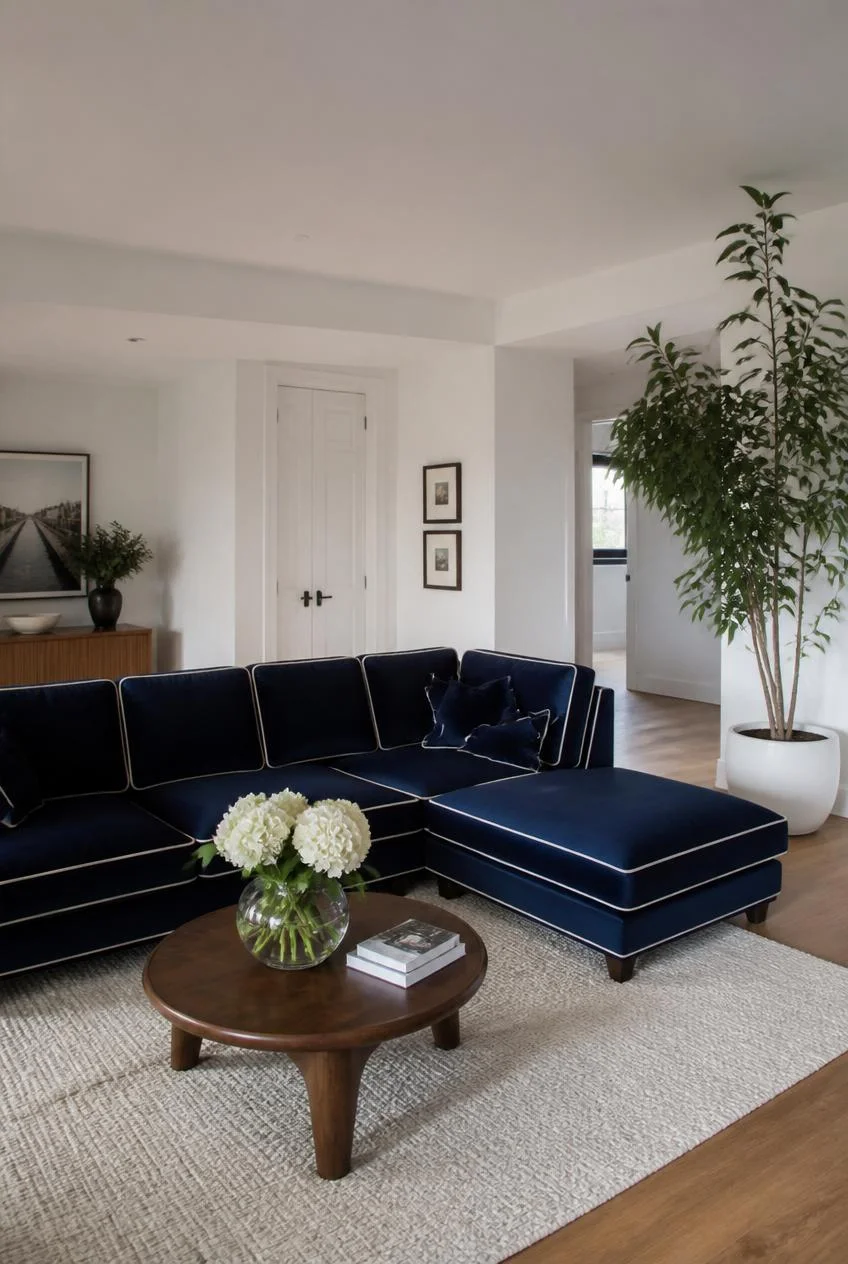
A deep navy sectional sofa gives a living room an immediate sense of grounding. Because navy reads almost neutral from a distance, it pairs easily with white walls, light wood floors, and a range of accent colors without fighting any of them. White piping along the seams adds a crisp detail that keeps the sofa from feeling overly heavy.
Why It Works
Navy is dark enough to anchor a room visually but warm enough in undertone to avoid feeling cold, which is part of why it works so well as a starting point rather than an accent.
Crisp White Walls With Blue Trim Accents
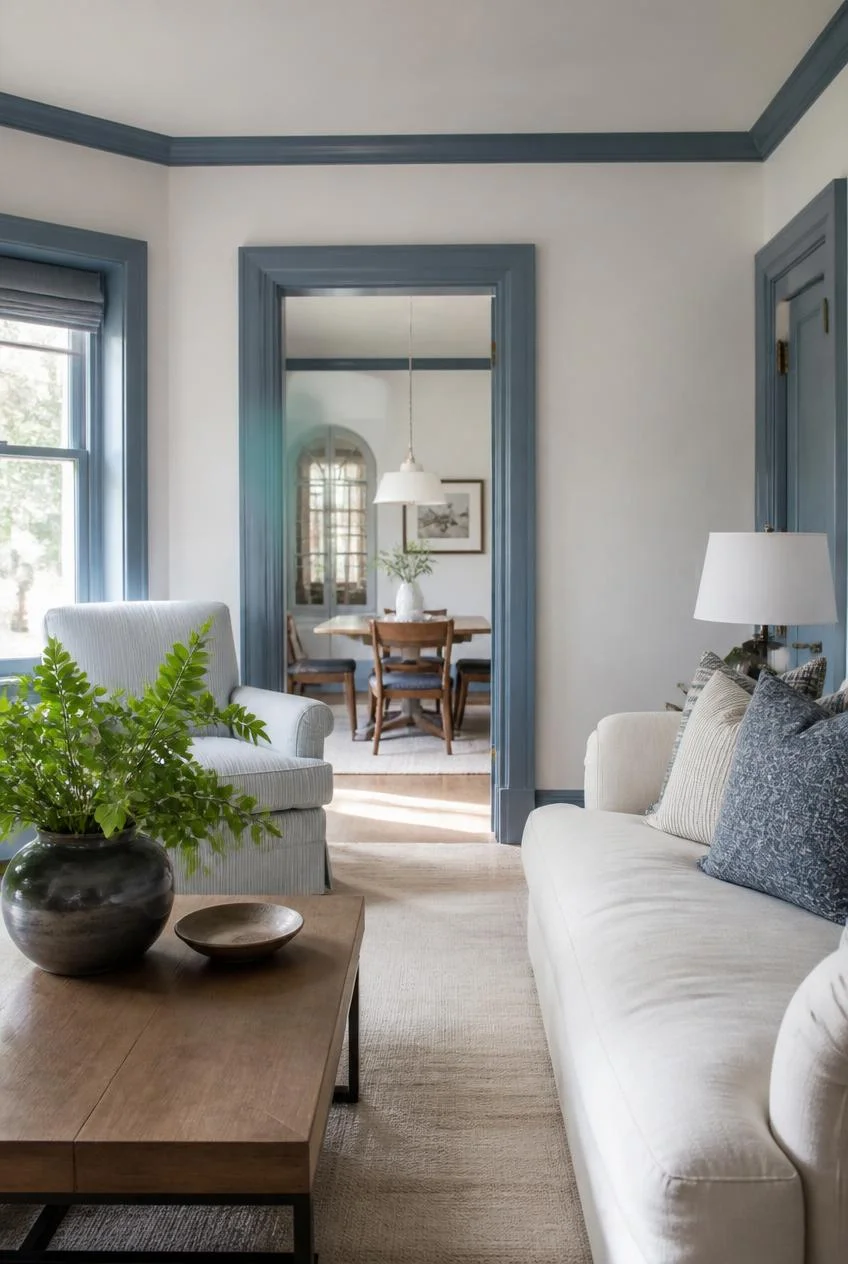
Instead of making blue the dominant wall color, try the reverse: white walls with blue painted trim, window casings, or door frames. This approach keeps the room feeling bright and open while still introducing blue in a structural, architectural way rather than through furniture alone.
Styling Tip
Choose a slightly muted blue, such as a soft slate or dusty cornflower, for trim rather than a bright primary tone, since trim color reads more intensely in small doses.
A Powder Blue Accent Wall Behind Open Shelving
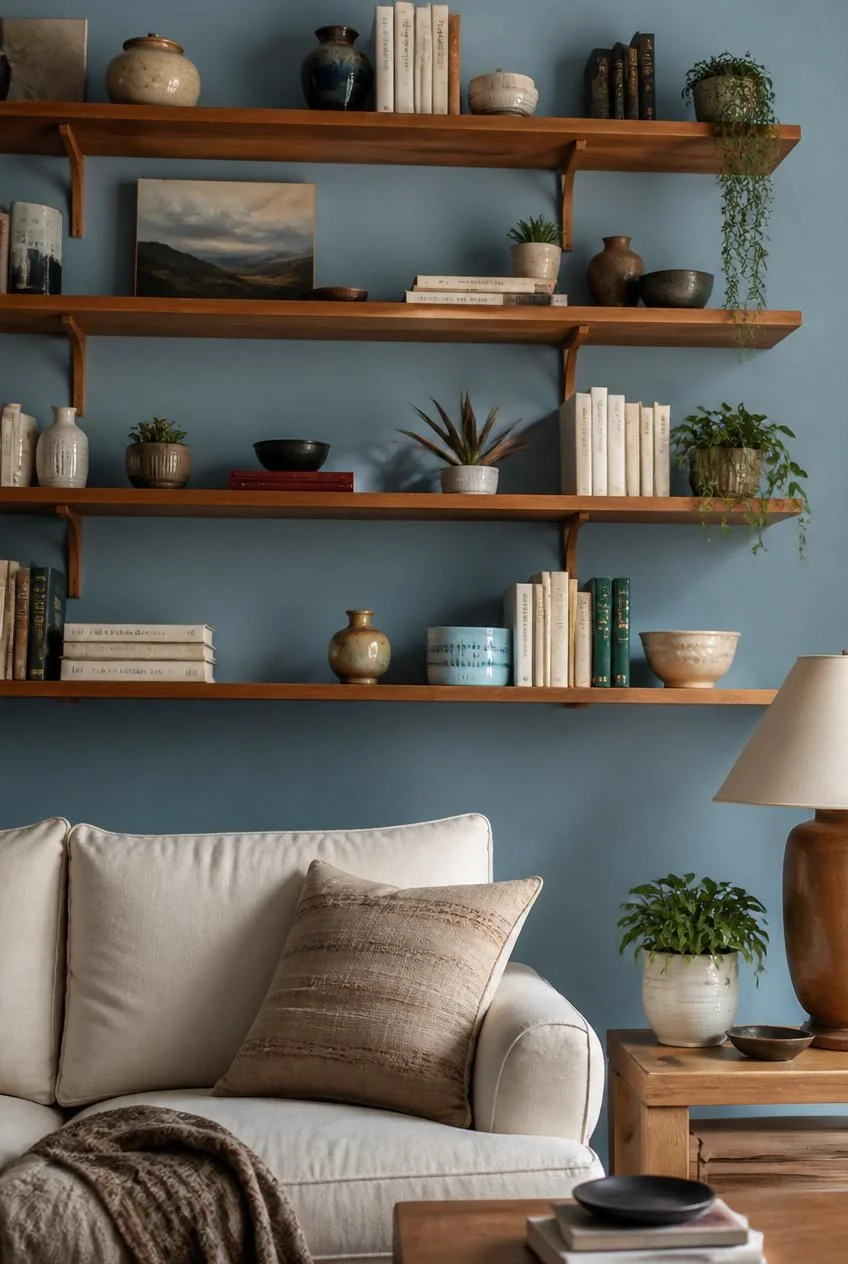
A soft powder blue accent wall placed behind open shelving creates a gentle backdrop that makes displayed books, ceramics, and plants stand out without overwhelming the room. This is a more delicate alternative to a bold navy feature wall and suits smaller or lighter filled living rooms particularly well.
Why It Works
Pale blue tones recede visually rather than advance, which means the wall supports the objects in front of it instead of competing with them.
Coastal Style With a Soft Blue Slipcovered Sofa
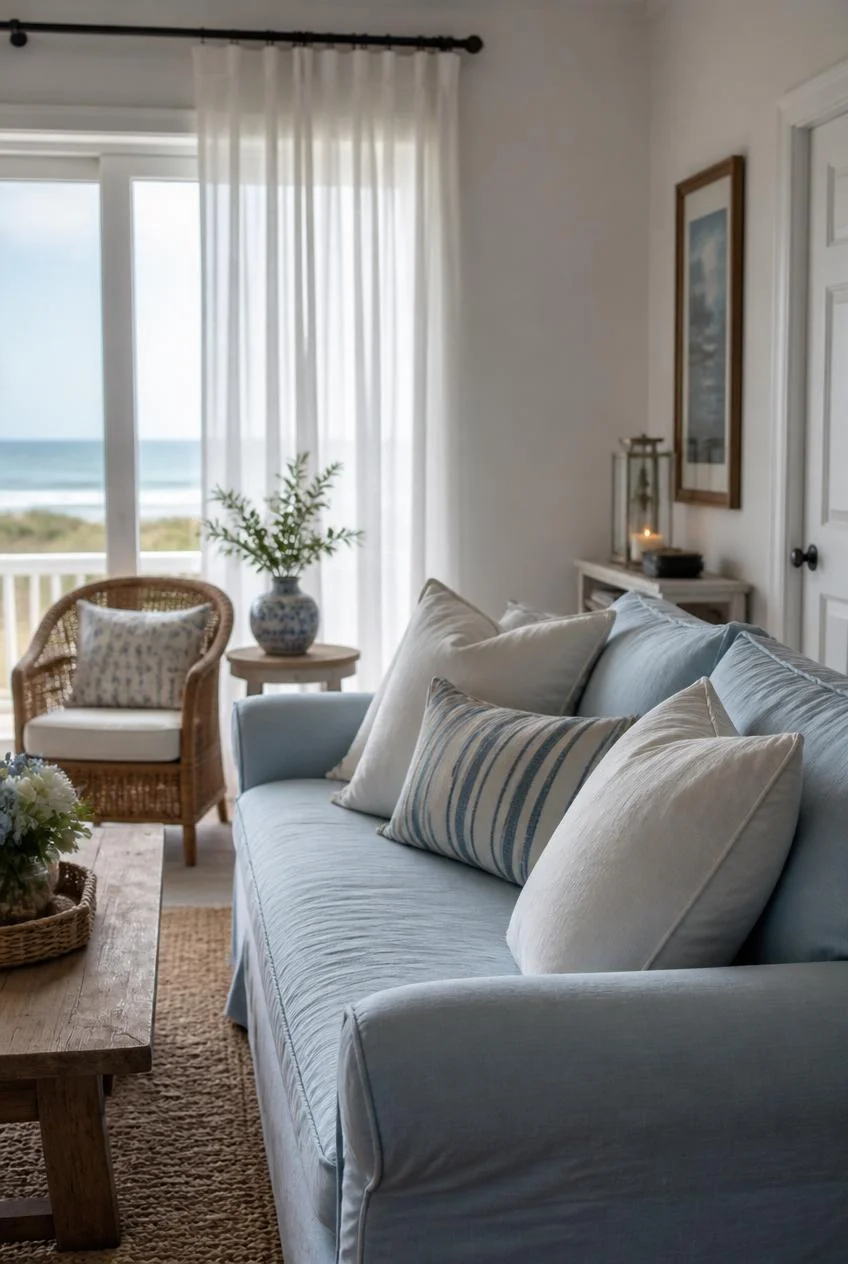
A light blue slipcovered sofa paired with crisp white throw pillows and a textured jute rug instantly signals a relaxed coastal aesthetic. Sheer white curtains filter natural light beautifully against this palette, keeping the whole room feeling airy rather than staged.
Material Pairing
Natural fiber rugs and rattan accents soften the blue and white scheme, preventing it from feeling overly crisp or formal.
A Gallery Wall in Blue and White Tones
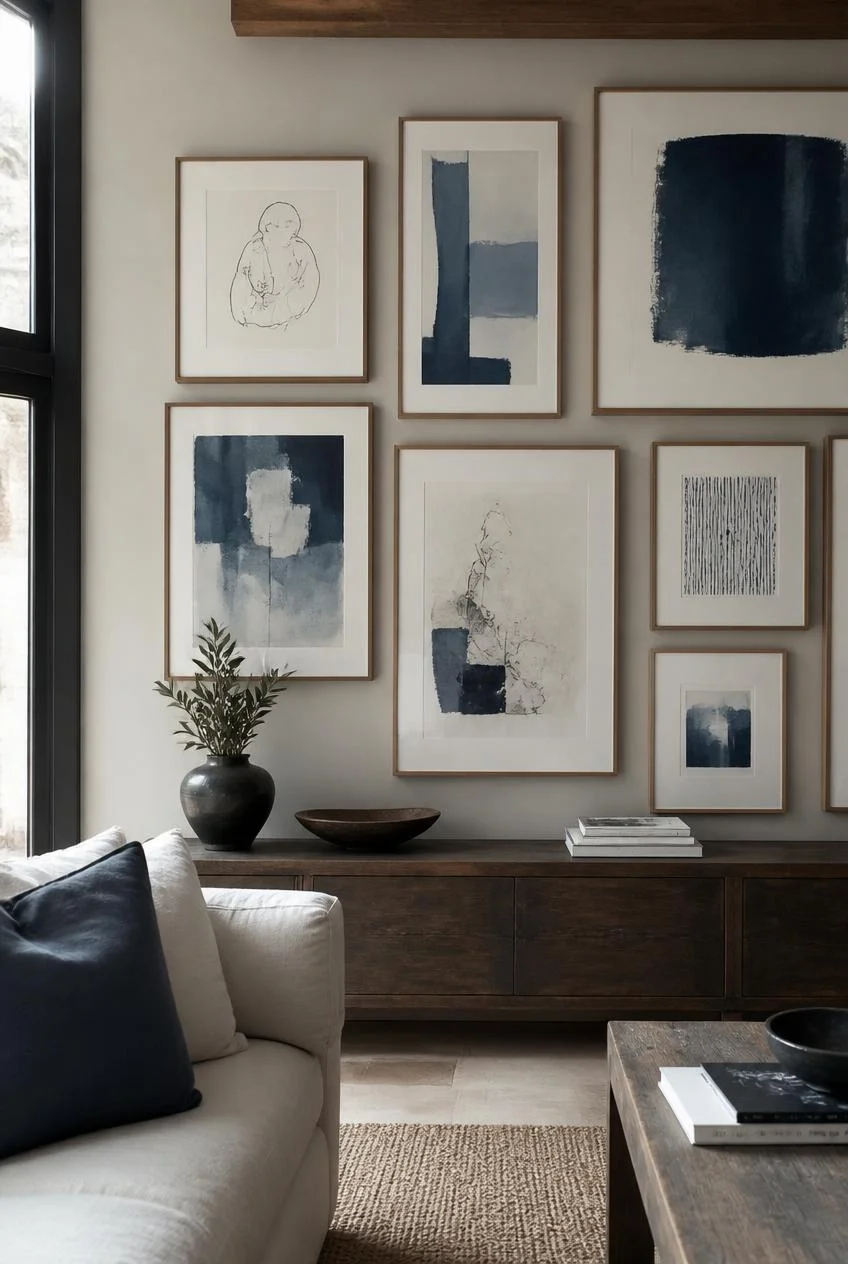
A curated gallery wall featuring framed art in blue, white, and grey tones gives a living room a focal point that feels personal rather than purchased as a set. Mixing abstract pieces with simple line drawings keeps the wall visually interesting without becoming busy.
Layout Insight
Keep frame finishes consistent, whether white, light wood, or thin black metal, even if the art inside varies in subject and intensity.
White Furniture With a Single Blue Accent Chair
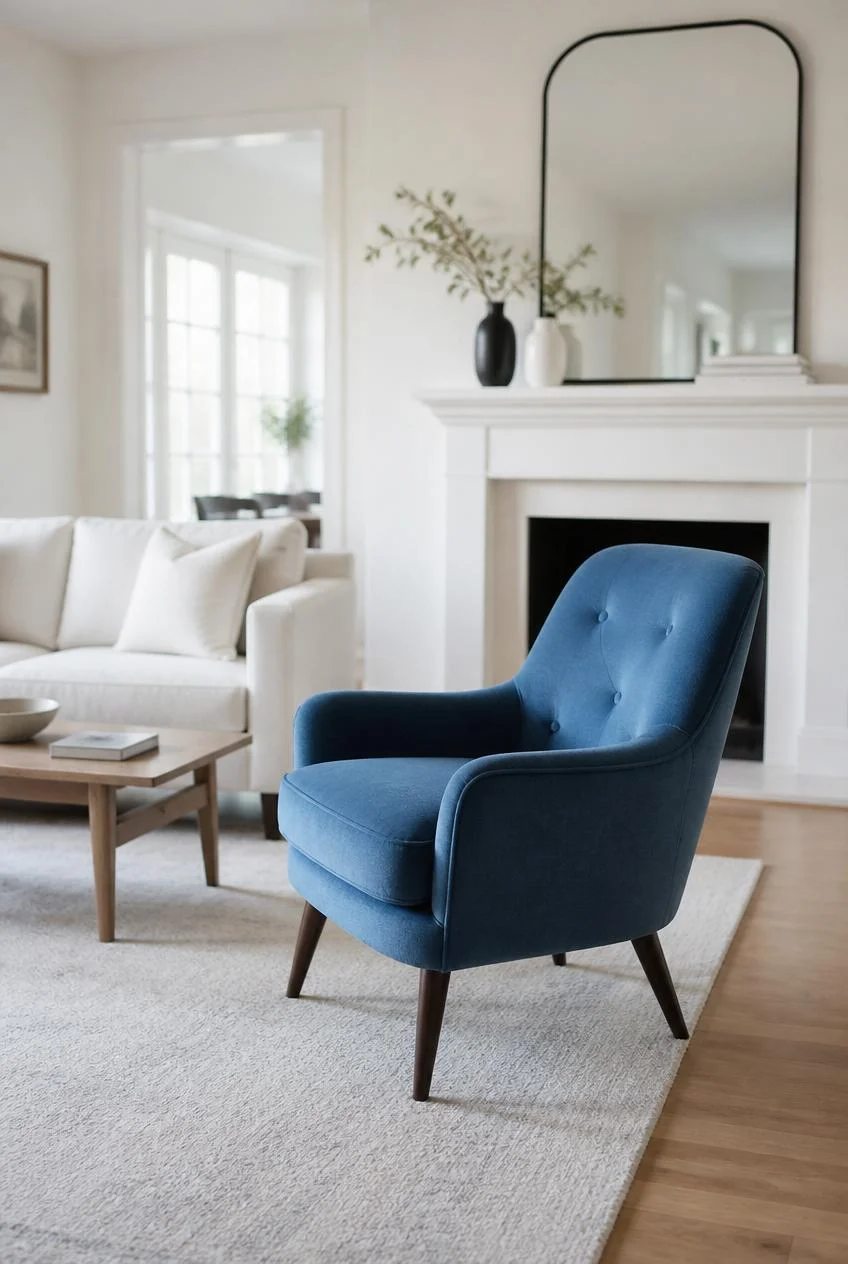
For a calmer approach, keep the majority of furniture white or cream and introduce just one blue accent chair as a focal point. This restrained method works particularly well in smaller rooms where too much saturated color could feel overwhelming.
Styling Note
A single bold piece tends to have more visual impact than several smaller blue accents scattered throughout the room.
A Blue and White Striped Rug as the Foundation
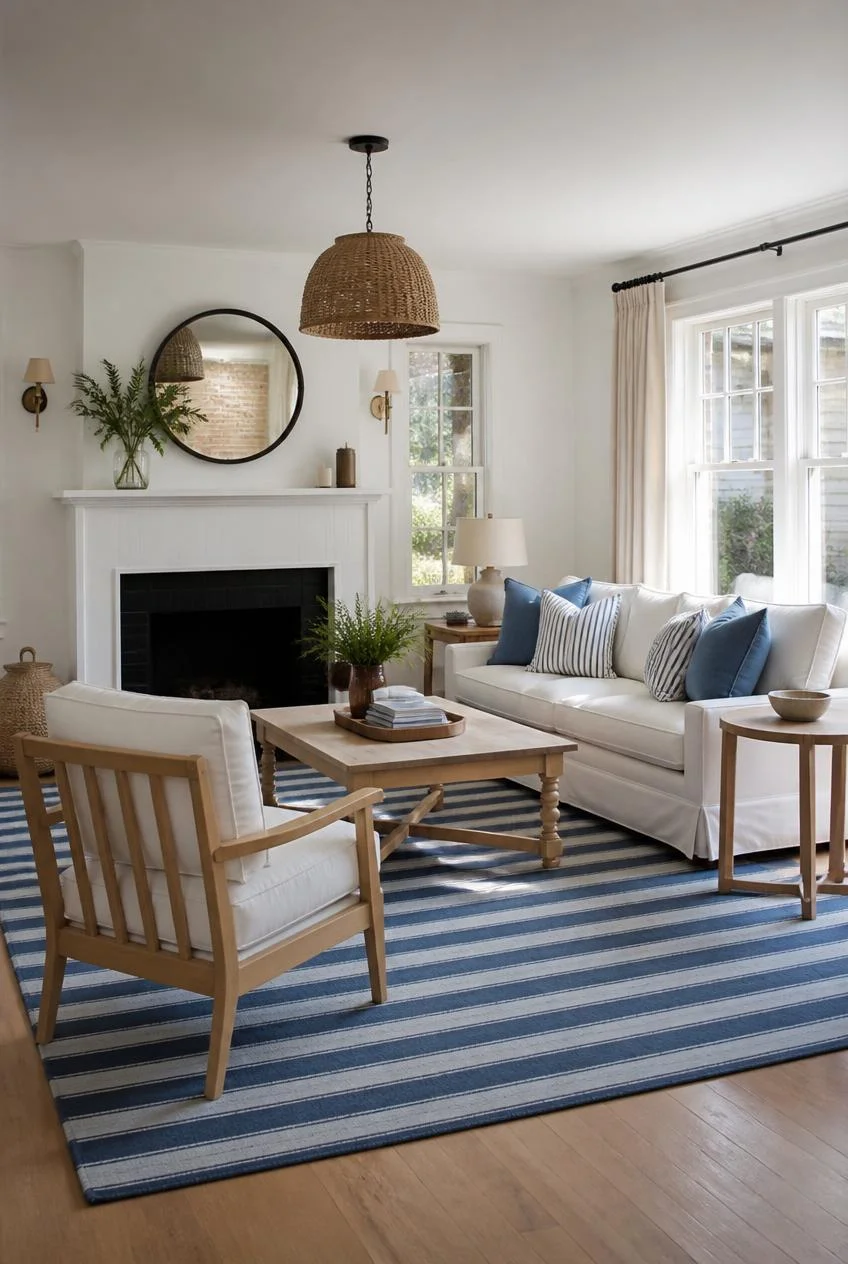
A striped blue and white rug is one of the simplest ways to establish the palette from the floor up. Stripes in particular read as classic rather than trendy, which makes this a safe long term investment piece that can outlast several rounds of furniture changes.
Why It Works
A patterned rug grounds the room visually, allowing surrounding furniture to stay simpler without the space feeling empty.
Traditional Symmetry With Matching Armchairs
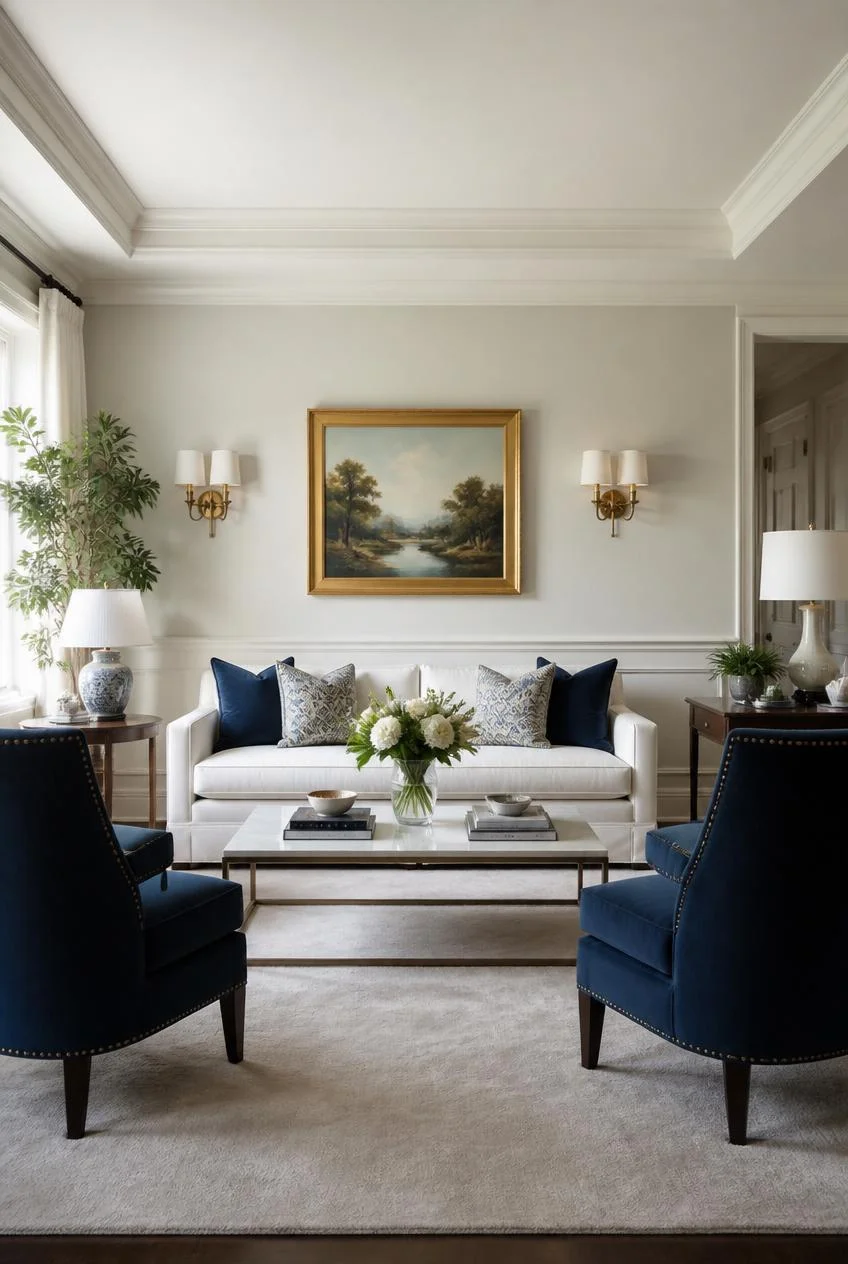
For those drawn to a formal, symmetrical layout, two matching blue armchairs positioned across from a white sofa create a balanced, classic composition. This arrangement suits traditional and French country style homes especially well.
Layout Tip
Pair this symmetry with a centered coffee table and a single statement light fixture overhead to reinforce the formal structure of the room.
Built In Bookshelves Painted in Deep Blue
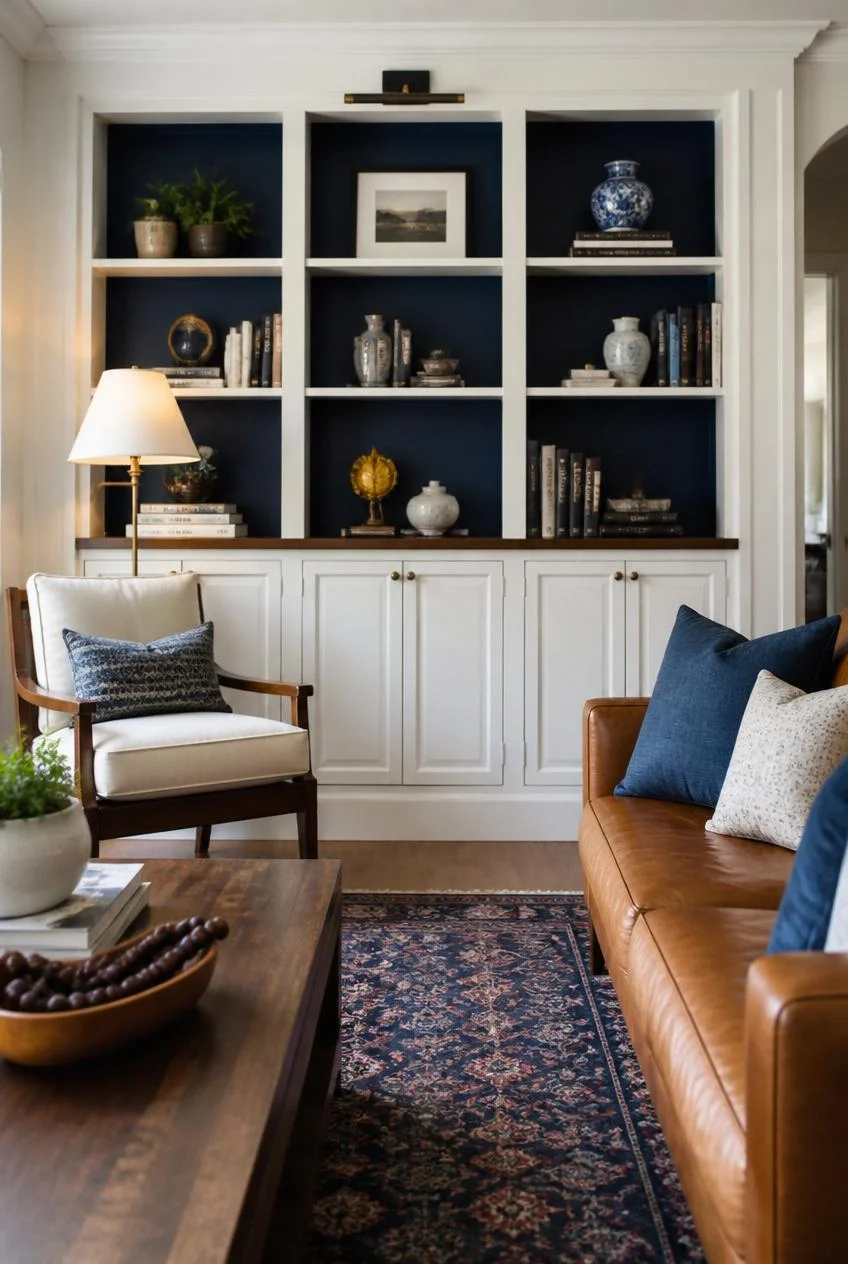
Painting the interior back panel of built in bookshelves a rich navy or deep blue, while keeping the shelf frames white, adds depth and contrast to a feature that might otherwise blend into the wall. Books, ceramics, and framed photos stand out more clearly against the darker backdrop.
Why It Works
This technique uses color strategically in a contained space, which means even a bold shade feels controlled rather than overwhelming.
A White Marble Coffee Table for Contrast
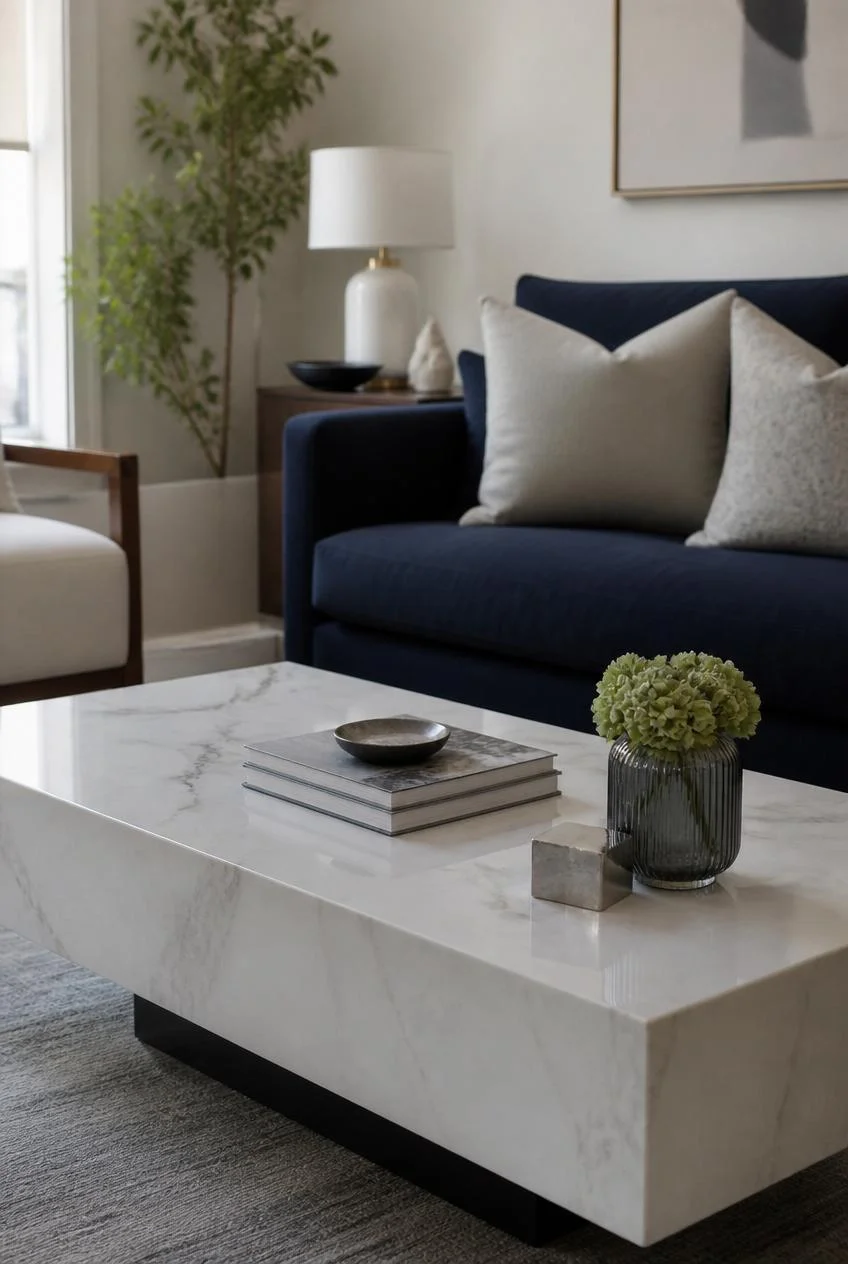
A white marble coffee table introduces a cooler, more polished texture that pairs beautifully with both navy upholstery and softer powder blue accents. The natural veining in marble adds visual interest without introducing a new color into the palette.
Material Insight
Marble’s reflective surface helps bounce light around a blue dominant room, keeping the space from feeling too dark or closed in.
Blue Abstract Artwork as a Focal Point
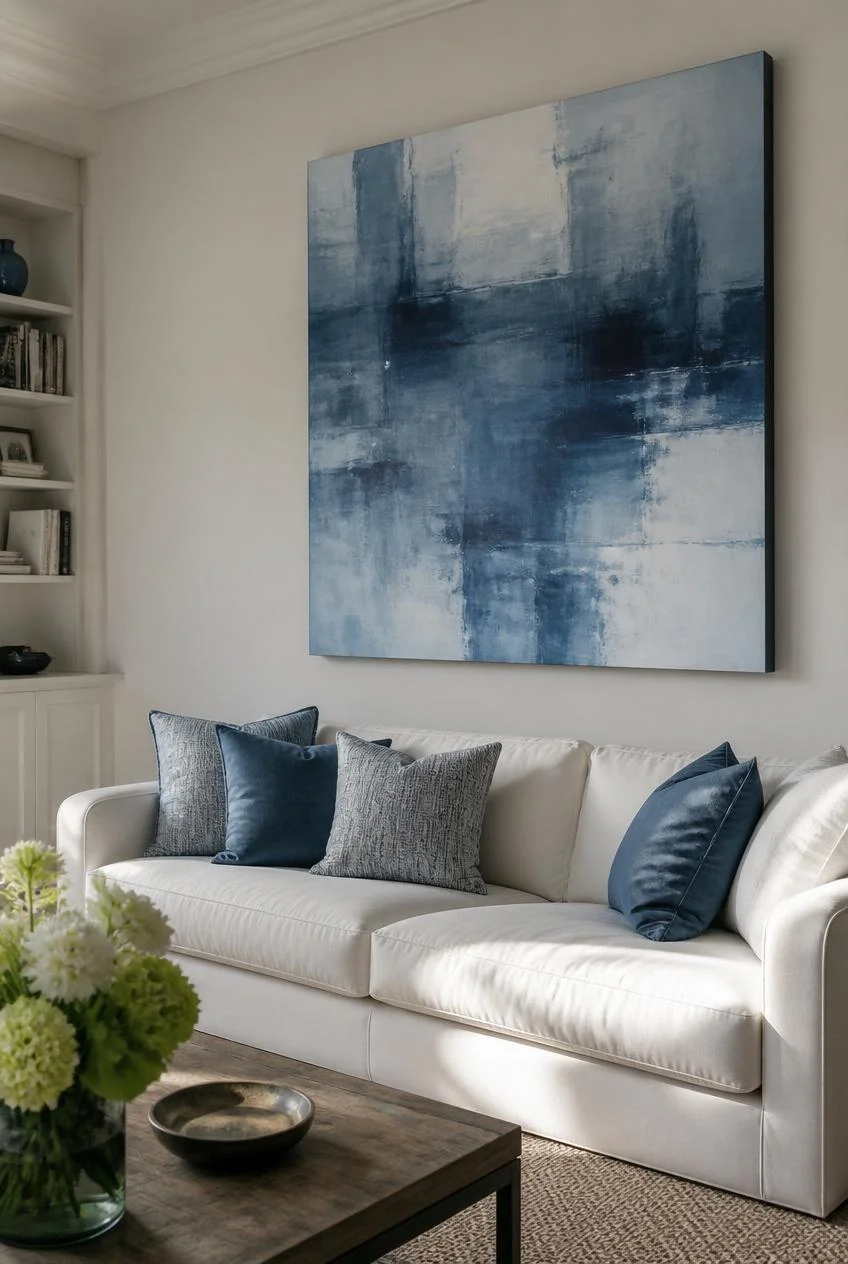
A large scale abstract painting in blue tones mounted above a white sofa or mantel becomes an instant focal point. This approach lets the art carry the boldest color statement in the room, while furniture and walls remain calmer and more neutral.
Styling Approach
Choose art with a range of blue shades within the piece itself, from pale to deep, to echo the variation found elsewhere in the room.
A Textured Blue Rug That Mimics Ocean Ripples
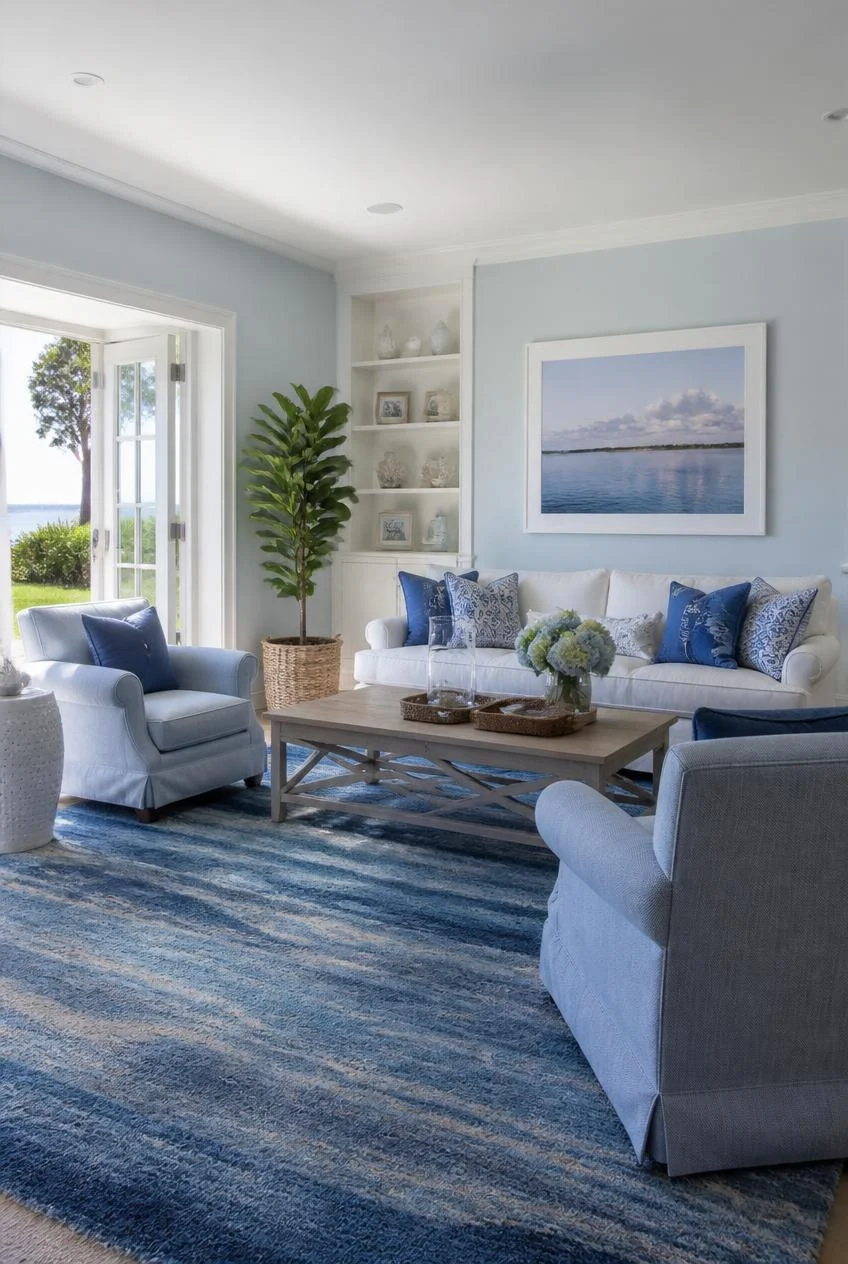
A textured area rug in varying shades of blue can visually echo the movement of water, which works especially well in coastal or beach inspired living rooms. The texture adds dimension underfoot while the color ties directly into the room’s broader palette.
Why It Works
Texture prevents a single color rug from looking flat, giving the floor visual depth even when the shade itself stays within one color family.
White Wainscoting With a Blue Upper Wall
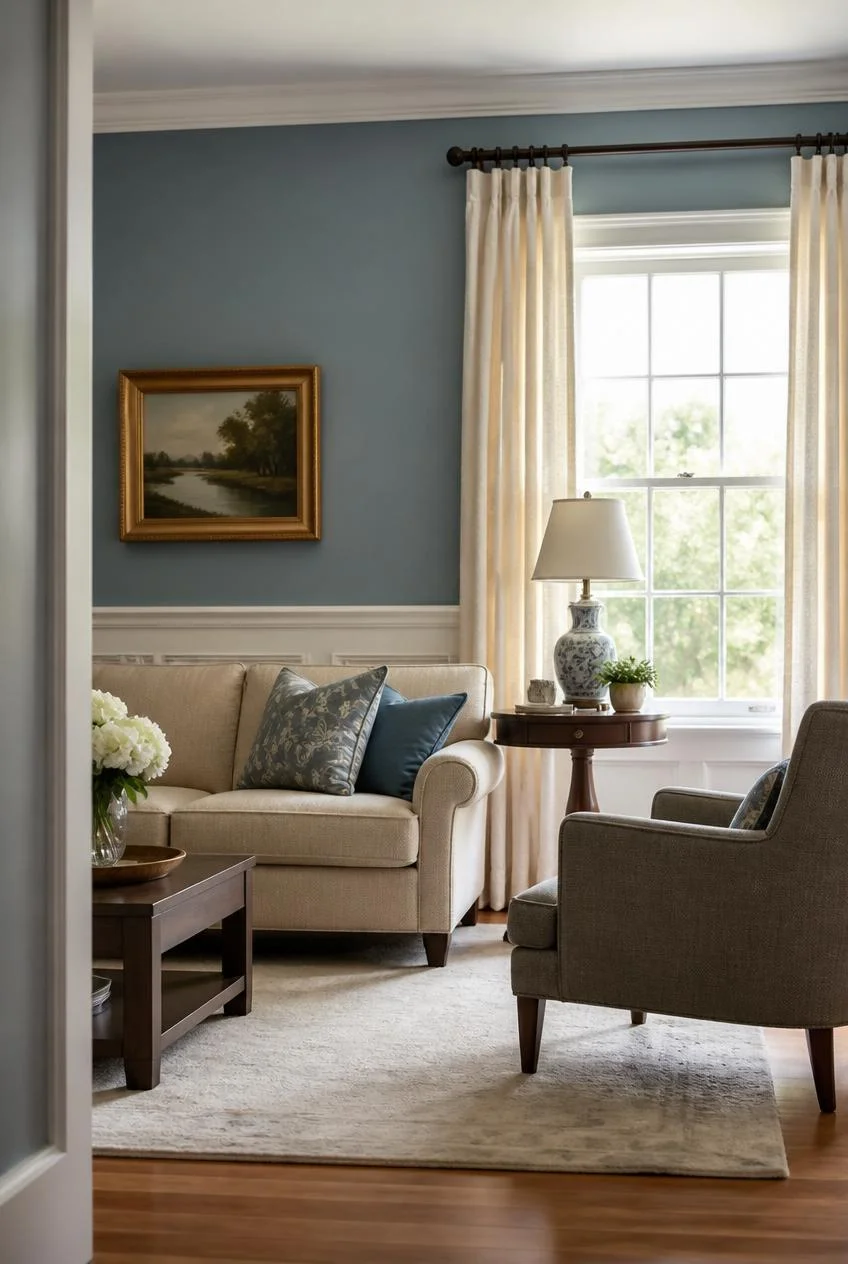
Pairing white wainscoting on the lower half of a wall with a soft blue upper portion creates a layered, traditional look that adds architectural interest without requiring structural changes. This approach works particularly well in older homes or those with classic trim details already in place.
Styling Tip
Keep the blue tone on the upper wall slightly muted so it does not compete visually with crown molding or ceiling details.
A Monochromatic Blue Color Scheme With White Breaks
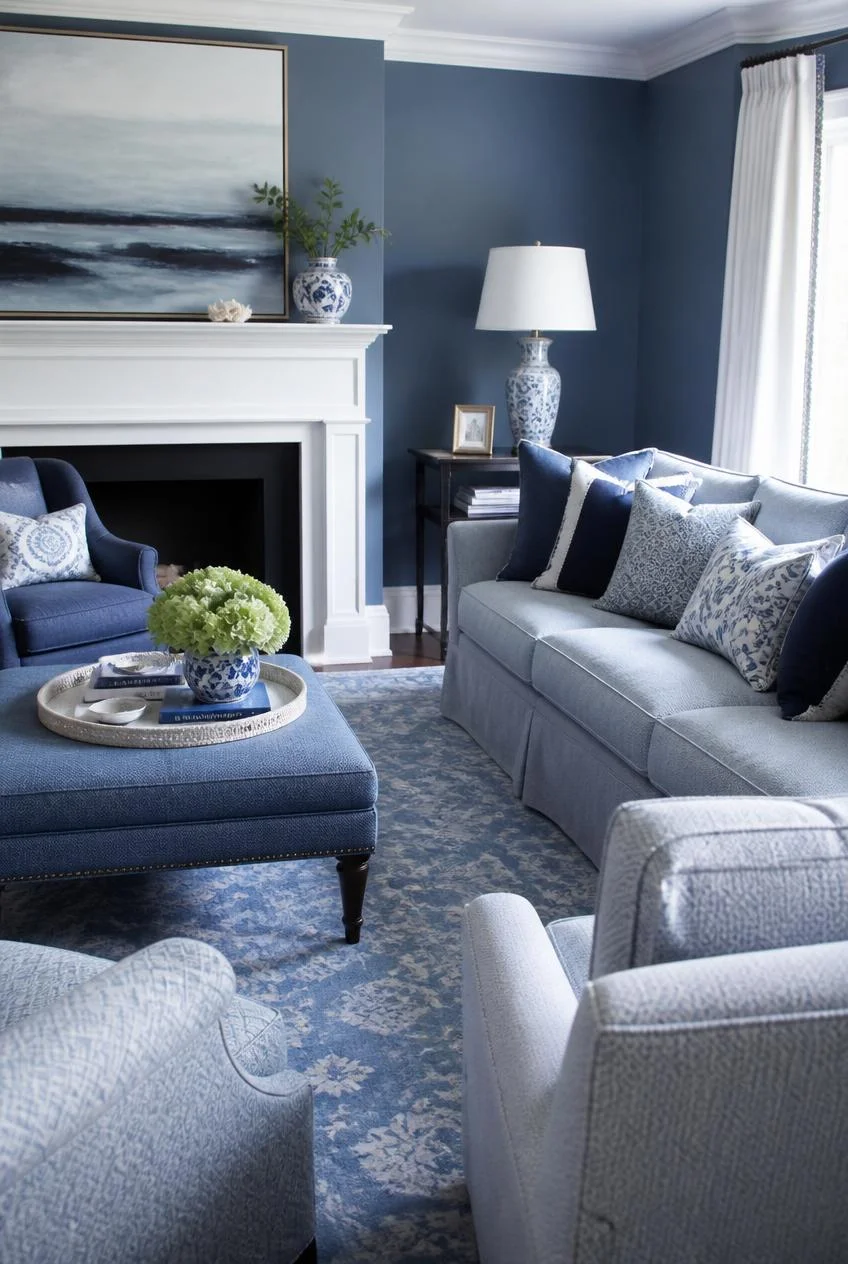
Rather than mixing in other colors, a monochromatic blue scheme uses several different shades of blue, from pale to navy, layered throughout the room. White furniture or trim acts as a visual break between these blue tones, preventing the room from feeling flat or overly saturated.
Why It Works
Varying the intensity of a single color family creates depth without needing to introduce additional hues, which keeps the room feeling cohesive.
Black Accents to Ground a Soft Blue and White Room
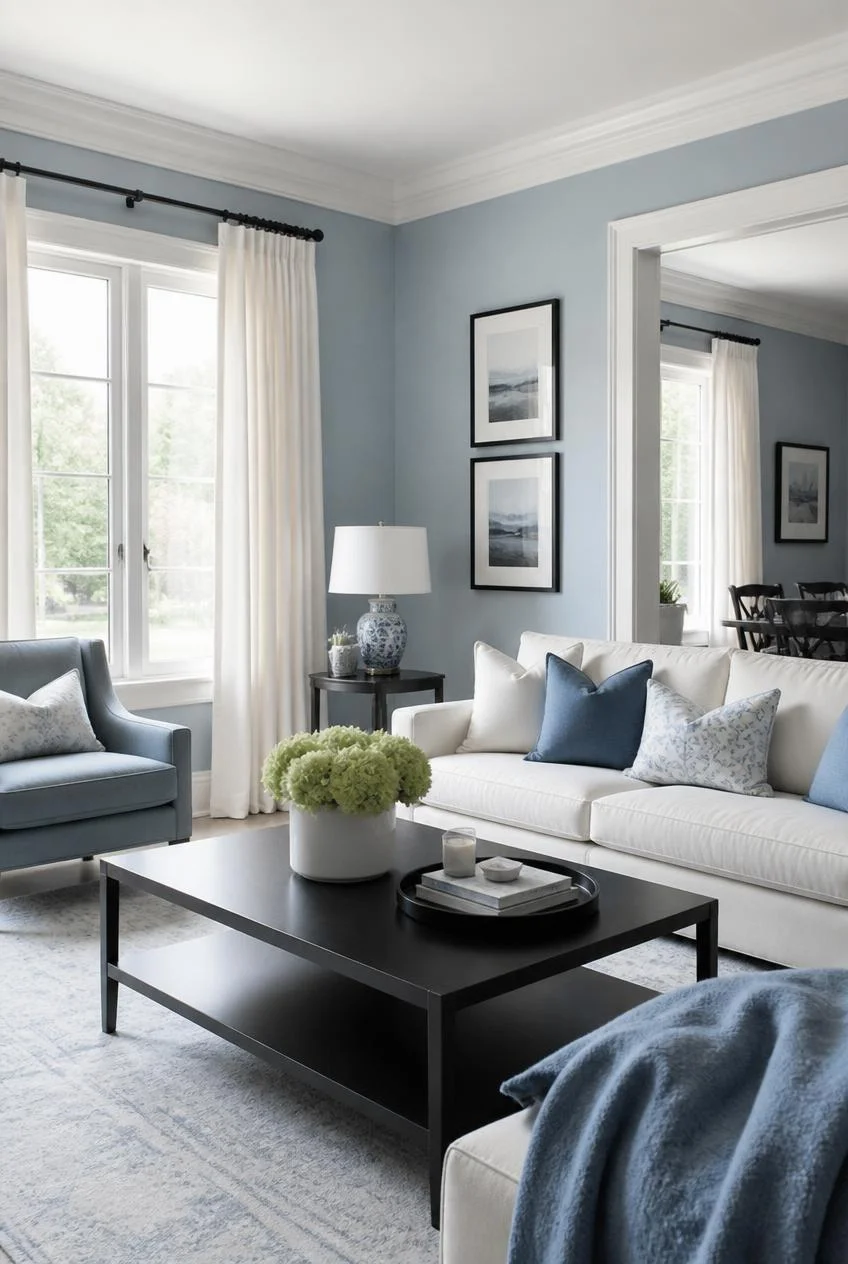
Introducing a small amount of black, such as a coffee table, curtain rods, or picture frames, gives an otherwise soft blue and white room a slightly modern or industrial edge. This works as a grounding device, preventing the palette from feeling overly delicate.
Styling Note
Limit black accents to two or three items maximum, since too much can shift the room away from its blue and white foundation entirely.
Sage Green Touches Within a Blue and White Palette
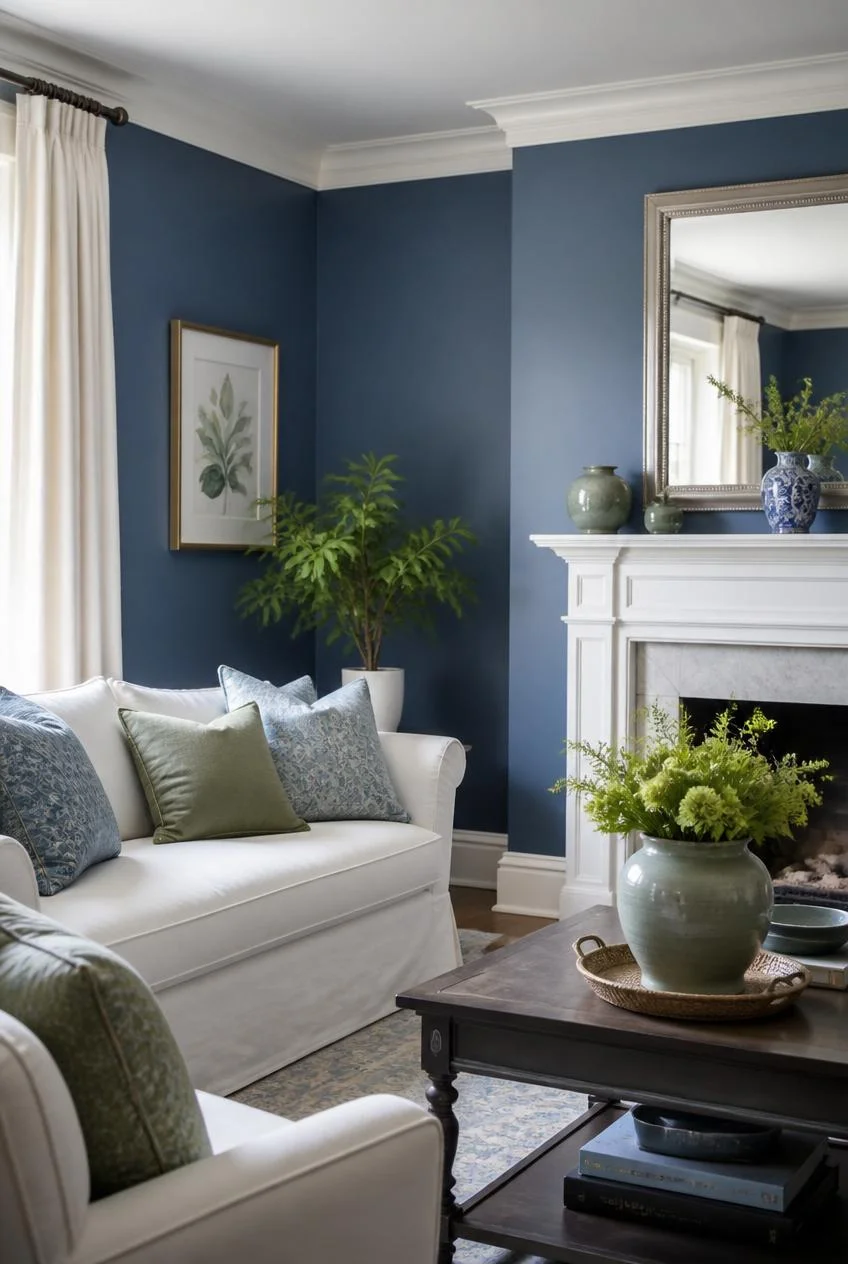
A few muted sage green accents, whether through a throw pillow, a plant, or a piece of pottery, blend surprisingly well with blue and white schemes. The earthy tone softens the coolness of blue without disrupting the overall palette.
Why It Works
Sage sits close to blue on the color wheel, which means it complements rather than competes, unlike a warmer green might.
A Chesterfield Sofa in White With Navy Accents
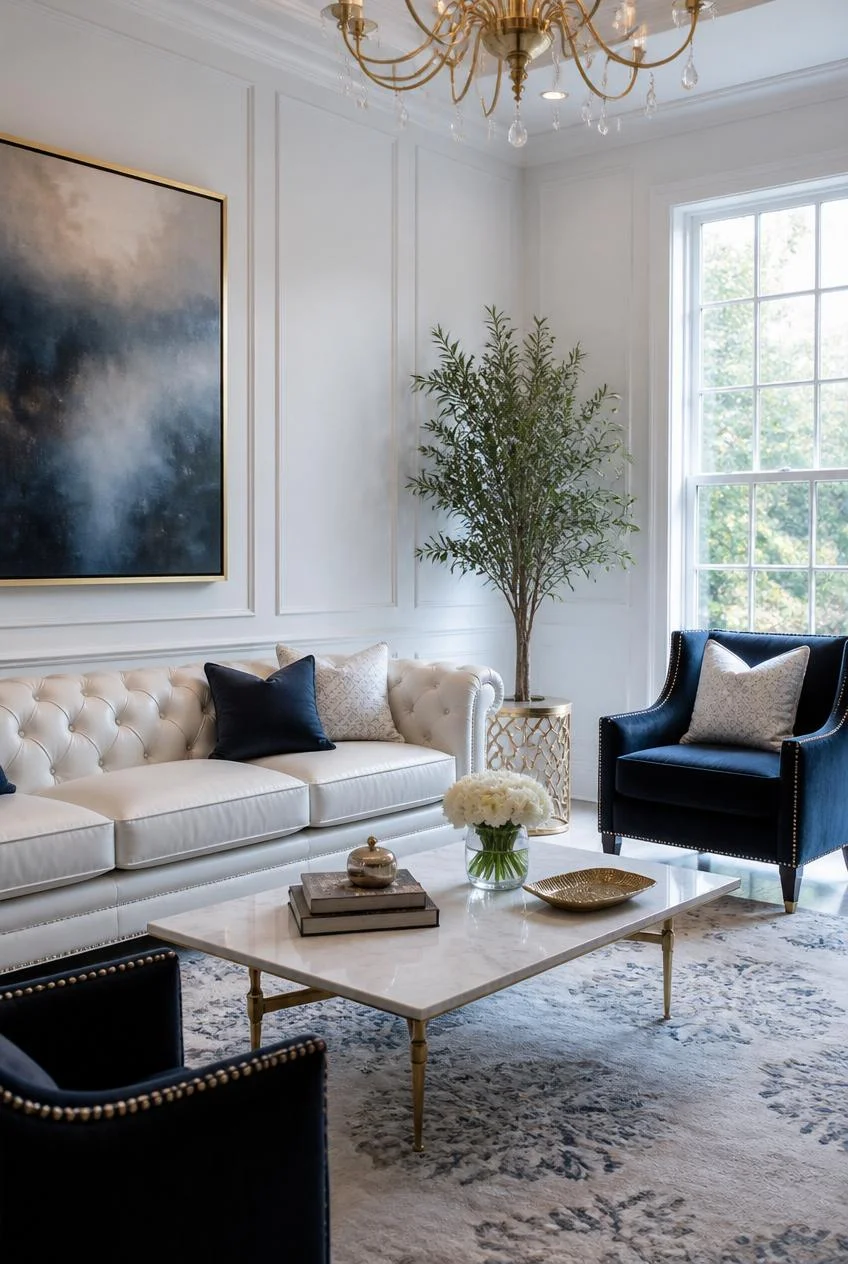
A white Chesterfield sofa, with its classic tufted leather or fabric structure, pairs elegantly with navy blue accent chairs and a marble coffee table. This combination leans into refined, timeless styling rather than a casual coastal feel.
Styling Approach
Keep accessories minimal and structured, such as a single abstract blue and white painting, to match the formality of the Chesterfield silhouette.
Layered Blue Throw Pillows on a White Sofa
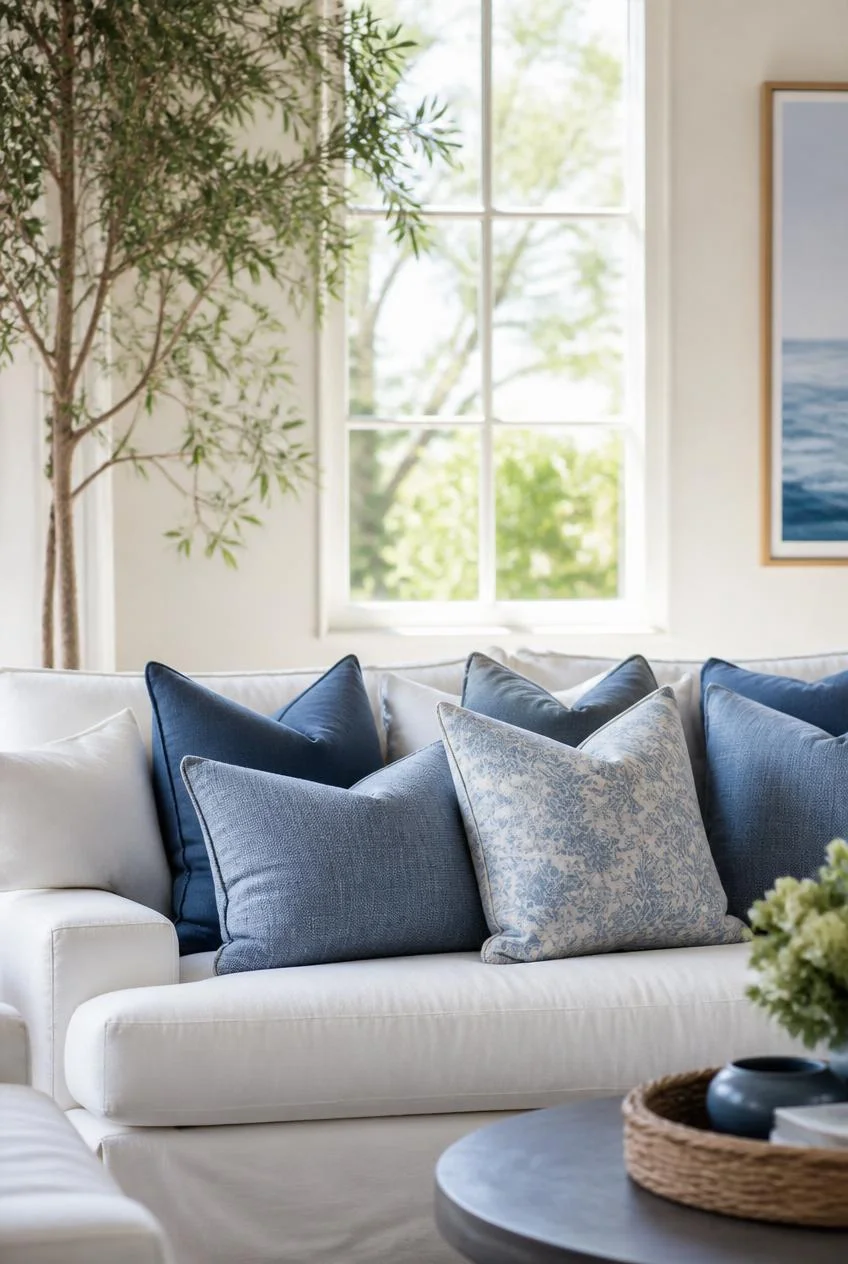
A white sofa layered with throw pillows in multiple shades of blue, from navy to pale sky tones, brings the palette into the room without committing to colored upholstery. This is one of the easiest and most affordable ways to test a blue and white scheme before making larger purchases.
Why It Works
Pillows can be swapped seasonally or whenever a refresh is wanted, making this one of the most flexible ideas on this list.
A Blue Front Door Visible From the Living Room
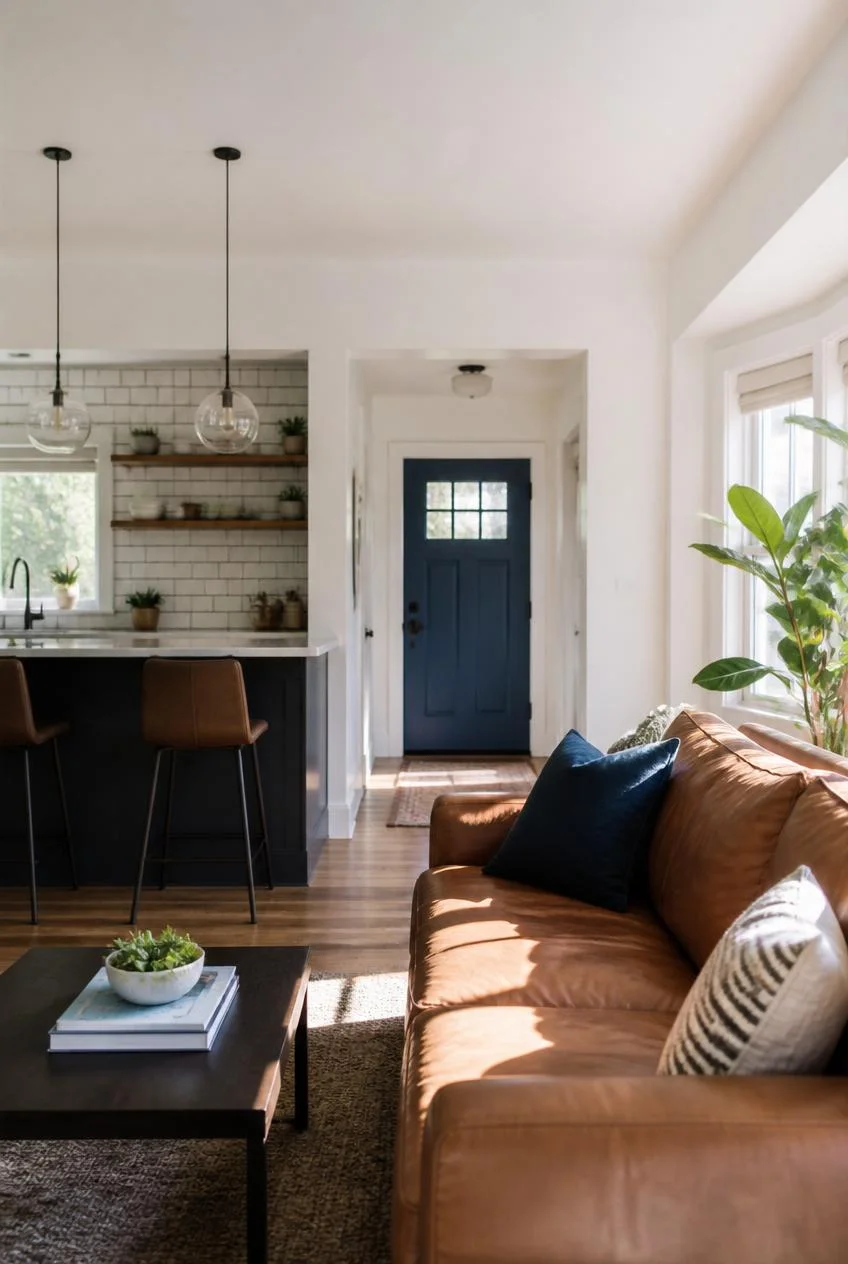
In open concept homes, a blue painted front door visible from the living room can tie directly into the room’s color scheme, creating a sense of continuity between entryway and living space. This subtle architectural detail reinforces the palette without adding more furniture or decor.
Layout Insight
This works best when the door is within direct sightline of the main seating area, so the color connection registers naturally.
White Built In Cabinetry Flanking a Fireplace
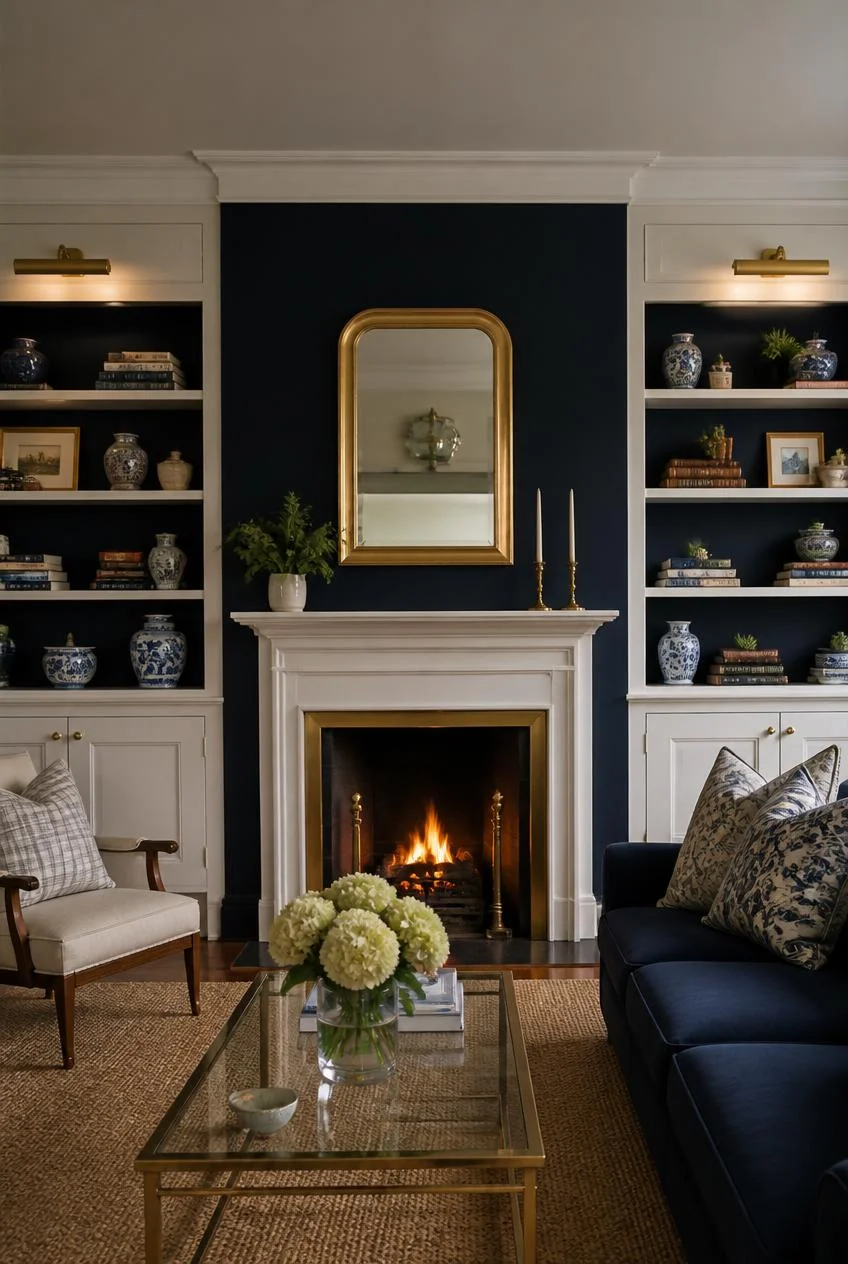
White built in cabinetry on either side of a fireplace, paired with a navy or muted blue wall behind it, creates a classic, balanced composition. The white cabinetry keeps the look bright, while the blue wall adds depth and contrast behind the fireplace itself.
Styling Tip
Use the cabinetry to display a mix of books, ceramics, and a few framed photos, keeping the styling varied in height and texture.
A Soft Blue Ceiling for Unexpected Depth
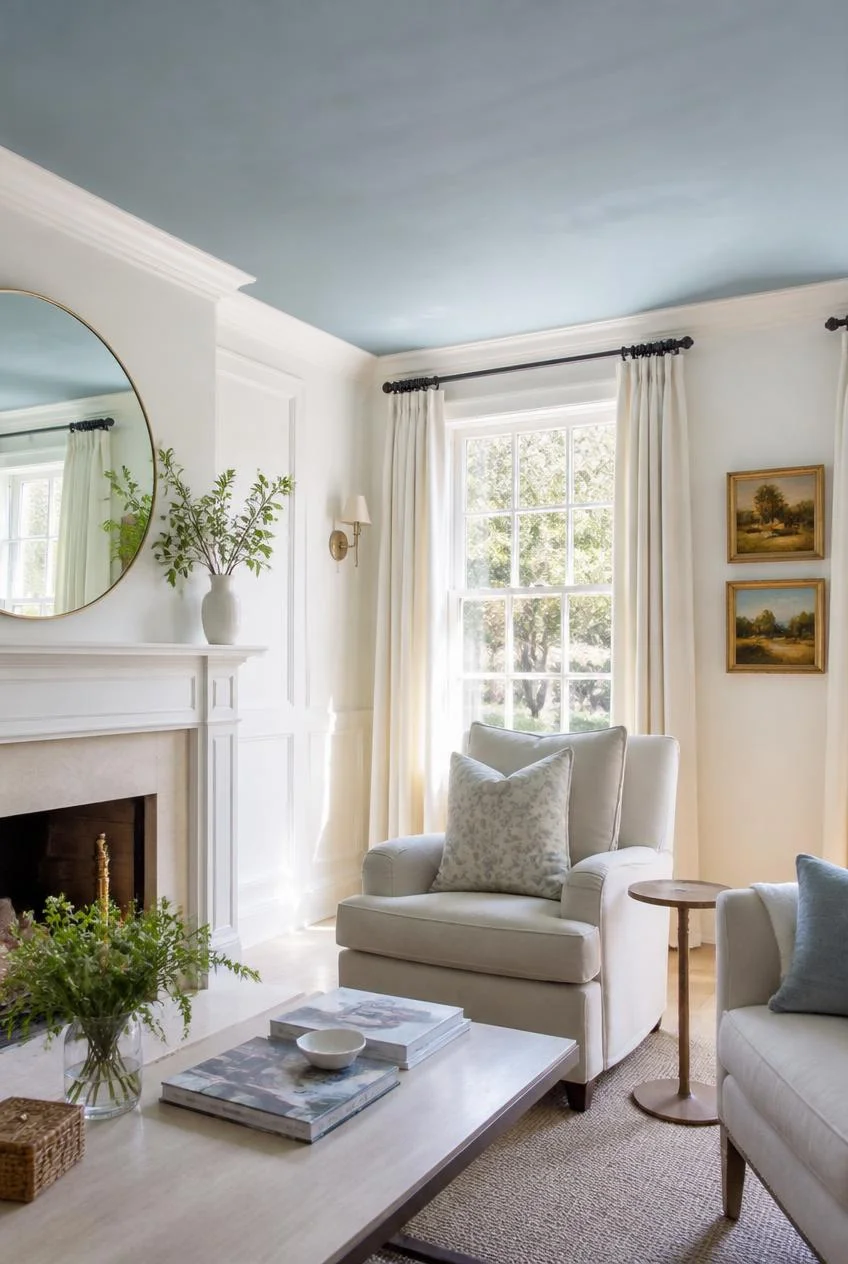
Painting the ceiling a soft blue, rather than the standard white, adds unexpected depth to a room without requiring any change to the walls or furniture below. This is sometimes referred to as a haint blue ceiling in traditional Southern design and has a long history in coastal and porch architecture.
Why It Works
A colored ceiling draws the eye upward, making the room feel taller while still keeping within the blue and white palette.
Rattan and Jute Textures Against a Blue Backdrop
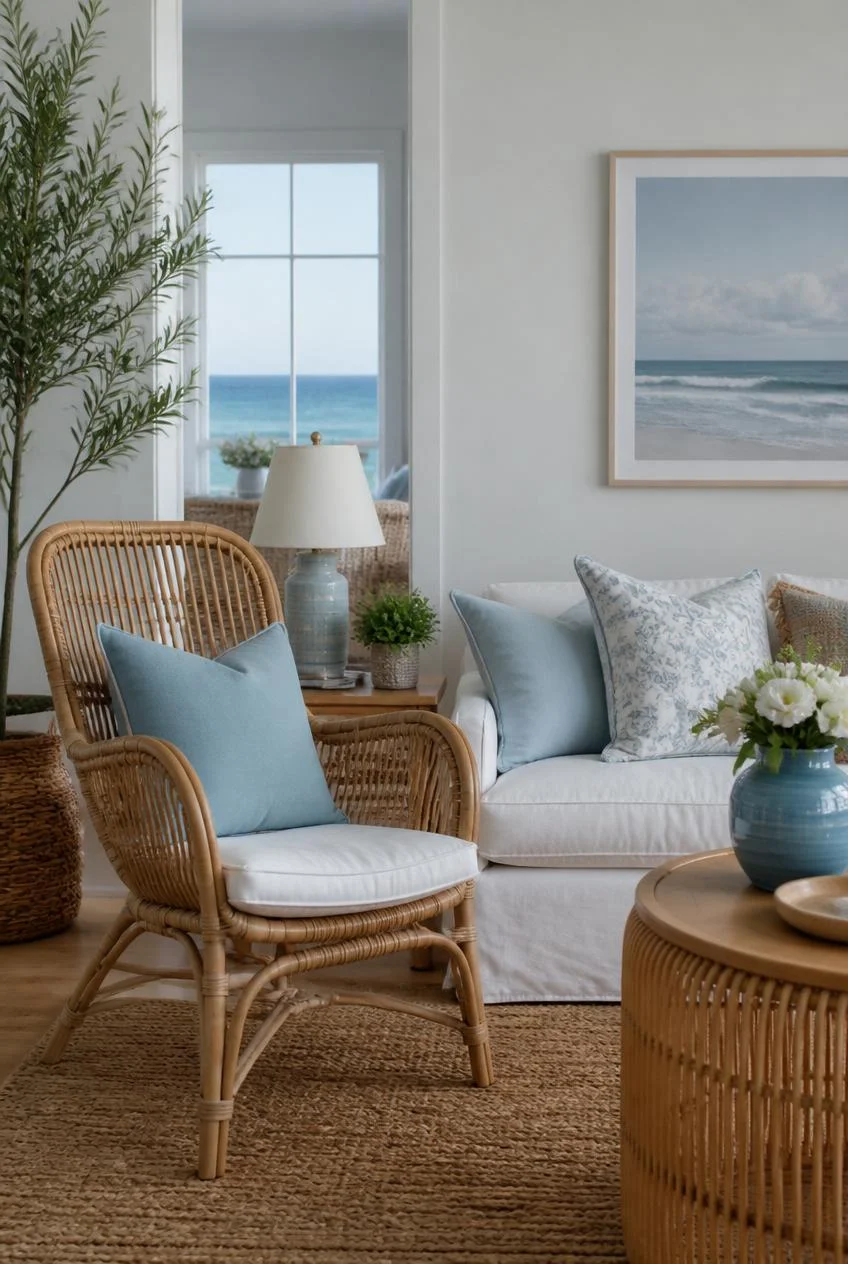
Incorporating rattan furniture and jute textiles against a blue and white color scheme adds warmth and natural texture that prevents the palette from feeling too clean or sterile. A rattan accent chair or a woven pendant light works particularly well in coastal style rooms.
Material Pairing
Natural fibers in warm tan tones balance the coolness of blue, creating a more lived in, relaxed atmosphere.
A Blue Velvet Ottoman for Texture and Function
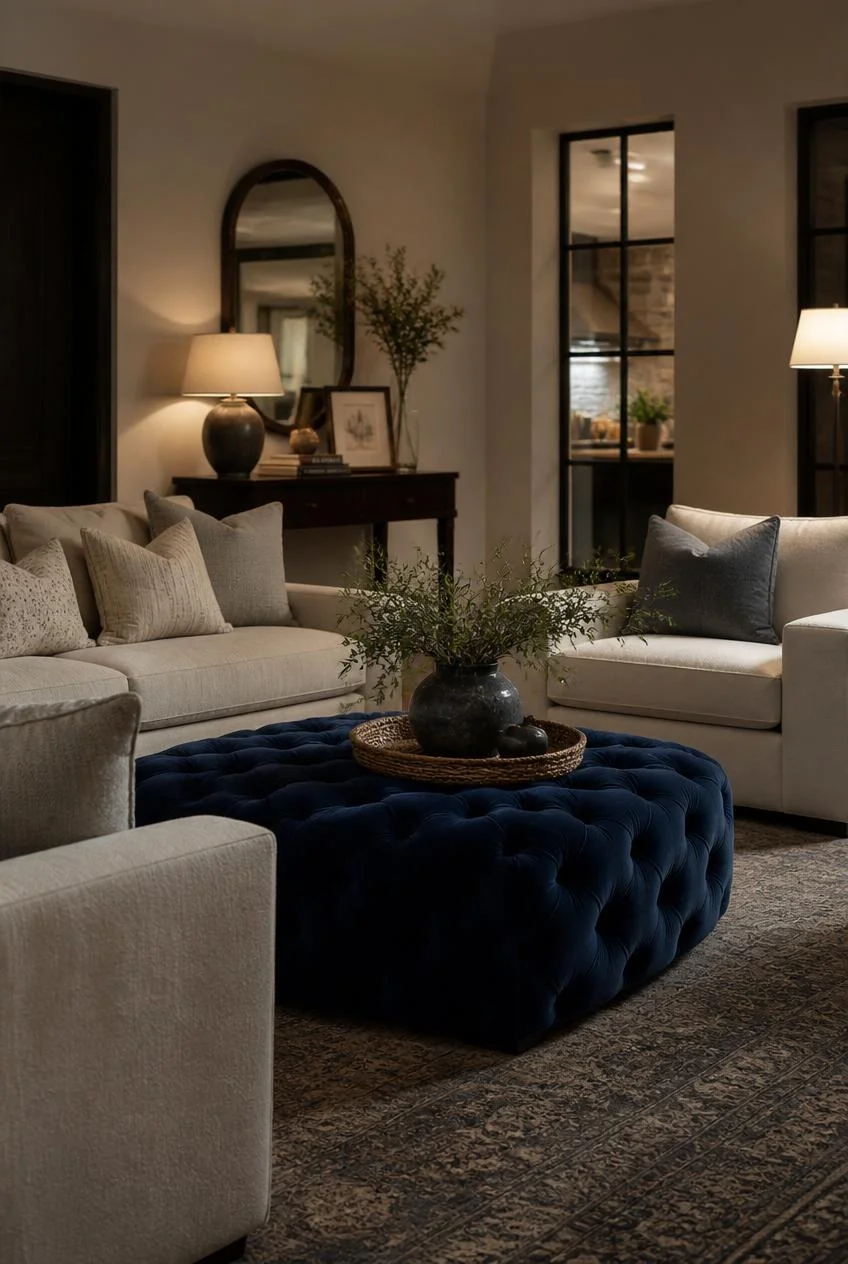
A blue velvet ottoman placed at the center of a seating arrangement adds both function as a footrest or extra seat, and a soft textural contrast to a room filled with linen, cotton, or woven materials. The slight sheen of velvet also catches light differently throughout the day.
Styling Note
Choose a deep, saturated blue velvet rather than a pale shade, since the fabric’s texture reads best in richer tones.
White Drapery From Ceiling to Floor
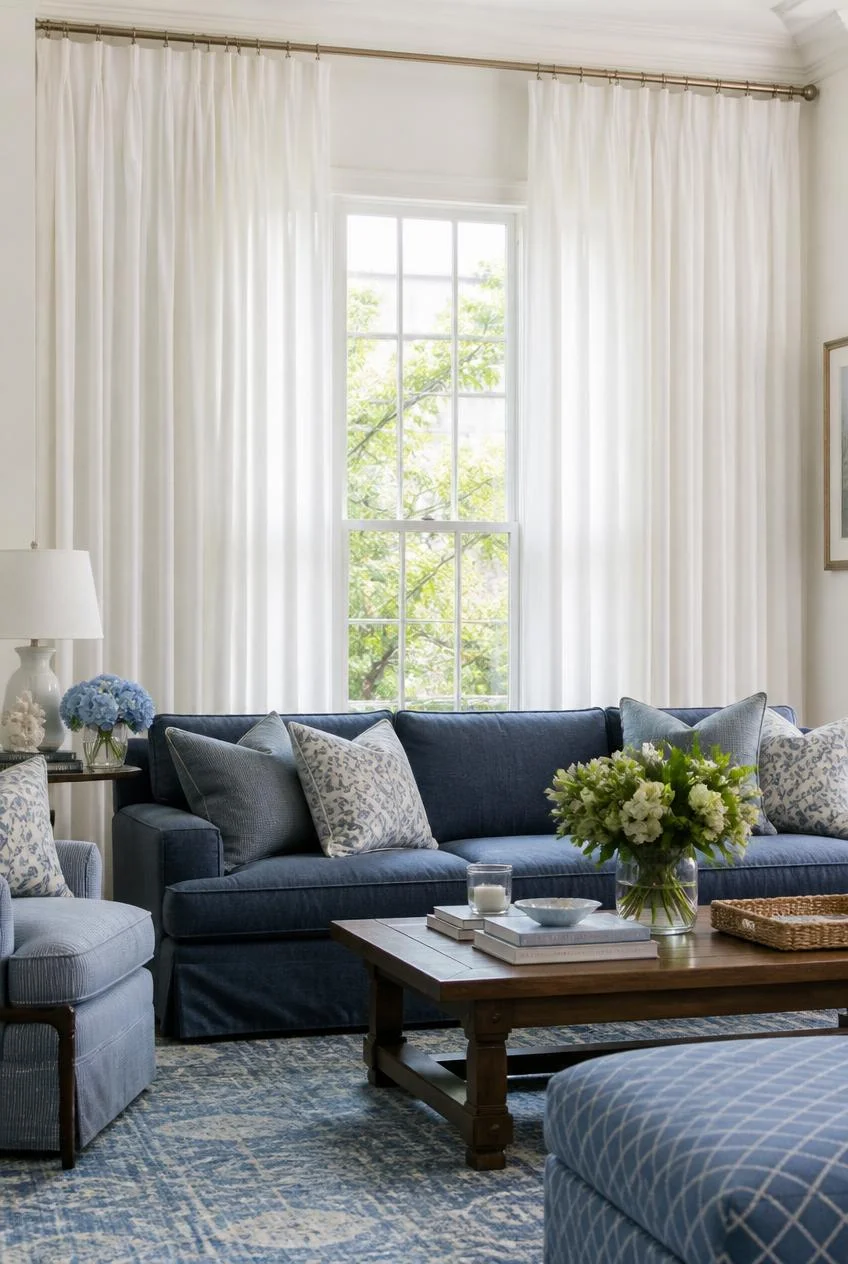
Hanging floor to ceiling white curtains, even on windows that are not particularly tall, creates the illusion of higher ceilings and a more elevated living room overall. Against a blue dominant palette, the white drapery adds softness and movement to an otherwise structured color scheme.
Why It Works
Vertical lines created by long drapery draw the eye upward, which makes the entire room feel more spacious.
A Blue and White Patterned Wallpaper Accent
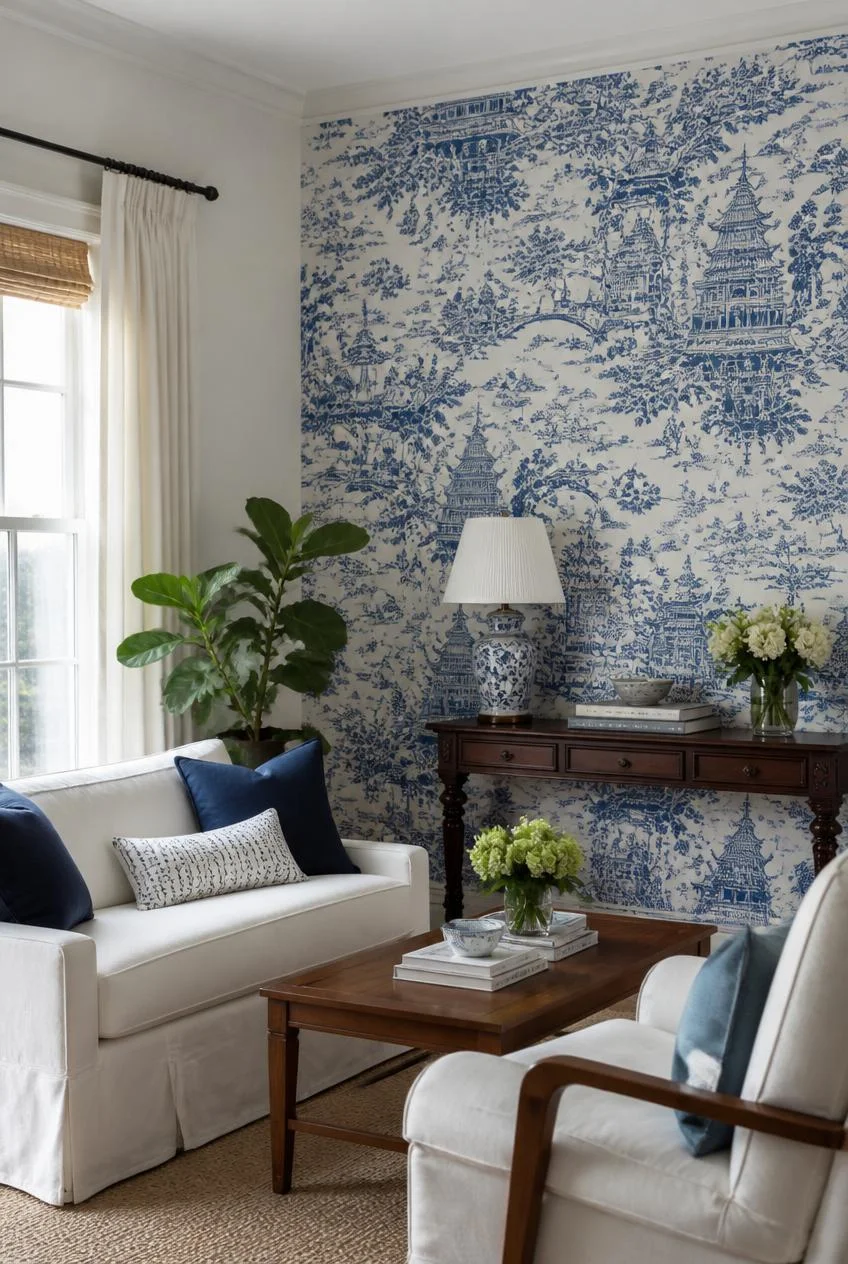
Rather than a solid painted wall, a blue and white patterned wallpaper, whether floral, geometric, or chinoiserie inspired, adds detail and visual richness to a single feature wall. This approach works particularly well behind a bed adjacent living space divider or behind open shelving.
Styling Tip
Limit pattern to one wall only, keeping the remaining walls solid white or a soft neutral to avoid visual overload.
Bringing the Palette Together With Greenery
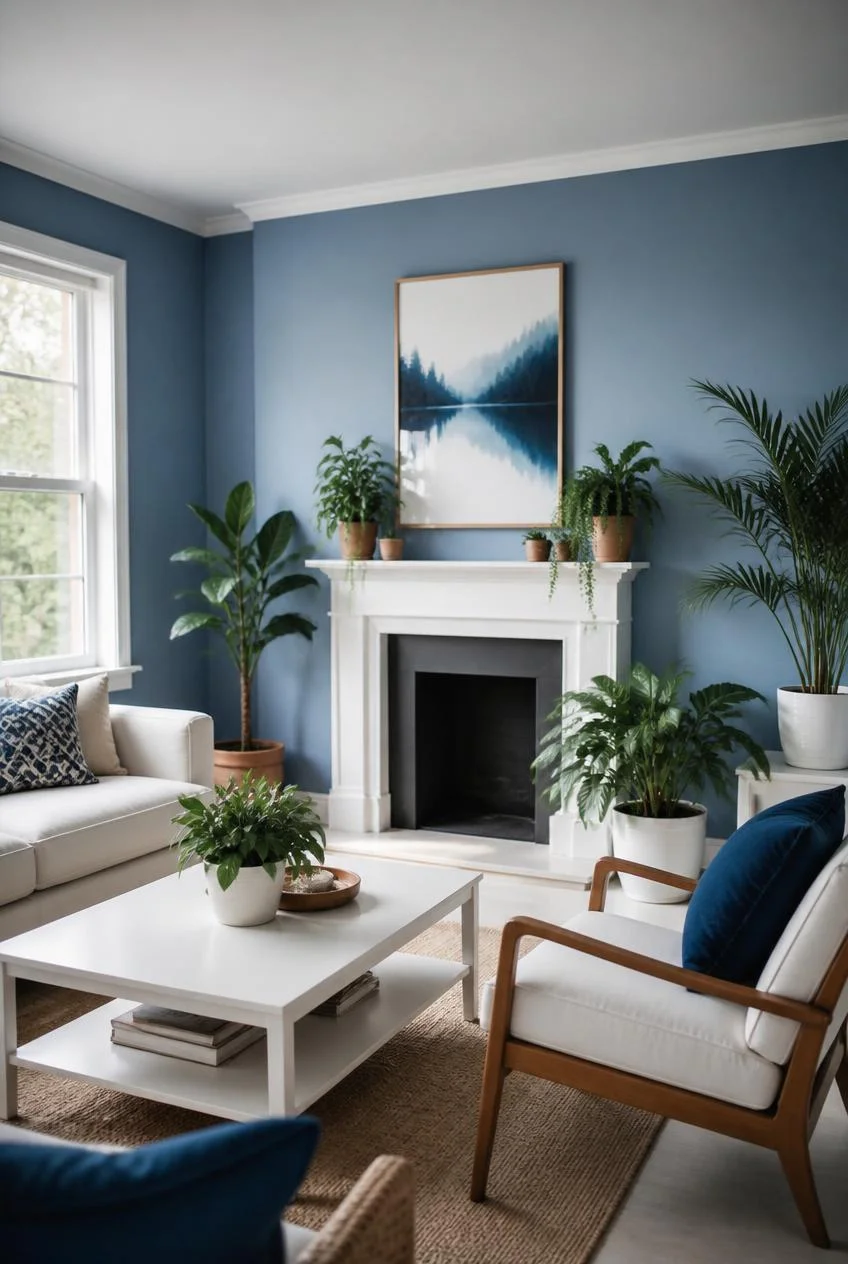
A few well placed houseplants in simple white or terracotta pots add a natural, living element to a blue and white living room. Greenery softens the coolness of blue tones and introduces organic shapes that contrast nicely with the room’s more structured color scheme.
Why It Works
Plants are one of the lowest commitment ways to add life and balance to a finished room without altering the core color palette at all.
Bringing It All Together
The strongest blue and white living rooms share one quality above all else, a sense of proportion. Whether the room leans coastal, traditional, or modern, the most successful versions treat blue and white as a relationship rather than a simple two color formula. Texture, shade variation, and a willingness to let one element lead while others support it are what separate a well balanced room from one that feels flat or overdone.
There is no single correct way to use this palette. Some rooms work best built around a bold navy sofa, while others thrive with nothing more than a few well placed throw pillows. The goal is not to copy a specific version exactly, but to understand the principles, contrast, texture, and restraint, that make blue and white feel timeless rather than trend driven. Start with one element you are drawn to, build outward gradually, and let the rest of the room take shape around it.
FAQs
What shade of blue works best in a small living room?
Lighter shades such as powder blue or soft sky blue tend to work best in smaller rooms, since they reflect more light and avoid making the space feel closed in.
Is navy blue too dark for a living room sofa?
Not necessarily. Navy reads as nearly neutral and pairs well with white walls and light flooring, making it a versatile anchor color rather than an overly bold choice.
How can I add blue to a living room without repainting the walls?
Throw pillows, a patterned rug, curtains, or a single accent chair are all effective ways to introduce blue without committing to a full wall color change.
Does blue and white work in modern interior styles, not just coastal ones?
Yes. Blue and white adapts easily to modern, traditional, and transitional styles depending on the shades chosen and how the colors are balanced with furniture and texture.
What colors pair well as accents in a blue and white living room?
Black, sage green, and natural wood tones are common accent choices that complement a blue and white palette without overpowering it.
You May Also Like This Post:
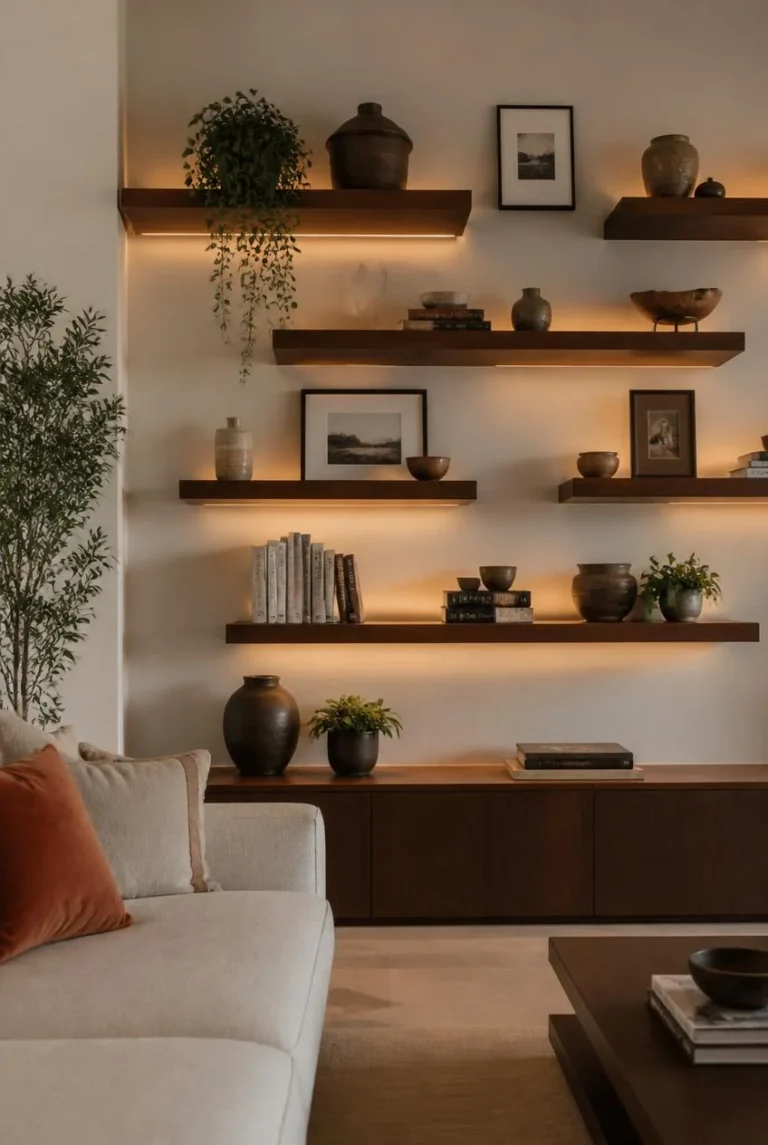
14 Unique Floating Shelves That Give Your Living Room Wall a Stylish Statement
One Comment