
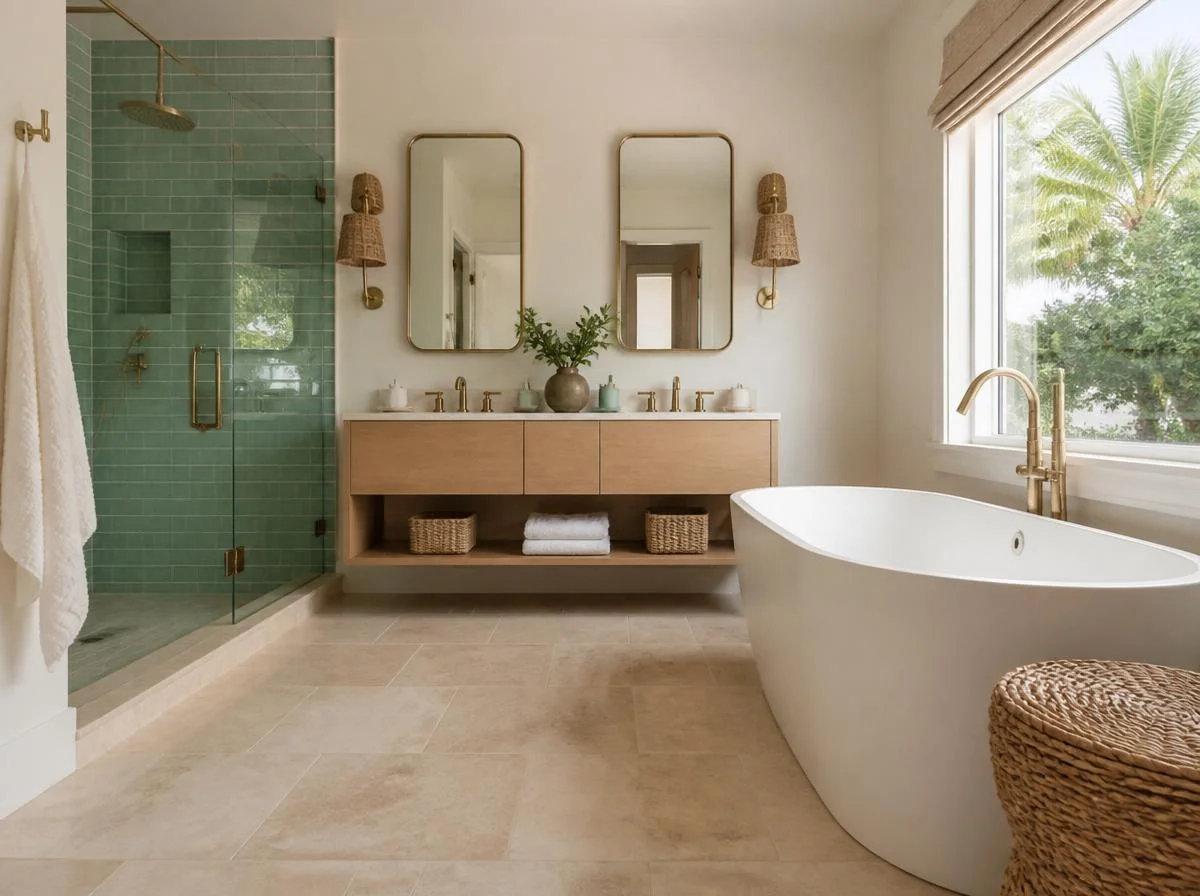
17 Coastal Bathroom Ideas That Bring Beach House Charm to Your Home
There is a very specific feeling that only a great bathroom gives you, a sense that time slows the moment you step inside. In the best coastal bathrooms, that feeling is unmistakable. The light falls differently in there. Something about the material on the wall, the tone of the tile, or the warmth of the wood vanity makes ordinary tasks feel considerably less ordinary. Getting ready for the day feels like a ritual. A bath in the evening feels like a genuine escape.
That quality does not require a home on the water. It does not require a renovation budget measured in six figures or a designer from a magazine. What it requires is a clear understanding of what makes coastal bathroom design work, the specific materials, tones, lighting choices, and textures that collectively create the relaxed, spa-like beach house atmosphere that people consistently describe as the most calming room in their home.
This guide covers 17 coastal bathroom ideas that bring that atmosphere to life, from complete bathroom overhauls to single changes that shift the feeling of an entire room. Each idea is rooted in the same underlying principle: genuine material warmth, organic coastal references, and the kind of considered restraint that separates a beautifully styled bathroom from one that simply has a lot going on.
A Sea Glass and Aqua Tile Palette That Sets the Mood
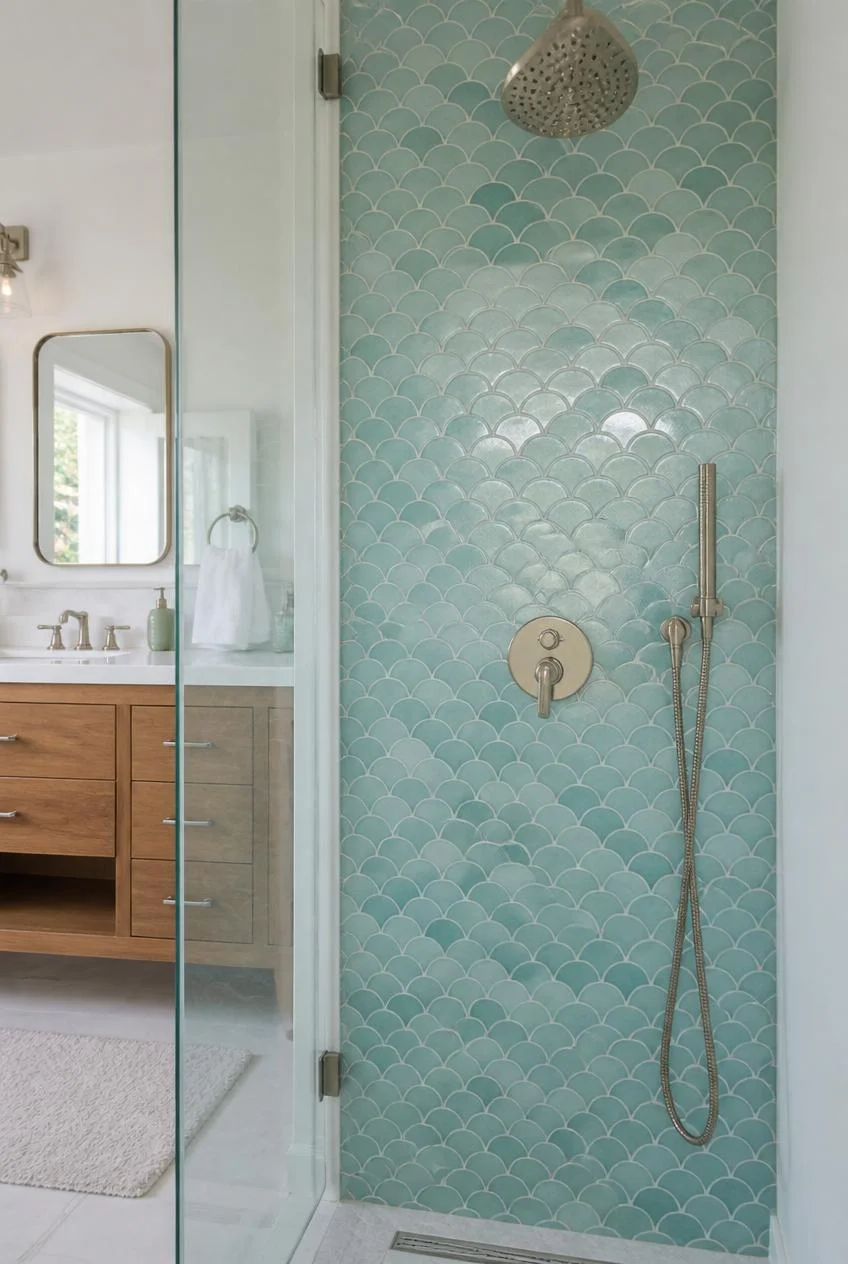
The foundation of any coastal bathroom is its color, and the most enduring and sophisticated version of the coastal palette in a bathroom context is built around sea glass tones: soft aqua, faded turquoise, misty blue-green, and the barely-there translucent quality of genuine sea glass held up to light. These tones reference the coastal landscape without being literal about it and suit the wet, light-reflective environment of a bathroom far better than most other colors precisely because they shift and deepen as natural light changes throughout the day.
Sea glass colored tile, whether in a large format for shower walls, a small mosaic for a shower floor, or a zellige finish for a feature wall, creates a surface that seems to hold light rather than simply reflect it. Pair this palette with crisp white walls and warm wood accents to keep the room feeling fresh and airy rather than heavy, and let the tiles themselves carry the coastal reference rather than relying on themed accessories to explain the palette.
Applying the Palette
Use the deepest sea glass tone in the most contained space, typically the shower interior, and graduate to lighter, softer tones on the surrounding walls. This creates the same effect as standing at the water’s edge, where the depth of color increases as you move into the water rather than sitting uniformly across every surface.
Fish Scale Tiles for Sculptural Coastal Character
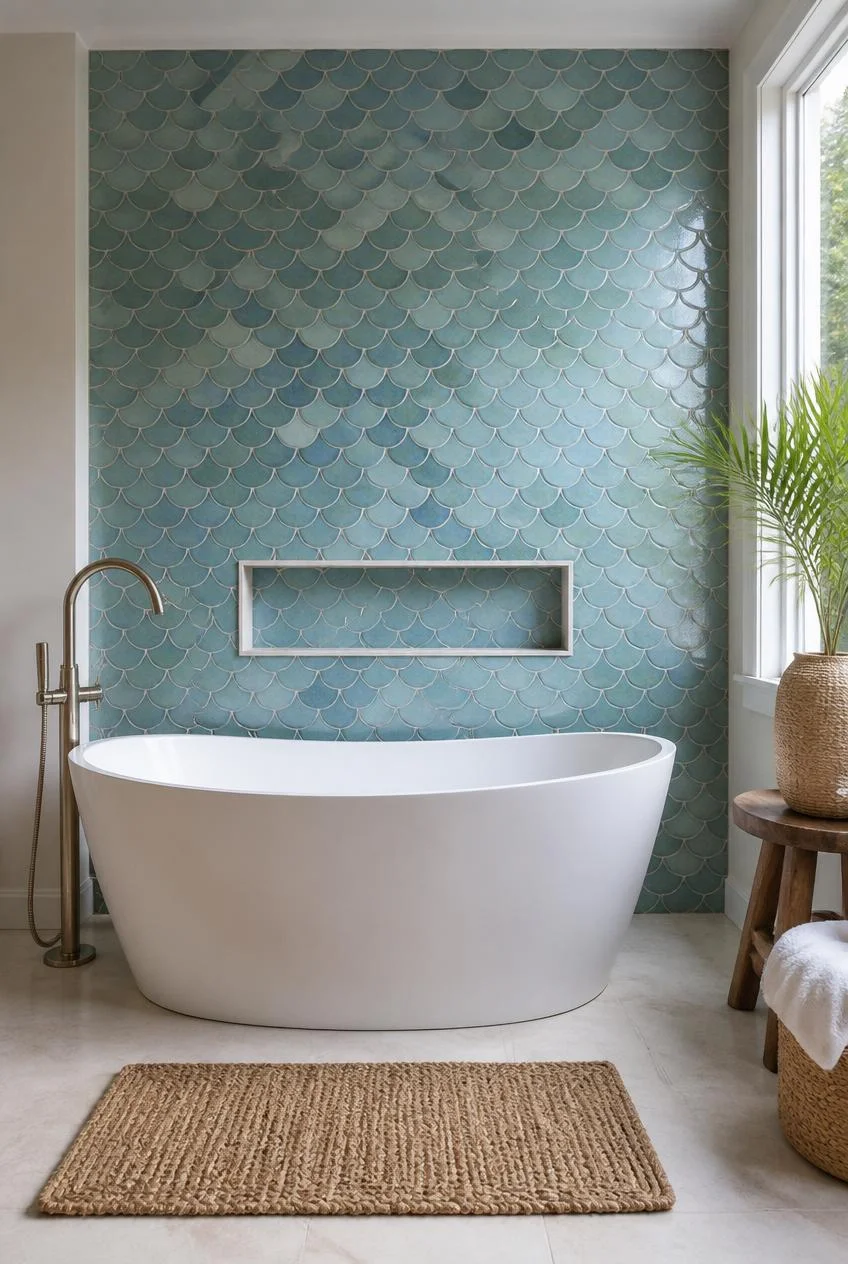
Fish scale tiles, also called scallop or fan tiles, are one of the most visually distinctive tile formats available in coastal bathroom design because their form references the marine world so directly and so beautifully. The overlapping curved shapes create a three-dimensional surface that catches light from different angles throughout the day, producing a subtle variation across the tile face that flat rectangular tiles cannot replicate.
Used as a shower accent wall, a vanity backsplash, or a niche liner, fish scale tiles in ocean blue, sage green, or warm sandy white introduce both pattern and sculptural texture simultaneously. A full-height application behind a freestanding tub is particularly striking, since the movement of the tile pattern gives the wall a quality that makes the tub look genuinely framed rather than simply positioned in front of a surface.
Color and Scale Decision
Larger fish scale tiles read as more architectural and contemporary, while smaller mosaic versions in the same shape read as more delicate and detailed. Choose the scale based on the amount of wall space available, since smaller tiles in a large shower can feel busy while larger tiles in a small niche will be partially hidden.
A Natural Wood Vanity in a Light or Driftwood Tone
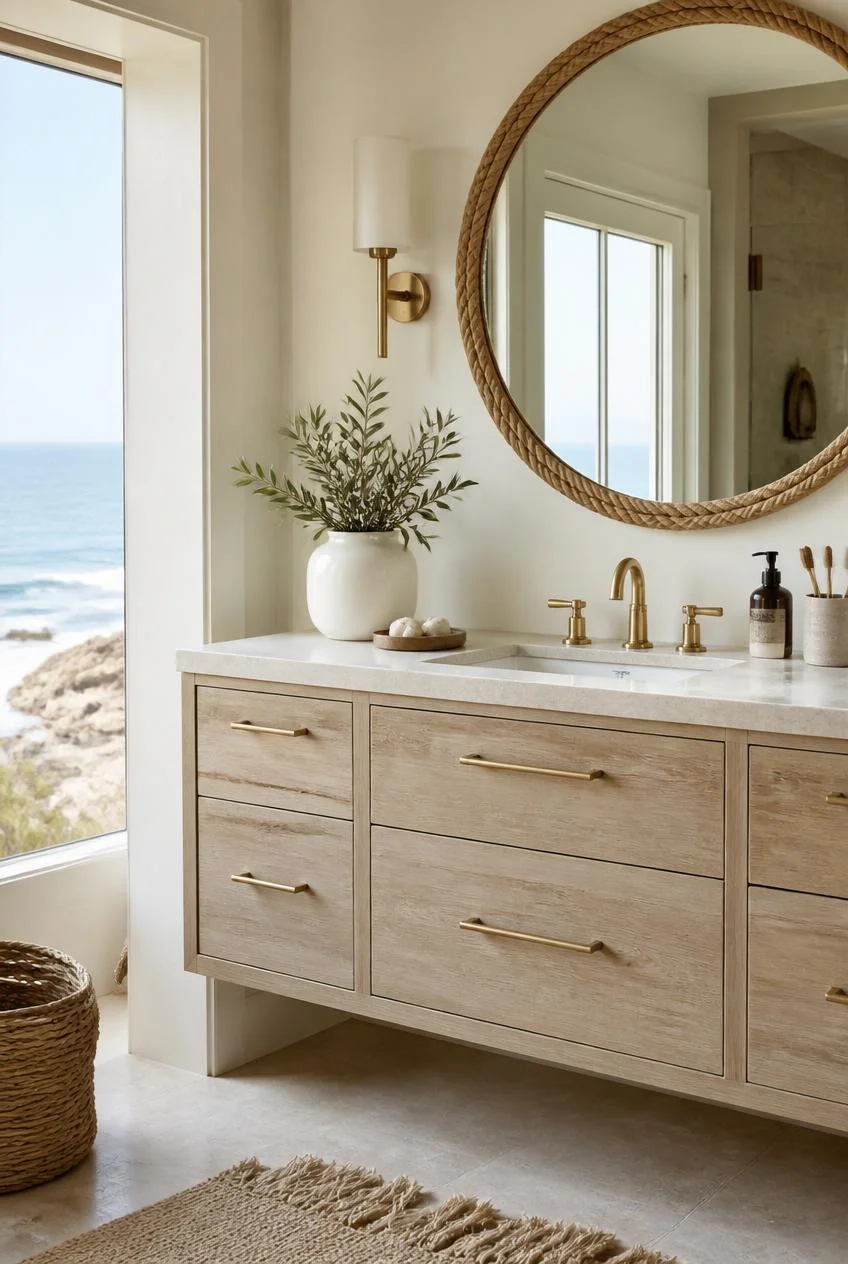
A natural wood vanity is one of the single most effective design choices in a coastal bathroom because it introduces organic warmth and genuine material character in a space that might otherwise be dominated by hard, reflective surfaces. A vanity in light oak, sun-bleached teak, or a driftwood-toned finish brings the same quality of weathered, natural beauty as genuine driftwood found on a shoreline, connecting the bathroom to the coastal landscape through material rather than through decoration.
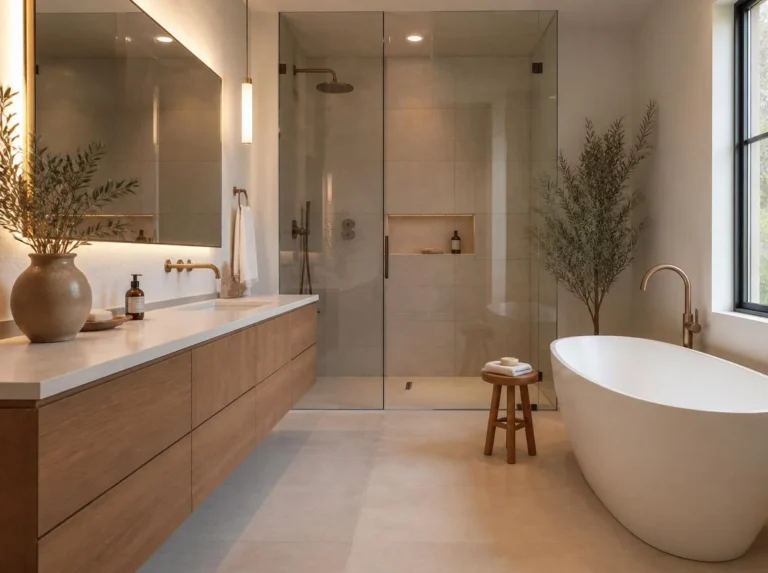
The floating vanity format suits coastal design particularly well because the visible floor space beneath it makes the room feel airier and more spacious, which reinforces the open, breezy quality that defines the best beach house bathrooms. Paired with a honed stone countertop in white or warm cream and unlacquered brass hardware that develops a natural patina over time, a light wood floating vanity becomes the room’s defining element.
Maintenance Note
Natural wood in a bathroom requires proper sealing and should ideally be positioned away from direct shower spray. A bathroom with good ventilation, either through an extraction fan or an opening window, significantly extends the life of a wood vanity and prevents moisture-related issues.
Shiplap Walls for Authentic Beach Cottage Character
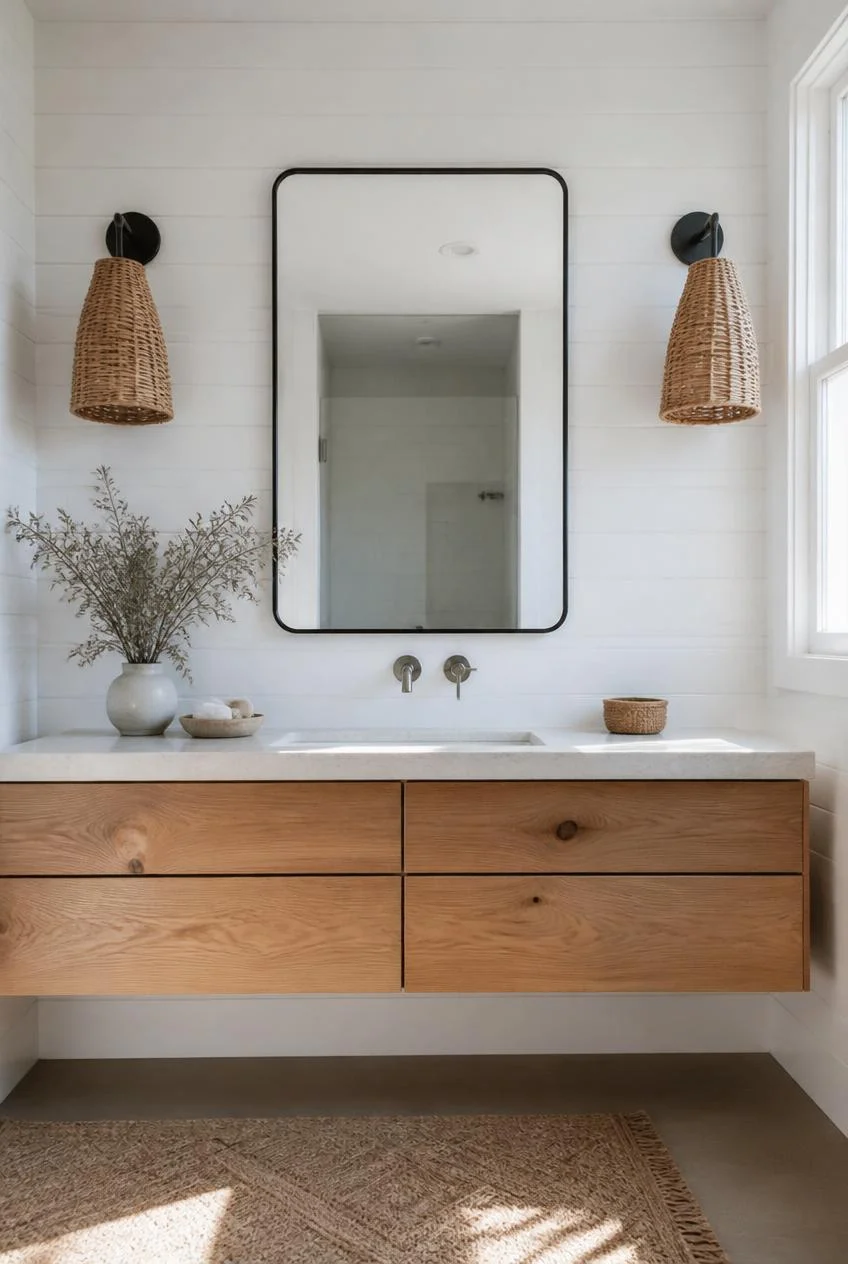
Shiplap, the horizontal wood planking treatment historically associated with East Coast beach cottage architecture, adds the architectural character and handcrafted warmth to a coastal bathroom that flat painted walls simply cannot provide. Applied as a full-height wall treatment, as wainscoting on the lower half of the wall below a painted upper section, or as a ceiling treatment above white tile walls, shiplap creates a dimensional surface that catches light differently throughout the day and gives the room a quality of age and authenticity.
White painted shiplap is the most classic choice in a coastal bathroom context, creating a crisp, sun-bleached quality that references the painted weatherboard of traditional beach houses. A natural or whitewashed tone gives the same three-dimensional texture with a warmer, more organic feel that suits bathrooms with more earthy coastal palettes.
Contemporary Shiplap
Slim-profile shiplap in a narrower board width than traditional applications reads as more refined and contemporary, suiting modern coastal bathrooms that want the material reference without the more heavily traditional aesthetic that wider boards sometimes produce.
A Freestanding Soaking Tub as the Coastal Spa Centrepiece
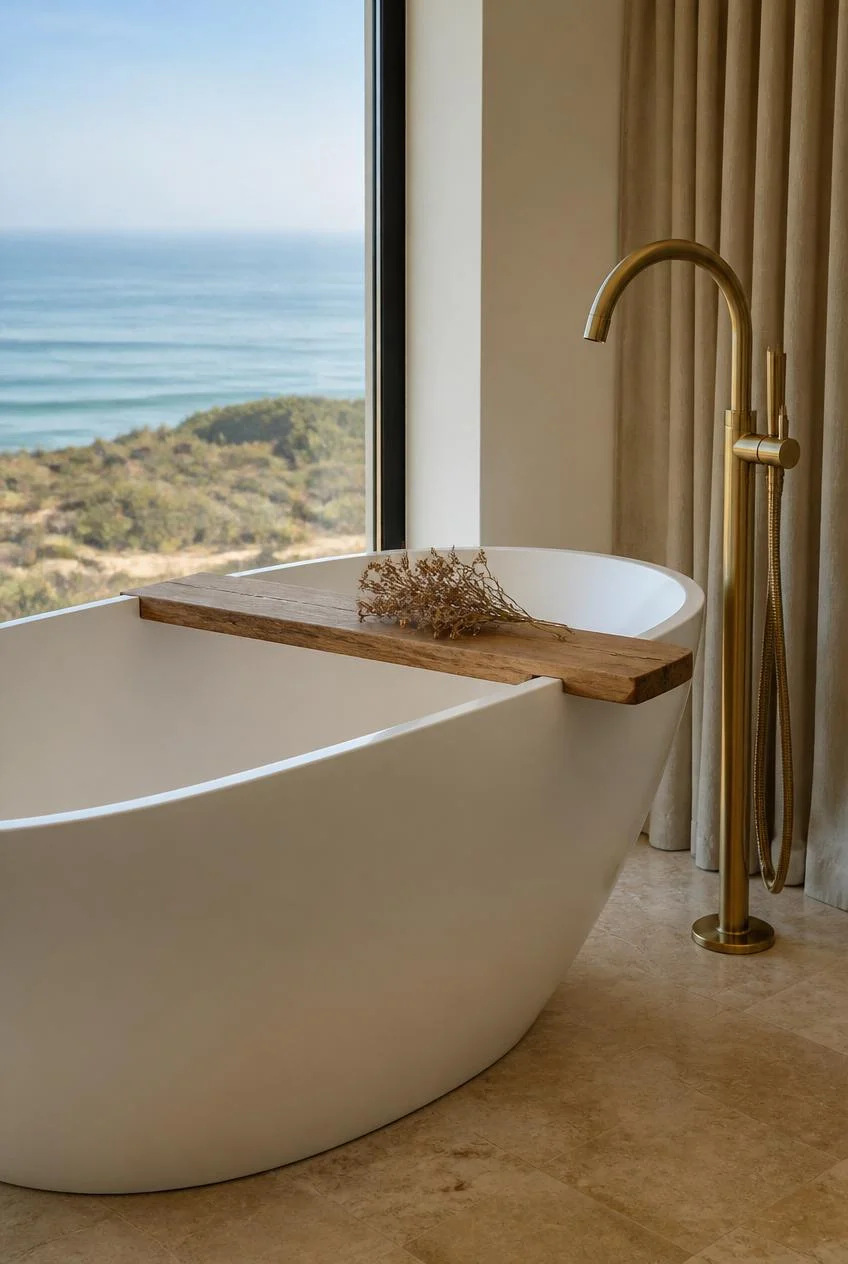
Nothing communicates the spa-like ambition of a coastal bathroom quite as clearly as a freestanding soaking tub positioned as the focal point of the room. The sculptural quality of a freestanding tub, its visible form from every angle, and the sense of occasion it creates around the act of bathing all reinforce the idea that this bathroom is designed for genuine relaxation rather than purely for function.
A freestanding tub in matte white or a warm stone composite finish positioned beside a window where natural light falls across the water surface creates a coastal bathroom experience that rivals any boutique hotel. Paired with a floor-mounted brass faucet, a simple wooden bath tray across the rim, and a single eucalyptus stem or dried botanical bunch hanging from the tub filler, the tub becomes the room’s only decoration.
Placement Strategy
Position the freestanding tub where it will receive the most natural light during the time of day the bathroom is most frequently used for bathing. Morning bathers benefit most from east-facing light, while those who prefer evening baths will appreciate a position where the tub faces toward the warm glow of a sunset.
A Rainfall Shower With Natural Stone Walls
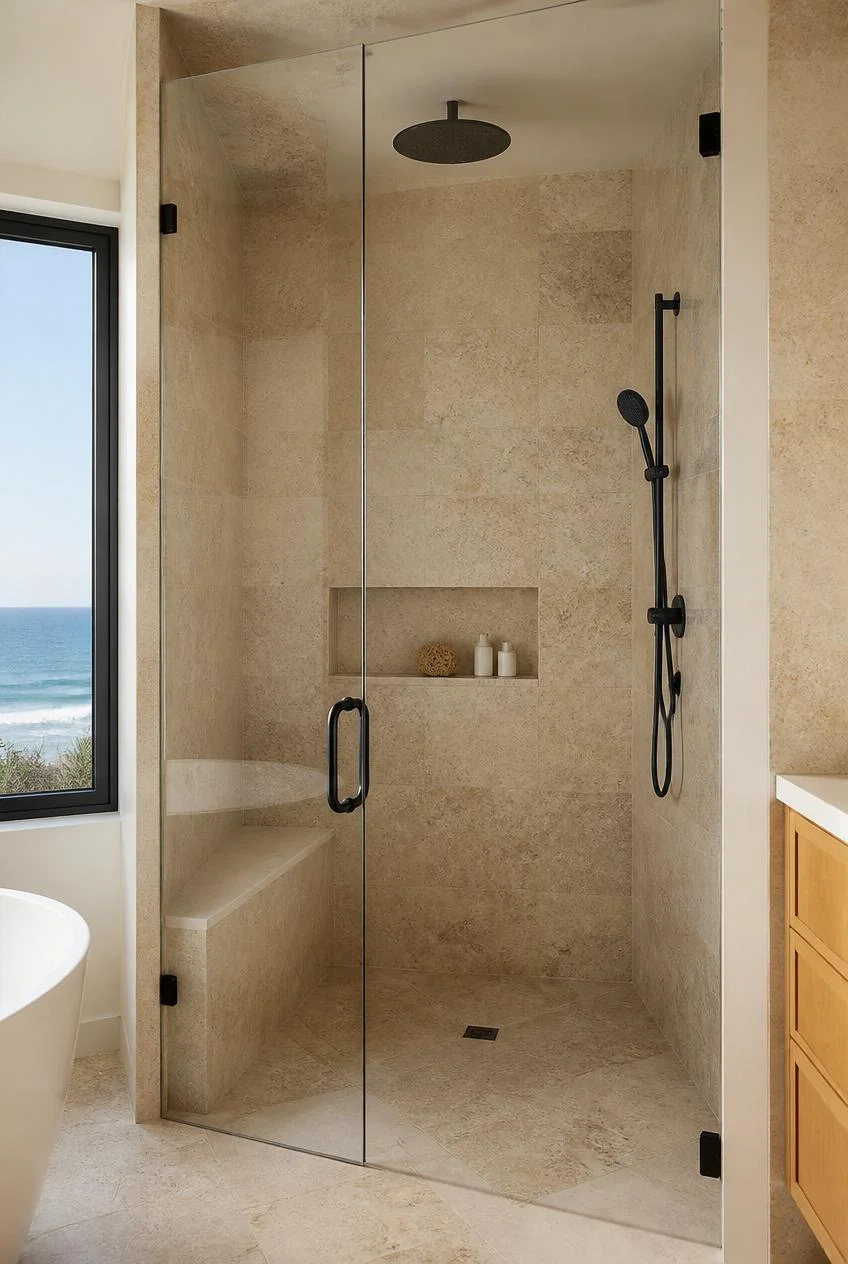
A walk-in rainfall shower lined with natural travertine, limestone, or sandstone tile creates an immersive shower experience that feels completely at home in a coastal bathroom context. The warm, slightly irregular surface of natural stone, with its variation in tone and texture across each tile, introduces an organic quality to the shower interior that porcelain or ceramic alternatives consistently fail to replicate.
A large format natural stone tile running floor to ceiling inside the shower enclosure, paired with a frameless glass door that does not interrupt the material, creates a shower that reads as an architectural feature rather than a functional compartment. Add a built-in stone bench and a recessed stone niche for a complete, resolved result.
Stone Selection
Travertine is the most popular natural stone choice for coastal bathrooms because its warm, sandy tones and slightly honeyed surface variation reference the beach landscape directly. It requires proper sealing to perform well in a wet environment, but maintained correctly, it develops a beautiful patina over time that only improves the room’s coastal character.
Rattan and Woven Light Fixtures for Organic Warmth
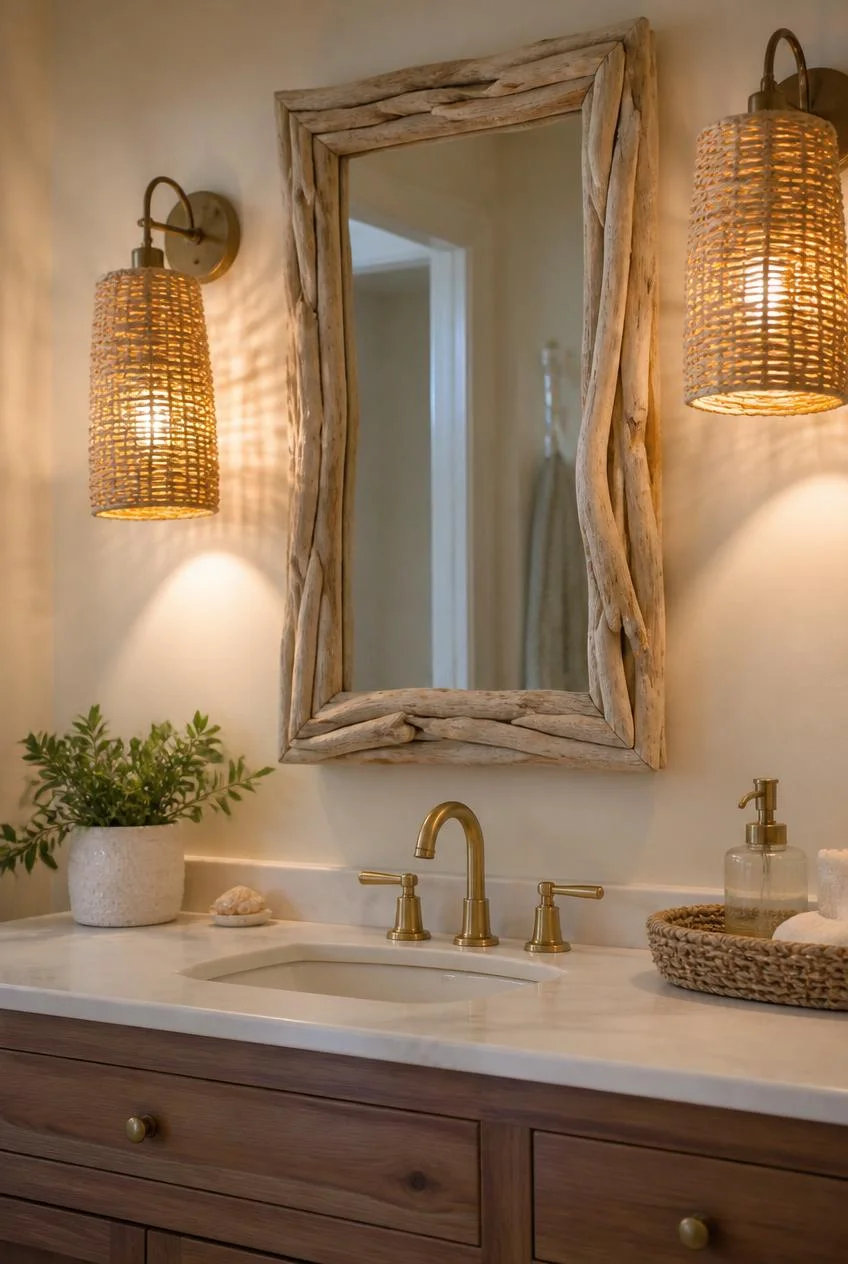
A woven rattan pendant light or a wicker wall sconce in a coastal bathroom introduces the same organic material warmth as a rattan pendant in a living room or kitchen, but in a space where the contrast between natural fiber and hard, reflective surfaces is even more dramatic and more effective. The warm, filtered glow that woven pendants cast through their natural fiber creates an atmosphere after dark that flat-shaded or bare bulb alternatives cannot replicate.
Rattan sconces positioned on either side of a mirror above the vanity provide both practical task lighting and decorative presence, giving the wall above the sink the kind of complete, styled composition that a single overhead light and an unframed mirror does not achieve. The material of the sconce connects naturally to woven rattan storage baskets, a jute bath mat, and any wooden elements in the room, reinforcing the organic material story across multiple surfaces.
Layering Bathroom Lighting
A rattan pendant above the bath, woven sconces at the vanity, and recessed downlights on a dimmer for general illumination give the coastal bathroom three distinct lighting modes: a bright, practical setting for morning routines and a soft, warm, atmosphere for evening bathing.
Rope-Wrapped and Driftwood-Framed Mirrors
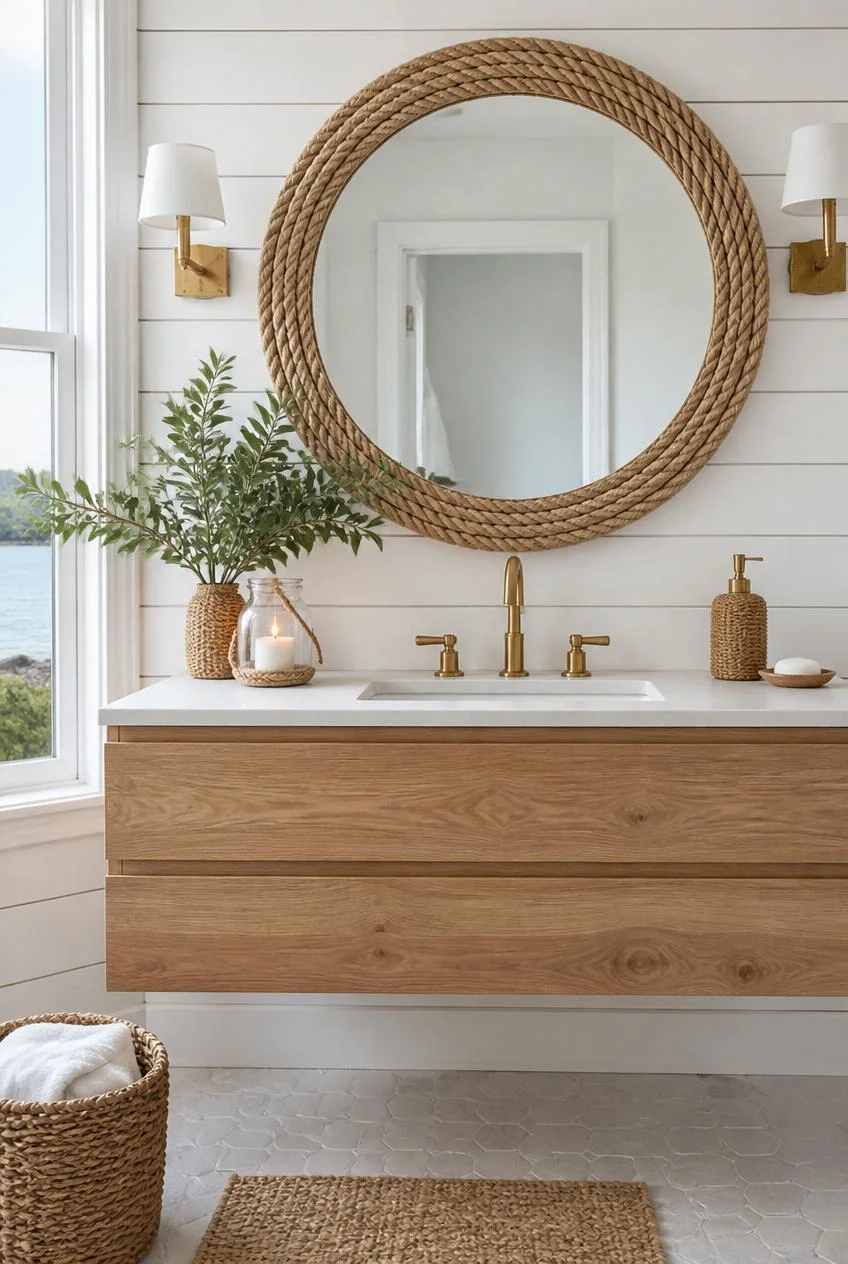
A mirror with a rope-wrapped frame or a driftwood-incorporated surround introduces one of the most direct and most refined coastal material references available without resorting to obvious nautical decoration. The natural texture of coiled rope or the bleached, organic form of driftwood gives the mirror a warmth and character that a plain frameless glass or a simple wood framed version cannot match.
Positioned above a natural wood vanity with brass fixtures beneath, a rope or driftwood framed mirror connects the organic material quality of the cabinetry with the marine reference of the frame, creating a composed wall composition that reads as curated rather than assembled.
Scale and Proportion
The mirror should be sized to the vanity beneath it rather than to the wall, with the mirror width sitting within about two thirds of the vanity width for a single sink or spanning close to the full width for a double vanity. A mirror that is undersized relative to its vanity always reads as uncertain rather than considered.
Sea Glass and Shell Accessories as Finishing Touches
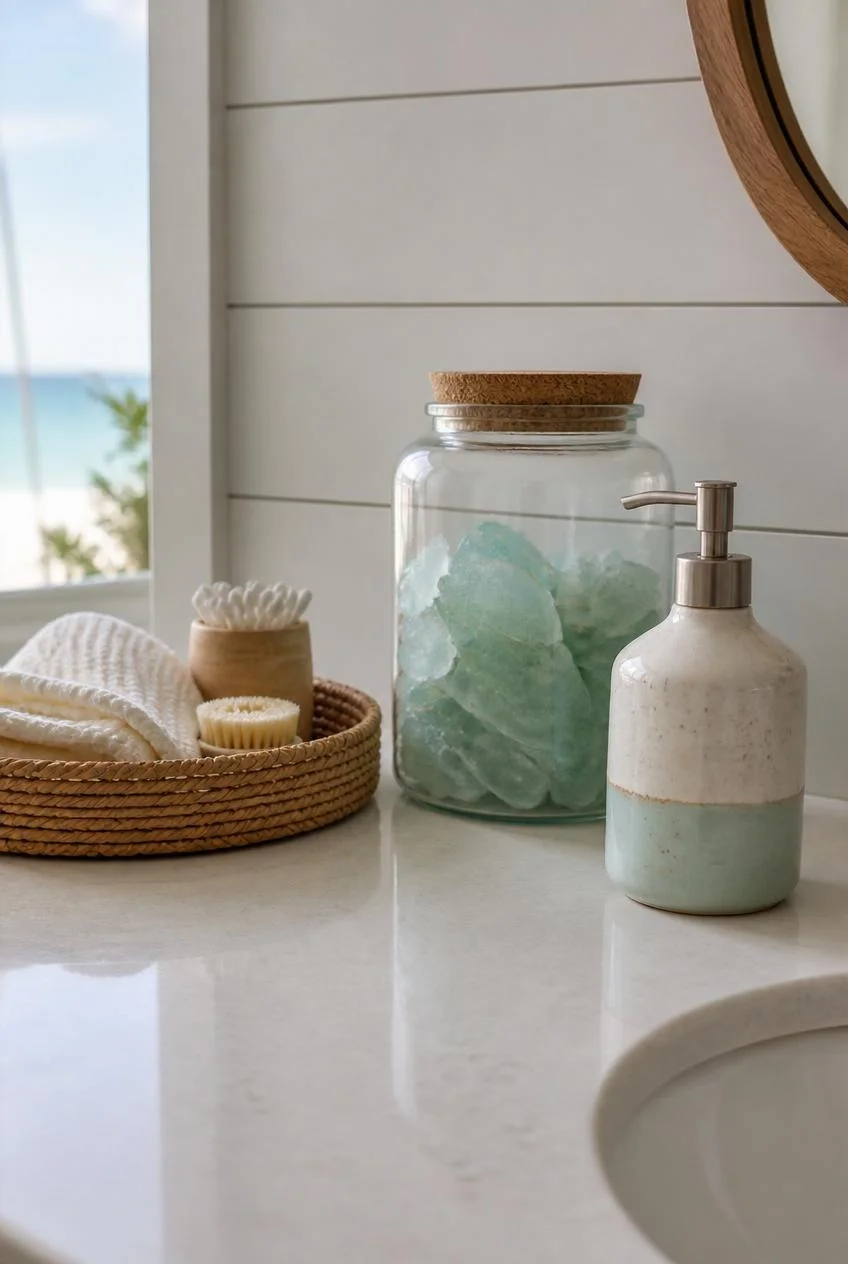
In a coastal bathroom, the accessories on a countertop, a shelf, or a window ledge carry the responsibility of completing the room’s material story with the same integrity as every structural decision that preceded them. Sea glass vessels, shell-form soap dishes, handmade ceramic containers in coastal tones, and small woven baskets all contribute to this final layer of character without being either obviously themed or decoratively fussy.
The discipline is in using these elements sparingly. A single glass jar of genuine sea glass on the vanity, a handmade ceramic soap dispenser, and a small woven tray to contain daily essentials is typically enough. The countertop should remain largely clear, with just enough personal, beautiful objects to make the room feel genuinely inhabited rather than simply well designed.
Where Accessories Work Best
Bathroom accessories that suit the coastal palette most naturally are those in soft aqua, sandy cream, natural white, driftwood brown, and warm brass tones. Avoiding bright, highly saturated accessory colors prevents the finishing layer from disrupting the calm, organic palette that the larger design decisions established.
Travertine Flooring for a Warm, Organic Base
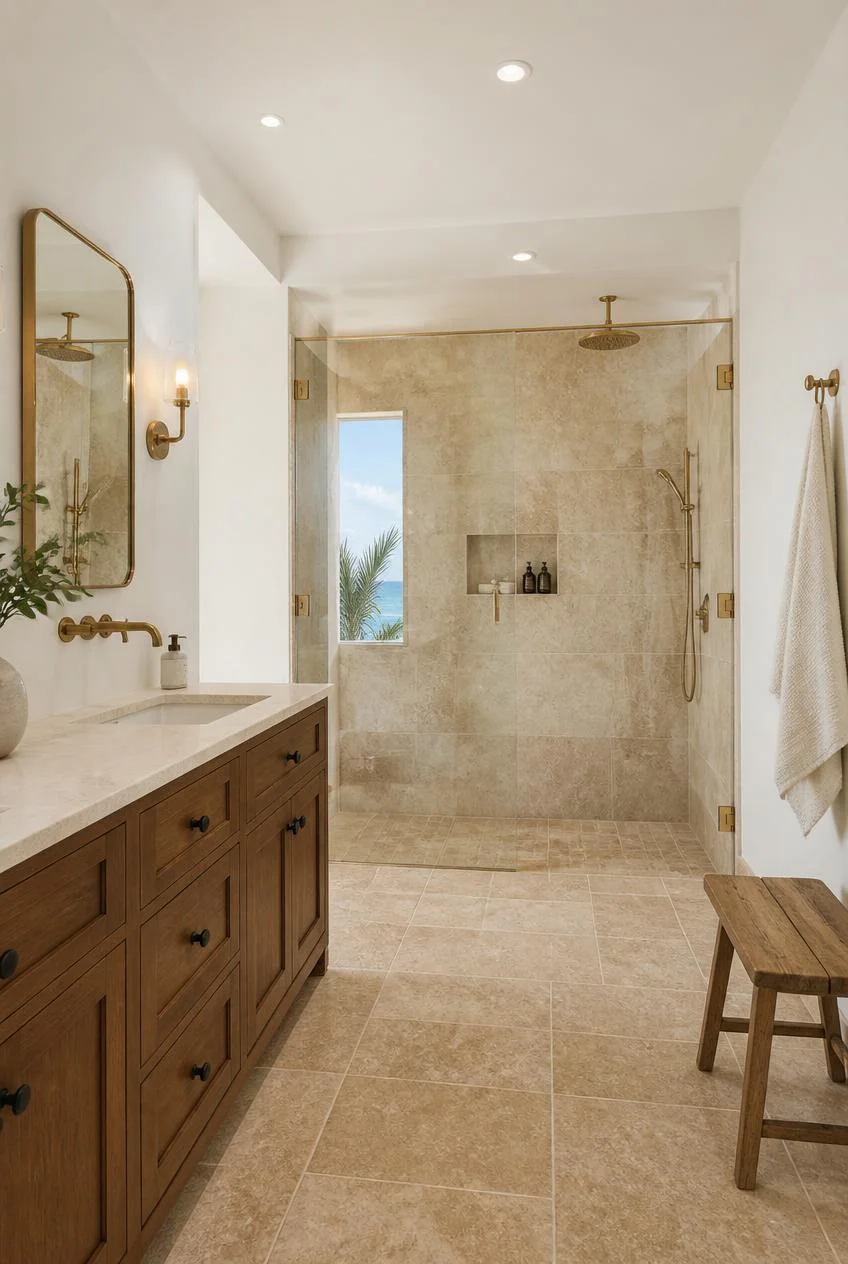
A travertine floor in a coastal bathroom is both a practical and an aesthetic choice: practical because the slightly rough, unfilled surface of honed travertine is naturally non-slip even when wet, and aesthetic because the warm, sandy tone and natural surface variation of travertine references the beach landscape more directly than any other flooring material available.
Running travertine flooring from the bathroom floor into the shower enclosure with no transition strip creates a seamless, continuous surface that makes the room feel larger and more architecturally considered. In a larger bathroom, extending the same material onto a low travertine shower bench reinforces the sense of the room being built from a single connected material throughout.
Maintenance Reality
Travertine requires regular sealing, more so than porcelain or ceramic, and should be resealed annually in a bathroom that sees daily use. The maintenance investment is considerably less burdensome than the renovation cost of replacing it, and the visual improvement it provides over its sealed porcelain alternatives is significant enough that most designers and homeowners who choose it consistently rate it as the right decision.
Wicker and Rattan Storage Baskets for Organic Organisation
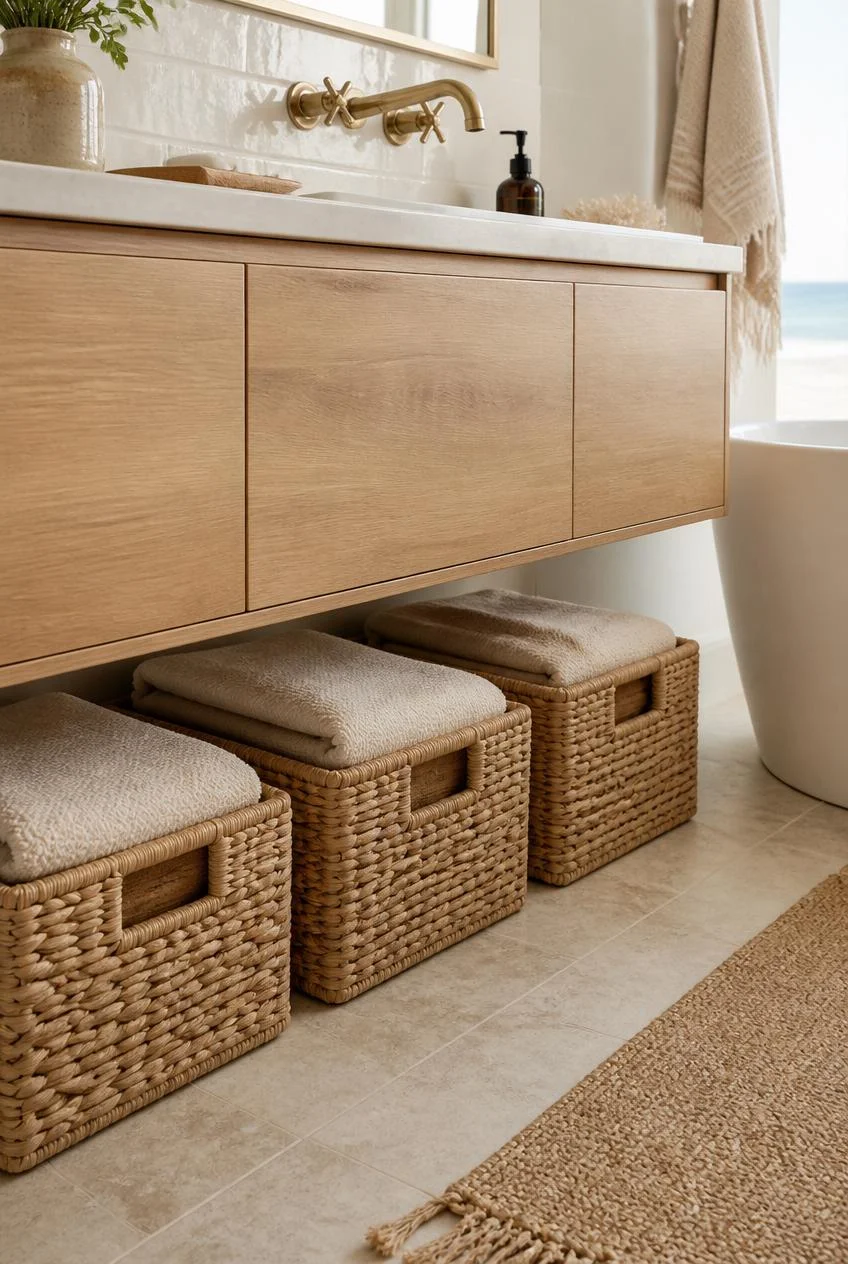
Wicker and rattan storage baskets in a coastal bathroom solve the functional problem of bathroom storage while simultaneously adding the organic texture and natural material warmth that hard cabinetry alone cannot provide. A set of matching woven baskets tucked into open shelving beside the vanity or under a floating cabinet, holding folded towels, extra toiletries, or bathroom essentials, looks both completely organized and genuinely relaxed at the same time.
The key to using wicker storage in a coastal bathroom without it looking fussy or over-decorated is keeping the baskets consistent in material and tone across the room, and choosing a weave that suits the scale of the space. A tighter, more refined weave suits a cleaner, more contemporary coastal bathroom, while a looser, more open weave suits a more relaxed beach cottage aesthetic.
Basket Placement
Under a floating vanity is the most common and most effective placement for woven bathroom storage, since the baskets are accessible from a standing or kneeling position, visible enough to contribute to the room’s aesthetic, and concealed enough from the main sightline to not dominate the overall composition.
A Blue and White Stripe Shower Curtain or Roman Shade
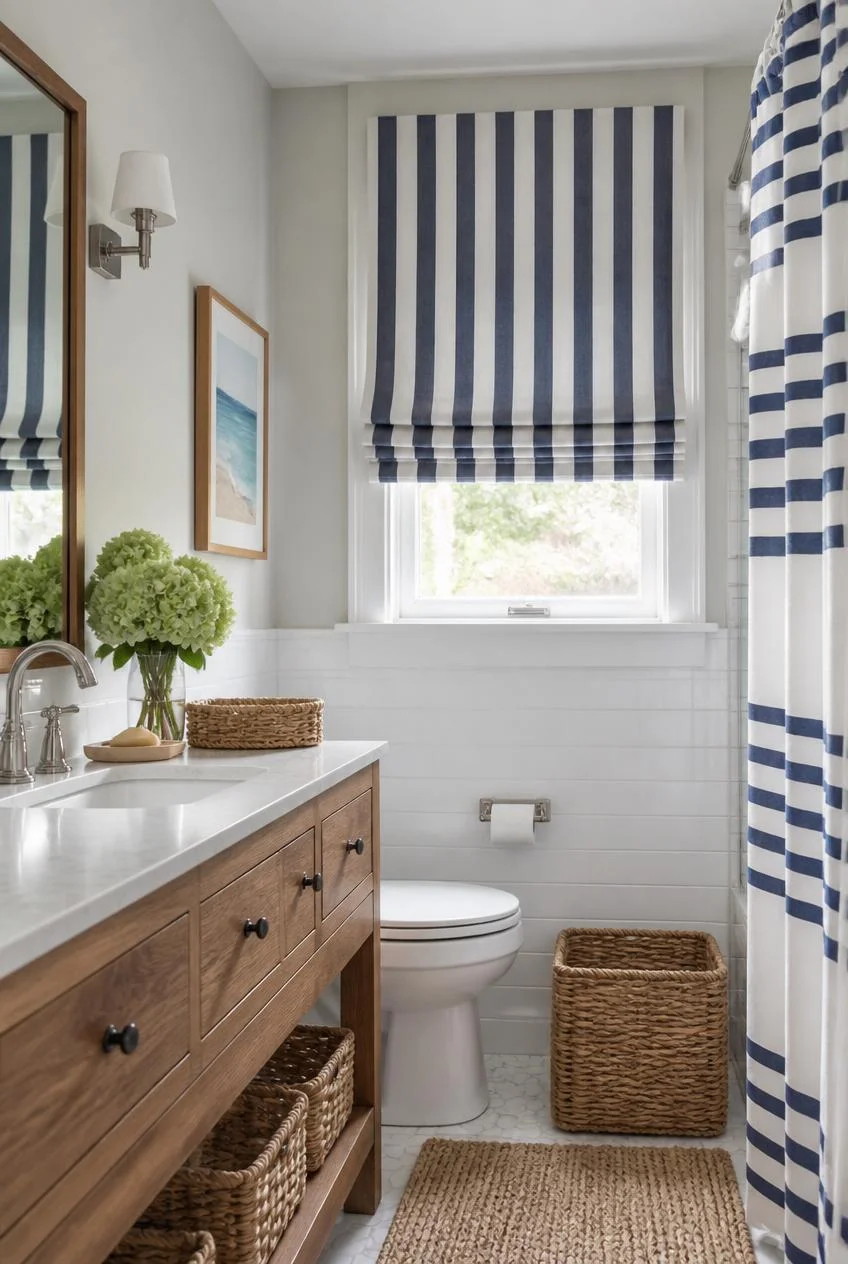
A blue and white striped shower curtain or Roman shade is one of the simplest and most affordable single changes available in a coastal bathroom, since it introduces both the coastal palette and one of the most characteristic coastal textile patterns in a single practical object. In a bathroom that cannot be retiled or reconfigured, a stripe pattern in the shower curtain immediately signals the coastal design direction without requiring any structural change.
Choose a stripe scale that suits the bathroom size: wider stripes in a larger bathroom, where they read as bold and confident, and narrower stripes in a smaller bathroom, where they add pattern without overwhelming the limited wall space. Navy and white is the most classic combination. Aqua and warm white is slightly softer and suits the more organic, earthy version of the coastal palette.
Beyond the Shower Curtain
The same stripe pattern used as a linen window treatment in a bathroom with a window rather than a shower curtain continues the textile language of the coastal design beyond the wet zone and gives the bathroom a more fully resolved aesthetic.
Maximizing Natural Light Through Windows and Skylights
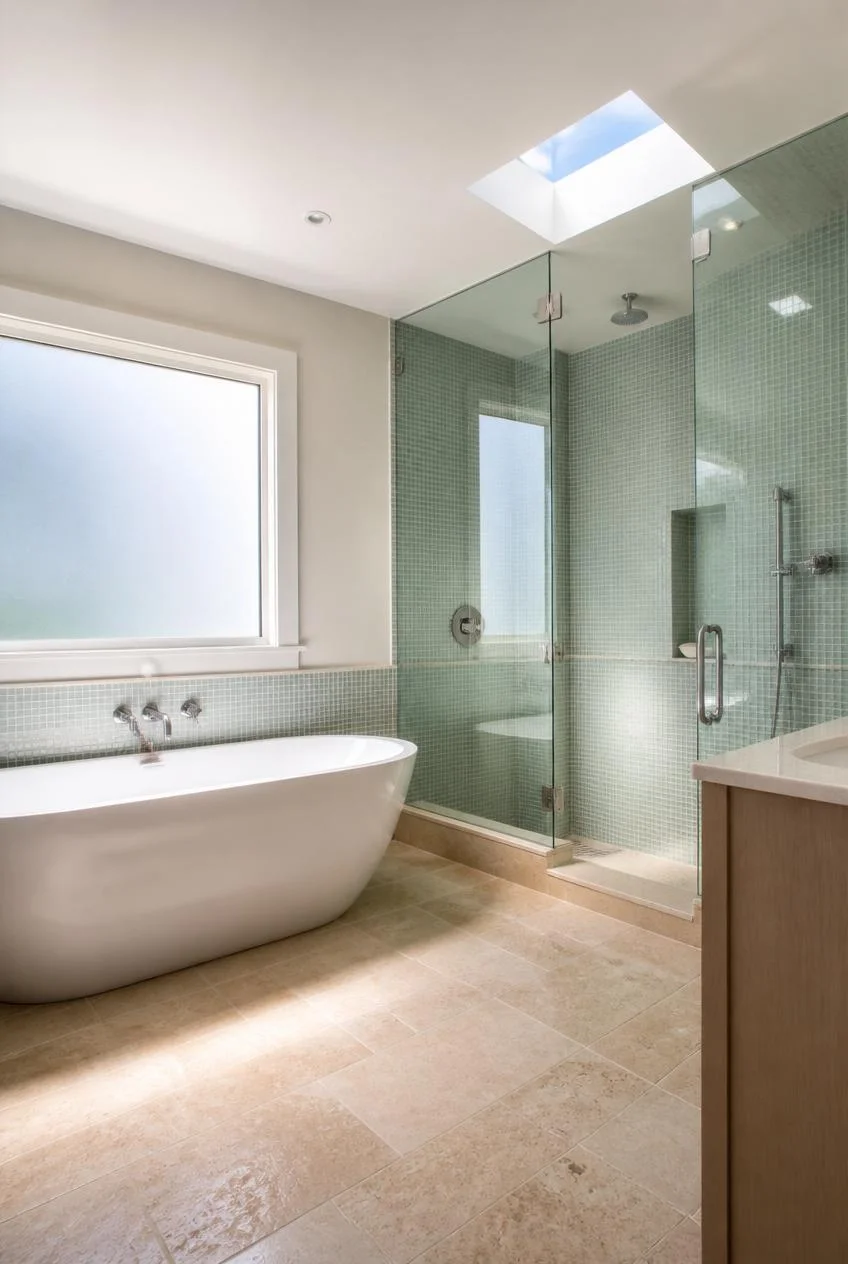
In a coastal bathroom, natural light is not simply a practical consideration: it is what makes every other design decision read at its best. Sea glass tiles shimmer, natural stone glows, and wood vanities reveal their grain properly only when genuine daylight falls across them, and the bathroom that is flooded with natural light consistently feels more relaxed and more beautiful than one relying primarily on artificial illumination.
Skylights positioned above a soaking tub or a shower enclosure deliver natural light directly into the areas of the bathroom where it creates the most atmosphere. Frosted glass windows or privacy film on standard windows allow natural daylight to enter without compromising privacy, maintaining the light-filled quality of the room throughout the day.
Mirrors as a Light Tool
A large mirror, either a full-width mirror above the double vanity or an oversized statement mirror on an adjacent wall, reflects and distributes natural light deeper into the room, effectively doubling its impact and making a smaller bathroom with limited window area feel considerably brighter.
Beadboard Paneling as Coastal Wainscoting
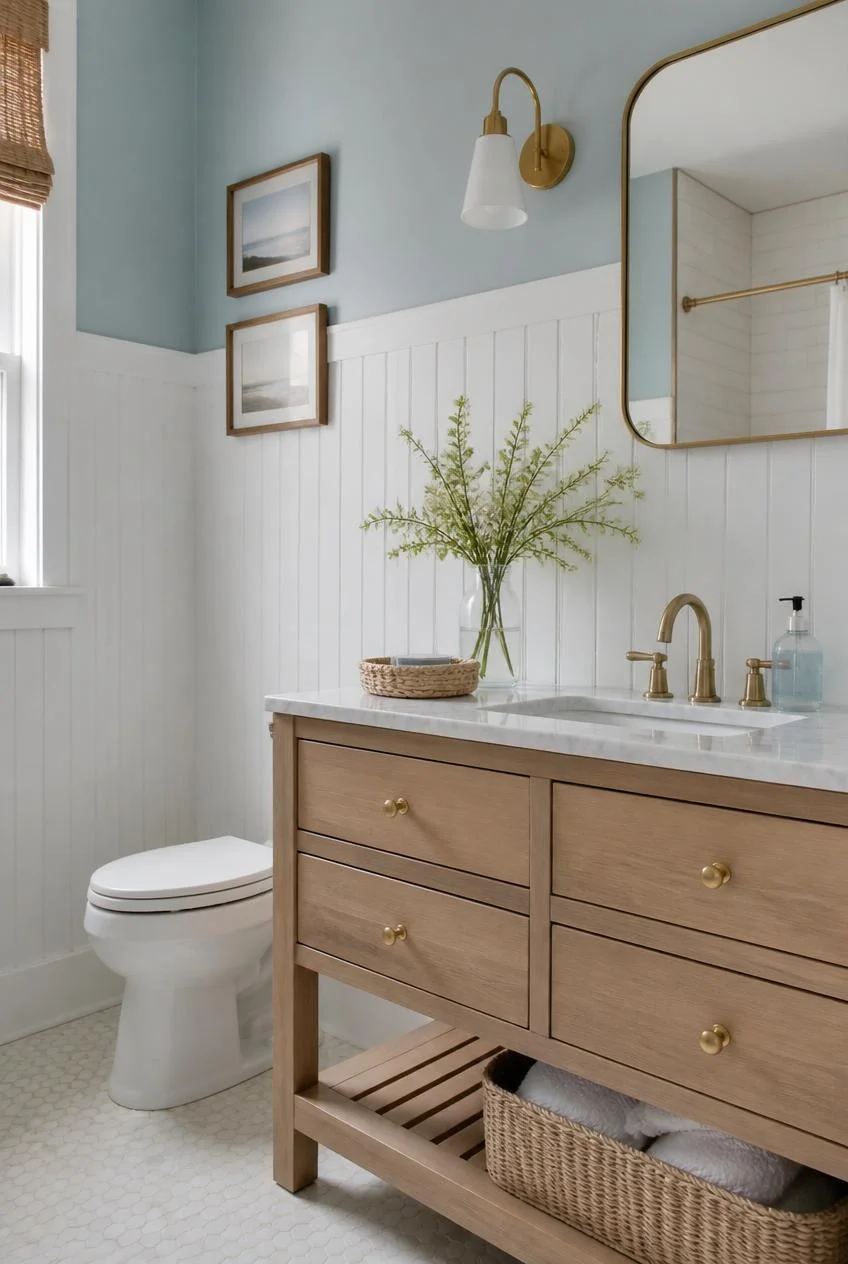
Beadboard wainscoting, the vertical grooved paneling applied to the lower half of a bathroom wall, brings the architectural character of classic beach cottage interiors into a contemporary coastal bathroom in a format that suits almost any room size. The paneling adds three-dimensional texture at the level where the eye most naturally rests, giving the lower wall a material quality that flat painted surfaces simply do not have.
White painted beadboard below a soft sea mist blue or warm sandy upper wall creates one of the most classic and most resolved coastal bathroom compositions available, since the combination references the architecture of traditional beach houses and suits both contemporary and more traditional interior styles equally well.
Contemporary Application
A taller beadboard application, running from floor to approximately two thirds of the ceiling height rather than the standard dado rail height, gives the treatment a more contemporary, architectural quality that suits modern coastal bathrooms without reading as overly traditional or cottage-like.
Brushed Brass Hardware for Warmth and Cohesion
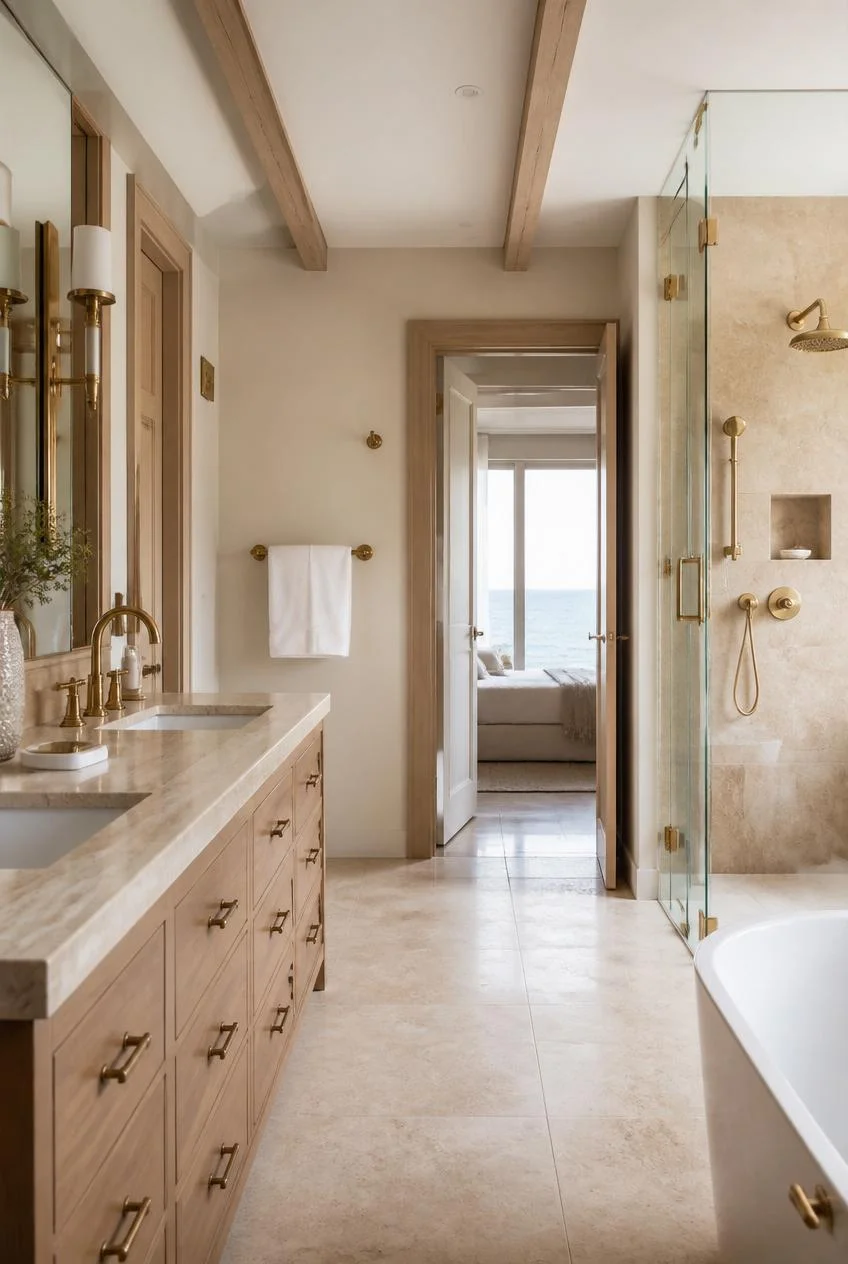
Brushed brass hardware, used consistently across every fixture and hardware point in a coastal bathroom, including faucets, shower fittings, towel bars, robe hooks, cabinet pulls, and light fixtures, adds a layer of warmth and material richness that chrome or matte black alternatives cannot provide in this context. Brass connects naturally to the warm tones of natural wood, travertine, and sea glass, sitting within the organic material palette of a coastal bathroom rather than contrasting with it.
Unlacquered brushed brass develops a natural patina over time, which gives the fixtures a depth and warmth that new, uniform brass cannot provide on its own. This gentle aging process suits the relaxed, slightly weathered character of coastal design perfectly, since a bathroom that looks as though it has been loved and used for years is precisely the aesthetic the style is built to create.
The One-Finish Rule
Choose a single hardware finish and apply it to every metal point in the bathroom without exception. A bathroom with consistent brushed brass throughout, from the main faucet to the smallest robe hook, reads as a considered, complete design. Mixing two metallic finishes, even subtly, tends to make the room look assembled rather than designed.
Coastal Wallpaper in a Powder Room or Guest Bathroom
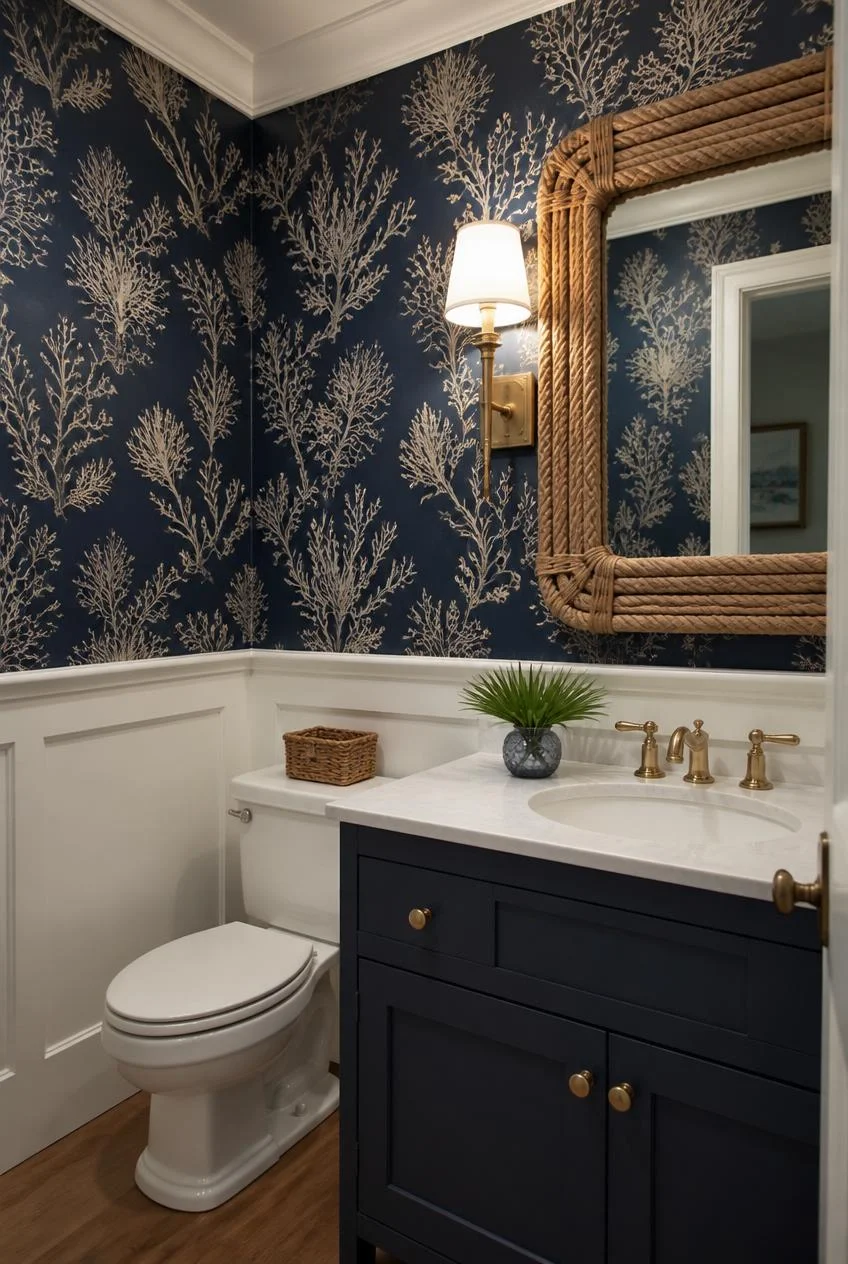
A coastal-themed wallpaper, whether coral and seagrass botanical prints, abstract ocean wave patterns, Moroccan fish tile designs, or a chinoiserie coastal motif, gives a powder room or guest bathroom an immediate, immersive coastal character that tile and paint alone take considerably longer to establish. Because powder rooms and guest bathrooms are used briefly rather than lived in daily, they can support a bolder, more pattern-rich approach than a primary bathroom where the goal is sustained calm.
Deep navy botanical wallpaper, a hand-drawn ocean wave pattern, or a muted coral and sea grass design each create a distinctly coastal atmosphere in a small bathroom with a single design decision and minimal installation complexity compared to a full tile renovation.
Pattern Restraint
Even in a powder room context, the wallpaper should remain the room’s primary statement rather than one of several competing elements. Keep the vanity, fixtures, and accessories restrained in tone and form so the wallpaper reads clearly rather than being overwhelmed by surrounding design decisions.
Open Shelving Styled With Coastal Bathroom Essentials
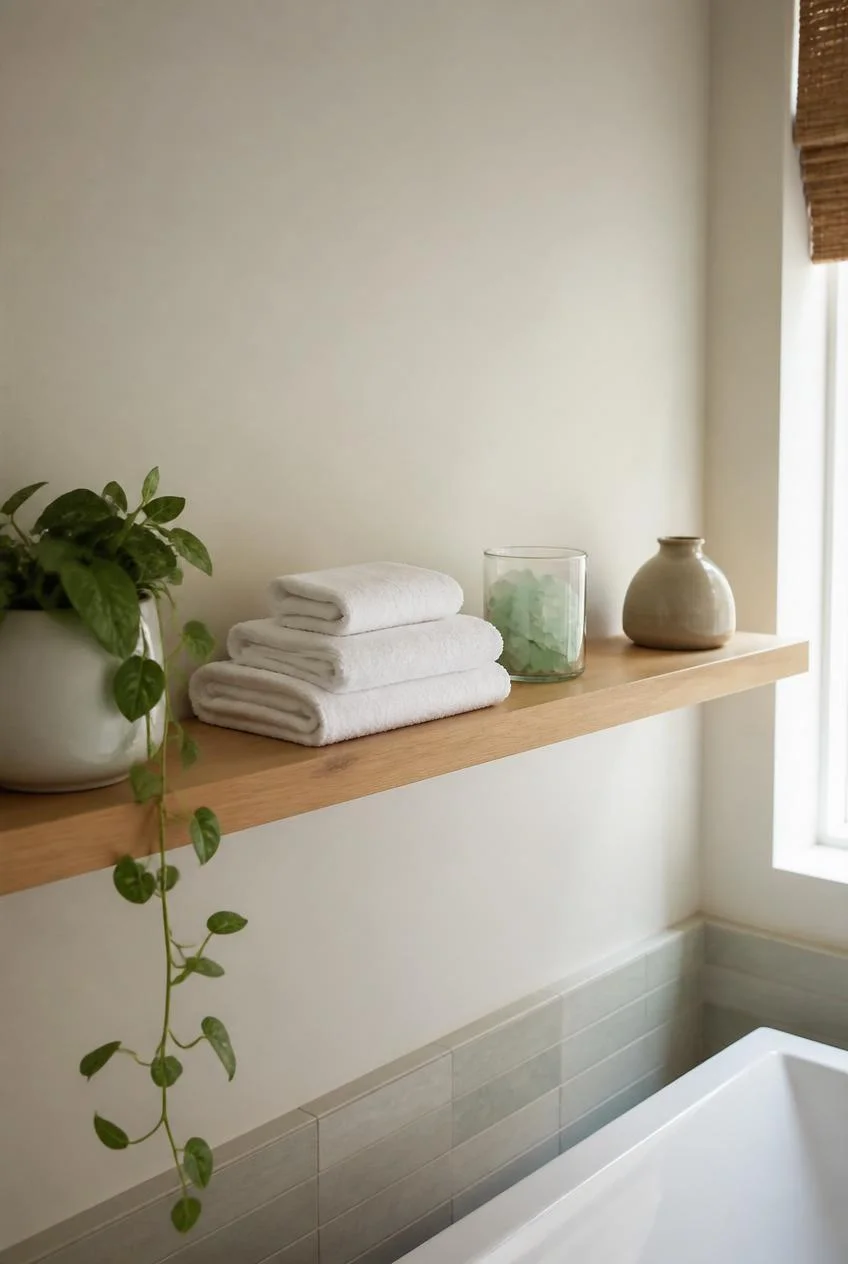
Open wooden shelving in a coastal bathroom, whether a single floating shelf beside the mirror or a small stack of shelves in a recessed niche, gives the room both practical storage and a display surface for the personal coastal objects that give the bathroom genuine character. A shelf of neatly folded linen towels in warm white, a small ceramic planter with a trailing plant, a glass jar of sea glass, and a single handmade ceramic vessel create a complete and resolved display that looks collected over time.
The same principles of minimalist styling that apply to coastal living rooms and kitchens apply equally in the bathroom: allow generous empty space on each shelf, vary the height of objects rather than keeping everything at the same level, and limit the total number of objects per shelf to prevent the display from becoming a storage surface rather than a considered arrangement.
Wood Tone for Shelving
Light oak or a warm white-painted shelf suits most coastal bathroom palettes. A shelf in the same wood tone as the vanity creates a material coherence that reinforces the sense of the bathroom being designed as a complete, unified space rather than assembled from independent product decisions.
What Every Great Coastal Bathroom Has in Common
Every coastal bathroom in this guide, from the travertine-floored spa-style retreat to the shiplap-lined powder room with a rope-wrapped mirror, shares one quality that has nothing to do with a specific material, a particular tile, or a named design style. It has the quality of calm. Every decision, from the palette to the fixture finish to the single ceramic object on the countertop, points toward the same intention: create a space where the act of being there is its own reward.
Coastal bathroom design achieves that quality not through a list of prescribed elements but through a consistent underlying philosophy. Use materials that reference the natural world honestly. Allow the palette to carry the coastal identity rather than relying on decoration to explain it. Bring in as much natural light as the space will allow. And resist the impulse to fill every surface with objects, allowing the room itself, its textures, its tones, and its quality of light, to be the most important thing in it.
FAQs
How do I create a coastal bathroom without it looking themed or kitschy?
Focus on natural materials, organic tones, and genuine texture rather than nautical themed accessories. A bathroom built on travertine flooring, a wood vanity, sea glass tile, and brushed brass hardware reads as genuinely coastal without requiring a single ship wheel or anchor motif.
What tile works best for a coastal bathroom shower?
Natural travertine, sea glass mosaic tile, fish scale tiles in ocean tones, and large format stone-look porcelain are all excellent choices. The best option depends on whether the priority is natural material authenticity or easier maintenance.
Can I create a coastal bathroom feel with a small renovation budget?
Yes. A rope-wrapped mirror, woven rattan storage baskets, a coastal stripe shower curtain, and a change of hardware to brushed brass are all affordable changes that collectively shift the feeling of a bathroom significantly toward a coastal aesthetic.
What is the best hardware finish for a coastal bathroom?
Brushed or unlacquered brass is the most consistently effective hardware finish for coastal bathrooms because its warm tone connects naturally to wood, stone, and sea glass, all of which are central to the coastal material palette.
Do coastal bathrooms work in homes that are not near the water?
Completely. Coastal bathroom design is a material and tonal philosophy rather than a geographic category. The combination of natural stone, organic wood tones, sea glass colors, and generous natural light creates the beach house atmosphere in any location.
You May Also Like This Post:
16 Coastal Decor Ideas That Bring a Relaxed, Timeless Feel to Your Home

One Comment