
15 Bright Sunroom Ideas to Add Light, Warmth, and Function to Your Home
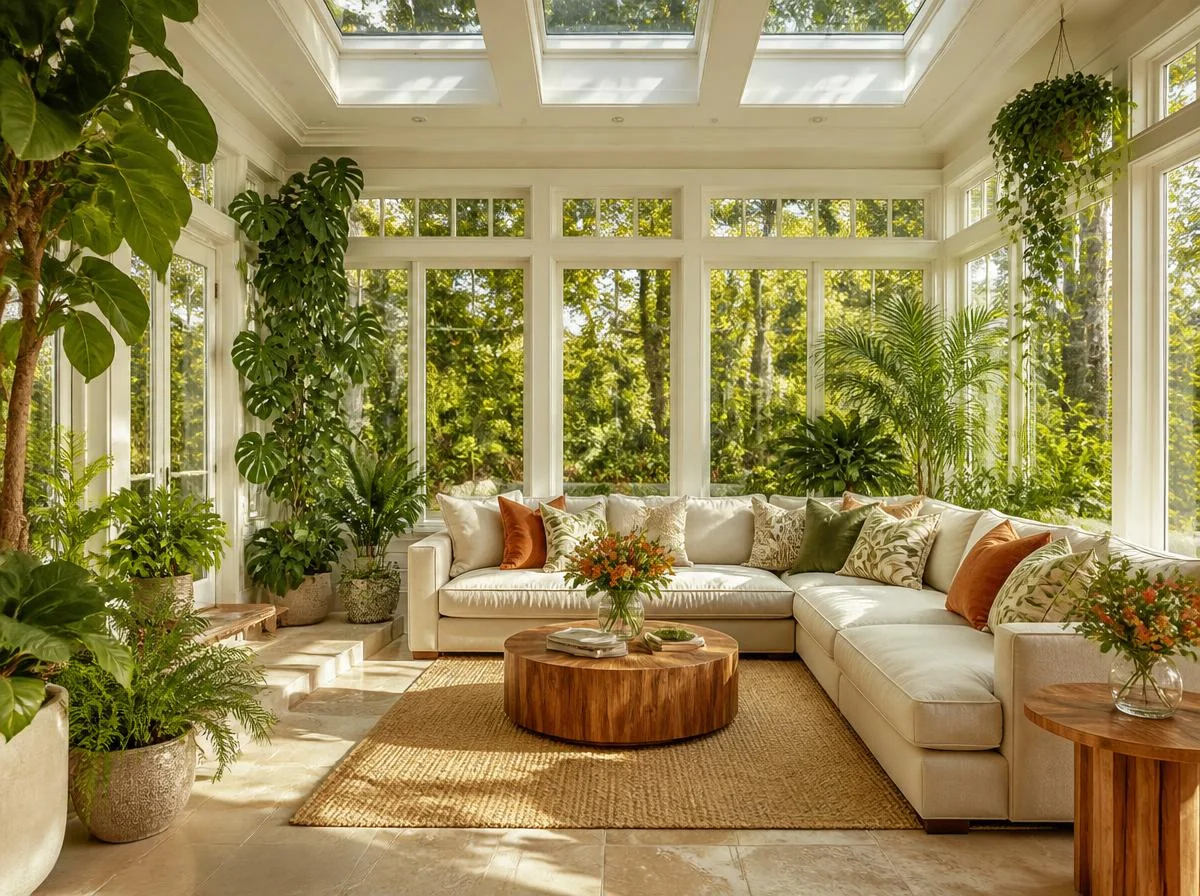
There is a particular quality of light that only exists in rooms where the outside world is present on multiple sides simultaneously, where walls dissolve into glass and the boundary between interior comfort and exterior natural beauty becomes genuinely negotiable. Sunrooms create this experience with a specific and irreplaceable quality that no amount of skylights, large windows, or biophilic decoration in conventional rooms can fully replicate, because a sunroom does not simply admit more light. It fundamentally changes the human experience of being indoors by surrounding occupants with the visual and sensory richness of the natural environment while maintaining the thermal comfort and weather protection that make indoor habitation preferable to outdoor exposure for most of the year.
Sunroom design ideas have evolved dramatically over the past two decades, moving from the three-season glass-enclosed porches of earlier residential design traditions through the current generation of fully insulated, climate-controlled four-season additions that function as complete living spaces in every weather condition. Today’s sunroom addition ideas range from modest screened enclosures that extend outdoor living into mild seasons through substantial glazed additions that create permanent rooms of extraordinary light and visual connection to the surrounding landscape, each suited to different climates, budgets, and household aspirations for their relationship to the natural world outside their windows.
The functional potential of sunroom decorating ideas extends far beyond the traditional sunroom-as-sitting-room concept that most homeowners default to when imagining this space. Sunrooms function extraordinarily well as home offices where natural light reduces eye strain and increases productivity, as dining rooms where the meal is surrounded by garden views and natural light, as greenhouse-inspired plant sanctuaries where tender botanical collections thrive in abundant light, and as exercise and yoga spaces where the connection to nature enhances the restorative quality of physical practice. This guide presents 15 bright sunroom ideas that maximize light, warmth, and function for every household need and every design direction.
Design a Four Season Sunroom for Year-Round Use
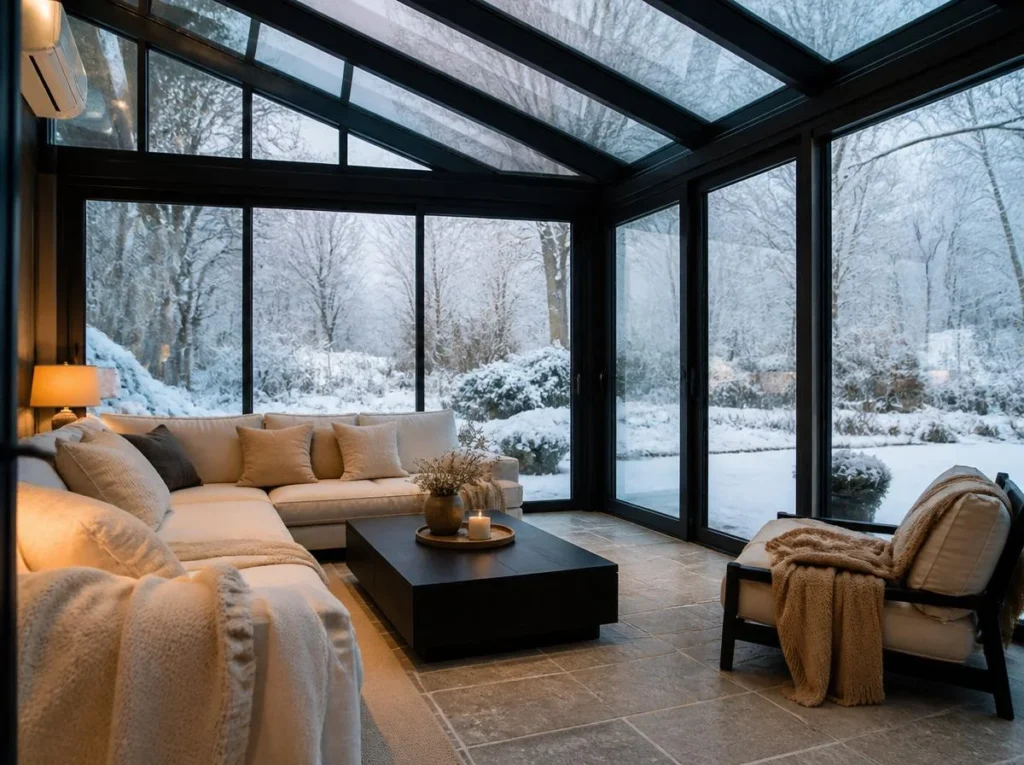
Four season sunroom design represents the most comprehensive and most functionally versatile sunroom investment available, creating a fully climate-controlled glass-enclosed living space that functions as comfortably in January as in July and that adds genuine conditioned square footage to the home’s total functional living area rather than serving as a seasonal amenity available only during mild months.
The structural and mechanical requirements that distinguish four season sunroom construction from three-season alternatives include insulated glass units with low-emissivity coatings that reduce solar heat gain in summer while retaining interior heat in winter, insulated wall and roof framing systems that prevent the thermal bridging creating the cold spots that single-layer enclosure systems produce in cold climates, and dedicated heating and cooling systems that maintain comfortable temperatures independently of the main house’s HVAC system or as an extension of it through appropriately sized supply and return connections. Sunroom heating and cooling in four-season applications typically uses either mini-split ductless systems that provide precise zone temperature control without requiring ductwork connections to the existing HVAC infrastructure, or in-floor radiant heating combined with a cooling unit that provides the most uniformly comfortable thermal environment available for glass-intensive spaces where conventional forced air heating creates uncomfortable temperature stratification.
Sunroom design ideas for four-season applications should address the specific solar management requirements that full-sun glass enclosures create in different orientations and climates, with south-facing sunrooms in cold climates receiving desirable solar heat gain during winter months while requiring summer shading through motorized exterior shading systems or interior cellular shades that provide insulating air gaps alongside solar control. Sunroom addition ideas in the four-season category represent the most significant structural investment of all sunroom types and should involve professional architects and structural engineers who understand the specific thermal, structural, and code compliance requirements that heated glass additions to existing homes create.
Create a Bright Sunroom Reading Nook
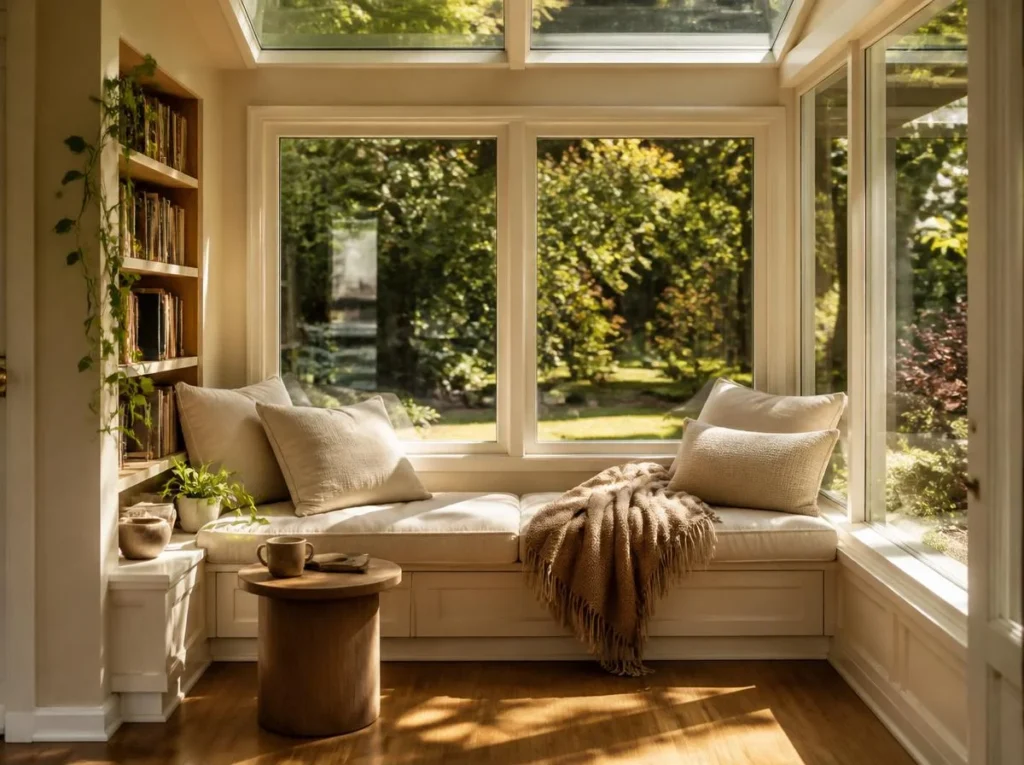
Sunroom reading nook design creates the most personally indulgent and most genuinely restorative use of natural light that any room in the home can provide, combining the specific comfort requirements of extended book reading with the extraordinary quality of natural illumination that sunrooms deliver across their complete glazed surface area.
Sunroom decorating ideas for reading-focused applications prioritize comfortable seating above all other design considerations, with deeply cushioned built-in window seats positioned beneath the sunroom’s lower windows creating the ideal combination of comfortable seating, natural light from above and beside the reading position, and the specific quality of connection to the surrounding garden or landscape that makes sunroom reading qualitatively different from reading in any interior room regardless of its artificial lighting quality. Sunroom furniture ideas for reading rooms include generously sized chaise lounges that allow full-length reclining during extended reading sessions, oversized club chairs with appropriately scaled ottomans that create comfortable upright reading positions, and the built-in bookshelving that brings the reading material into the sunroom itself rather than requiring movement to another room for book selection between reading sessions.
Small sunroom ideas for reading applications recognize that reading nooks represent the sunroom use where compact dimensions are not a limitation but a specific advantage, with small glass-enclosed spaces of 80 to 120 square feet creating the genuinely intimate and enclosed quality that reading retreats need to feel properly separated from the household’s more active areas. The specific acoustic quality of glass enclosures, their tendency to create a contained and slightly separated acoustic environment from the main house, suits the concentrated quiet that sustained reading requires and makes even small sunrooms feel like genuine retreats when designed with appropriate seating and sufficient natural light.
Use a Sunroom as a Bright Home Office
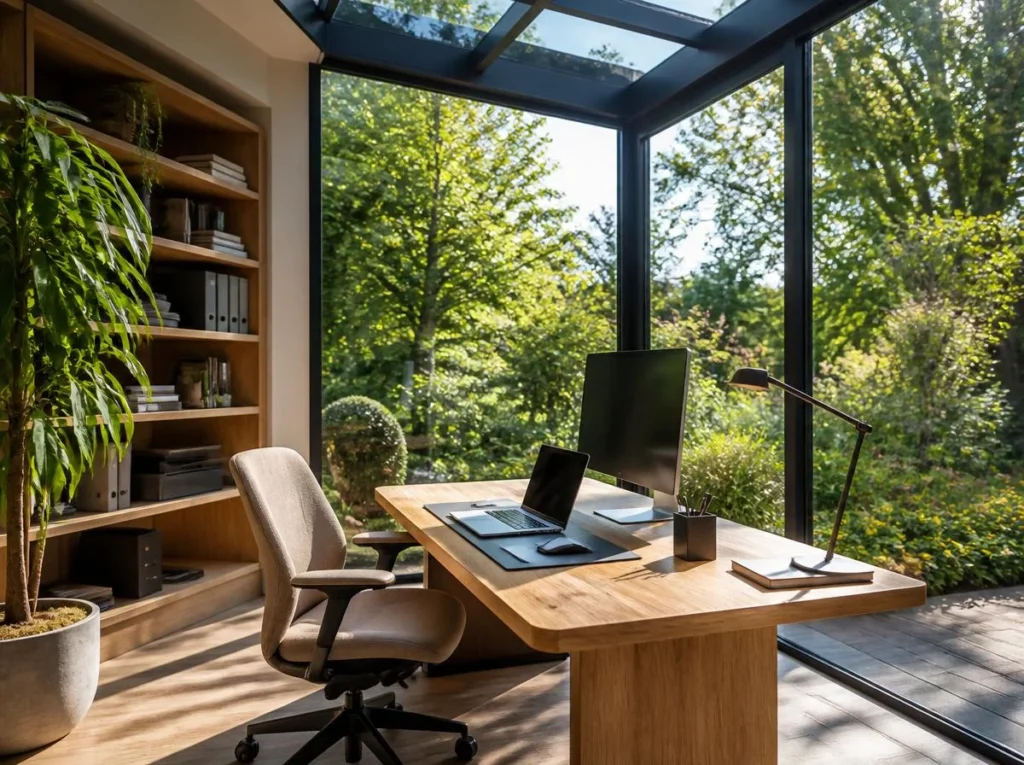
Sunroom office ideas create the most naturally illuminated and most visually inspiring home working environment available in residential design, with natural light’s specific quality for reducing digital screen eye strain and maintaining the circadian rhythm entrainment that sustained productivity requires making sunrooms objectively superior working environments compared to interior rooms with artificial lighting regardless of the interior room’s artificial light quality.
Sunroom design ideas for office applications must address the specific practical requirements that productive working imposes beyond pleasant atmosphere, including adequate electrical infrastructure for computer equipment and charging, acoustically appropriate environments where video call background and sound quality reflect professional quality, sufficient desk surface for the specific work activities the occupant performs, and the thermal comfort consistency that sustained working sessions require. Sunroom lighting ideas for office use supplement natural light with appropriately positioned task lighting for overcast days and evening working sessions, with adjustable LED desk lamps providing the focused task illumination that ceiling-level light sources cannot achieve at the specific angles and intensities that computer-based work demands.
Sunroom addition ideas designed specifically for home office use should orient the primary work surface perpendicular to the main glazed wall rather than facing it, because direct face-to-glazing working positions create glare on computer screens during bright sun periods that reduces visibility and causes eye fatigue. The perpendicular orientation allows the worker to benefit from the natural light’s ambient quality and the garden view as a restorative visual break from screen work while managing the specific glare and brightness issues that face-to-glass working positions create during peak solar hours.
Design a Sunroom Dining Room with Garden Views
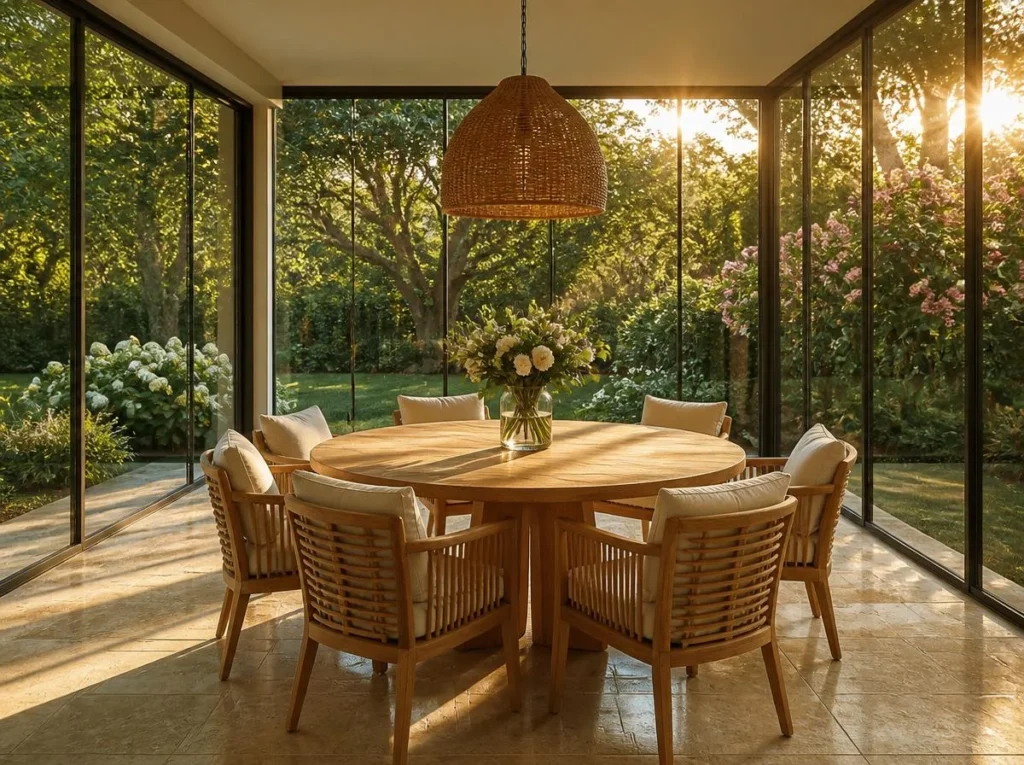
Sunroom dining room design creates the most visually spectacular and most genuinely special dining environment available in residential architecture, surrounding the act of dining with natural light, garden views, and the specific quality of being almost-outside that makes every meal taken in a sunroom feel like a special occasion regardless of what is actually being served at the table.
Sunroom furniture ideas for dining applications center on the dining table as the primary organizing element, with table size selection calibrated to the sunroom’s specific dimensions while preserving adequate circulation space and maintaining the visual relationship to the surrounding glazing that makes sunroom dining qualitatively superior to dining in glazing-free interior rooms. Sunroom decorating ideas for dining rooms use the surrounding garden views as the primary decorative element, with restraint in interior decoration allowing the exterior landscape to provide the visual richness that overcrowded interior decoration would compete against rather than complement. A dining table with a simple arrangement of fresh cut flowers, quality tableware, and minimal but beautiful accessories creates a complete and beautiful dining environment when the garden beyond the glass provides the extraordinary visual backdrop that no interior wall decoration can approach.
Sunroom ceiling ideas for dining rooms include tongue-and-groove wood ceiling treatments in natural white oak or cedar that create organic warmth overhead while the glass walls provide the visual transparency at eye level and above, with the wood ceiling creating visual counterpoint to the glass that prevents the all-glass enclosure from feeling like an exposed fishbowl rather than a warm and comfortable dining environment. A statement pendant light in appropriate scale above the dining table creates the centered overhead focal point that dining rooms conventionally require while its warm amber illumination provides the atmospheric evening dining light that natural daylight cannot provide once the sun sets.
Fill Your Sunroom with Lush Plants and Greenery
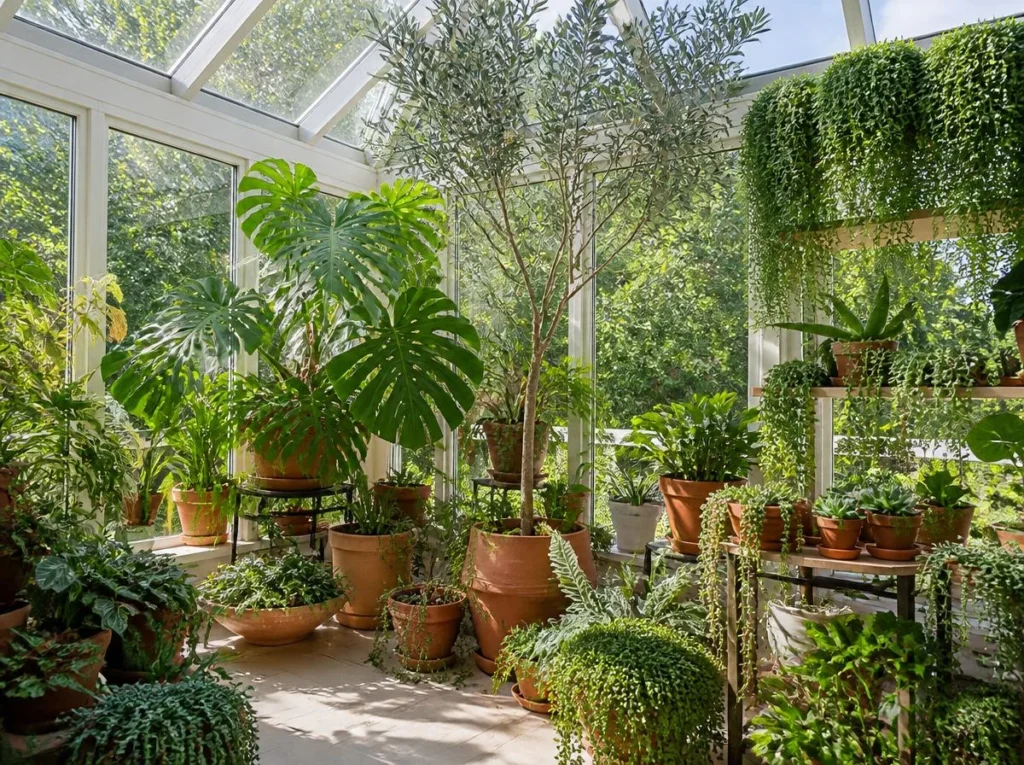
Sunroom with plants design creates the most completely biophilic and most genuinely garden-connected sunroom environment available, transforming the glass-enclosed space from a light-filled room that happens to have a garden view into a room that is itself a garden, where the boundary between the indoor plant collection and the outdoor landscape becomes intentionally blurred through the specific combination of abundant plant specimens and the glazed enclosure that creates the greenhouse-like growing conditions that tender plant collections thrive within.
Sunroom design ideas for plant-focused applications use the sunroom’s specific environmental advantages for plant cultivation, including elevated daytime temperatures, high natural light levels, and the humidity that large plant collections generate, to create growing conditions that interior rooms cannot provide for the exotic, tropical, and tender plant species that add the most dramatic botanical presence to indoor environments. Sunroom furniture ideas for plant rooms prioritize materials that withstand the humidity and occasional water exposure that active plant care creates, with powder-coated steel and aluminum furniture, teak and similar weather-resistant wood furniture, and waterproof tile or sealed concrete flooring creating the most appropriate material environment for rooms that function as both living spaces and growing environments.
Sunroom with plants design at its most ambitious creates the indoor garden room that residential design tradition has celebrated since the Victorian conservatory tradition established the botanical glass room as one of the most desirable domestic amenities available in the highest quality residential properties. Large specimen plants including standard olive trees, architectural palms, and oversized monstera create the specific tropical greenhouse atmosphere that transforms the sunroom from a pleasant sitting room with some plants into a genuinely extraordinary botanical environment that creates the most memorable room in the house.
Choose the Right Sunroom Flooring
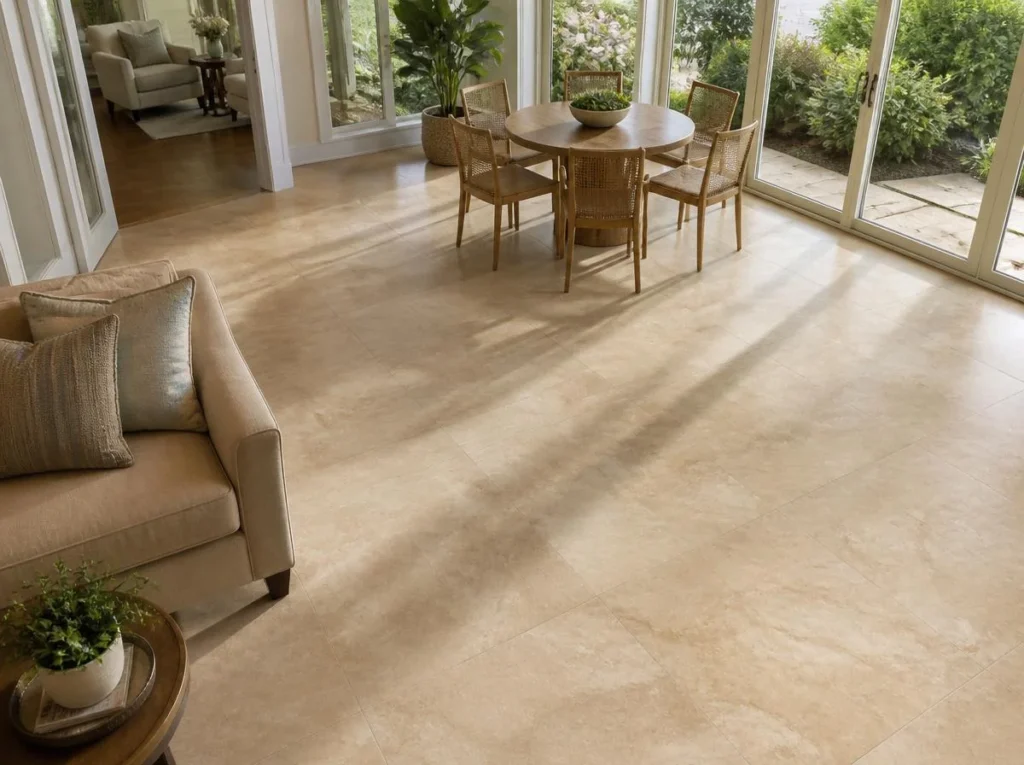
Sunroom flooring ideas must satisfy the specific performance requirements that sunroom environments impose, including resistance to the thermal expansion and contraction that temperature-variable glass enclosures experience through seasonal extremes, the moisture exposure that condensation, plant watering, and wet footwear from garden access create, and the UV exposure that direct sunlight through glazing delivers to floor surfaces for extended daily periods.
Sunroom design ideas for flooring use porcelain and ceramic tile as the most consistently appropriate materials for sunroom environments through their complete moisture resistance, excellent UV stability, and the specific thermal mass benefit of tile’s ability to absorb solar heat during the day and release it slowly during cooler evening hours, creating passive solar heating contribution that reduces mechanical heating requirements in south-facing four-season sunrooms significantly. Sunroom flooring ideas using large format porcelain in stone-look patterns including travertine, slate, and concrete looks create the organic material character most appropriate for rooms designed to bridge interior and exterior environments, with the stone reference creating material continuity with natural outdoor surfaces that carpet or wood flooring cannot approach in the visual vocabulary of inside-outside connection.
Sunroom color ideas for flooring selections should consider the specific light conditions of the sunroom’s orientation and glazing type, because floors in highly glazed spaces receive more direct UV light than interior room floors and require UV-stable materials that maintain their color without fading or changing character under prolonged direct sunlight exposure. Glazed porcelain tile in warm tones and patterns maintains its color and surface quality indefinitely under direct UV exposure in ways that many natural stone materials, particularly limestone and travertine in lighter tones, may gradually lighten or alter through long-term UV bleaching.
Add a Fireplace or Heating Element for Cozy Warmth
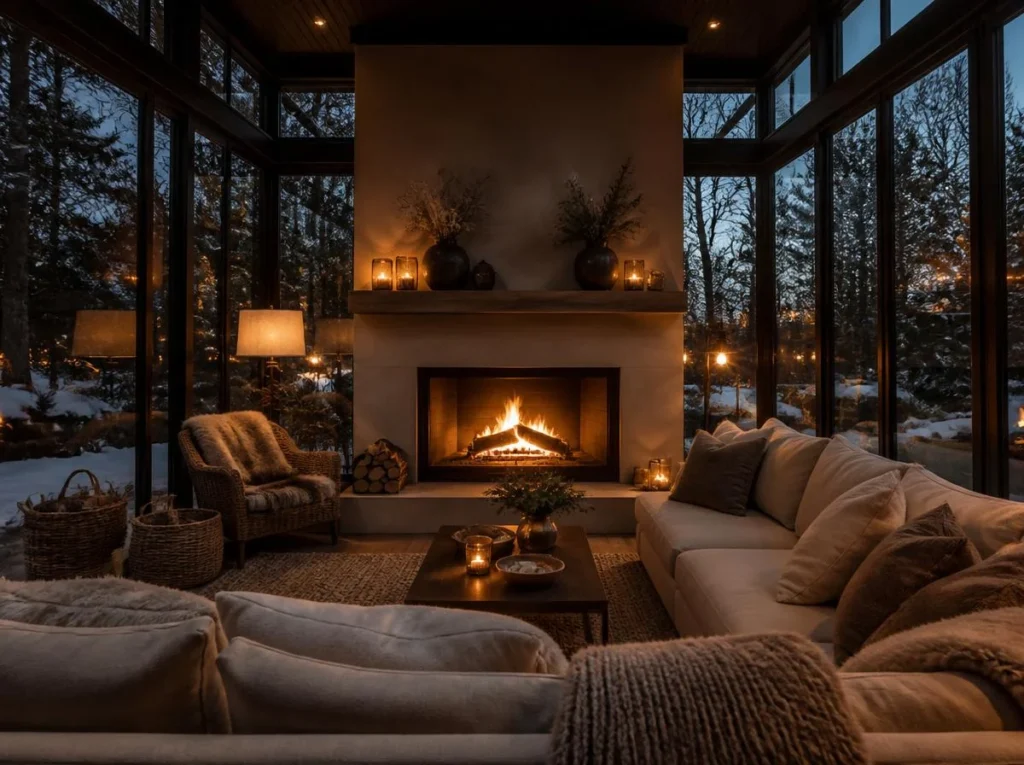
Sunroom with fireplace design creates the most atmospherically complete and most genuinely cozy sunroom environment available, combining the extraordinary natural light and visual transparency of the glass-enclosed space with the specific warmth, visual drama, and emotional resonance of an active fire that transforms the sunroom from a pleasant light-filled space into a genuinely extraordinary domestic sanctuary.
Four season sunroom design incorporating fireplaces typically uses gas fireplace inserts that provide the clean combustion, consistent warmth output, and simple operation most appropriate for glass-enclosed spaces where wood smoke management creates specific challenges for enclosed environments with limited natural ventilation compared to open-air fireplaces. Sunroom heating and cooling using fireplace as a supplementary heat source alongside a primary mini-split or radiant heating system creates the specific layered comfort approach that makes sunrooms genuinely usable during the coldest months while the fireplace provides the atmospheric quality that mechanical heating systems cannot replicate through their efficient but atmospherically inert heat output.
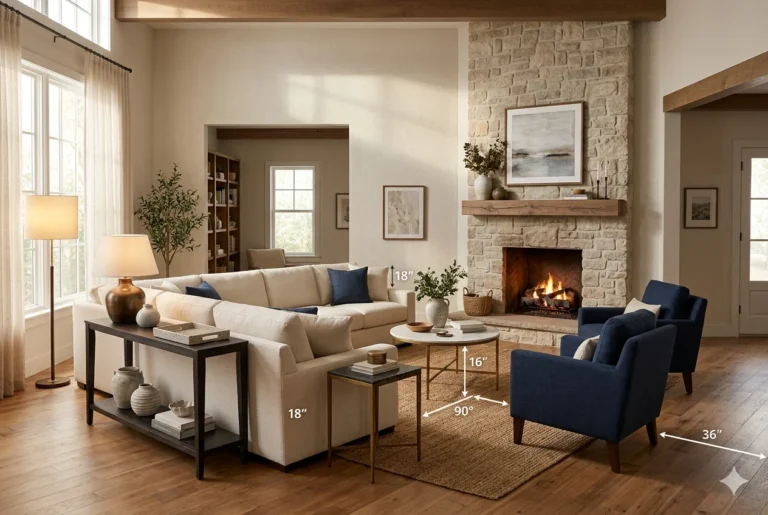
Sunroom decorating ideas that incorporate fireplaces use the fireplace as the sunroom’s primary interior focal point, organizing seating in conversation-circle or U-shape arrangements around the fire in the same way that living room seating arrangements conventionally orient toward fireplaces as social and visual anchors. The specific character of a sunroom with a fireplace, warm firelight dancing on glass surfaces at night and reflecting warm amber light throughout the glazed enclosure, creates one of the most spectacular domestic interior environments available in residential design.
Design a Modern Sunroom with Clean Lines
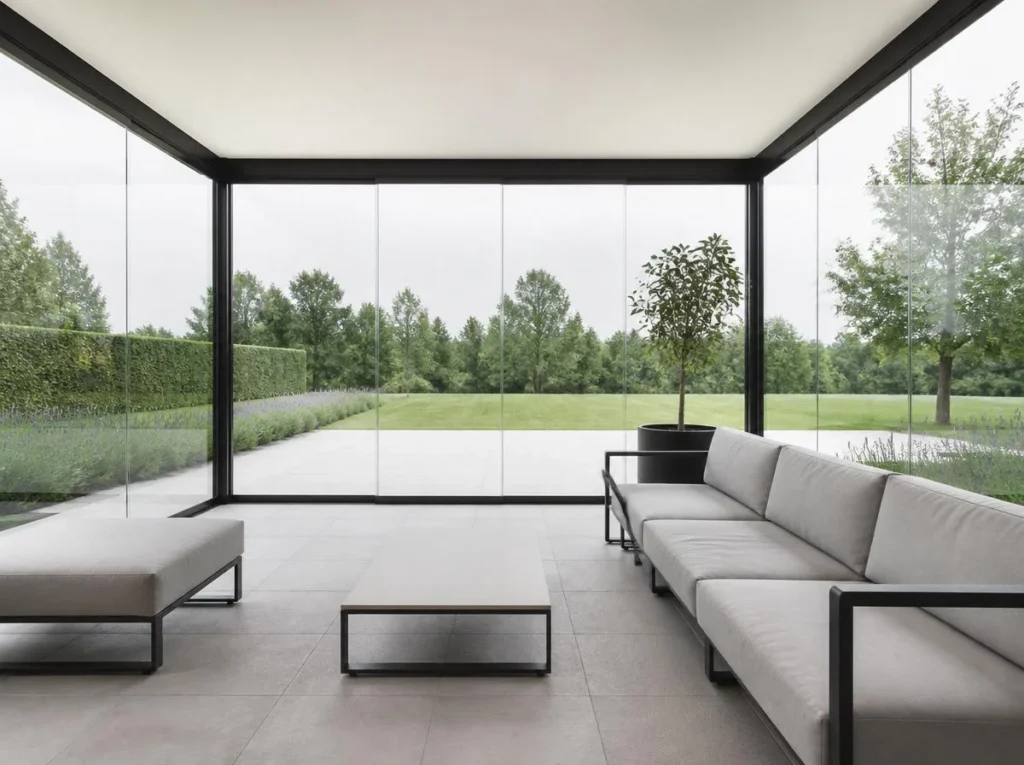
Modern sunroom design applies the design language of contemporary architecture to the sunroom addition typology, creating glass-enclosed spaces of geometric precision, minimal material palette, and the specific visual restraint that modernist residential design values above ornamental complexity and historical reference.
Sunroom addition ideas in the modern design direction use structural glazing systems with thermally broken aluminum frames in matte black, warm charcoal, or architectural gray finishes that minimize the visual interruption of frame elements within the glass surface, creating sunroom enclosures whose glazing reads as near-continuous transparent surface interrupted by minimal frame geometry rather than the prominent frame-and-glass composition of conventional window-based sunroom construction. Sunroom design ideas for modern applications emphasize the quality of the glass itself, with high-performance triple-glazed units providing exceptional thermal performance alongside the clarity and color neutrality that allows the surrounding landscape to be experienced through the glass without the green tint cast or reflective quality that lower-quality glazing introduces.
Sunroom furniture ideas for modern design applications use clean-lined contemporary outdoor-indoor furniture in powder-coated steel, brushed aluminum, and weather-resistant teak, avoiding the traditional wicker and rattan that suits farmhouse and cottage sunroom aesthetics but conflicts with the geometric precision of modern sunroom architecture. Sunroom color ideas for modern applications use restrained monochromatic palettes in warm white, natural gray, and organic linen tones for all interior elements, allowing the exterior landscape view to provide the visual color and complexity that the interior design deliberately withholds in service of the clean architectural character most associated with modern design quality.
Create a Farmhouse Sunroom with Rustic Warmth
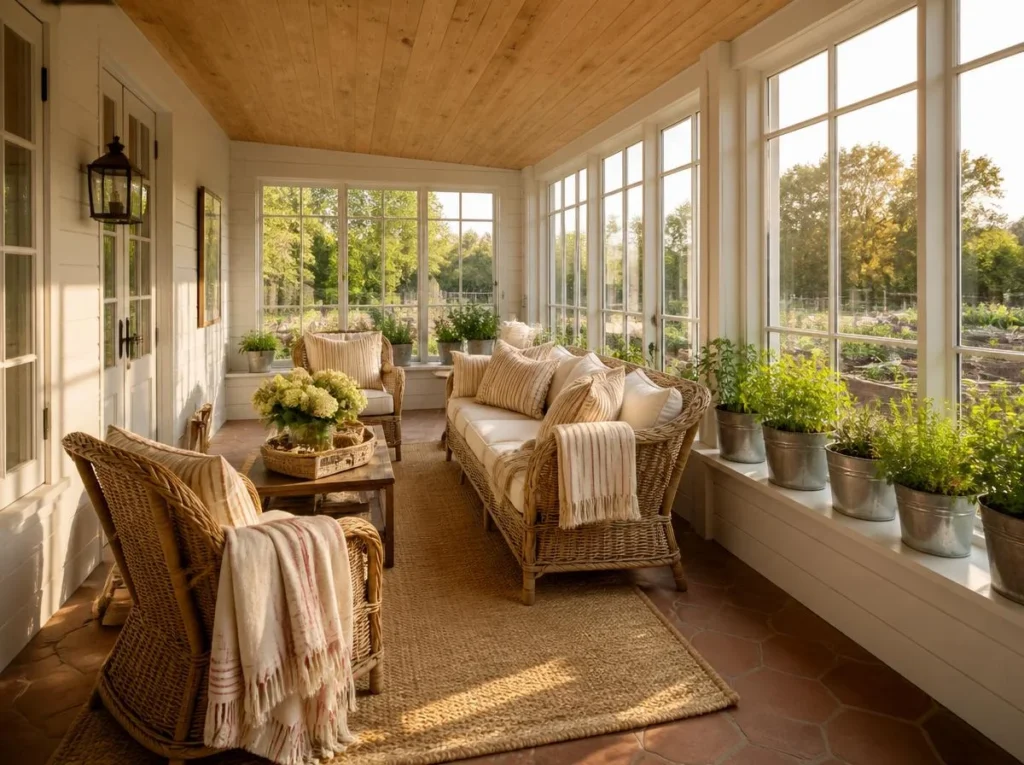
Farmhouse sunroom ideas create the most warmly atmospheric and most personally inviting sunroom environments available, combining the abundant natural light and garden connection of glass-enclosed design with the organic materials, warm textures, and cozy domestic character that define farmhouse interior aesthetics at their most genuinely beautiful.
Sunroom decorating ideas in farmhouse style use the specific material vocabulary most associated with American farmhouse design tradition, including white painted shiplap or beadboard walls on any opaque sunroom wall sections, natural white oak or reclaimed wood ceiling treatments, worn-finish natural wood furniture in cottage and country profiles, vintage wicker and rattan seating with generous cushions in warm linen and cotton, galvanized metal and aged iron accessories, and the layered textile warmth of cotton and linen rugs, cushion covers, and throw blankets that create tactile coziness alongside the visual warmth of the farmhouse material palette. Farmhouse sunroom ideas use the abundance of natural light as the organizing atmospheric element that distinguishes a farmhouse sunroom from a farmhouse interior room, with the bright natural illumination flooding through all-glass or heavily glazed walls creating the specific quality of light most evocative of the traditional farmhouse veranda experience where indoor and outdoor merged in the specific quality of covered outdoor sitting that the original farmhouse porch tradition celebrated.
Sunroom with plants in farmhouse interpretation uses potted herbs, flowering plants, and botanical specimens in terracotta and galvanized metal containers to create the kitchen garden aesthetic most appropriate for farmhouse design contexts, with the practical agricultural associations of herb growing alongside the beauty of flowering plants creating the specifically productive-and-beautiful botanical character that farmhouse design tradition celebrates through its emphasis on the usefulness and beauty of domestic plants.
Build a Small Sunroom That Maximizes Impact
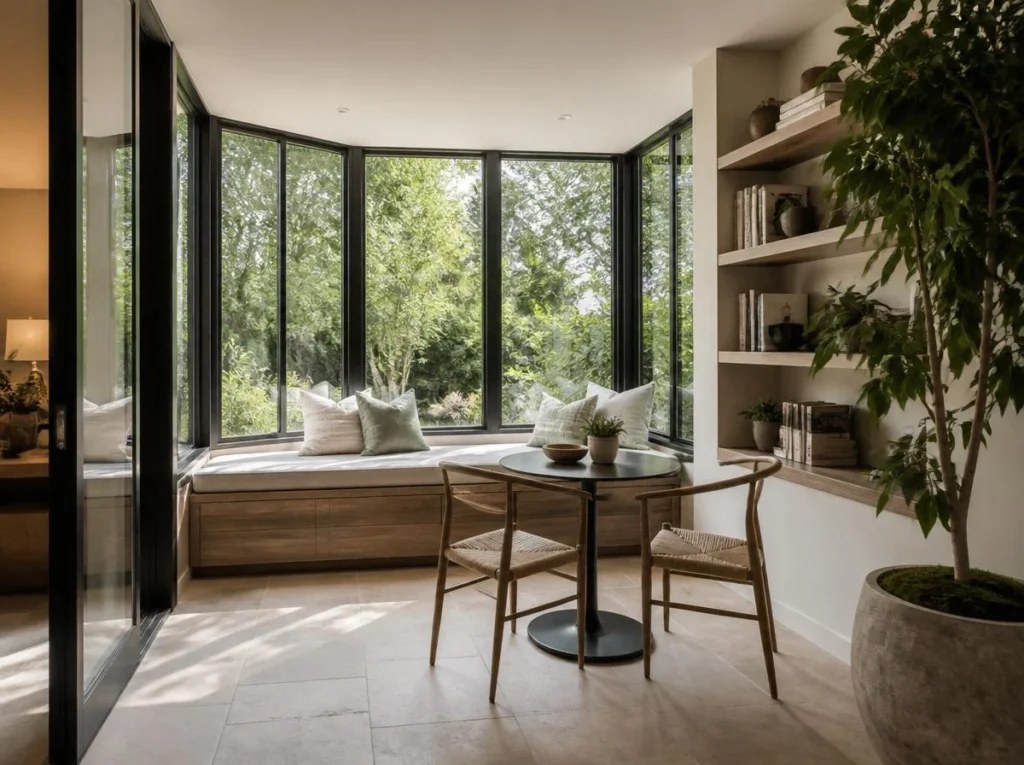
Small sunroom ideas demonstrate that the transformative quality of glass-enclosed natural light and garden connection is not dependent on generous square footage but on the quality of design intelligence applied to whatever dimensions are available, with compact sunrooms of 60 to 120 square feet consistently creating profound improvements in residential quality of light and life when executed with appropriate design care.
Sunroom addition ideas for compact applications use the constraint of limited space as a design parameter that clarifies purpose rather than limits possibility, with small sunrooms most successfully designed around a single primary function that the compact space serves with excellence rather than attempting to accommodate multiple functions that together require more space than is available. A small sunroom designed as an exceptional reading nook with beautiful seating, excellent lighting, and abundant plant life creates a more successful and more satisfying space than a small sunroom whose designers attempted to accommodate dining, working, exercising, and plant growing within the same insufficient square footage. Small sunroom ideas using built-in furniture against opaque wall sections, including window seats with storage beneath and built-in shelving beside window openings, maximize usable furniture function within compact floor areas by using wall-adjacent positions that do not consume the central floor area that free-standing furniture pieces would occupy in identical square footage.
Sunroom design ideas for small spaces benefit particularly from consistent flooring that extends from the interior adjacent room through the sunroom without threshold interruption, because the visual continuity of uninterrupted flooring makes the connected spaces read as a single larger area rather than two separate small rooms defined by their individual boundaries. This flooring continuity is one of the most impactful and most accessible small sunroom design improvements available, requiring only a deliberate material selection decision during construction or renovation rather than any structural change to the space’s actual dimensions.
Install Skylights and Roof Windows for Overhead Light
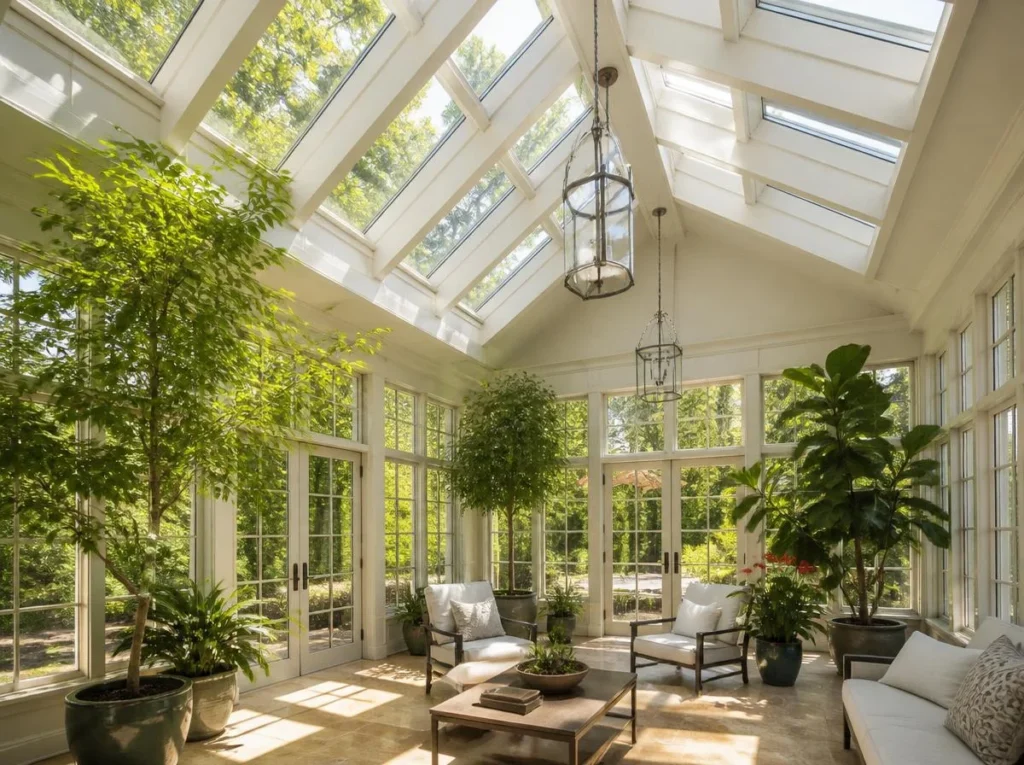
Sunroom ceiling ideas using skylights and roof windows create the most transformative natural light interventions available in sunroom design, with overhead light delivery creating the specific quality of illumination most closely resembling open-air experience that vertical window light cannot replicate regardless of its quantity or quality.
Sunroom lighting ideas through roof apertures benefit from the specific physics of overhead light admission, with light entering from above rather than from the sides creating the specific quality of diffused ambient illumination most associated with overcast sky conditions that provides the most even and most shadow-free natural light available from any single source direction. Sunroom windows in roof positions also create the specific thermal dynamics that passive solar design exploits in cold climates, with south-facing roof windows admitting winter sun at steep angles that penetrate deeply into the room’s floor area while summer sun’s high angle limits penetration to a narrow band immediately below the opening, creating natural seasonal solar management that requires no mechanical intervention.
Sunroom ceiling ideas using operable skylights or roof windows provide the ventilation benefit that glass-enclosed spaces critically need during spring and autumn when outdoor temperatures are comfortable but the greenhouse effect of full solar exposure through extensive glazing raises interior temperatures significantly above comfortable levels. Motorized operable skylights with rain sensors that automatically close at first rainfall provide the ventilation convenience of passive cooling without the maintenance requirement of manually operated skylights that many occupants find inconvenient to operate regularly throughout the variable weather conditions of mild seasons.
Choose the Best Sunroom Furniture for Comfort and Style
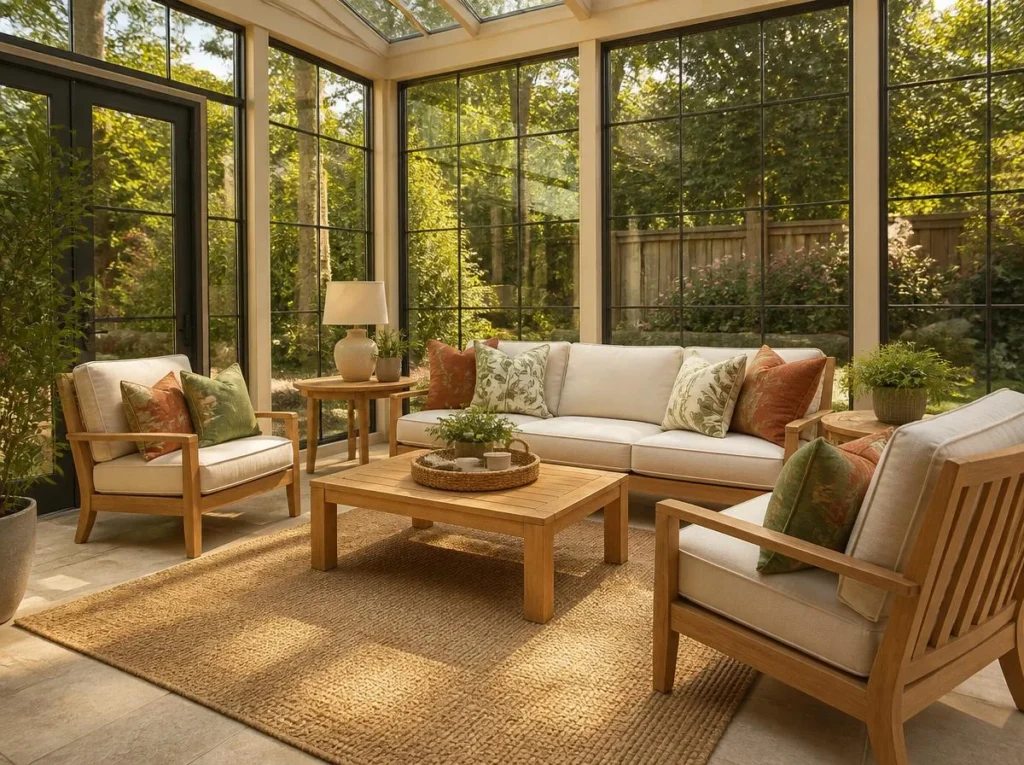
Sunroom furniture ideas determine the primary daily experience of the sunroom more than any other single design decision, because the specific comfort, durability, and aesthetic quality of the furniture people actually sit in for hours determines whether the sunroom is a room that family members genuinely want to spend time in or one that they appreciate aesthetically without inhabiting practically.
Sunroom decorating ideas for furniture selection prioritize all-weather or indoor-outdoor rated materials that withstand the specific conditions of high UV exposure, temperature variation, and occasional moisture that sunroom environments create. Powder-coated aluminum frames resist corrosion and temperature-related degradation in conditions that untreated steel would not survive with acceptable long-term performance. Solution-dyed acrylic upholstery fabrics resist fading under UV exposure that natural cotton and linen upholstery would bleach significantly within a single season of south-facing sunroom exposure. Sunroom furniture ideas using teak wood furniture provide the most durable and most naturally beautiful wood option for sunroom applications, with teak’s natural oil content protecting the wood from moisture damage and UV bleaching while the material ages from golden honey to distinguished silver-gray in the specific way that makes teak furniture more beautiful through years of sunroom use rather than less.
Sunroom color ideas for furniture selection should balance the visual warmth needed to prevent the sunroom from feeling cold during overcast days and winter months with the light tones that reflect rather than absorb solar heat during summer months when temperature management in sun-exposed sunrooms requires every available passive cooling strategy. Warm white, natural linen, warm sage, and the specifically warm neutral tones that complement both natural sunlight and artificial evening illumination create the most consistently beautiful and most seasonally appropriate sunroom furniture palette.
Design a Sunroom Kitchen or Breakfast Room
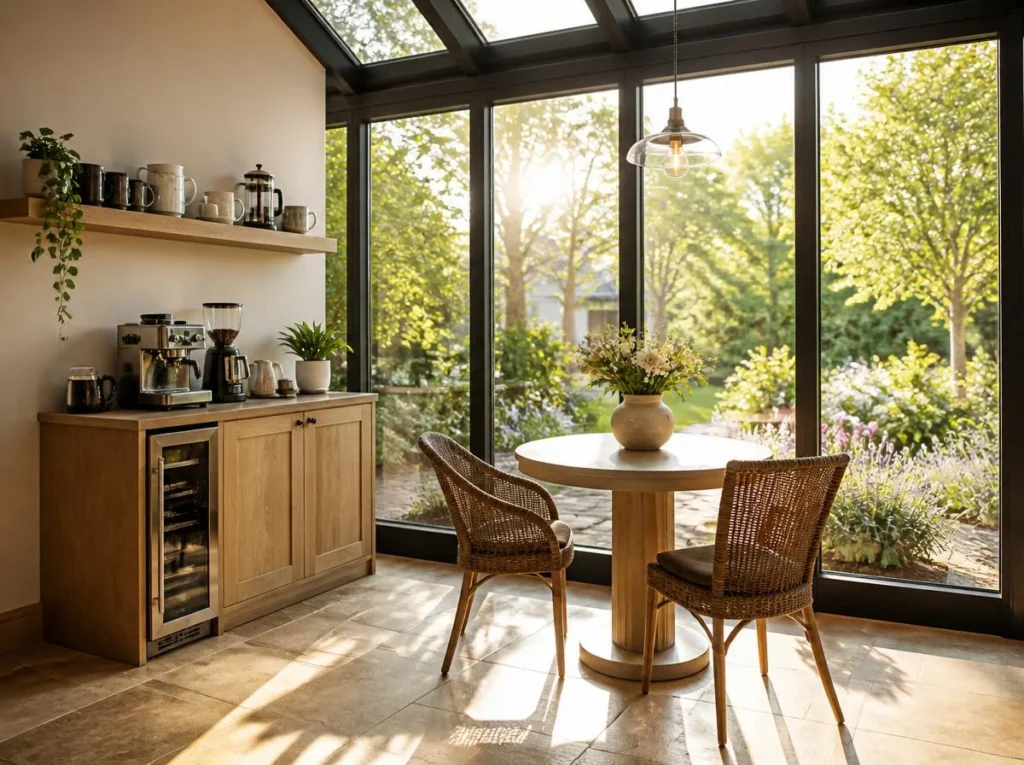
Sunroom kitchen ideas represent one of the most functionally ambitious and most daily-life-enhancing sunroom applications available, creating the morning breakfast and casual meal experience that combines the pleasure of eating with the specific quality of natural light and garden connection that makes food genuinely taste better through the specific psychological and sensory richness of an extraordinary dining environment.
Sunroom design ideas for kitchen and breakfast room applications use the sunroom’s specific design advantages for food-related activities, with natural light providing the ideal conditions for food photography, the color accuracy needed for cooking assessment, and the morning light quality that makes the first coffee and breakfast of the day a genuinely special daily ritual rather than a functional necessity performed in whatever room happens to be adjacent to the food preparation area. Sunroom addition ideas that incorporate kitchen functionality require specific infrastructure planning including appropriate electrical service for small appliances and refrigeration, water service for coffee stations and beverage centers, and the ventilation infrastructure that food preparation generates in the form of steam, cooking odors, and the humidity that enclosed glass rooms require active management to prevent condensation accumulation.
Sunroom flooring ideas for kitchen and breakfast applications should use the hardest and most moisture-resistant materials available among the options appropriate for sunroom environments, with large format porcelain tile providing the most appropriate combination of complete moisture resistance, heat resistance, and food spill cleanup ease that kitchen use demands alongside the UV stability and thermal performance that sunroom flooring requires beyond conventional kitchen flooring specifications.
Incorporate Smart Sunroom Shading and Ventilation
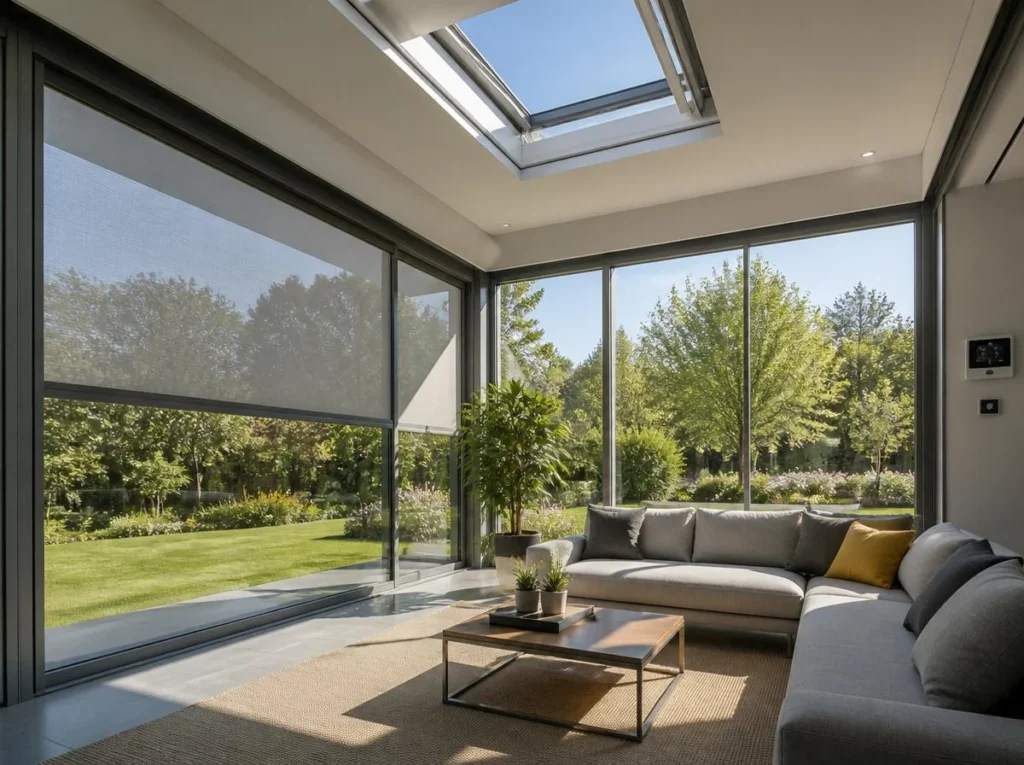
Sunroom heating and cooling management through smart automated shading and ventilation systems creates the four-season livability that unmanaged sunroom environments cannot consistently provide, addressing the specific thermal management challenges that extensive glass exposure creates through the systematic control of solar heat gain and ventilation that maintains comfortable temperatures without requiring manual intervention across the variable weather conditions that sunrooms experience.
Sunroom windows and shading systems in motorized format controlled through smartphone applications or home automation systems allow precise solar management that tracks the sun’s position and intensity throughout the day, deploying and retracting shading systems in response to measured interior temperatures and light levels rather than requiring occupants to manually manage shading systems that most people operate inconsistently or not at all when manual operation requires attention and effort during periods of active use. Four season sunroom design using automated exterior roller shades provides the most effective solar control available for glazed additions, with exterior shading blocking solar radiation before it enters the glass and creates heat load within the enclosed space, compared to interior shading systems that allow solar radiation to enter the glass before attempting to manage its thermal impact through internal reflection.
Sunroom design ideas for ventilation management use operable windows and skylights in motorized format with temperature-activated control logic that opens ventilation apertures when interior temperatures exceed predetermined comfortable limits and closes them in response to rain detection or temperature drop, creating passive cooling management that eliminates the greenhouse overheating that poorly ventilated sunrooms experience during warm months while maintaining the enclosed comfort of the glass addition during cooler periods when ventilation is not needed.
Add Personal Touches That Make the Sunroom Yours
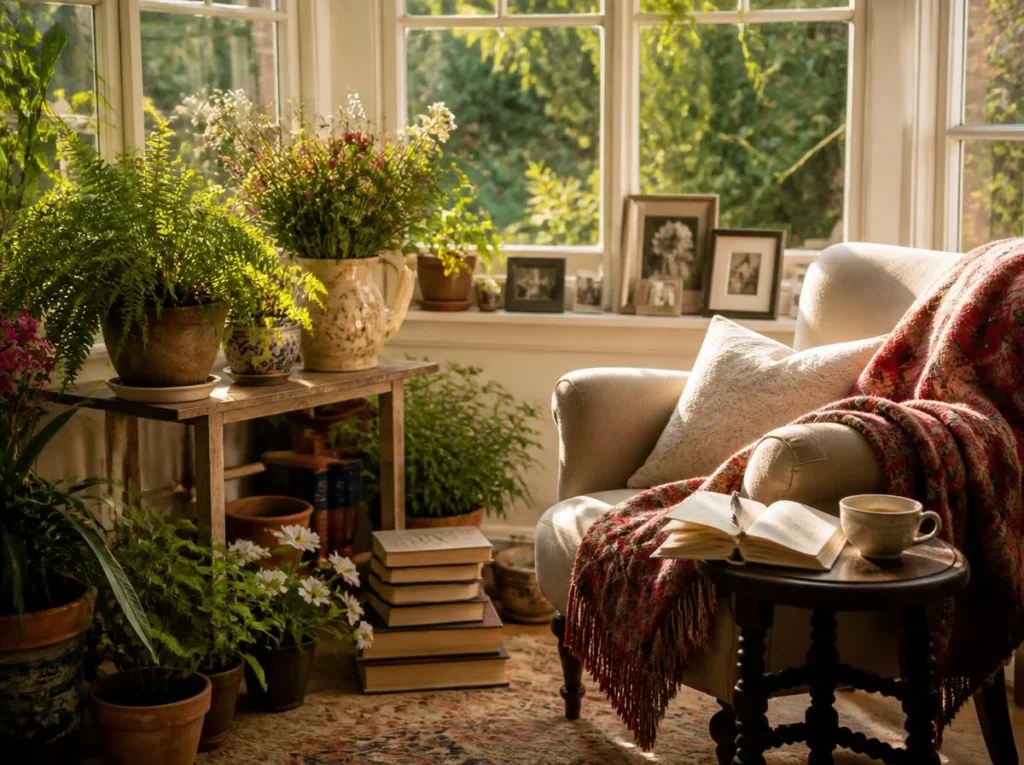
The final quality that distinguishes a genuinely beloved sunroom from a beautifully constructed but impersonal glass addition is the presence of authentic personal character, the specific objects, materials, and decorative choices that communicate the specific aesthetic sensibility and lifestyle priorities of the people who use the space rather than the generic aspirational quality of professionally styled but uninhabited room presentations.
Sunroom decorating ideas that create genuine personal character use the same principles of personal expression that make other rooms in the home feel genuinely inhabited rather than generically furnished, but apply them with specific attention to the sunroom’s unique qualities as a space whose primary character comes from natural light and garden connection rather than from designed interior elements. A collection of beloved plants tended over years, a stack of genuinely read books beside a comfortable chair worn soft through regular use, vintage ceramic pots found at markets across travels, and the specific textile colors that the household finds genuinely beautiful rather than stylistically correct all create sunroom character of a specifically authentic kind that professional decoration cannot replicate because it requires genuine personal history and real domestic use to develop.
Sunroom color ideas for personal expression use the room’s unusual quality of light as the defining context for color selection, allowing colors that might appear too intense in interior rooms to be tempered by natural light in the sunroom to a perfectly balanced quality that only sunroom conditions create. Deep coral, warm terra cotta, saturated sage green, and warm golden yellow each create sunroom character of extraordinary warmth and personal confidence when the natural light moderates their interior intensity in the specific way that abundant natural illumination achieves for colors that artificial lighting would render overpowering.
Conclusion
The sunroom that genuinely adds light, warmth, and function to a home achieves something more fundamental than simply creating another room or increasing property square footage. It changes the household’s daily relationship to natural light, to the surrounding landscape, and to the specific quality of being inside while remaining visually connected to the natural world that all humans require for genuine wellbeing regardless of how successfully designed interior rooms manage to create comfortable and beautiful environments without this connection.
The 15 bright sunroom ideas explored throughout this guide demonstrate that the specific form this connection takes is infinitely variable across architectural styles, household functions, budget levels, and climate conditions while the fundamental value it provides remains constant. Whether the sunroom is a compact glass-enclosed reading nook that transforms a modest home’s quality of daily life through 80 square feet of extraordinary light, or a substantial four-season addition that creates a complete new room of permanent value and daily inhabitation, the investment in sunroom design consistently produces the most profound improvements in domestic quality available per dollar of home improvement investment.
Begin with the clarity of understanding how you most want to use the sunroom and what relationship to natural light and the surrounding landscape you most want to experience in your daily home life, then select from the design strategies in this guide those that most directly serve those specific aspirations. The sunroom that gets designed around what you genuinely want to do in it will become the most-used room in your home, because it will be the room that was designed specifically for the most restorative and most pleasurable activities that daily life offers.
Frequently Asked Questions
How much does a sunroom addition cost?
Sunroom addition ideas range dramatically in cost based on construction type and size. Basic three-season screened sunrooms begin at approximately 15,000 to 30,000 dollars for modest prefabricated structures. Four season sunroom additions with full insulation and climate control typically cost 50,000 to 150,000 dollars or more depending on size and finish quality. Custom architectural glass additions designed by architects can reach 200,000 to 400,000 dollars for premium construction. The investment consistently returns strong property value addition with industry research indicating 50 to 70 percent cost recovery in added property value.
Can a sunroom be used year-round?
Four season sunroom construction with insulated glass, insulated wall and roof systems, and dedicated HVAC provides complete year-round usability in any climate. Sunroom heating and cooling through mini-split systems or radiant heating combined with appropriate cooling creates comfortable temperature management in all seasons. Three-season sunrooms without this infrastructure are comfortable in spring through autumn in temperate climates but typically cannot maintain comfortable temperatures during winter months or extreme summer heat without the thermal management systems that four-season construction provides.
What is the best flooring for a sunroom?
Sunroom flooring ideas in large format porcelain tile provide the most appropriate combination of moisture resistance, UV stability, thermal mass benefit, and durability for sunroom environments across every climate condition. Luxury vinyl plank rated for UV exposure provides the best budget-accessible alternative with complete moisture resistance. Avoid laminate and standard hardwood flooring in sunrooms where direct sunlight exposure, temperature variation, and moisture conditions create deterioration in these materials faster than in conventional interior room applications.
How do I heat and cool a sunroom efficiently?
Sunroom heating and cooling most efficiently uses dedicated mini-split ductless systems that provide precise zone temperature control independent of the main house HVAC system, with a properly sized mini-split addressing both heating and cooling requirements year-round with excellent energy efficiency. Sunroom with fireplace provides supplementary atmospheric heating. Motorized exterior shading systems reduce solar heat gain before it enters the glass envelope and represent the single most effective passive cooling strategy available for glass-intensive sunroom spaces.
What plants grow best in a sunroom?
Sunroom with plants environments support the broadest range of tropical and tender species available in residential growing conditions, with the combination of high natural light levels, consistent warmth, and elevated humidity creating growing conditions superior to any interior room for exotic botanical specimens. Best performers include fiddle leaf figs, citrus standards, bird of paradise, large monstera specimens, jasmine for fragrance, and the full range of tropical foliage plants that require more light and warmth than interior rooms provide. South-facing sunrooms support the widest range of light-demanding species while north-facing sunrooms suit shade-tolerant tropical foliage plants.
You May Also Like This Post:
15 Modern Garage Door Designs That Instantly Boost Curb Appeal
One Comment