19 Coastal Kitchen Ideas That Look Custom Designed and Timeless
Some kitchens work hard to announce their style. They use every available surface as an opportunity for decoration and every hardware choice as a statement. The best coastal kitchens work in exactly the opposite direction. They feel effortless. The natural light falls across a worn wood countertop, a breeze seems possible through a window that might be open or might simply be very clean, and the whole room has the quality of a space that has always been exactly as it is, beautiful without ever trying to appear so.
That quality is not accidental. It is the result of specific decisions made about material, color, light, and texture, and those decisions follow a logic that holds across every scale of project, from a full renovation to a simple refresh. Coastal kitchen design at its best combines the relaxed, sun-bleached character of genuine beach house interiors with the kind of considered craftsmanship that makes a space feel custom built rather than assembled from a mood board.
This guide covers 19 coastal kitchen ideas that achieve that combination, ideas that feel simultaneously easy and intentional, casual and completely resolved.
White Shaker Cabinets With Natural Wood Island
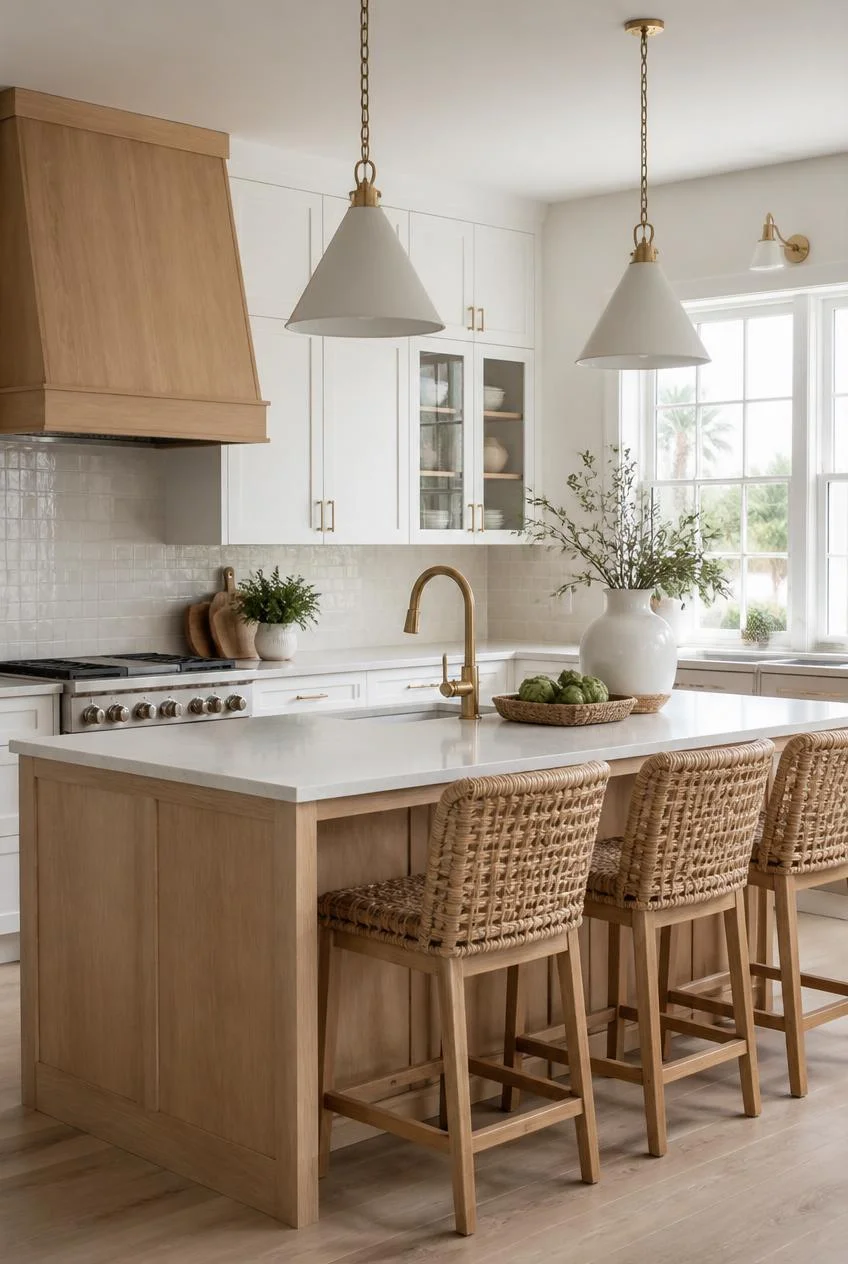
The combination of white shaker cabinets on the perimeter with a natural wood toned island is the most enduringly successful layout in coastal kitchen design because it solves the room’s central aesthetic challenge in a single material decision. The white keeps the room feeling light and airy. The wood prevents it from feeling cold or clinical. Together they create the same tonal relationship as white sand and driftwood, which is precisely the reference that makes the combination feel so at home in a coastal context.
The wood tone on the island should lean toward light oak, sun-bleached teak, or a warm honey stain rather than anything too dark or too red, since the driftwood character of a naturally weathered finish is what connects the material to the coastal palette. Simple gold or brass hardware on both the white cabinets and the wood island creates consistency without making the hardware the room’s focal point.
Why It Works
The contrast between white perimeter cabinetry and a wood island creates visual depth that a fully white or fully wood kitchen cannot achieve alone, giving the room the kind of layered, considered quality that feels custom designed rather than off the shelf.
A Navy Blue Island in an All White Kitchen
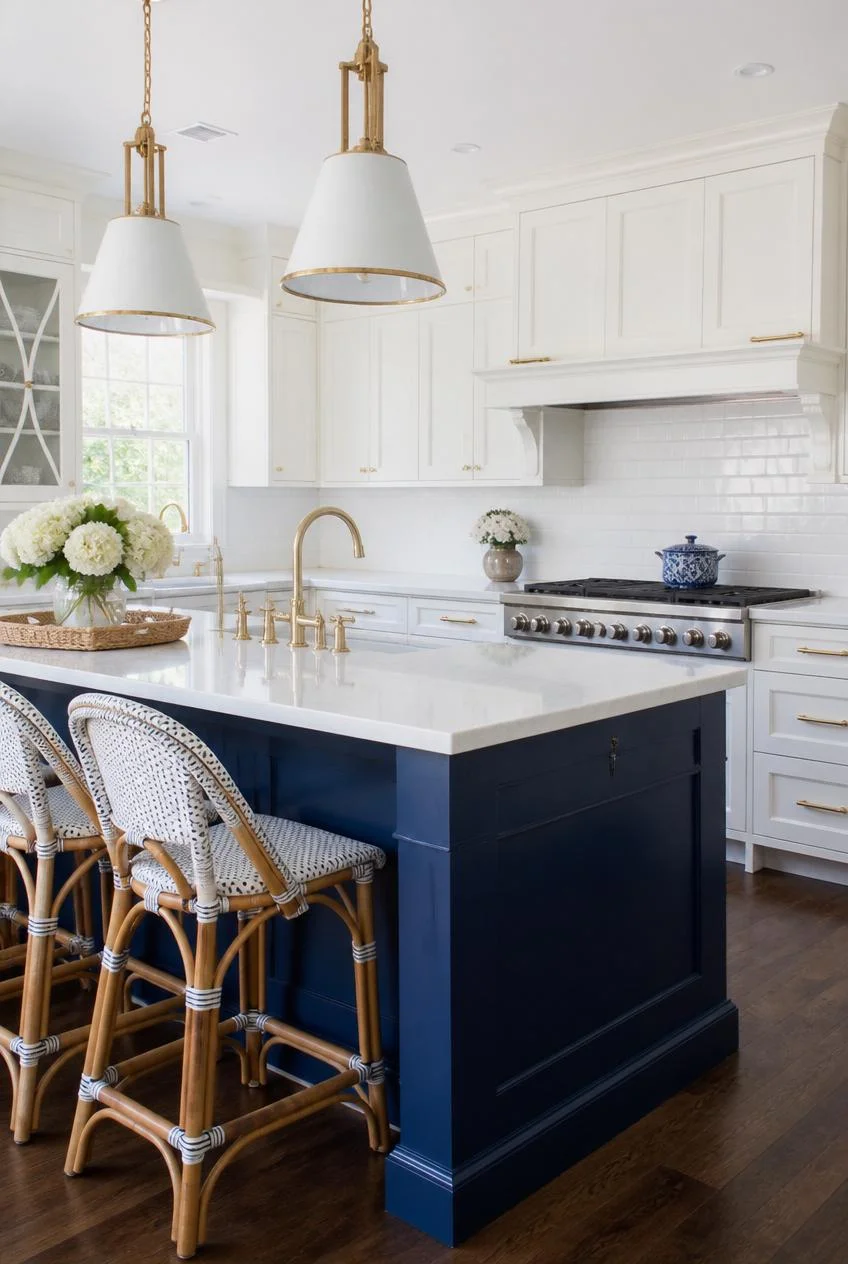
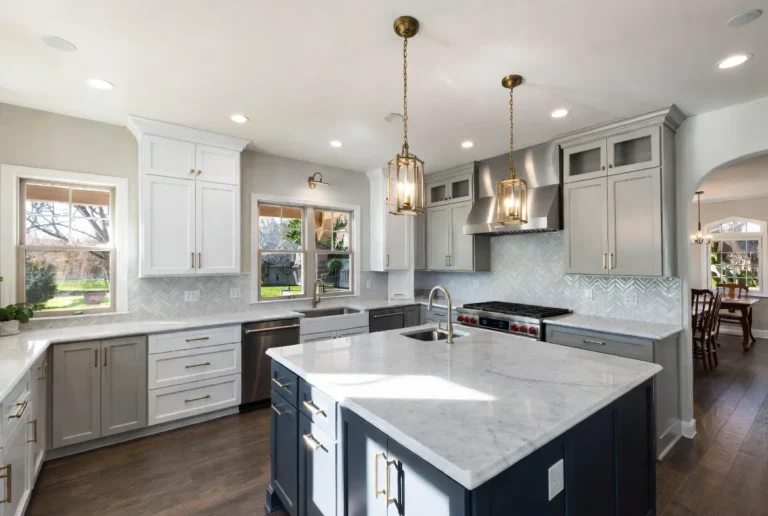
If the natural wood island is the warm, relaxed version of the coastal kitchen island, the navy blue island is the more refined and confident version. Set against all-white perimeter cabinetry, a navy island functions as the room’s single bold design statement, a decision so clear and so well placed that nothing else in the room needs to compete for attention.
Brass or brushed gold fixtures and hardware suit a navy island particularly well, since the warmth of the metal connects the cool depth of the navy to the warmth of the white cabinetry around it. A white marble or quartzite countertop on the island surface continues the light, airy quality of the surrounding cabinetry while giving the navy color room to read at its full depth below.
Color Selection
A navy that reads as genuinely blue rather than blue-grey suits the coastal context most naturally. Blue-grey navies can shift the room toward an industrial or transitional aesthetic that moves away from the relaxed beach house character the palette is designed to express.
Beadboard Paneling on the Island Base
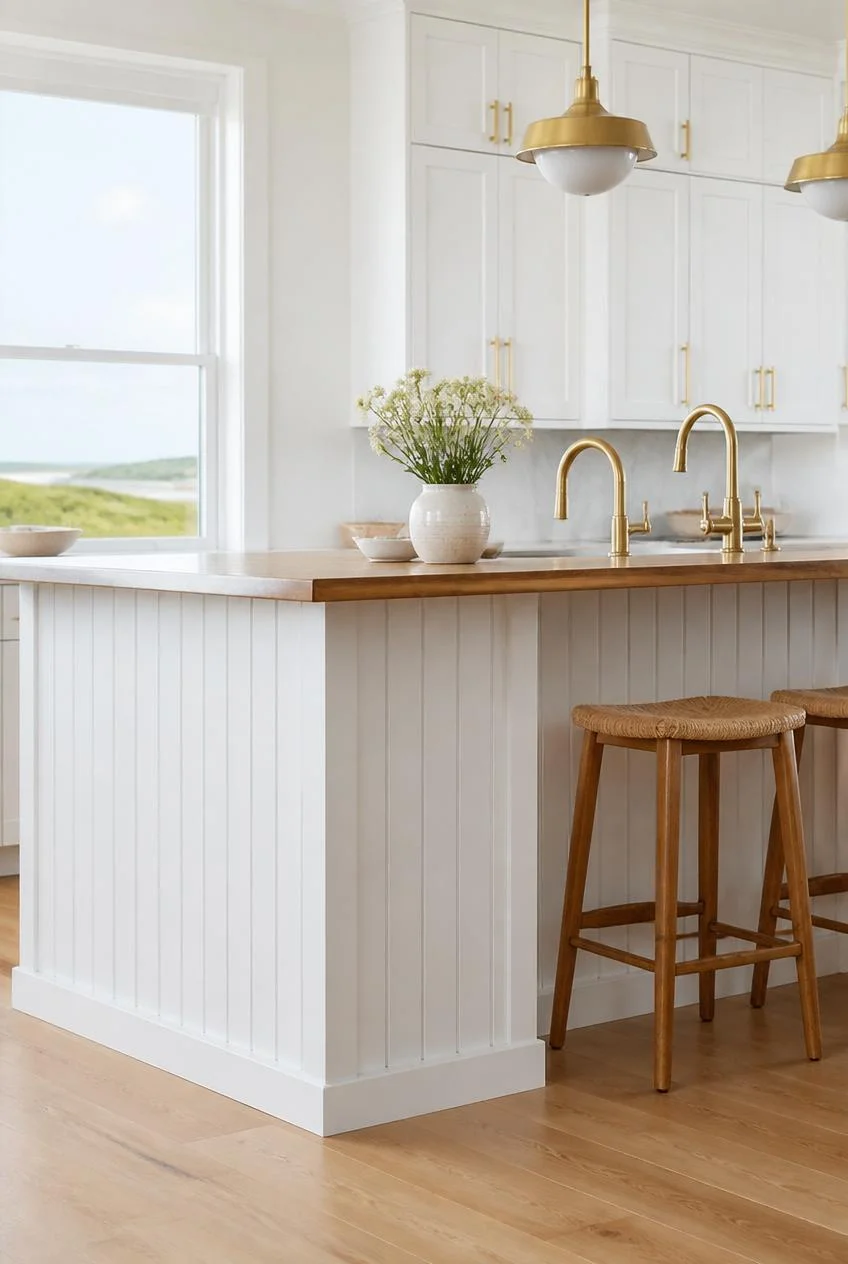
Beadboard paneling, the characteristic vertical grooved woodwork associated with traditional East Coast beach cottages, adds the kind of architectural detail and historical reference that gives a coastal kitchen genuine character rather than simply the appearance of it. Applied to the base of a kitchen island, it introduces texture and craft at the level where the eye naturally lands when seated at bar stools.
The paneling can be painted the same color as the island cabinetry above it for a seamless, quietly detailed look, or it can be painted white against a navy or colored island for a two-tone effect that makes the architectural detail more pronounced. Either way, the beadboard detail is the finishing touch that lifts the island from a standard cabinet form to something that reads as genuinely considered.
Application Note
Beadboard paneling suits cottage-influenced and traditional coastal kitchen styles most naturally. In a more contemporary or California casual coastal kitchen, it can feel overly referenced and may be better replaced by a flat panel or a simple shiplap application instead.
An Apron Front Farmhouse Sink in White or Fireclay
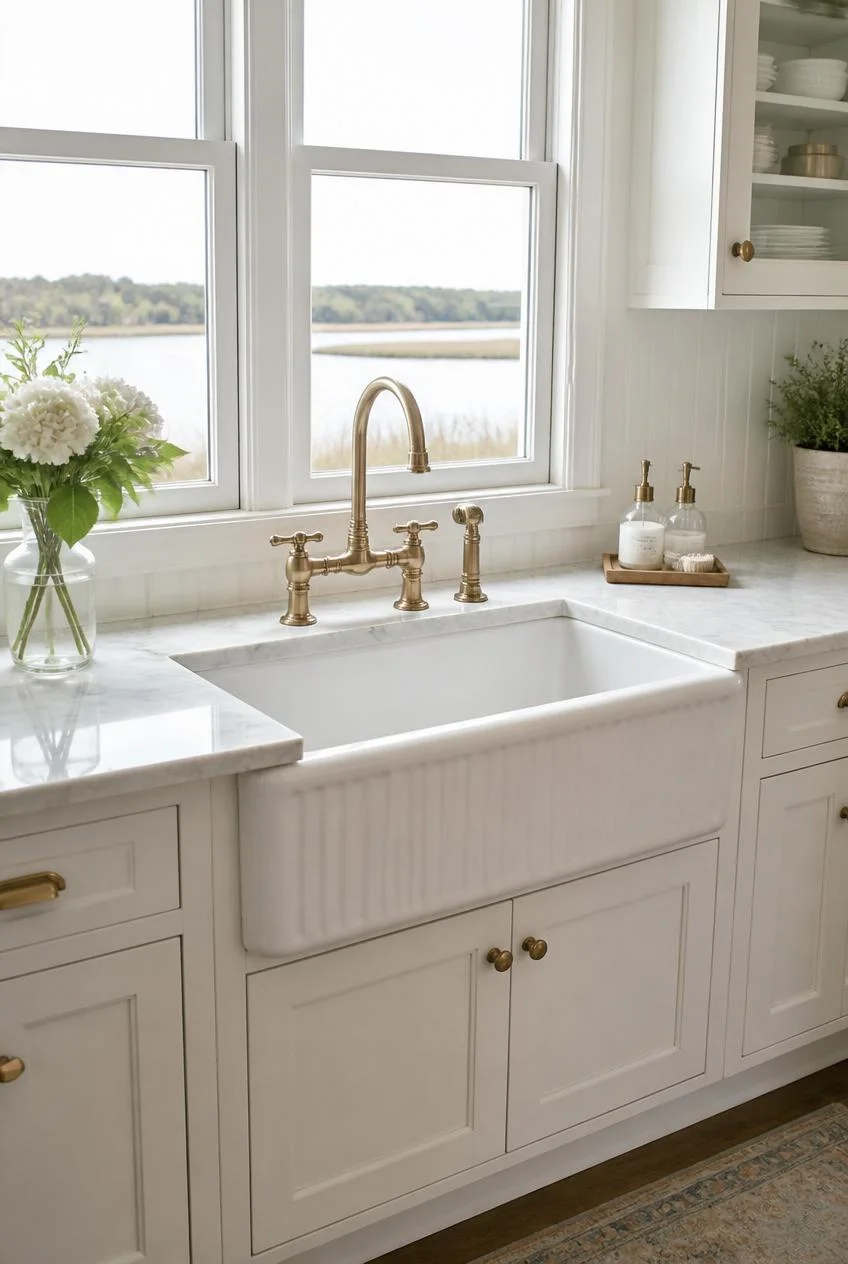
An apron front farmhouse sink, where the front face of the sink is exposed rather than hidden behind a cabinet door, is one of the most characteristic elements in coastal farmhouse kitchen design. The exposed front creates a prominent horizontal detail at countertop level that reads as both purposeful and genuinely beautiful, particularly in a white fireclay finish that develops a slightly softened character with everyday use.
In a coastal kitchen, the apron front sink pairs naturally with a Carrara marble countertop, a simple white subway tile backsplash, and a bridge-style faucet in brushed brass, creating a combination of elements that together signal a fully considered design rather than a series of independent product choices.
Fireclay vs Cast Iron
Fireclay sinks are typically the preferred choice for coastal kitchens because they are lighter than cast iron, easier to install, and have a slightly softer, more artisan-quality surface that suits the relaxed character of coastal design better than the harder, more precise finish of a cast iron alternative.
Zellige Tile Backsplash in Ocean Blue or Aqua
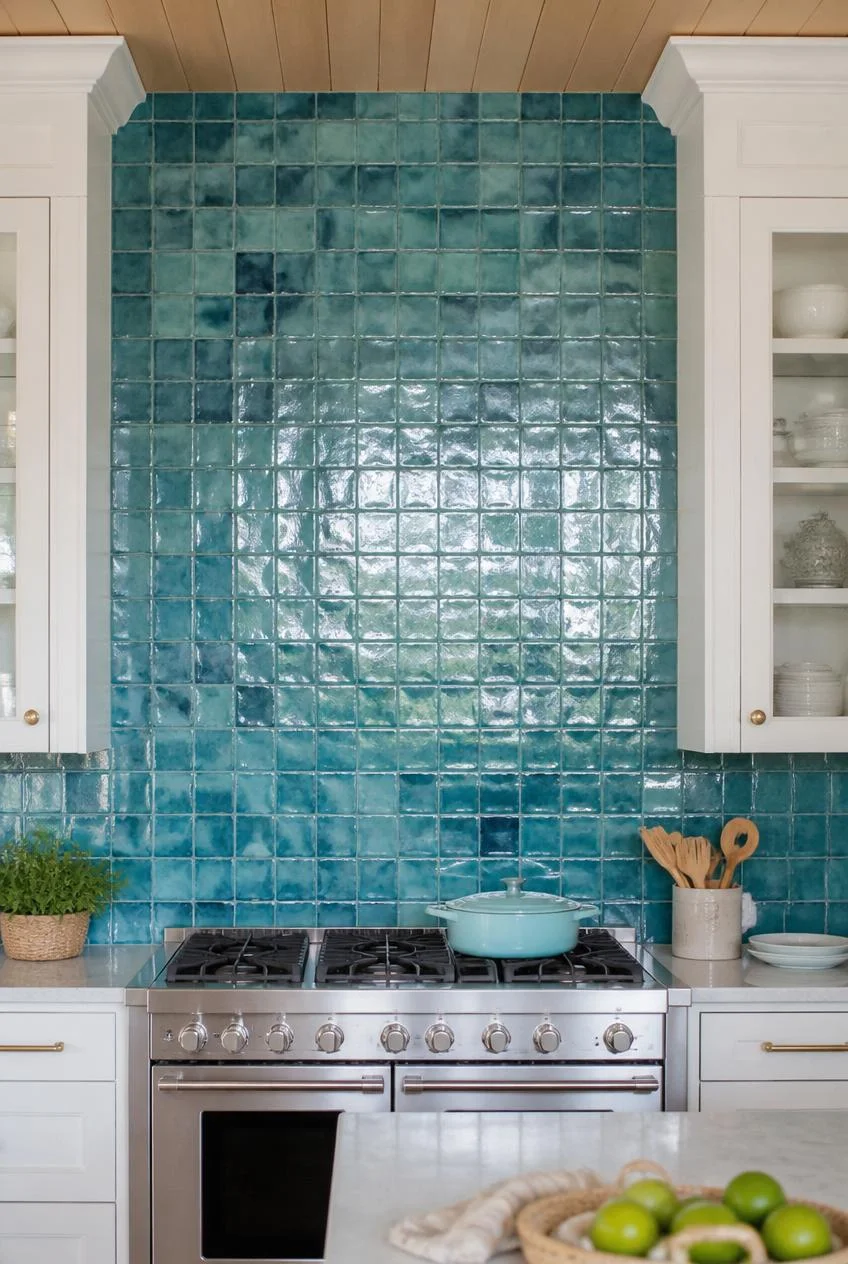
A zellige tile backsplash in a deep ocean blue, aqua, or turquoise tone is one of the most visually striking choices available in a coastal kitchen, and the handmade quality of genuine zellige tile makes it one of the most distinctive as well. The irregular surface of each tile, which absorbs and reflects light slightly differently depending on its unique glaze, creates a backsplash that shimmers and shifts throughout the day in a way that machine-made tile simply cannot replicate.
Used as a full-height backsplash between white cabinetry or as a focal feature behind the range, a zellige tile backsplash brings the color and texture of coastal waters into the kitchen with a material richness that painted surfaces and standard ceramic tiles cannot match.
Color Depth Guidance
A medium depth ocean blue rather than a very pale or very saturated tone tends to suit most coastal kitchen palettes most naturally, since it reads clearly from across the room while still sitting comfortably within the light, airy character that coastal design requires.
Shiplap Walls and Ceilings for Architectural Character
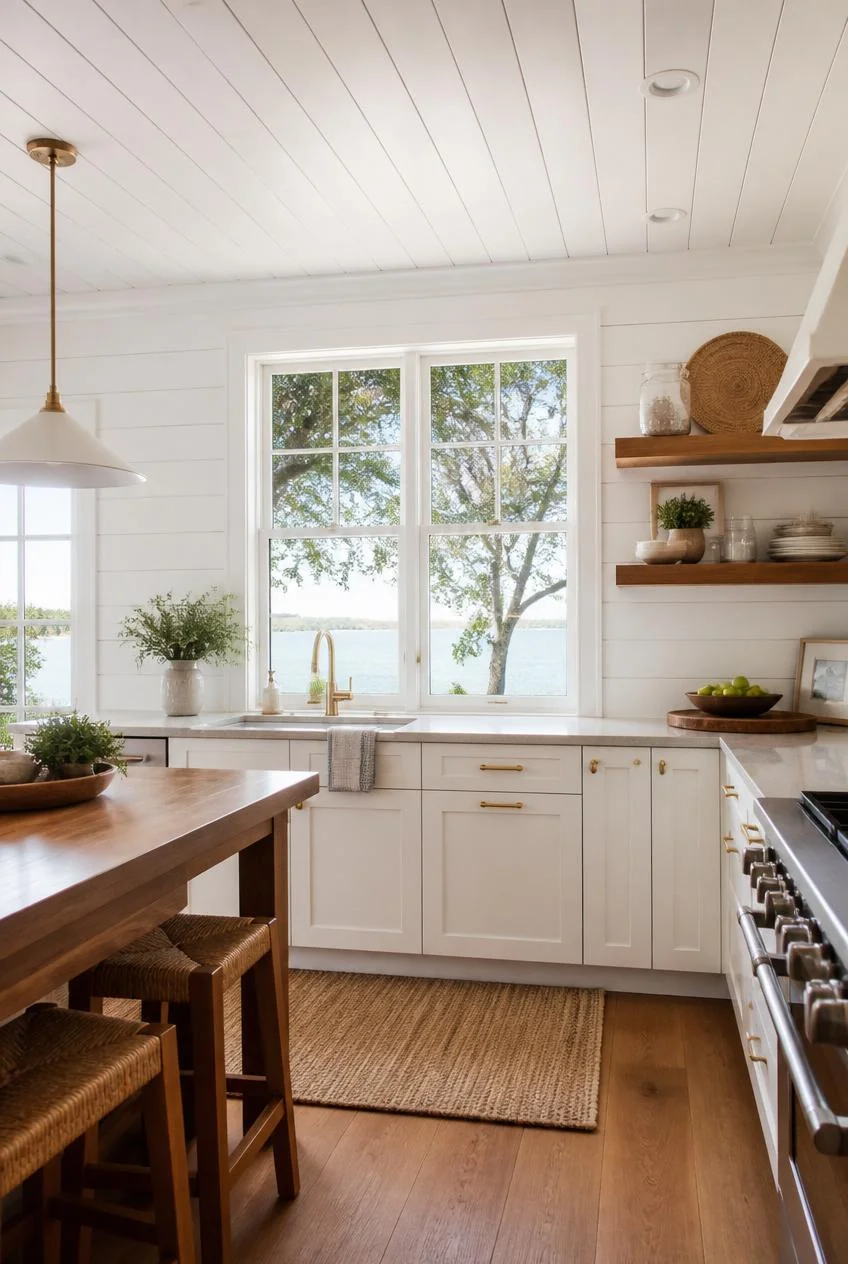
Shiplap, the horizontal wooden planking associated with East Coast beach architecture and coastal farmhouse interiors, adds architectural texture to a coastal kitchen without requiring art, wallpaper, or additional decorative elements to make the room feel complete. Applied to a single accent wall behind open shelving, or across the ceiling of a kitchen with a cathedral or vaulted profile, shiplap creates a character and warmth that flat painted surfaces cannot replicate.
White painted shiplap is the most commonly used finish in coastal kitchens, since it maintains the light and airy quality of the space while still delivering the three-dimensional texture of the planking. Leaving the wood in a natural or whitewashed tone rather than a fully opaque white gives the room a slightly more relaxed, beach-worn quality.
Contemporary Update
Modern slim profile shiplap in a narrower plank width than the original material reads as more contemporary than traditional wide-board applications, which suits kitchens that want the coastal character of shiplap without the heavier visual weight of thicker, more prominent planking.
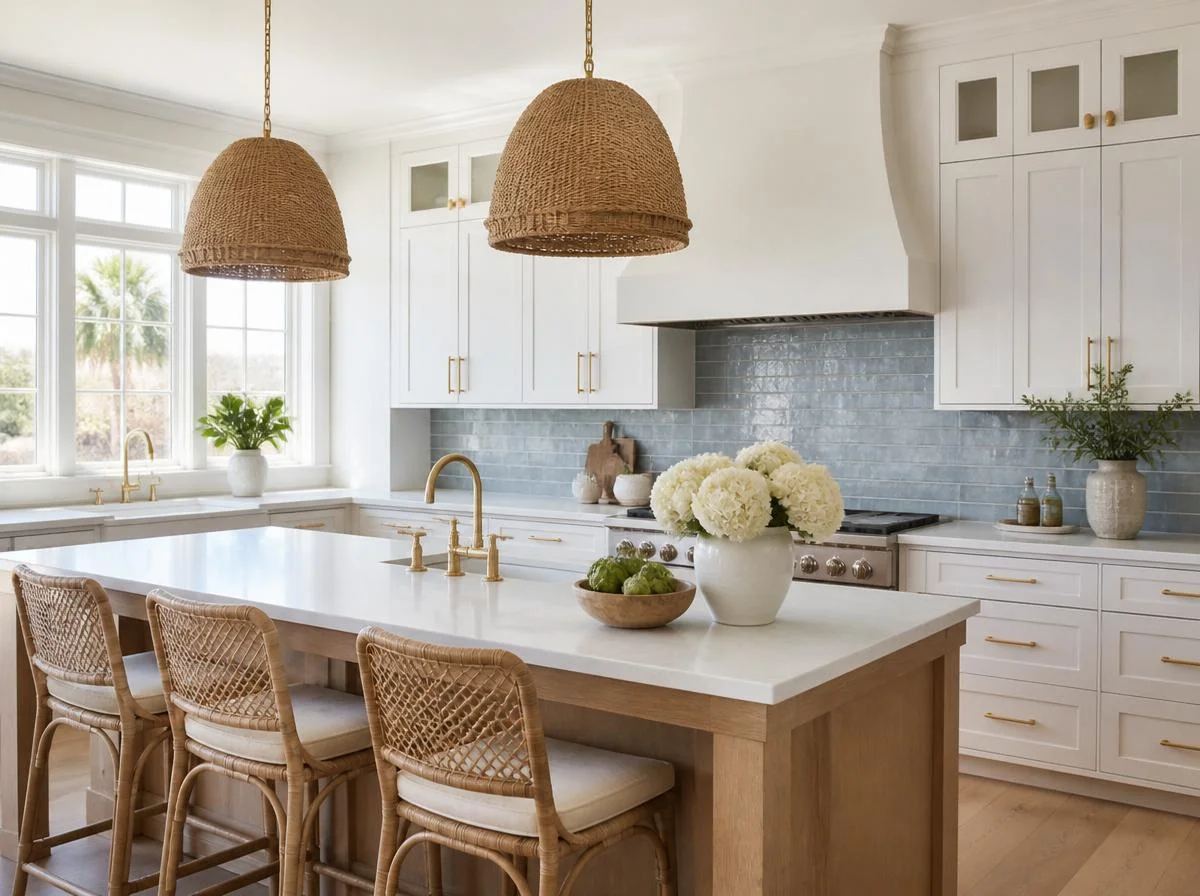
Woven Rattan Pendant Lights Above the Island
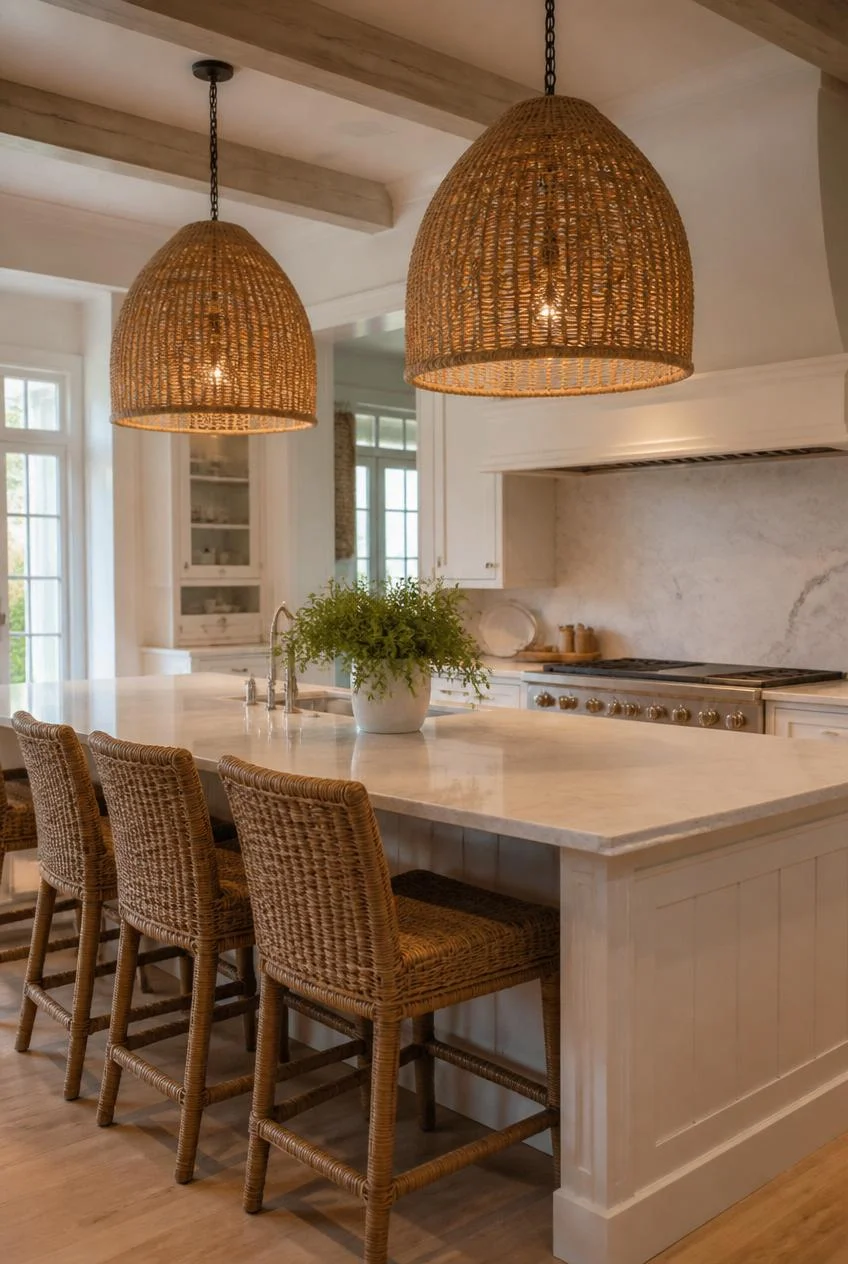
A woven rattan or natural fiber pendant light hung above a kitchen island is one of the most efficient ways to bring the warmth and organic texture of coastal design into a kitchen through a single fixture choice. The natural material of the pendant adds warmth and contrast against white cabinetry and stone countertops, and the dappled, filtered light it casts through the weave creates an atmosphere after dark that no solid shade can replicate.
A pair of oversized rattan dome pendants hung at low height above a long island, with enough clearance for unobstructed sightlines across the counter, creates a proportion that feels custom designed rather than selected from a standard lighting catalogue.
Scale Decision
Oversizing the pendant relative to what feels immediately comfortable is almost always the right call in a coastal kitchen. A pendant that reads as slightly large when viewed in isolation typically looks perfectly proportioned once the island and surrounding cabinetry are in place, since the horizontal expanse of the kitchen gives large pendants the visual support they need.
Light Oak Open Shelving for Coastal Display
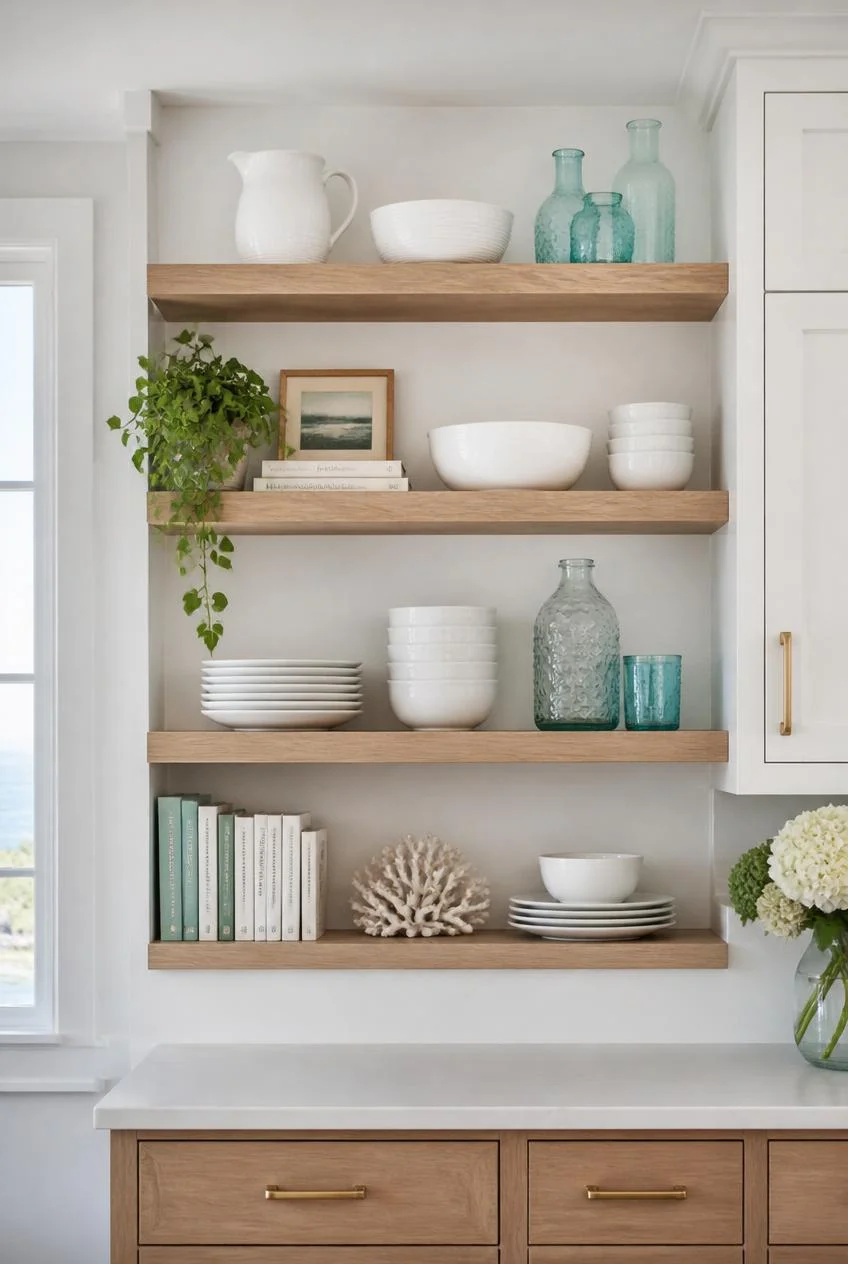
Open shelving in light oak or a bleached wood tone gives a coastal kitchen two things simultaneously: functional storage that is immediately accessible, and a display surface that becomes part of the room’s visual composition. In a kitchen built on white cabinetry, a run of open shelves in a warm wood tone introduces the same material contrast as a wood island, but at eye level where the objects displayed become part of the overall design.
The styling of the shelves matters enormously in a coastal kitchen context. White ceramic dishes, sea glass or aqua-toned glass vessels, a few cookbooks with light colored spines, a trailing plant, and one or two genuine coastal objects, such as a piece of coral or a simple woven basket, create a display that feels collected over time rather than purchased as a set.
What to Avoid
Overloading open shelves, even with genuinely beautiful objects, works against the light, airy quality of coastal design. Allow generous space between groupings and resist the impulse to fill every inch of available shelf space.
A Quartzite or White Marble Countertop
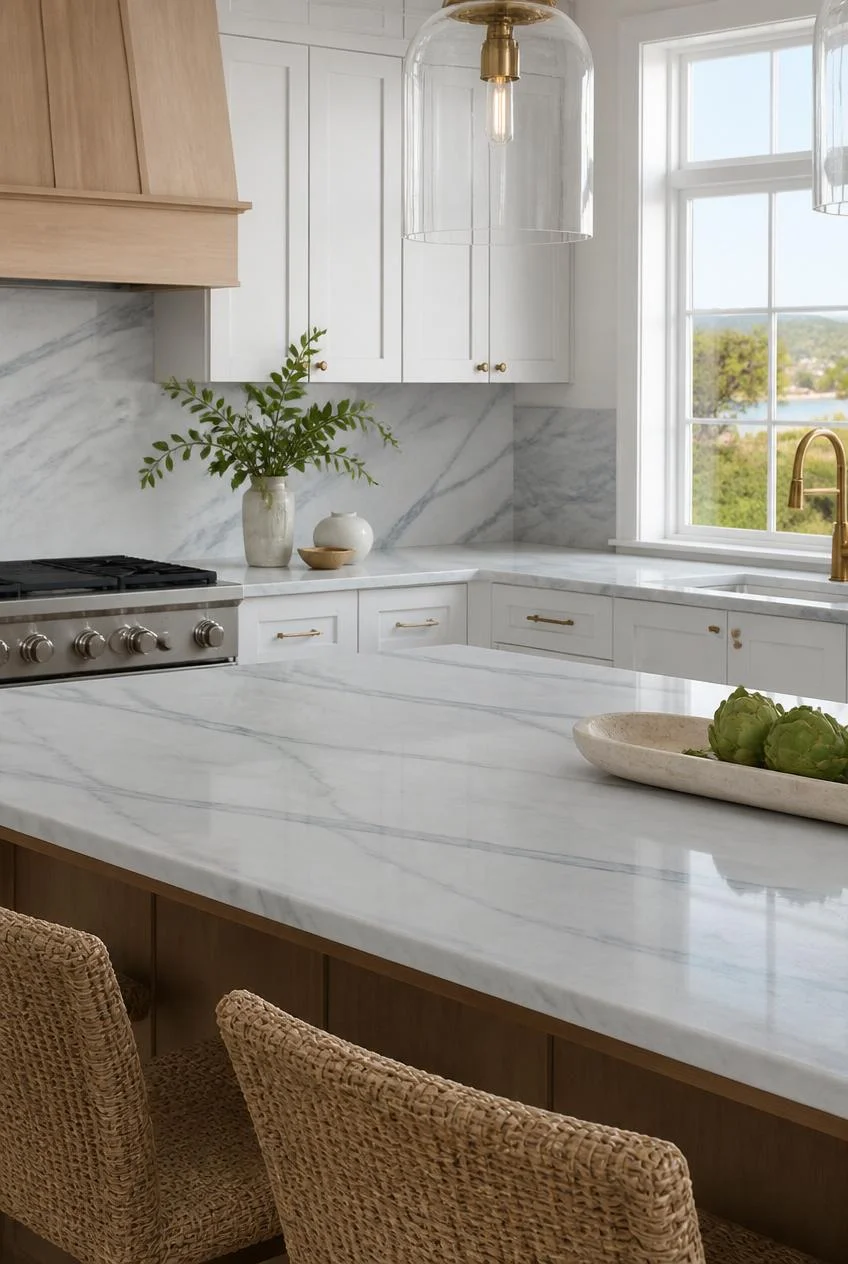
Quartzite or white Carrara marble countertops bring the natural veining and material depth of stone into a coastal kitchen in a way that complements the room’s palette without introducing a new color. The movement within white marble, whether grey, blue, or warm gold veining, echoes the visual language of water, waves, and shoreline without referencing either too literally.
Quartzite is the more practical choice of the two in a kitchen context, since it is significantly harder and more stain-resistant than marble while offering a similar visual character. A honed or leathered finish rather than a high-polish surface suits the relaxed, beach house aesthetic better and shows everyday use more gracefully.
Countertop Edge Profile
A simple eased or slightly rounded edge profile suits a coastal kitchen better than an elaborate ogee or decorative profile, since the simplicity of the edge reinforces the effortless, unpretentious quality that is central to the coastal design philosophy.
A Sage Green Island for a Modern Coastal Twist
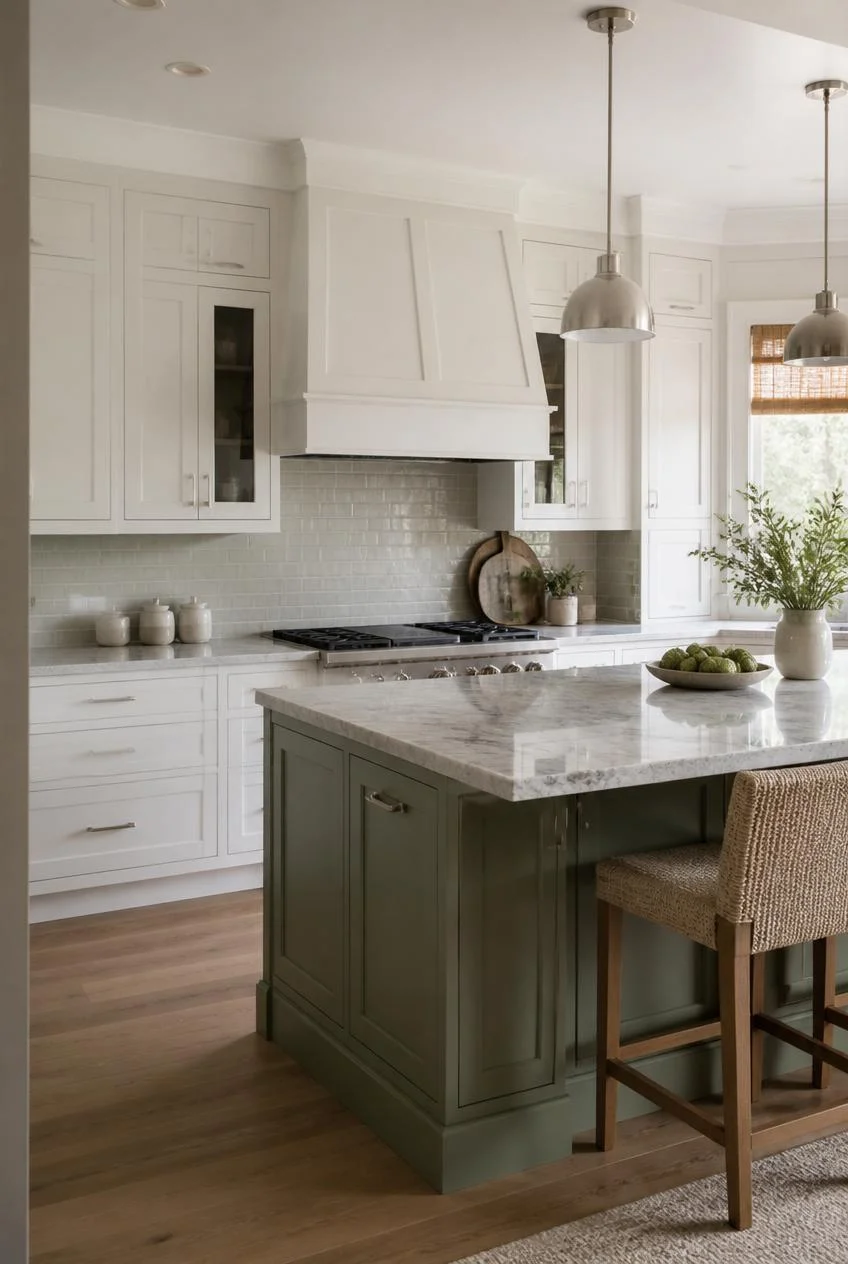
For coastal kitchens that want to move beyond the expected blue palette, a sage green island offers an equally organic, nature-referencing alternative that feels simultaneously fresh and resolved. Sage sits close to the blue and green palette of coastal waters without being directly blue, which gives the kitchen a connection to coastal tones that reads as sophisticated rather than thematic.
Paired with white perimeter cabinetry, a natural stone countertop with movement, and simple brushed nickel or matte black hardware, a sage green island creates a modern, restrained version of coastal design that suits contemporary and transitional kitchens as naturally as it suits more traditional beach house interiors.
Why Sage Works
Sage green is an earthy tone at its core, which means it ages and trends more slowly than a brighter or more saturated color would. In a coastal kitchen where longevity is as important as immediate visual impact, that quality of staying power is a significant practical advantage.
Shaker Cabinets in Soft Blue Gray
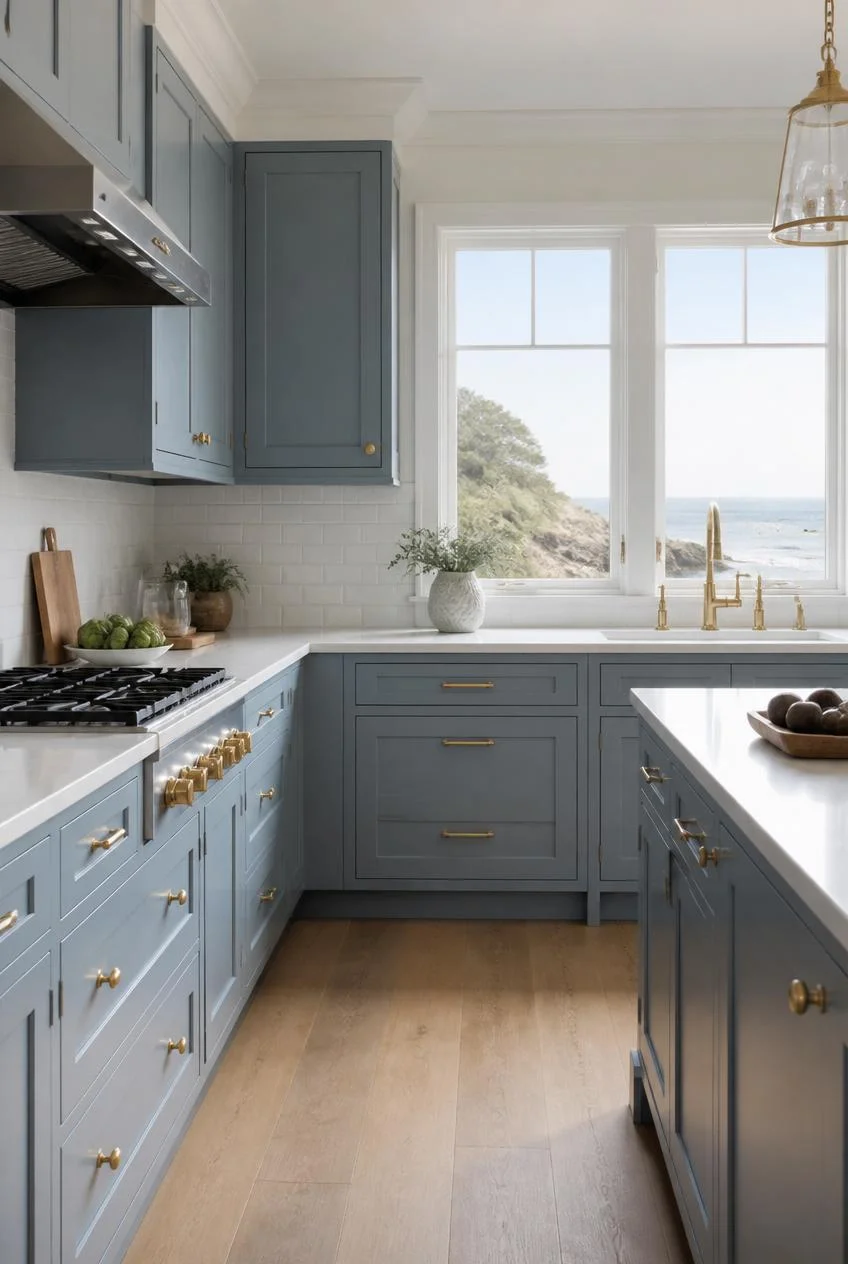
Soft blue-grey shaker cabinets across the perimeter or as a full-kitchen color choice bring the palette of coastal waters into the kitchen at architectural scale without the heavier visual commitment of a deep navy. The grey component of the blue keeps the tone from reading as overly nautical or obviously thematic, while the blue component maintains the coastal reference that anchors the design.
This palette pairs naturally with white countertops in quartz or marble, unlacquered brass hardware, and a white subway tile backsplash that keeps the overall room feeling light even when the cabinetry is in a medium tone. A wide plank light wood floor below the blue-grey cabinetry introduces the warmth needed to prevent the cool tone of the cabinets from making the room feel cold.
Shade Selection
Muted blue-grey, rather than a clear, saturated blue or a very neutral grey, is the tone that reads most convincingly as a coastal reference without requiring any additional decorative elements to explain the palette.
Brass Hardware Throughout for Warmth and Cohesion
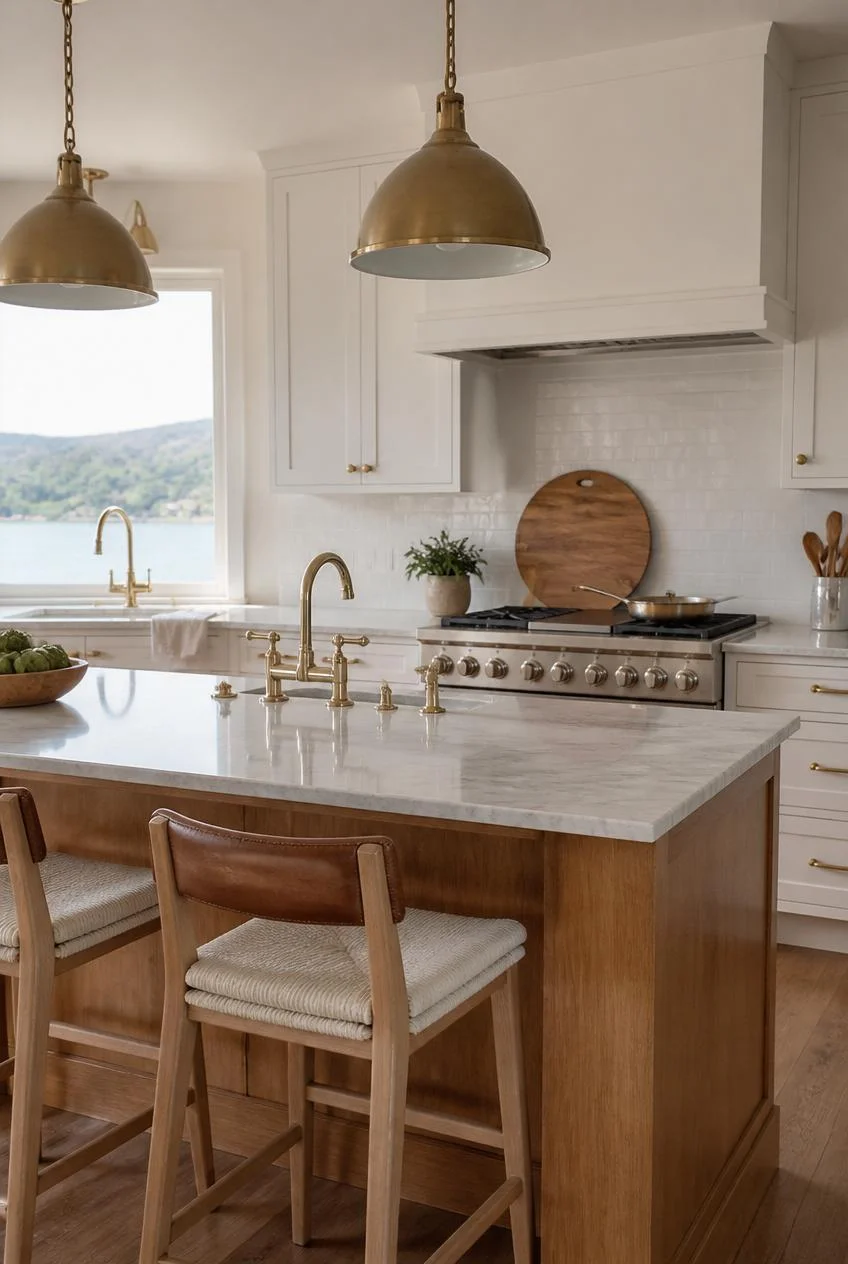
Brushed or unlacquered brass hardware used consistently across every cabinet, drawer, and fixture point in a coastal kitchen adds a warmth and material richness that chrome or matte black alternatives cannot provide in this palette context. Brass connects naturally to the warm tones of sand, sun-bleached wood, and the golden light of late afternoon on a beach, which makes it the instinctively right material choice for coastal kitchen hardware.
Unlacquered brass, which develops a natural patina over time rather than maintaining a uniform finish, suits the relaxed, lived-in quality of beach house kitchen design particularly well. The patina that develops gives each piece of hardware a depth and authenticity that polished or lacquered alternatives never achieve.
Hardware Consistency
Extending the same brass finish to faucet, cabinet pulls, drawer knobs, light switch plates, and pendant fixtures creates the kind of comprehensive material coherence that makes a kitchen feel genuinely custom designed rather than composed from independent selections.
A Shiplap Ceiling for Unexpected Overhead Warmth
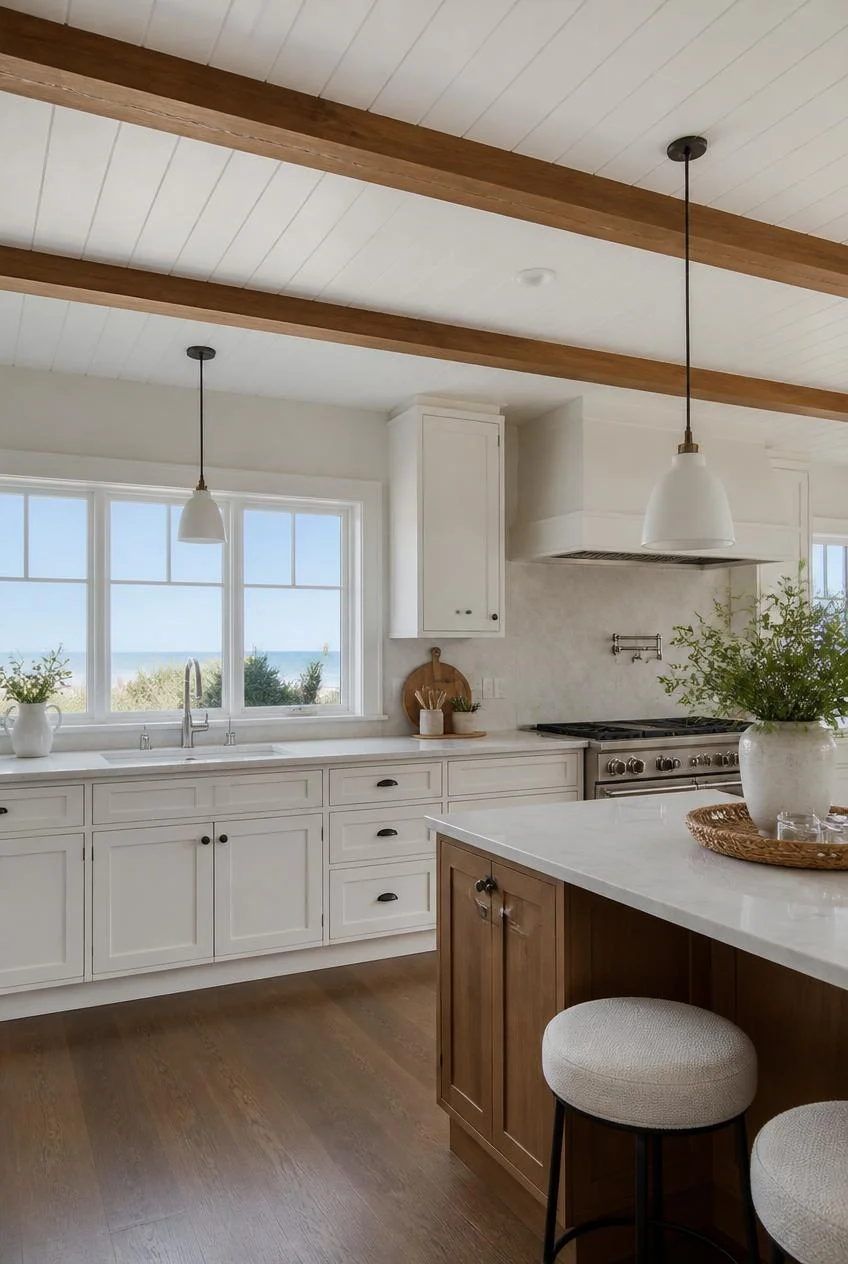
A shiplap ceiling in a coastal kitchen, whether painted white or left in a warm natural wood tone, transforms the overhead plane into an architectural feature that contributes meaningfully to the room’s character from above as well as at eye level and below. In a kitchen with a standard flat ceiling, this is one of the most impactful single changes available, since the ceiling is the one surface that immediately changes how the entire room feels to stand inside.
White painted shiplap ceiling planks in a narrow to medium width profile suit most coastal kitchens without adding too much visual weight overhead. Paired with exposed wooden beams, the combination creates a full overhead composition that references the raftered ceilings of genuine beach cottages without requiring actual historic construction to achieve.
Beam Pairing
If adding wooden ceiling beams alongside a shiplap ceiling, choose beams in a warm, slightly rough-finished wood tone rather than a highly polished or dark-stained version, since the rougher, more natural finish better suits the relaxed character of coastal design.
Large Windows Framing an Outdoor View
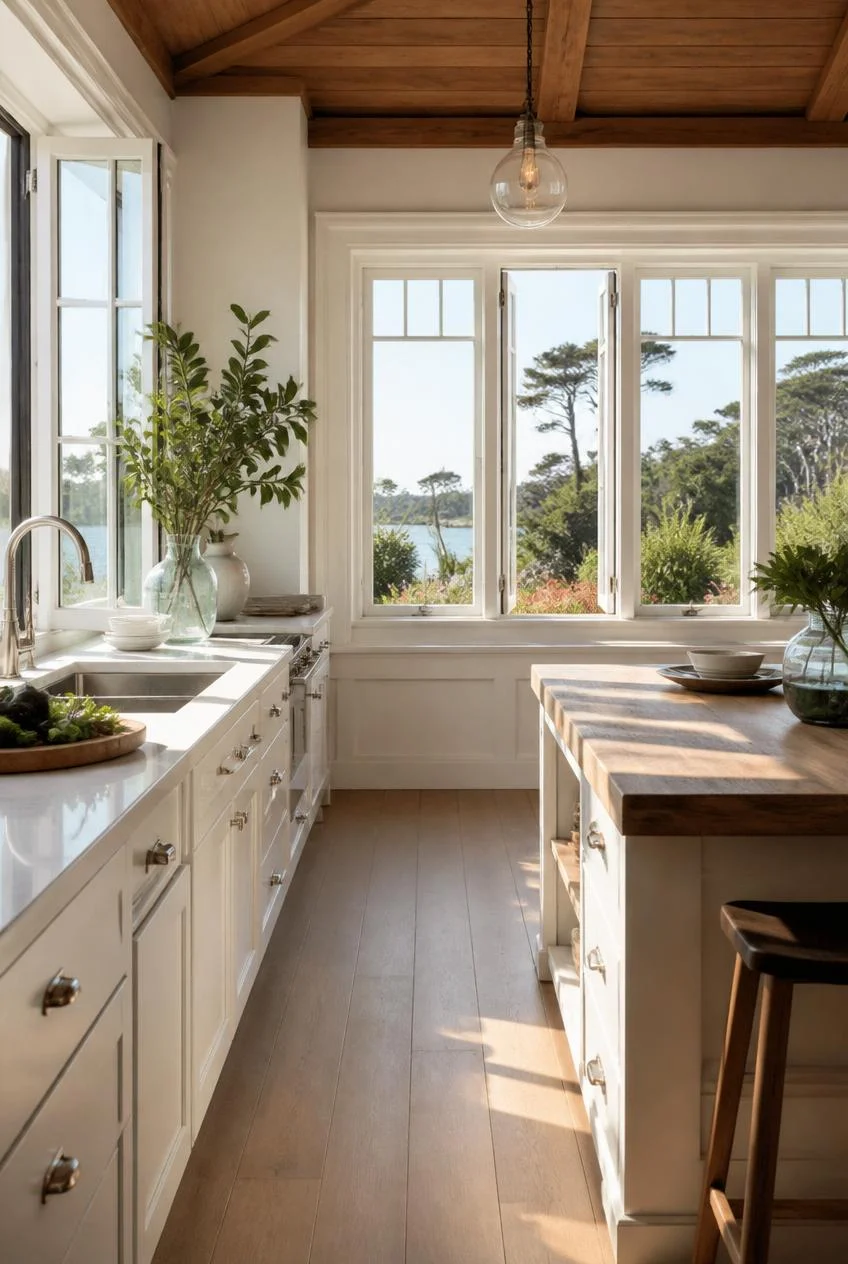
In a coastal kitchen, natural light is not simply a practical consideration. It is a central design element, and the amount of it available determines the quality of every other material choice in the room. Large windows, whether a single wide picture window above the sink, a bank of casement windows along one wall, or sliding glass doors that open the kitchen to an outdoor deck or patio, flood the room with the quality of light that makes white cabinetry, natural stone, and wood tones all read at their best.
Where the view permits, positioning the kitchen to frame a garden, water feature, or landscape element through large windows gives the room a visual connection to the outdoors that reinforces the indoor-outdoor living philosophy at the heart of coastal design without requiring any specific decorative element inside the kitchen to communicate it.
When the View Is Limited
In coastal kitchens without a significant outdoor view, maximizing window area still dramatically improves the quality of light, and adding simple white Roman shades rather than heavy curtain treatments keeps window wall open and bright when privacy is not required.
A Mosaic Tile Floor for Pattern at Ground Level
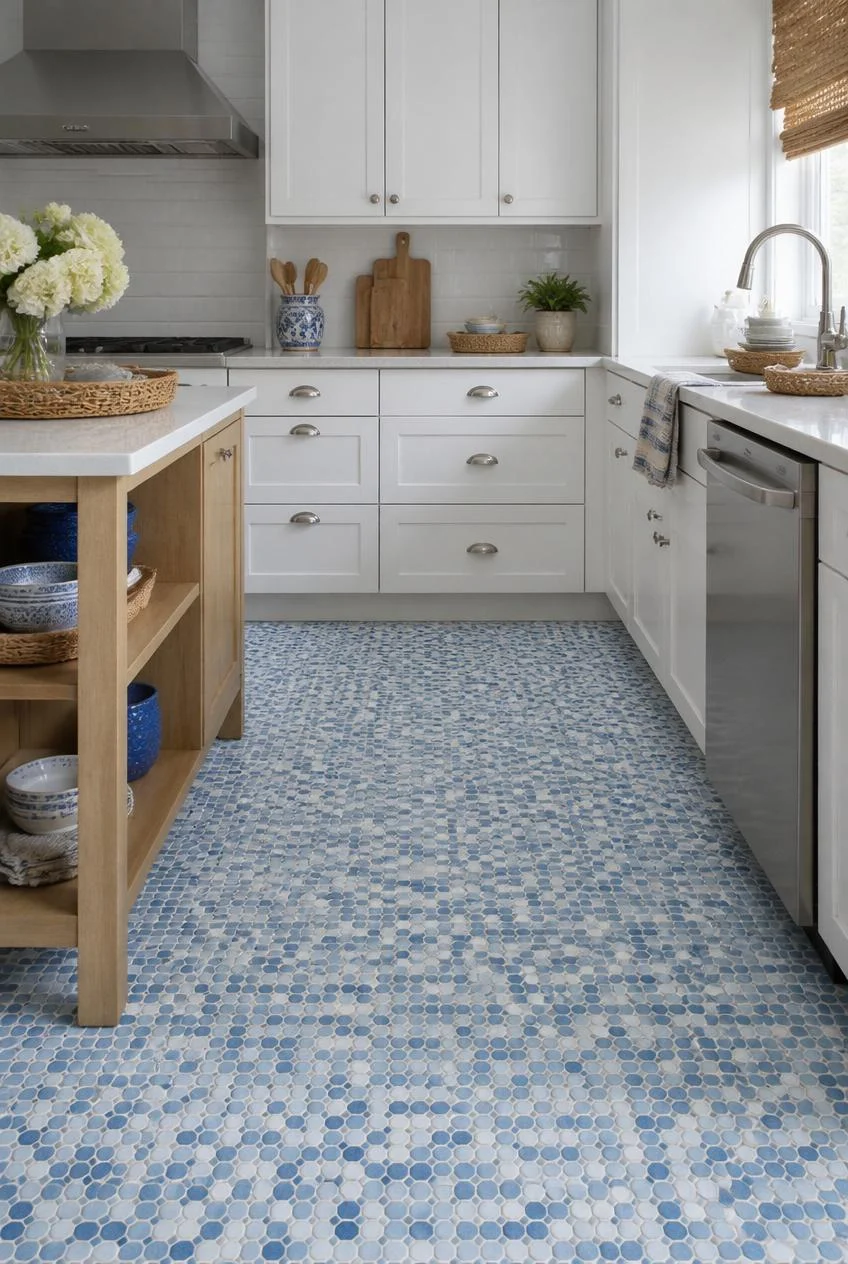
A mosaic tile floor in a blue and white pattern, a simple checkerboard, or a hexagonal penny tile in a coastal tone brings pattern into the coastal kitchen at the one level where it least competes with the surrounding cabinetry, countertops, and backsplash. Because the floor is seen largely from above rather than straight on, pattern at floor level reads more as texture than as decoration, giving the room visual richness without visual complexity.
White and blue penny tiles or a classic black and white checkerboard in a small format are two of the most timeless choices for a coastal kitchen floor, both because they reference the historical character of beach cottages and because their established track record means they will look as appropriate in twenty years as they do today.
Material Note
Porcelain mosaic tiles are generally preferred over ceramic in a kitchen floor application because porcelain’s lower porosity makes it more resistant to food and liquid staining and easier to maintain in a room where spills are a daily reality.
Natural Fiber Rugs for Warmth and Texture
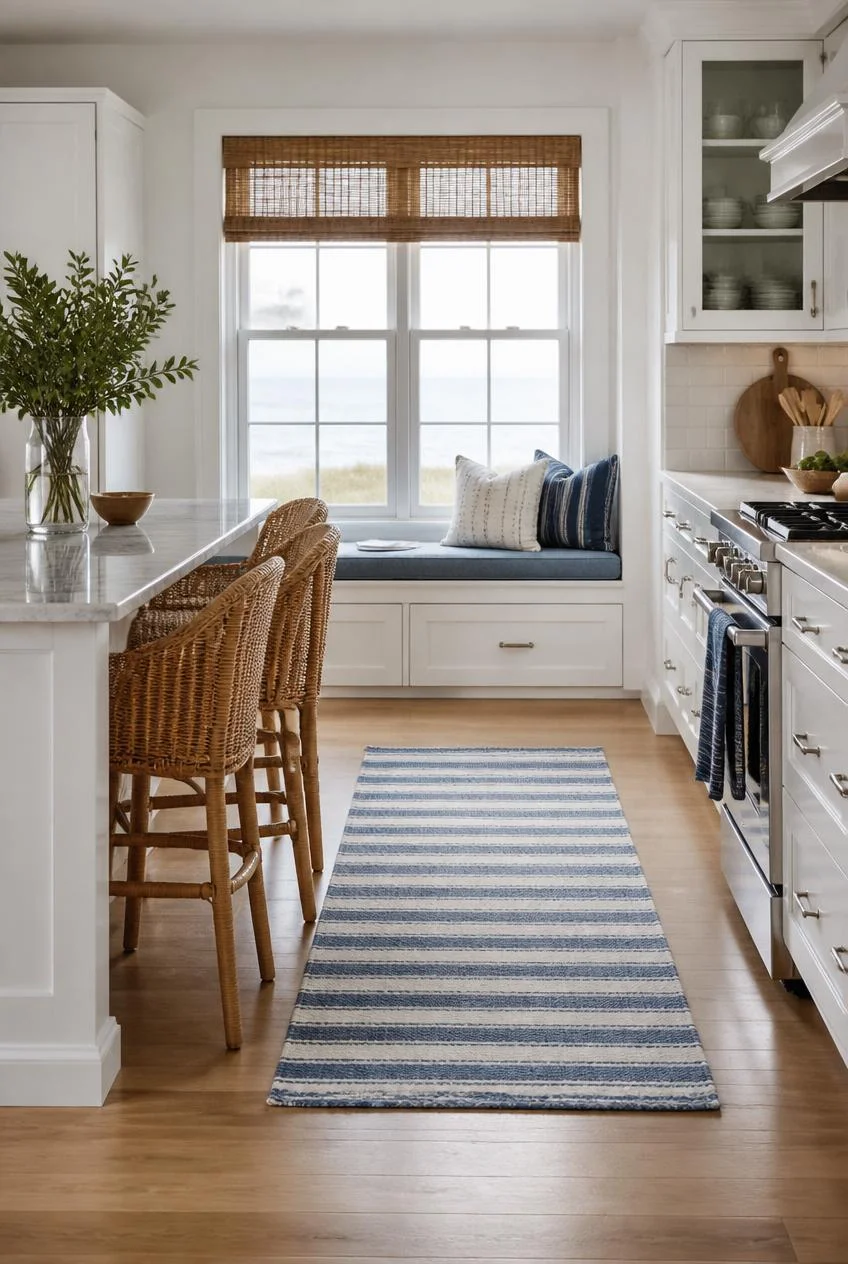
A natural fiber rug in jute, sisal, or a flat-woven cotton in blue and white stripes brings organic texture to a coastal kitchen floor in a way that hard tile and wood surfaces alone cannot provide. In kitchens with a dedicated sitting area, a breakfast nook, or an island with bar seating, a rug also defines that zone and gives it a comfortable, residential quality that suits the relaxed character of coastal kitchen design.
Blue and white striped cotton or jute rugs are the most characteristic choice for a coastal kitchen, since the stripe directly references the aesthetic language of beach towels, sailing canvas, and coastal textiles without requiring any additional decorative elements to reinforce the connection.
Practical Consideration
Choose a low pile or flat weave rug for a kitchen application, since deep pile rugs collect debris more readily in a food preparation environment and are considerably more difficult to clean after spills. A rug pad beneath the rug prevents movement on hard flooring and adds a minimal degree of cushioning underfoot.
Linen Roman Shades for Breezy Window Treatments
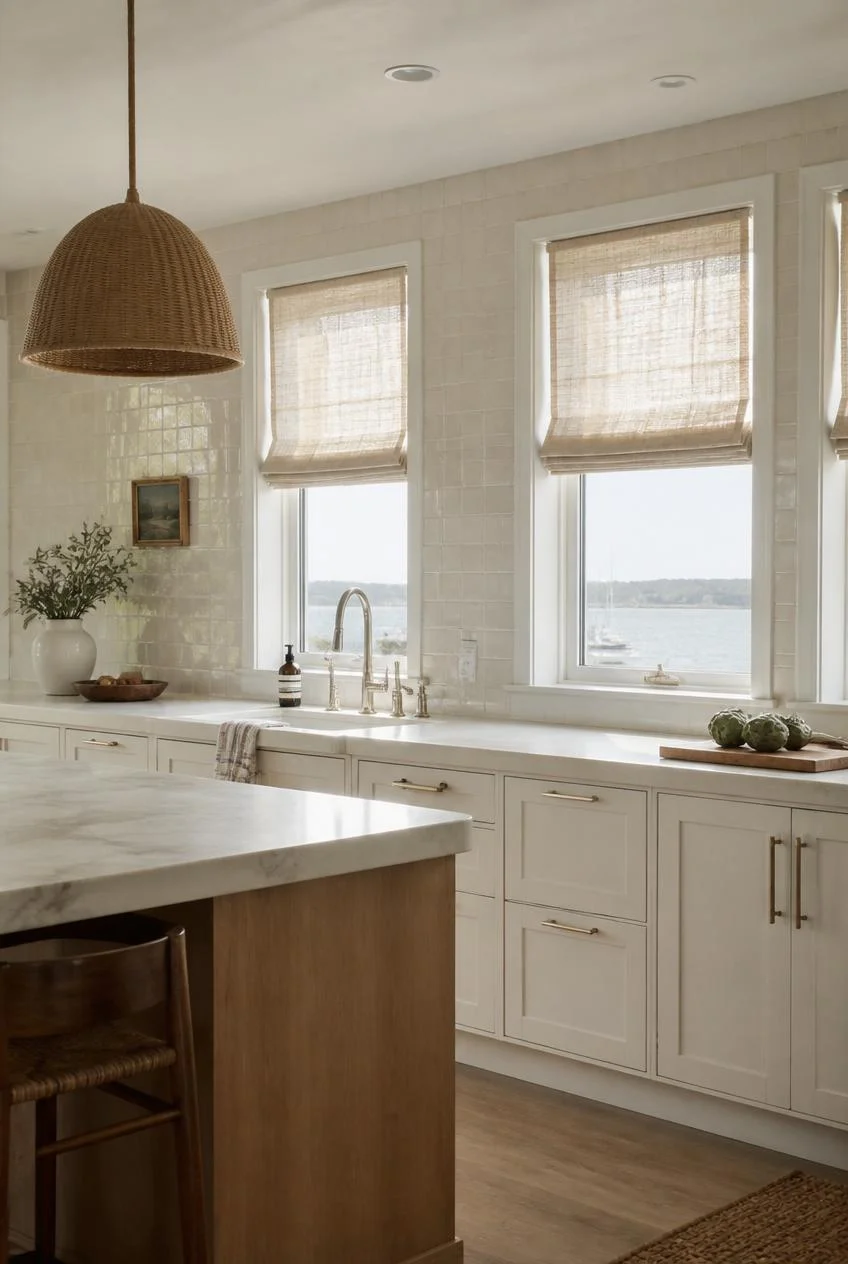
Linen Roman shades in a natural, warm white, or soft stripe pattern are the window treatment that suits coastal kitchen design most naturally, since they filter natural light while remaining visually unobtrusive, pull neatly up and out of the way when not needed, and introduce a soft textile quality to the window wall that heavier curtain alternatives tend to compromise by adding too much visual weight.
In a kitchen with multiple windows, using the same linen Roman shade across every window creates a visual consistency that simplifies the room and makes the cabinetry, countertops, and backsplash the room’s primary elements rather than the window treatments.
Color Choice
A natural unbleached linen shade in a tone close to the ceiling color suits most coastal kitchens, since it allows the shade to read as part of the wall when raised and as a soft filtering element when lowered, rather than as a decorative addition that competes with the surrounding room.
Sea Glass and Ceramic Accessories as Finishing Touches
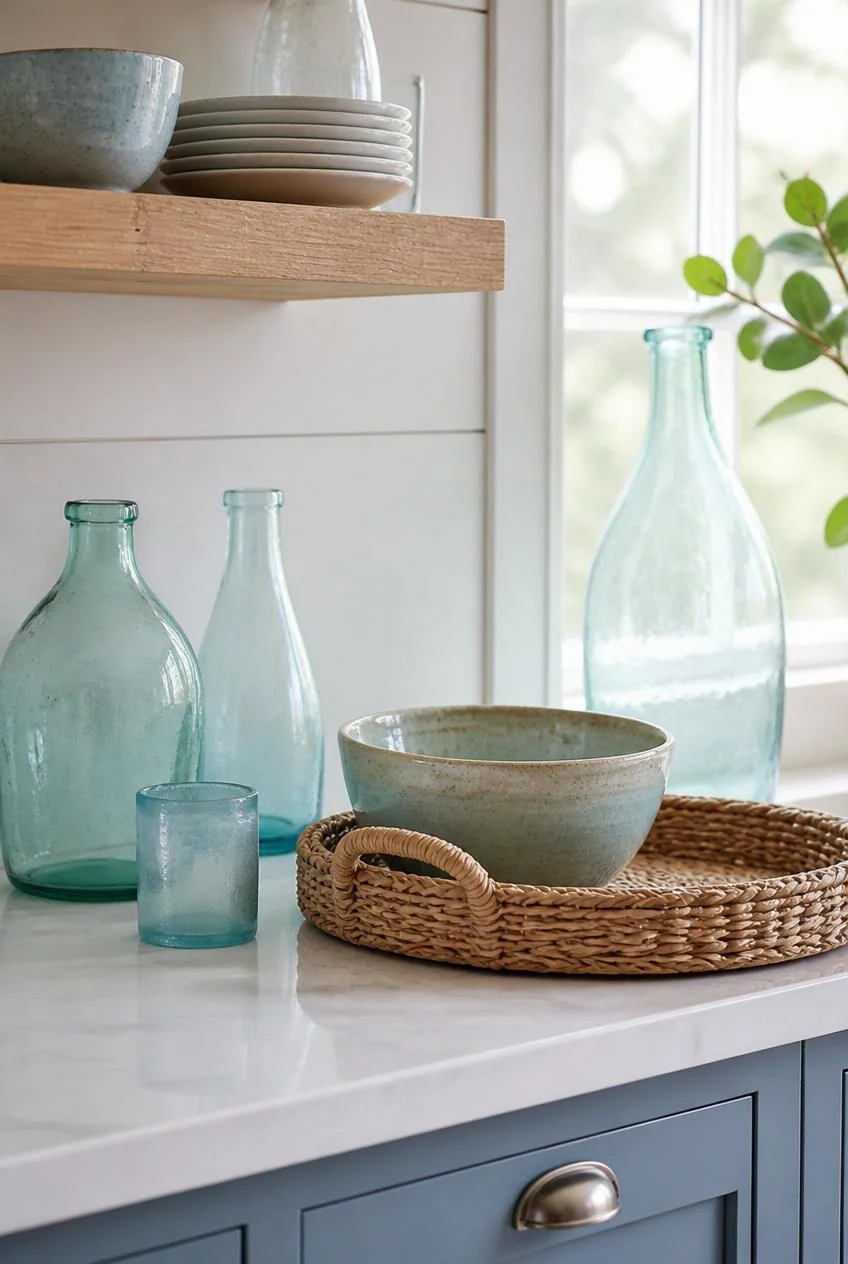
The finishing touches in a coastal kitchen should feel found rather than purchased, which is exactly the quality that sea glass vessels, ceramic bowls in organic shapes, simple coral pieces, and woven baskets share. These objects introduce the final layer of personal character and material interest that completes the coastal kitchen aesthetic without requiring any additional structural or architectural change.
Sea glass in aqua, soft blue, and green tones displayed in a simple glass jar or arranged on an open shelf, a handmade ceramic serving bowl beside the sink, and a woven wicker tray on the island countertop each add a detail that the room genuinely benefits from without the risk of overcrowding a space built on the principle of restraint.
The Finishing Rule
Each accessory should either serve a function or add something visually that nothing else in the room already provides. If it does neither, it belongs somewhere else.
An Outdoor Dining Connection for Indoor-Outdoor Flow
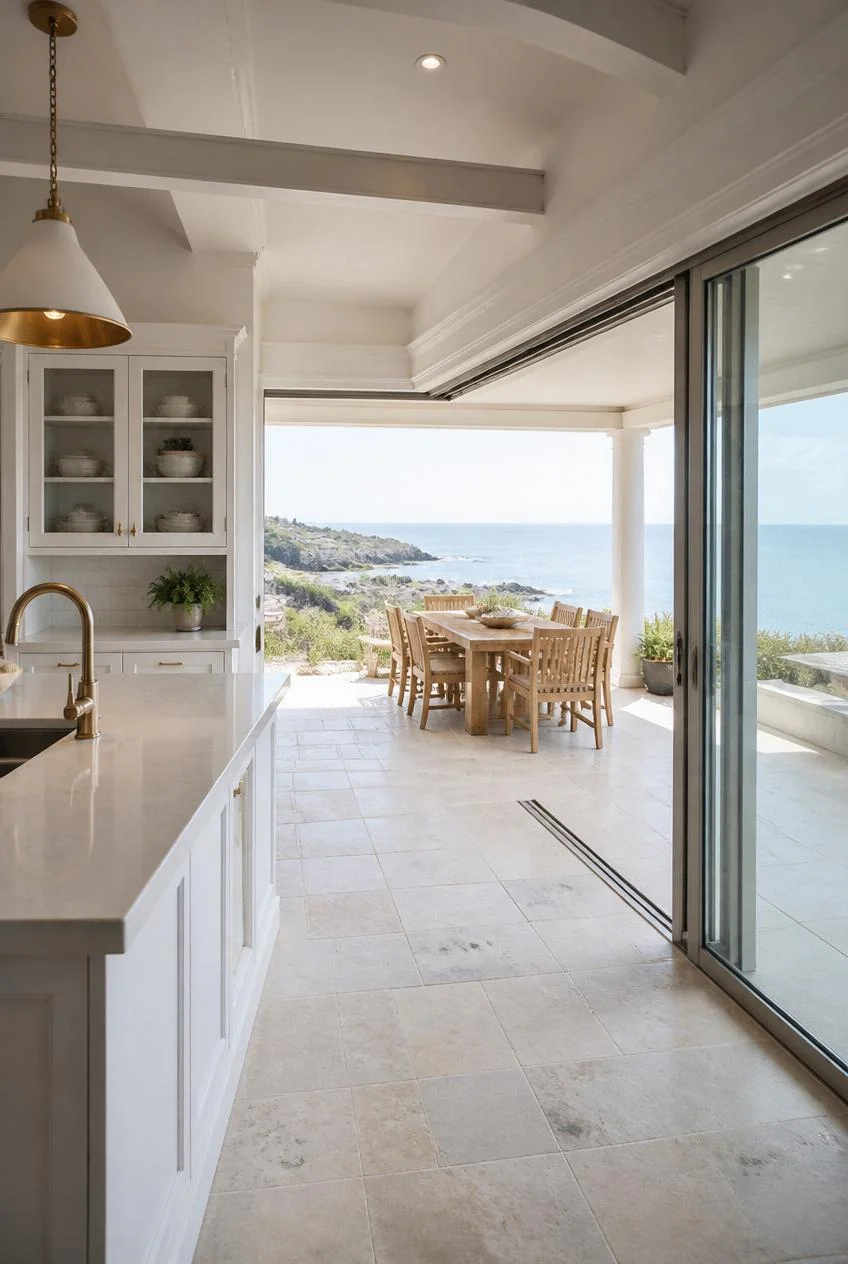
The finest coastal kitchens do not stop at the kitchen walls. They connect to an outdoor space, whether a deck, a patio, a covered veranda, or a garden, in a way that makes the interior and exterior feel like a single flowing space rather than two separate rooms separated by a door. Sliding or folding glass doors that open the kitchen to an outdoor dining or entertaining area extend the kitchen’s sense of space significantly, particularly when the outdoor flooring material is either identical to or closely related to the interior floor.
Consistent material choices across the threshold, whether continuous tile extending from inside to out, or a complementary natural wood deck that sits close in tone to the interior floor, reinforces the sense of continuity that makes the indoor-outdoor kitchen feel genuinely intentional rather than simply connected by proximity.
Where Interior Space Is Limited
In coastal kitchens where a full indoor-outdoor connection is not structurally possible, even a window positioned above the kitchen sink to frame an outdoor view, or a window box with fresh herbs planted immediately outside, introduces enough visual connection to the exterior to communicate the outdoor living philosophy that coastal design is built around.
What Makes a Coastal Kitchen Timeless
The coastal kitchen ideas in this guide share a characteristic that extends well beyond aesthetic preference: they are built on a consistent underlying logic. Light colors that maximize natural light. Natural materials that connect the interior to the landscape outside. Textures that suggest the organic variety of sand, water, and wood without imitating them literally. Hardware and fixtures chosen for warmth and longevity rather than for novelty.
That logic is the reason the best coastal kitchens look as beautiful in a photograph taken twenty years after construction as they do when first installed. They are not expressions of a particular moment in design culture. They are expressions of a relationship between architecture and natural environment that does not change with seasons or trends. A custom designed coastal kitchen that feels genuinely timeless is always the result of that deeper logic applied consistently, from the color of the cabinetry to the choice of a single rug.
FAQs
What colors work best for a coastal kitchen?
White, soft blue-grey, navy, sage green, and warm natural wood tones are the most effective choices for a coastal kitchen palette. These tones reference sand, water, and driftwood without making the design feel overtly thematic.
Do coastal kitchens have to include obvious nautical decoration?
No. The most sophisticated coastal kitchens achieve their character entirely through material and color choices, natural textures, and generous natural light rather than through nautical themed accessories like ropes, anchors, or shells.
What countertop material suits a coastal kitchen best?
White or light-toned quartzite, Carrara marble, or a quartz in a similar vein pattern are the most consistently effective choices, since their natural movement references water and stone while complementing the light palette of coastal design.
Can a coastal kitchen work in a home that is not near the water?
Yes. Coastal design is defined by its palette, materials, and quality of light rather than by geographic location. A well-designed coastal kitchen can feel genuinely connected to that aesthetic in any climate or setting.
What lighting suits a coastal kitchen?
Woven rattan or natural fiber pendants above the island, recessed ceiling lights for general illumination, and warm-toned under-cabinet lighting together create the layered, warm light quality that suits coastal kitchen design most naturally.
You May Also Like This Post:
20 Minimalist Living Room Ideas That Create a Beautiful and Timeless Space