
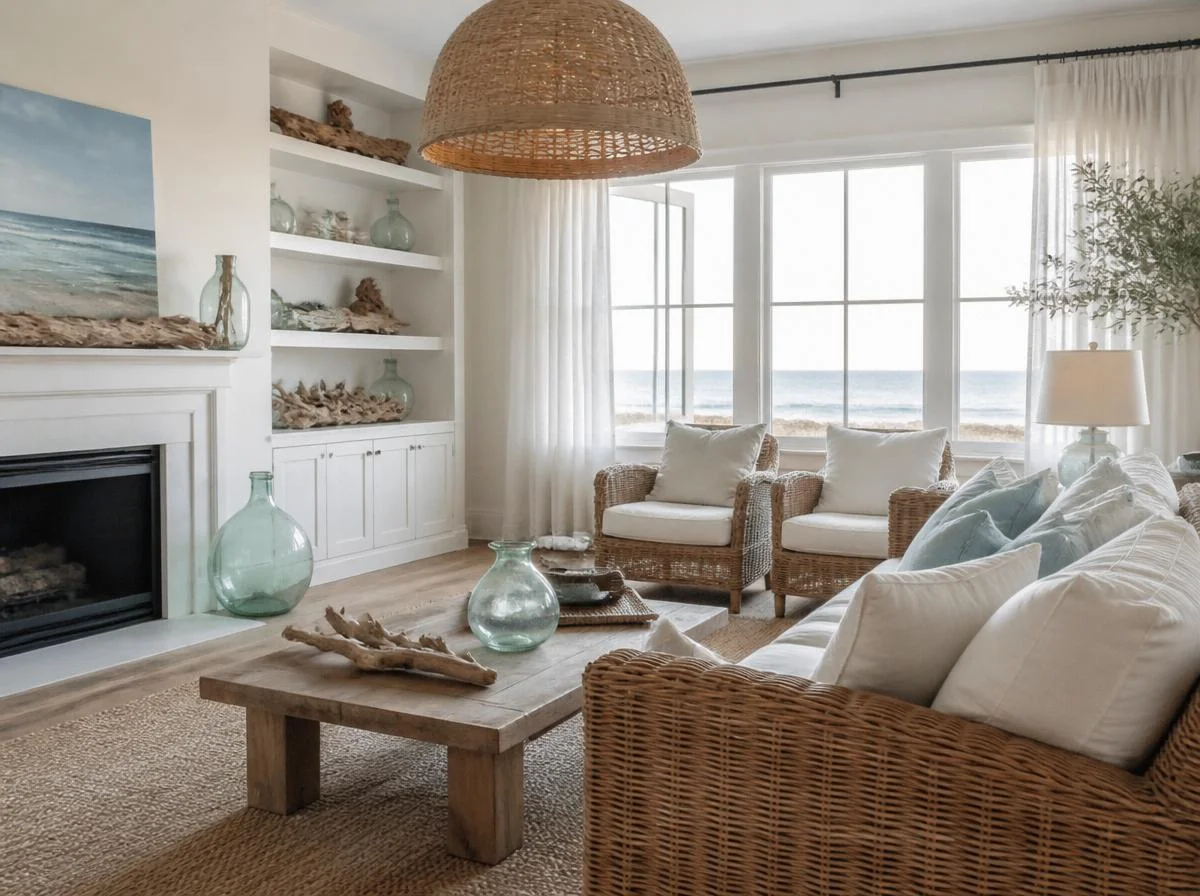
16 Coastal Decor Ideas That Bring a Relaxed, Timeless Feel to Your Home
There is a reason coastal interiors consistently rank among the most searched and most loved home design styles in the world. It is not simply that they look beautiful, though they do. It is that they feel like something. Standing inside a well designed coastal home, there is a quality of ease that has nothing to do with the furniture and everything to do with the way every decision in the room points toward the same instinct: slow down, breathe, stay a while.
Coastal decor at its best captures that instinct without forcing it. It does not stack anchors on shelves and call it a beach house. It does not rely on clichéd nautical themes to signal its identity. Instead, it uses natural materials, an organic earthy palette, generous natural light, and a disciplined restraint with clutter to create rooms that feel genuinely connected to the landscape of coastal living whether they are on the shoreline or in the middle of a city.
This guide covers 16 coastal decor ideas that work at every scale and every budget, from a full room transformation to a few well-chosen objects that shift the feeling of a space entirely. Each idea is rooted in the same underlying logic: genuine materials, honest color, and the kind of calm that a great beach day always leaves behind.
A Nature-Inspired Coastal Color Palette Beyond Blue and White
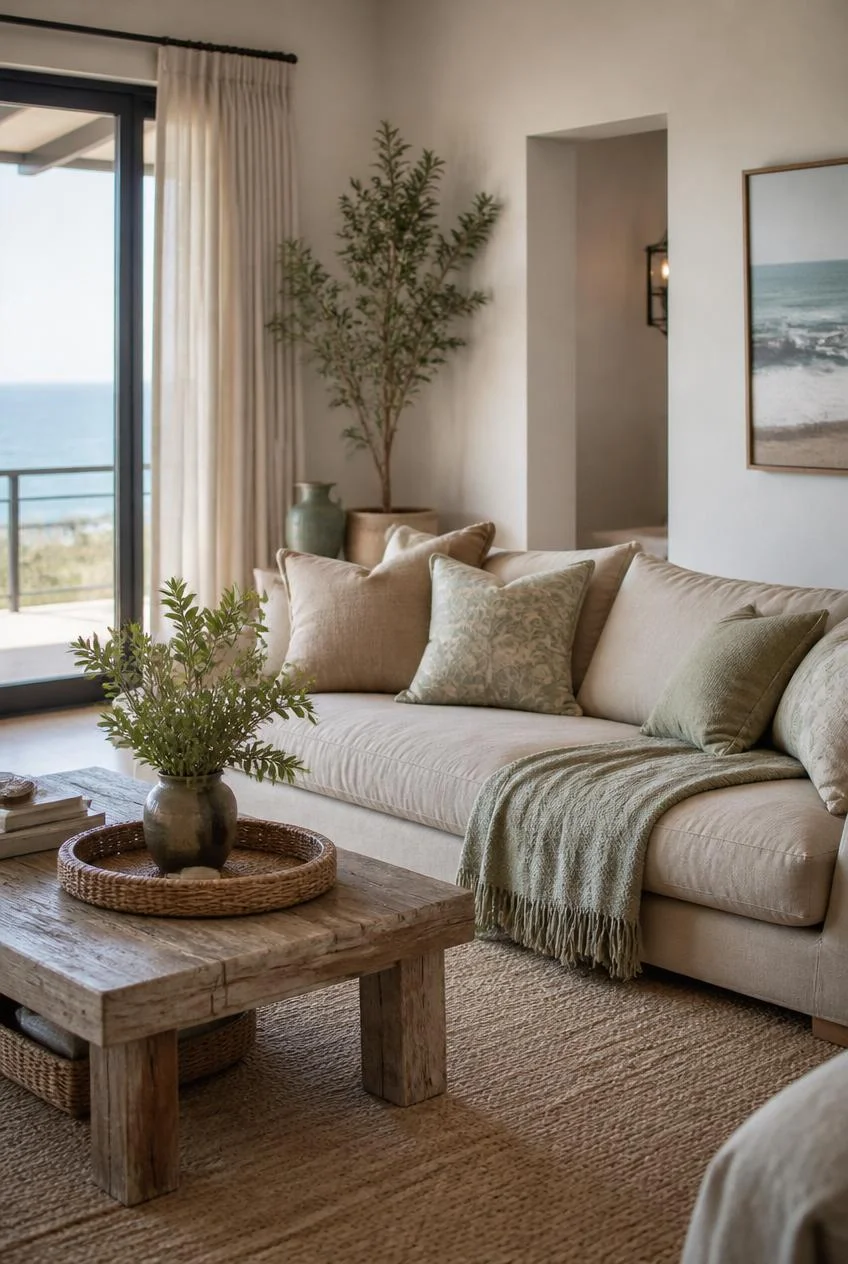
The most current and most sophisticated coastal color palette has moved decisively beyond the expected combination of stark navy and crisp white. The colors that define genuinely timeless beach house decor today are drawn from the full range of the coastal landscape: sandy beige, warm ivory, sea mist green, driftwood brown, soft putty, and muted clay, all layered together in a room that feels like a long afternoon on a warm shoreline.
These earthy coastal tones share a quality that pure white and saturated blue do not: they look equally beautiful under the cool light of a cloudy morning and the warm glow of an evening lamp, which means the room changes character through the day without requiring any adjustment. Building a layered neutral coastal palette from three or four of these tones across walls, large furniture, and textiles creates the kind of settled, cohesive atmosphere that defines a room as timeless rather than trendy.
Building the Coastal Palette
Start with the lightest tone on the walls, a warm ivory or soft sandy white. Move the large furniture one shade warmer, toward beige or putty. Add a single sea mist green or faded aqua in a textile or an accessory. Keep the floor in a natural material tone, either warm wood or a natural fiber rug in jute or sisal. The result is a room that references the coastline entirely through color temperature rather than through literal beach imagery.
Rattan and Wicker Furniture as the Room’s Natural Backbone
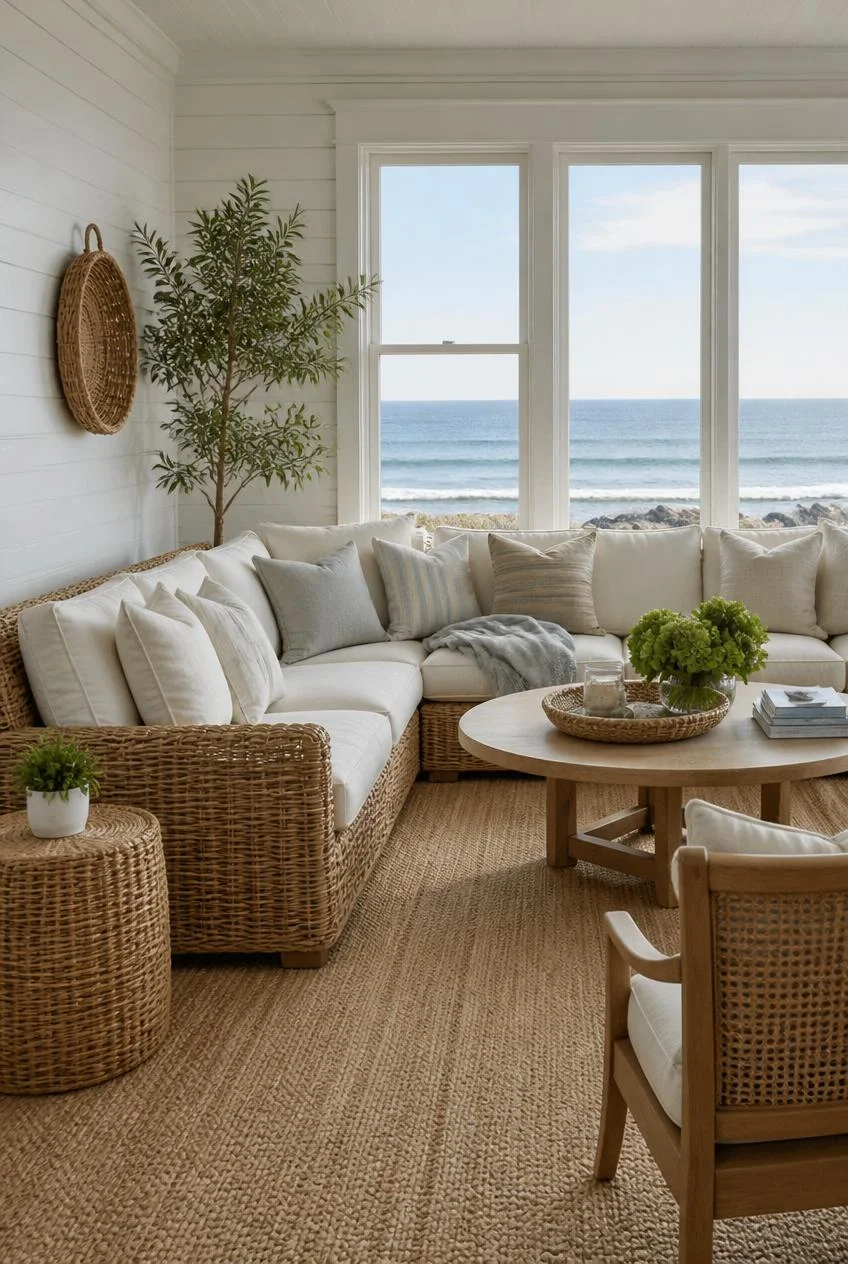
No material is more instinctively and more durably associated with coastal interior design than rattan and wicker. Both are natural plant fibers woven into furniture forms that feel genuinely light, organic, and connected to the outdoors in a way that upholstered or lacquered alternatives simply do not. A rattan armchair, a wicker side table, or a cane-backed dining chair in the context of a coastal room immediately brings warmth and natural texture that hard furniture cannot replicate.
The current direction in coastal decor uses rattan and wicker not as accent pieces but as primary furniture choices, building rooms around a rattan sectional or a wicker daybed as confidently as an interior designer might build a room around a velvet sofa in another context. Paired with linen cushions in coastal tones and a natural fiber rug underfoot, rattan furniture creates a room that feels relaxed, genuine, and completely at ease in its own skin.
Mixing Rattan With Other Materials
Rattan and wicker pair naturally with light-toned solid wood, bleached oak, and stone surfaces, since all three share the same warm, natural material quality. Avoid mixing rattan heavily with polished metals, high gloss lacquer, or synthetic materials, since the contrast between the organic and the artificial tends to work against the effortless quality that coastal furniture arrangements rely on.
Linen Textiles for a Breezy, Relaxed Atmosphere
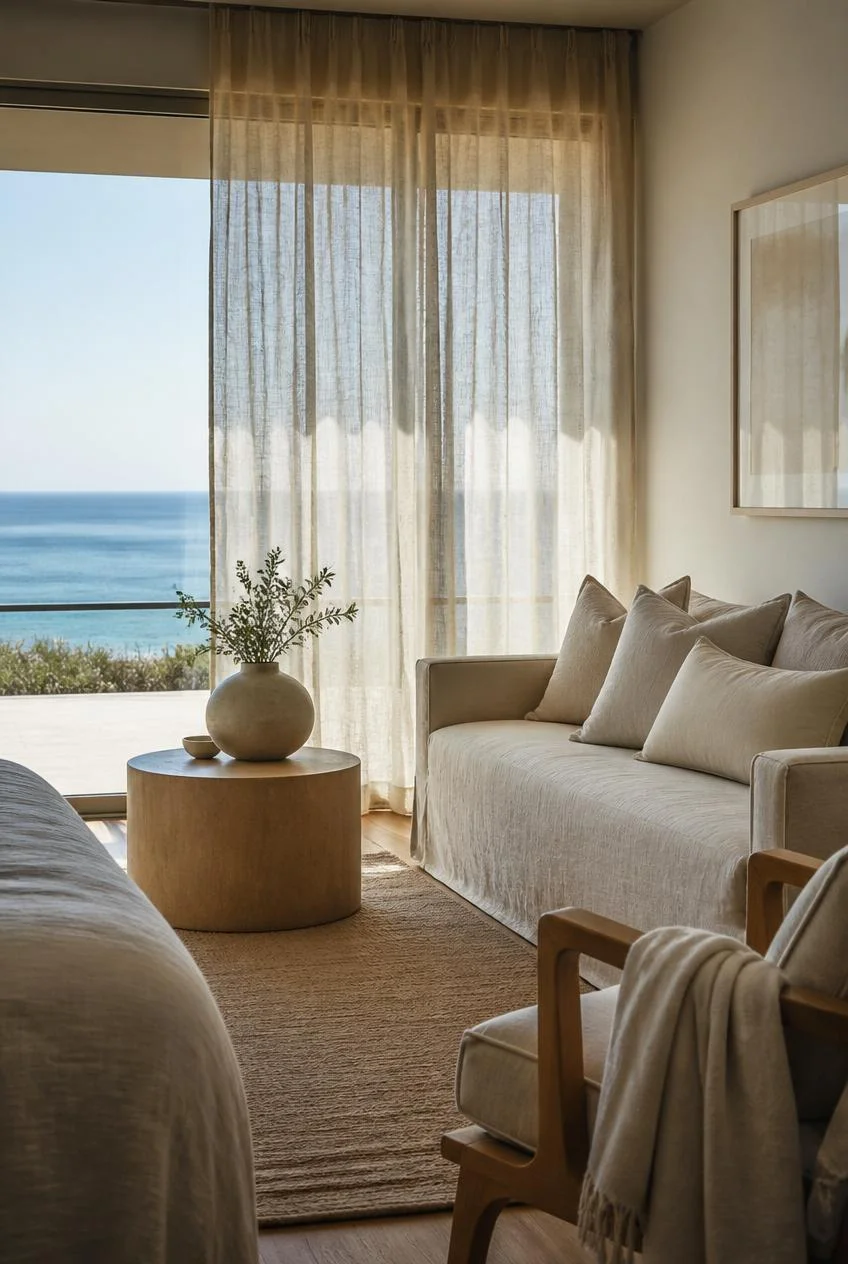
Linen is the textile that suits coastal decor more naturally than any other fabric because it does the one thing coastal design requires most: it looks relaxed. Linen wrinkles. It softens over time. It catches natural light differently from different angles and in different weathers. These qualities, which would be flaws in a more formal interior, are precisely the qualities that make linen feel so at home in a beach house context.
Linen curtains hung from ceiling height, linen sofa cushions in warm neutral tones, and linen throw blankets folded casually over a chair arm all contribute to the same quality of ease. Using linen consistently across multiple textile applications in a room, rather than as a single accent, gives the space a material coherence that reinforces the relaxed, breezy atmosphere of genuine coastal living.
Linen Color Choices
Undyed or naturally colored linen in tones of oatmeal, warm white, and sandy beige suits the organic coastal palette most naturally. Linen in a soft aqua or faded stripe introduces the coastal color reference more directly and suits rooms that want to signal the palette more clearly rather than relying entirely on material and form to carry the identity.
Driftwood and Reclaimed Wood Accents
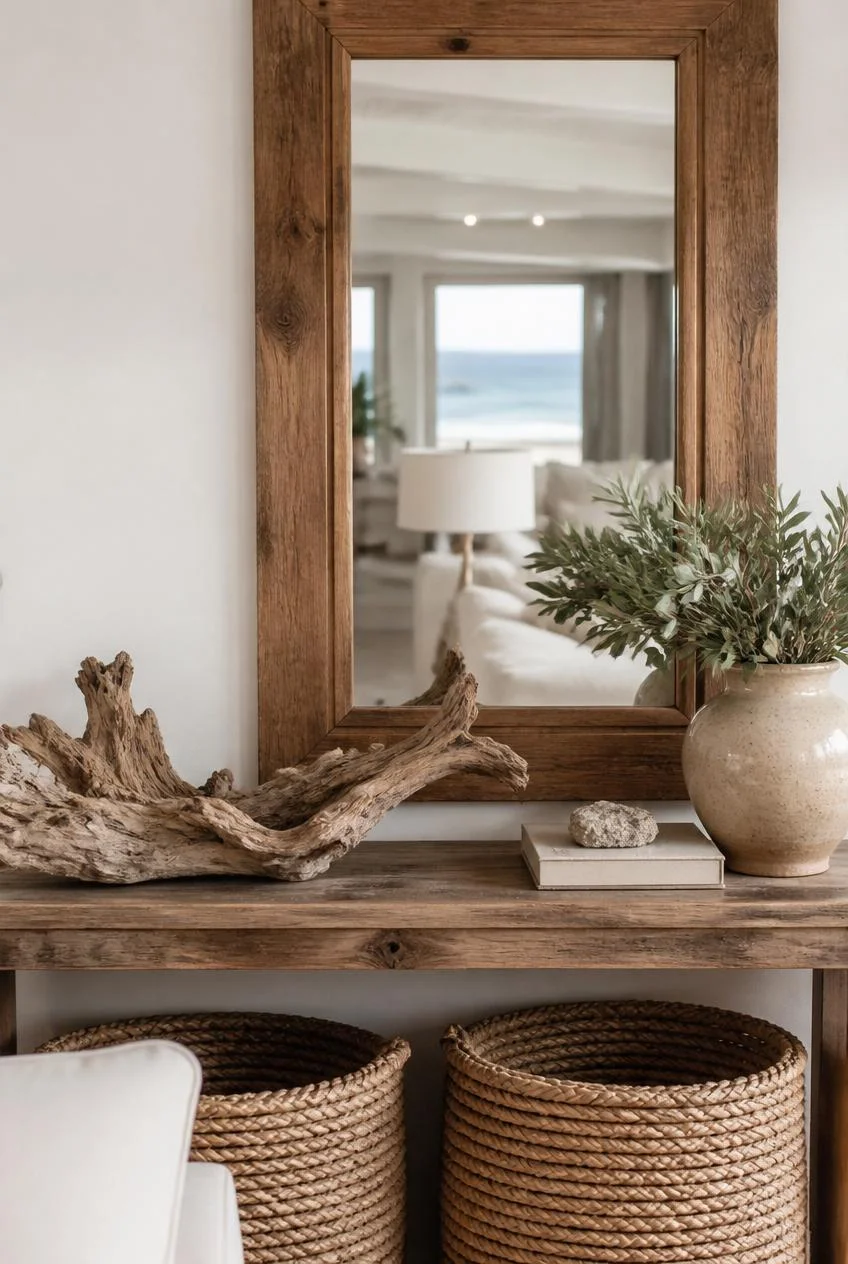
Driftwood, whether genuine pieces collected from a shoreline or commercially produced pieces that replicate the bleached, weather-worn quality of real driftwood, brings a direct material reference to the coastal landscape into a home in a way that feels entirely authentic rather than themed. A driftwood sculpture on a console table, a reclaimed wood frame around a mirror, or a driftwood centerpiece on a dining table each add the kind of tactile, organic character that connects a room to the natural world outside.
Reclaimed wood used in furniture, shelving, and architectural detailing carries the same quality in a more structural form. A reclaimed wood coffee table or a floating shelf in a weather-worn timber introduces both material warmth and a sense of history that new, uniform materials cannot replicate.
Sourcing Authentic Pieces
Genuine driftwood pieces found personally carry significantly more character than commercially produced equivalents. Even a single piece collected during a coastal visit and placed on a shelf or windowsill gives a room a connection to a real place and a real experience that purchased decor can suggest but never fully replicate.
Woven Rattan and Capiz Shell Pendant Lighting
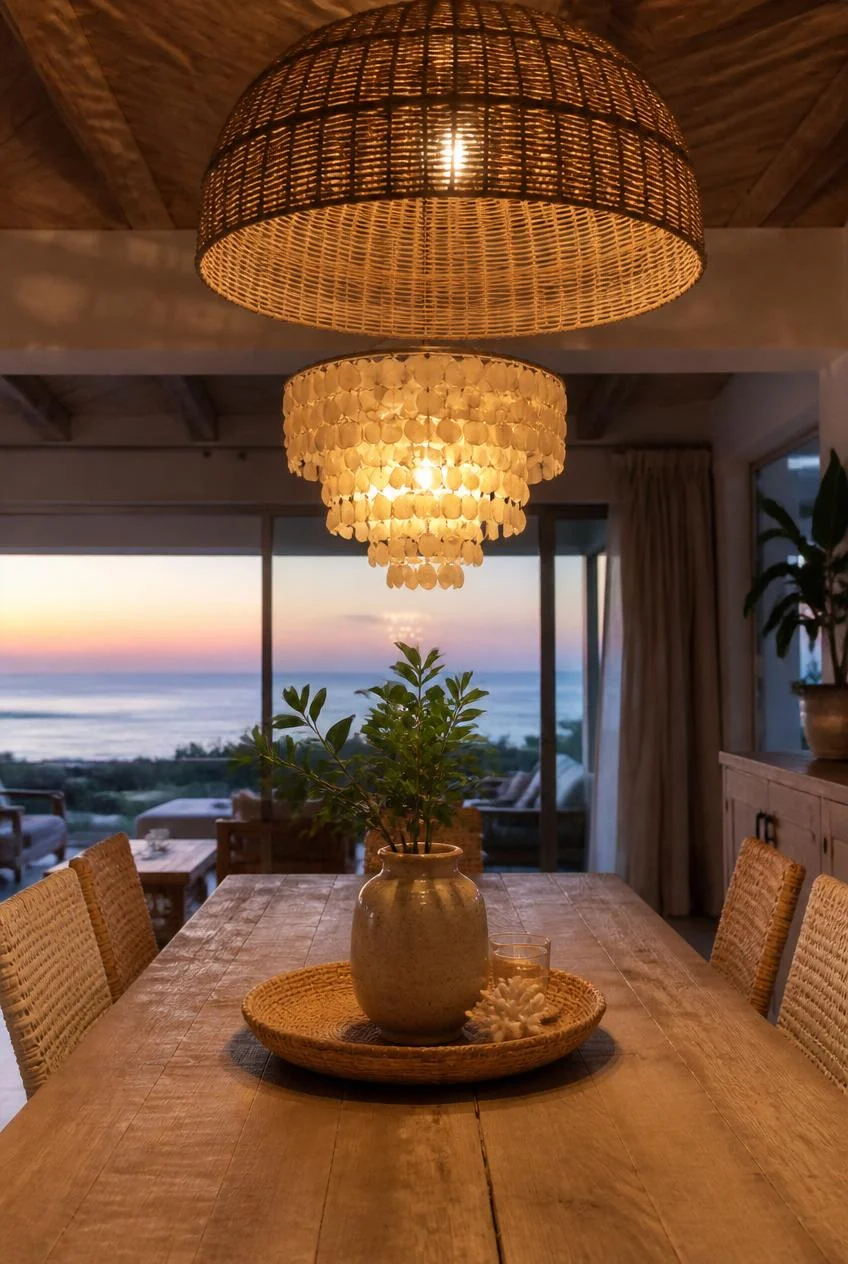
The lighting in a coastal home deserves the same material attention as the furniture and textiles, and the fixtures that suit this context best are those made from natural materials that filter and diffuse light rather than projecting it uniformly. Woven rattan pendant lights, whether large dome forms above a dining table or smaller basket shapes beside a bed, cast a warm, dappled glow through their woven structure that creates atmosphere rather than simply providing illumination.
Capiz shell pendants, made from thin translucent shells layered together, add a particularly beautiful coastal quality to a room, since the shells shimmer slightly as they move and cast a soft, scattered light that references the way sunlight plays across water. Both materials suit the organic coastal palette naturally and feel considerably more resolved in a coastal context than glass, ceramic, or metal alternatives.
Pendant Placement
Hang woven or shell pendants low enough above a dining or seating surface to feel present and intimate rather than distant. The filtered quality of the light they produce is most effective at close range, where the warmth of the material is also visible.
Shiplap and Beadboard Wall Treatments
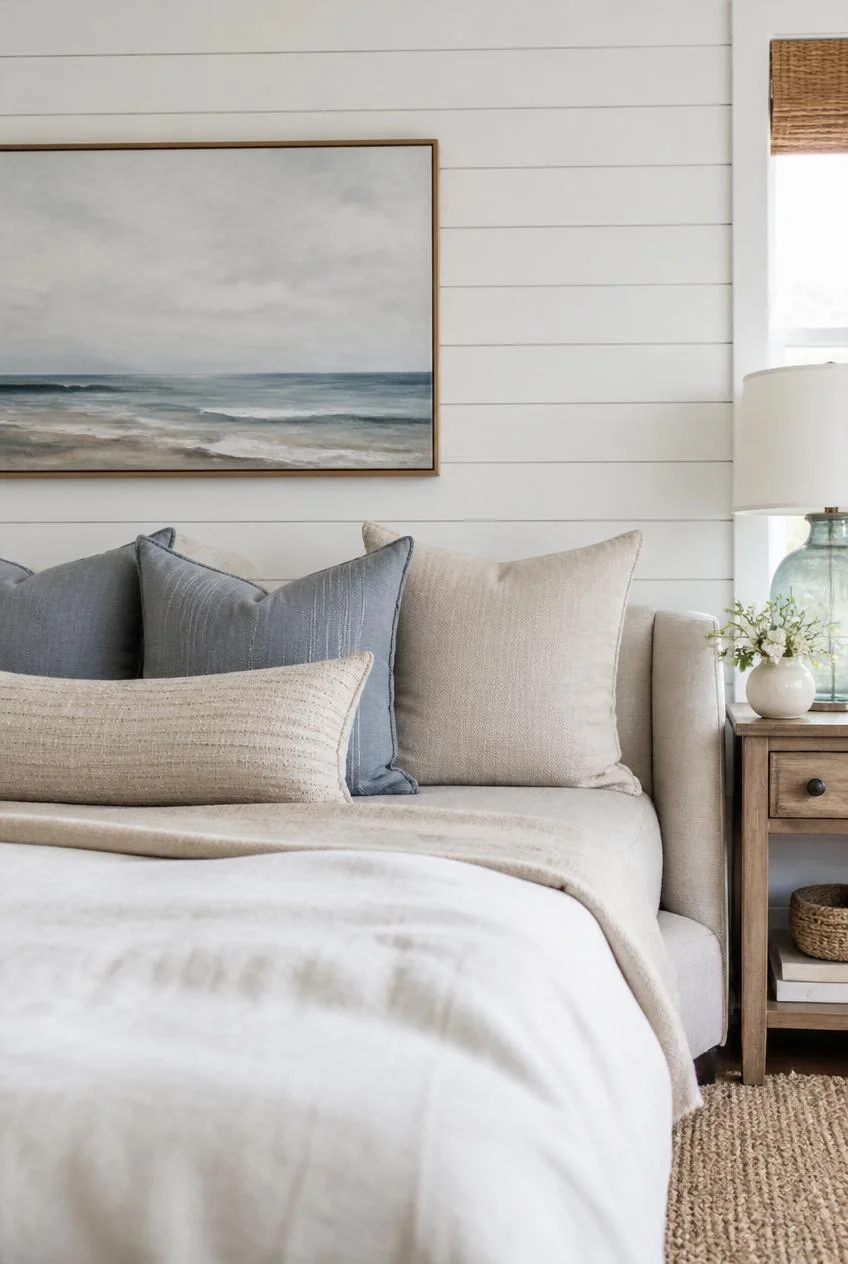
Shiplap and beadboard, the horizontal and vertical wood paneling treatments historically associated with East Coast beach cottage architecture, add architectural character to a coastal interior that flat painted walls cannot provide. Applied to a single accent wall, used as wainscoting in a dining room or hallway, or extended across a ceiling in a living room or bedroom, these treatments introduce the dimensional texture and craft quality that give a coastal home genuine warmth rather than simply the appearance of it.
White painted shiplap or naturally stained beadboard both suit the coastal palette, with the choice between them depending on whether the room benefits from the crisp brightness of white paneling or the warmer tone of a natural wood finish. Either way, the three-dimensional quality of the paneling catches light differently throughout the day, creating a subtle variation that flat surfaces never achieve.
Contemporary Application
Slim profile shiplap in a narrower board width than traditional versions reads as more contemporary and less heavily themed than wide-board applications, which suits modern coastal interiors that want the character of the treatment without the heavier visual commitment of a more traditional execution.
Ocean-Inspired Art That Feels Personal and Curated
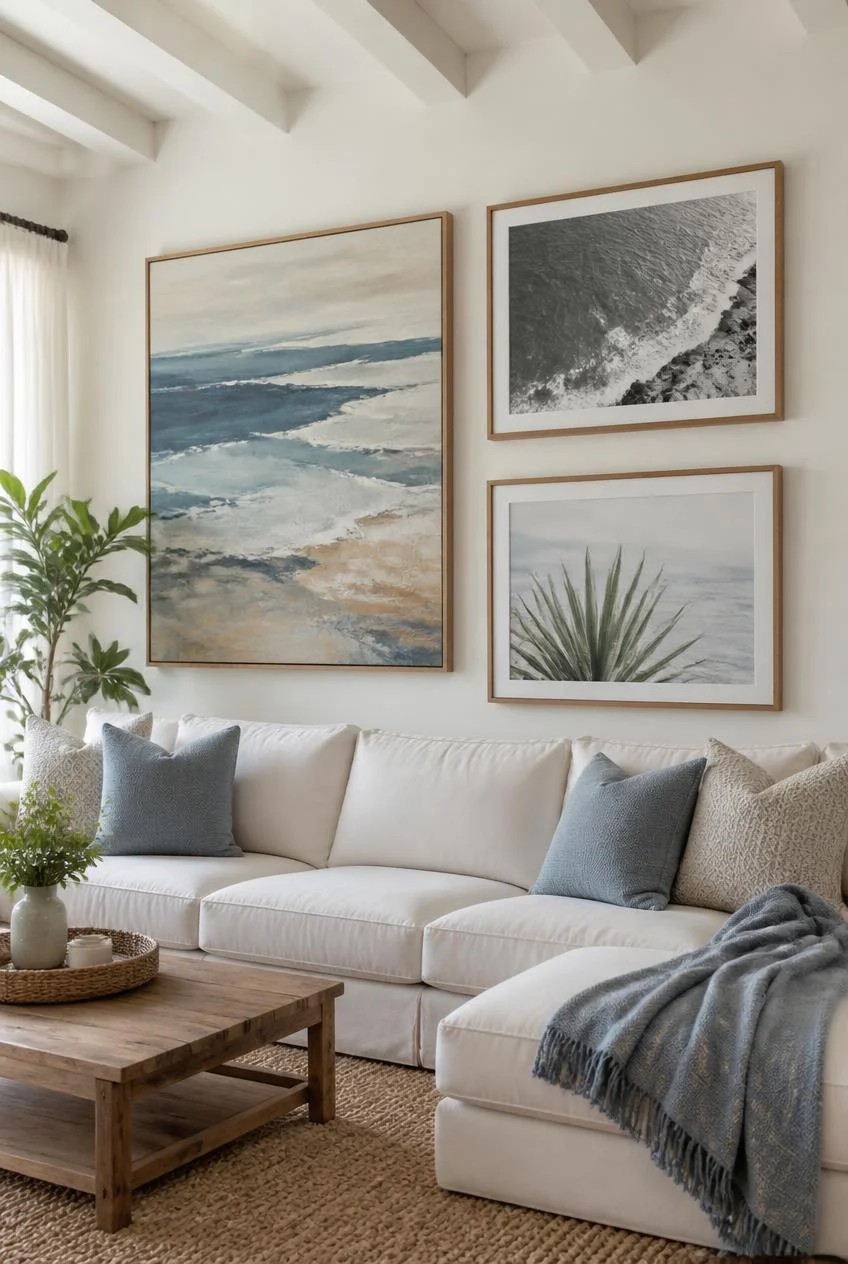
Wall art in a coastal home should feel found or commissioned rather than purchased as part of a package, and the difference shows immediately. A large-scale abstract painting in ocean blue and sandy tones, a black and white aerial photograph of a shoreline, or a series of botanical studies of coastal plant life each contribute something visually specific that a generic coastal print cannot match.
The most effective coastal wall art does not require explicit imagery of the sea to communicate its connection to the coastal landscape. Abstract work in the right palette, a textural study in natural dyes, or even a large-scale photograph of early morning light across water all carry the emotional quality of coastal living without requiring a literal depiction of it.
Gallery Wall Approach
A coastal gallery wall works best when the frames are consistent in finish, either natural wood or a single neutral tone, and the art itself varies in subject and scale. Mixing an abstract coastal painting with a framed botanical print, a personal photograph, and a small piece of driftwood mounted in a shadow box creates a display that feels genuinely collected rather than assembled.
Sea Glass Vessels and Objects as Accent Pieces
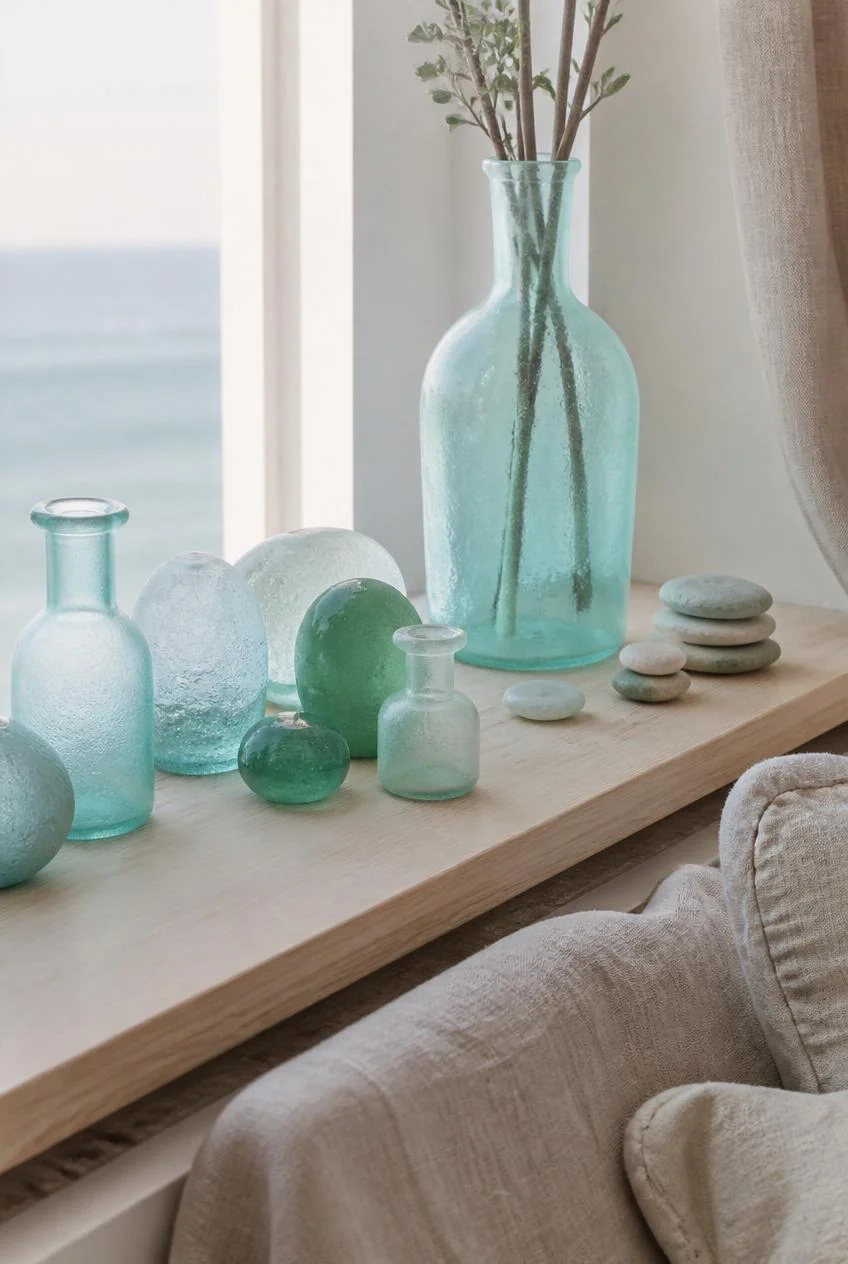
Sea glass, whether genuine pieces collected from a shoreline or the frosted glass vessels that replicate the same quality of light, brings one of the most quietly beautiful material qualities of the coastal landscape into a home. The soft, translucent quality of sea glass in aqua, sage, and soft blue tones glows in natural light in a way that solid ceramic or clear glass cannot, and even a small collection displayed on a shelf, a windowsill, or a bathroom counter makes an immediate contribution to the coastal atmosphere of the space.
Sea glass and frosted glass vessels pair particularly naturally with natural wood shelving and linen textiles, since the soft translucent quality of the glass creates a contrast with the organic opacity of the surrounding materials that feels visually resolved rather than competing.
Simple Display Ideas
A glass jar or a simple ceramic bowl filled with genuine sea glass is one of the most affordable and most effective single decor additions available to a coastal interior. The collection grows gradually over time, which gives it a quality of natural accumulation that purchased decor sets consistently lack.
Stripe Patterns in Coastal Textiles
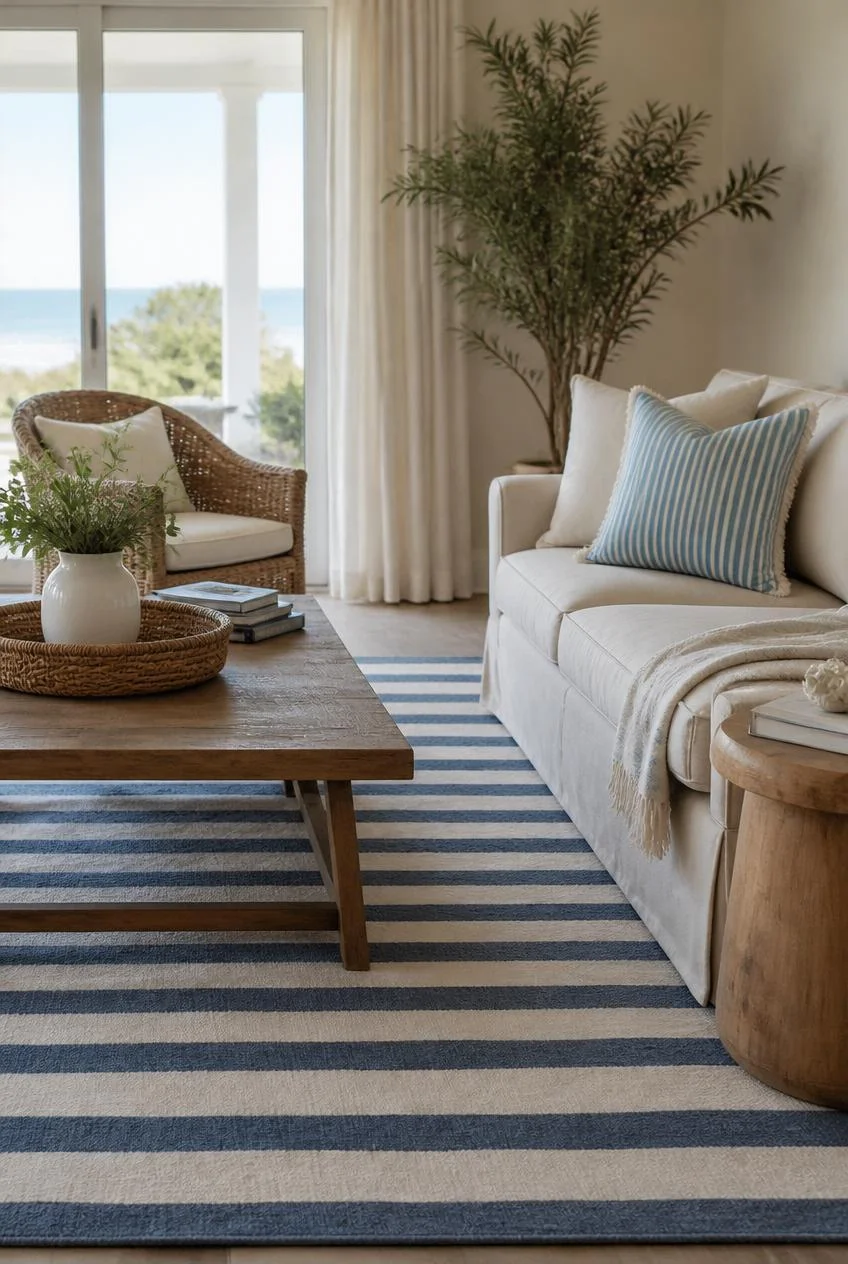
The stripe pattern is the most enduring graphic element in coastal decor precisely because it appears in so many genuine coastal contexts: the canvas of sailing boats, the fabric of beach chairs and umbrellas, the planking of wooden piers and boardwalks. A blue and white striped rug, a natural stripe on a linen cushion, or striped Roman shades in a soft coastal tone introduce pattern into a coastal room without disrupting its palette or its calm character.
The key is keeping the stripe within the coastal color palette, whether classic navy and white, soft aqua and cream, or natural sand and warm white, so the pattern reads as part of the room’s material story rather than as a decorative addition from outside it.
Restraint With Pattern
Limit stripe patterns to one or two applications per room, using them as a grounding element within an otherwise material-textured space rather than as the room’s dominant decorative feature. A striped rug under a seating arrangement and a single striped cushion on the sofa is typically enough to introduce the pattern quality without overwhelming the room’s overall calm.
Natural Fiber Rugs to Ground Every Room
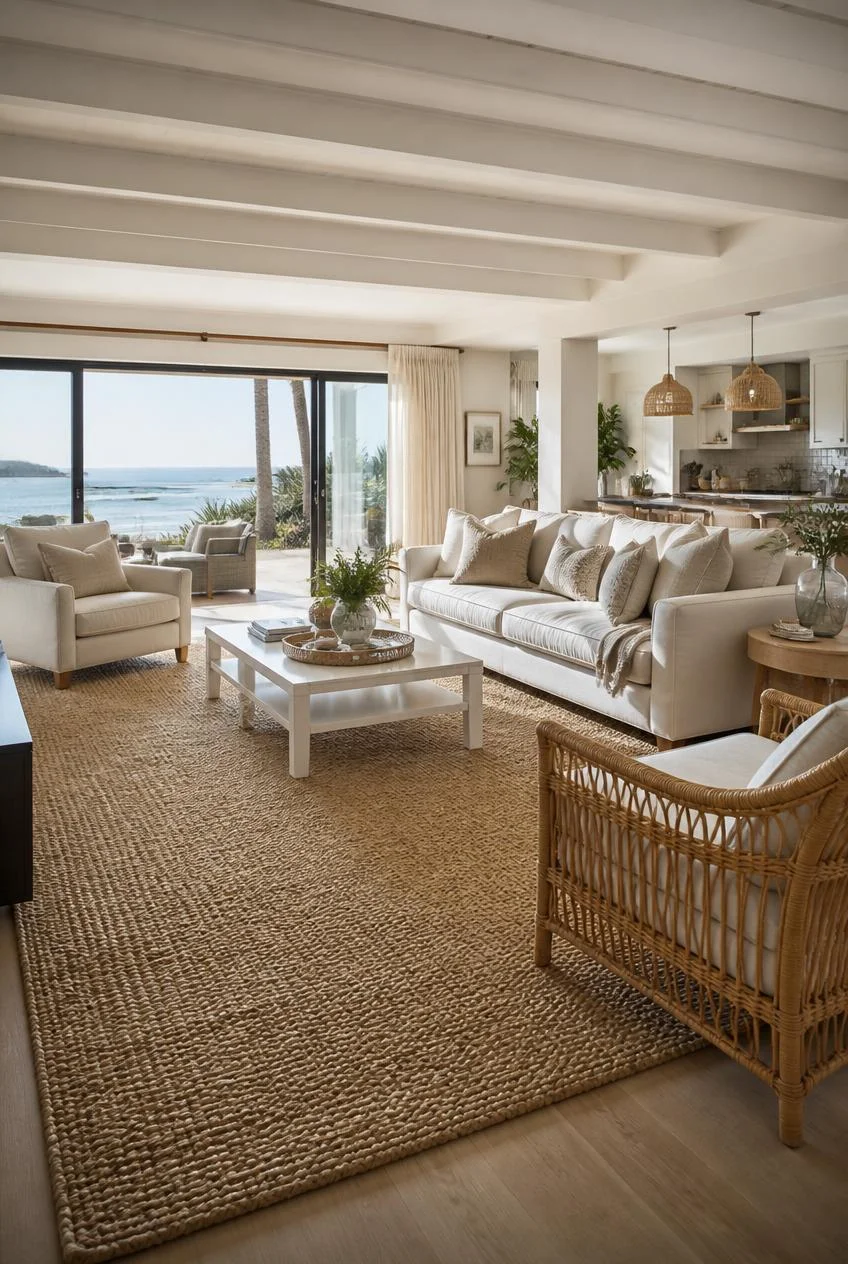
A natural fiber rug in jute, sisal, or a flat-woven seagrass is one of the most essential elements in a coastal interior, since it grounds every room in the same material language as the outdoor landscape while adding a tactile warmth that hard flooring surfaces alone cannot provide. The natural tone of an undyed jute rug works within virtually every coastal color palette, from pure white and navy to the more complex earthy combinations of warm ivory, driftwood, and sea mist green.
In open-plan coastal homes, a large natural fiber rug defines the seating zone and creates a sense of boundary without walls or partitions, connecting the furniture arrangement into a coherent group while maintaining the open, airy quality that coastal interiors are built around.
Care Consideration
Natural fiber rugs in jute and sisal are not ideal for high-moisture areas or outdoor use, but they perform well in living rooms, bedrooms, and dining rooms where their organic quality adds most to the coastal atmosphere. A rug pad underneath prevents movement on hard flooring and extends the life of the rug considerably.
Indoor Plants and Coastal Greenery
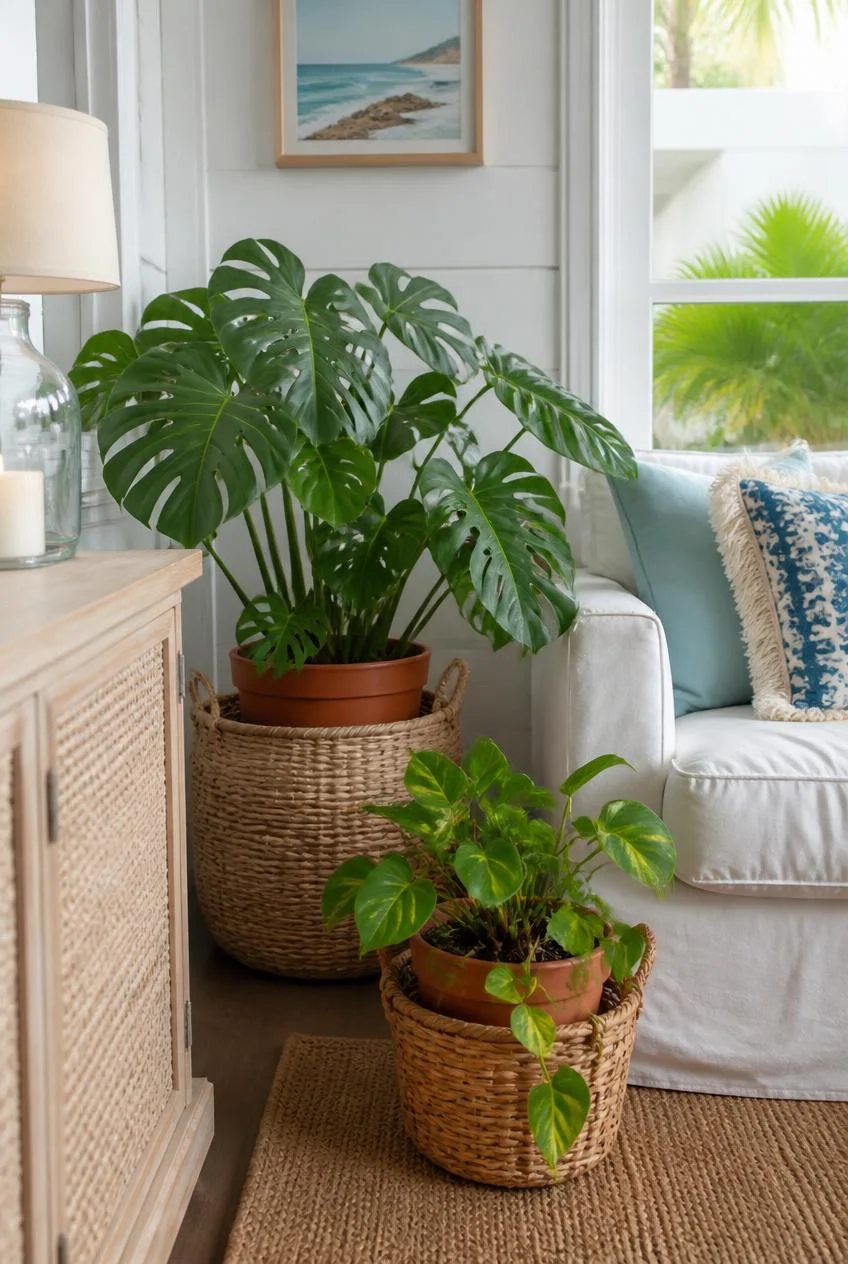
Plants in a coastal interior extend the connection between the indoor space and the natural landscape outside in a way that no inanimate object can fully replicate. The specific plants that suit coastal decor best are those that reference the local flora of shoreline environments: trailing pothos, string of pearls, large-leafed tropical varieties, sea oats styled in a terracotta pot, or a simple olive tree in a plain ceramic planter.
The organic growth and seasonal change of living plants also introduce an element of genuine life into a room that prevents it from feeling over-styled or too composed. A coastal room with a few well-chosen plants feels inhabited and cared for in a way that distinguishes it from a room that is simply beautifully decorated.
Container Choice
Simple terracotta pots, woven baskets as pot covers, and plain unglazed ceramic planters suit the coastal material palette most naturally. Avoid highly decorated or vividly colored containers, since the plant itself should remain the primary element and an overly decorative pot tends to compete with the plant’s own form and color.
White and Cream Bedding for a Serene Coastal Bedroom
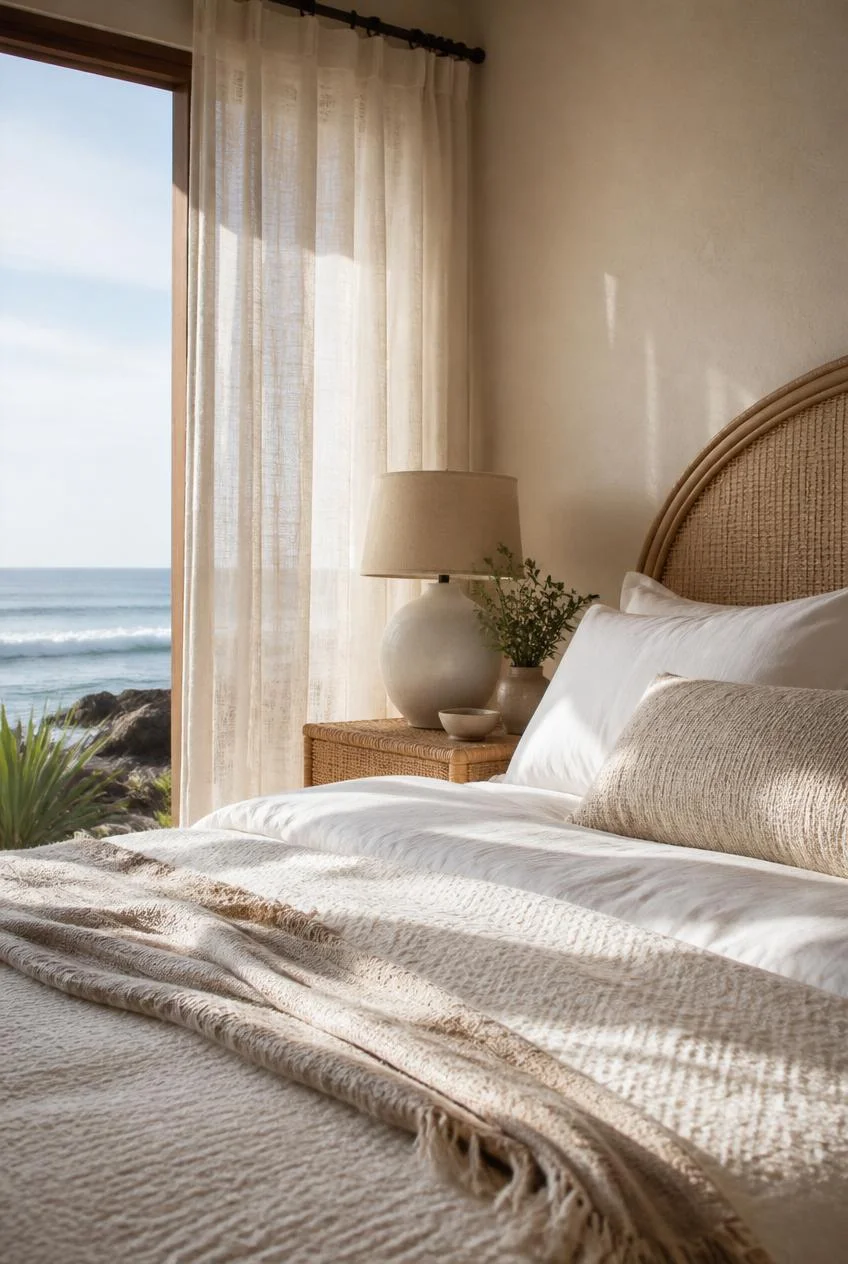
The coastal bedroom achieves its character of serene, vacation-like ease primarily through its bedding choices and its treatment of natural light. White or cream linen bedding, layered with a woven cotton coverlet, a linen duvet, and a few cushions in coastal tones, creates the kind of bed that looks as beautiful and inviting in the morning light as it does in the soft warmth of an evening lamp.
Sheer linen curtains that filter natural light without blocking it entirely give the coastal bedroom a breezy, sunlit quality throughout the day that heavier window treatments cannot provide. The combination of light bedding and filtered natural light creates the essential quality of a beach house bedroom: a room that makes sleep feel like a deliberate, pleasurable act rather than simply the end of a day.
Layering the Bed
Begin with crisp white or warm cream fitted sheets. Add a linen duvet in a slightly warmer tone. Layer a textured woven blanket across the foot of the bed. Add two or three cushions in coastal tones, keeping the number low enough that the overall bed retains its clean, relaxed quality rather than becoming a display surface for accessories.
Rope and Jute Decorative Details
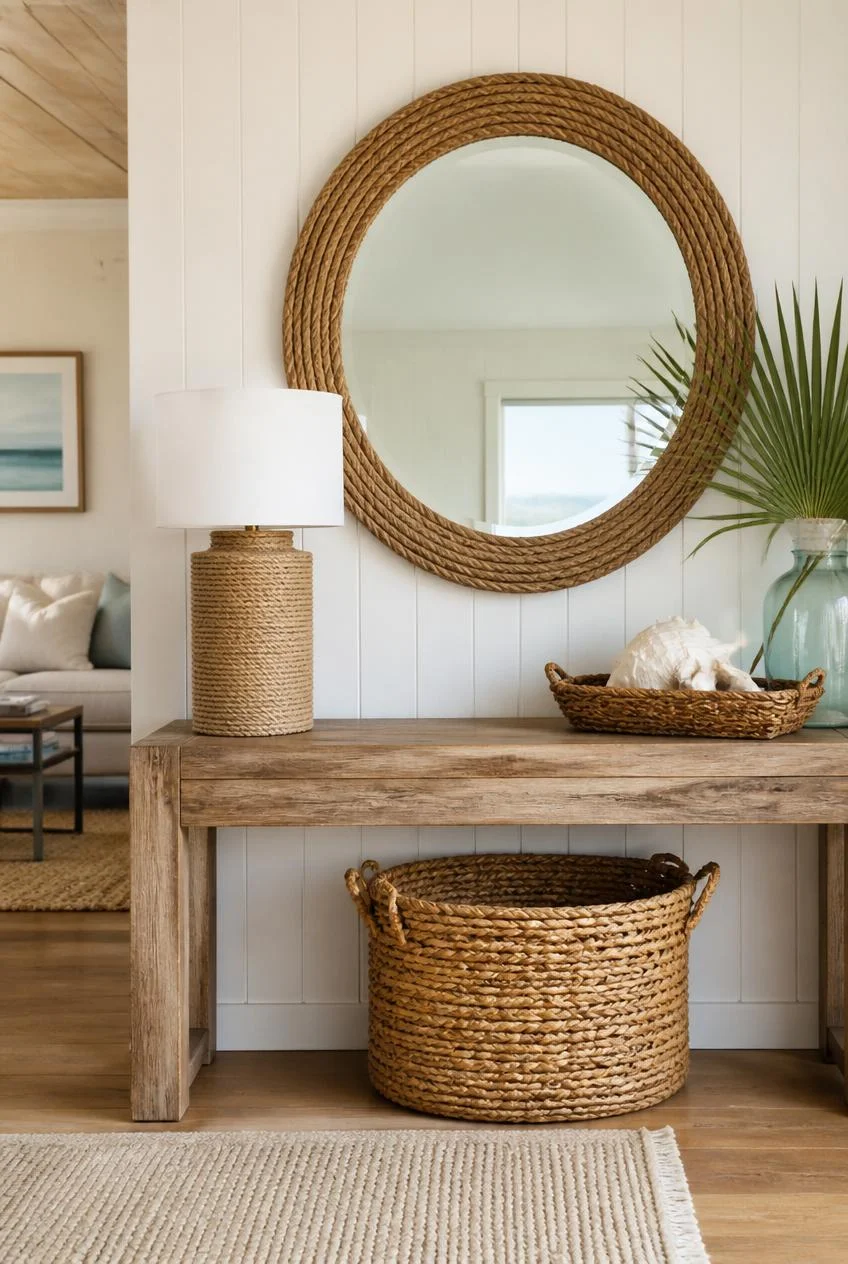
Rope and jute, used thoughtfully rather than as obvious nautical props, add a layer of organic tactile texture to a coastal interior that references the materials of the shoreline without becoming thematic. A jute wrapped lamp base, a rope framed mirror, a woven jute basket used as a magazine holder or planter cover, or even a length of natural rope coiled and used as a decorative object on a shelf all introduce the material quality of coastal life in a genuinely subtle way.
The discipline is in keeping these elements restrained and integrated rather than using them as obvious decoration. A single rope-framed mirror or a jute lamp base contributes meaningfully to the coastal material story without being noticed as a themed element, which is precisely the quality that separates sophisticated coastal decor from the over-referenced nautical interiors that felt dated a decade ago.
Where to Use Them
Rope and jute details work best as finishing touches within a room that has already established its coastal character through palette and material choices rather than as the primary elements asked to carry the coastal identity on their own.
Open Shelving Styled With Coastal Objects
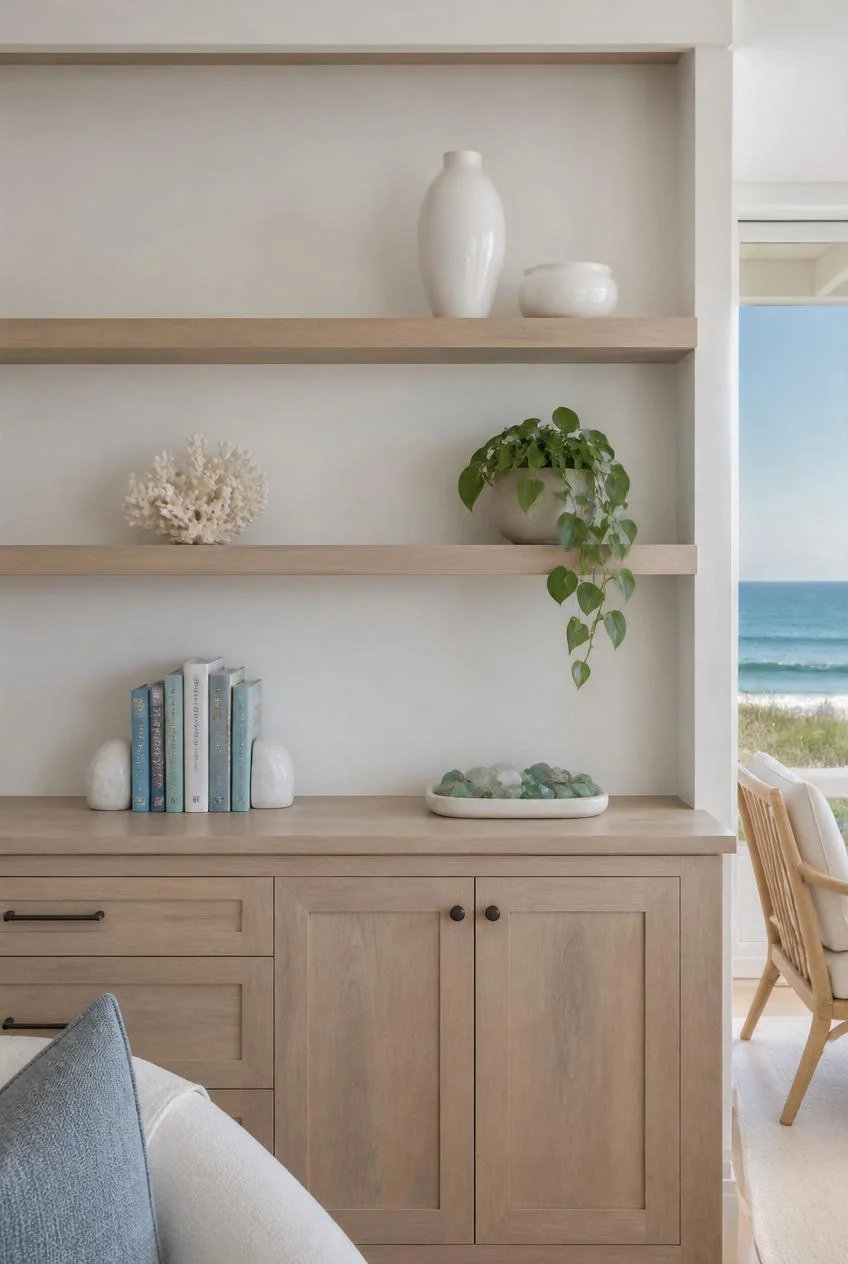
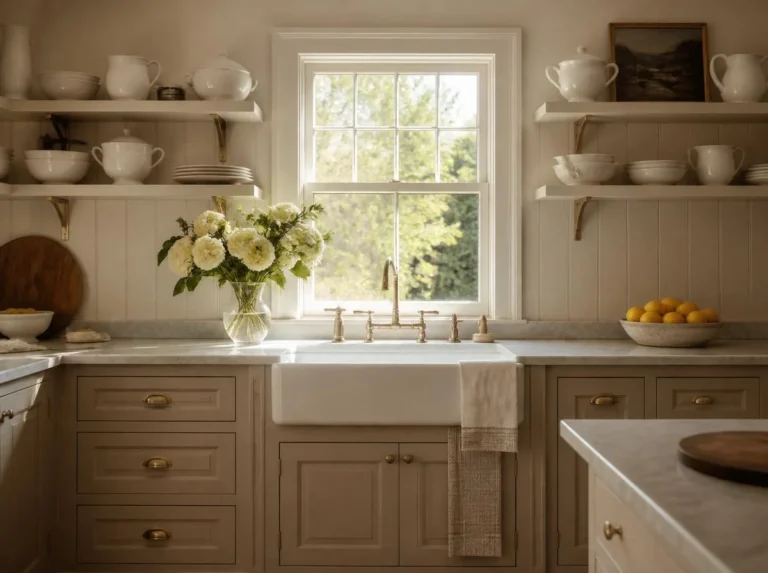
Open shelving in a coastal home gives the room a display surface that can evolve over time as the collection of meaningful coastal objects grows. A shelf styled with white ceramic vessels, sea glass pieces, a few cookbooks, a small piece of coral, a trailing plant, and one or two genuinely personal objects has a character and authenticity that a fully matched set of decorative objects cannot replicate.
The key to styling coastal open shelves well is restraint and variation. Allow generous space between groupings. Vary the height and scale of objects rather than keeping everything at the same level. Include at least one living element, whether a trailing plant or a vase of fresh or dried botanicals, to give the shelf a quality of life and slight unpredictability.
Avoiding Over-Styling
The most beautiful coastal shelf displays are those that look as though they accumulated over time rather than being arranged in a single sitting. Resist the impulse to fill every available inch and allow the empty space on the shelf to be part of the composition rather than a gap to be filled.
Maximizing Natural Light Through Thoughtful Window Choices
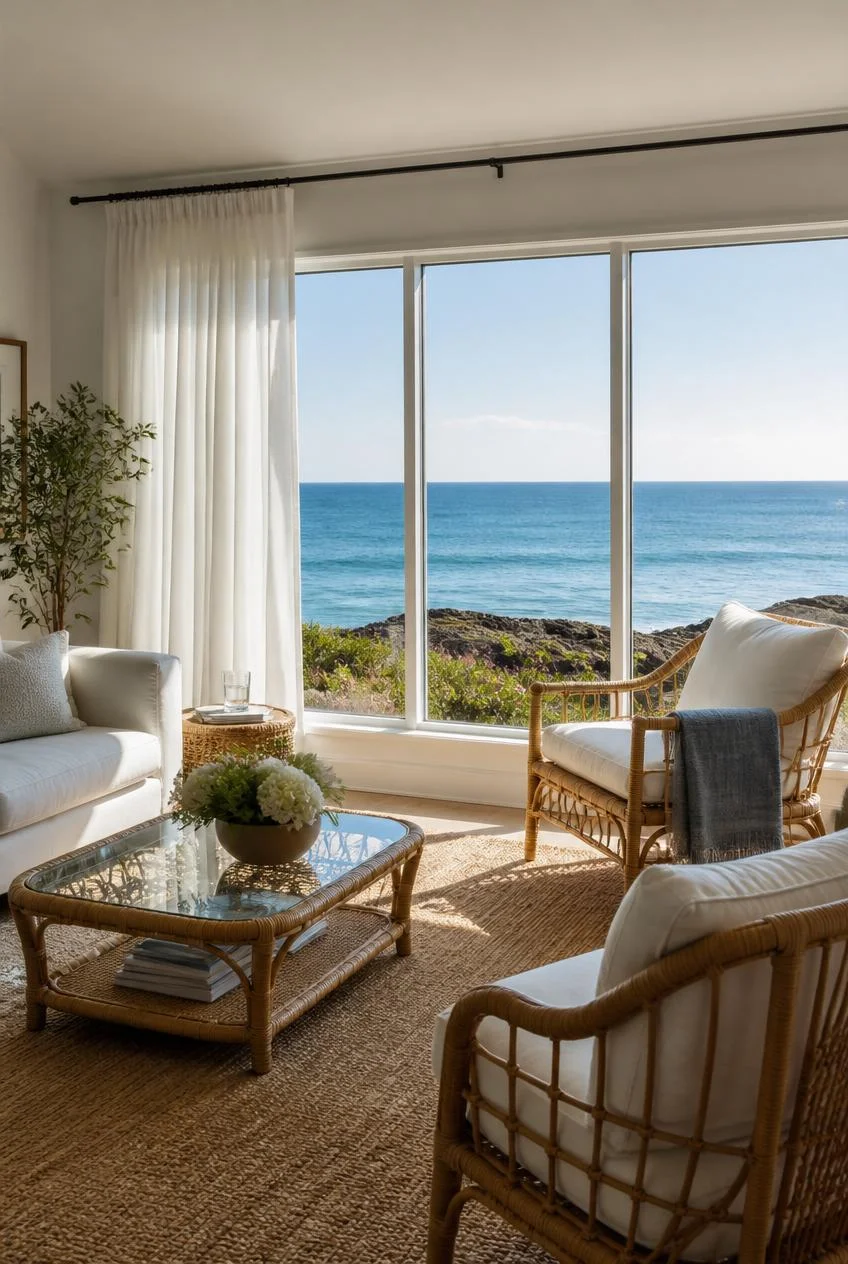
In a coastal home, natural light is not simply a practical consideration. It is the primary design element that makes every other choice in the room work. Generous window openings, unobstructed glazing, and window treatments that filter rather than block daylight all contribute to the light-filled, airy quality that defines genuinely successful coastal interiors.
Sheer linen panels pushed fully to one side when not needed, simple white Roman shades, or in privacy-permitting situations, no window treatment at all allow natural daylight to reach every surface in the room and make white cabinetry, natural stone, and wood tones all read at their most beautiful. The changing quality of coastal light throughout the day, from the cool clarity of morning to the warm amber of late afternoon, becomes a design feature in itself.
When Privacy Is Needed
Frosted or etched glass in window panes that face directly onto neighboring properties, or simple sheer panels that allow light penetration while obscuring direct visibility, maintain the light-filled quality of a coastal interior in situations where unobstructed glazing is not possible.
Indoor-Outdoor Living Through Seamless Transitions
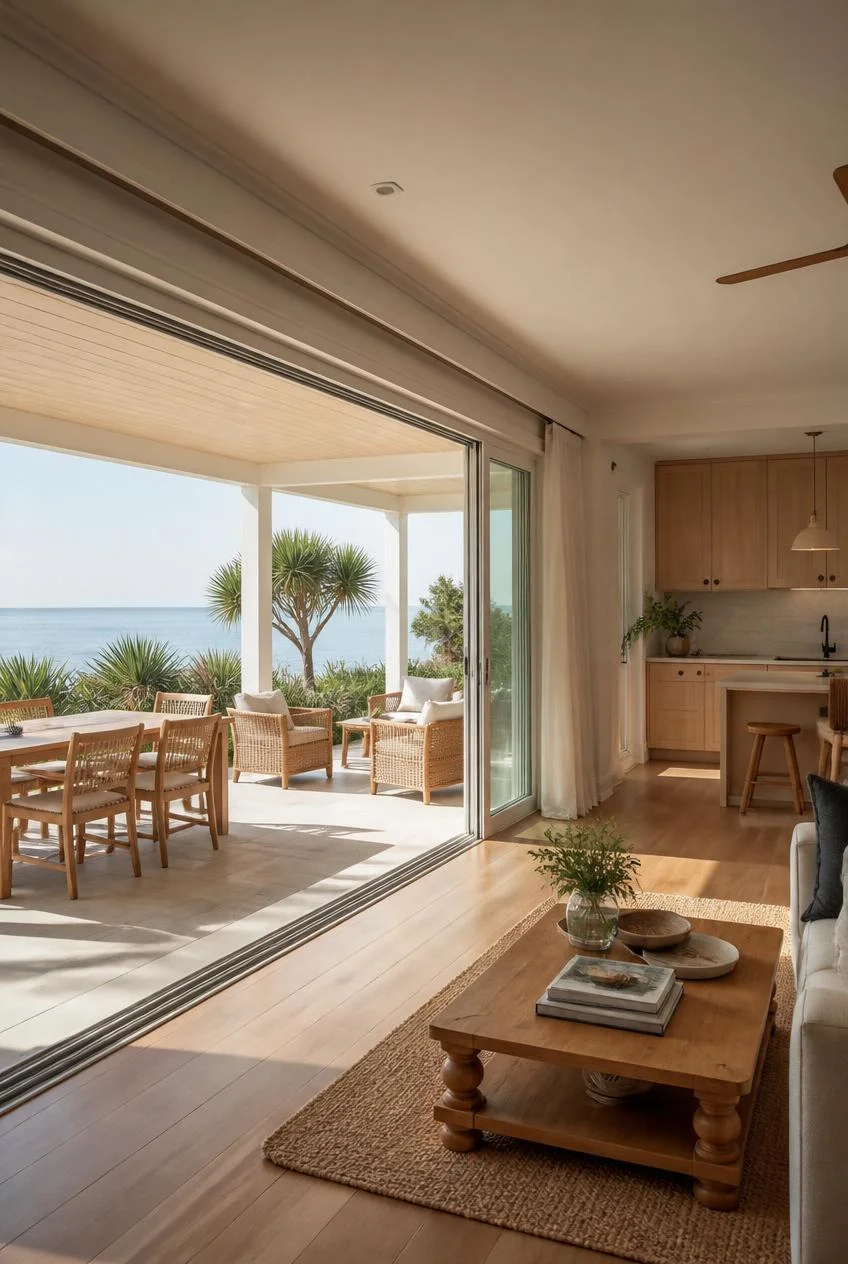
The finest coastal interiors do not stop at the walls. They extend outward through large sliding or folding glass doors, covered verandas, and outdoor seating areas furnished with the same care as the interior rooms they connect to. The goal is a seamless indoor-outdoor flow that makes the boundary between inside and outside feel less like a threshold and more like a gradual transition from one beautiful space to another.
Using the same natural material palette outdoors as indoors, whether through continuous tile flooring, matching natural fiber textiles in weather-resistant versions, or teak and rattan outdoor furniture that echoes the material choices of the interior, creates the sense of the home extending naturally into its surrounding landscape rather than stopping abruptly at the exterior wall.
Accessible Version
For coastal interiors in settings where full indoor-outdoor connection is architecturally difficult, a single French door opening to a small balcony, a window box with coastal herbs, or even a large window positioned to frame an outdoor view maintains the visual connection to the exterior that the indoor-outdoor philosophy requires.
Bringing the Coastal Feeling Into Every Room
Coastal decor earns its enduring popularity not because it looks like the beach but because it feels like what the beach gives you: the specific quality of ease that comes from being somewhere beautiful, warm, and uncomplicated. A room built on a natural fiber rug, honest wood tones, linen textiles, and generous natural light communicates that quality without a single shell, anchor, or nautical motif in sight.
The ideas in this guide all point toward the same destination: a home that feels genuinely relaxed, genuinely timeless, and genuinely like the person who lives in it made decisions with both care and confidence. The relaxed timeless coastal home is never finished because it grows and evolves with the objects and memories brought back from real coastal experiences. That quality of gradual, authentic accumulation is what no single shopping session can replicate and what no passing trend can replace.
FAQs
How do I bring coastal decor into my home without it looking themed or overdone?
Focus on natural materials, an organic earthy palette, and quality textiles rather than on explicitly nautical or beach themed accessories. The coastal feeling comes from material choices and light rather than from decorative props.
What colors define a modern coastal palette?
Sandy beige, warm ivory, sea mist green, driftwood brown, soft putty, and muted aqua are the tones that define contemporary coastal decor, replacing the older combination of stark white and deep navy with something warmer and more organic.
Can coastal decor work in a small apartment without natural light?
Yes. Natural fiber rugs, linen textiles, rattan furniture, and a light earthy palette all contribute to the coastal feeling regardless of room size. Layered artificial lighting in warm bulb temperatures compensates significantly for limited natural light.
What is the difference between coastal and nautical decor?
Coastal decor is inspired by the materials, colors, and quality of light found in shoreline environments. Nautical decor references maritime themes, including ropes, anchors, ships, and navy uniforms. The most current coastal interiors are organic and material-focused rather than thematic.
How do I style a coastal shelf without it looking cluttered?
Keep groupings small, vary object heights, leave generous empty space between items, include at least one living element such as a plant, and limit the overall number of objects on each shelf to no more than three or four. Empty space on a coastal shelf is part of the composition, not a gap.
You May Also Like This Post:
19 Coastal Kitchen Ideas That Look Custom Designed and Timeless
One Comment