
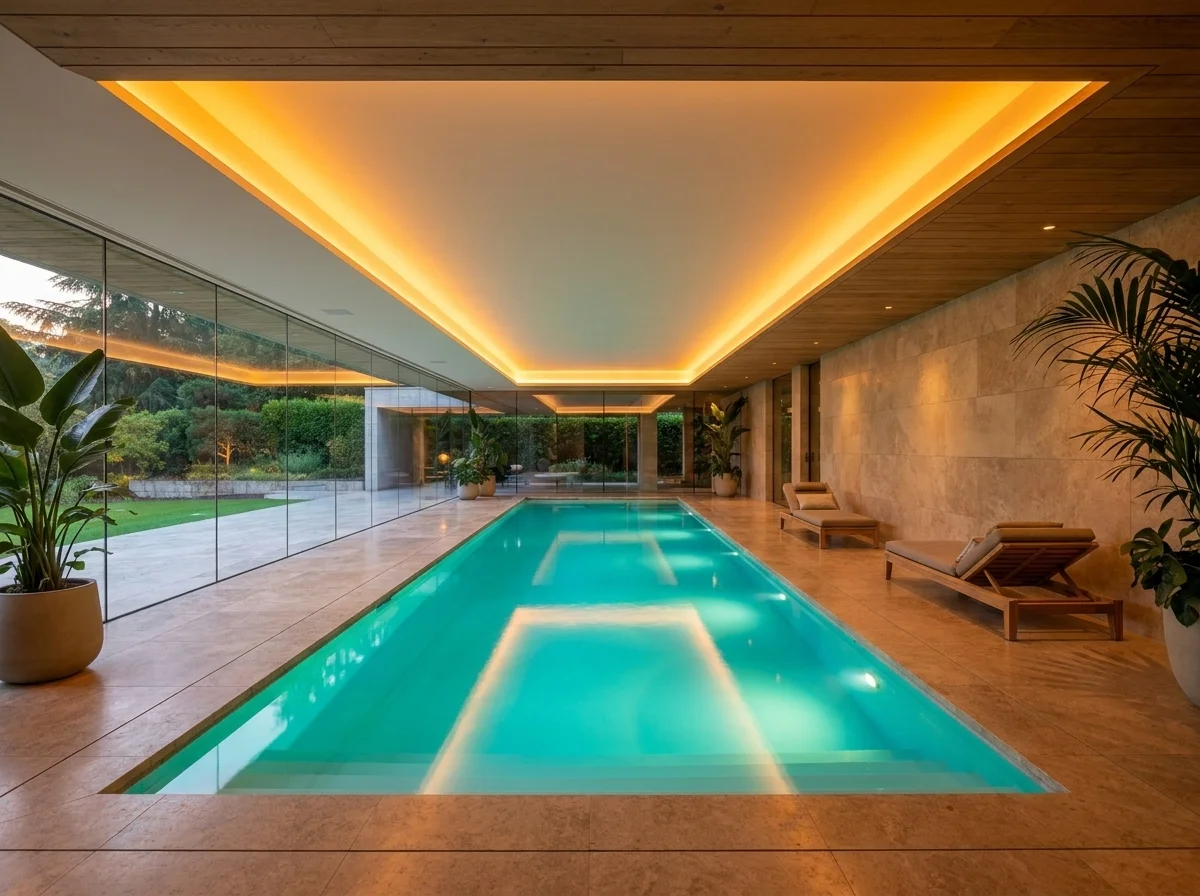
15 Modern Indoor Pool Designs for a Luxurious and Stylish Home
Imagine stepping into your own private aquatic sanctuary every morning regardless of the weather outside, the temperature dropping to freezing or rain hammering the windows, and none of it touching the experience of swimming in warm, beautifully lit water surrounded by architecture designed specifically for that pleasure. For a long time this experience belonged exclusively to the world’s most expensive hotels and the wealthiest private estates. That is no longer quite true.
Modern indoor pool designs have evolved dramatically over the past two decades, moving from purely functional installations with utilitarian tile and basic enclosures to genuine architectural statements that rival the most sophisticated interior design work found anywhere in residential construction. The best contemporary indoor pools are not rooms that happen to contain water. They are spaces where water is the primary architectural material, where light and reflection and the specific quality of an enclosed aquatic environment create something genuinely extraordinary that no other residential feature can replicate.
Luxury indoor pool design today encompasses everything from the sleek minimal pools of contemporary architectural homes where water meets glass and concrete in compositions of severe beauty through the warm organic environments of natural stone spa pools through the theatrical drama of underground pools reached by floating staircases. What unites these diverse indoor pool ideas is the understanding that an indoor pool is an investment in a specific quality of daily life rather than simply an amenity, and that investment deserves architectural ambition commensurate with its cost and its potential.
This comprehensive guide presents 15 modern indoor pool designs covering the full spectrum of contemporary residential aquatic architecture, with practical guidance on materials, lighting, ventilation, and the specific design considerations that distinguish exceptional indoor pools from adequate ones.
Minimalist Indoor Pool Design for Pure Architectural Elegance
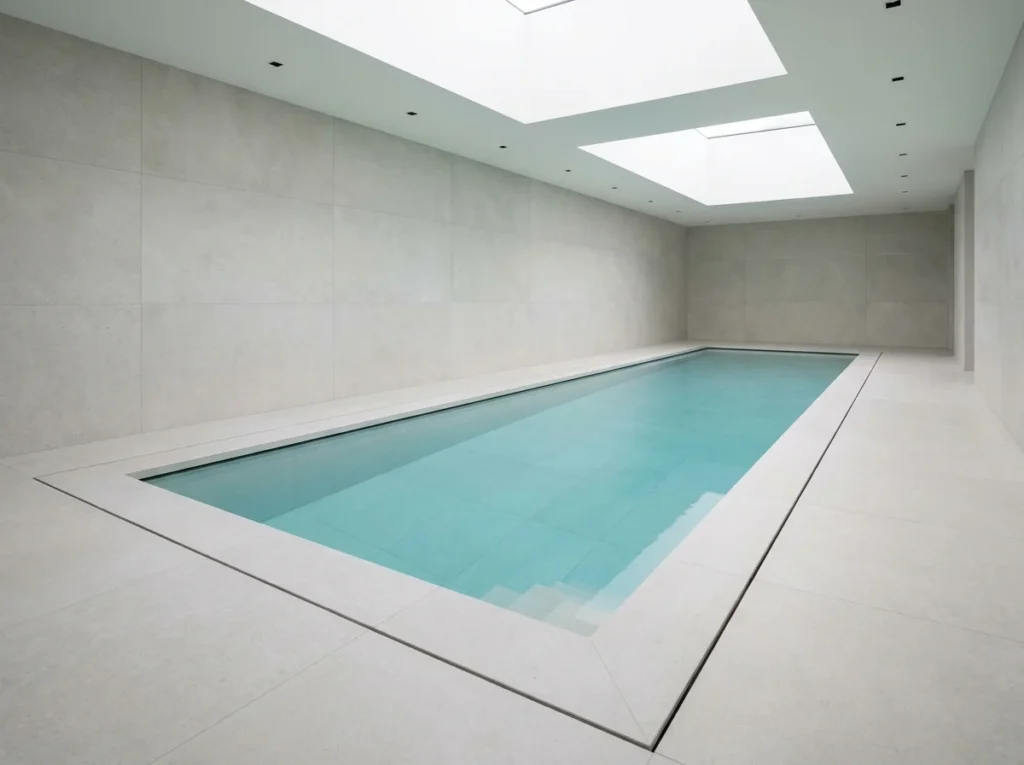
The minimalist approach to modern indoor pool design has become one of the most consistently admired and most widely attempted directions in contemporary residential aquatic architecture, and for good reason. When executed with genuine material quality and spatial precision, a minimalist indoor pool achieves something that more elaborately decorated alternatives frequently fail to reach: a sense of absolute rightness, where the pool and its surrounding architecture exist in such complete harmony that imagining the space differently becomes impossible.
Contemporary indoor pool design in the minimalist tradition uses large format porcelain or concrete tiles in pale gray, warm white, or natural limestone tones to create pool surrounds of near-seamless visual continuity. The goal is the elimination of visual complexity at every surface, with thin grout lines in matching tones, flush linear drains that disappear into the floor plane, and recessed lighting that creates architectural illumination without visible fixture intrusion. Indoor pool tiles in large format porcelain of 60-by-60 centimeters or larger create the most seamlessly resolved minimalist pool surround surfaces, their reduced grout frequency creating near-continuous stone or concrete reading that smaller format tiles interrupt with their visible grid.
The water surface in minimalist indoor pool design is treated as an architectural plane, with infinity overflow edges or flush basin designs at deck level creating the specific effect of water contained without visible edges. Pool coping in matching material to the deck creates seamless floor-to-pool-edge transitions that further eliminate the visual interruptions that conventional raised coping introduces between the deck surface and the water. Indoor pool lighting in minimalist applications uses narrow-aperture recessed fixtures in the surrounding ceiling and underwater LEDs mounted flush with the pool shell to illuminate water without disrupting the clean architectural surfaces surrounding it.
Glass Wall Indoor Pool for Seamless Indoor-Outdoor Connection
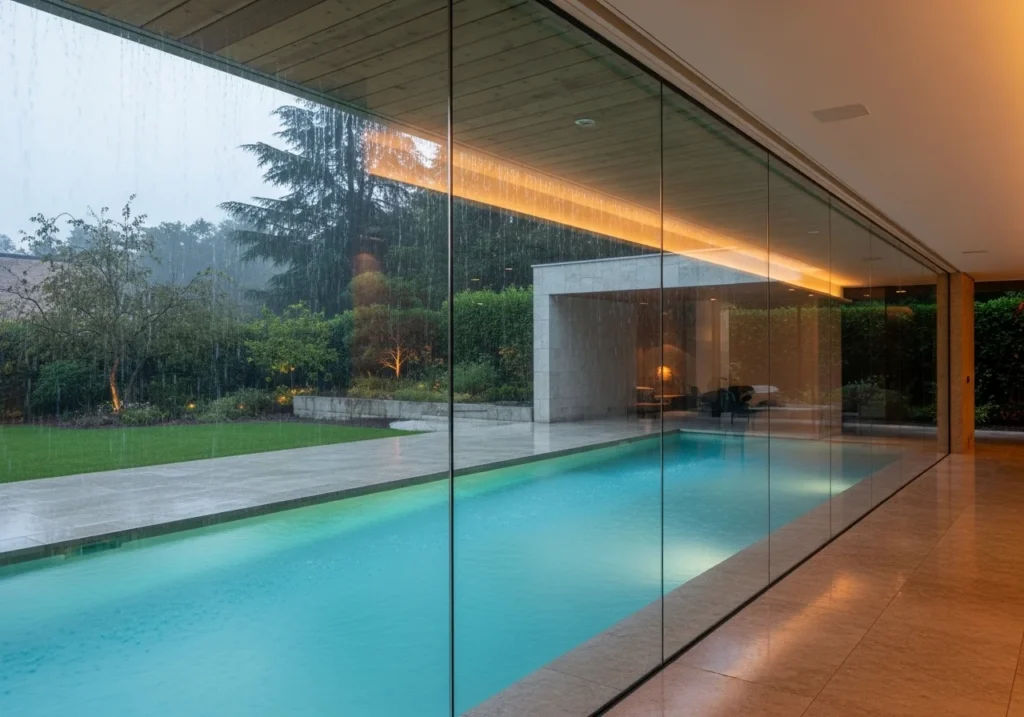
Glass wall indoor pool design represents perhaps the most architecturally ambitious residential indoor pool typology available, using structural glazing systems to dissolve the boundary between the contained aquatic environment and the exterior landscape in compositions that simultaneously protect swimmers from weather while maintaining the visual and psychological connection to the natural world that fully interior pools without windows can feel disconnected from.
Indoor pool room design using glass walls requires structural engineering that differs significantly from conventional glazing applications because of the specific humidity, temperature, and load conditions that indoor pool environments create. The condensation management requirements of large glazed surfaces adjacent to warm pool water demand thermally broken glass systems, heated glazing frames, and the specific interior air management that prevents condensation formation on cold glass surfaces during winter operation. These technical requirements, properly addressed during design, create glass wall pool environments of extraordinary spatial quality where the experience of swimming in heated indoor water while rain falls on the exterior garden represents one of the genuinely unique sensory experiences available in residential architecture.
Luxury indoor pool environments with glass walls often use motorized louvered external shading systems that provide sun control during summer months when solar heat gain through large glass areas would overheat the pool space while maintaining full glass transparency during cooler seasons. Indoor pool architecture incorporating glass walls should orient the glass toward east or north in hot climates to minimize direct solar exposure, while south-facing glass walls in temperate climates capture winter solar gain that reduces pool heating costs meaningfully throughout the heating season.
Indoor Pool with Skylights for Natural Light Immersion
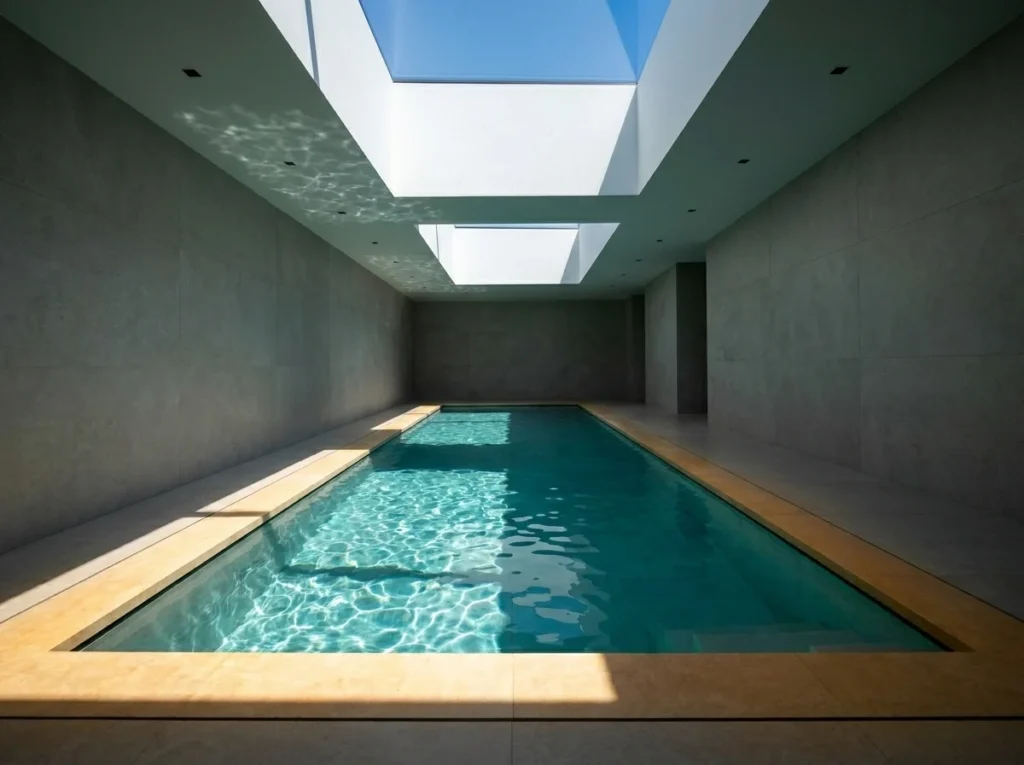
Indoor pool with skylights creates the specific quality of natural overhead light that transforms enclosed pool spaces from the artificially illuminated environments that most interior pools inevitably become into genuinely luminous rooms where the sky’s changing quality of light animates the water surface and surrounding architecture throughout every hour of the swimming day.
The specific quality of light that skylights bring to residential indoor pool environments is fundamentally different from the quality of light entering through vertical windows. Overhead light hits the water surface at steep angles that create the sparkling, constantly animated reflections most associated with outdoor swimming experiences, with light rays entering the pool water and refracting against the pool shell to create the dancing underwater light patterns that horizontal window light cannot generate. Indoor pool lighting that supplements skylight illumination with artificial sources tuned to match the skylight light’s color temperature during daylight hours creates seamless visual transitions between natural and artificial illumination as daylight changes through the day.
Home indoor pool designs using linear skylights positioned directly above the pool length create the most architecturally resolved skylight application, with the skylight’s geometry echoing the pool’s own rectangular form and the overhead light band creating a specific quality of bilateral shadow depth at the pool’s edges that establishes the pool as a distinct architectural element rather than a floor surface that happens to contain water. Modern pool design applications using circular or irregular skylights above pools create more playful and less formally resolved light compositions that suit informal and family-oriented pool environments where the specific gravitas of linear light bands would feel inconsistent with the space’s recreational character.
Natural Stone Indoor Pool Surround for Organic Luxury
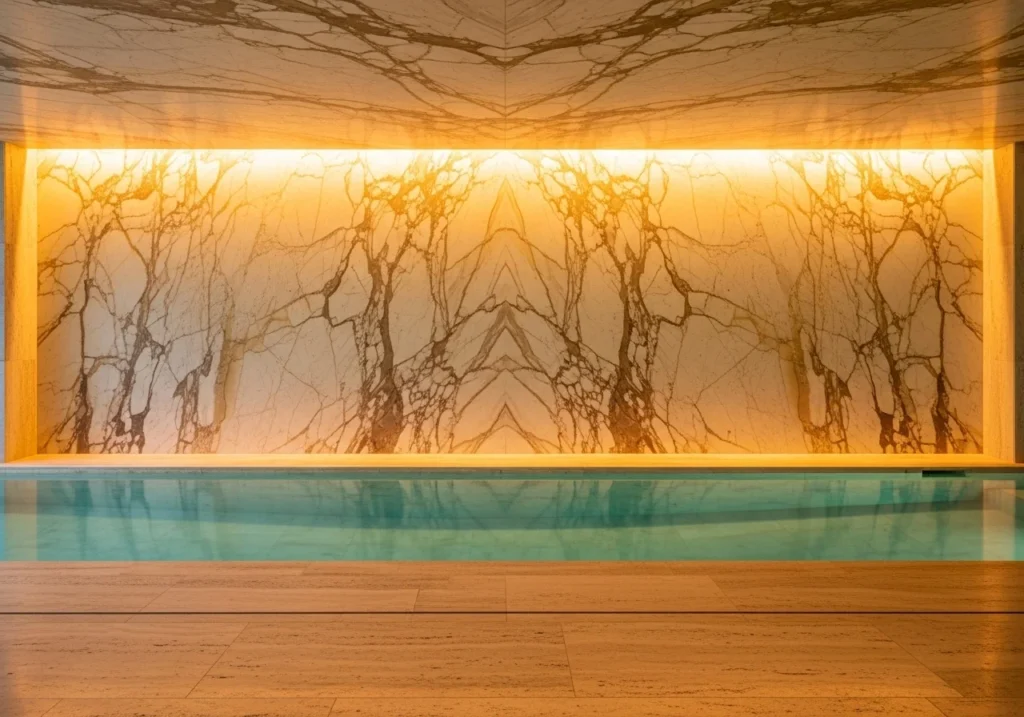
Natural stone indoor pool surrounds create the most materially authentic and most genuinely luxurious pool environments available in residential aquatic design, with the geological complexity of natural stone providing the surface richness and organic beauty that manufactured alternatives consistently fail to replicate regardless of their technical quality and visual sophistication.
Indoor pool materials in natural stone for pool surround applications include travertine, limestone, marble, slate, and various granites, each offering distinct aesthetic characters and practical performance profiles suited to different pool design directions and climate conditions. Travertine remains one of the most specified natural stone materials for luxury indoor pool surrounds because of its warm honey and cream tones, its excellent thermal performance that keeps barefoot surfaces comfortable without the cold shock that denser stone materials create, and its naturally non-slip honed surface texture that provides adequate traction in wet pool environments without requiring additional slip-resistant treatment that compromises the material’s natural visual quality.
Indoor pool room design using marble for pool surround applications creates the most dramatically beautiful stone pool environments, with the veined and crystalline quality of marble creating surfaces of genuine geological artistry visible and beautiful even when the material is wet and in the specific lighting conditions of enclosed pool rooms. Indoor pool tiles using book-matched marble panels on pool feature walls and large-slab marble coping create the most architecturally ambitious natural stone pool installation, with the mirror-symmetry of book-matched slabs creating decorative stone compositions of extraordinary formal beauty that photograph spectacularly and create genuinely magnificent pool room environments.
Indoor Infinity Pool for Dramatic Visual Impact
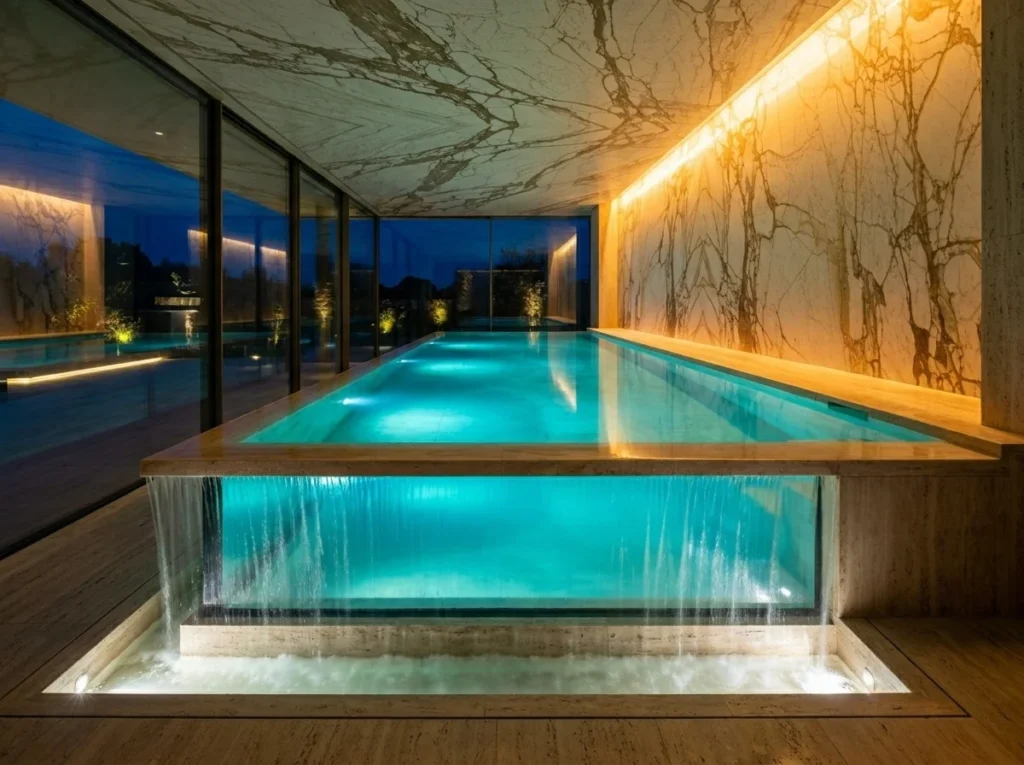
Indoor infinity pool design brings the most visually dramatic of all pool configurations into interior architectural contexts, creating the specific effect of water extending to the room’s visual boundary or flowing over an edge into an adjacent lower space in a composition of theatrical beauty that immediately establishes the pool environment as something genuinely extraordinary.
Luxury indoor pool design using the infinity concept within enclosed spaces requires the creative adaptation of a technique originally developed for outdoor pools with landscape views into a context where the vanishing edge must relate to architectural space rather than natural horizon. Interior infinity pools frequently use one edge that overflows into a lower catch basin visible through a glass panel, creating the specific effect of water flowing through the architecture rather than contained by it. Indoor pool architecture incorporating infinity edges must integrate the catch basin, pump systems, and visual access to the overflow within the overall spatial composition, with the catch basin often becoming a secondary water feature visible from the main pool level through structural glass.
Modern pool design applications of the infinity concept in indoor pools also include slot overflow systems that create an elevated water line flush with or slightly above the deck surface, creating the effect of the deck and water existing at the same level in compositions that blur the visual boundary between solid surface and liquid surface. Indoor swimming pool design using overflow systems maintains the pool water at precise levels that require sophisticated automation, with level sensors and pump systems that compensate for both swimmer displacement and evaporation to maintain the specific overflow visual effect that defines the installation’s dramatic character.
Spa and Wellness Indoor Pool for Therapeutic Luxury
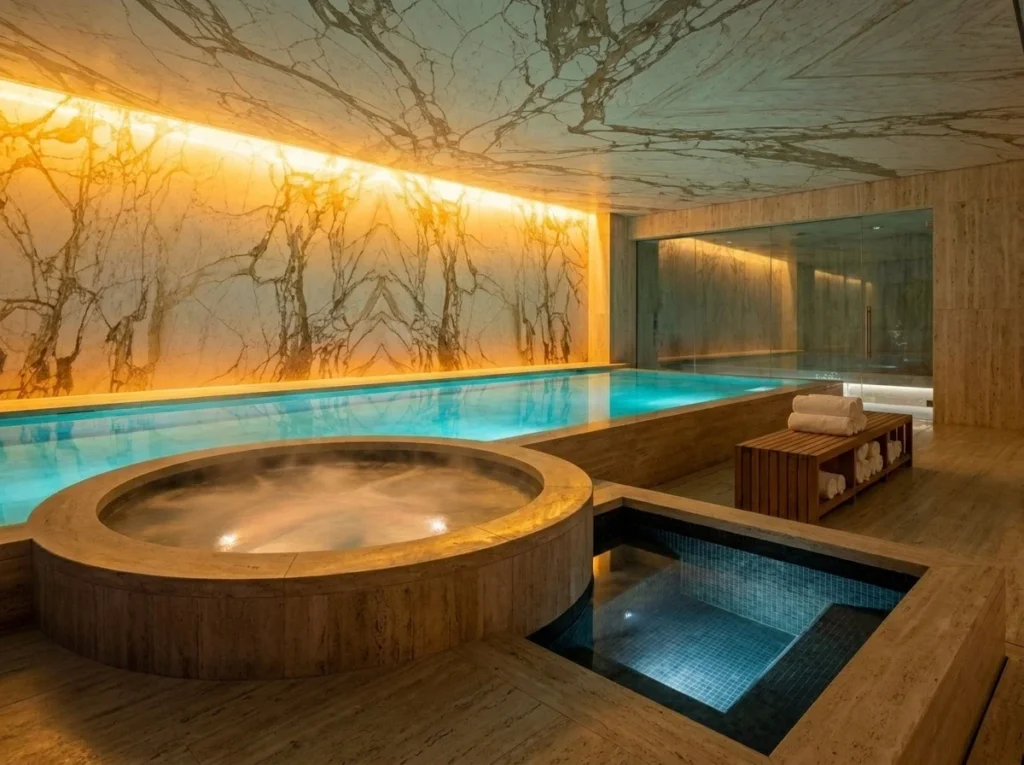
Spa indoor pool design creates the residential aquatic environment most aligned with the wellness-oriented lifestyle values that contemporary luxury homeowners increasingly prioritize, integrating the therapeutic benefits of hydrotherapy, controlled water temperature, and the specific restorative quality of regular water immersion into a daily accessible private environment of extraordinary quality.
Home indoor pool design for spa and wellness applications typically includes a primary swimming pool at a slightly lower temperature than conventional recreational pools for swimming exercise, an adjacent hot tub or hydrotherapy pool at higher therapeutic temperatures for relaxation and recovery, and frequently a cold plunge pool for the contrast therapy that elite athletic recovery and spa wellness traditions both recognize as physiologically beneficial. Indoor pool room design for wellness applications creates distinct zones for these different temperature environments within a unified architectural composition, with the design challenge being the visual and spatial integration of pools operating at different temperatures within a room whose humidity management must accommodate the resulting different evaporation rates.
Luxury indoor pool wellness environments also incorporate steam rooms and saunas within the pool room architectural envelope, creating complete hydrotherapy circuits where the sequence of hot pool, cold plunge, steam room, and relaxation space all exist within a single beautifully designed environment accessible without leaving the building. Modern pool design for wellness applications uses the specific calming aesthetic of warm stone, warm wood, and warm amber lighting to create the specific restorative atmosphere most associated with premium spa environments, where the visual experience of the space contributes to the physiological restoration that the therapeutic water applications deliver.
Indoor Lap Pool Design for Fitness and Function
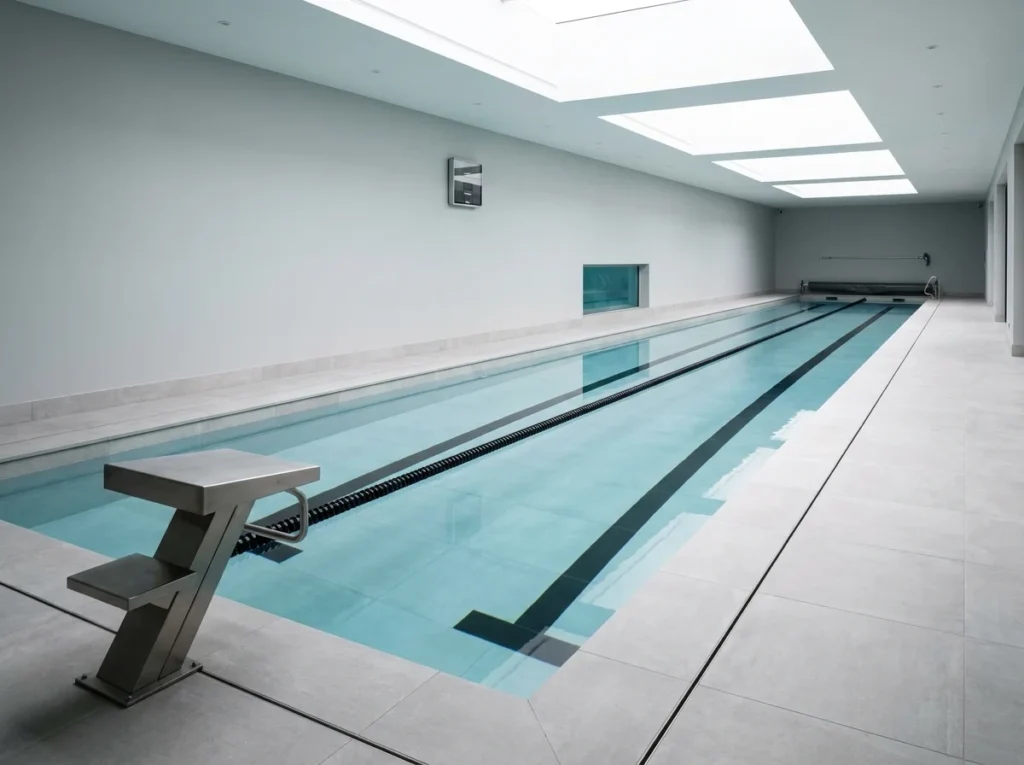
Indoor lap pool design serves the specific functional requirements of serious swimming exercise with pools calibrated for athletic performance rather than recreational use, with the length, width, lane configuration, and equipment integration that makes regular swim training genuinely effective as a primary fitness activity.
Residential indoor pool in lap pool format typically measures between 15 and 25 meters in length, with widths accommodating one to four swim lanes depending on the available space and the household’s swimming practice intensity. Indoor pool room design for lap pools uses the specific design language of athletic aquatic environments, with starting blocks, lane lines, underwater viewing windows, and pace clock installations that communicate the serious fitness purpose of the installation while still maintaining the material quality and spatial dignity appropriate for luxury residential contexts. Modern pool design for lap pools in residential applications increasingly uses swim jet systems that allow effective swimming training in shorter pool lengths, with powerful counter-current jets creating resistance equivalent to full-length swimming in pools as compact as four meters that otherwise would not accommodate meaningful swimming exercise.
Indoor swimming pool design for lap pool applications uses the pool’s elongated rectangular form as an organizing architectural element, with the long pool body establishing the room’s primary axis and all architectural decisions including ceiling height, window placement, lighting position, and deck configuration relating to this dominant linear form. Heated indoor pool lap pools operating at slightly cooler water temperatures than recreational pools create the specific athletic training environment that most competitive and fitness swimmers prefer, with cooler water creating the metabolic conditions that maximize swimming performance during sustained aerobic exercise.
Underground Indoor Pool for Unexpected Drama
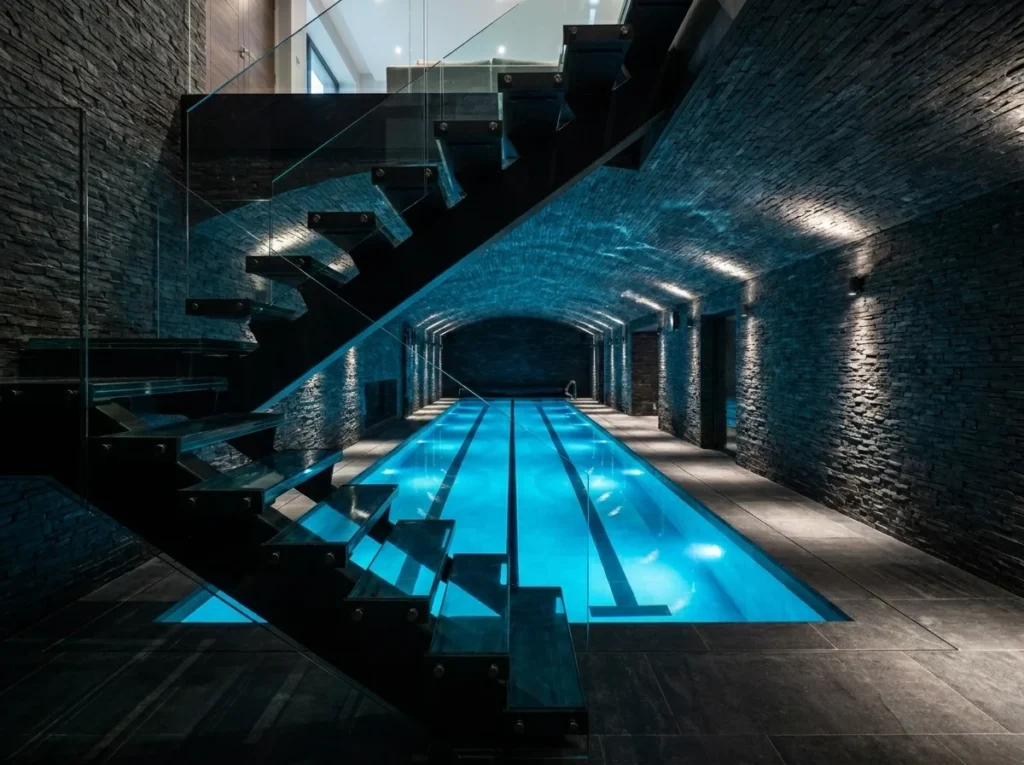
Underground residential pools accessed from living spaces above through stairs, lifts, or dramatic architectural transitions create one of the most genuinely unique and most dramatically theatrical of all modern indoor pool designs, transforming the pool experience from simply entering a ground-level room into something more ceremonial and more distinctly separate from everyday domestic life.
Indoor pool architecture for underground applications uses the inherent quality of below-grade space, its removal from the visual horizon, its consistent temperature profile maintained by surrounding earth, and its potential for complete light control, to create pool environments of total immersion that no above-grade installation can replicate. Home indoor pool design in underground format reaches its most spectacular expression when the descending architectural transition, whether a floating staircase, a sculptural ramp, or a glass lift, creates a journey from the domestic interior above to the aquatic sanctuary below that frames the pool experience as a genuinely distinct event rather than simply entering an adjacent room.
Luxury indoor pool environments in underground configurations use artificial lighting as the complete illumination story, with the opportunity for fully controlled dramatic lighting compositions uncompromised by natural light that cannot be managed without window treatments. Indoor pool lighting in underground pools frequently uses color-changing LED systems that create the most theatrical and most transformable lighting environments available, with the ability to shift the pool room’s complete color palette from warm amber through cool blue through vibrant color sequences creating a flexibility of atmosphere impossible in pools with fixed natural light as a primary illumination source.
Modern Indoor Pool with Wooden Elements for Warm Contrast
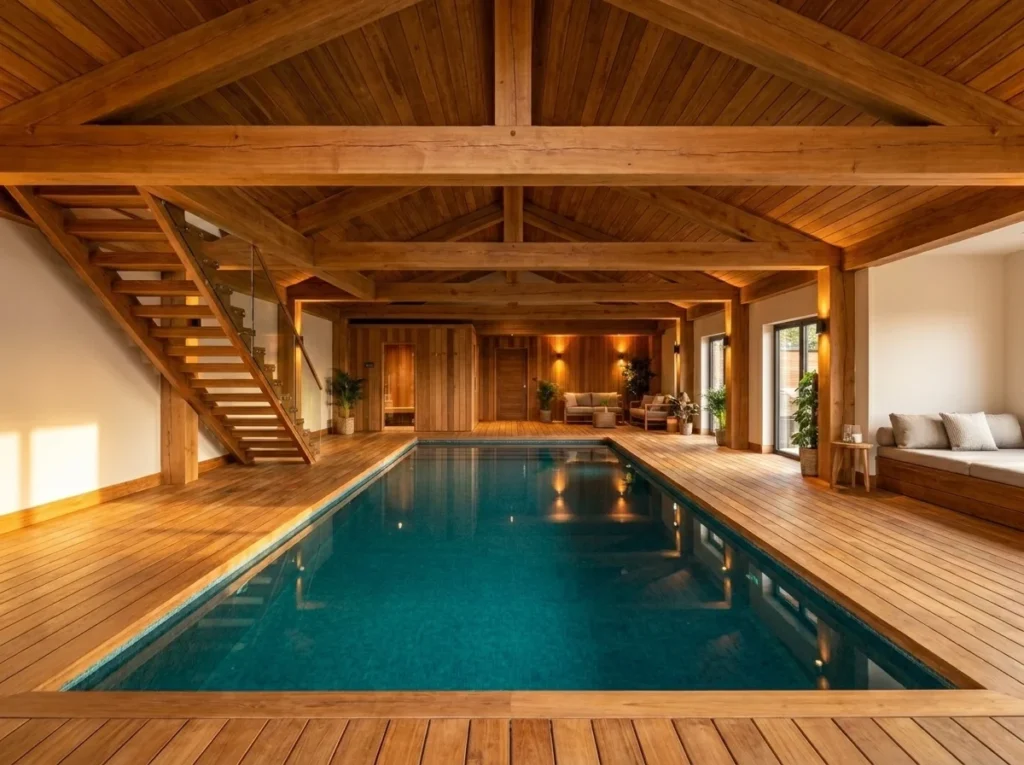
The combination of warm wood and cool water creates one of the most sensuously satisfying material contrasts available in modern indoor pool design, with the organic warmth and tactile quality of natural wood providing exactly the human-scale counterpoint to the cool precision of pool architecture that makes spaces feel inhabitable and genuinely pleasurable rather than merely impressive.
Indoor pool room design incorporating wood elements uses species with appropriate moisture resistance for pool environments, with teak, ipe, and thermally modified wood providing the necessary durability in the high-humidity conditions of enclosed pool spaces while their warm honey and amber tones create the specific visual warmth most desired in pool surround applications. Modern pool design using wood-clad pool surrounds, wood-beamed ceiling structures above pools, and wood-paneled changing and relaxation areas creates pool environments that feel like genuine architectural rooms rather than tiled wet areas, with the material warmth signaling residential quality and personal comfort rather than the institutional character that all-tile pool environments inadvertently communicate.
Indoor pool architecture using wood in ceiling applications above pools creates the specific acoustic warmth of wood’s sound absorption alongside its visual warmth, with wood-clad ceilings reducing the reverberant acoustic quality that concrete and glass pool room surfaces create through their complete sound reflection. Luxury indoor pool environments benefit from this acoustic warmth because the sound quality of an indoor pool space significantly affects how pleasurable the environment feels during swimming and especially during the relaxation activities that luxury pool environments support, with a reverberant space feeling tiring while a warmly acoustic space feels genuinely restful.
Indoor Pool House Design for Dedicated Aquatic Architecture
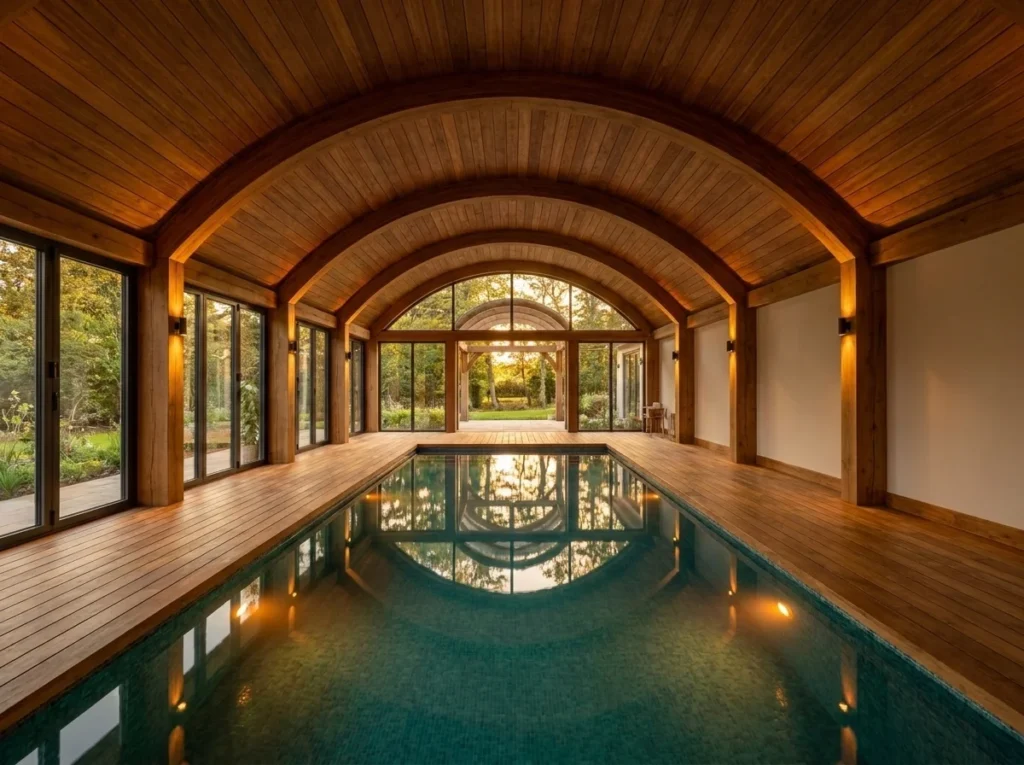
Indoor pool house design creates a completely dedicated architectural structure for aquatic activities, separate from or connected to the primary residence but conceived specifically around the pool and its ancillary spaces in a way that integrated interior pool rooms embedded within general residential architecture cannot achieve.
Home indoor pool in a dedicated pool house allows the architectural design to be completely driven by the pool’s specific requirements without compromise against the competing demands of general residential function that shape embedded pool room design decisions. Indoor pool room design in a dedicated pool house can achieve optimal ceiling heights for the specific pool volume, optimal window and glazing orientation for natural light without overheating, optimal structural spans for unobstructed pool room space, and optimal material specifications for humidity, durability, and aesthetic quality without the cost constraints that interior pool room design typically imposes through its requirement to maintain design consistency with surrounding residential spaces.
Indoor pool architecture in pool house format creates the opportunity for genuinely landmark architectural statements at the residential scale, with the pool house’s dedicated purpose allowing architectural expression as focused and singular as a museum pavilion. Residential indoor pool houses using dramatic roof forms including barrel vaults, hyperbolic parabolas, and folded plate structures create pool environments of architectural quality impossible to achieve within the conventional residential building envelope, with the structure itself becoming a primary design element that creates the spatial character of the pool environment alongside the water, light, and material selections that conventional pool design focuses exclusively upon.
Smart Technology Integration in Modern Indoor Pools
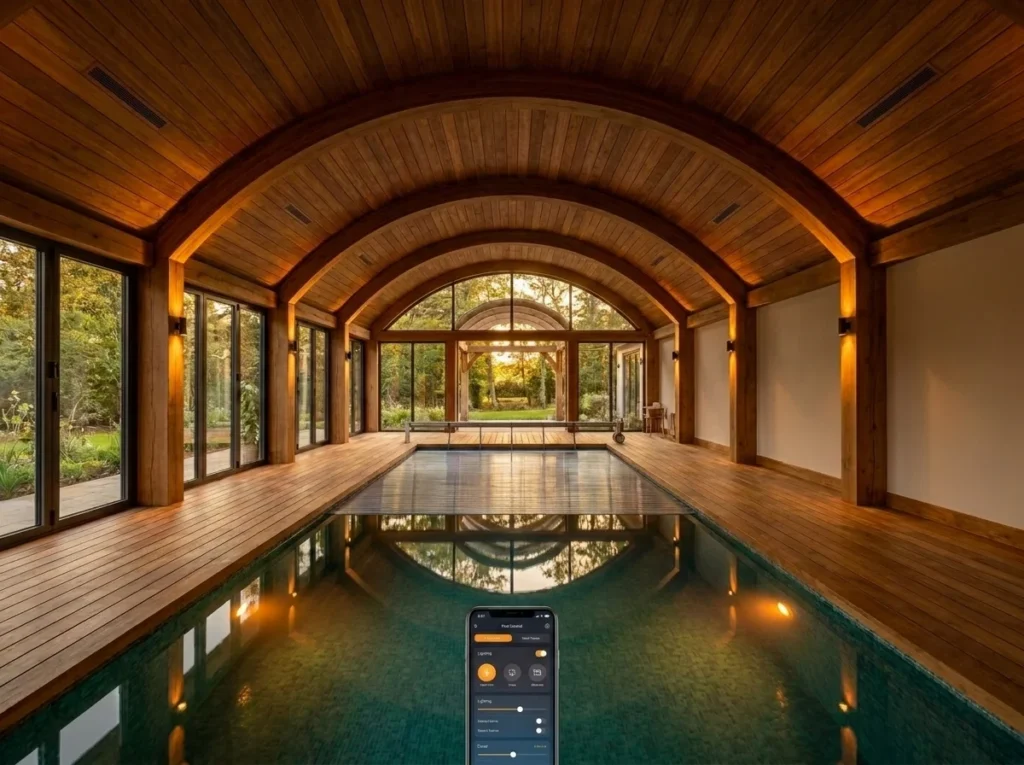
Modern indoor pool designs increasingly incorporate smart building technologies that manage pool operations with a level of precision and convenience that earlier generations of pool systems could not approach, creating pool environments that are simultaneously more enjoyable to use, more energy efficient to operate, and more sophisticated in their integration with the broader home automation systems that contemporary luxury residences employ.
Heated indoor pool management using smart heat pump systems with predictive operation algorithms that heat the pool based on programmed usage schedules and real-time weather data creates the energy efficiency optimization that makes indoor pool operation economically viable at a broader range of household income levels than the constant heating costs of earlier generation pool systems allowed. Luxury indoor pool environments using smart humidity management systems that continuously monitor and adjust the balance between pool surface evaporation, ventilation air exchange, and dehumidification to maintain optimal comfort conditions while minimizing energy consumption represent the current state of the art in indoor pool environmental management.
Indoor pool lighting systems using smart color-changing LED technology with programmed scenes accessible through smartphone control create the most versatile and most personally customizable pool lighting environments available, allowing pool owners to shift from bright daylight-quality illumination for lap swimming through warm amber relaxation lighting through theatrical color sequences for entertaining with simple scene selections. Indoor swimming pool design incorporating automated pool cover systems that deploy and retract on programmed schedules or user command reduces evaporation losses and heat retention requirements by up to 70 percent compared to uncovered pool operation, representing the single most energy-efficient operational technology available for residential indoor pool management.
Indoor Pool with Fireplace for Ultimate Cozy Luxury
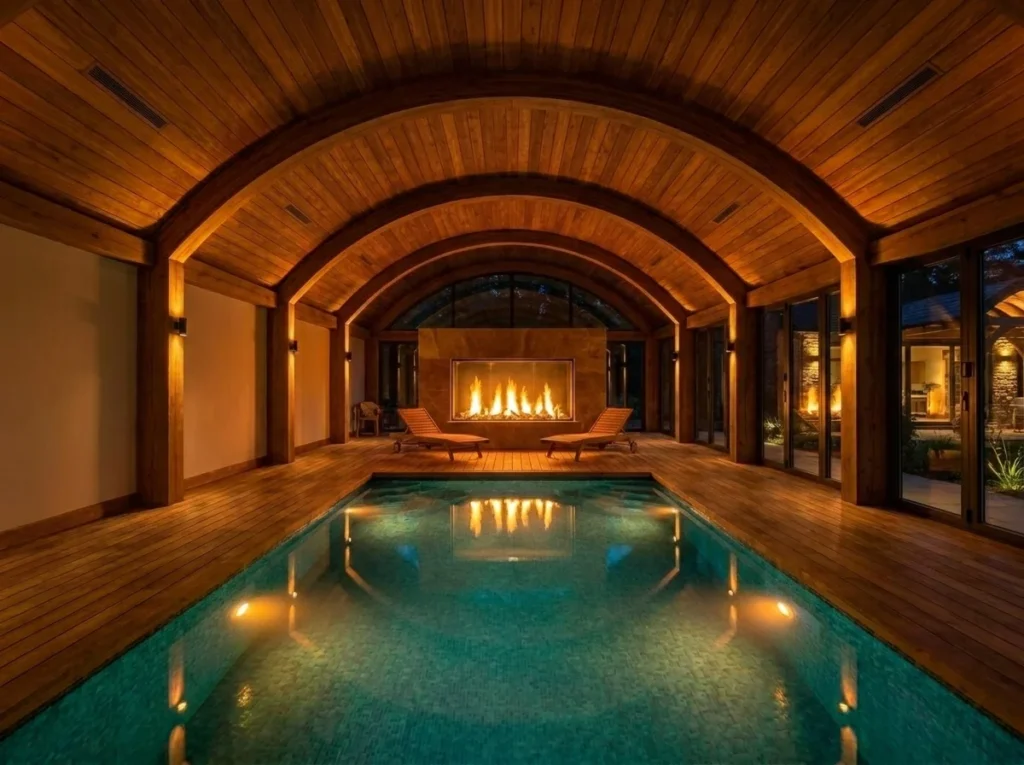
The combination of pool and fireplace in a single interior space creates the most dramatically contrasting and most luxuriously cozy residential environment imaginable, with the elemental opposition of fire and water creating a spatial experience of compelling sensory richness that neither element provides independently.
Indoor pool room design incorporating fireplaces positions the fire element at the pool room’s primary social or relaxation zone, creating a warm gathering focus that pool users gravitate toward after swimming for the specific pleasure of warmth after water immersion that this combination makes uniquely available. Luxury indoor pool environments with fireplaces typically use gas fireplace systems rather than wood-burning alternatives, with gas providing the consistent operation and clean combustion that enclosed pool room environments require without the particulate and smoke management challenges that wood combustion creates in high-humidity enclosed spaces. Modern pool design integrating fireplace elements within pool room architecture requires specific ventilation planning that manages both the pool’s humidity control requirements and the fireplace’s combustion air and exhaust requirements within a unified building system that serves both functions simultaneously.
Home indoor pool spaces with fireplaces create the specific experience of lounging in waterside warmth, wrapped in towels after swimming, beside a real fire in an architecturally extraordinary space that represents the most complete expression of domestic luxury available in residential design. Indoor pool architecture incorporating fireplaces within built-in stone or concrete surrounds creates design compositions of considerable visual power, with the fireplace as architectural anchor providing the room with a secondary focal point that complements the pool itself in creating the complete spatial experience.
Indoor Pool Lighting Design for Atmosphere and Function
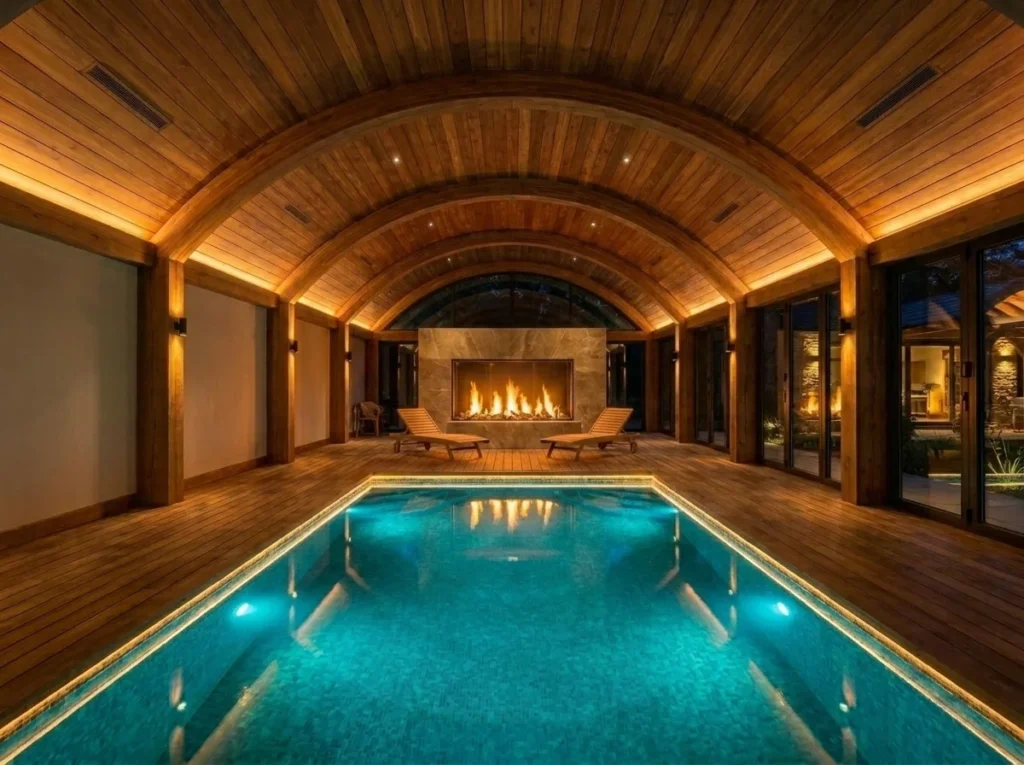
Indoor pool lighting represents one of the most technically complex and most experientially significant design decisions in any modern indoor pool project, requiring the simultaneous satisfaction of functional illumination requirements for safe swimming, aesthetic illumination requirements for creating the atmospheric quality that transforms the pool from a utilitarian installation into a genuinely beautiful architectural environment, and the specific technical requirements of waterproof, corrosion-resistant fixtures operating in the demanding conditions of an enclosed aquatic environment.
Indoor swimming pool design lighting strategy uses multiple distinct source types at different positions within the pool room to create the layered illumination that produces the most visually rich and most atmospherically compelling pool environments. Underwater pool lights mounted in the pool shell create the primary illumination source that makes the water itself luminous and creates the reflective light patterns on surrounding surfaces that give indoor pools their characteristic visual identity. Recessed ceiling lights in waterproof or moisture-resistant housings provide the ambient room illumination necessary for safe movement around the pool deck without competing with the underwater lighting that creates the pool room’s primary aesthetic character.
Luxury indoor pool lighting design also incorporates accent lighting directed at specific architectural features including stone feature walls, ceiling structural elements, and plant materials that add biological warmth to the pool environment, creating the layered spatial depth that flat ambient lighting without accent cannot achieve. Indoor pool room design using cove lighting at the junction between pool room walls and ceiling creates the most seamlessly ambient lighting effect available in pool rooms, with the indirect cove source providing soft overall illumination without any visible fixture that might interrupt the clean architectural surfaces that premium pool room design prioritizes.
Small Indoor Pool Design That Maximizes Impact
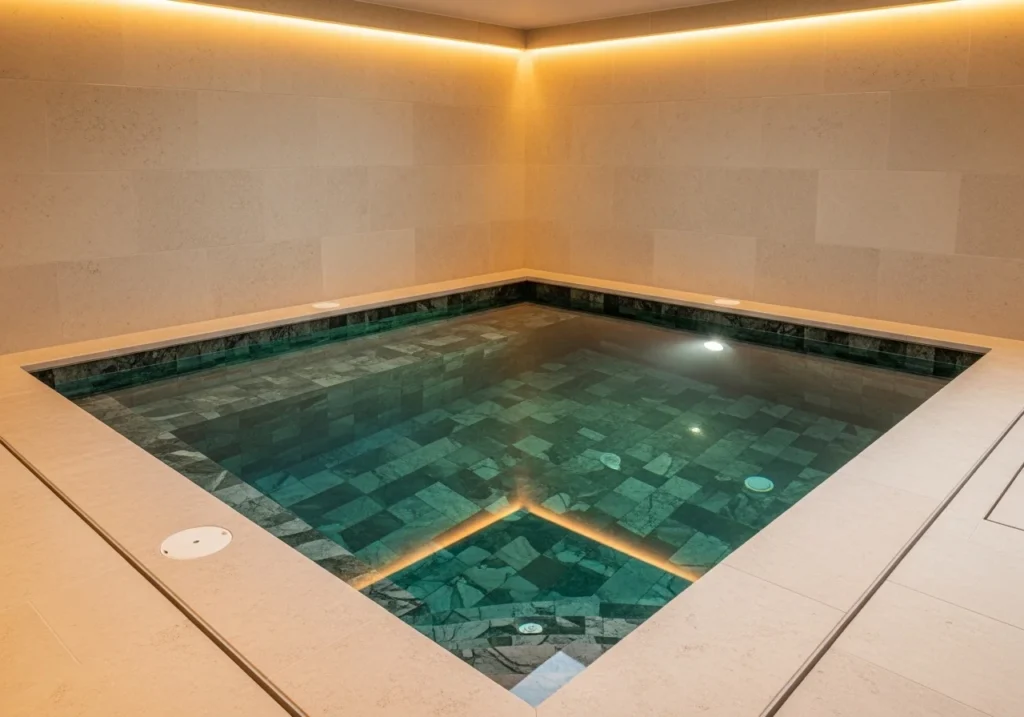
Small indoor pool design challenges the assumption that meaningful aquatic experiences require substantial square footage, demonstrating through numerous exemplary installations that pools of modest dimensions can create genuinely extraordinary spatial and experiential quality when designed with the specific intelligence that small-pool architecture requires.
Indoor pool ideas for compact applications include plunge pools of 2 by 4 meters that provide the complete cold water immersion experience within a footprint comparable to a large bathtub, small hydrotherapy pools of 3 by 5 meters equipped with jets and heating systems that provide therapeutic water immersion without the spatial requirements of swimming-capable pools, and the swim jet pools discussed earlier that provide effective swimming training in lengths as short as 4 meters. Residential indoor pool design in these compact formats focuses design intensity on material quality and spatial resolution rather than volumetric generosity, with premium natural stone, excellent lighting, and precise architectural detail creating pools of genuine luxury character despite their modest physical dimensions.
Modern pool design for small indoor pools uses the design strategy of making the pool the room’s complete focus, with the surrounding architecture reduced to the minimum necessary envelope that frames and contains the pool experience without competing with it for spatial attention. Indoor pool room design for compact pools uses high-quality materials on every visible surface, because the limited total surface area makes the cost of premium stone, premium wood, and premium fixtures proportionally manageable and the visual impact of those premium selections proportionally significant compared to larger installations where material quality is necessarily balanced against the sheer quantity of surface requiring treatment.
Indoor Pool With Lush Botanical Elements
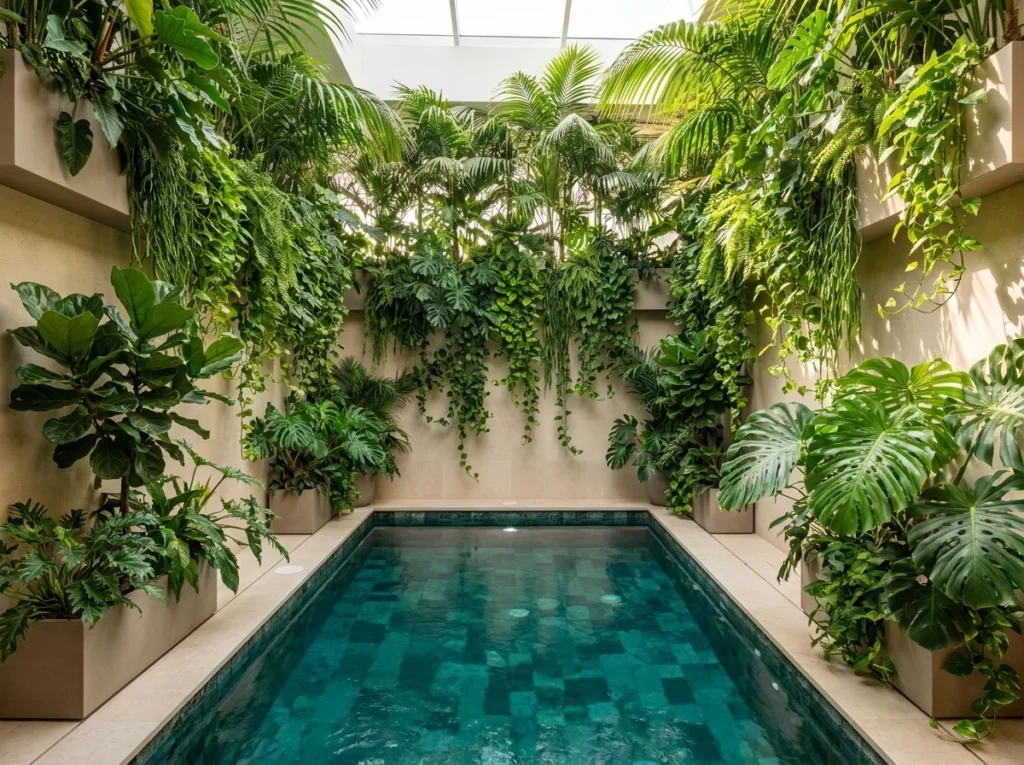
Indoor pool environments incorporating generous botanical planting create the most genuinely paradisiacal residential spaces available, transforming enclosed aquatic architecture into private tropical environments where swimming occurs within a lush living garden that makes the experience of being in the water genuinely extraordinary rather than simply pleasant.
Home indoor pool botanical integration uses species selected for their tolerance of the specific environmental conditions of enclosed pool rooms, including high humidity, warm temperatures, limited natural light in many cases, and the occasional chemical exposure from pool water splashing that less tolerant species would not survive. Indoor pool room design with botanical elements typically uses large format planters built into the pool room architecture at ground level, elevated positions, and in some ambitious installations even overhead hanging installations that create a tropical canopy above the pool deck. Luxury indoor pool environments with botanical gardens achieve the specific sensory richness of swimming in a lush enclosed environment that combines the aquatic experience with the specific psychological restorative effects of immersion in natural plant environments that biophilic design research consistently identifies as profoundly beneficial.
Modern pool design incorporating botanical elements must address the plant’s water, light, and maintenance requirements within the pool room environment, with the botanical planting zones requiring drainage systems, irrigation access, and sufficient natural or artificial light to sustain the specific species selected. Indoor pool architecture that integrates botanical planting from the earliest design stage, rather than accommodating it as an afterthought, creates the most seamlessly integrated and most architecturally resolved plant and pool compositions available in residential aquatic design.
Conclusion
Modern indoor pool designs have reached a level of architectural and technical sophistication that makes them genuinely extraordinary domestic amenities rather than simply expensive ones. The 15 design directions explored throughout this guide collectively demonstrate that the contemporary indoor pool is a field of remarkable creative possibility, from the severe beauty of minimalist concrete and water compositions through the warm luxury of natural stone spa environments through the theatrical drama of underground pools and glass wall aquatic pavilions.
The investment in a luxury indoor pool is ultimately an investment in a specific quality of daily life, in the specific pleasures of swimming in warm water when the world outside is cold and gray, of enjoying a private hydrotherapy environment whenever the body needs it, of having access to an architectural space of genuine extraordinary quality that belongs completely and privately to the household that created it. When that investment is matched with design ambition proportional to its scale, the result is reliably one of the most beloved and most transformative spaces in the entire property.
The practical guidance throughout this guide, on materials, lighting, ventilation, and the specific technical requirements that indoor pools impose on building design, is intended to support the design ambition that genuinely great indoor pool projects require rather than to substitute caution for creativity. The best indoor pools are designed by clients who know what they want, understand what achieving it requires, and commit to both with appropriate seriousness.
Frequently Asked Questions
How much does a modern indoor pool cost to build?
Residential indoor pool installation costs vary enormously based on size, finish quality, structural requirements, and regional labor costs. Basic indoor pools in dedicated enclosures begin at approximately 150,000 to 250,000 dollars. Luxury indoor pool installations with premium natural stone, sophisticated lighting, spa features, and integrated architectural design regularly reach 500,000 to 1,500,000 dollars or more. Operational costs including heating, chemical management, and maintenance add 15,000 to 30,000 dollars annually depending on pool size and usage patterns.
How do you manage humidity in an indoor pool room?
Indoor pool ventilation and humidity management requires dedicated mechanical systems sized specifically for the pool’s surface area and room volume. Dehumidification systems remove moisture-laden air before it damages building materials, while fresh air supply systems maintain indoor air quality and occupant comfort. Heated indoor pool environments require particularly careful humidity management because warm water evaporates more rapidly than cooler recreational pools, generating higher moisture loads that require correspondingly more powerful mechanical management systems.
What pool tiles work best for modern indoor pools?
Indoor pool tiles in large format porcelain of 60-by-60 centimeters or larger create the most seamlessly resolved modern pool aesthetics with minimal grout lines and near-continuous surface reading. Natural stone including travertine and limestone creates the most luxurious pool environments while glass mosaic tiles create beautiful light-interactive surfaces. All indoor pool tile selections must specify frost-resistant, chemically resistant materials with appropriate coefficient of friction for wet surfaces, particularly for pool surrounds where barefoot safety is paramount.
Do indoor pools require special structural considerations?
Yes. Indoor swimming pool design requires structural engineering significantly more complex than standard residential construction. Pool water weight, typically 1,000 kilograms per cubic meter, creates substantial loads that floor structures must be specifically engineered to support. Indoor pool architecture in upper floors or basement locations requires careful structural analysis. The waterproofing of pool shells and surrounding building elements demands specialized systems that prevent water damage to structural elements through the pool’s operational lifetime.
How long does an indoor pool take to design and build?
Modern indoor pool projects typically require 12 to 24 months from initial design through construction completion for integrated residential installations. Indoor pool house design projects that involve separate structural construction can extend to 18 to 30 months. The design phase alone for luxury indoor pool projects typically spans 4 to 8 months to properly develop the architectural, structural, mechanical, and finish design to the level of detail that quality construction requires, making early design engagement essential for projects with specific completion timeline requirements.
You May Also Like This Post:
How to Arrange Furniture: 15 Easy Layout Ideas for a Stylish Home
One Comment