
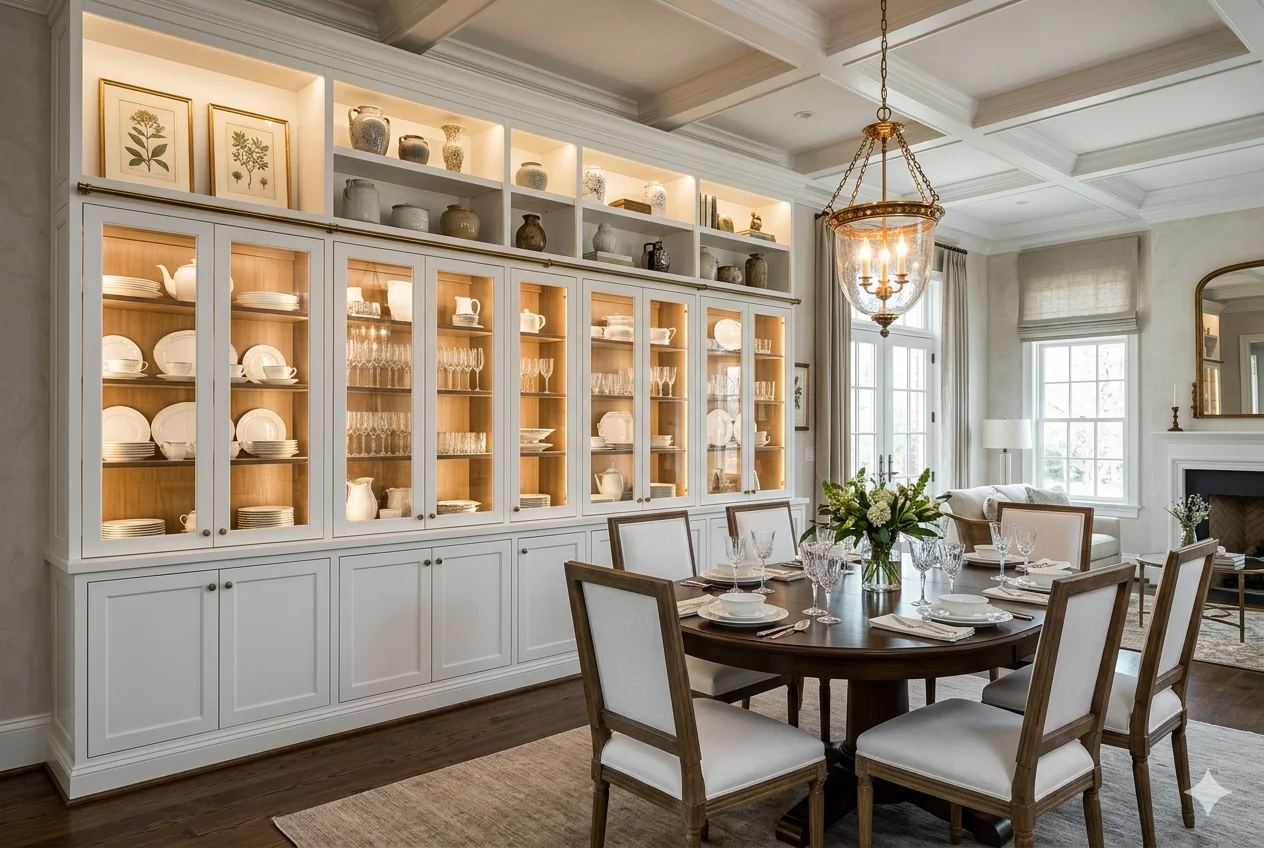
Dining Room Built-In Cabinets: 15 Stylish Storage Ideas to Maximize Space
Most dining rooms share a specific storage problem that no amount of stylish furniture quite resolves. The china that comes out for special occasions needs somewhere to live. The serving pieces that are too large for kitchen cabinets need organized accessible storage nearby. The wine collection needs a proper home. The table linens need a dedicated drawer rather than an overcrowded kitchen cabinet. And all of these practical storage requirements need to be met without making the dining room feel like a warehouse of mismatched furniture accumulated to solve organizational problems that the room was never properly designed to address.
Dining room built-in cabinets solve this problem definitively by integrating storage directly into the room’s architecture, creating organizational systems of genuine permanence and visual coherence that no collection of freestanding furniture can match regardless of individual piece quality. When storage is built into the wall, it becomes part of the room’s spatial composition rather than an addition to it, transforming the dining room’s character from a furnished space with storage problems into a genuinely designed environment where every element serves the complete vision of how the room should look and function simultaneously.
The specific value of built-in dining room cabinets extends beyond their organizational capacity into their architectural contribution to the dining room’s overall design quality. A beautifully executed floor-to-ceiling built-in cabinet wall transforms an ordinary dining room into a genuinely designed space of considered intention and personal character that elevates every meal, every gathering, and every quiet breakfast at that table with the specific quality of inhabiting a room that was created for you rather than simply furnished from available options. This comprehensive guide presents 15 stunning dining room built-in storage ideas that maximize space while creating the architectural beauty that makes dining rooms genuinely extraordinary.
Floor-to-Ceiling Built-In Cabinets for Maximum Storage
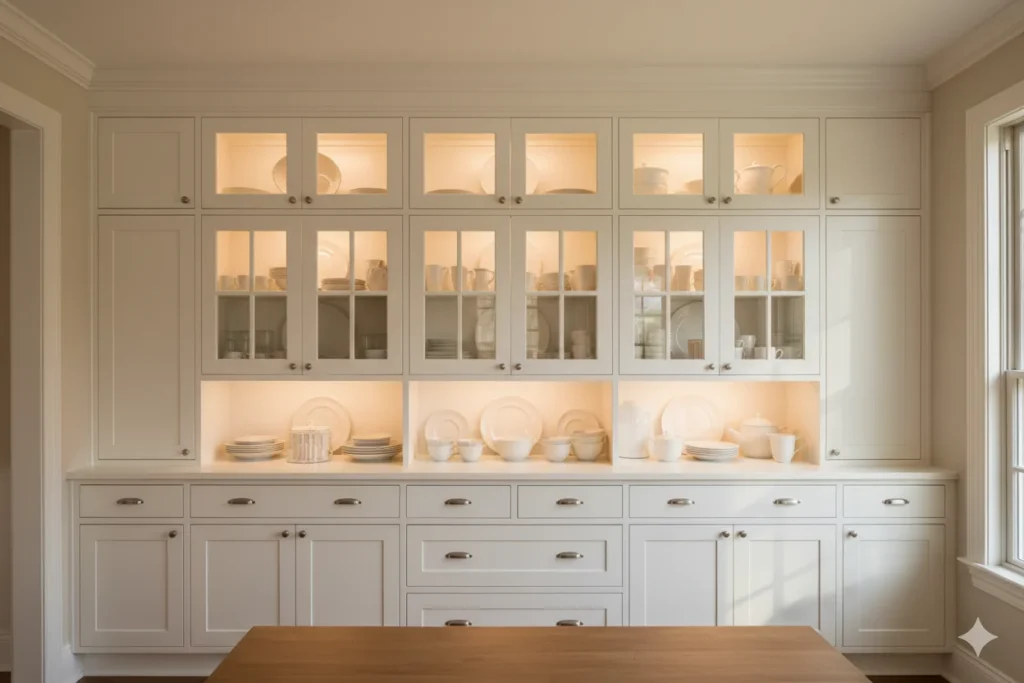
Built-in dining room cabinets that extend from floor to ceiling represent the most storage-efficient and most architecturally impactful built-in storage option available, utilizing the complete vertical dimension of the dining room wall surface in ways that conventional furniture installations necessarily leave partially unused through their limited height profiles.
The specific architectural benefit of floor-to-ceiling dining room built-in storage is its ability to transform an entire wall into a unified compositional element that reads as a designed feature of the room rather than furniture placed against it. This distinction matters enormously to the dining room’s overall aesthetic quality: a wall of floor-to-ceiling built-ins creates the impression that the dining room was designed with this storage intention from the beginning, creating the specific character of architectural completeness that custom-designed rooms possess and furnished rooms consistently lack regardless of the individual quality of the pieces assembled within them. Custom dining room cabinets in floor-to-ceiling format typically combine closed lower cabinet sections at base height for concealed storage of less frequently needed items, open or glass-front display sections at eye level for china display and accessible storage, and closed upper cabinet sections above for seasonal and bulk storage that is accessible by step stool without daily retrieval demands.
Dining room cabinet ideas for floor-to-ceiling applications should consider the integration of a display lighting system within the cabinet structure at the design planning stage, as retrofitting LED strip lighting or picture light mounting points into an already-installed built-in is significantly more complex than incorporating lighting-specific features into the initial design. Built-in LED strip lighting at the underside of upper shelves, picture light mounting positions at the top of glass-front display sections, and toe-kick accent lighting at base level each create distinct lighting contributions that collectively transform built-in cabinet displays from simply organized storage to genuinely gallery-quality china and accessory presentations.
Built-In Buffet Cabinet for Elegant Serving Storage
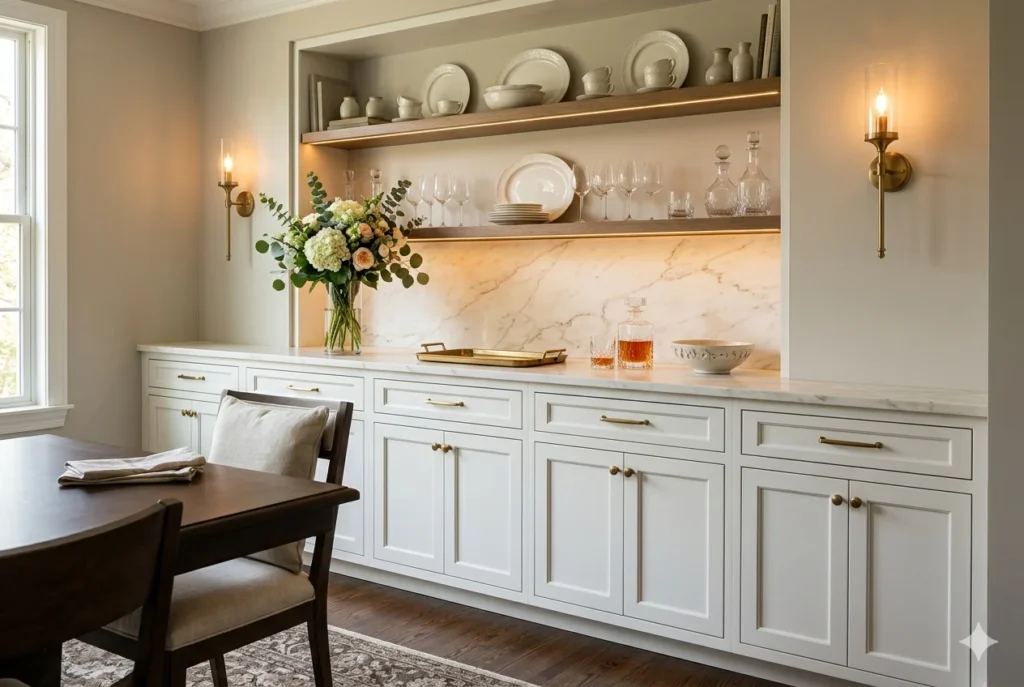
Built-in buffet dining room design creates the most functionally logical and architecturally elegant built-in storage solution specifically appropriate to dining rooms, with the buffet’s characteristic combination of counter-height working surface, lower cabinet storage, and upper display capacity addressing the specific functional requirements of dining service in a single built-in installation of maximum architectural resolution.
The traditional buffet functions that built-in versions perform include providing a stable counter-height surface for serving dishes, warming stations, and drinks during entertaining, storing the serving pieces, linens, and table accessories that dining room service requires in immediately accessible lower cabinet storage, and displaying china, glassware, and decorative objects at eye-level upper sections that communicate the dining room’s design character and personal aesthetic investment. Built-in sideboard dining room installations translate these traditional furniture functions into permanent architectural form, with the counter surface, lower cabinets, and upper display sections becoming part of the wall architecture rather than furniture that can be relocated, replaced, or rearranged as preferences change. The counter surface of a built-in buffet dining room installation provides practical working space during meal service while its permanent integration into the wall surface creates a clean architectural continuation of the room’s horizontal elements without the leg visibility and furniture mass that freestanding buffet alternatives introduce at floor level.
Dining room storage solutions using built-in buffet configurations benefit particularly from interior lighting within the buffet’s upper display sections, with LED strip lighting beneath upper shelves creating the warm illumination that transforms displayed china and glassware from stored items into genuinely decorative elements of the room’s complete visual composition. The specific quality of illuminated china display within a built-in buffet context creates dining room ambiance during both daytime and evening hours that freestanding buffet alternatives cannot produce through their inherent inability to integrate lighting into their structural forms with the architectural seamlessness of purpose-designed built-in installations.
Built-In China Cabinet for Display and Organization
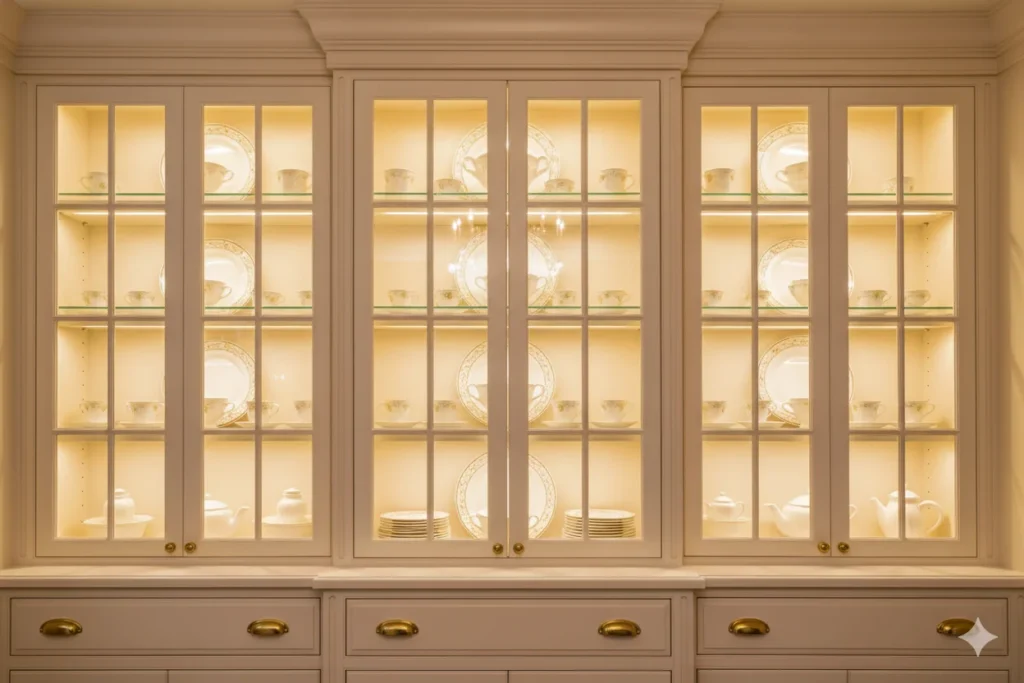
Built-in china cabinet design creates the most formally resolved and historically authentic dining room storage tradition available in built-in format, with the china cabinet’s characteristic combination of glass-front upper display sections and solid lower storage sections creating a purpose-designed home for the china, crystal, and silver that formal dining rooms have traditionally housed in the cabinet form most associated with the finest residential dining room design across centuries of residential interior history.
Dining room display cabinet design in built-in format provides superior china display quality compared to freestanding china cabinet alternatives through the built-in’s ability to create deeper display sections, taller display heights, and more architecturally integrated interior lighting than any freestanding china cabinet design can achieve within the portable furniture category’s inherent dimensional and constructional constraints. The glass-front sections of built-in china cabinet installations can incorporate museum-quality display features including silk or velvet interior backing in coordinating colors that make displayed china appear more vivid and deliberately presented, adjustable glass shelves with plate grooves for stable upright plate display, and LED lighting systems calibrated to the specific color temperature that makes white and cream china appear most beautiful and most luminous within the display environment.
Custom dining room cabinets in china cabinet format allow the specific dimensional accommodation of the homeowner’s actual china service scale, plate diameter, and storage requirements rather than forcing the china collection to fit within the standardized dimensions of manufactured freestanding alternatives that may not suit the specific pieces requiring storage. A custom built-in china cabinet designed around a specific 12-person china service will accommodate each piece with appropriate clearance and display position in ways that general-purpose manufactured china cabinets with standardized shelf spacing cannot guarantee for non-standard china dimensions.
Corner Built-In Cabinet to Use Every Inch
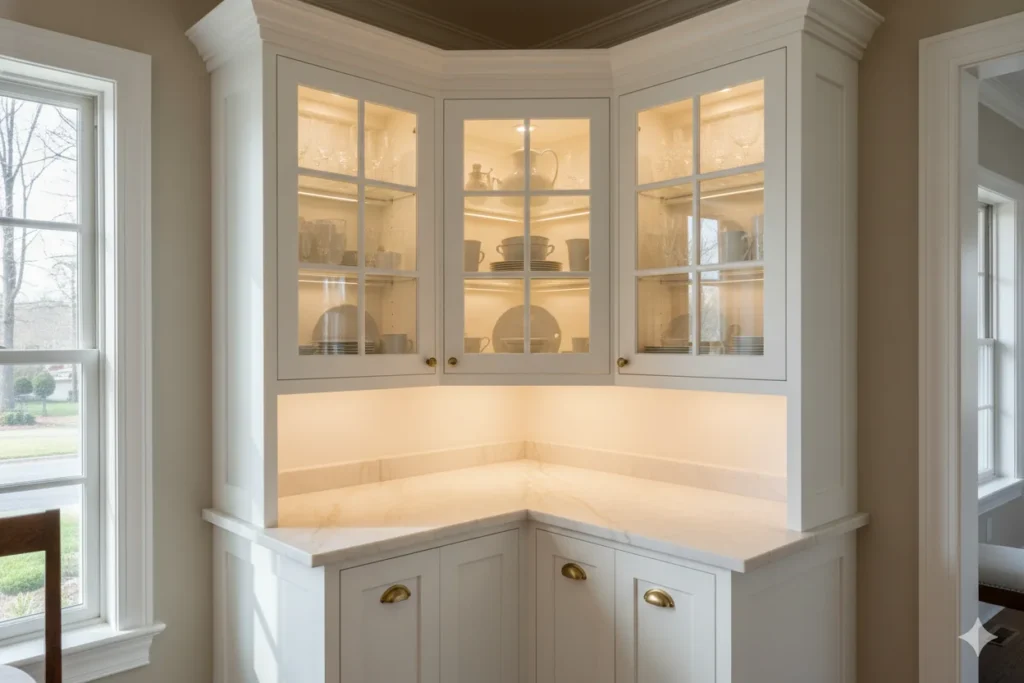
Built-in corner cabinet dining room installations convert the most consistently wasted architectural space in rectangular dining rooms into highly productive storage environments that freestanding furniture cannot access with equivalent efficiency due to the specific geometric challenges of corner positioning in room furniture arrangements.
Dining room cabinet ideas using corner built-in configurations address the specific challenge that dining room corner spaces present: they are visually prominent enough to require design attention while too geometrically constrained for standard furniture pieces that require straight wall relationship. Custom corner built-in cabinets designed to fit the specific 90-degree angle of the dining room corner with appropriate angled or curved front profiles create storage installations that appear purposefully designed for their specific position rather than adapted from standard designs that do not precisely suit corner geometry. Built-in corner cabinet dining room designs using diagonal front profiles create a furniture-like presence at the corner that softens the room’s angular geometry while the interior storage capacity of the corner volume, which is surprisingly substantial given the large floor footprint of corner positions, provides genuine storage for serving pieces, linens, and bar accessories that dining rooms require in accessible nearby positions.
Dining room built-in shelving in corner applications using open shelf configurations rather than closed cabinet formats create corner display installations of immediate visual impact, with the angled or curved open shelves creating architectural focal points that display china, art objects, and decorative elements in the elevated corner position where they are visible from multiple viewing angles simultaneously. Corner built-in open shelving creates the specific design quality of a room where every architectural position has been considered and addressed through design intention rather than left as a visually awkward residual space filled with a single plant in an undersized pot.
Built-In Bar Cabinet for Entertaining Elegance
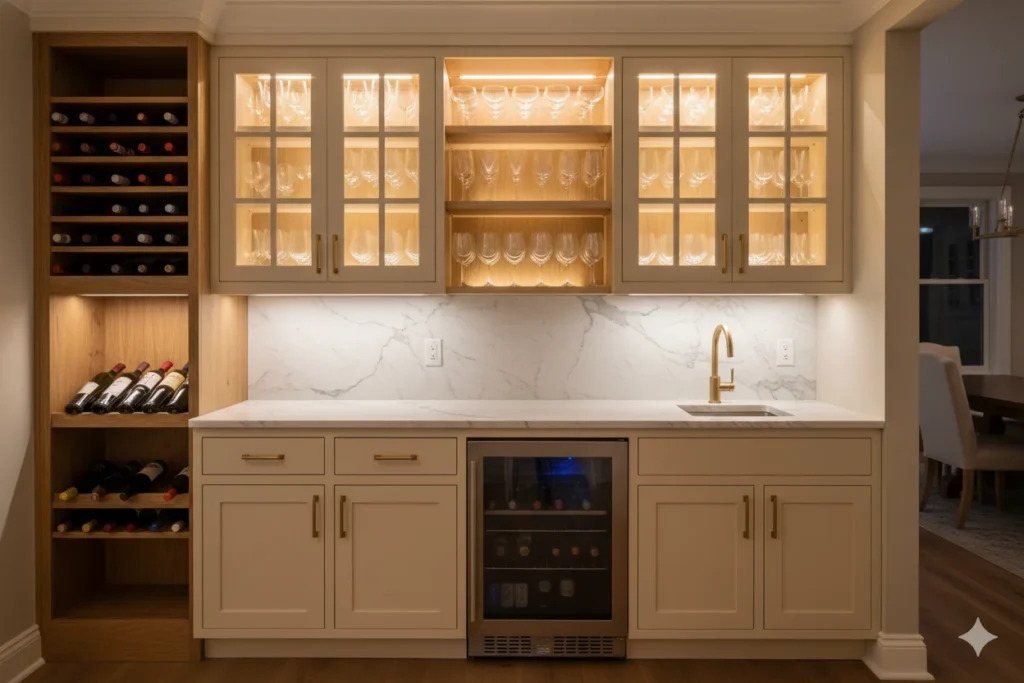
Built-in bar cabinet dining room installations create the most entertaining-capable and socially sophisticated dining room storage feature available, elevating the dining room’s hospitality function from simple food service to the complete beverage service capability that genuinely welcoming entertaining environments provide through proper bar infrastructure and organized drink storage.
The functional components of a well-designed built-in bar cabinet dining room installation include dedicated wine storage in either refrigerated wine drawer or temperature-stable wine rack format, glassware storage in heights appropriate for wine glasses, cocktail glasses, and whiskey tumblers, spirits storage with adequate shelf depth for bottle accommodation, bar tool organization through drawer inserts and hanging rail systems, and the counter surface workspace that cocktail preparation requires during active entertaining use. Dining room storage cabinet design in bar cabinet format benefits from integrated sink installations that convert the bar zone from simple drink dispensing to a genuinely functional wet bar with running water for glass rinsing, ice preparation, and the cleaning convenience that eliminates constant trips between bar and kitchen during entertaining sessions. Dining room built-in design ideas for bar cabinet applications should consider the visual character of the bar zone when not in active use, with glass-front cabinet sections that display attractive glassware collections creating consistent decorative contribution even during the extended periods between formal entertaining occasions.
Built-in dining room cabinets incorporating bar functions benefit from specific interior lighting design that illuminates glassware displays with the warm amber quality that makes crystal and glass appear most beautiful while providing the practical work surface lighting that cocktail preparation requires at a different intensity from the ambient display lighting that makes the bar zone decoratively appealing during non-service hours.
White Built-In Cabinets for Bright Clean Elegance
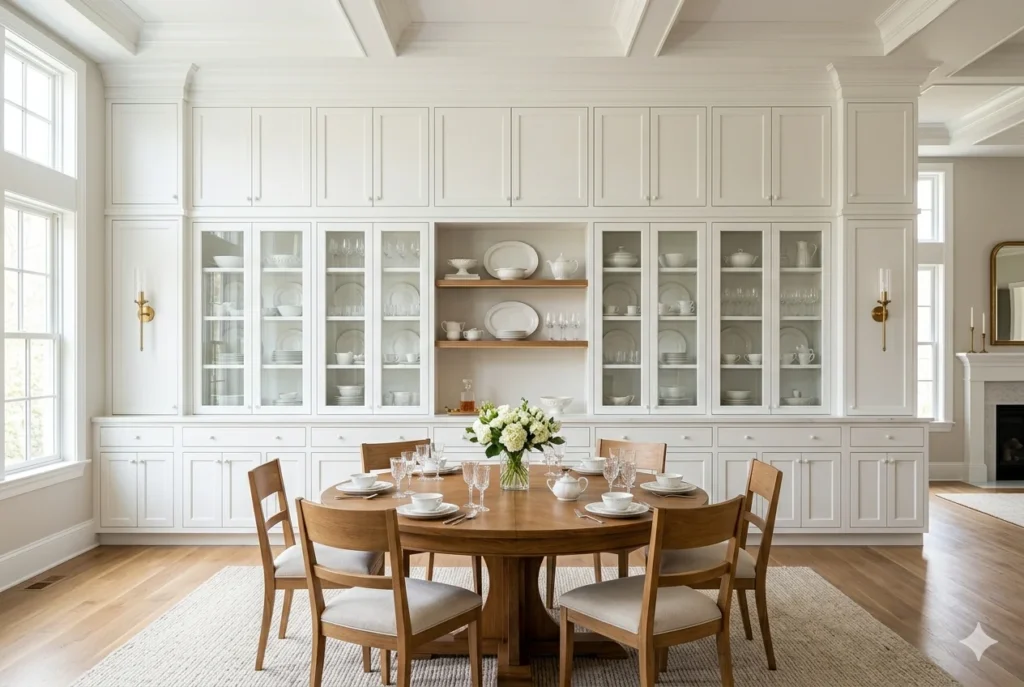
White built-in dining room installations create the most universally appealing and broadly applicable built-in dining room cabinets aesthetic available, with white’s characteristic light reflectivity creating dining room environments of maximum brightness and spatial generosity while the white cabinet surfaces provide the clean neutral backdrop that makes displayed china, glassware, and decorative accessories appear most vivid and most deliberately presented against their storage environment.
Dining room cabinet ideas in white paint create the specific visual coherence with surrounding white or light trim, white ceiling, and white walls that makes dining room built-in cabinets appear as genuine architectural features rather than furniture additions, with the color continuity between built-in and surrounding room surfaces creating the seamless integration that signals purpose-designed architecture rather than installed furniture. White built-in dining room installations in shaker profile cabinet doors create the most broadly appropriate and most enduringly fashionable white dining room cabinet design, with the shaker door’s characteristic flat center panel and simple frame creating cabinet doors of clean geometric elegance that suit farmhouse, transitional, traditional, and contemporary dining room design contexts with equal appropriateness and equal visual success.
Dining room built-in storage in white finish creates the maximum contrast backdrop for the warm color tones of natural wood dining furniture, the warm cream and gilt tones of traditional china patterns, and the green botanical tones of cut flower arrangements and plant material that dining tables and sideboards traditionally feature as seasonal decoration. This warm-against-white contrast effect makes dining room built-ins in white contribute actively to the room’s decorative richness through their surface color’s ability to make surrounding warm-toned elements appear more vivid and more deliberately composed against the clean white backdrop.
Modern Built-In Dining Room Storage with Sleek Lines
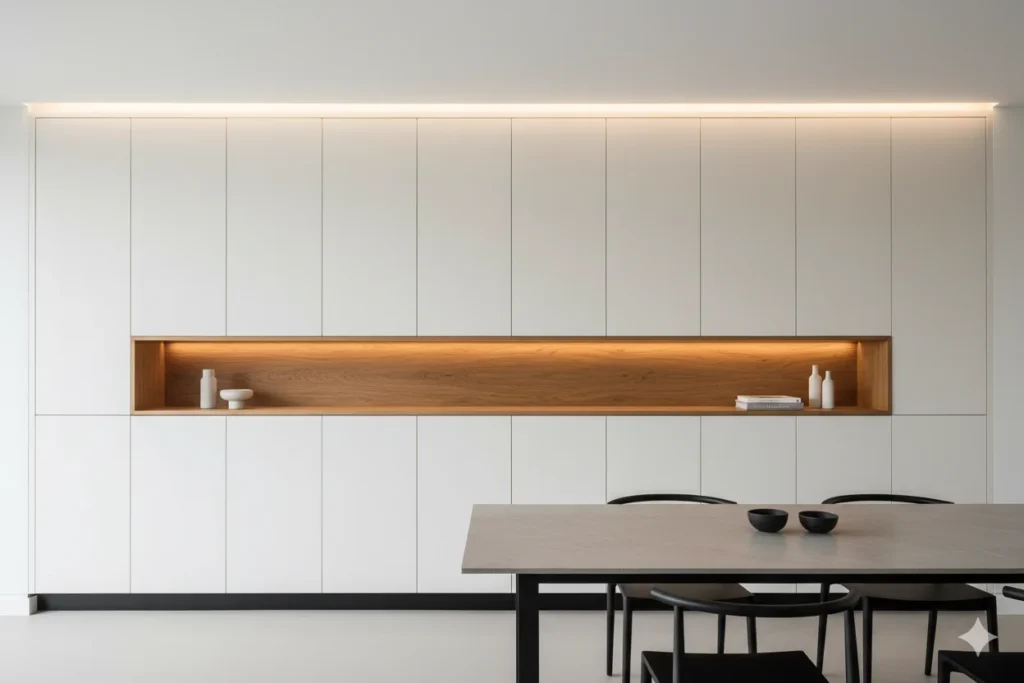
Modern built-in dining room storage design applies the discipline of contemporary design to dining room storage solutions, creating built-in cabinet installations of clean geometric precision and material sophistication that suit modern and contemporary dining room design contexts with the architectural consistency that historically-referenced cabinet profiles would disrupt in these specifically contemporary environments.
Dining room cabinetry in modern design uses flat-front slab or minimally profiled doors without the recessed panel, raised panel, or frame-and-panel construction that traditional cabinet profiles employ, creating cabinet door surfaces of uninterrupted plane geometry that read as architectural elements of maximum visual simplicity. Custom dining room cabinets in modern slab-front format with integrated pulls or push-to-open mechanisms eliminate the visible hardware that traditional cabinets employ, maintaining the uninterrupted surface plane quality that modern design prioritizes through the removal of every projecting element that breaks the clean geometric integrity of the cabinet wall composition. Dining room built-in design ideas for modern applications benefit from the combination of slab-front cabinet doors in matte white or warm wood veneer with open shelf sections in contrasting materials including blackened steel, brass-edged glass, or warm natural wood creating the material variety that prevents all-slab-front modern built-in installations from appearing monotonous through the absence of decorative profile variation.
Modern built-in dining room storage using integrated LED strip lighting concealed within the cabinet structure creates architectural light details that emerge from the built-in surfaces themselves rather than being applied as visible fixtures, with under-shelf lighting creating glowing floating shelf effects, cove lighting creating illuminated shadow gaps between cabinet sections, and toe-kick lighting creating the floating base effect that makes floor-to-ceiling built-in installations appear to hover above the floor surface in the specifically contemporary lighting effect most associated with premium modern residential interior design.
Farmhouse Dining Room Built-In Cabinets
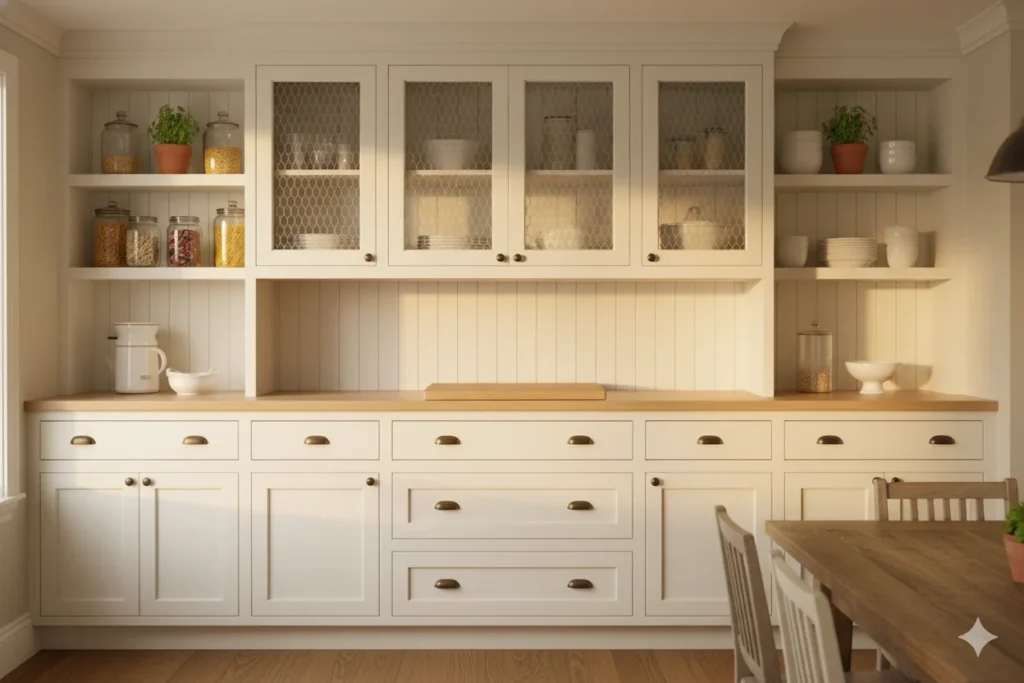
Farmhouse dining room cabinets create built-in storage installations of extraordinary warmth, authentic character, and welcoming domestic beauty that reference the specific material traditions and design values most associated with American farmhouse interior design at its most genuinely beautiful and its most practically functional expression.
Dining room built-in storage in farmhouse style uses the combination of white or cream painted shaker cabinet doors, open wood shelving with visible grain character, chicken wire or mullioned glass cabinet door inserts, and natural wood countertop surfaces to create built-in installations that appear to have accumulated through the organic domestic history of a well-loved farmhouse rather than having been designed and installed as a complete coordinated system. Built-in buffet dining room installations in farmhouse style often incorporate an apron-front sink within the buffet counter section, creating the farmhouse-specific detail most associated with authentic rural domestic architecture and providing genuine functional wet bar capability within the farmhouse aesthetic framework. Shiplap or beadboard cabinet interior backing in the open shelf sections of farmhouse dining room built-in cabinets creates the characteristic vertical line texture within the display sections that reinforces the farmhouse aesthetic identity through its reference to the wall surface treatment most associated with farmhouse interior design tradition.
Dining room cabinet ideas in farmhouse style use open shelving as a primary storage format rather than exclusively closed cabinet storage, with the display of beautiful practical items including white ceramic dish collections, mason jar storage, cast iron serving pieces, and natural botanical arrangements creating the specifically practical-yet-beautiful display that defines farmhouse domestic aesthetic values at their most authentic and most appealing expression.
Open Shelving and Closed Cabinet Combinations
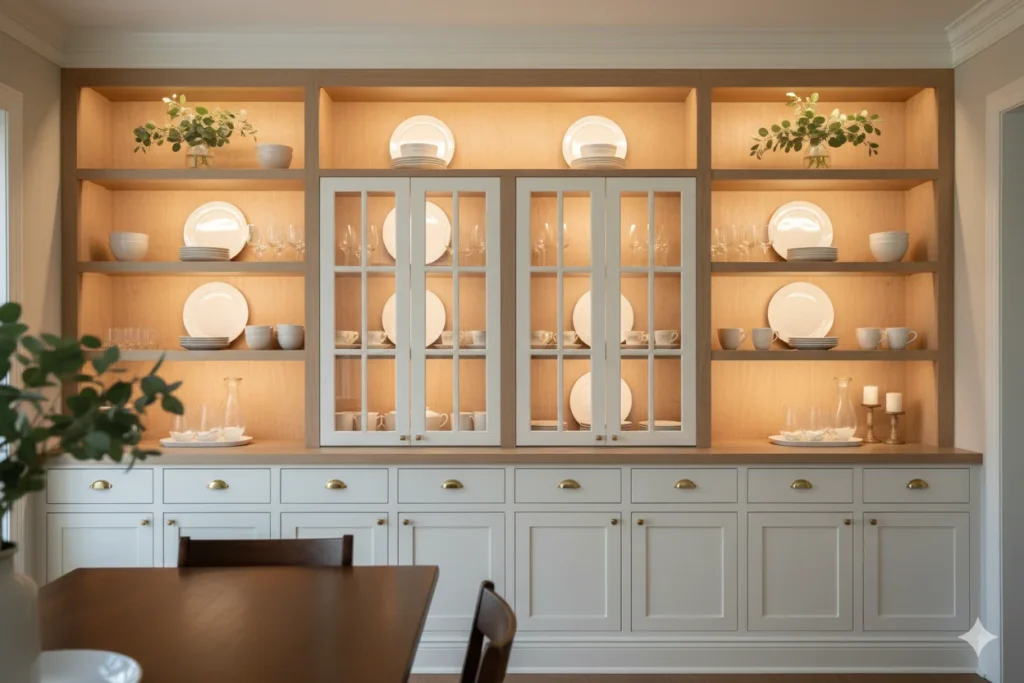
The strategic combination of open shelving and closed cabinet storage within a single built-in dining room cabinets installation creates the most functionally flexible and visually interesting storage composition available, with the open sections contributing display richness and accessible practical storage while the closed sections provide the concealed organizational capacity that prevents living storage requirements from overwhelming the display aesthetic that open shelving alone cannot maintain through real household use.
Dining room built-in shelving in open format creates the display opportunity most valued in dining room built-in design, with the open shelves providing the gallery-like presentation quality for china, glassware, and decorative objects that closed cabinet storage eliminates by concealing displayed items behind opaque door surfaces. Dining room storage solutions using the combination of open upper shelves with closed lower cabinets create the specific ergonomic logic of accessible display storage at the most comfortable viewing and reaching heights while concealed practical storage occupies the base cabinet zone where visual access is less critical and concealment of less decorative but practically necessary items is most appropriate. This upper-open-lower-closed combination suits dining rooms where the homeowners want to display their most beautiful dining pieces while maintaining organized concealed storage for the practical accessories that dining service requires but that do not contribute positively to the room’s decorative character when visible.
Built-in dining room cabinets using glass-front closed upper sections as an intermediate option between fully open and fully closed storage create the specific display-while-organized quality that glass-front cabinets provide through their visibility of contents behind the protective glass front. Glass-front cabinets allow the display benefit of visible china and glassware while protecting the displayed items from the kitchen oils and cooking moisture that open shelving in kitchen-adjacent dining rooms exposes displayed items to through normal air circulation in connected open-plan environments.
Built-In Cabinets with Display Lighting
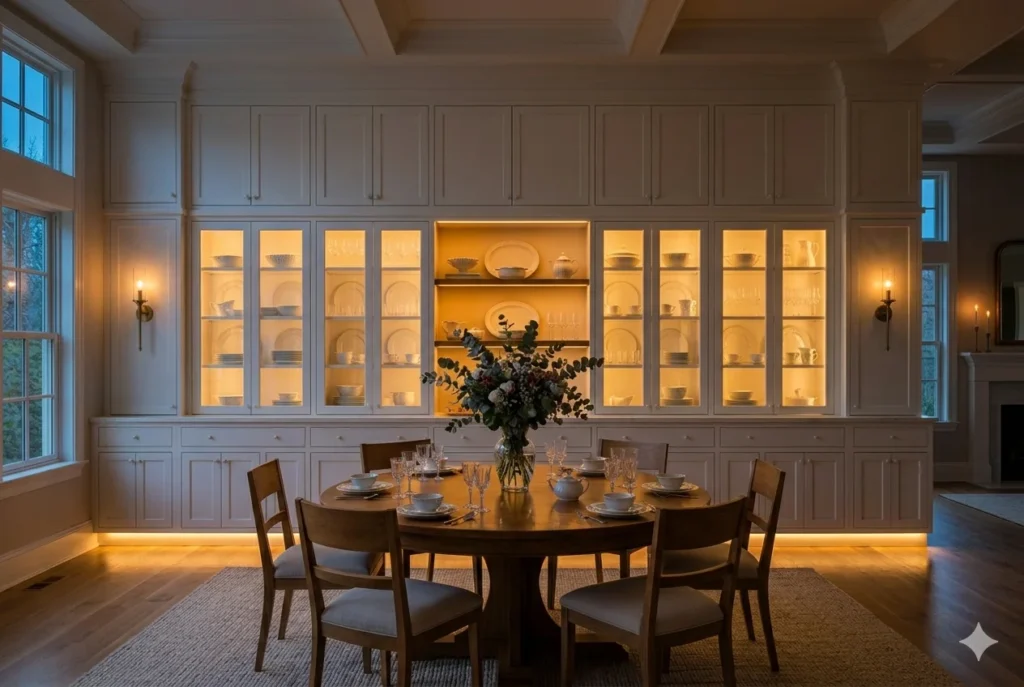
Dining room display cabinet installations incorporating integrated lighting systems transform the built-in cabinet from a storage solution into a genuine lighting feature of the dining room, with the warm illumination within cabinet display sections creating ambient lighting contribution, decorative focal point quality, and the specific gallery-display character that elevates displayed china and glassware from organized storage to genuine design elements of the room’s complete visual composition.
LED strip lighting installed at the underside of upper shelves within dining room built-in storage creates the downward illumination that washes the shelf surface and displayed items below in warm even light, making white china appear brighter, crystal appear more luminous, and the complete cabinet interior appear as a warmly lit stage for the displayed collection rather than a dark organizational space behind closed or open cabinet sections. Built-in dining room cabinets with display lighting require electrical planning during the design phase to route wiring through cabinet structures to appropriate switch or dimmer control positions, with the investment in integrated lighting infrastructure during initial built-in installation significantly more cost-effective than the complex retrofitting process that lighting addition to completed built-ins requires. Dining room cabinet ideas incorporating dimmer control for display lighting allow the intensity of cabinet illumination to be calibrated for different occasions from bright daytime display lighting through softer evening ambient lighting that creates the warm and intimate dining atmosphere most appropriate for formal dinner service and romantic evening meals.
Custom dining room cabinets with display lighting can incorporate color temperature adjustable lighting systems that allow warm white illumination for general display and entertaining contexts while providing the cooler white illumination that certain china pattern colors require for accurate color rendering, creating the most versatile display lighting system available for dining rooms where the china collection includes pieces in multiple pattern colors and aesthetic characters that different color temperatures serve with different degrees of fidelity.
Built-In Cabinet Makeover for Existing Dining Rooms
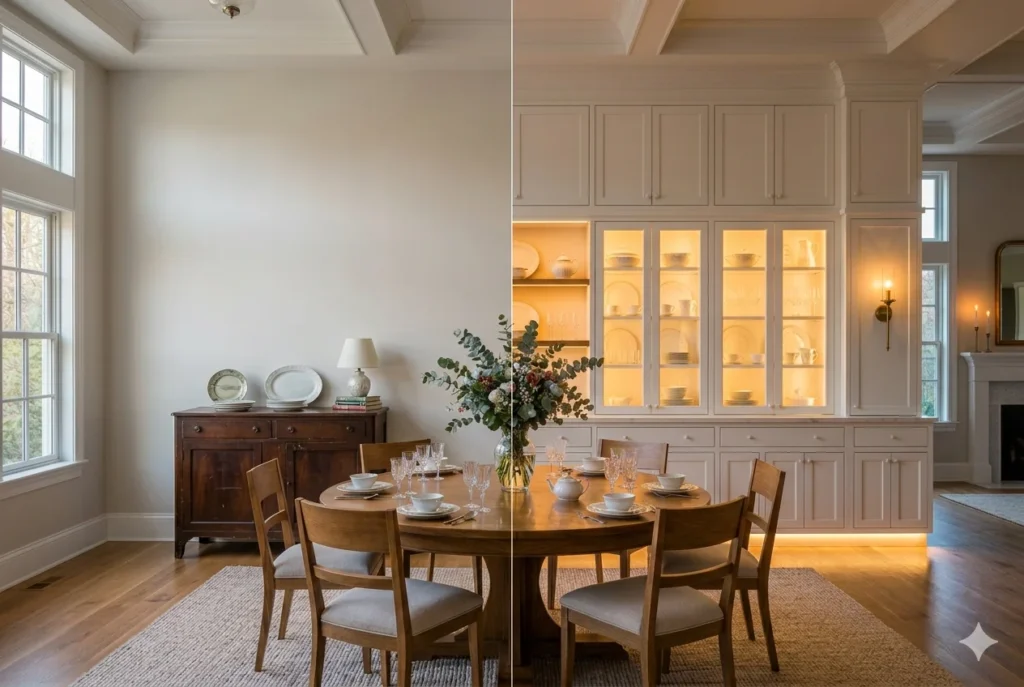
Dining room cabinet makeover approaches allow homeowners to transform existing dining room storage situations through built-in installation without the complete room renovation that purpose-built built-in dining rooms from initial construction represent, with strategic built-in additions creating architectural storage character from existing bare walls and inadequate freestanding furniture situations.
Built-in dining room cabinets created through makeover approaches typically begin with the assessment of the most appropriate wall for built-in installation, with the wall most visible from the primary dining chair seating positions, the wall adjacent to the kitchen entry, or the wall opposite the dining room’s primary natural light source each presenting distinct advantages for different functional and aesthetic built-in objectives. Dining room storage solutions through makeover built-in installations should prioritize the most impactful single built-in element within available budget, with a single well-designed built-in buffet installation or a single full-height cabinet tower creating more architectural improvement than the same budget distributed across multiple smaller and less impactful storage additions. The specific quality of commitment evident in a well-executed built-in installation, its permanence, its precise fit to the room’s dimensions, and its visual integration with the room’s architectural features, creates dining room transformation of a fundamentally different character from freestanding furniture improvements of equivalent cost.
Dining room wall cabinet installations in existing dining rooms often benefit from the incorporation of existing architectural features including alcoves, bay windows, and chimney breast projections as the organizing geometry for built-in cabinet design, with these existing features providing the specific dimensional definition that makes built-in installations appear genuinely intentional and architecturally motivated rather than simply added to available wall space without contextual design rationale.
Built-In Cabinet Hardware and Finish Details
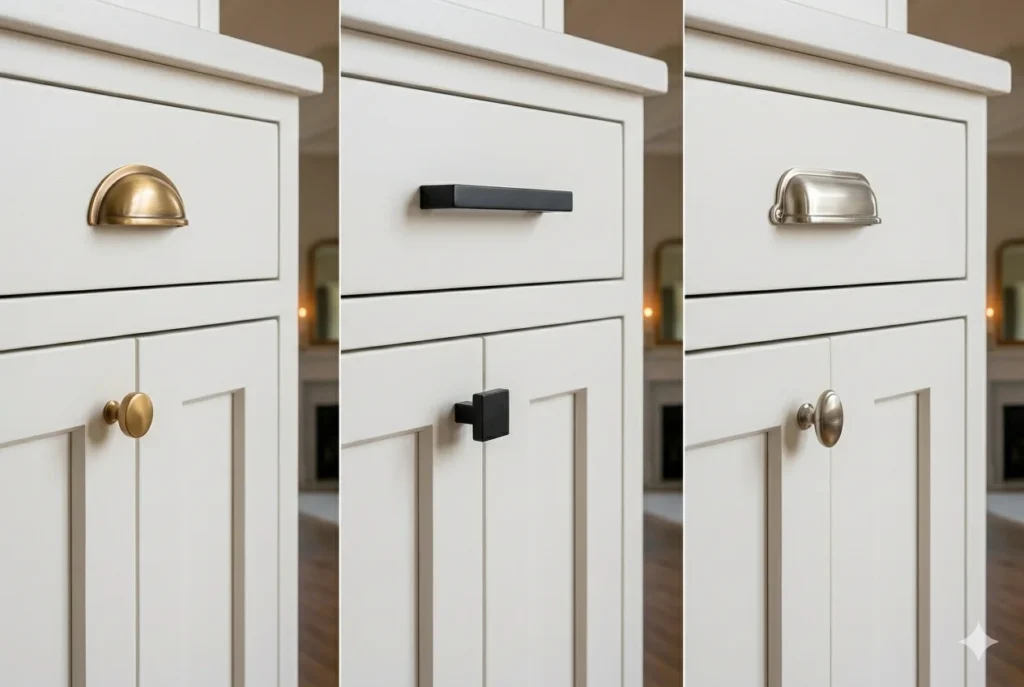
The hardware and finish details of dining room built-in storage installations determine the specific aesthetic character that the built-ins contribute to the dining room’s complete design composition, with cabinet hardware in particular performing the function of providing the metallic accent note that unifies the built-in with the dining room’s other metallic elements including light fixtures, table hardware, and decorative accessories.
Dining room cabinetry hardware in brushed brass or unlacquered brass creates the warm metallic character most associated with transitional and traditional dining room design, with the warm gold tone of brass hardware complementing the warm tones of natural wood dining furniture, cream and gold china patterns, and the warm amber illumination of candlelight and warm artificial lighting that formal dining rooms typically use. Custom dining room cabinets using cup pulls in solid brass on lower cabinet drawers, bin pulls on wide drawer openings, and small knobs on upper cabinet doors create the hardware variety that suits the varied cabinet formats of complete built-in installations while maintaining consistent finish identity throughout the complete hardware selection. Dining room built-in design ideas for hardware selection should consider the specific finish durability requirements of dining room environments, with unlacquered brass developing natural patina through handling that aged brass enthusiasts value while lacquered brass maintains consistent gold tone without patina development for homeowners preferring consistent metallic character.
Dining room cabinet ideas using matte black hardware on white or light-colored built-in cabinets create the most graphically contemporary and boldly contrasting hardware aesthetic available, with matte black pulls and knobs against white shaker cabinet doors creating the specific high-contrast detail that communicates confident contemporary design intention through the hardware’s obvious deliberate choice of dark against light.
Built-In Hutch Design for Traditional Dining Rooms
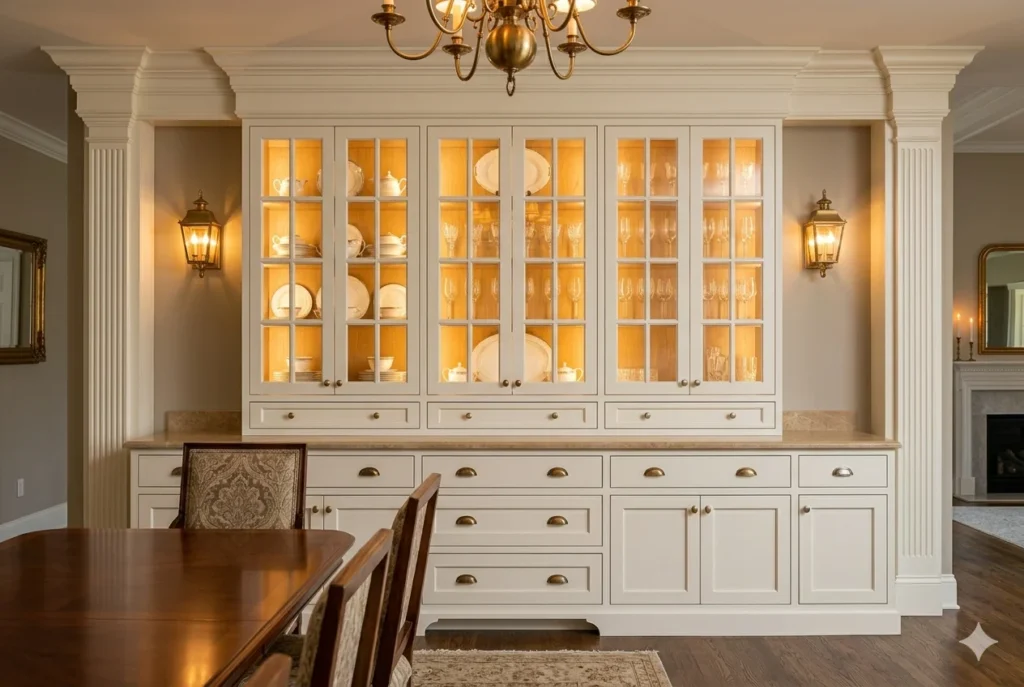
Dining room hutch ideas in built-in format translate the classic freestanding hutch’s combination of lower closed storage and upper open display into permanent architectural form, creating the dining room’s most historically resonant storage tradition as a built-in installation of maximum architectural integrity and organizational completeness.
The traditional dining room hutch evolved as a purpose-designed storage solution combining the sideboard or buffet’s counter-height working surface and lower cabinet storage with an upper display section positioned above the counter for the display of the finest china, silver, and decorative objects that dining families have traditionally assembled as expressions of domestic prosperity and aesthetic investment. Built-in dining room cabinets in hutch configuration create this traditional form as an architectural feature rather than portable furniture, with the hutch’s proportional relationship between lower and upper sections becoming a permanent vertical composition within the dining room’s wall architecture. Dining room built-in storage in hutch format benefits from the upper display section’s relationship to the room’s ceiling height, with floor-to-ceiling hutch designs that extend the upper display section from counter height to ceiling creating the most architecturally imposing and storage-comprehensive built-in hutch installations available in the dining room’s vertical dimension.
Dining room hutch ideas for built-in applications should consider the specific china display requirements of the homeowner’s collection, with plate grooves on appropriate shelves for upright plate display, tall shelf heights for serving platter accommodation, and glass-front doors or open shelves for the specific display preference that the collection’s visual character best suits. Illuminated upper display sections in built-in dining room cabinets of hutch configuration create the warm gallery quality that makes the hutch the dining room’s primary visual focal point during both day and evening use, with the illuminated display contributing to the dining room’s ambient lighting during meals through the warm glow of the cabinet interior’s illumination.
Built-In Cabinets with Integrated Seating
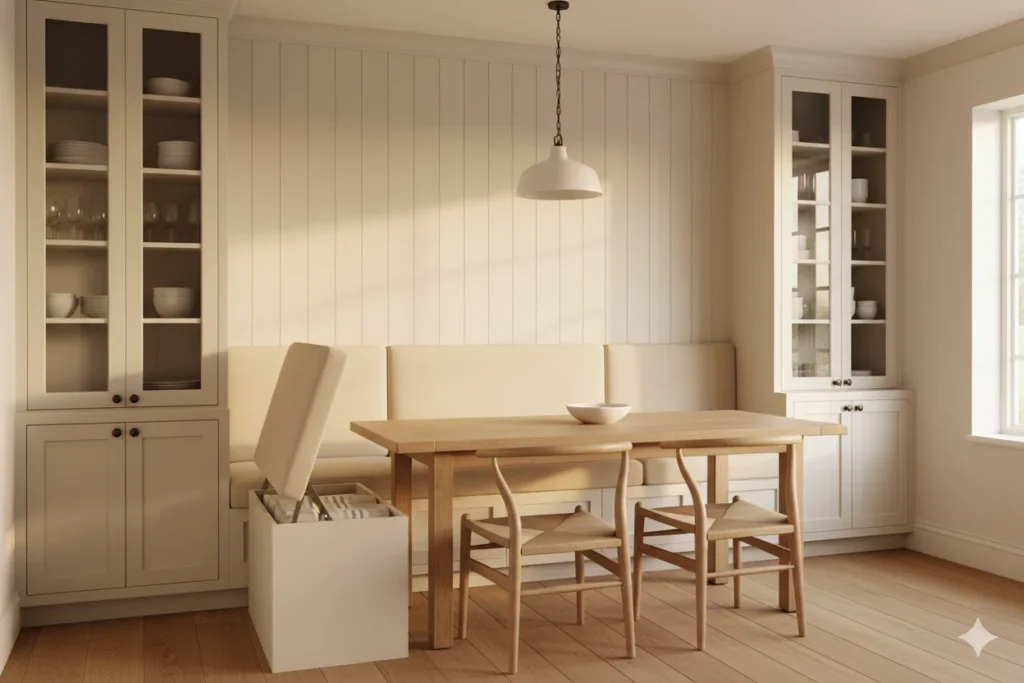
Dining room built-in storage combined with integrated bench seating creates the most multifunctional and spatially efficient dining room built-in installation available, with the seating function providing the specific hospitality-ready character that makes dining rooms genuinely ready for use without additional furniture while the built-in storage beneath the bench seat addresses practical storage requirements within the same footprint as the required seating function.
Built-in dining room cabinets with integrated bench seating suit dining rooms where space efficiency is a primary concern, with the bench seat’s ability to serve both seating and storage simultaneously making it the highest-value dual-function element available in dining room built-in design. Dining room storage solutions using bench seat storage access through lift-top mechanisms or front-opening drawer configurations under the seat surface provide substantial storage volume for dining linens, serving pieces, and seasonal table accessories within the seating footprint that the dining function already requires regardless of its storage contribution. Dining room built-in design ideas combining bench seating with flanking storage towers, upper display cabinets above the bench back, and integrated table configuration create complete built-in dining alcove installations that create the specific enclosed dining nook quality most associated with intimate and genuinely cozy dining spaces where the architectural definition of the dining zone creates a sense of private dedicated space within larger open-plan environments.
Built-in buffet dining room installations that extend to incorporate integrated bench seating along one wall of the dining room create the complete dining room furniture situation of buffet service, seating, and storage within a single unified built-in installation that addresses all dining room functional requirements through a single architectural investment rather than requiring multiple separate furniture acquisitions to achieve equivalent organizational and seating capability.
Budget-Friendly Built-In Cabinet Ideas
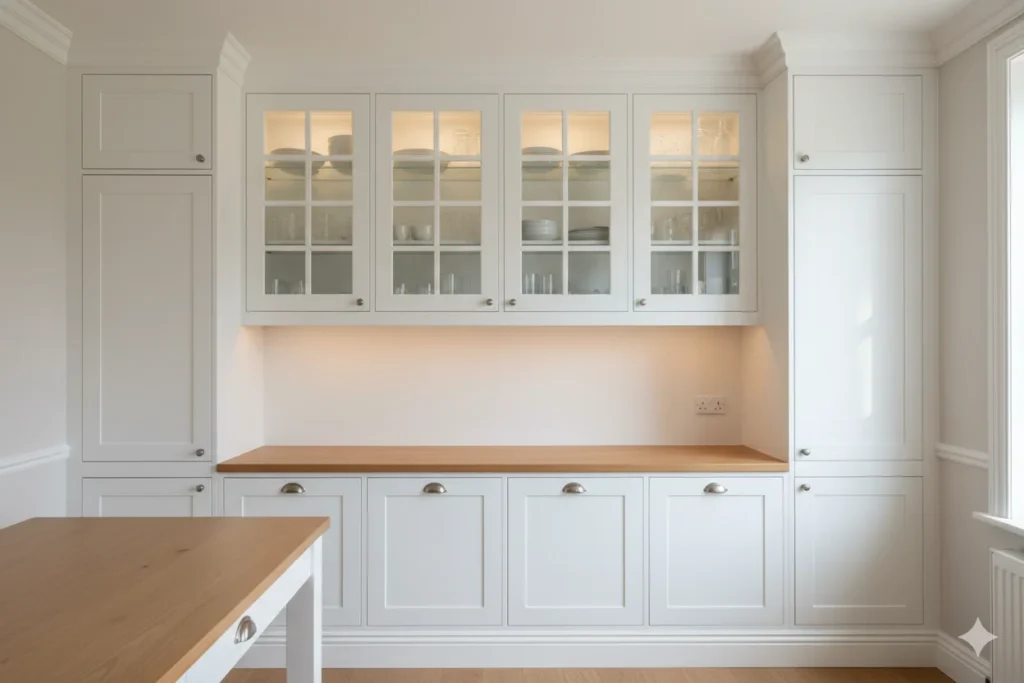
Dining room cabinet makeover approaches using budget-conscious built-in creation strategies allow homeowners to achieve the architectural quality and organizational benefits of dining room built-in cabinets through cost-effective construction approaches that deliver genuine built-in character at investment levels significantly below custom millwork alternatives.
Dining room storage solutions using IKEA or other flat-pack cabinet systems as the structural core of built-in installations create the most budget-accessible pathway to genuine built-in dining room cabinet character, with the standard cabinet carcasses providing the structural storage function while custom face frames, trim boards, and integrated crown molding applied during installation transform the manufactured cabinet modules into visually custom built-in installations that closely resemble millwork-quality custom cabinets at dramatically lower material cost. Dining room built-in storage created through flat-pack cabinet system built-in conversions requires specific attention to the installation details that distinguish genuine built-in character from simply cabinets placed against a wall, with scribing the cabinet faces to wall surfaces, installing continuous crown molding at ceiling junction, adding base molding at floor junction, and painting all components including visible wall sections between cabinet units in consistent color creating the architectural integration that defines genuine built-in installations.
Custom dining room cabinets at accessible investment levels using stock cabinet sizes combined with custom face frames and molding profiles create built-in dining room storage of surprisingly high quality for homeowners willing to invest additional installation time in the detail work that transforms standard cabinet assemblies into convincing built-in installations. The investment in quality hardware, appropriate interior lighting, and consistent paint or finish application on stock cabinet built-in conversions delivers results that observers at normal dining room viewing distances consistently perceive as custom millwork rather than assembled stock cabinet components.
Conclusion
Creating dining room built-in cabinets that maximize storage while delivering genuine aesthetic beauty requires understanding that the most successful built-in dining room storage solutions emerge from the intelligent integration of functional storage requirements with architectural design opportunity, treating each inch of available wall surface as an investment in the dining room’s spatial organization, visual character, and long-term daily livability rather than simply a location for storing the items that formal dining requires within accessible reach of the table.
The 15 dining room built-in storage ideas explored throughout this guide collectively demonstrate that exceptional dining room built-in cabinets are defined by the quality of their design thinking rather than by their construction budget, with flat-pack cabinet conversions executed with architectural finish detail creating results of genuine built-in quality while improperly finished custom millwork fails to achieve the integrated architectural character that built-in cabinets promise despite their premium construction cost.
Begin your dining room built-in cabinet project by identifying the specific functional requirements your dining room’s storage needs demand, the specific aesthetic direction your room’s existing design establishes as the appropriate built-in character, and the specific wall or corner position within the dining room where built-in storage will deliver maximum functional benefit and maximum visual impact simultaneously. From that clarity of purpose and position, every subsequent design decision about profile, finish, hardware, lighting, and interior configuration will find its appropriate resolution in service of the complete vision rather than as independent choices accumulated without organizing design logic.
Frequently Asked Questions
How much do dining room built-in cabinets cost?
Custom dining room cabinets in fully custom millwork typically cost 500 to 1,500 dollars per linear foot including installation, making a 10-foot built-in dining room cabinets installation 5,000 to 15,000 dollars or more depending on complexity, materials, and local labor costs. Semi-custom cabinet options cost 200 to 600 dollars per linear foot. Flat-pack cabinet system built-in conversions can achieve dining room built-in storage results at 100 to 300 dollars per linear foot with appropriate DIY installation skill and attention to architectural finish detail.
What should I store in dining room built-in cabinets?
Dining room storage solutions in built-in cabinets ideally house china services and serving pieces in glass-front or open display sections, dining linens and placemats in dedicated drawers, glassware collections in appropriate height cabinet sections, serving accessories including platters and bowls in lower closed cabinet storage, wine and spirits in bar cabinet sections if applicable, and seasonal table decorations in upper closed cabinet sections accessed less frequently through the dining year.
Should dining room built-in cabinets go floor to ceiling?
Floor-to-ceiling dining room built-in storage creates the most architectural impact and the most storage capacity per linear foot of wall, making it the recommended approach when wall height allows and the dining room’s design aesthetic suits the comprehensive built-in coverage. Lower built-in configurations at buffet height with open wall above suit dining rooms where wall art display above the built-in is preferred and where the ceiling height or architectural features above the built-in zone would interrupt floor-to-ceiling coverage unnaturally.
What cabinet door style works best for dining room built-ins?
Dining room cabinet ideas for door style selection should align with the room’s overall design direction, with shaker profile doors suiting farmhouse, transitional, and traditional dining rooms most broadly, flat-front slab doors suiting modern and contemporary contexts specifically, and raised panel doors suiting formal traditional dining rooms most authentically. Glass-front doors on upper sections of any style create the display quality most associated with dining room specific cabinet design regardless of the profile choice on lower solid door sections.
How do I add lighting to existing dining room built-in cabinets?
Dining room display cabinet lighting can be added to existing built-ins through battery-operated LED puck lights requiring no electrical routing for immediate display improvement, plug-in LED strip lights routed along shelf undersides to the nearest accessible outlet, or hardwired LED strip installations requiring electrician involvement for code-compliant permanent installation. The most elegant and most functionally effective results come from hardwired systems with dimmer control, but battery-operated LED solutions provide immediate and substantially improved display lighting at minimal cost and zero installation complexity.
One Comment