
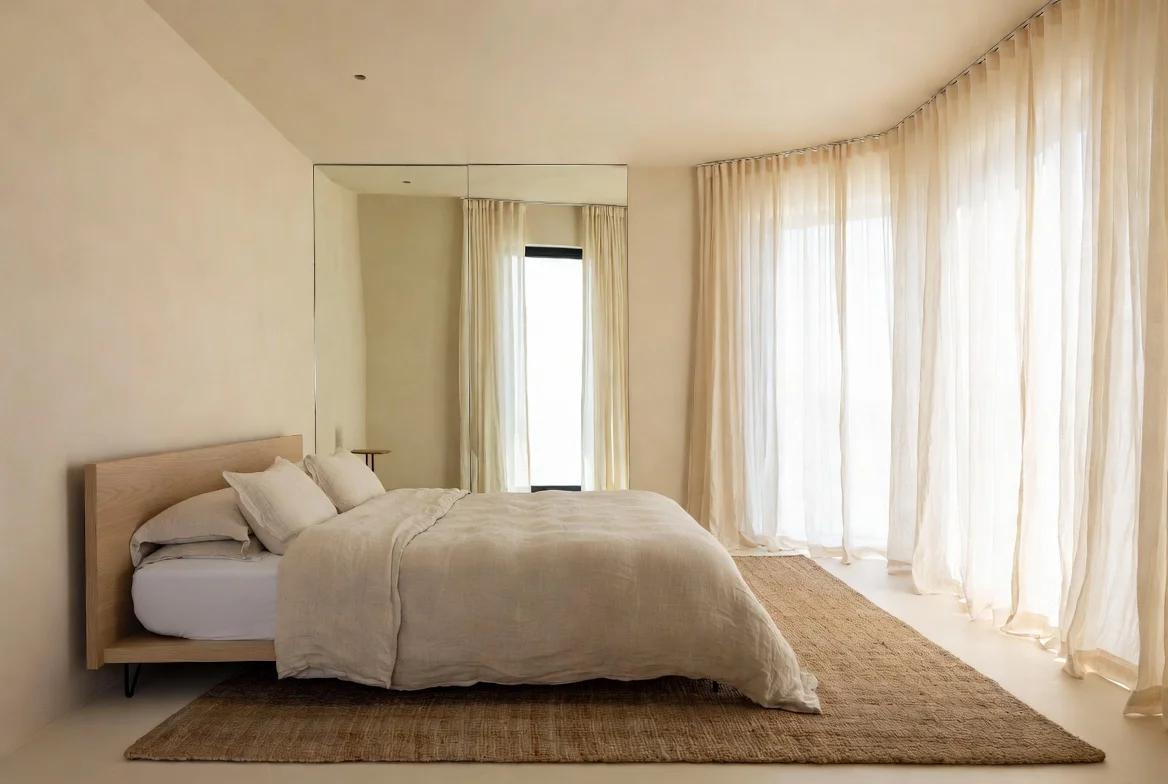
15 Easy Ways to Make a Small Bedroom Look Bigger and More Stylish
Here is the uncomfortable truth that most people with small bedrooms already know but rarely address directly: the room does not feel small because of its square footage. It feels small because of decisions made within it, furniture choices that fight the room’s proportions, colors that close the walls inward, storage solutions that consume floor space without solving organization problems, and lighting that flattens every surface rather than creating the dimensional depth that makes rooms feel generous.
The genuinely exciting counterpart to that uncomfortable truth is equally powerful: the techniques that make a small bedroom look bigger are not expensive, they do not require renovation or architectural change, and they produce results visible from the moment you implement them. Spatial perception is surprisingly manageable once you understand the specific visual principles at work, and those principles apply just as reliably to small bedrooms as they do to the grand interior spaces that designers typically photograph for the aspirational imagery that small bedroom owners often look at with a mixture of admiration and resignation.
Small bedroom ideas that genuinely transform how a room feels rather than simply how it is described work by systematically removing the visual cues that communicate smallness while installing the design elements that communicate spaciousness. Mirrors that multiply perceived depth, colors that push walls outward, furniture with visual lightness, vertical elements that create ceiling height, and lighting strategies that eliminate the shadows where rooms feel smallest collectively produce bedroom environments that consistently surprise visitors who expect confinement based on the room’s actual dimensions.
This guide presents 15 proven, practical, and immediately actionable strategies to make a small bedroom look bigger and more stylish, covering every design dimension from color and light through furniture, storage, and the finishing visual touches that complete the spatial transformation.
Paint Walls in Light and Airy Colors
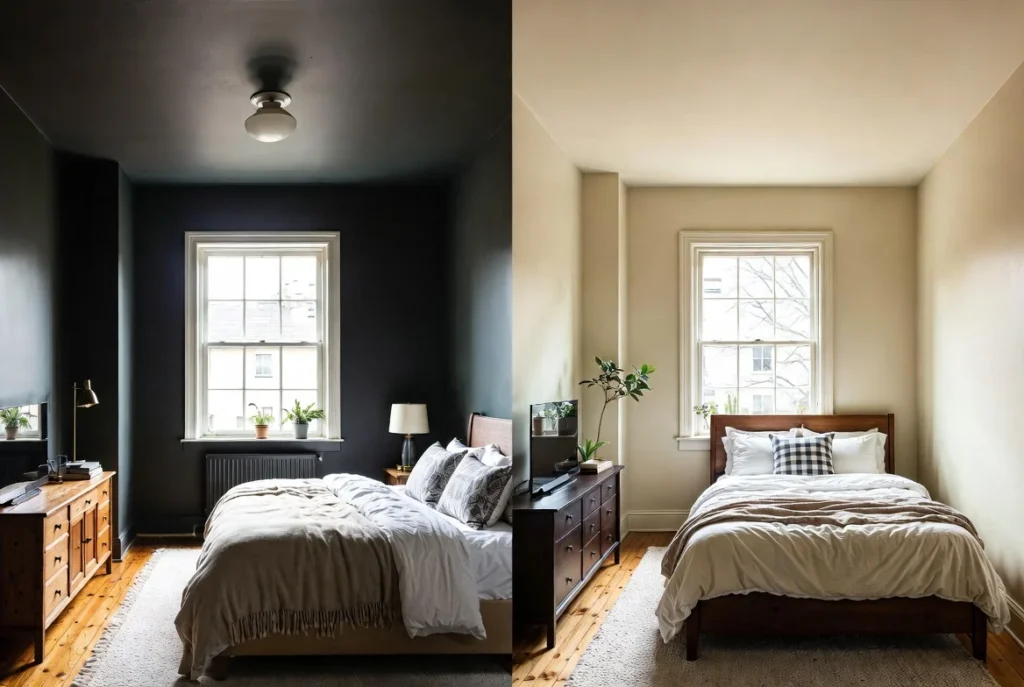
Small bedroom color ideas represent the highest-impact and most immediately accessible strategy available for making confined rooms feel significantly more generous, with color’s direct effect on light reflection and visual weight creating spatial impressions that bear only loose relationship to actual room dimensions.
The physics of light reflection explains why pale colors expand perceived space: light tones reflect available light back into the room, multiplying its presence and eliminating the shadowed corners where small rooms feel most constricted, while dark tones absorb light and create the visual weight that advances walls toward the viewer rather than receding from them. Bedroom appear larger effects from light color selection work most powerfully when the ceiling is painted the same continuous tone as the walls rather than the conventional approach of white ceiling against colored walls, with the elimination of the wall-to-ceiling color boundary removing the visual horizon that defines and therefore limits the room’s perceived height. Soft whites in warm cream undertones, pale grays with blue or green subtlety, barely-there sage greens, and warm off-white tones all create the spatial openness of light colors while avoiding the clinical harshness of stark pure white that can make light-deficient small bedrooms feel institutional rather than expansive.
Small bedroom decor using monochromatic color schemes extends the light color principle beyond wall paint to encompass bedding, furniture, and soft furnishings in the same color family, creating visual continuity that allows the eye to move without interruption through the room’s complete surface area rather than stopping and restarting at each color change boundary. The specific spatial benefit of monochromatic schemes is the elimination of visual fragmentation, the breaking of the room’s visual field into distinctly different colored zones that each feel smaller than the complete unified space would appear in matching tones.
Use Large Mirrors Strategically
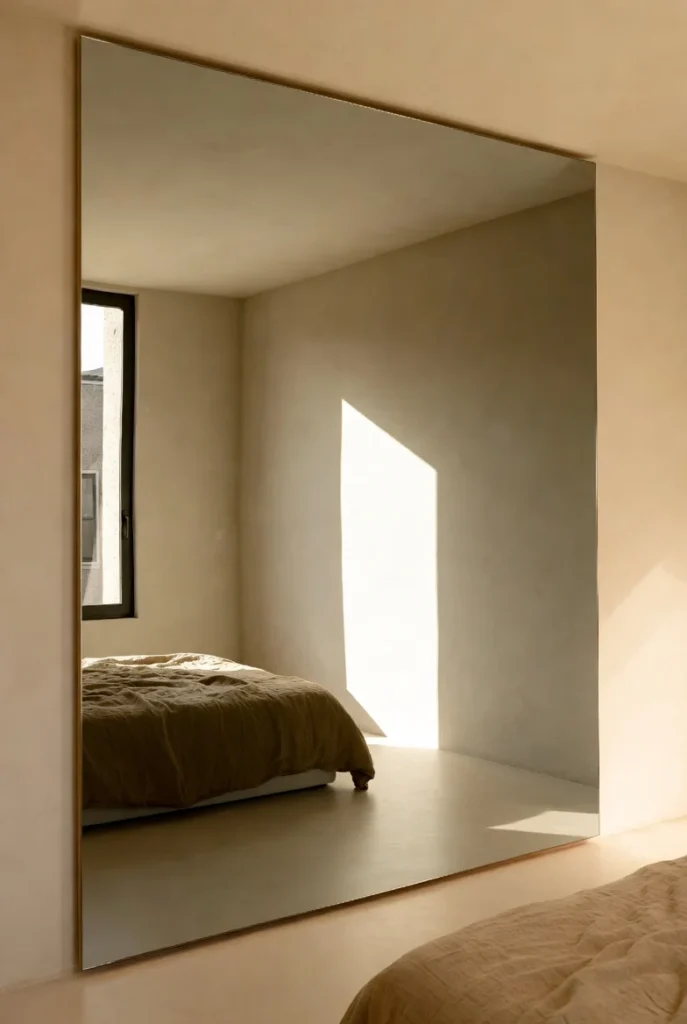
Mirrors for small bedroom applications deliver the most dramatically immediate spatial transformation available in any small bedroom design tips collection, with properly positioned mirrors creating visual depth that literally changes how the room’s dimensions register in perception regardless of what the actual measurements confirm.
A large mirror mounted on the wall directly opposite the room’s primary light source, typically the main window, creates the most powerful spatial expansion effect by reflecting both the light source and the view beyond it, essentially creating the impression of a second window opening toward another outdoor space. This reflected depth perception is genuinely powerful, with the eye reading the reflected space as real extension rather than mere reflection when the mirror is large enough and positioned to reflect significant room volume. Make bedroom look larger effects from mirrors are proportional to mirror size, with oversized mirrors covering most of a single wall creating effects of near-room-doubling that smaller mirrors in groups never approach regardless of their cumulative reflective surface area, making the investment in a single large mirror consistently superior to multiple smaller mirrors in equivalent positions.
Floor-length mirrors leaned casually against walls create the specific combination of spatial expansion and relaxed lifestyle aesthetic that contemporary small bedroom ideas favor, with the leaning position creating a casual sophistication that formally hung mirrors of equivalent size cannot achieve while the floor-to-ceiling height of the mirror creates vertical spatial expansion alongside the horizontal depth expansion that any large mirror provides. Visual tricks for small bedroom using mirrors extend to mirrored closet sliding doors, which combine functional wardrobe access with the spatial expansion of large-format mirror surface while consuming zero additional wall space beyond the closet opening the doors already occupy.
Choose the Right Furniture Scale and Proportion
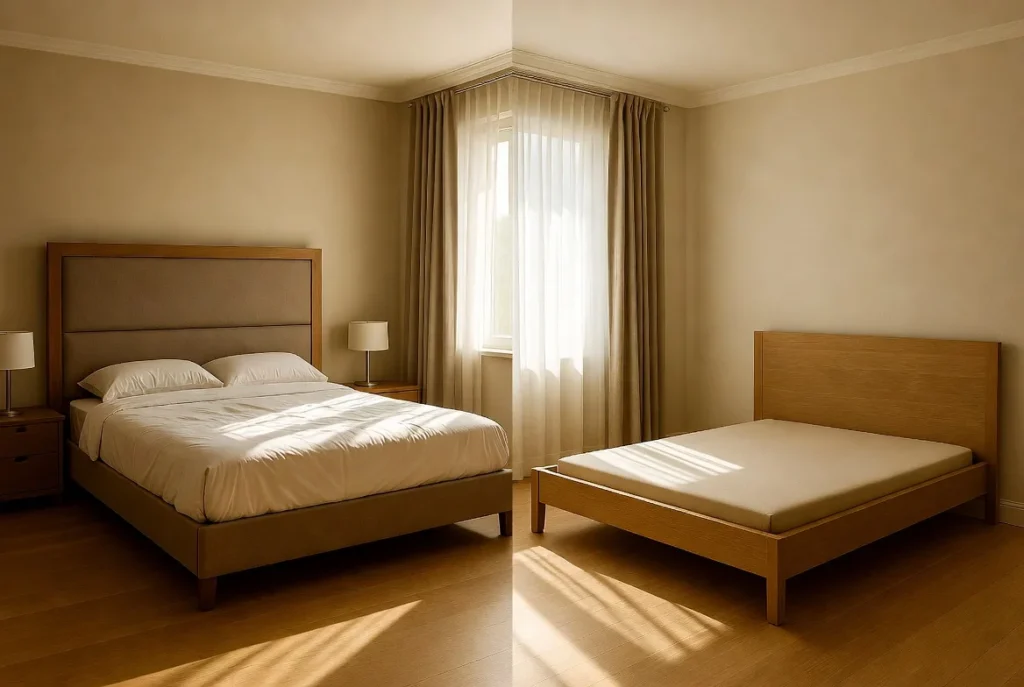
Small bedroom furniture ideas that succeed in making confined rooms feel generous prioritize appropriate scale over individual furniture quality, with correctly proportioned pieces creating more spatial generosity than premium oversized alternatives regardless of their individual design excellence or material quality.
The bed, as the room’s dominant furniture piece, determines the spatial experience of the entire bedroom more than any other single element, making bed size selection the most consequential small bedroom layout decision available. Platform beds with low-profile frames eliminate the visual height of traditional box spring and frame combinations, bringing the bed’s visual mass closer to the floor and creating the impression of more vertical clearance above the sleeping surface, a perception of room height that conventional bed heights with their substantial frames and box springs actively diminish. Compact bedroom design using platform beds in correctly sized dimensions for the available floor area, typically a full or queen in rooms below 150 square feet and a queen maximum in rooms below 200 square feet, creates the proportional relationship between bed and room that allows both to appear appropriately sized rather than the room appearing overwhelmed by furniture that commands too much of its limited floor area.
Bedroom space saving ideas for secondary furniture beyond the bed prioritize pieces with visual lightness through elevated profiles on slim legs rather than furniture that rests on the floor with solid bases that visually connect to the floor plane and make rooms feel more occupied and therefore smaller. Side tables on hairpin or tapered legs, chairs with open backs and visible space beneath the seat, and dressers on raised feet each create the visual breathing room of elevated furniture that floor-resting alternatives eliminate, maintaining the visible floor plane that communicates spatial generosity even in rooms where that floor plane is genuinely limited in area.
Maximize Vertical Space with Tall Storage
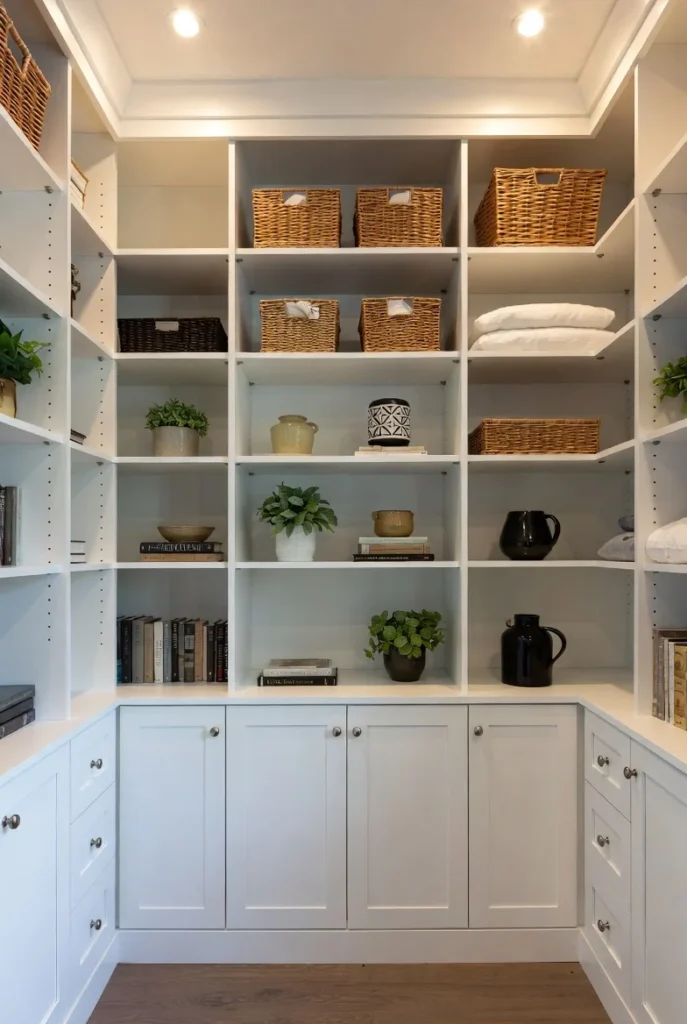
The most consistently underutilized spatial resource in small bedrooms is vertical height, with the wall space extending from shoulder height to ceiling remaining completely empty in most compact bedrooms while homeowners struggle with inadequate floor-level storage solutions that consume the precious floor area that small rooms cannot spare.
Maximize small bedroom space through vertical storage using floor-to-ceiling built-in shelving, wardrobe units that extend to the ceiling rather than stopping at conventional furniture height, and wall-mounted storage that eliminates the floor contact that freestanding furniture requires, creating storage capacity several times greater than floor-level alternatives within the same wall footprint. The visual benefit of tall storage elements in small bedroom storage ideas extends beyond their functional capacity to their spatial perception effect, with tall vertical elements drawing the eye upward along their height and creating the impression of ceiling height beyond the room’s actual measurement through the vertical visual movement they encourage. Shelving units that extend to or very close to the ceiling height create a specific spatial illusion of taller rooms through this vertical visual anchoring, making ceiling height feel greater than it measures because the vertical furniture element provides constant reference to the ceiling’s actual position.
Small bedroom organization using vertical space for frequently accessed items positioned at comfortable reaching height and less frequently needed items in higher positions creates functional organizational hierarchy while fully exploiting the vertical dimension that most small bedroom storage solutions fail to utilize. Command strips and floating shelves at ceiling-adjacent heights for decorative items, spare bedding storage, and seasonal accessories each convert otherwise wasted vertical space into productive storage that relieves pressure on the limited floor space below.
Install Strategic Bedroom Lighting
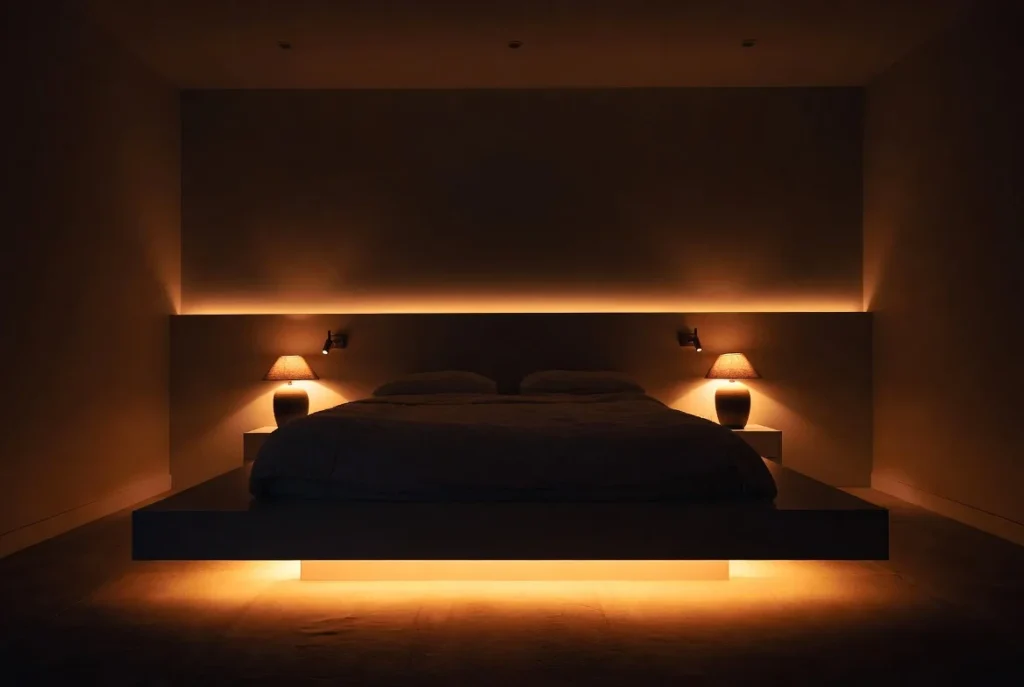
Small bedroom lighting tips that create dimensional visual depth through layered illumination rather than flat uniform brightness transform how rooms feel more dramatically than almost any other non-structural design change, with lighting strategy determining the perception of room size through its specific management of shadow, highlight, and the three-dimensional quality of the space that flat even lighting obscures.
Recessed ceiling lights provide the most spatially generous overhead illumination for small bedroom design tips applications, their flush installation eliminating the physical volume of pendant and surface-mounted fixtures that reduce available ceiling height while their directional illumination creates the interplay of light and shadow that gives walls dimensional depth rather than the flat uniformly lit appearance that makes rooms feel smaller by eliminating the visual depth cues that shadow provides. Bedroom feel spacious effects from lighting increase when light sources at varying heights are combined, with ceiling illumination for general brightness, bedside task lighting for functional reading, and low ambient sources including floor-level LED strips or nightstand lamps that create warm pools of intimate light rather than uniform illumination throughout. The specific quality of varied-height lighting creates the dimensional quality that makes rooms feel more complex and therefore more spacious than their actual measurements, while flat uniform lighting creates a one-dimensional visual experience that makes rooms feel exactly as small as they measure.
Small bedroom ceiling ideas using lighting to create the impression of greater ceiling height include uplighting from floor or shelf positions that wash ceiling surfaces in warm light, creating the perception that the ceiling is further from the light source than it actually is, and cove lighting from concealed LED strips at ceiling-wall junctions that create a glowing ceiling border effect that visually expands the perceived ceiling plane outward beyond the room’s actual boundaries.
Select Window Treatments That Enhance Height and Light
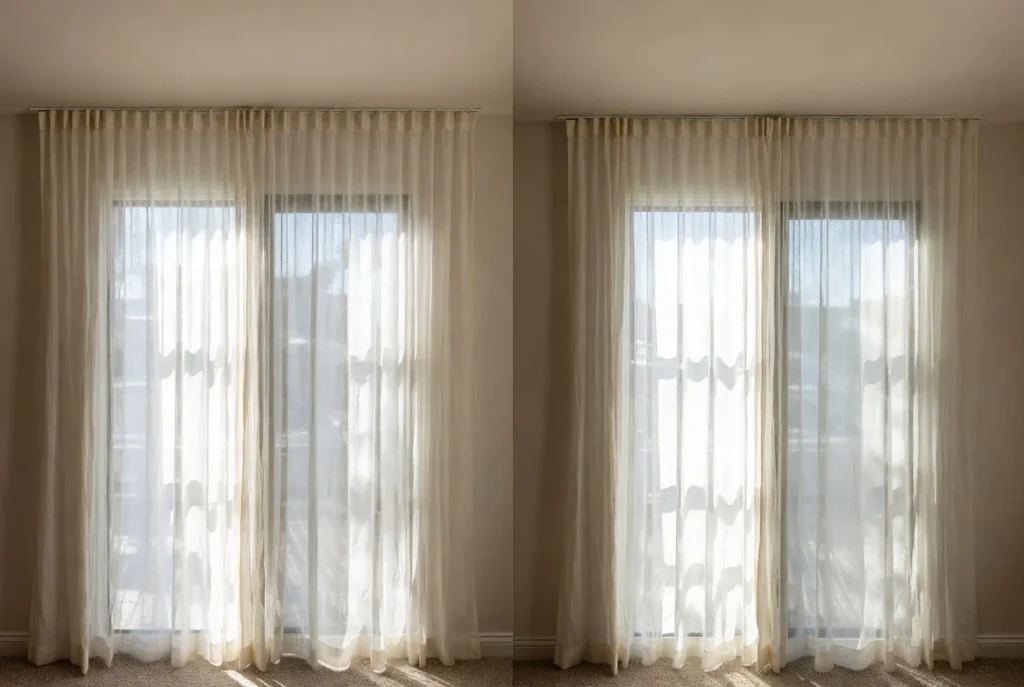
Small bedroom window treatment choices carry spatial consequences that most decorating guidance dramatically underestimates, with curtain rod positioning, fabric transparency, and treatment style each influencing both the room’s actual light levels and the perceived height, width, and openness that window treatments create or diminish around the room’s most architecturally significant apertures.
Mounting curtain rods as close to the ceiling as possible rather than at window frame height, then allowing curtains to fall from that elevated position to floor level, creates the most powerful window-based visual height expansion available in small bedroom ideas, with the vertical distance between the high rod position and the floor creating the impression that the ceiling is significantly higher than it actually measures. This single curtain rod repositioning trick requires only drilling new holes and purchasing slightly longer curtain panels while delivering spatial perception improvements that paint and furniture choices combined cannot fully replicate. Bedroom appear larger effects from high curtain rods are amplified when the curtain panels extend horizontally beyond the window frame width on both sides, creating the impression of a wider window that admits more light while the extra fabric width at sides makes the window appear to be a larger architectural feature than its actual dimensions.
Sheer fabric window treatments that allow maximum natural light transmission through the window surface while providing privacy through translucency rather than opacity create small bedroom lighting tips benefits from natural light without sacrificing the privacy that complete transparency would compromise. The specific quality of diffused natural light entering through sheer panels illuminates the room without the harsh shadows that direct unfiltered light creates, producing the even bright illumination most favorable to spatial expansion perception throughout small bedroom environments.
Keep Furniture and Decor Minimal and Intentional
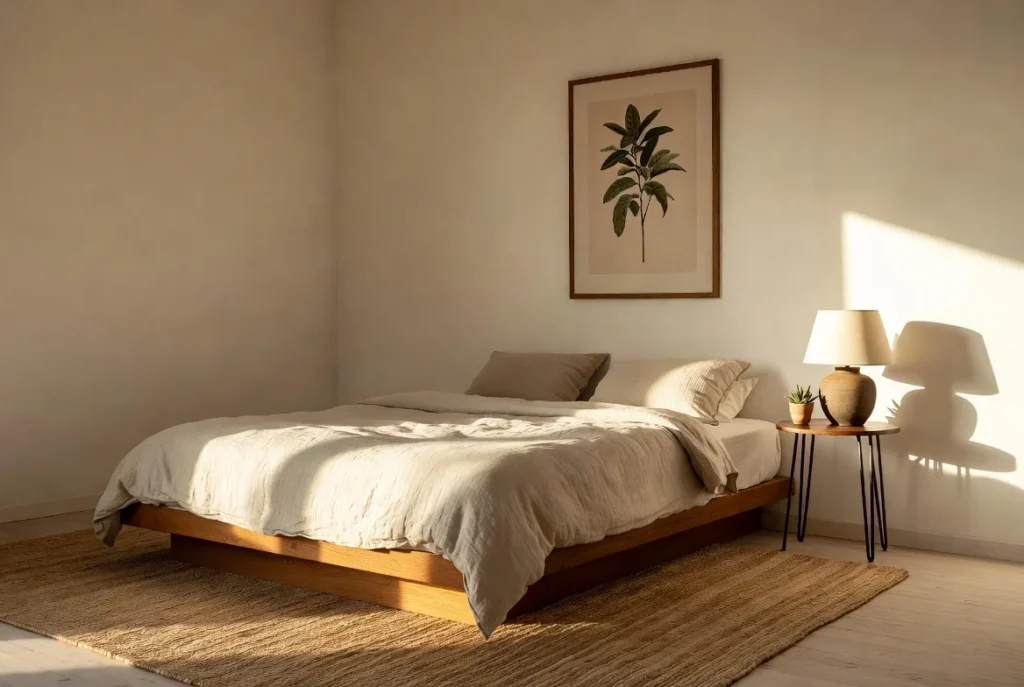
Declutter small bedroom approaches that apply the specific principle of intentional minimalism rather than simply removing objects create spatial freedom that aesthetic minimalism for its own sake cannot achieve in rooms that genuinely need every piece of furniture they contain to function adequately for daily use.
The functional equivalent of the decluttering principle in compact bedroom design is ensuring that every object in the bedroom earns its position through genuine daily use contribution, eliminating the decorative objects that contribute only visual complexity without functional value and the furniture pieces that serve theoretical purposes without regular practical engagement. Small bedroom decor that succeeds in both aesthetic quality and spatial generosity uses the discipline of intentional selection, with each decorative element chosen for both its visual contribution and its spatial cost, accepting only those pieces whose aesthetic contribution clearly justifies the visual space they consume within the room’s limited visual field. A single substantial plant in a beautiful ceramic pot contributes more positive visual energy than six small decorative objects of equivalent total footprint while consuming less visual attention and creating more breathing room in the room’s decorative composition.
Small bedroom organization through concealed rather than open storage prevents the visual clutter of visible belongings that makes small rooms feel occupied and overwhelmed even when actual floor space remains technically adequate for comfortable movement. Closed wardrobe doors, drawers rather than open shelving for clothing storage, and lidded storage boxes rather than open bins each convert potentially cluttering stored items into clean contained forms that read as furniture surface rather than accumulated possession.
Use Rugs to Define Space and Expand Perception
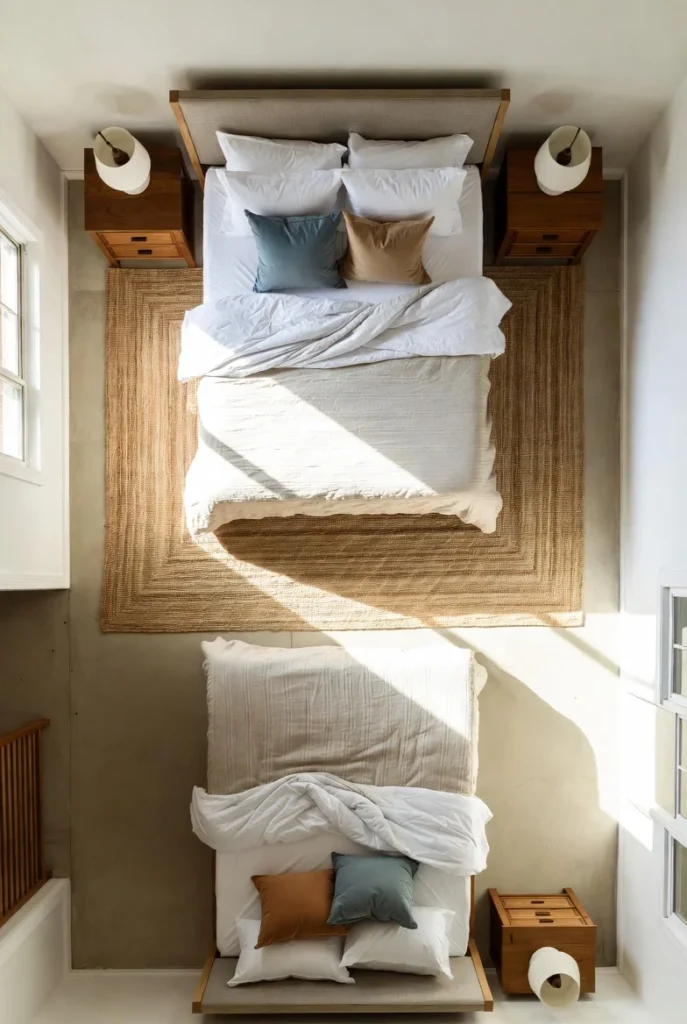
Small bedroom flooring ideas using area rugs create spatial definition and visual warmth simultaneously, with rug sizing and placement either expanding or contracting perceived room size through their specific relationship to the furniture they anchor and the floor they define.
The counterintuitive sizing principle for rugs in small bedroom ideas is that larger rugs create more spacious-feeling rooms than smaller alternatives in equivalent spaces, with an adequately sized rug that extends beyond the bed perimeter on three sides creating a unified bedroom zone of apparent generosity while an undersized rug that barely accommodates the bed footprint creates the visual fragmentation that makes rooms feel smaller than they measure. Bedroom feel spacious effects from rug sizing emerge from the rug’s function as a zone-defining element, with a large rug creating the impression of a complete room within the bedroom while a small rug creates only a partial zone that emphasizes the limited dimensions of the remaining uncarpeted floor area. The minimum appropriate rug size for a queen bed in a small bedroom requires the rug to extend at least 18 inches beyond the bed on both sides and at the foot, typically requiring a 8 by 10 foot minimum rug to achieve this bedside zone proportionality.
Light-toned rugs in pale cream, warm ivory, and soft natural fiber tones continue the light color spatial expansion principle from walls to floor, creating the floor-level brightness that amplifies overall room luminosity and maintains the visual connection between floor and wall surfaces that light overall color palettes establish. Minimalist small bedroom design using natural fiber rugs in jute, seagrass, or sisal creates both the light floor tone and the organic textural warmth that adds design richness without the pattern complexity that busily patterned rugs introduce in rooms where visual simplicity is the primary spatial strategy.
Embrace Built-In Storage Solutions
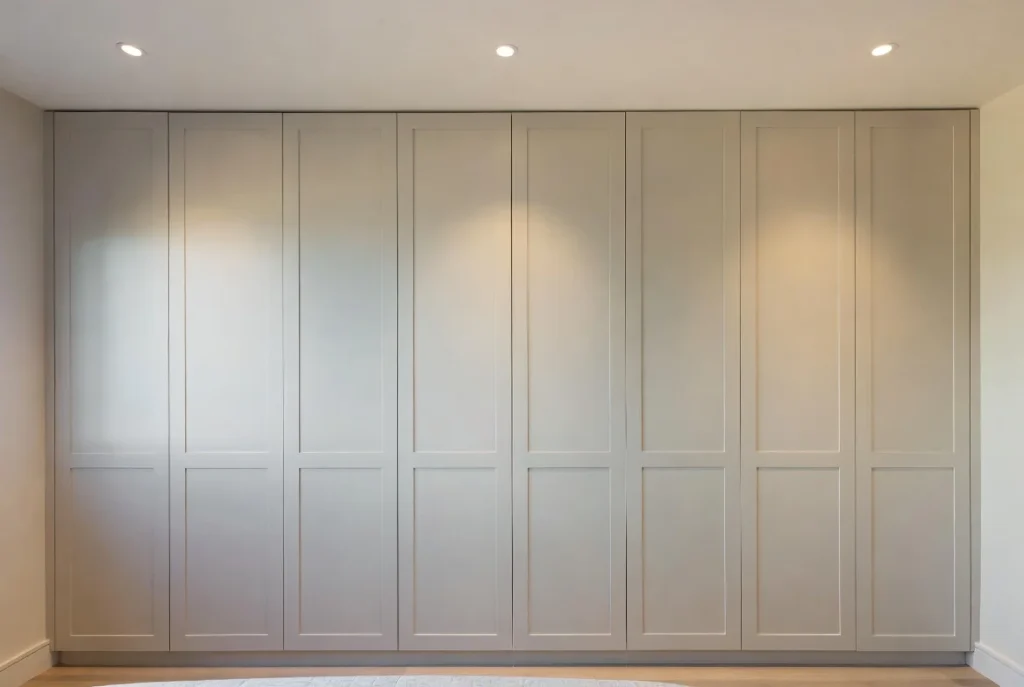
Small bedroom storage ideas using built-in construction rather than freestanding furniture represent the highest-efficiency spatial investment available in compact bedroom design, creating storage systems that exploit the room’s architectural dimensions precisely while occupying minimum visual volume and zero floor area beyond their constructed footprint.
Built-in wardrobes and closets that extend from floor to ceiling and wall to wall within alcoves and architectural recesses convert potentially wasted architectural voids into highly productive storage environments that freestanding furniture cannot access with equivalent efficiency. Maximize small bedroom space through built-in headboard storage systems that integrate shelving, lighting, and concealed storage behind the bed creates bedroom-specific built-in infrastructure that addresses the unique storage requirements of sleeping environments including books, electronics, and personal accessories within the head-of-bed zone where these items are most frequently accessed. The visual benefit of built-in storage in compact bedroom design extends beyond its functional capacity to its architectural integration, with built-in wardrobes and shelving reading as permanent architectural features of the room rather than furniture additions to it, creating spatial composition of considerably greater sophistication and apparent roominess.
Bedroom space saving ideas through under-bed storage using bed frames with integrated drawers, lift-top platform mechanisms, or simple rolling storage containers positioned beneath conventional frames convert the largest typically wasted space in small bedrooms into productive storage without consuming any additional floor area. The specific organizational benefit of under-bed storage is its ability to absorb the bulk seasonal storage including off-season clothing, spare bedding, and infrequently needed items that might otherwise require separate furniture pieces with their associated floor area consumption in limited bedroom space.
Hang Artwork Strategically for Visual Height
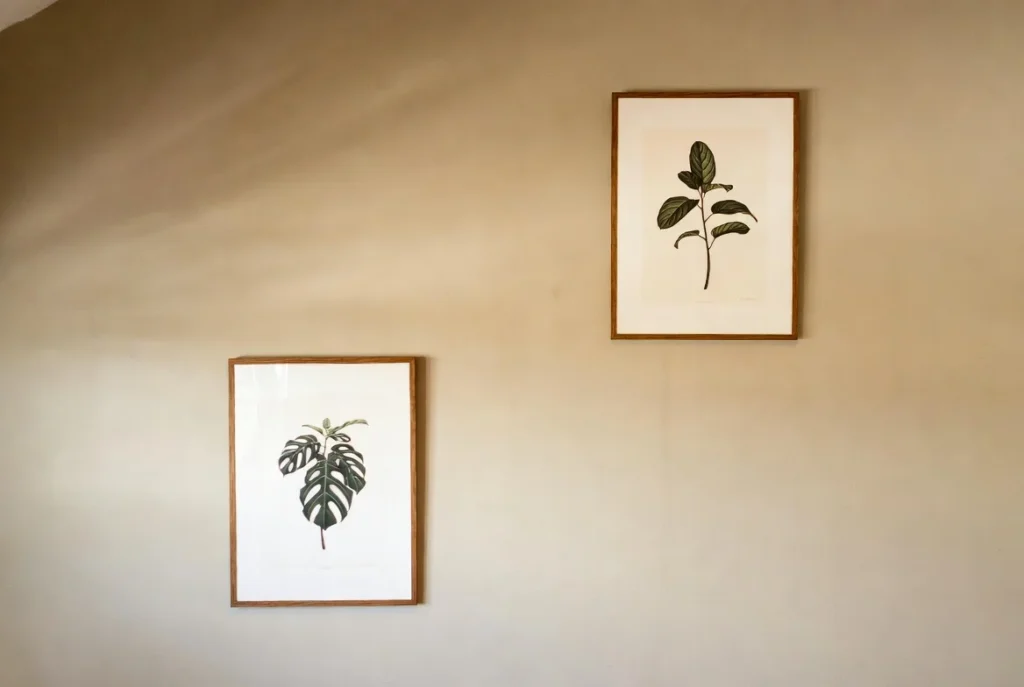
Small bedroom wall decor placement strategies that use artwork positioning to create visual height and direct the eye upward through the room’s vertical dimension convert the architectural surfaces of confined spaces into active spatial expansion tools rather than passive decorative backgrounds.
Hanging artwork higher than the conventional eye-level recommendation of 57 to 60 inches center height creates the eye-upward visual movement that communicates ceiling height without any physical change to the room’s architecture. Make bedroom look larger effects from elevated artwork positioning work by encouraging the viewer’s gaze to travel upward along the wall surface to find the artwork, creating awareness of the wall’s full vertical extent from floor to ceiling that artwork at conventional mid-wall height prevents by anchoring attention at shoulder level where the ceiling remains unregistered in peripheral awareness. Single large-format artworks positioned at higher-than-conventional heights create more powerful height expansion effects than multiple small pieces at conventional positions, with the single large piece commanding upward attention movement more effectively than the scattered attention of multiple smaller works at varied mid-wall heights.
Visual tricks for small bedroom design using vertical artwork formats, tall narrow prints and photographs oriented in portrait rather than landscape format, reinforce the vertical dimension emphasis through the artwork’s own proportional language, training the eye to read vertical height as the room’s primary spatial dimension rather than the horizontal width that actually constrains the space. Gallery walls using predominantly vertical format pieces in a single column arrangement rather than horizontal spreading create the most powerful vertically oriented wall composition available in small bedroom wall decor strategies.
Choose Multifunctional Furniture
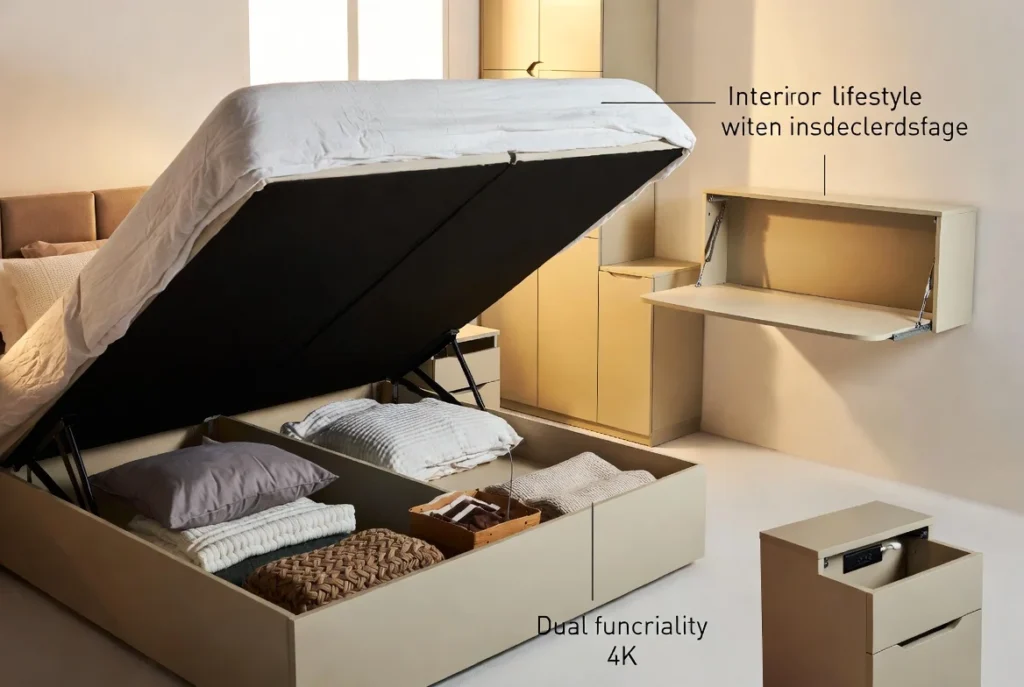
Multifunctional bedroom furniture transforms the spatial efficiency of small bedrooms by replacing the separate single-purpose pieces that collectively consume excessive floor area with integrated dual-purpose alternatives that serve multiple functions within the physical footprint of a single piece of furniture.
Ottoman beds combining comfortable sleeping platform with lift-top storage beneath, window seats integrating perch seating with hidden storage within, and bedside tables incorporating charging stations and concealed drawers in minimal footprints each provide the functional compound value of bedroom space saving ideas that address multiple simultaneous needs through single spatial investments. Small bedroom ideas using desks that fold flat against wall surfaces when not in active use, creating study and work capability without permanent floor area commitment, and folding chairs that store flat in minimal spaces allowing occasional seating guests without dedicated chair storage represent the flexibility-oriented furniture thinking that makes compact bedrooms genuinely work for the full range of activities their occupants conduct in them. The discipline of questioning every furniture selection for its multi-purpose potential before accepting single-purpose pieces creates the cumulative spatial efficiency that transforms small bedroom function from cramped compromise to genuinely adequate daily living within limited square footage.
Small bedroom furniture ideas using storage beds as the single most impactful multifunctional investment in compact bedroom design provide the most substantial floor-space-equivalent storage volume available in any bedroom furniture category, with hydraulic lift-top platform beds offering storage volumes equivalent to a substantial dresser within the bed frame footprint that the sleeping surface already requires regardless of its storage function. This storage-within-necessary-footprint principle represents the highest form of spatial efficiency thinking in bedroom space saving ideas, converting space that must be occupied by the bed anyway into productive storage that would otherwise require additional floor area.
Use Vertical Lines and Patterns
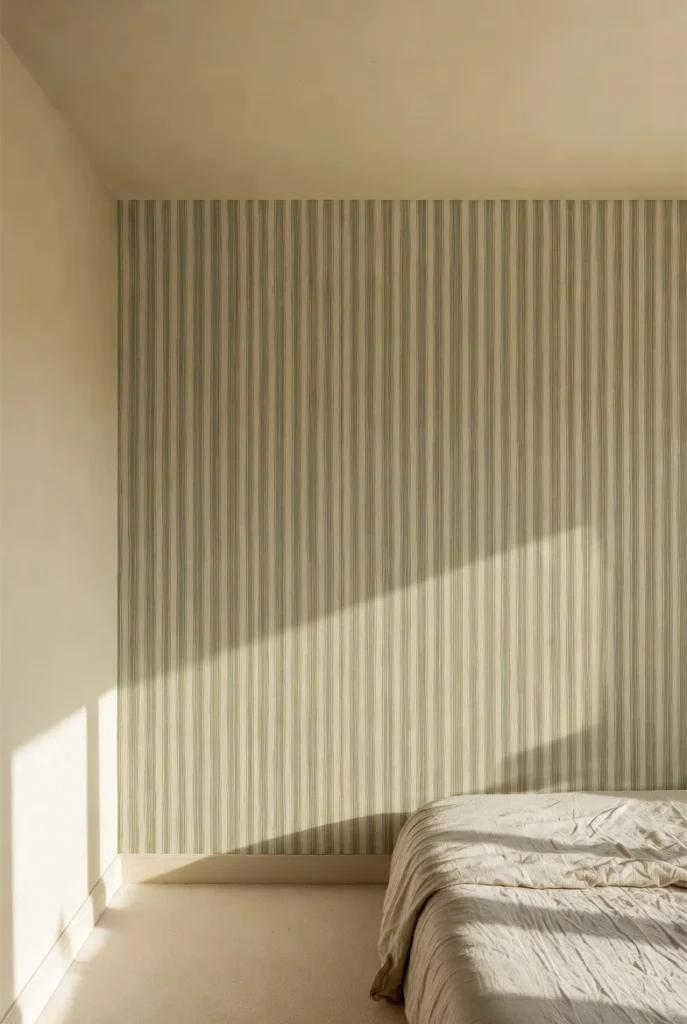
Small bedroom design tips exploiting the visual psychology of linear pattern orientation create the specific spatial perception effects of height increase and width modification through decorative surface treatments that require no physical change to the room’s actual dimensions.
Vertical stripe wallpaper or painted vertical stripes on bedroom walls create one of the most reliably effective visual tricks for small bedroom environments available in decorating practice, with the vertical line pattern directing the eye upward along each stripe’s length and creating the impression of ceiling height proportionally greater than the room’s actual measurement. The specific visual psychology at work is the trained association between tall proportions and vertical line emphasis that centuries of architectural column design, striped textile tradition, and fashion styling have embedded in how viewers interpret linear pattern orientation, making vertical stripes read as height-creating signals regardless of whether the surface displaying them is actually taller than an alternative. Small bedroom ceiling ideas using horizontal painted beams or horizontal wall stripes work inversely, creating the impression of wider rooms by directing eye movement horizontally, making this an alternative spatial strategy for rooms where width rather than height is the primary spatial deficiency.
Herringbone and chevron floor patterns in small bedroom flooring ideas applications create visual movement through space that plain single-direction materials cannot generate, with the angular geometry of these patterns drawing the eye inward and forward through the room rather than stopping at the walls that define its boundaries. This eye-movement-through-space quality creates the impression of spatial depth that receding perspective creates in visual compositions, making herringbone floor patterns one of the most effective floor-level spatial expansion strategies in compact bedroom design despite requiring no additional square footage beyond the room’s existing floor area.
Create the Illusion of Higher Ceilings
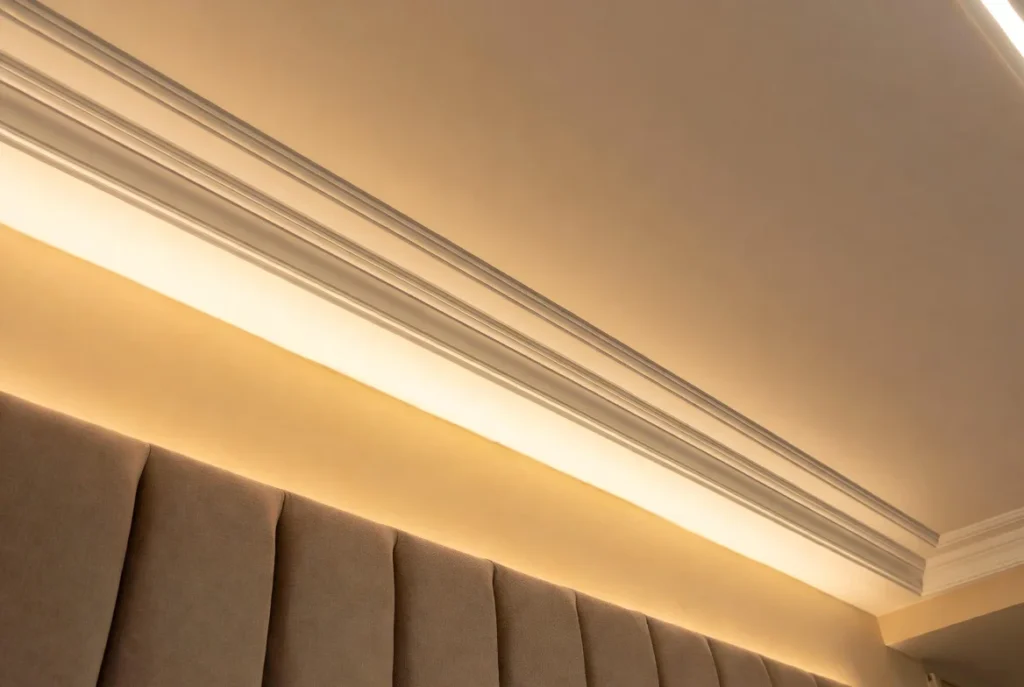
Small bedroom ceiling ideas that create the impression of greater ceiling height without structural modification work through the same visual psychology as other spatial perception techniques, exploiting how the eye interprets architectural scale relationships to create perceived proportions different from actual measurements.
Crown molding positioned at the ceiling-wall junction and painted the same continuous color as both ceiling and wall rather than the contrasting accent approach creates the subtle ceiling-height expansion effect of eliminating the visual boundary between wall and ceiling that defined molding in contrasting color emphasizes and therefore makes more spatially limiting. Bedroom appear larger effects from continuous color ceiling treatments extend to the specific installation of molding higher than the actual ceiling height to create artificial ceiling height impression, with detailed molding installed at the actual ceiling junction and the wall surface above the molding painted in the ceiling color rather than the wall color effectively convincing the eye that the ceiling is where the color change occurs rather than where the actual structural ceiling exists. This technique requires only paint and molding materials while delivering ceiling height perception changes that the eye genuinely registers as architectural reality rather than decorative illusion.
Tall headboards in small bedroom furniture ideas applications create ceiling height perception through their function as vertical reference elements that the eye uses to assess ceiling distance from floor level, with a headboard reaching from the floor or bed base to within twelve to eighteen inches of the ceiling creating the impression of a taller room by placing the scale reference closer to the ceiling than conventional headboard heights allow. The eye’s measurement of remaining space between the headboard top and the ceiling as a small gap rather than a large expanse registers as the ceiling being close to a very tall element rather than far from a lower element, creating genuine ceiling height impression change through furniture selection alone.
Incorporate Transparent and Glass Furniture
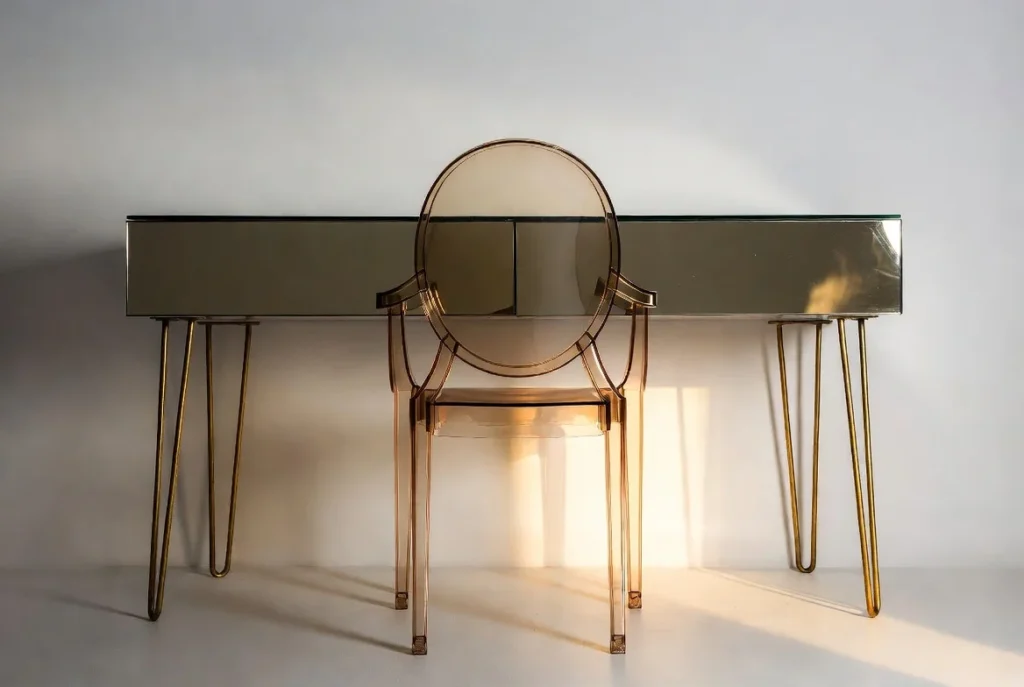
Small bedroom decor using transparent furniture materials in clear acrylic, tempered glass, and lucite creates the most complete visual lightness available in furniture form, with these materials occupying physical space without registering as visual mass in the way that opaque alternatives inevitably do in confined room compositions.
Glass-top bedside tables on clear acrylic or slim metal bases create bedside surfaces that appear to float rather than occupy space, with the glass surface visible through rather than reflected from its position creating the floor continuation effect of transparency that reads as spatial openness rather than furniture placement in the room’s visual field. Bedroom space saving ideas using acrylic ghost chairs or clear polycarbonate seating in small bedrooms that require occasional second-person seating create functional seating that virtually disappears into the room’s visual field when not in active use, providing capability without the permanent spatial commitment that equivalent solid chairs maintain regardless of their occupancy status. The specific value of transparent furniture in small bedroom ideas is this conditional existence in the visual field, present when needed and virtually absent when not, creating the functional versatility of complete furniture without the constant spatial cost that opaque alternatives impose continuously.
Compact bedroom design using mirrors incorporated into furniture pieces beyond standalone mirror installations, through mirrored dresser fronts, mirrored wardrobe doors, and mirrored bedside table surfaces, creates spatial expansion through reflective surface throughout the room’s furniture layer rather than from dedicated mirror installations alone. This distributed reflectivity through furniture choices multiplies the spatial expansion effect of mirror surfaces while maintaining the functional purpose of storage and bedside furniture that the bedroom requires regardless of its spatial strategy.
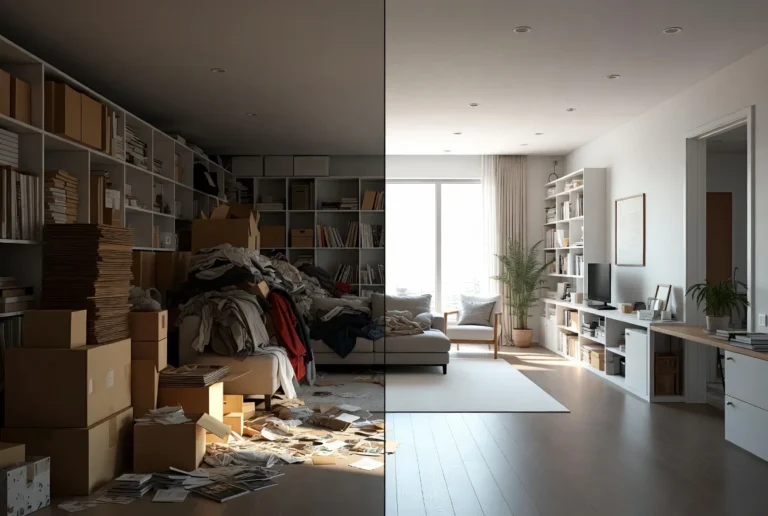
Declutter and Edit Ruthlessly
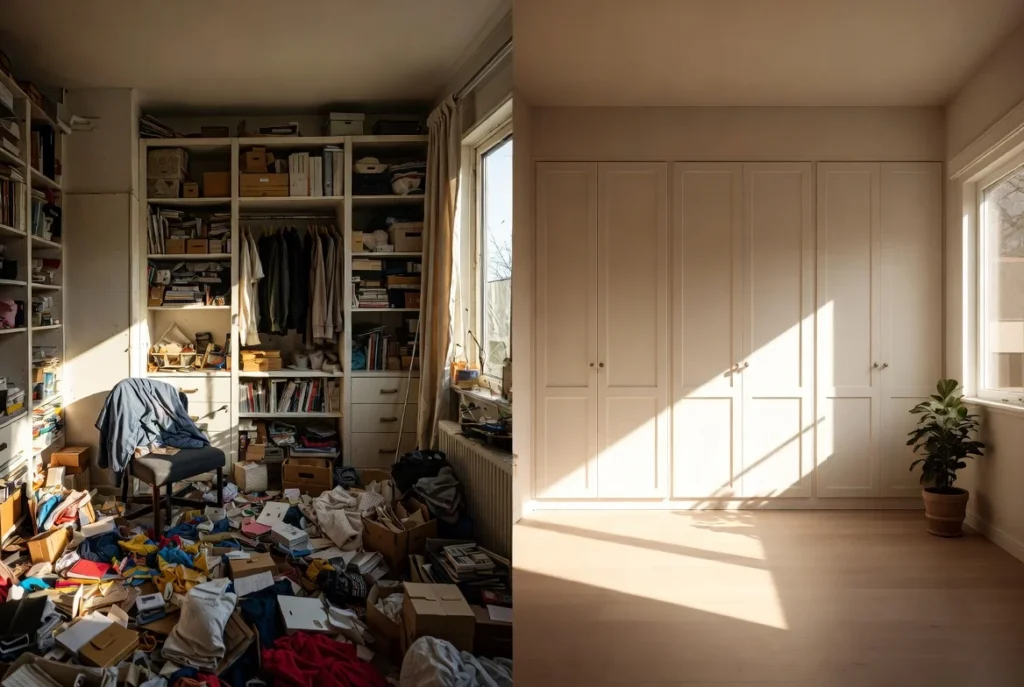
The most powerful and most consistently effective strategy to make a small bedroom look bigger requires no design knowledge, no budget investment, and no special materials: it requires only the discipline to remove everything from the bedroom that does not serve its daily function or provide genuine aesthetic contribution that outweighs the spatial cost of its presence.
Small bedroom organization through ruthless editing applies the specific principle that every object in a small room costs spatial perception regardless of its individual beauty or usefulness, with the cumulative visual complexity of many objects creating the overwhelming occupied quality that makes rooms feel smaller than empty rooms of identical dimensions. Declutter small bedroom practice that identifies the twenty percent of bedroom objects responsible for eighty percent of the room’s visual complexity and systematically eliminates or relocates those specific items delivers spatial perception improvement disproportionate to the number of objects removed, because visual complexity does not scale linearly but exponentially with the number of distinct objects competing for attention within a limited visual field. The specific objects that create disproportionate visual complexity in small bedrooms include open shelving displaying miscellaneous items without organizational coherence, chair-back and floor-corner clothing accumulations that read as visual chaos rather than storage, and multiple small decorative objects that collectively create visual noise without individually creating significant beauty.
Minimalist small bedroom design achieved through edited storage uses closed containment for all organizational categories, ensuring that belongings contribute to daily function without contributing to visual complexity through their visible presence. The visual benefit of this closed storage discipline, drawers for clothing rather than open shelving, wardrobe doors closed over hanging garments rather than open rails, lidded boxes rather than open trays, is the conversion of the room’s organizational reality into clean geometric furniture surfaces that communicate spaciousness rather than accumulated possessions regardless of the actual inventory stored within these closed forms.
Conclusion
Learning to make a small bedroom look bigger and more stylish is ultimately learning to work with visual perception rather than against it, understanding that the specific design choices made within confined spaces either communicate their limitations or transcend them through the intelligent application of spatial illusion principles that professional designers use intuitively. The 15 strategies explored throughout this guide collectively demonstrate that small bedroom ideas that genuinely transform spatial experience are defined by accumulated design intelligence rather than expanded square footage, with each strategy contributing specific and measurable perception changes that together create bedroom environments consistently experienced as more generous than their actual measurements would suggest.
The most valuable practical insight from this comprehensive exploration of how to make a small bedroom look bigger is that the highest-impact changes are not necessarily the most expensive or most structurally complex. The repositioned curtain rod, the large mirror opposite the window, the light continuous color from wall through ceiling, and the ruthless editing of visual complexity each cost little or nothing while delivering spatial perception improvements that expensive renovations frequently fail to match. These perception-based interventions work with the specific psychology of how human visual systems interpret architectural scale and are therefore more reliably effective than physical expansions that add square footage without necessarily addressing the visual complexity and proportion issues that make rooms feel smaller than they need to feel.
Begin your small bedroom makeover by identifying the two or three strategies from this guide that most directly address the specific qualities making your current bedroom feel cramped, starting with the highest-impact low-cost changes of color, mirror placement, and lighting before progressing through the furniture and storage modifications that complete the spatial transformation your bedroom is genuinely capable of achieving.
Frequently Asked Questions
What is the fastest way to make a small bedroom look bigger?
The fastest visible transformation for small bedroom ideas comes from repositioning curtain rods to ceiling height and hanging large mirrors opposite windows, with both changes achievable in under an hour and delivering immediate spatial perception improvements visible from the moment of implementation. These two changes address ceiling height perception and depth perception simultaneously, the two most influential spatial dimensions in bedroom size perception.
What colors make a small bedroom look bigger?
Soft white in warm cream undertones, pale gray with subtle warm undertones, barely-there sage green, and warm off-white tones create the strongest small bedroom color ideas space expansion effects through their high light reflectivity and visual recession from the viewer. Continuous color from wall through ceiling in any of these light tones amplifies the effect by eliminating the visual boundary that wall-to-ceiling color contrast creates, which defines and therefore emphasizes the room’s limited height.
Should I use a large or small rug in a small bedroom?
Counter to instinct, a larger rug makes a small bedroom design feel more spacious than a smaller alternative by creating a unified room zone rather than a small defined area surrounded by bare floor that emphasizes the room’s limited dimensions. The minimum appropriate size requires the rug to extend at least 18 inches beyond the bed on all three accessible sides, typically requiring an 8 by 10 foot rug minimum for queen bed rooms.
Does a platform bed make a small bedroom look bigger?
Yes, platform beds significantly help maximize small bedroom space perception by lowering the visual mass of the room’s dominant furniture piece toward the floor, creating more visible vertical clearance above the sleeping surface and reducing the visual weight that high-profile box spring and frame combinations impose on confined room volumes. Storage platform beds with lift-top mechanisms add substantial concealed storage to this spatial benefit, making them the most spatially efficient bed choice for compact bedroom applications.
How do I organize a small bedroom with no closet?
Small bedroom storage ideas for closet-free rooms use vertical built-in shelving units extending to ceiling height, wardrobe armoires with floor-to-ceiling profiles, under-bed storage through lift-top platform beds or rolling containers, wall-mounted hooks and rails for daily-use clothing, and over-door organizers on all available door surfaces. Prioritizing closed storage in all categories prevents the visual complexity of visible belongings that makes closet-free bedrooms feel particularly cramped and disorganized.
You May Also Like This Post:
10 Romantic Bedroom Ideas for Couples to Create a Cozy Love Space

One Comment