
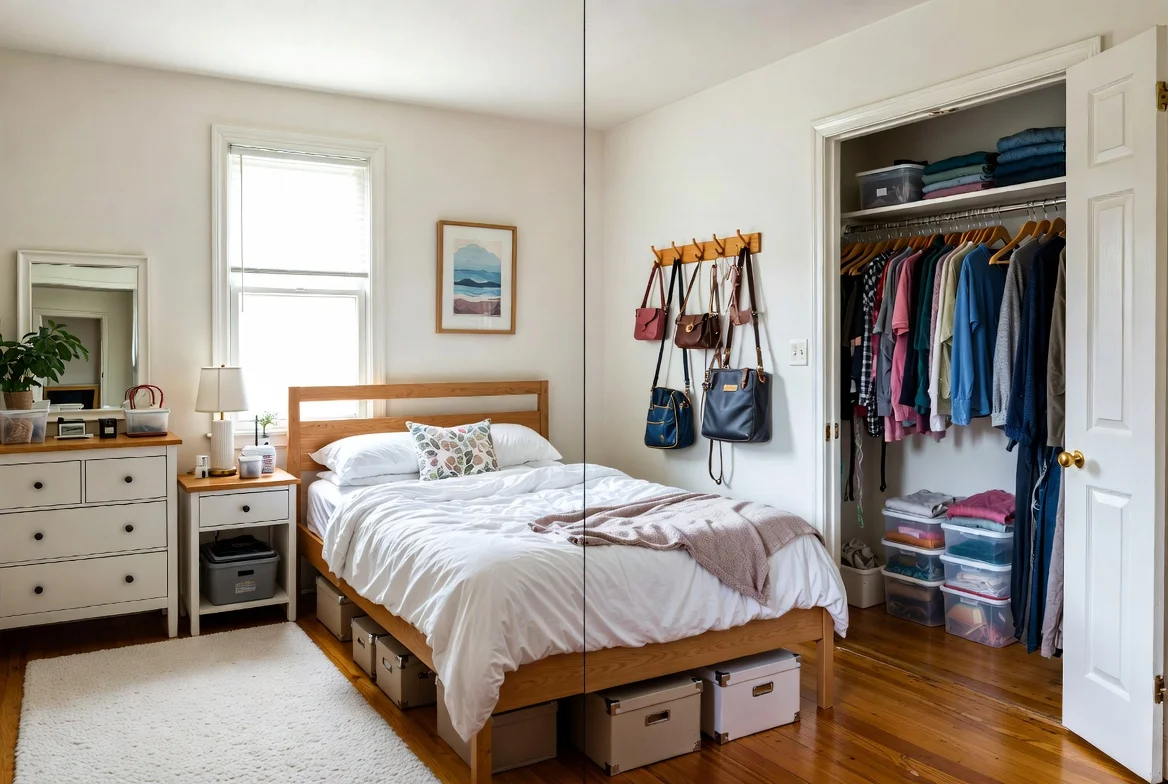
How to Organize a Small Bedroom Without Buying New Furniture: 15 Smart Ideas
Your small bedroom should not feel like a chaotic storage unit where you simply sleep between piles of belongings. It deserves to be a peaceful sanctuary where organization meets tranquility, where every item has a designated home, and where the limited square footage works efficiently rather than feeling perpetually cramped. Yet too many people believe that organizing small bedrooms requires expensive storage furniture, elaborate closet systems, or complete room makeovers that drain budgets and create upheaval.
The truth is that organizing a small bedroom effectively requires creativity and strategy far more than money. The most impressive transformations happen not through purchasing new furniture but through maximizing existing space, rethinking storage solutions, and implementing clever organization systems using items you already own. Small bedroom organization becomes achievable when you understand that the problem is not lack of furniture but rather underutilized space and accumulated clutter.
This comprehensive guide presents 15 powerful strategies for organizing your small bedroom without buying new furniture. From foundational steps like systematic decluttering to creative solutions like under-bed storage and vertical space maximization, these ideas prove that you can create the organized, peaceful bedroom you deserve using nothing more than what you already have, a bit of time, and thoughtful implementation.
Start With Ruthless Decluttering

Decluttering forms the essential foundation for any successful bedroom organization project. Before rearranging or creating storage solutions, eliminate items that no longer serve you. Go through every belonging systematically, creating keep, donate, and discard piles. Apply the one-year rule by removing anything you have not used in the past twelve months. Question each item honestly by asking whether you would keep it if moving tomorrow or whether you would purchase it today if shopping now. Decluttering ruthlessly creates the breathing room that makes organization possible, proving that the best storage solution often involves owning less rather than finding more places to store excess.
Maximize Under-Bed Storage Space
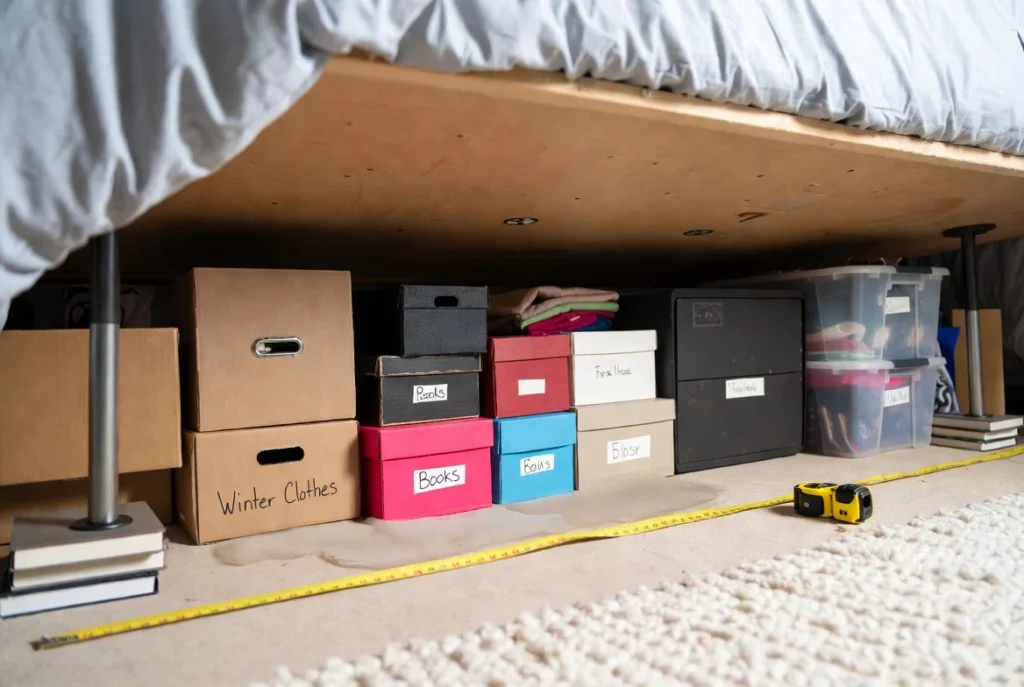
The space under your bed represents prime storage real estate that often goes completely unused. Measure the height and dimensions beneath your bed, then gather boxes, bins, or containers you already own that fit those measurements. Store seasonal clothing, shoes you wear infrequently, extra bedding, or items you need but do not use daily. Create categories and label containers clearly so you can find items easily without pulling everything out. If your bed sits too low for adequate storage, use books or wooden blocks as makeshift bed risers to create additional clearance. This hidden storage solution keeps floors clear while utilizing valuable square footage.
Reorganize Your Closet Strategically
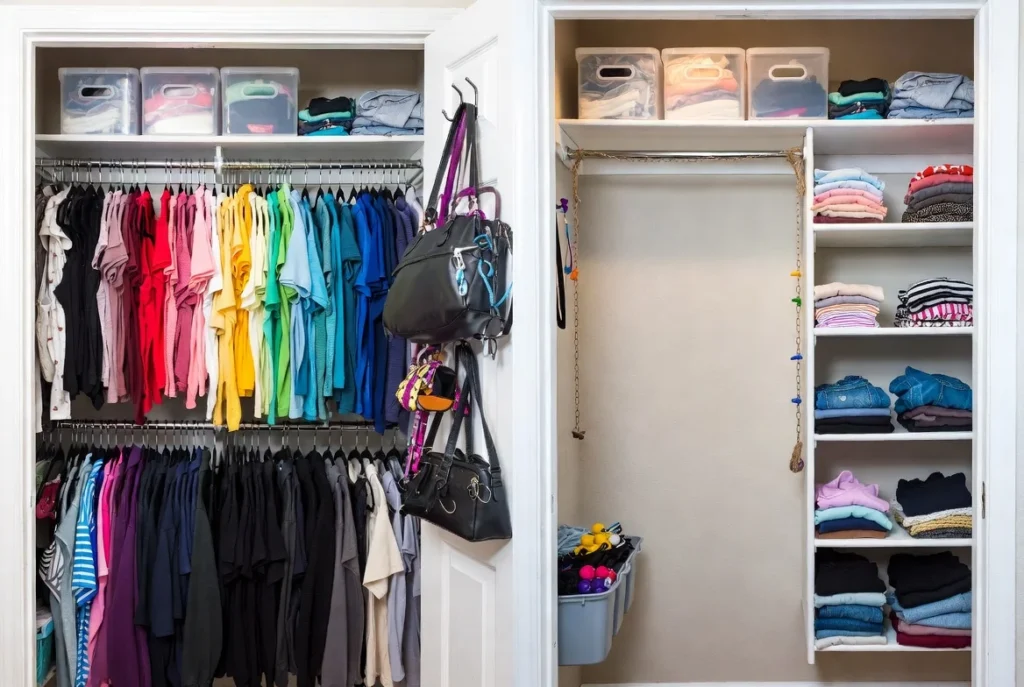
Closet organization dramatically impacts overall bedroom tidiness without requiring new furniture. Start by removing everything from your closet, then return only items you actually wear regularly. Organize clothing by category first, then by color within each category for a visually pleasing, easy-to-navigate system. Use the vertical space by stacking folded items or hanging double rods if possible using rope or chain you have around the house. Store out-of-season clothing in bins on high shelves or under the bed, keeping only current-season items in prime closet real estate. Utilize closet door backs by hanging bags, belts, or scarves on existing hooks or nails.
Implement Drawer Divider Systems
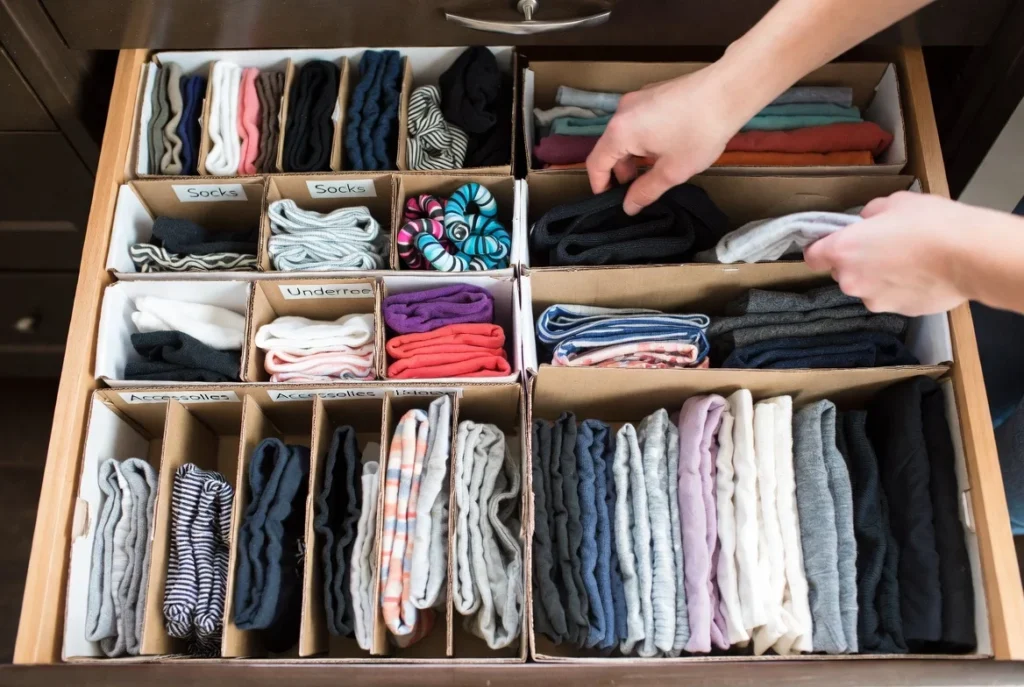
Dresser drawers quickly become chaotic black holes without proper organization systems. Create drawer dividers using cardboard boxes, shoeboxes, or small containers you already own. Cut boxes to fit your drawer dimensions, creating compartments for different item categories like socks, underwear, accessories, or folded t-shirts. This DIY organization prevents items from mixing together while making it easy to see everything at a glance. Apply the KonMari folding method by folding clothes vertically rather than stacking horizontally, allowing you to see all items simultaneously while maximizing drawer space. Organized drawers prevent the overflow that leads to bedroom clutter.
Rearrange Furniture for Better Flow
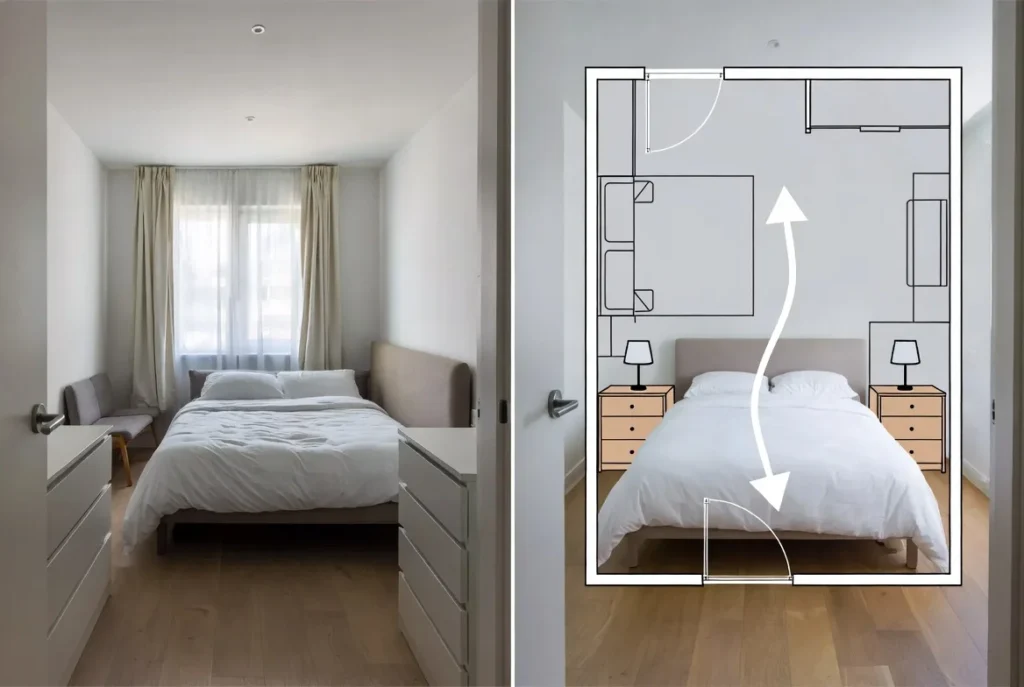
Furniture placement dramatically affects how spacious and organized small bedrooms feel. Experiment with different furniture arrangements to find layouts that maximize floor space and improve traffic flow. Try floating your bed away from walls rather than pushing it into corners, creating accessible space on both sides. Position dressers where they serve double duty, perhaps placing them where a nightstand might go to consolidate furniture. Remove unnecessary pieces entirely if they do not serve essential functions, storing them elsewhere or finding new uses in different rooms. Sometimes simply rearranging existing furniture creates the organized feeling you have been seeking without adding anything new.
Utilize Vertical Wall Space Creatively
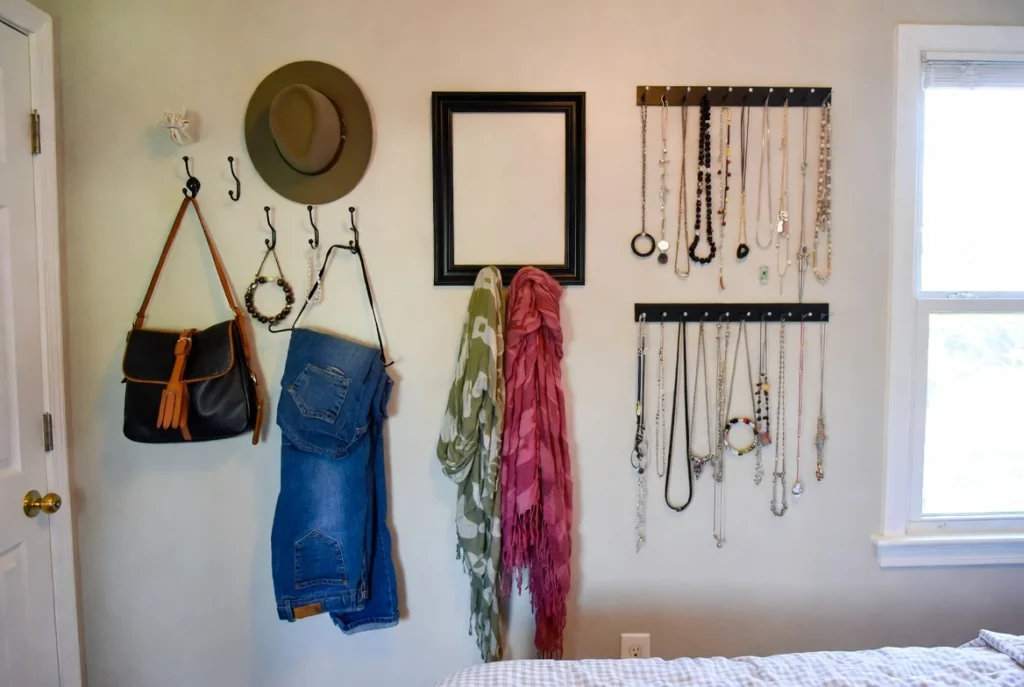
Think upward when floor space proves limited. Install hooks, nails, or Command strips on walls to hang items that currently clutter surfaces or floors. Hang bags, hats, jewelry, or even folded jeans on wall hooks arranged artistically. Create a makeshift jewelry organizer by hammering nails into walls in decorative patterns, hanging necklaces and bracelets where they are visible and accessible. Use existing picture frame hooks to hang scarves or belts. Vertical storage solutions keep items off precious floor and surface space while adding visual interest to blank walls. This creative storage approach costs nothing beyond what you already own.
Organize Nightstands Intentionally
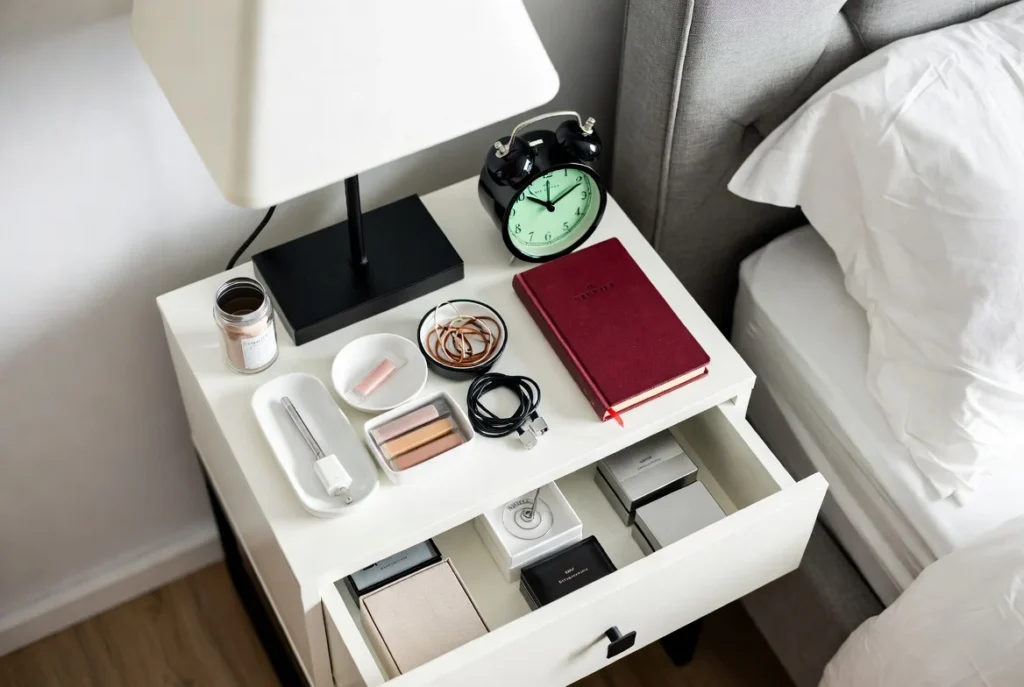
Cluttered nightstands undermine even well-organized bedrooms. Clear everything off your nightstand, then return only absolute essentials like a lamp, alarm clock, and perhaps a book. Use small boxes, dishes, or containers you already own to corral tiny items like lip balm, hair ties, or charging cables. Implement a nightly routine of clearing the nightstand before bed, putting away items that accumulate throughout the day. If your nightstand has drawers, organize them with small containers to prevent junk accumulation. A tidy nightstand creates visual calm while making mornings more peaceful when you can find items easily.
Harness Closet Door Storage
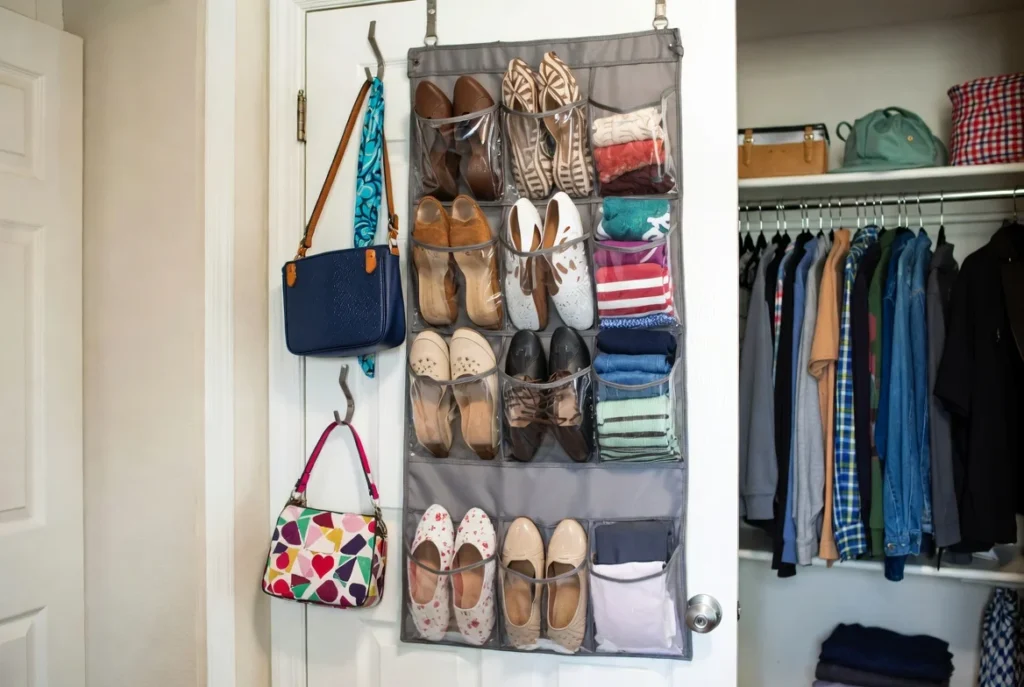
Closet doors offer valuable vertical storage that often goes unused. Hang items on the inside of closet doors using existing hooks or over-the-door organizers you may already own. Store shoes in hanging shoe organizers, creating visible storage that keeps pairs together. Hang bags, scarves, or accessories on hooks mounted on door backs. If you have over-the-door organizers intended for other rooms, repurpose them for bedroom storage by filling pockets with folded clothes, accessories, or small items. Closet door storage capitalizes on space that otherwise serves no function while keeping items accessible yet hidden.
Create Zones for Different Activities
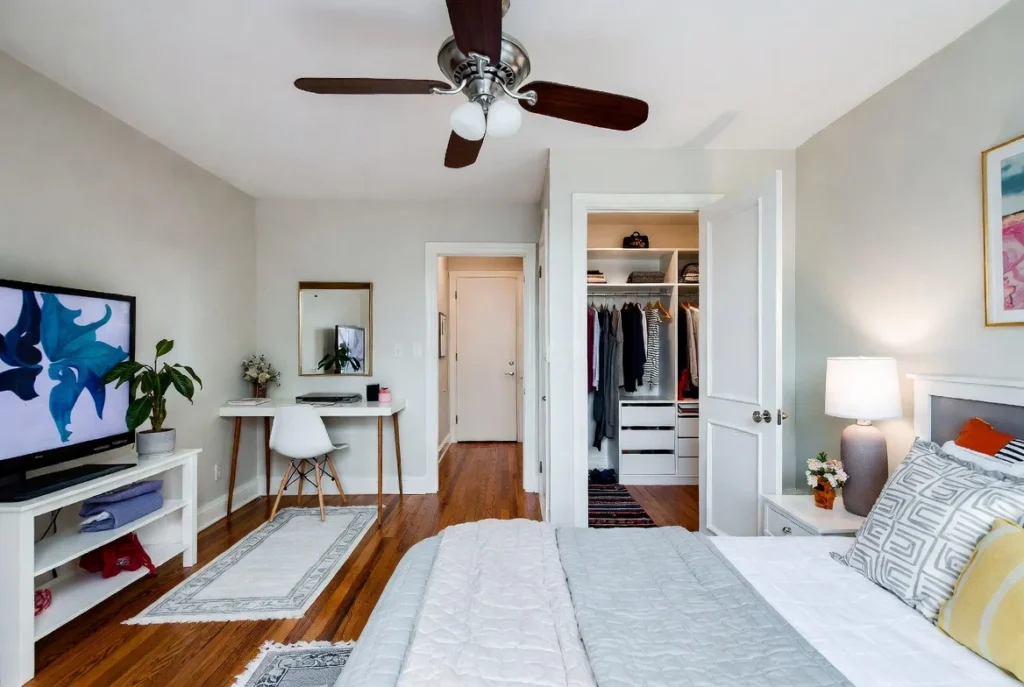
Organizing by zones helps maintain order in multifunctional small bedrooms. Designate specific areas for different activities like sleeping, dressing, and perhaps working or reading. Keep items needed for each activity in their respective zones, storing clothing near the closet, books near reading areas, and work supplies near desks or work spaces. This zoning strategy prevents items from migrating throughout the room while making it obvious where things belong. Clear zone boundaries, even in small spaces, create psychological organization that makes rooms feel more spacious and purposeful.
Use Existing Furniture as Hidden Storage
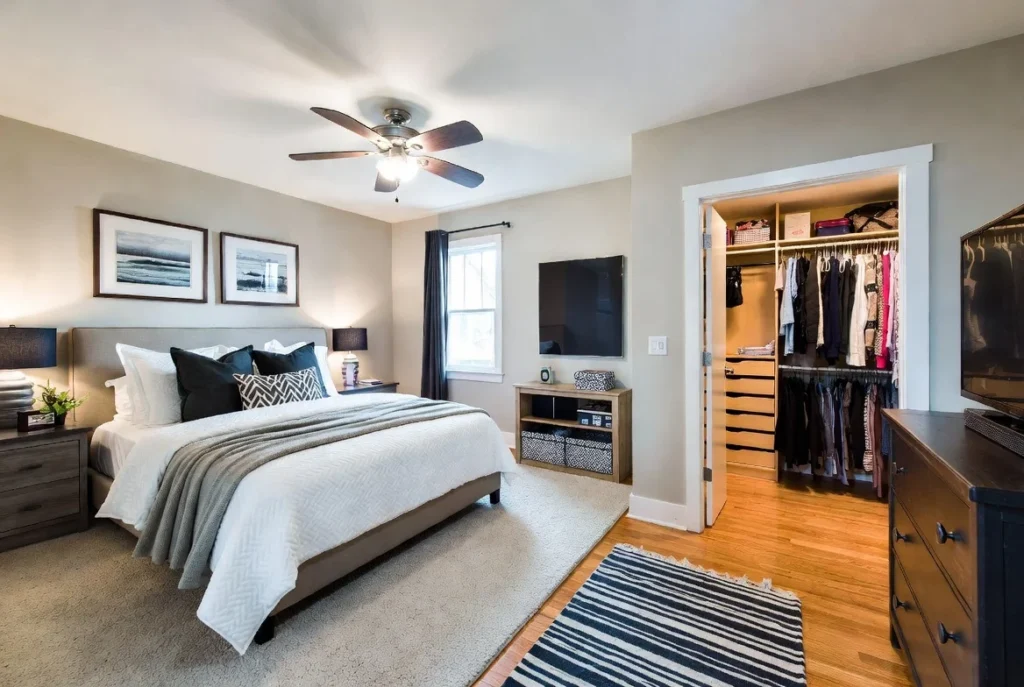
Look at your current furniture with fresh eyes, identifying hidden storage potential. Could you store items inside decorative boxes placed under side tables? Might ottoman tops lift to reveal storage space you have been ignoring? Can dressers accommodate more through better drawer organization? Sometimes existing furniture offers storage capacity you simply have not utilized fully. Explore every piece systematically, looking for concealed compartments or unused space. Stack items inside furniture pieces more efficiently, using vertical space within drawers and cabinets that often goes wasted.
Implement Basket and Box Systems
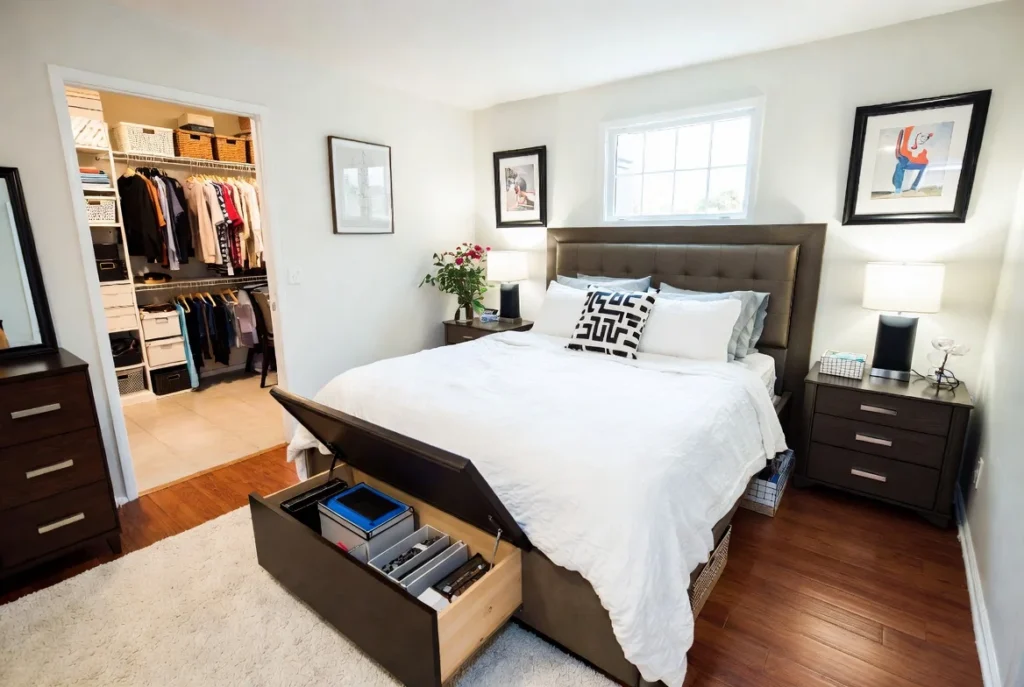
Gather baskets, boxes, and containers from throughout your home, repurposing them for bedroom organization. Use decorative baskets to corral items on open shelves, keeping small belongings contained while adding texture. Place boxes on closet shelves to create defined storage for accessories, seasonal items, or keepsakes. Shoeboxes make excellent drawer dividers or under-bed storage containers when labeled clearly. This no-cost organization utilizes items you already own while creating the structured storage essential for maintaining order. Containerized storage prevents the chaotic piles that make small bedrooms feel overwhelming.
Organize Cords and Electronics
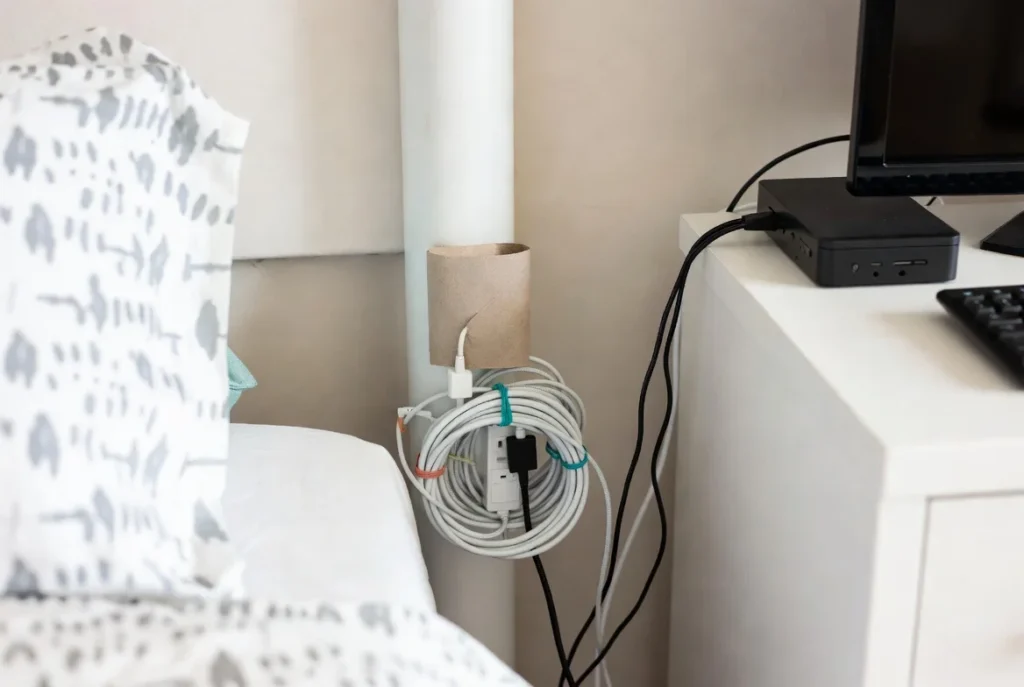
Cord clutter creates visual chaos that undermines bedroom organization efforts. Gather charging cables, power cords, and electronic accessories, then organize them intentionally. Use toilet paper rolls, bread bag clips, or rubber bands you already have to coil and secure cords. Designate one specific location for charging devices, keeping all necessary cords there rather than scattered throughout the room. Hide unsightly power strips in decorative boxes or behind furniture. Cable management may seem minor but dramatically improves visual calm while preventing the tangled messes that frustrate daily life.
Store Seasonal Items Elsewhere
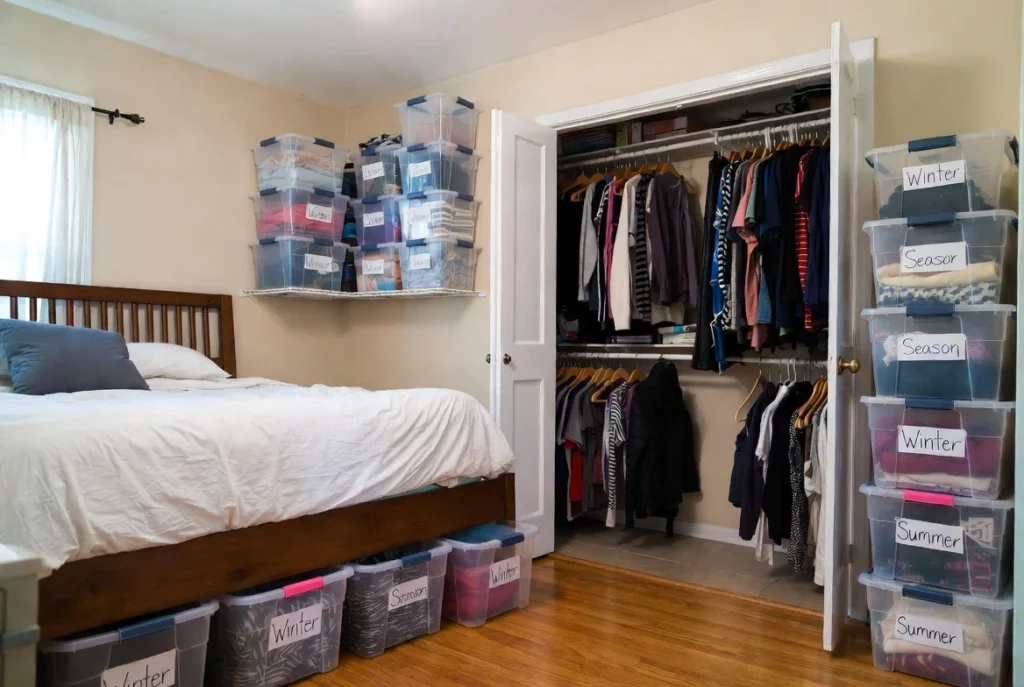
Small bedroom storage becomes more manageable when you remove out-of-season items entirely. Box up winter clothes during summer months, storing them under beds, in other closets, or in garage/basement space if available. Swap seasonal items twice yearly, keeping only current-season clothing and accessories in prime bedroom storage areas. This seasonal rotation effectively doubles your usable space by ensuring you are only storing and organizing items you actually need access to currently. The reduced volume makes maintaining organization significantly easier.
Create Color-Coded Organization Systems
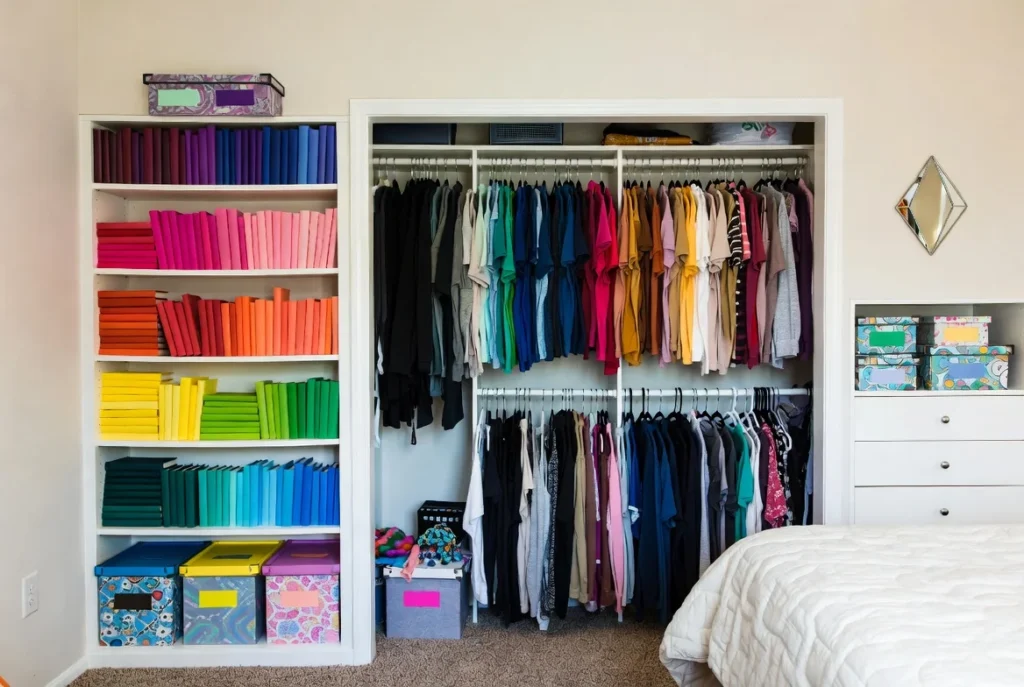
Color-coding provides instant visual organization without purchasing anything new. Arrange closet clothing by color, creating rainbow gradients that look intentionally curated while making outfit selection easier. Organize books by spine color for aesthetically pleasing shelves. Use colored paper, ribbon, or even colored socks you do not wear to create labels and categories for boxes and containers. This visual organization system appeals to the brain’s pattern-recognition abilities, making it easier to maintain order while creating an unexpectedly beautiful organizational aesthetic that costs nothing.
Establish Daily Maintenance Routines
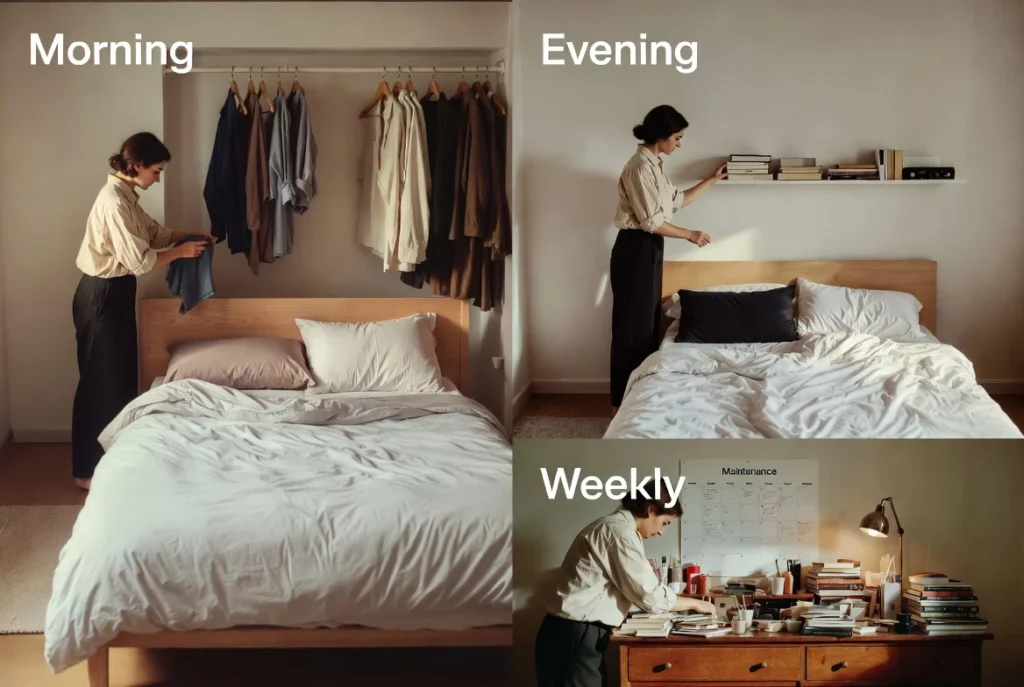
The most effective bedroom organization requires ongoing maintenance rather than occasional overhauls. Establish simple daily habits that prevent clutter from accumulating, like making your bed every morning, putting away clothes immediately rather than draping them on chairs, and spending five minutes each evening returning items to their designated homes. Weekly routines might include decluttering surfaces, reorganizing drawers, and addressing any organizational systems that are not working. These maintenance habits ensure your hard organizational work lasts rather than degrading back into chaos within weeks.
Conclusion
Organizing a small bedroom without buying new furniture proves entirely possible through strategic thinking, creative problem-solving, and commitment to utilizing space you already have more effectively. The 15 ideas presented throughout this guide demonstrate that exceptional bedroom organization emerges not from expensive solutions but from maximizing existing storage, eliminating clutter, and implementing thoughtful systems using items already in your possession.
The most important insight to carry forward is that successful small bedroom organization requires changing how you think about and use your space rather than acquiring more furniture or storage products. Ruthless decluttering creates breathing room, under-bed storage capitalizes on hidden space, vertical solutions utilize walls, and systematic organization maintains order. Each strategy works synergistically, creating cumulative effects greater than individual efforts.
Begin your transformation by decluttering thoroughly, as this foundational step makes all other organization efforts more effective. Then tackle one area at a time whether under-bed space, closets, or drawers rather than attempting everything simultaneously. Allow yourself patience as you discover which systems work best for your specific needs and belongings. Remember that organization is not a destination but an ongoing practice requiring regular maintenance.
Your small bedroom holds remarkable potential to become the peaceful, organized sanctuary you deserve without spending a single dollar on new furniture. The solutions already exist within your current possessions and space. These 15 strategies provide the roadmap to unlocking that potential, proving that smart organization beats expensive purchases every time.
Frequently Asked Questions
Can I really organize my bedroom without spending any money?
Absolutely! Most effective bedroom organization strategies utilize space and items you already have rather than requiring purchases. Focus on decluttering first to create space, then maximize under-bed storage, reorganize closets strategically, create DIY drawer dividers from shoeboxes, and rearrange furniture for better flow. Use baskets and containers from other rooms, hang items on walls with existing hooks, and implement organizational systems using what you own. The key is creative thinking about your existing resources rather than shopping for solutions. Decluttering often proves more valuable than buying storage furniture anyway.
What should I do first when organizing a small bedroom?
Start with thorough, ruthless decluttering before implementing any organizational systems. Remove everything from one area at a time like your closet or dresser drawers and sort items into keep, donate, and discard piles. Apply the one-year rule by removing anything unused in twelve months. Decluttering creates the breathing room that makes all other organization efforts more effective while often revealing that you need less storage than you thought. Only after decluttering should you tackle specific organizational projects like under-bed storage, drawer dividers, or furniture rearrangement. This foundational step prevents organizing clutter you should not keep.
How do I keep my small bedroom organized long-term without new furniture?
Maintain bedroom organization through simple daily and weekly habits rather than occasional overhauls. Make your bed every morning, put clothes away immediately rather than draping them on furniture, and spend five minutes each evening returning items to designated homes. Implement the one-in-one-out rule by removing something whenever you acquire something new. Conduct weekly surface decluttering and monthly deeper organization reviews to address systems that are not working. Adjust organizational strategies as needed rather than rigidly maintaining ineffective systems. Consistent maintenance prevents gradual clutter accumulation that undermines even the best organizational efforts.
What is the best way to store clothes in a small bedroom closet?
Maximize closet space by organizing clothes first by category, then by color within categories for easy navigation. Use vertical space by stacking folded items on shelves or creating double hanging rods with rope or chains. Store out-of-season clothing elsewhere, keeping only current-season items in prime closet space. Fold items using the KonMari vertical method so you can see everything at once. Utilize closet door backs for hanging bags, scarves, or accessories on existing hooks. Remove items you do not wear regularly, as overcrowded closets make organization impossible. Strategic closet organization often eliminates the perceived need for additional bedroom furniture.
How can I create more storage space without buying anything?
Create storage by utilizing currently wasted space like under beds, closet doors, walls, and inside existing furniture. Measure under-bed space and use boxes or bins you already own to store seasonal items, shoes, or extra bedding. Install hooks or use existing nails to hang items on walls, creating vertical storage. Repurpose containers, baskets, and boxes from other rooms for bedroom organization. Rearrange furniture to better utilize floor space and improve flow. Use DIY drawer dividers made from shoeboxes or cardboard. Remove unnecessary furniture to free up space rather than adding more. Often you have adequate storage but are not using it efficiently or own too many items.
One Comment