
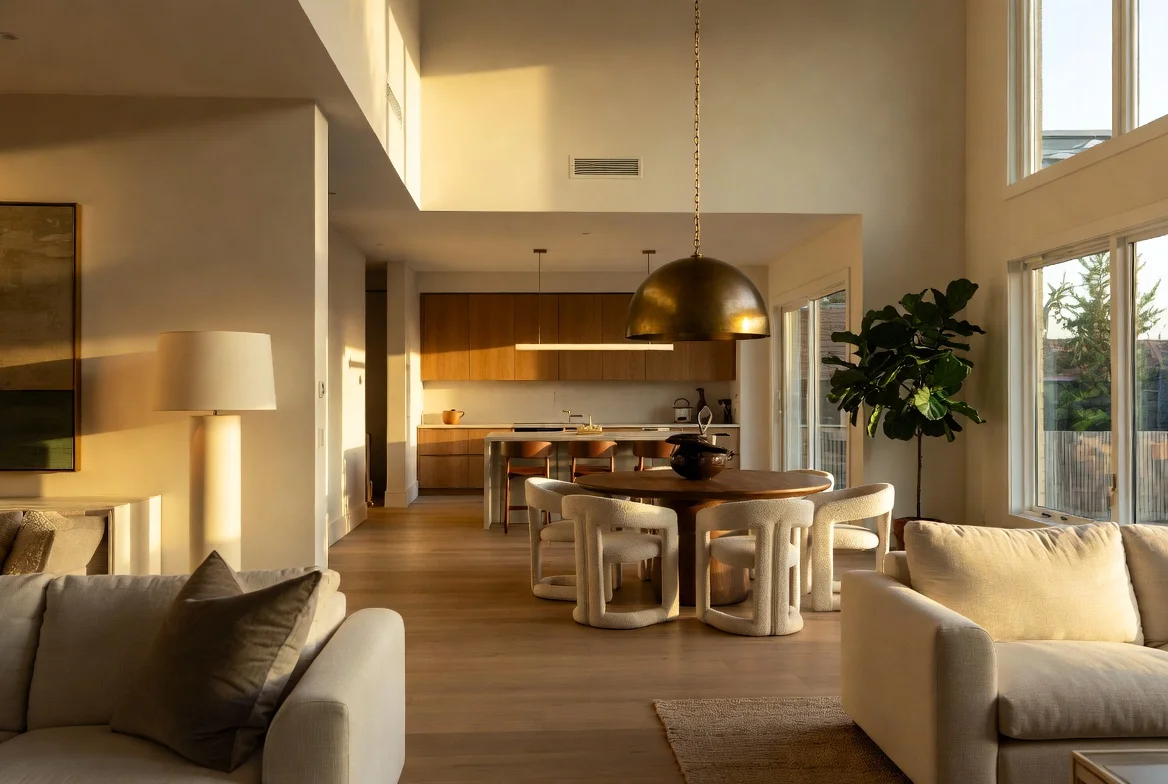
How to Seamlessly Connect Living Room and Dining Room: 15 Modern Open Concept Ideas
When Two Spaces Become One Beautiful Whole
There is a transformative moment when removing walls between your living and dining rooms reveals not limitations but possibilities, not confusion but clarity about how your family actually lives and moves through daily life. Yet many homeowners struggle with open floor plans, fearing that combined spaces become chaotic catchalls lacking purpose or that the absence of walls creates design confusion rather than flowing elegance.
The truth is that successfully connecting living room and dining room spaces requires thoughtful intention rather than haphazard furniture placement, strategic zone definition without physical barriers, and cohesive design elements that unify while allowing each area to maintain distinct function. Research from interior designers confirms that well-executed open concept spaces increase home value by up to 20 percent while creating the family connectivity and entertaining ease that modern lifestyles demand.
Seamless integration emerges from understanding that open layouts thrive on visual continuity through consistent materials and colors, defined but permeable boundaries using furniture and rugs, and layered lighting that highlights different functional zones while maintaining overall harmony. The most successful combined living dining spaces balance practical flow with aesthetic beauty, ensuring furniture placement encourages rather than obstructs movement while decorative elements tie disparate areas into unified wholes.
This comprehensive guide presents 15 proven strategies for creating open concept living dining rooms that feel intentionally designed rather than accidentally connected. From foundational layout principles to finishing decorative touches, these ideas will help you achieve the seamlessly integrated space your home deserves.
Use Cohesive Color Palettes Throughout
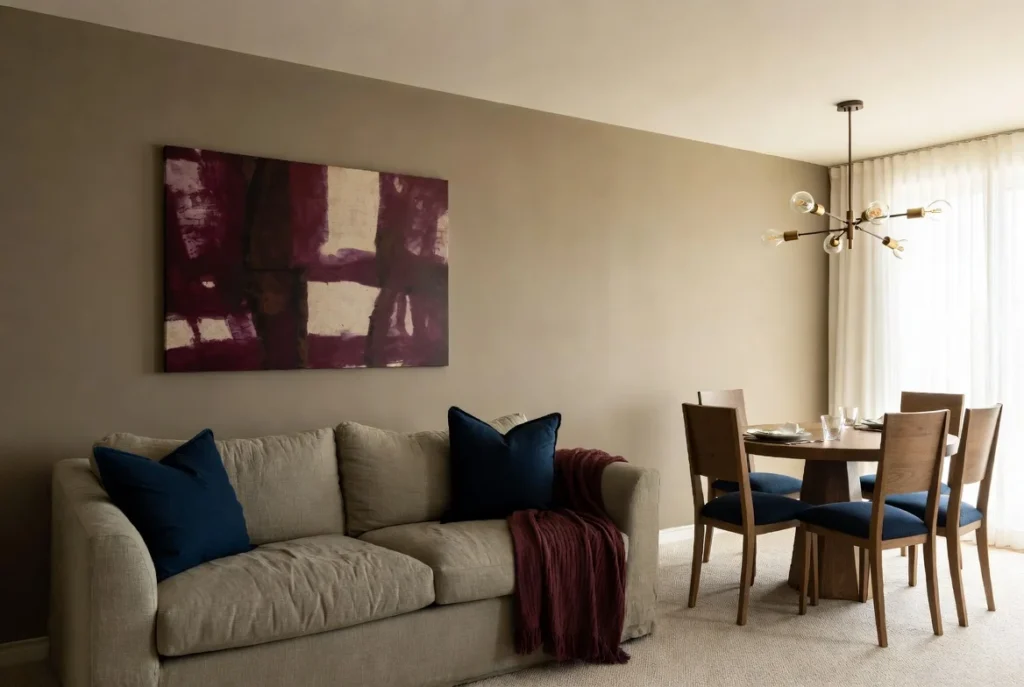
Unified color schemes create visual connections making separate zones feel like intentional parts of single compositions rather than unrelated rooms forced together. Choose one neutral base color for walls spanning both living and dining areas creating foundational cohesion. Soft grays, warm beiges, creamy whites, or gentle greiges work beautifully as connecting neutrals allowing accent colors in furnishings and accessories to add personality without disrupting overall harmony.
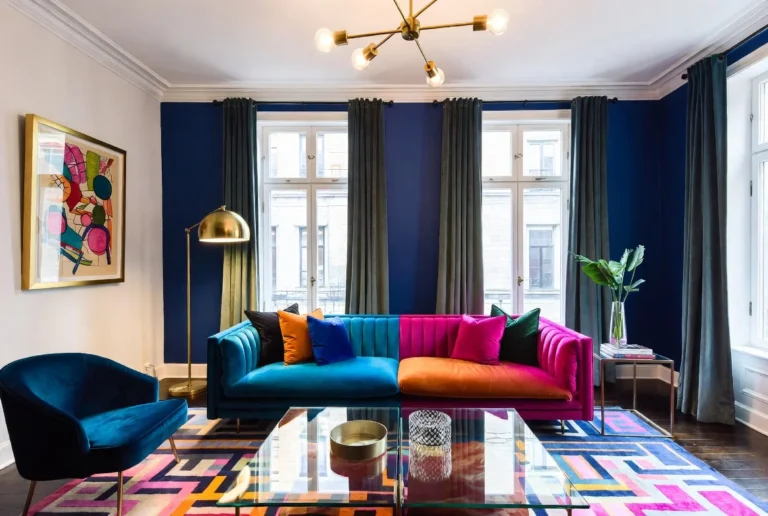
Layer complementary accent colors throughout both spaces reinforcing connections. If your living room features navy throw pillows, incorporate navy dining chair cushions or table runners. Burgundy artwork in the dining area echoes burgundy throws in the living space. The repetition need not be exact; varying shades within single color families creates tonal depth while maintaining obvious relationships.
Consistent color temperature proves critical for seamless flow. Warm neutrals with beige or cream undertones feel jarring beside cool grays with blue undertones. Choose colors sharing similar warmth or coolness ensuring transitions feel natural rather than abrupt. This foundational strategy proves that thoughtful color curation creates powerful visual unity binding open floor plans into cohesive environments.
Define Zones with Strategic Furniture Placement
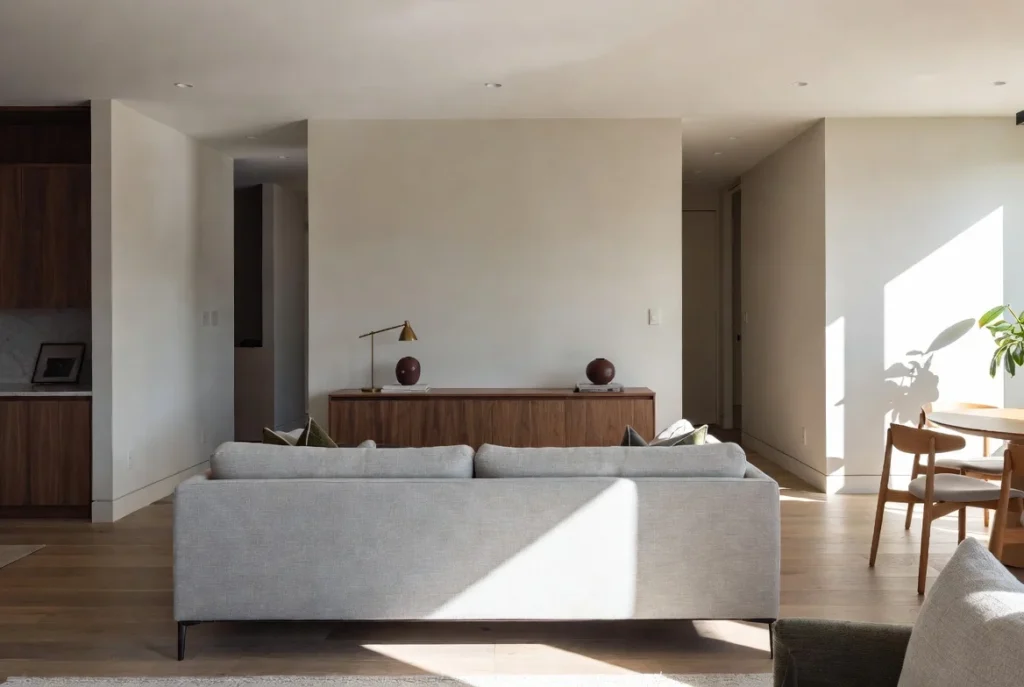
Furniture arrangement creates subtle boundaries defining functional areas without physical walls disrupting open concept flow. Position your sofa as a natural divider with its back facing the dining area creating psychological separation while maintaining visual permeability. Console tables behind sofas reinforce divisions while providing surfaces for decorative displays and table lamps adding ambient lighting.
Orient dining tables perpendicular to living room seating creating distinct axes for each zone. This perpendicular placement ensures each area maintains its own focal point and traffic pattern rather than competing for attention or creating confusing circulation paths. Leave adequate walking space between zones preventing furniture from obstructing natural flow between rooms.
Floating furniture away from walls maximizes flexibility and defines spaces more effectively than wall-hugging arrangements. A sofa positioned several feet from the wall with a console table behind creates a definite living room zone while maintaining the open, airy quality that makes connected spaces so appealing. Strategic placement proves that thoughtful furniture positioning creates order and definition in wall-free environments.
Install Consistent Flooring Materials
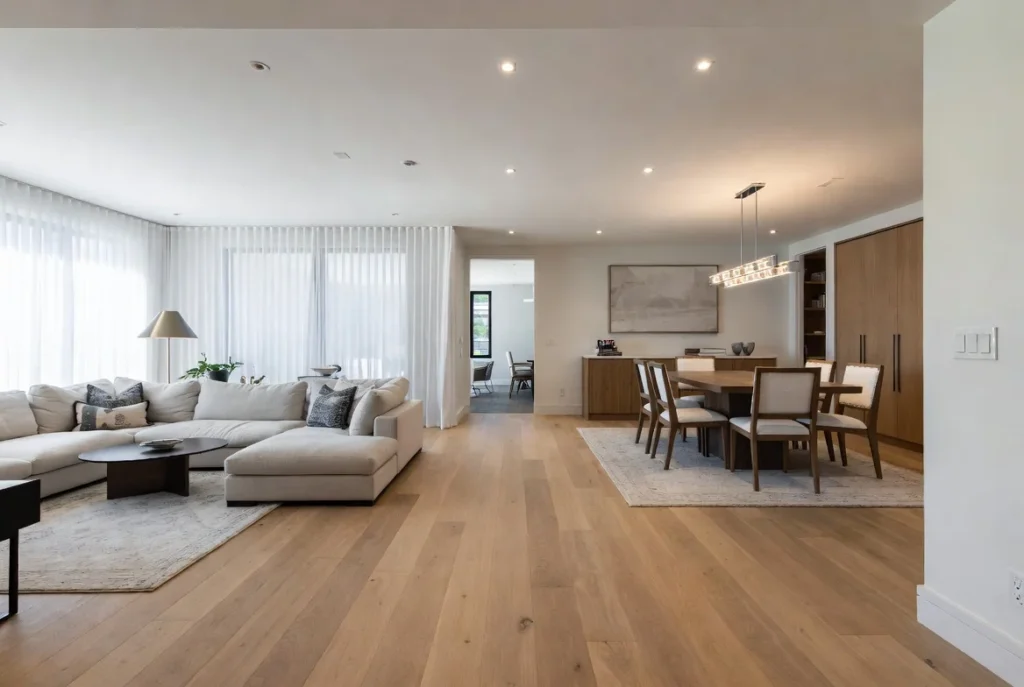
Unified flooring throughout open layouts removes visual interruptions creating seamless transitions between living and dining zones. Choose single flooring materials like hardwood, luxury vinyl, or polished concrete spanning entire combined spaces. The continuous surface creates spatial flow impossible to achieve with multiple flooring types requiring transition strips that fragment spaces visually.
Matching wood tones or flooring colors reinforces cohesion while allowing area rugs to define individual zones. Light oak flooring throughout makes both areas feel bright and spacious, dark walnut adds sophistication and warmth, while neutral luxury vinyl provides budget-friendly versatility. The key is maintaining consistent materials avoiding jarring changes that disrupt visual continuity.
If existing different flooring exists, ensure materials share similar colors, patterns, or textures creating related rather than contrasting appearances. Contemporary wood in living areas pairs well with complementary tile in dining zones when both share warm tones. Consistent flooring proves that removing visual barriers at floor level dramatically enhances the seamless quality of integrated living spaces.
Anchor Each Zone with Area Rugs
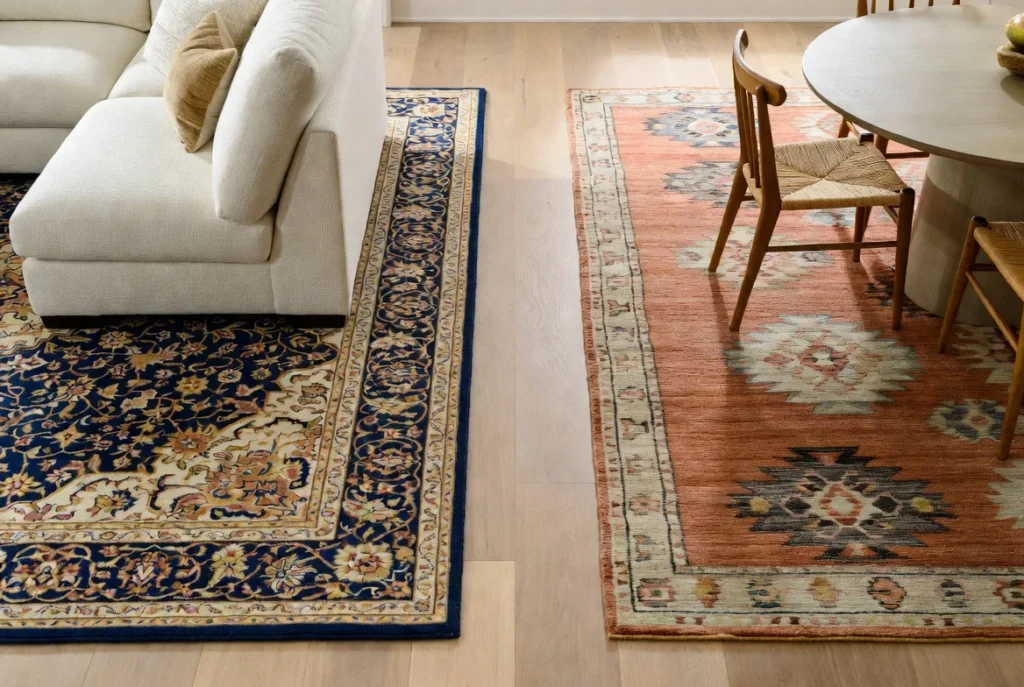
Area rugs define distinct living and dining zones while adding warmth, texture, and visual interest to open floor plans. Choose substantial rugs extending beyond furniture footprints ensuring all chair or sofa legs rest comfortably on rug surfaces. Living room rugs should accommodate your entire seating arrangement while dining rugs extend beyond table and chairs allowing chairs to remain on rugs when pulled out.
Coordinate rug styles, colors, or patterns creating visual relationships without exact matching. Similar color palettes, complementary patterns, or shared textural elements tie zones together while area-specific rug choices maintain functional distinctions. Persian-style rugs add traditional elegance, geometric patterns suit contemporary aesthetics, while natural fiber rugs bring organic warmth to any style.
Rug placement creates obvious room delineation helping eyes understand spatial organization even without walls. The defined boundaries prevent multipurpose spaces from feeling chaotic while soft textiles add acoustic dampening reducing echo in hard-surfaced open areas. Strategic rug use proves that soft furnishings create structure and definition as effectively as architectural elements.
Layer Multiple Lighting Sources
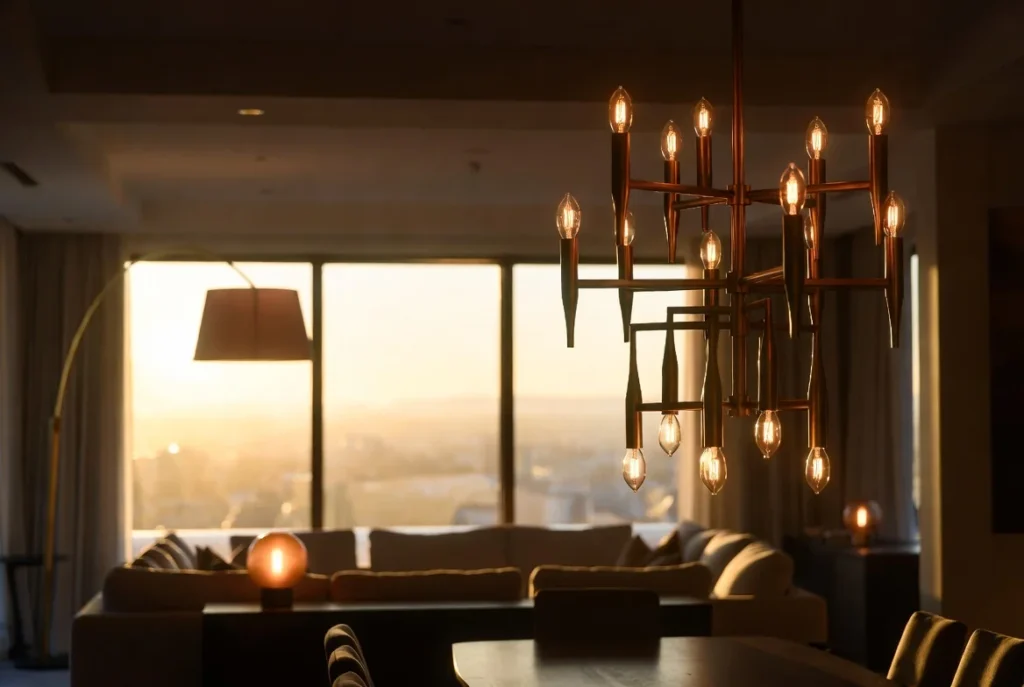
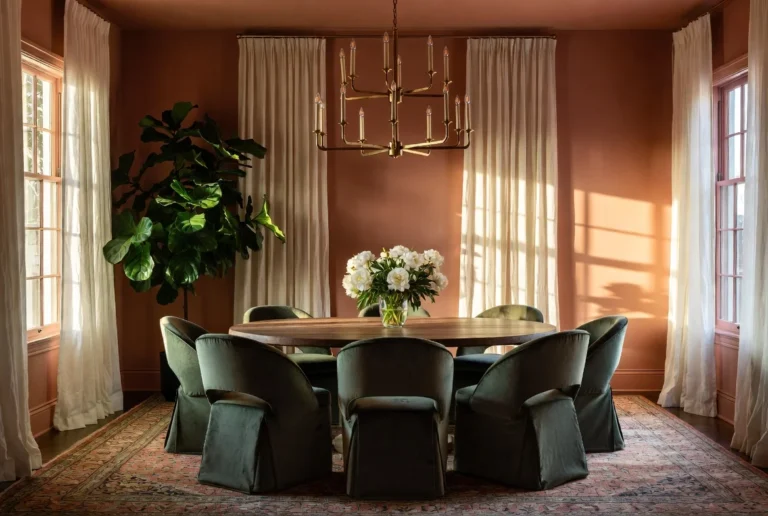
Layered lighting at varying heights and intensities highlights different functional zones while creating cohesive ambiance throughout connected spaces. Install statement chandeliers or pendant lights above dining tables providing task lighting and decorative focal points. Choose fixtures coordinating with living room lighting in finish, style, or scale creating visual relationships between zones.
Add ambient lighting through floor lamps, table lamps, and wall sconces in living areas creating warm glowing layers. Matching lamp styles or coordinating finishes in brass, bronze, or matte black tie lighting schemes together. Dimmer switches on all fixtures allow adjusting brightness for different occasions from bright family meals to intimate evening entertaining.
Accent lighting highlighting artwork, architectural features, or decorative displays adds dimensional interest throughout open spaces. Recessed lighting, track lighting, or picture lights create focal points drawing eyes through spaces encouraging visual exploration. Lighting layers prove that illumination serves both practical and aesthetic purposes defining zones while maintaining overall unity in open concept designs.
Create Visual Connections Through Materials
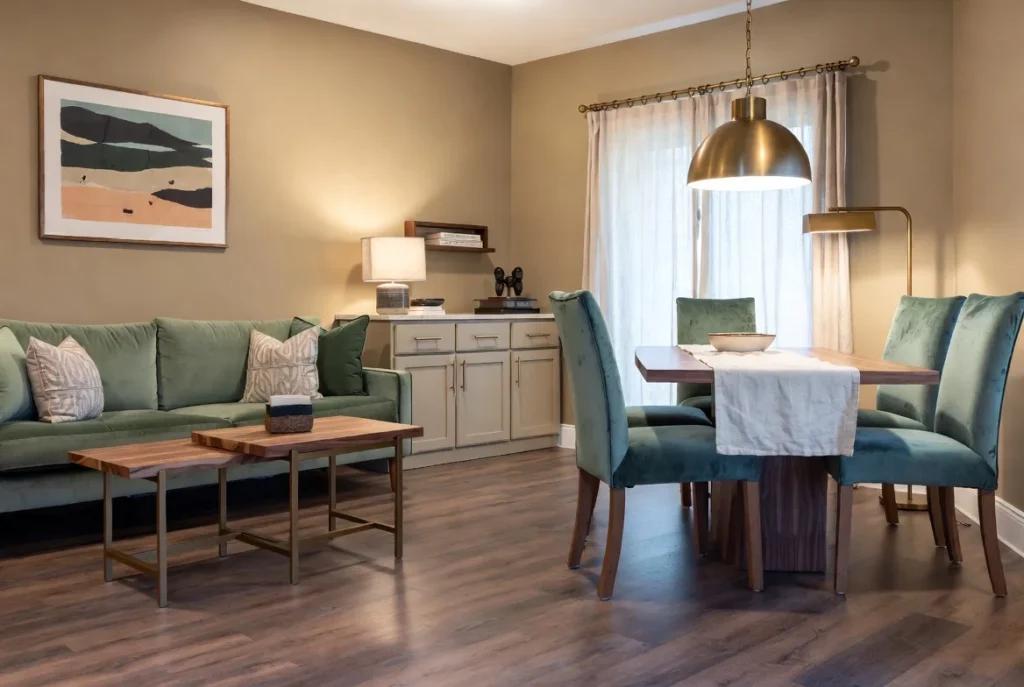
Repeated materials throughout living and dining zones create obvious visual connections reinforcing spatial relationships. Match wood tones in dining tables and living room coffee tables, side tables, or entertainment centers. The consistent finish creates cohesive collections rather than random furniture assortments.
Coordinate metal finishes in lighting fixtures, furniture legs, cabinet hardware, and decorative accessories. Brass accents throughout both zones feel intentional and elegant, matte black delivers contemporary sophistication, while mixed metals work when one finish dominates roughly 70 percent. Complementary materials like wood paired with metal or glass create textural interest while maintaining visual harmony.
Fabric connections through matching or coordinating textiles reinforce unity. Velvet dining chairs echo velvet throw pillows in living areas, linen curtains coordinate with linen table runners, or leather dining seats relate to leather accent chairs. Material repetition proves that thoughtful curation creates perceived luxury and intentional design impossible to achieve through random selections.
Maintain Clear Traffic Patterns
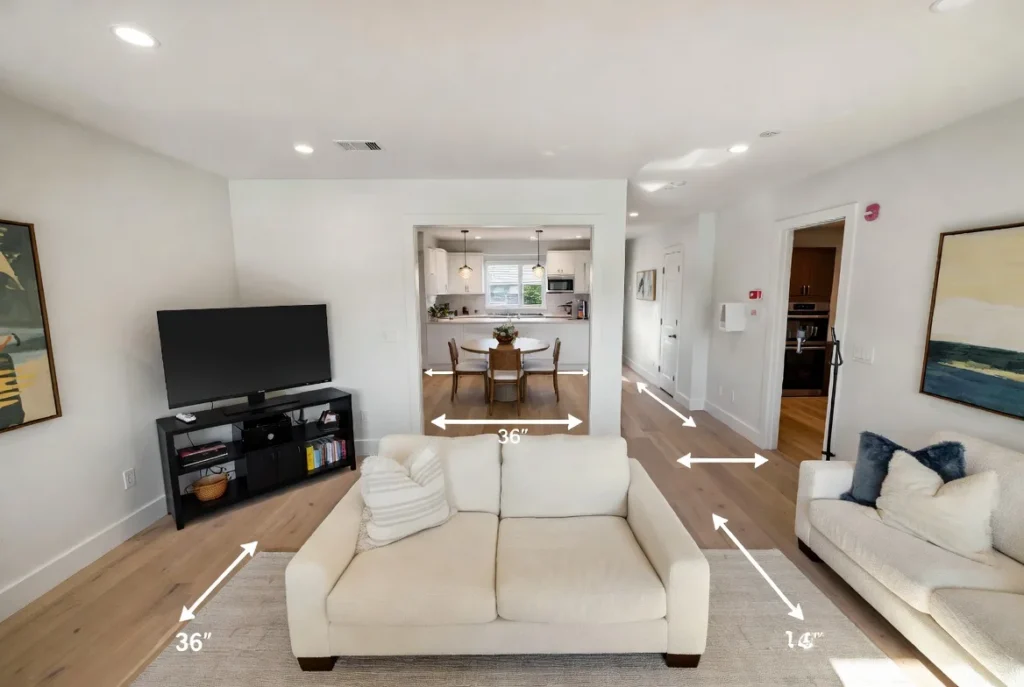
Functional flow requires maintaining clear pathways allowing easy movement between and through both zones without furniture obstacles creating frustration or accidents. Leave minimum 36-inch walkways between furniture pieces ensuring comfortable passage even when dining chairs are pulled out or people gather in living areas.
Position furniture creating natural circulation routes rather than forcing awkward navigation around pieces. Align sofa backs with dining area entries creating logical transitions between spaces. Avoid placing furniture in high-traffic areas where constant movement disrupts activities or creates collision risks with sharp table corners or unstable decorative items.
Pass-through design considerations ensure one zone doesn’t block access to another. If your dining area connects living room to kitchen, maintain clear sightlines and open paths preventing either space from feeling like a dead end requiring backtracking. Thoughtful traffic flow proves that successful open layouts balance furniture placement with practical movement needs.
Use Multifunctional Furniture Wisely
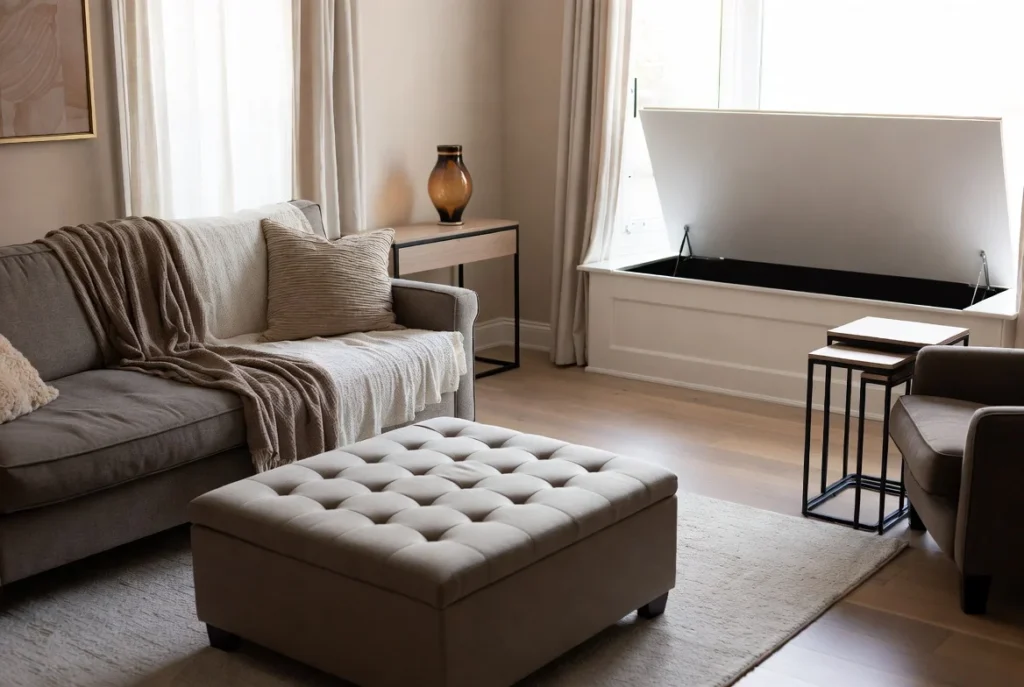
Multipurpose pieces maximize utility in combined living dining spaces serving dual functions without consuming excessive square footage. Storage ottomans provide living room seating while concealing blankets, games, or seasonal items. Console tables behind sofas offer surfaces for decorative displays while drawers store dining linens or serving pieces.
Extendable dining tables accommodate daily family meals at compact sizes while expanding for entertaining guests without permanently consuming floor space. Drop-leaf tables, butterfly extensions, or removable leaves provide flexibility adapting to varying needs. Nesting tables in living areas offer surfaces when needed while stacking compactly when floor space takes priority.
Built-in storage like window seats with lift-up lids or banquette benches with interior compartments maximize every inch while maintaining clean aesthetics. Multifunctional furniture proves that smart choices deliver maximum utility and flexibility essential in spaces serving multiple purposes simultaneously.
Balance Proportions and Scale
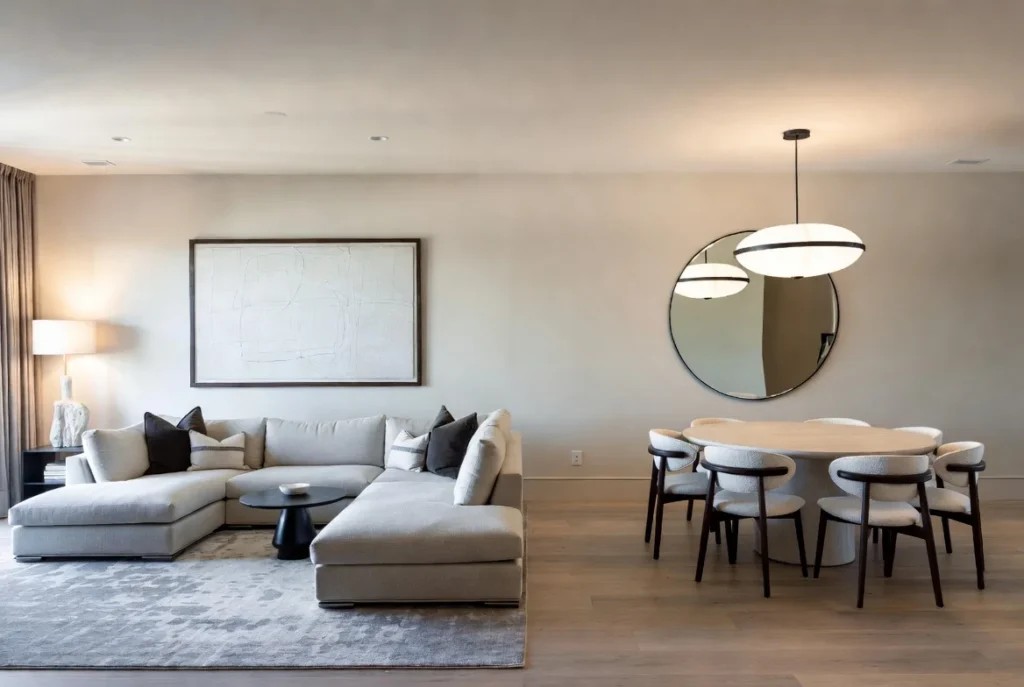
Furniture scale appropriate to combined room size prevents either zone from overwhelming the other or feeling insignificant by comparison. Substantial sectional sofas require dining tables and chairs of similar visual weight preventing imbalanced compositions where one area dominates inappropriately.
Match furniture heights creating horizontal visual harmony. Sofa backs roughly aligning with dining chair backs create pleasing proportions while dramatically different heights feel disconnected. Consistent sight lines across both zones reinforce spatial unity making eyes travel smoothly without jarring height variations.
Proportion awareness extends to decorative elements where artwork, mirrors, and accessories should relate appropriately to furniture sizes. Oversized art above a massive sectional pairs with substantial dining area artwork or mirrors maintaining visual balance. Thoughtful scale relationships prove that harmonious proportions create professional polish in integrated living designs.
Add Transitional Design Elements
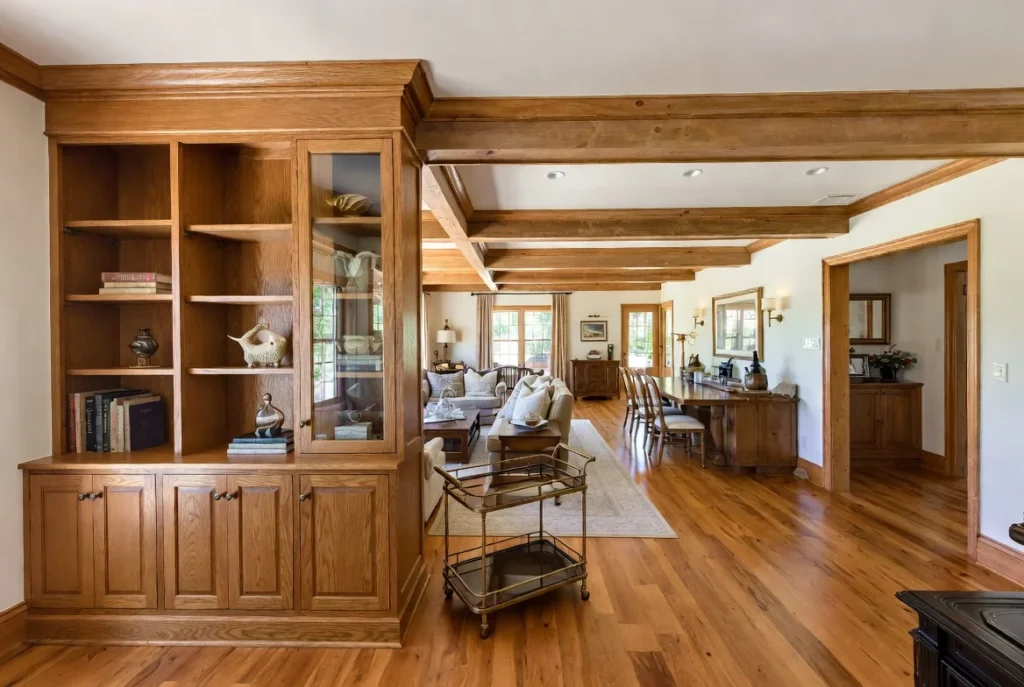
Bridging pieces in areas between living and dining zones create smooth transitions reinforcing connections. Console tables positioned between spaces serve both areas storing dining essentials while displaying decorative objects visible from living room seating. Bar carts transition between zones holding beverages accessible to both areas.
Open shelving or bookcases create permeable dividers maintaining visual connection while providing subtle separation. These semi-transparent boundaries allow light and sightlines to pass through while psychologically defining zones. The architectural interest adds character while the openness preserves open concept benefits.
Transitional decor like hallway runners connecting both zones or ceiling treatments spanning the entire space create literal bridges. Consistent crown molding, ceiling paint colors, or exposed beams tie separate areas under single architectural canopies. Transitional elements prove that thoughtful connections in between-spaces reinforce overall unity.
Incorporate Focal Points in Each Zone
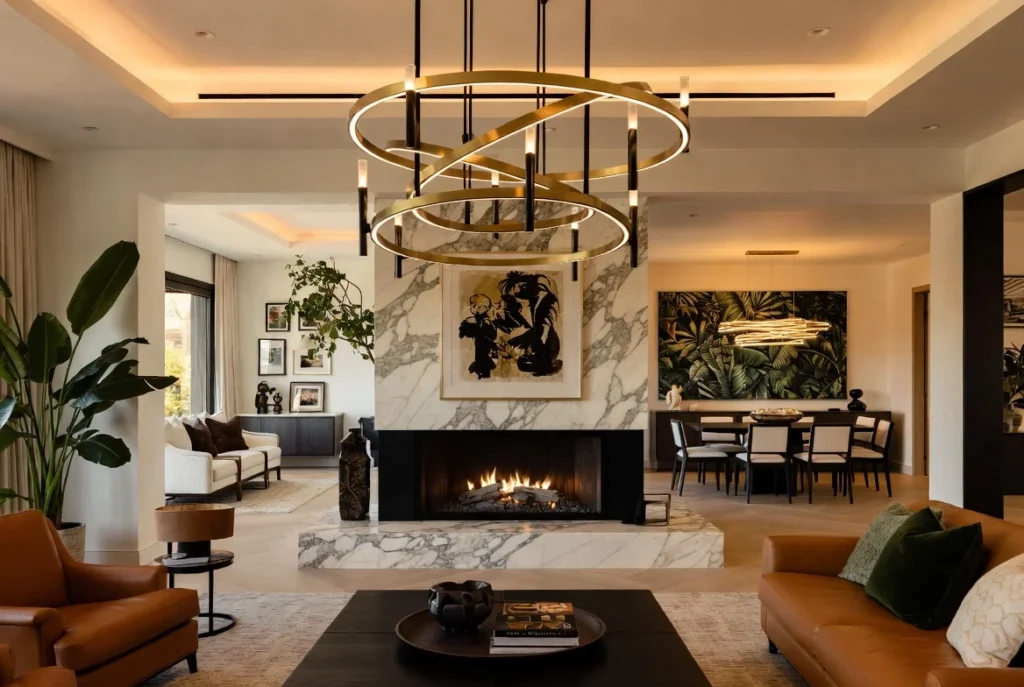
Distinct focal points give each area purpose and identity preventing combined spaces from feeling undifferentiated and purposeless. Living rooms benefit from fireplaces, large windows, media centers, or statement artwork drawing eyes and anchoring seating arrangements around clear centers.
Dining areas need their own focal elements like dramatic chandeliers, accent walls, large mirrors, or gallery walls ensuring the zone feels intentional rather than leftover. The separate focal points prevent competition while giving each space its own character and visual anchor.
Balanced focus ensures neither area overwhelms the other through overly dramatic features stealing attention from shared environments. Coordinated visual weight in focal elements maintains harmony while distinct features preserve functional identities. Strategic focal points prove that unified spaces still benefit from individual character and purpose.
Choose Complementary Not Matching Furniture Styles
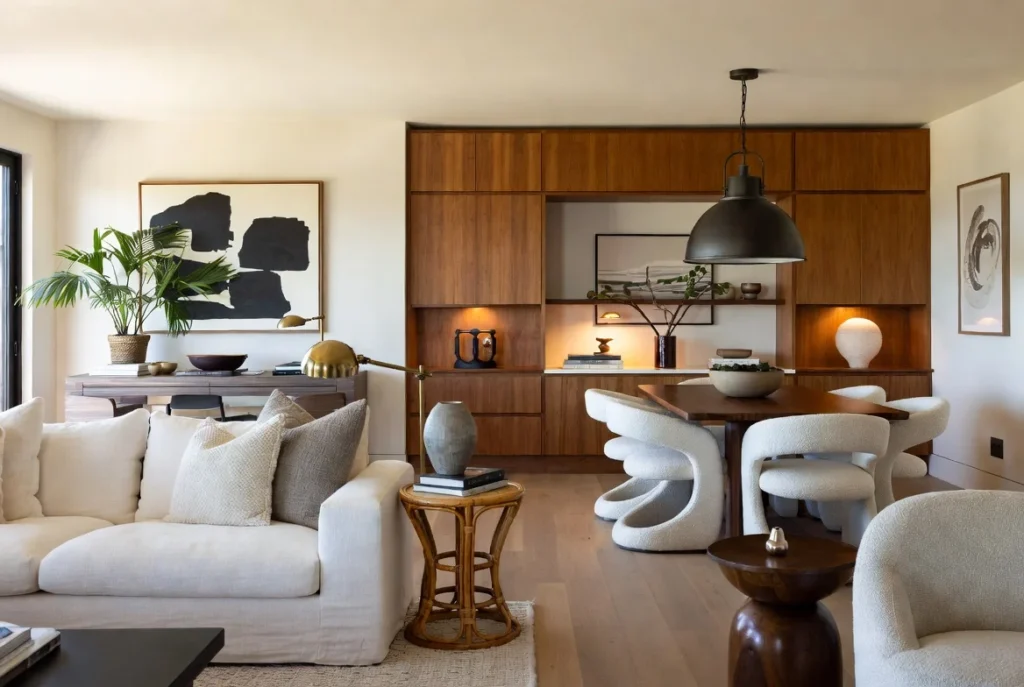
Related but varied furniture styles create collected, authentic aesthetics versus matchy-matchy showroom appearances. Mix modern dining chairs with traditional wooden tables, contemporary sofas with vintage side tables, or industrial lighting with classic upholstered seating. The style variety adds personality and visual interest impossible in perfectly matched sets.
Ensure pieces share common elements like similar color tones, coordinating materials, or complementary silhouettes creating cohesion amid variety. Mid-century modern chairs share clean lines with contemporary sofas despite different eras, rustic wood tables relate to farmhouse-style shelving through natural materials. Complementary styles balance unity with individuality preventing sterile matching while maintaining intentional curation.
The 60-40 rule suggests dominant styles comprising roughly 60 percent of furnishings with contrasting elements adding 40 percent interest. This balance prevents chaotic eclecticism while avoiding monotonous uniformity. Thoughtful style mixing proves that personalized character and cohesive design coexist beautifully in open floor plans.
Maximize Natural Light Flow
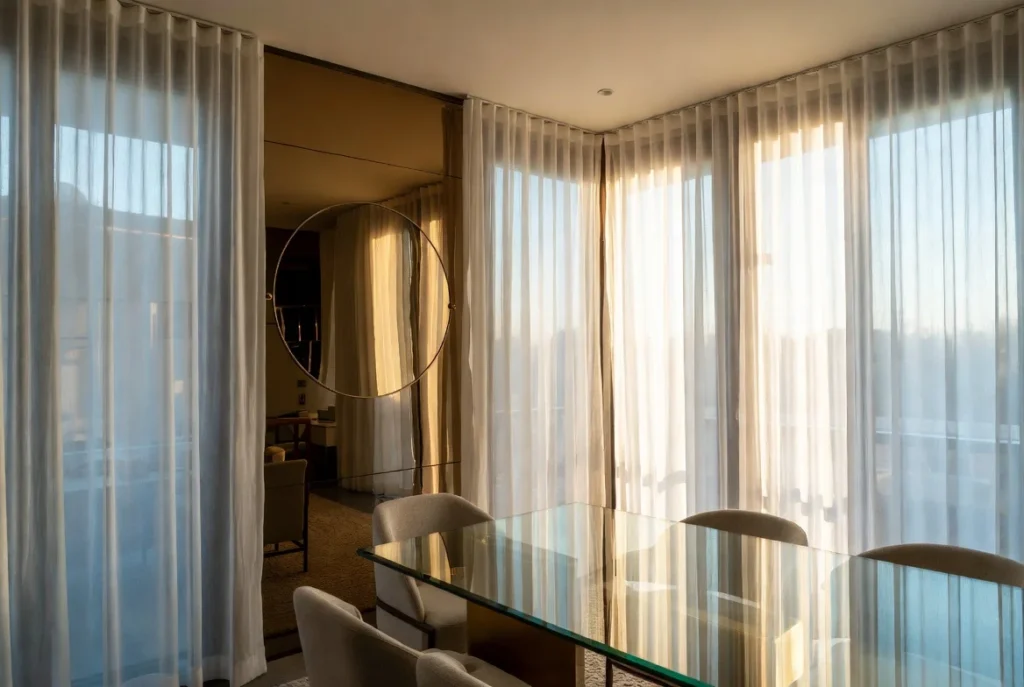
Unobstructed windows in both zones allow natural light to flow freely throughout connected spaces creating bright, airy environments. Avoid heavy window treatments blocking sunshine or tall furniture pieces preventing light from reaching interior areas. Sheer curtains, top-down bottom-up shades, or minimal blinds provide privacy while maximizing illumination.
Light-reflecting surfaces like mirrors, glass tables, metallic accents, and glossy finishes bounce natural light throughout spaces multiplying its impact. Position large mirrors opposite windows reflecting outdoor views and sunshine deeper into rooms. Glass dining tables allow light to pass through rather than being absorbed by solid wood surfaces.
Consistent window treatment styles throughout both zones create visual unity while coordinated fabrics or hardware tie spaces together. The unimpeded light flow proves that natural illumination enhances the spacious, connected quality making open layouts so desirable.
Add Greenery and Natural Elements
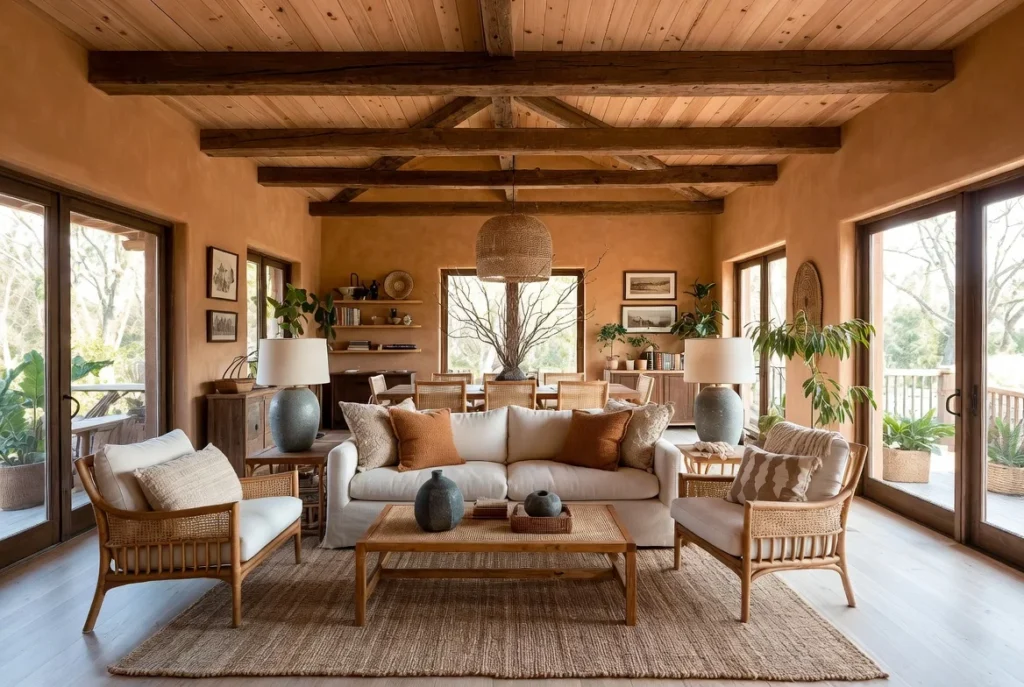
Living plants bring organic life and vibrant color to open concept spaces softening hard architectural lines with natural shapes. Position tall floor plants between zones creating gentle natural dividers while purifying air and adding vertical interest. Tabletop plants on dining tables or console tables inject fresh life without consuming precious floor space.
Natural materials like wood, stone, rattan, and jute add textural warmth and organic character throughout both areas. Wooden furniture, stone decorative objects, woven baskets, and natural fiber rugs create cohesive natural palettes while varied textures prevent monotony.
Fresh flowers in coordinating vases placed in both zones create visual relationships through repeated elements. Seasonal branches, potted herbs, or succulent arrangements add living touches keeping spaces feeling fresh and vibrant. Natural elements prove that organic touches create warmth and vitality in integrated living environments.
Establish Flexible Zones with Movable Elements
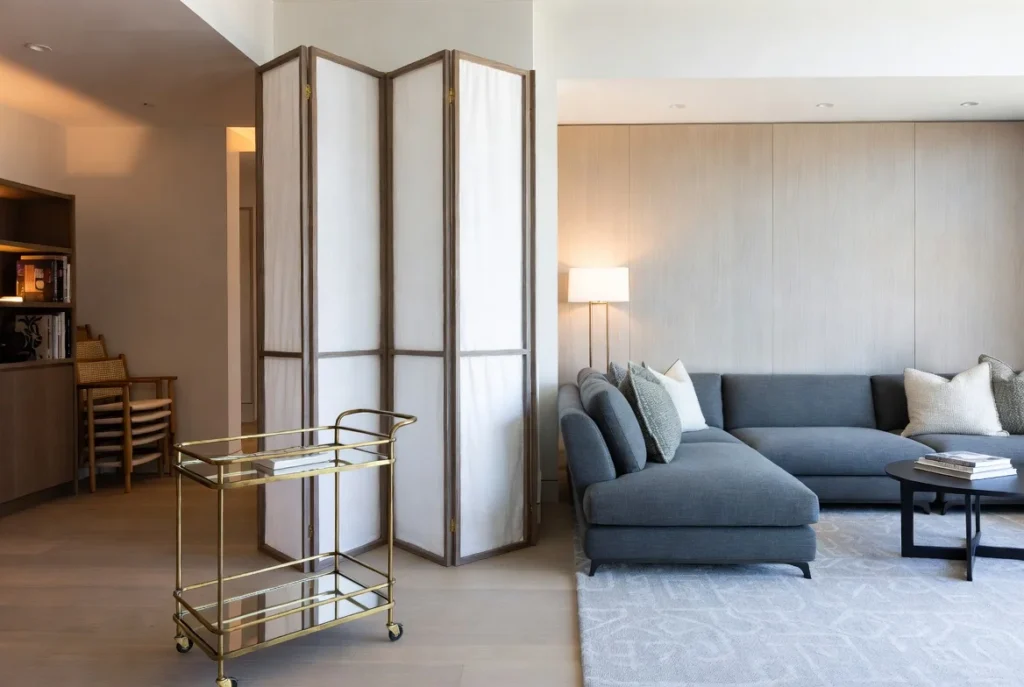
Adaptable arrangements using lightweight, movable furniture allow reconfiguring spaces for different occasions without permanent commitment. Rolling bar carts transition between zones, folding screens create temporary divisions for privacy, and stackable seating accommodates varying guest numbers.
Modular furniture like sectional components separating into individual seats or nesting tables expanding for entertaining provides flexibility adapting to changing needs. This adaptability ensures multipurpose spaces serve varying functions from intimate family dinners to large gatherings without requiring multiple furniture sets.
The flexibility proves that open floor plans succeed through thoughtful design allowing spaces to evolve with changing needs while maintaining overall cohesion and aesthetic appeal through foundational design elements remaining constant.
Conclusion: Creating Your Perfectly Connected Living Dining Space
Successfully connecting living room and dining room areas requires understanding that exceptional open concept spaces emerge from balancing defined zones with seamless flow, coordinating materials and colors while allowing individual character, and creating visual continuity through thoughtful repetition while avoiding monotonous matching. The 15 strategies presented throughout this guide prove that integrated living dining rooms succeed through layered decisions about furniture placement, color coordination, material selection, lighting design, and decorative curation.
The most valuable insight to carry forward is that transformative open layouts come from intentional design rather than simply removing walls and hoping for the best. Cohesive color palettes, strategic furniture positioning, unified flooring, defined rugs, and layered lighting each contribute to creating spaces that feel purposefully designed rather than accidentally connected while maintaining the flow and connectivity making open floor plans so appealing for modern living.
Begin your space transformation by identifying which strategies resonate most with your specific layout, lifestyle needs, and aesthetic preferences. Perhaps you start with cohesive paint colors and consistent flooring, add strategic rugs and furniture placement, or layer lighting and materials throughout both zones. These foundational changes create momentum while proving that your combined living dining space holds remarkable potential to become the seamlessly integrated environment where your family truly lives, connects, and creates cherished memories in beautifully designed surroundings.
Frequently Asked Questions
How do you visually separate a living room from a dining room in an open floor plan?
Use area rugs defining each zone with clear boundaries, position furniture like sofas and console tables creating subtle dividers, and employ distinct lighting fixtures highlighting different functional areas. Add variation in wall colors through accent walls or maintain consistent base colors with different accent colors in furnishings and accessories. The key is creating perceptible boundaries without physical barriers allowing visual connection while maintaining functional distinction. Strategic furniture placement proves most effective, using sofa backs as natural dividers or positioning console tables between zones.
What colors work best for connecting living and dining rooms?
Neutral base colors like soft gray, warm beige, creamy white, or gentle greige work beautifully throughout both spaces creating foundational cohesion. Layer complementary accent colors ensuring tones appear in both zones through pillows, artwork, rugs, or accessories. Maintain consistent color temperature avoiding mixing warm and cool neutrals which feel jarring together. Monochromatic schemes using varying shades within single color families create sophisticated unity while preventing monotony. The most successful palettes balance neutral backgrounds with coordinated accent colors appearing strategically throughout connected spaces.
Should furniture match in an open concept living dining room?
Furniture should coordinate rather than match exactly, creating cohesive collections versus sterile showroom appearances. Choose pieces sharing common elements like similar wood tones, coordinating metal finishes, or complementary upholstery colors while varying styles, silhouettes, and specific designs. The 60-40 rule suggests dominant styles comprising 60 percent with contrasting elements adding 40 percent visual interest. This balance prevents chaotic eclecticism while avoiding monotonous matching. Related but varied furniture creates authentic, collected aesthetics reflecting personal style rather than catalog perfection.
How do you create good traffic flow in combined living dining spaces?
Maintain minimum 36-inch walkways between furniture pieces allowing comfortable passage even when dining chairs are pulled out. Position furniture creating natural circulation routes aligning with room entries and exits. Avoid placing pieces in high-traffic areas where constant movement disrupts activities. Ensure pass-through design where one zone doesn’t block access to another maintaining clear sightlines and open paths. Float furniture away from walls when possible preventing wall-hugging arrangements that obstruct natural flow patterns. Strategic planning ensures practical movement without sacrificing aesthetic furniture arrangements.
What type of lighting is best for open concept living dining rooms?
Layered lighting at multiple heights and intensities serves both zones effectively. Install statement chandeliers or pendants above dining tables for task lighting and focal interest. Add ambient lighting through floor lamps, table lamps, and wall sconces in living areas. Include accent lighting highlighting artwork or architectural features. Coordinate fixture styles, finishes, or scales creating visual relationships between zones. Install dimmer switches on all fixtures allowing brightness adjustments for different occasions. Choose warm white bulbs creating inviting atmospheres while matching color temperatures throughout ensures cohesive illumination. Multiple adjustable sources provide functional and aesthetic lighting solutions.
You May Also Like This Post:
10+ Home Entrance Decor Ideas to Create a Stylish and Welcoming First Impression
One Comment