30 Modern TV Wall Ideas That Transform Your Living Space
The television has evolved from a simple entertainment device into a central design element that can make or break the aesthetic of your entire living room. Walk into any beautifully designed home today and you will notice something remarkable: the TV no longer sits awkwardly on a bulky stand but instead integrates seamlessly into a thoughtfully designed feature wall that elevates the entire space. This transformation represents one of the most exciting opportunities in contemporary home interior design.
Creating a modern TV wall goes far beyond mounting a screen and calling it finished. The best designs blend functionality with artistry, turning what could be a technological eyesore into a sophisticated living room focal point that guests admire and homeowners genuinely love. Whether you are working with a compact apartment or a spacious open-concept home, the right TV wall design can completely reshape how your space feels, functions, and flows.
This comprehensive guide presents 30 powerful ideas that prove modern TV walls can deliver both stunning visual impact and practical everyday functionality. From minimalist designs that embrace clean lines to luxury materials that create boutique hotel elegance, each concept offers tested strategies for transforming your entertainment area into the showpiece your home deserves. These are not theoretical possibilities but proven approaches drawn from the latest interior design trends and real-world applications.
Understanding Modern TV Wall Design Fundamentals
Before exploring specific design ideas, grasping the core principles that separate exceptional TV walls from mediocre ones prevents costly mistakes and ensures your investment delivers maximum impact. Every successful modern TV wall rests on three foundational elements working in perfect harmony: visual integration, functional storage, and technical excellence.
Visual integration ensures your television feels like an intentional part of the room’s design rather than an afterthought bolted to the wall. This involves creating a cohesive backdrop through materials, colors, and proportions that complement rather than compete with your screen. When a media wall achieves true integration, the TV becomes nearly invisible when powered off, blending into the surrounding design elements seamlessly.
Functional storage addresses the practical reality that modern entertainment systems require organization for gaming consoles, streaming devices, remotes, and countless cables. The most successful entertainment centers hide clutter behind sleek cabinet doors while displaying curated decorative objects on open shelving. This balance between concealment and display creates spaces that feel both lived-in and polished.
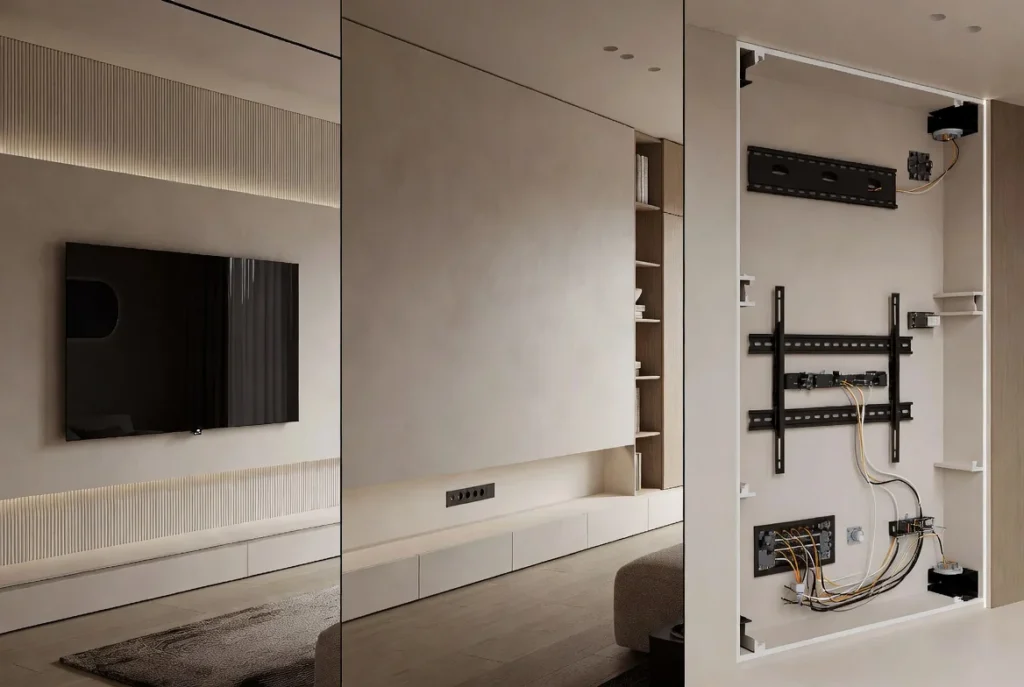
Technical excellence covers the unglamorous but critical aspects like proper cable management, secure mounting, and adequate ventilation for electronics. Nothing undermines a beautiful design faster than visible wire tangles or a television that tilts slightly because of improper installation. Professional-quality results demand attention to these foundational details that casual observers never notice but always feel.
Ideas 1 Through 6: Minimalist TV Wall Designs
Clean Lines and Floating Consoles
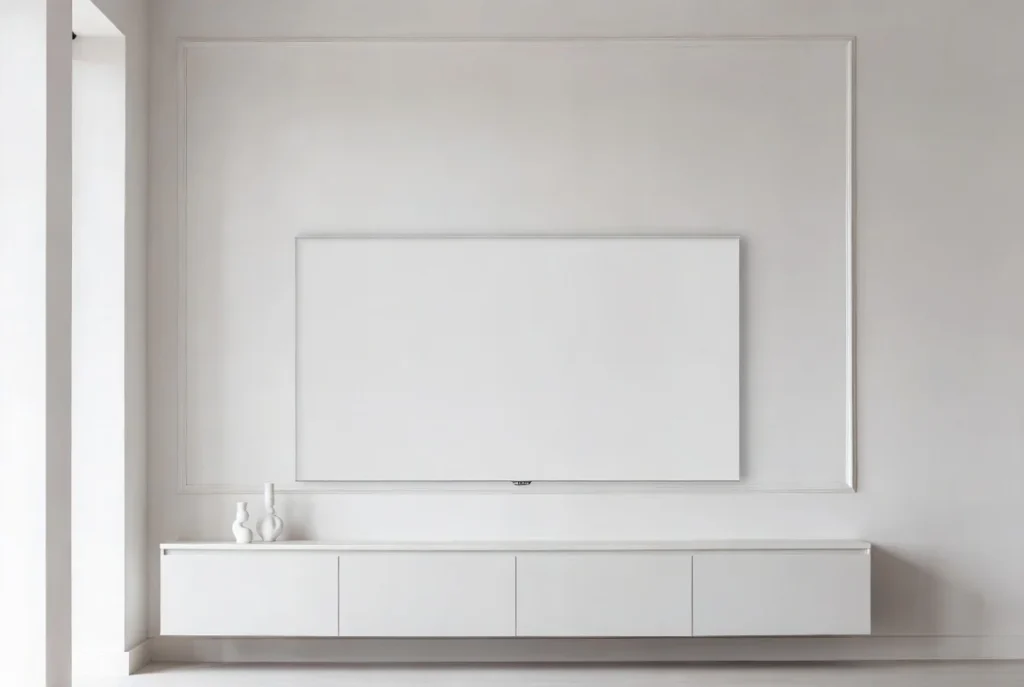
Minimalist design philosophy centers on the principle that less truly becomes more when executed with precision and intention. A floating console beneath a wall-mounted television creates instant visual sophistication by eliminating bulky furniture legs and opening floor space. Choose consoles in matte finishes like white lacquer, warm walnut, or concrete gray that complement your existing decor while maintaining the streamlined aesthetic minimalism demands.
The key to successful minimalist TV walls lies in what you choose to exclude rather than include. Resist the temptation to fill every surface with decorative objects. Instead, select two or three meaningful pieces that bring personality without creating visual noise. A single sculptural vase, a small potted succulent, and perhaps one art book styled vertically often prove more impactful than a crowded collection of trinkets.
The Power of Negative Space
Embracing negative space around your television transforms it from a technological necessity into an art object worthy of contemplation. Mount your TV against a plain painted wall in a neutral tone, ensuring adequate breathing room on all sides. This intentional emptiness draws the eye to the screen’s clean rectangular form while creating a sense of calm that busy, cluttered walls can never achieve.
Paint the wall behind your television in the same color as surrounding walls for seamless integration, or choose a shade just slightly deeper to create subtle definition without jarring contrast. Avoid the temptation to add decorative elements that compete for attention. The television itself, when properly proportioned and positioned, provides all the visual interest this approach requires.
Integrated Cable Concealment
Perhaps nothing destroys a minimalist aesthetic faster than visible cables snaking down walls or pooling behind furniture. Professional cable management represents the single most important technical detail in modern TV wall design. For wall-mounted installations, invest in an in-wall cable concealment kit that routes wires through the wall cavity, delivering the clean, seamless look that defines contemporary design.
For renters or those unable to modify walls, paintable cable raceways offer an acceptable alternative. These channels adhere to wall surfaces and can be painted to match, creating a far neater appearance than exposed wires. Combine raceways with smart power strips hidden inside console storage to eliminate the visual chaos of multiple plugs and adapters.
Monochromatic Material Palettes
Creating a monochromatic color scheme for your TV wall using varying shades of a single color family produces sophisticated depth without visual fragmentation. Consider an all-white approach using glossy white cabinetry, matte white walls, and a white marble accent panel behind the television. The subtle variations in finish and texture create interest while maintaining the serene simplicity minimalism celebrates.
Alternatively, explore monochromatic schemes in warm grays, soft beiges, or even dramatic blacks for spaces that can handle darker palettes. The key lies in varying the materials and finishes within your chosen color family. Combine painted drywall with natural stone, wood veneer, and metal accents all in coordinating tones for a layered look that feels intentional rather than flat.
Architectural Panel Framing
Installing architectural paneling around your television creates a refined, built-in appearance that elevates the entire wall. Simple rectilinear panels in painted wood or MDF frame the TV like fine artwork, adding dimensional interest without overwhelming the space. This approach works particularly well in traditional or transitional interiors where purely minimalist designs might feel too stark.
Position panels symmetrically around the television, extending them floor to ceiling for maximum architectural impact. Paint panels in the same color as walls for subtle definition, or use a contrasting shade to make the TV wall a true focal point. Add picture frame molding detail for classic elegance or keep edges clean and sharp for contemporary sophistication.
Single Material Feature Walls
Covering the entire TV wall in a single dramatic material creates bold impact through restraint. A floor-to-ceiling installation of wood slat panels, concrete-look porcelain tiles, or textured wallpaper transforms the wall into a unified canvas where the television becomes an integrated element rather than a separate object. This approach particularly suits open-concept homes where the TV wall remains visible from multiple vantage points.
Select materials with inherent visual interest through grain patterns, texture variations, or subtle color shifts that reward closer inspection. Natural wood panels offer warmth and organic beauty, while stone-look tiles deliver cool sophistication. Textured wallpapers in geometric patterns provide affordable drama without permanent commitment.
Ideas 7 Through 12: Wood Panel and Natural Material Walls
Vertical Slat Panel Installations
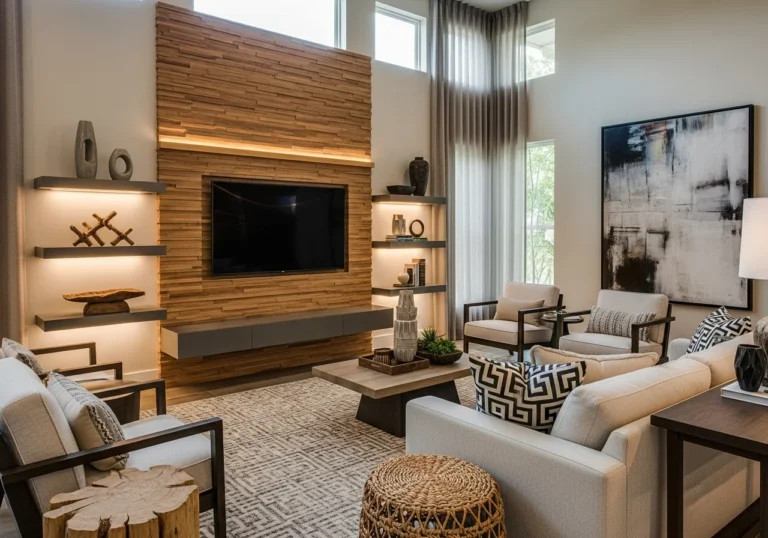
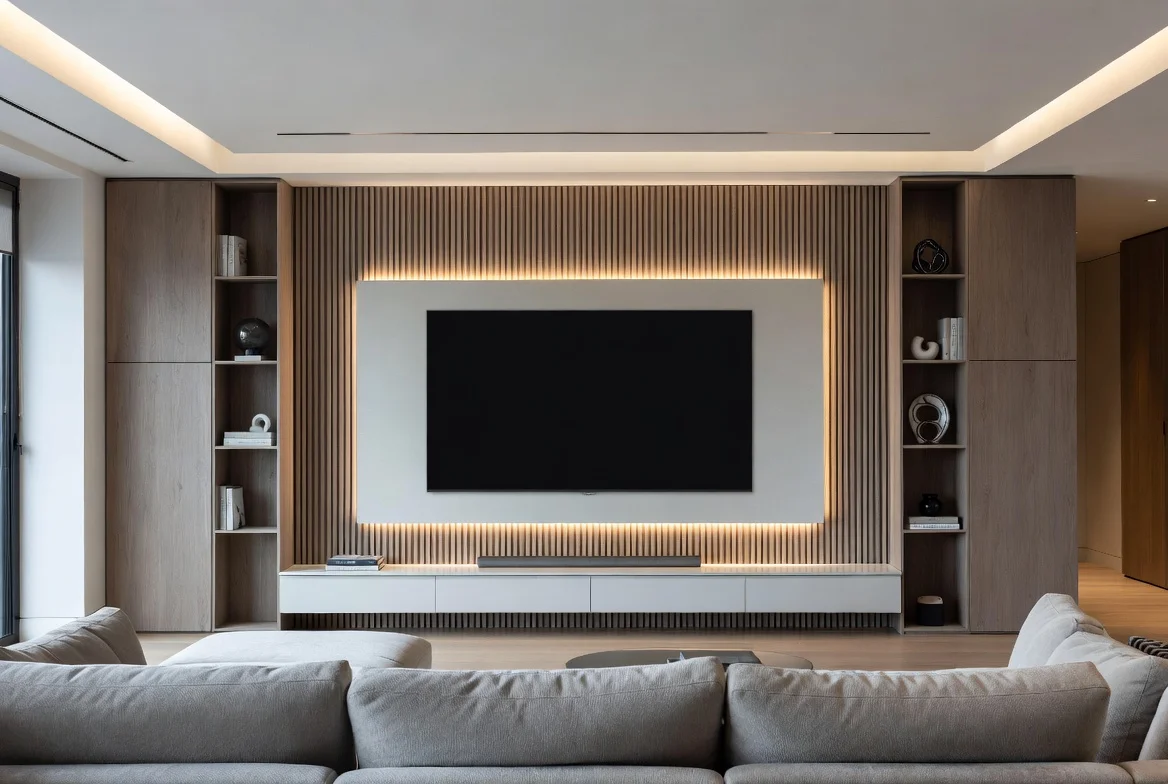
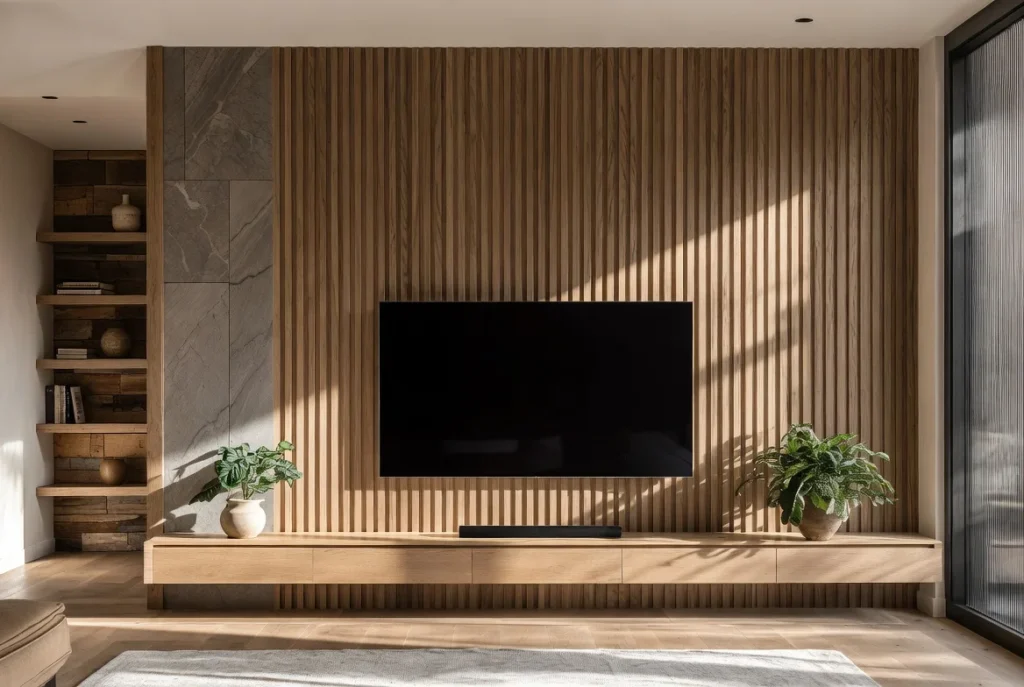
Wood slat panels arranged vertically represent one of the most popular contemporary design trends for TV walls, and with good reason. These panels introduce natural warmth, create pleasing rhythm through their repetitive pattern, and offer genuine acoustic benefits by absorbing sound reflections. The vertical orientation draws the eye upward, making ceilings appear higher while providing an elegant backdrop for your television.
Choose slat panels in warm wood tones like oak, walnut, or teak for inviting organic beauty. Space slats evenly with gaps of one to two inches between each piece to create depth and shadow play as light moves throughout the day. Many premium slat systems include acoustic backing that dampens sound, improving both music listening and movie watching experiences.
Horizontal Wood Plank Arrangements
While vertical slats dominate current trends, horizontal wood planking creates an equally stunning effect with a distinctly different character. Horizontal boards make walls appear wider, an advantageous optical trick in narrow rooms. This orientation also evokes the relaxed, coastal aesthetic of shiplap while maintaining thoroughly modern sophistication when executed in sleek, contemporary wood species and finishes.
Install horizontal planks in varying widths for added visual interest, or maintain uniform sizing for clean, linear impact. Extend planking across the entire wall behind your television or create a defined panel that frames just the TV zone. Light-colored woods like white oak or maple brighten spaces, while rich walnut or mahogany adds dramatic warmth.
Mixed Material Feature Walls
Combining wood with complementary materials like stone, concrete, or metal creates luxury materials combinations that feel custom and intentional. Consider anchoring your wall-mounted television on a vertical stone panel flanked by wood slat sections on either side. This mixed-media approach provides visual weight behind the screen while the flanking wood softens the overall effect.
Ensure materials share either warm or cool undertones for cohesion. Pair warm honey-toned wood with cream travertine rather than cold gray granite. Combine ebonized wood with dramatic black marble for moody sophistication. The materials should complement rather than compete, creating a harmonious whole that feels carefully curated.
Reclaimed Wood Accent Walls
Reclaimed wood brings instant character, sustainability credentials, and one-of-a-kind beauty to modern TV walls. The varied patinas, nail holes, saw marks, and weathering of salvaged barn wood or reclaimed warehouse timbers create visual texture impossible to replicate with new materials. This rustic element surprisingly complements sleek modern televisions, the contrast between old and new generating dynamic tension.
Source reclaimed wood from specialty suppliers who clean, treat, and mill salvaged materials for interior use. Install planks in random widths and lengths for organic authenticity, or cut to uniform sizes for a more controlled rustic aesthetic. Seal wood properly to prevent continued aging and protect against dust accumulation in the textured surface.
Natural Stone Backdrop Panels
Floor-to-ceiling installations of natural stone like marble, quartzite, or granite transform TV walls into luxury statements worthy of high-end hotels and designer showrooms. The dramatic veining patterns in quality stone slabs create organic artwork that changes character as light shifts throughout the day. Position your television centrally on this natural canvas, allowing the stone’s inherent beauty to frame and elevate the screen.
Book-matched stone installation, where two adjacent slabs are mirror images creating a symmetrical butterfly pattern, delivers particularly stunning results. This technique requires skilled fabrication and installation but produces breathtaking focal points. Choose stones with medium to bold veining that reads clearly from across the room without overwhelming the space.
Japandi Style Integration
The Japandi aesthetic, blending Japanese minimalism with Scandinavian warmth, has emerged as a defining trend in modern interior design. For TV walls, this translates to clean-lined wood installations in light, natural finishes paired with subtle Asian-inspired details. Think horizontal oak slats with gentle grain variation, minimal decorative objects on open shelving, and an overall sense of tranquil restraint.
Incorporate elements like low-profile floating shelves in matching wood tones for displaying carefully curated ceramics or small plants. Avoid clutter and excessive ornamentation. The Japandi approach celebrates the beauty of natural materials through simplicity, allowing wood grain and thoughtful proportions to provide all necessary visual interest.
Ideas 13 Through 18: Lighting and Illumination Techniques
LED Backlighting Systems
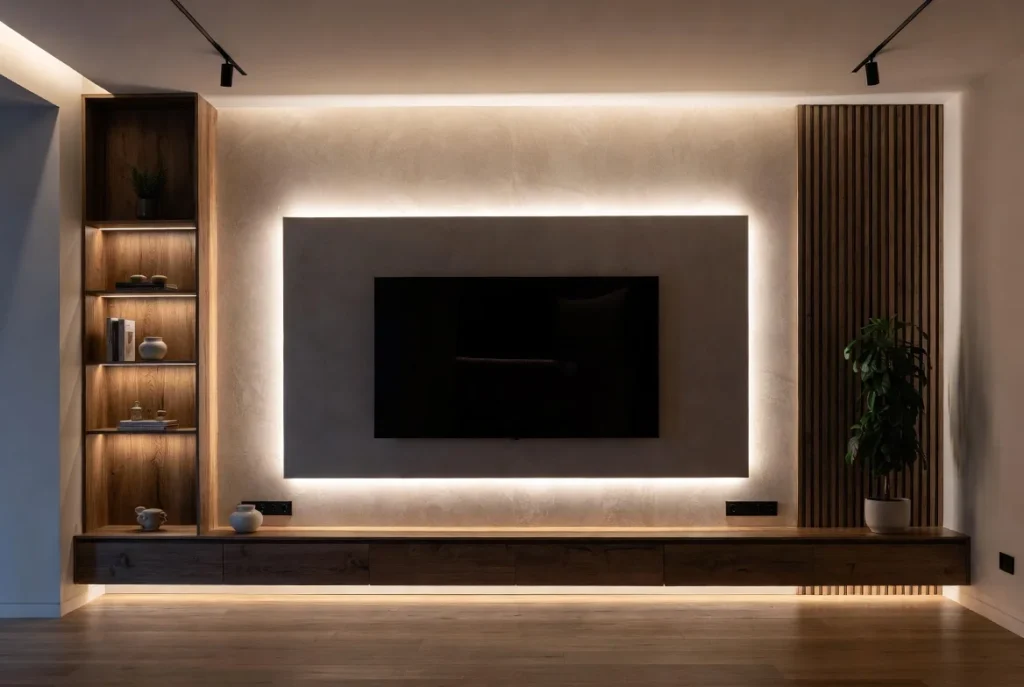
LED strip lighting installed behind your television creates a soft halo effect that reduces eye strain during viewing while adding sophisticated ambient lighting to the space. This backlighting makes screens appear to float away from the wall, creating depth and dimension that enhances the viewing experience. Modern LED systems offer color-changing capabilities, allowing you to adjust lighting to match content or mood.
Install LED strips along the back edges of wall-mounted televisions, ensuring even coverage on all four sides for balanced illumination. Choose strips with adequate brightness to create visible glow without overwhelming the room. Warm white tones typically prove most flattering, though RGB options allow experimentation with colored accent lighting for gaming or parties.
Recessed Lighting Integration
Recessed ceiling lights positioned to wash the TV wall with gentle illumination create professional gallery-like ambiance. Install recessed fixtures on dimmer switches to adjust lighting levels based on time of day and activity. Bright illumination suits daytime viewing and showcases the wall’s design details, while dimmed lights create intimate atmosphere perfect for movie nights.
Position recessed lights to avoid glare on the television screen. Aim fixtures slightly away from the TV surface or use adjustable trim that directs light toward the surrounding wall rather than directly at the screen. Space fixtures evenly across the ceiling above your TV wall for uniform coverage that highlights the entire composition.
Shelf and Cabinet Lighting
Installing LED lighting within open shelving units and behind glass cabinet doors transforms functional storage into illuminated display. This layered lighting approach adds warmth and visual interest while showcasing favorite books, decorative objects, and collections. The gentle glow from within creates depth that makes TV walls feel three-dimensional rather than flat.
Use warm LED puck lights or strip lights adhered to the underside of each shelf, ensuring even illumination of displayed items. Wire lights to a single switch or smart home system for convenient control. Consider motion-activated cabinet lighting that automatically illuminates when doors open, combining practical function with elegant presentation.
Cove Lighting Details
Cove lighting installed in recessed channels along the perimeter of your TV wall creates indirect illumination that bathes the space in soft, shadowless light. This architectural lighting technique adds drama and sophistication while providing ambient room lighting independent of table and floor lamps. Cove installations work particularly well with paneled or architectural TV walls where the lighting detail becomes part of the overall design.
Build shallow recesses along the top, bottom, or sides of your TV wall feature to house LED strip lighting. Paint the recessed area white to maximize light reflection. The resulting glow appears to emanate from within the wall itself, creating a floating, ethereal quality that elevates the entire space.
Smart Lighting Control
Smart home integration allows sophisticated lighting control that adapts to your activities and preferences. Program lighting scenes that automatically adjust when you begin watching movies, playing games, or simply relaxing. Voice control through systems like Alexa or Google Home eliminates the need to fumble for light switches or remotes.
Install smart dimmers and switches that integrate with your preferred home automation platform. Create scenes that coordinate TV backlighting, recessed ceiling lights, and shelf illumination for perfect ambiance at voice command. Advanced systems can even sync lighting with on-screen content for immersive home theater experiences.
Accent Lighting for Art and Objects
Adjustable picture lights or small accent fixtures highlight artwork, sculptures, or decorative objects displayed near your television. This focused illumination creates visual interest and draws attention to curated elements that personalize the space. Accent lighting ensures these items remain visible even when overhead lights are dimmed for viewing.
Choose compact fixtures that provide adequate illumination without overwhelming displayed items. Position lights to avoid creating hot spots or glare on reflective surfaces. Battery-powered LED picture lights offer installation flexibility without requiring hardwired electrical work, perfect for renters or those avoiding wall modifications.
Ideas 14 Through 20: Built-In Storage and Cabinetry Solutions
Full-Wall Entertainment Centers
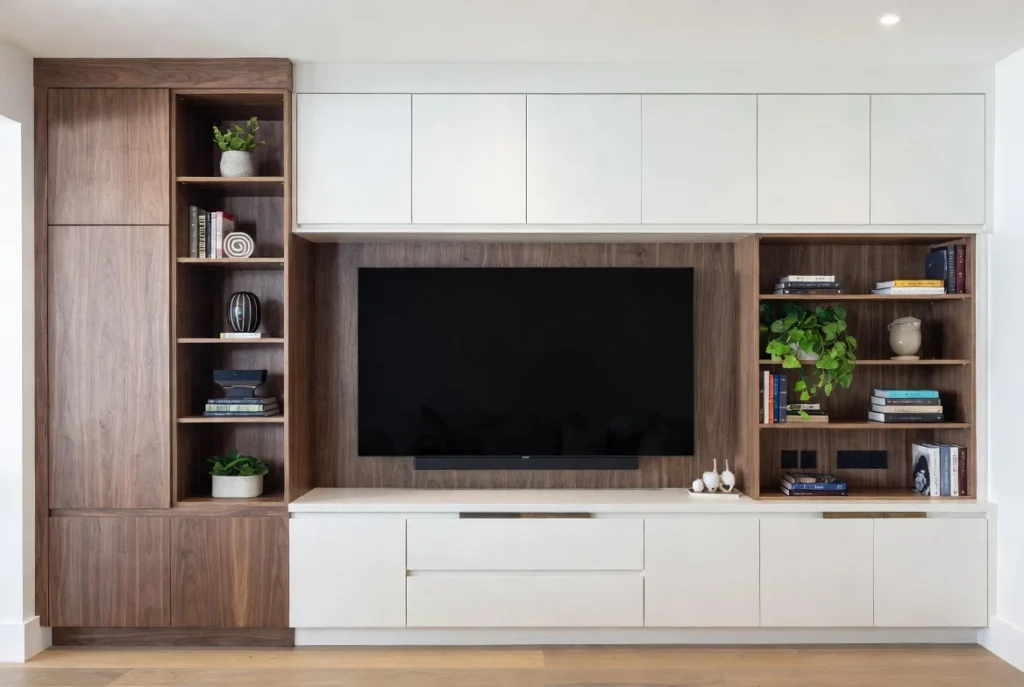
Built-in cabinetry spanning the entire TV wall creates impressive storage capacity while delivering custom, architectural presence. These floor-to-ceiling installations maximize vertical space, providing abundant room for media equipment, books, decorative objects, and everyday clutter that needs concealing. When designed with proportions that complement your television size, built-ins create balanced, harmonious compositions that feel intentionally designed rather than assembled.
Work with a skilled carpenter or cabinet maker to create units with varied door styles, open shelving, and closed storage that meet your specific needs. Include wire management provisions during construction, routing cables through cabinet backs and using grommet holes for clean connections. Paint built-ins to match walls for seamless integration or choose contrasting colors that make the cabinetry a bold design statement.
Asymmetrical Cabinet Arrangements
Breaking away from strict symmetry creates dynamic, contemporary TV walls with personality. Asymmetrical cabinetry positions storage elements on just one side of the television, balancing visual weight through varying cabinet heights and depths. This approach works particularly well in modern and eclectic interiors where perfect symmetry might feel too formal or traditional.
Design asymmetrical arrangements carefully to maintain visual balance despite unequal distribution. A tall cabinet tower on one side of the TV might balance against several smaller cabinets and open shelves on the other. Use the Rule of Thirds for placement guidance, positioning the television slightly off-center with surrounding elements arranged to create pleasing composition.
Floating Shelf Displays
Floating shelves installed to flank your television provide display space for books, plants, and decorative objects without the visual weight of full cabinetry. This lighter approach maintains open, airy feeling while still offering functional storage and personality-expressing display opportunities. Choose shelf depths between eight and twelve inches for adequate capacity without excessive protrusion.
Arrange shelves symmetrically on both sides of the TV for balanced, traditional styling, or create asymmetrical configurations for contemporary edge. Vary shelf lengths and heights to accommodate different object sizes and create visual interest. Ensure proper anchoring into wall studs for shelves that remain level and secure even when fully loaded.
Hidden Door Television Cabinets
For those who prefer concealing televisions when not in use, hidden door cabinets offer elegant solutions. Custom cabinetry with doors that close over the television screen allows the TV wall to transform into a traditional built-in bookcase, art display, or even a blank wall when the TV is off. This approach suits formal living rooms and multi-purpose spaces where prominent television presence feels inappropriate.
Design cabinet doors that complement surrounding cabinetry for seamless integration when closed. Consider barn door-style sliding panels for space-efficient operation, or traditional hinged doors for classic styling. Ensure adequate ventilation within the cabinet to prevent heat buildup when the television is in use with doors closed.
Media Console with Open Shelving
Combining a media console with open shelving above creates balanced TV walls with both concealed and display storage. The lower console hides media equipment, gaming consoles, and cable chaos behind closed doors while upper open shelves showcase curated books, art objects, and plants. This high-low combination feels less imposing than full built-ins while providing ample functional storage.
Choose console and shelf materials that coordinate for cohesive design. Matching wood tones create seamless integration, while contrasting materials like a dark wood console with white shelves provide dynamic visual interest. Maintain consistent styling across open shelves, grouping similar items and leaving adequate breathing room to prevent cluttered appearance.
Corner and Alcove Installations
Awkward corners and architectural alcoves present unique TV wall opportunities when approached creatively. Custom corner units that wrap around angles maximize otherwise wasted space while creating distinctive focal points. Alcoves naturally frame televisions, the surrounding walls providing built-in definition that eliminates need for additional construction.
Install custom cabinetry that follows corner angles, creating continuous surfaces that feel intentional rather than improvised. In alcoves, add simple shelving on either side of the television or install full built-ins that transform the recess into a cohesive entertainment center. Paint alcove interiors in contrasting colors to emphasize architectural depth.
Modular Storage Systems
Modular furniture systems offer flexibility that custom built-ins cannot match. These configurable units allow you to start with basic components and expand over time as needs change or budgets allow. Quality modular systems provide dozens of cabinet, shelf, and drawer combinations that adapt to various spaces and storage requirements while maintaining design cohesion.
Select modular systems with finishes and proportions that complement your aesthetic. Arrange components asymmetrically for contemporary flair or symmetrically for traditional balance. The beauty of modular design lies in its adaptability; rearrange components as your needs evolve without starting from scratch.
Ideas 21 Through 26: Statement Materials and Luxury Finishes
Marble and Stone Feature Panels
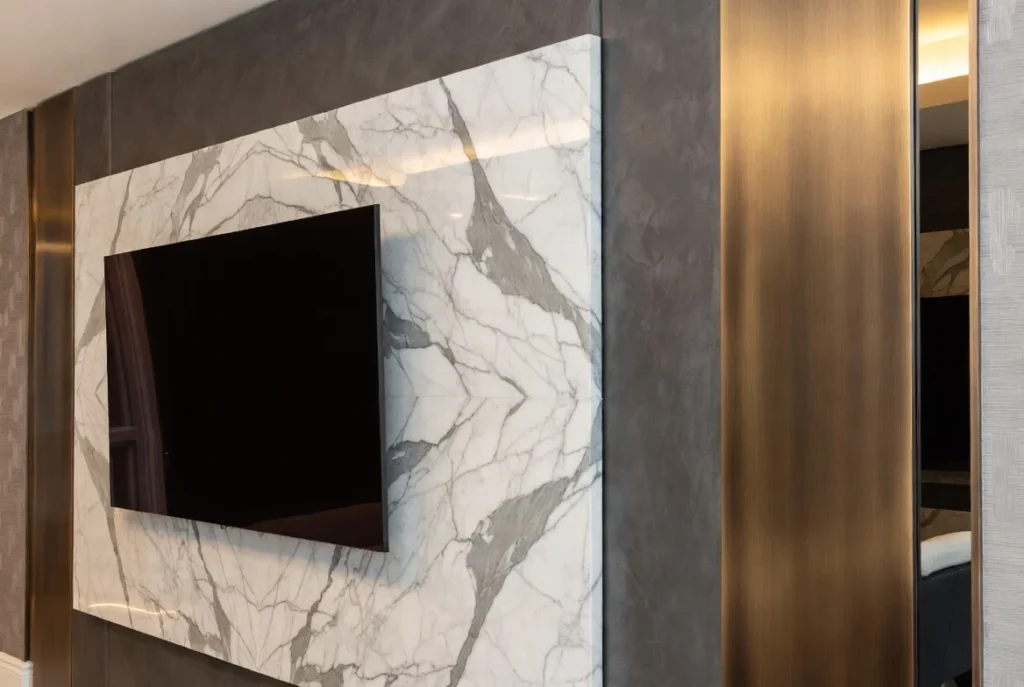
Marble slabs create instant luxury and timeless sophistication. Large-format marble panels installed behind wall-mounted televisions transform ordinary walls into gallery-worthy backdrops. The natural veining patterns in quality marble provide organic artwork that never grows tiresome, each slab completely unique. Lighter marbles like Calacatta or Statuario brighten spaces, while dramatic dark marbles like Nero Marquina create moody elegance.
Install marble panels as full wall coverage or create defined sections that frame just the television zone. Book-matched installations where adjacent slabs mirror each other create striking symmetrical patterns. Honed finishes provide subtle sophistication, while polished surfaces deliver high-gloss glamour that reflects light beautifully.
Textured Concrete Panels
Concrete-look panels bring industrial chic and contemporary edge to modern TV walls. Whether using actual concrete, concrete-look porcelain tiles, or textured paint finishes that mimic concrete, this material creates bold, architectural statements. The neutral gray tones of concrete complement virtually any color palette while the subtle texture variations add depth that plain painted walls lack.
Pair concrete feature walls with warm wood elements to soften the industrial aesthetic. The combination of cool gray concrete and warm natural wood creates balanced contrast that feels current and sophisticated. Add brass or copper accents through hardware and decorative objects for elevated industrial glamour.
Metallic Accent Panels
Metallic finishes including brushed brass, copper, bronze, or stainless steel create high-impact TV wall features that catch light and draw the eye. These reflective surfaces add glamour and contemporary luxury when used as accent panels behind televisions or as decorative insets within surrounding cabinetry. Metallics work particularly well in eclectic and modern glam interiors where bold material mixing creates curated sophistication.
Use metallic panels sparingly to avoid overwhelming spaces. A single vertical panel behind the TV in brushed brass creates striking focal point without excessive shine. Combine metals with wood, stone, or painted surfaces for balanced material palettes that feel intentional rather than chaotic.
Leather and Fabric Wall Panels
Upholstered fabric panels or leather tiles introduce unexpected softness and acoustic absorption to TV walls. These tactile materials create residential warmth that hard surfaces alone cannot achieve, while also improving room acoustics by reducing sound reflections. Leather particularly suits masculine, traditional, or transitional interiors where its rich patina adds depth and character.
Install upholstered panels in neutral tones that coordinate with existing furnishings. Subtle textures like linen, velvet, or suede provide visual interest without busy patterns that compete with the television. Leather panels develop beautiful patina over time, becoming more distinguished with age.
Mirror and Glass Accents
Mirrored panels flanking televisions or installed as cabinet door inserts reflect light and visually expand spaces. This technique works particularly well in smaller rooms where maximizing perceived size matters. Antiqued or tinted mirrors add vintage character while standard clear mirrors deliver clean contemporary impact. Glass shelves maintain open, airy feeling while providing display surfaces.
Use mirrors thoughtfully to avoid creating distracting reflections visible when watching television. Position mirrored elements to reflect pleasing views or attractive room features rather than creating sight lines to less desirable areas. Smoked or bronze-tinted mirrors reduce reflection intensity while adding sophisticated color.
Wallpaper and Wall Covering Features
Contemporary wallpapers in geometric patterns, organic textures, or subtle metallic prints create affordable drama behind televisions without permanent commitment. Modern removable wallpapers make this approach particularly appealing for renters or those who enjoy frequent design changes. Select patterns with appropriate scale; too-small patterns disappear from distance while oversized patterns can overwhelm.
Apply wallpaper to the full wall behind your television or create a defined panel that frames just the TV zone. Grasscloth and natural fiber wallcoverings add organic texture, while metallic wallpapers catch light for subtle shimmer. Coordinate wallpaper colors with surrounding room elements for cohesive design.
Ideas 27 Through 30: Smart Technology and Innovative Solutions
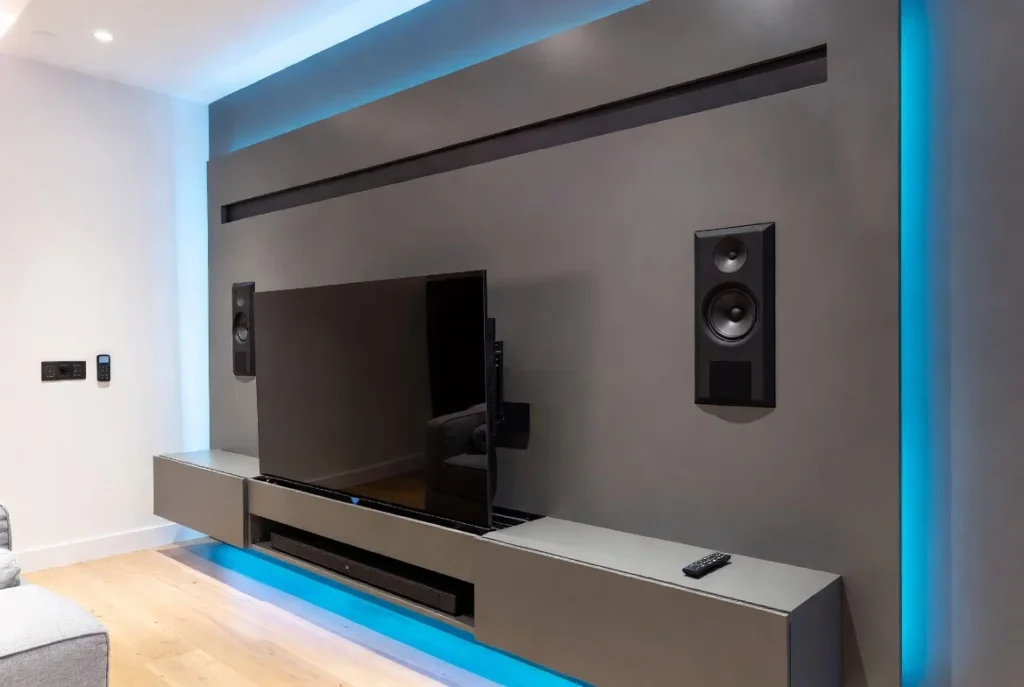
Motorized TV Lifts and Concealment
Motorized lifts represent the ultimate in television concealment, allowing screens to disappear into furniture, walls, or ceilings at the touch of a button. These systems suit formal living rooms, bedrooms, or multi-purpose spaces where prominent television presence feels inappropriate. The television rises for viewing then retracts from sight when entertainment concludes, transforming the space completely.
Install lift mechanisms within custom cabinetry, behind decorative panels, or even inside specially designed ceiling coffers. While representing significant investment, motorized systems deliver unmatched flexibility for those committed to hiding technology when not in use. Work with experienced installers to ensure smooth, reliable operation.
Rotating and Swiveling Mounts
Articulating TV mounts that swivel and tilt allow optimal viewing from multiple seating areas. This flexibility proves particularly valuable in open-concept homes where television viewing occurs from various locations. Mounts that extend from walls enable adjustment for reduced glare from windows or light fixtures, then push flush when ideal positioning is achieved.
Select mounts rated for your television’s size and weight with adequate extension and swivel range for your space. Higher-quality mounts operate smoothly and hold position reliably without sagging. Hide mount mechanisms behind decorative panels or within alcoves for cleaner appearance when the TV is centered.
Integrated Sound Systems
Built-in speakers hidden within walls or cabinetry deliver superior audio without visible equipment cluttering the TV wall. In-wall speakers installed to flank the television provide left-right stereo separation while maintaining clean aesthetics. Soundbars concealed within floating consoles or behind decorative grilles offer simpler installation with impressive audio improvement over television speakers.
Work with audio professionals to properly position speakers for optimal sound distribution. In-wall installations require running wires during construction or renovation, while wireless soundbar systems offer easier retrofit solutions. Regardless of approach, quality audio dramatically improves the entertainment experience.
Smart Home Integration
Voice control and automation transform how you interact with entertainment systems. Smart home platforms allow single-command control of television, lighting, window shades, and audio systems. Scenes programmed for movie watching might dim lights, close shades, and power on the TV and sound system simultaneously. This integration delivers luxury convenience that feels thoroughly modern.
Choose smart devices compatible with your preferred ecosystem whether Alexa, Google Home, or Apple HomeKit. Start with basics like smart lights and plugs before investing in motorized shades and advanced audio systems. The beauty of smart home technology lies in its expandability as budgets and interests grow.
Conclusion
Creating a modern TV wall that truly transforms your living space requires nothing more than thoughtful application of the design principles outlined throughout this guide. The 30 ideas presented here prove that television walls can serve as stunning architectural features rather than necessary compromises. From minimalist designs that celebrate restraint to luxury materials that deliver boutique sophistication, each concept offers tested strategies for elevating your entertainment area.
The most important insight to carry forward is that successful TV wall design depends not on expensive materials or complete renovations but on intentional decision-making about how each element relates to the whole. A well-chosen wood slat panel, strategically placed LED backlighting, or carefully selected floating console can completely transform how your space looks and functions. Start with foundational elements like proper television mounting and cable management before layering on decorative details that express your personal style.
Your living room focal point holds remarkable potential waiting to be unlocked. Whether you implement a single idea from this collection or combine multiple strategies, the cumulative effect will be a space that feels both beautifully designed and genuinely functional for everyday life. Modern TV walls prove that technology and aesthetics can coexist harmoniously, creating homes that are as beautiful as they are livable.
Frequently Asked Questions
What is the best height to mount a TV on the wall?
The ideal TV mounting height positions the screen center at eye level when seated, typically 42 to 48 inches from the floor to the TV’s center point for standard seating. This ensures comfortable viewing without neck strain. If you have taller furniture or higher seating, adjust accordingly by sitting in your primary viewing position and marking where your natural eye line falls. Mounting too high is the most common mistake, creating uncomfortable viewing angles that diminish the entertainment experience.
How do I hide cables for a wall-mounted TV?
The cleanest cable concealment method involves running wires through the wall using an in-wall cable management kit that meets electrical codes. This requires cutting two access holes and fishing cables through the wall cavity. For simpler solutions, paintable cable raceways that mount to wall surfaces hide wires while allowing easy access. Cord-concealing fabric sleeves gather multiple cables into a single covered bundle. Whatever method you choose, proper cable management is essential for achieving the clean, professional appearance modern TV walls demand.
What materials work best for modern TV wall designs?
Popular materials include wood slat panels for natural warmth and acoustic benefits, marble or stone slabs for luxury sophistication, painted drywall for minimalist simplicity, and textured concrete panels for industrial edge. The best material depends on your overall interior style, budget, and desired aesthetic. Natural materials like wood and stone add timeless appeal, while painted surfaces offer affordability and flexibility. Consider durability, maintenance requirements, and how materials will age over time when making selections.
Should I build custom cabinetry or use modular furniture for my TV wall?
Custom built-in cabinetry delivers perfectly fitted solutions tailored to your exact space and needs but requires higher investment and permanent installation. Modular furniture systems offer flexibility, allowing you to start small and expand over time while maintaining the ability to reconfigure or relocate components. Built-ins make sense for long-term homeowners with specific storage needs and budgets supporting custom work. Modular systems suit renters, those with evolving needs, or anyone wanting design flexibility without permanent commitment.
How can I make a small living room TV wall feel larger?
Light colors make spaces feel more expansive, so choose white or pale neutral finishes for cabinetry and walls. Floating consoles create open floor space that increases perceived room size. Vertical design elements like floor-to-ceiling panels or tall narrow cabinetry draw the eye upward, making ceilings appear higher. Mirrors strategically placed to reflect light and views expand spaces visually. Minimalist designs with clean lines and minimal ornamentation prevent the cluttered feeling that makes small rooms feel cramped. Proper lighting including backlighting behind the TV creates depth that makes walls recede.
You may also like this post: 30 Small Open Concept Kitchen Living Room Ideas That Make Every Square Foot Count