
15 Mid-Century Modern Home Ideas for Timeless and Stylish Living
Your home deserves more than following fleeting trends, yet most homeowners struggle to create spaces that genuinely feel both contemporary and timelessly elegant. Research from architectural historians confirms that mid-century modern design remains one of the most enduring residential styles precisely because it prioritizes functional beauty and human-scaled comfort over decorative excess. The disconnect between wanting that iconic mid-century aesthetic and achieving it stems from not understanding the fundamental design principles that make these homes feel effortlessly sophisticated decades after their creation.
The truth is that exceptional mid-century modern homes emerge from balancing clean architectural lines with warm natural materials, open spatial flow with defined living zones, and minimalist restraint with carefully curated statement pieces. The most successful contemporary interpretations honor the style’s post-war origins while adapting floor plans and sustainable materials for modern living. Interior designers and architects emphasize that this design movement transcends mere nostalgia, instead offering genuinely livable spaces celebrating simplicity, craftsmanship, and connection to nature.
This comprehensive guide presents 15 proven mid-century modern home ideas creating timeless and stylish living that feels both historically grounded and refreshingly current. From foundational architectural elements to interior styling choices, these strategies will help you achieve the mid-century sanctuary you deserve.
Embrace Open Floor Plans
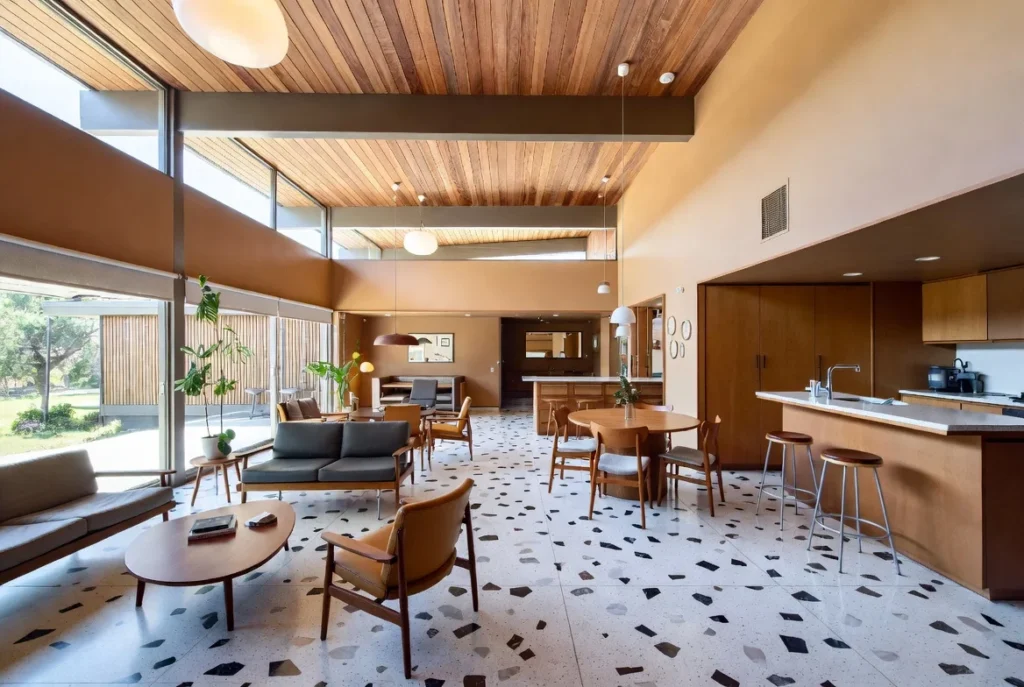
Open-concept layouts form the foundation of mid-century modern design, breaking down rigid room divisions that characterized earlier residential architecture. Remove unnecessary walls between living rooms, dining areas, and kitchens creating fluid spaces where families genuinely interact. This spatial openness emerged from post-WWII optimism and changing lifestyles valuing casual entertaining over formal compartmentalized living. Maintain visual flow through consistent flooring materials and cohesive color palettes while defining distinct zones through furniture placement rather than walls. Sunken conversation pits or level changes add subtle separation without compromising openness. This democratic spatial approach makes homes feel larger while encouraging connection between occupants.
Install Floor-to-Ceiling Windows
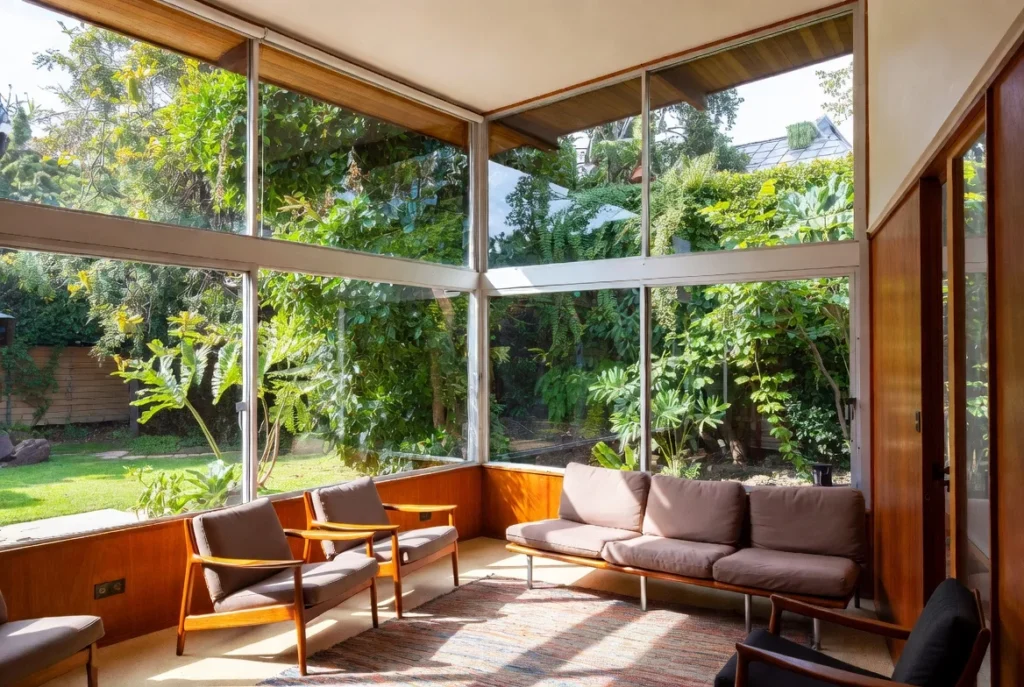
Expansive glazing bringing natural light and outdoor views inside defines mid-century modern homes more than any other element. Replace traditional punched windows with wall-spanning glass blurring boundaries between interior and exterior. Clerestory windows positioned high on walls flood spaces with light without sacrificing wall space for furniture. Corner windows create dramatic focal points while their mullion-free junctions celebrate structural innovation. Choose thermally efficient modern glass maintaining period aesthetics while improving energy performance. Window walls transform modest rooms into dramatic spaces while their transparency celebrates honest architecture central to mid-century philosophy. Position windows to frame specific landscape views or create garden vignettes that become living artwork.
Create Seamless Indoor-Outdoor Connection
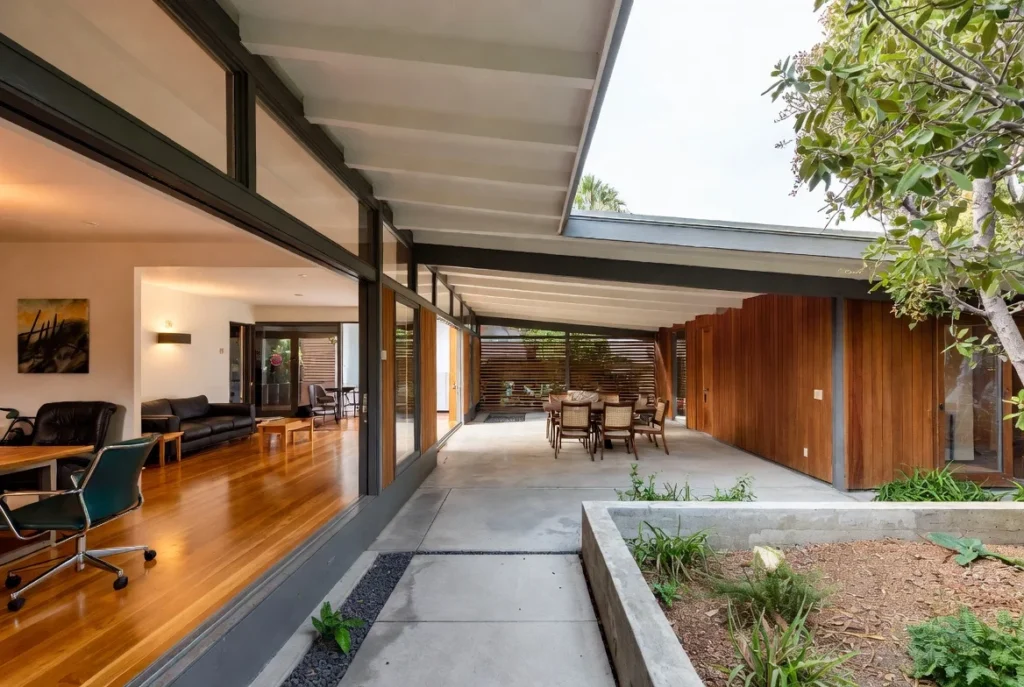
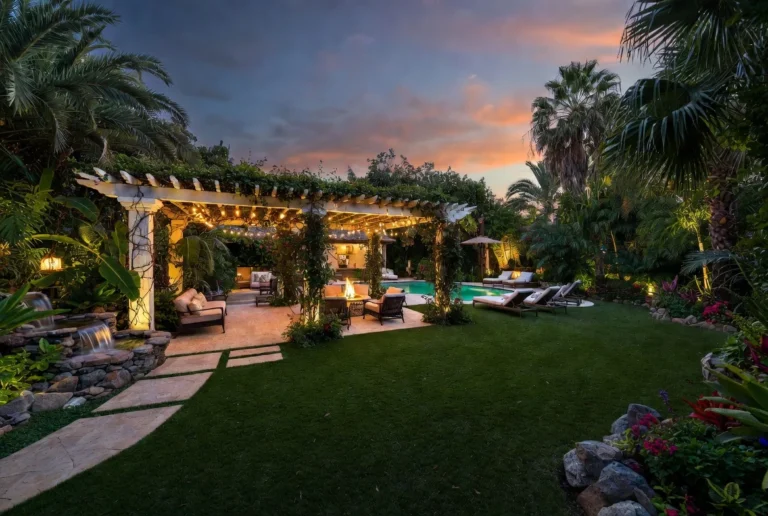
Integrated outdoor living extends usable square footage while honoring mid-century emphasis on nature connection. Install sliding glass doors or folding glass walls opening entire rooms to patios, decks, or courtyards. Extend interior flooring materials outside blurring thresholds between spaces. Design covered outdoor areas with same ceiling heights and lighting as adjacent rooms making them genuine extensions rather than afterthoughts. Entry courtyards welcome visitors through landscaped outdoor rooms before reaching doors. This spatial continuity emerged from California modernist architects adapting Japanese design principles to temperate climates. Add built-in planters bringing greenery directly against window walls. Outdoor fireplaces or fire pits make spaces usable year-round while their material simplicity complements architectural restraint.
Choose Natural Wood Materials
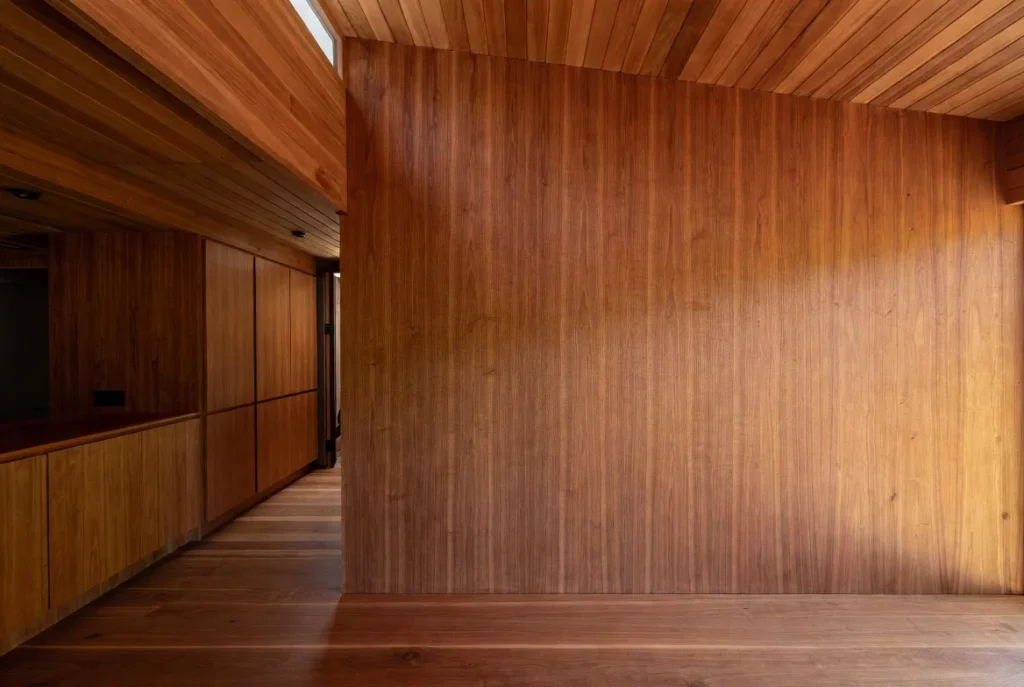
Warm wood tones in teak, walnut, rosewood, or oak prevent minimalist spaces from feeling cold or sterile. Feature wood paneling on accent walls adding textural warmth and horizontal emphasis characteristic of the style. Select wood-grained cabinetry with flat-panel doors celebrating natural beauty through simple forms. Exposed wood beams or wood ceilings add organic warmth overhead while their structural honesty reveals how buildings actually stand. Choose quality hardwood flooring in medium to dark tones grounding rooms with natural richness. This material emphasis emerged from Scandinavian design influence and Japanese craftsmanship appreciation permeating mid-century aesthetics. Mix wood species thoughtfully rather than matching everything perfectly, creating collected-over-time authenticity.
Design Flat or Low-Pitched Rooflines
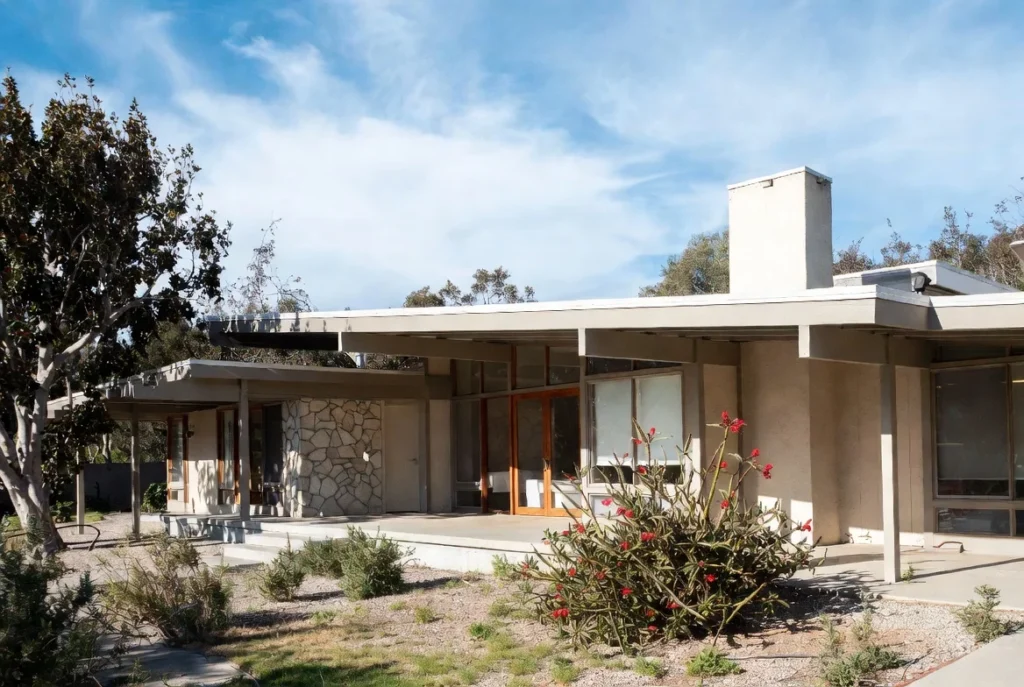
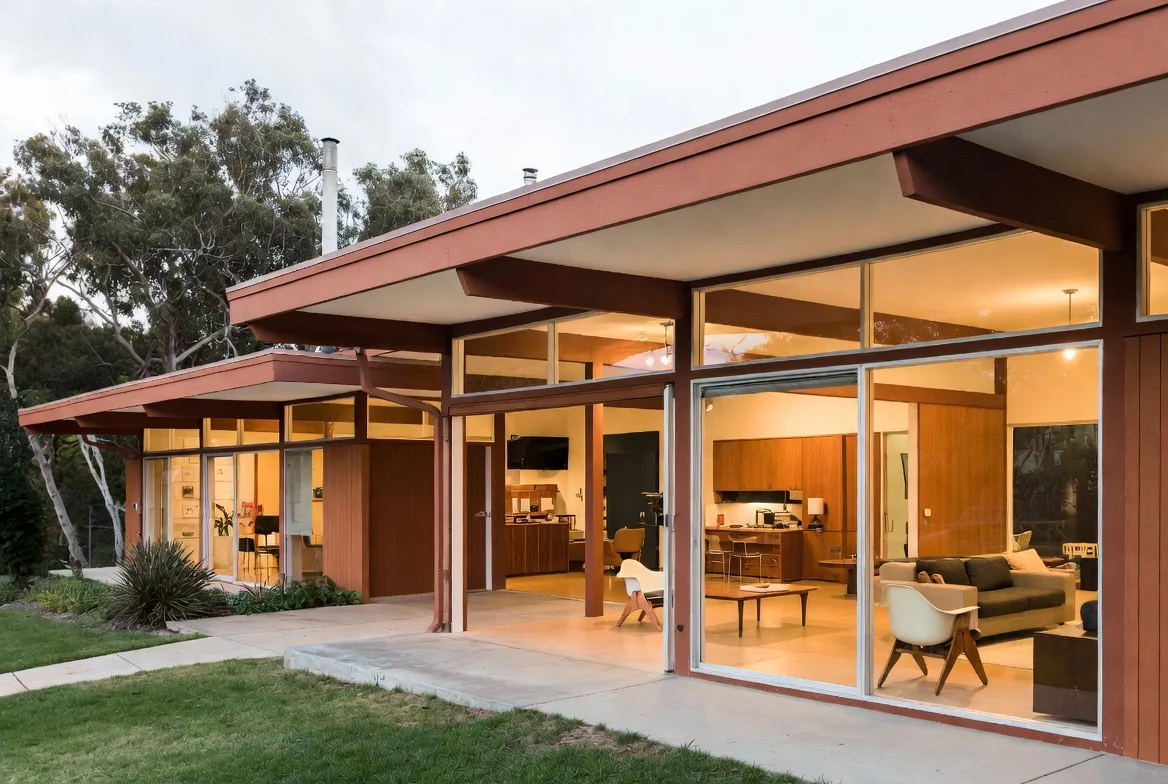
Horizontal rooflines with minimal pitch distinguish mid-century modern homes from traditional peaked-roof houses. Flat roofs with slight drainage pitch create clean geometric forms while extended overhangs provide sun shading and weather protection. Butterfly roofs with their distinctive V-shape add sculptural drama while channeling rainwater to central collection points. These roofline choices emerged from modernist rejection of historical architectural ornament in favor of structural expression. Deep eaves create sheltered outdoor zones while casting shadows that add dimensional interest to otherwise simple volumes. Expose roof structure from below when possible, celebrating post-and-beam construction central to mid-century building techniques.
Incorporate Iconic Furniture Pieces
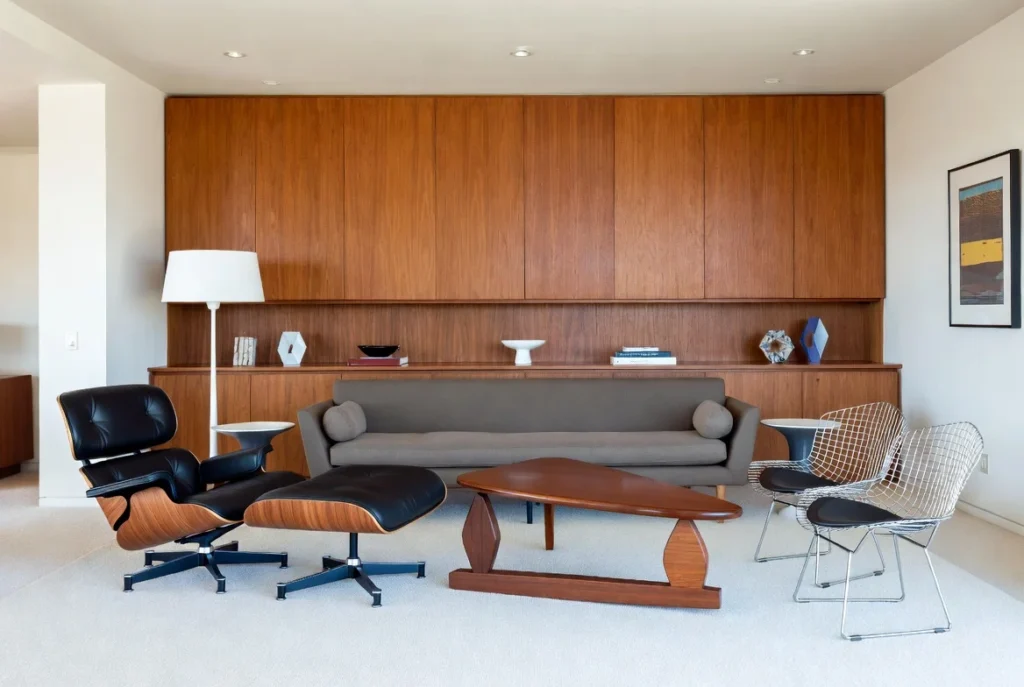
Statement furniture by mid-century masters anchors spaces with design pedigree and timeless appeal. Invest in Eames lounge chairs, Saarinen tulip tables, Noguchi coffee tables, or Bertoia wire chairs adding sculptural quality to rooms. These iconic pieces prove that furniture can be both functional and artistic, embodying mid-century belief that good design improves daily life. Choose clean-lined sofas with tapered legs and simple upholstery allowing architectural bones to shine. Built-in storage and seating reduces furniture clutter while their custom integration demonstrates thoughtful spatial planning. Mix vintage originals with quality reproductions creating authentic atmospheres without requiring collector-level investments.
Add Geometric Patterns
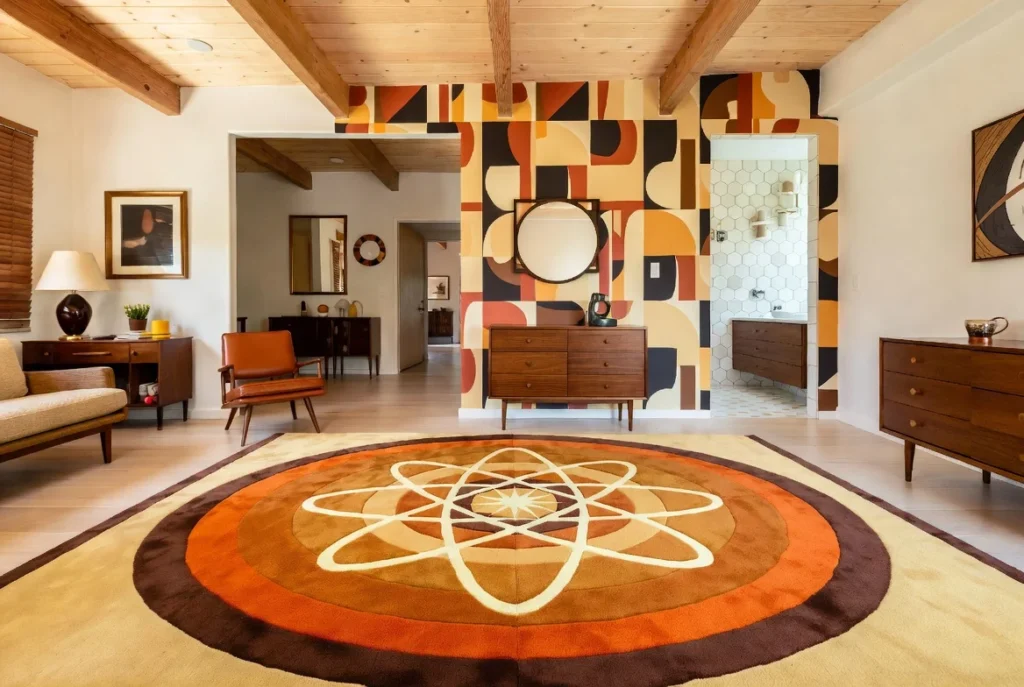
Bold geometric designs in textiles, artwork, and decorative elements inject visual interest without ornamental excess. Choose area rugs with abstract patterns, atomic starburst motifs, or asymmetric shapes characteristic of 1950s and 1960s design. Feature wallpaper with large-scale geometric prints on accent walls adding graphic punch. Tile work in bathrooms and kitchens using hexagonal, diamond, or chevron patterns brings period authenticity. These pattern choices reflect mid-century fascination with space-age technology and scientific optimism. Balance patterned elements with solid-colored surfaces preventing visual overwhelm while the geometric quality maintains modern sensibility.
Use Warm Earth Tone Color Palettes
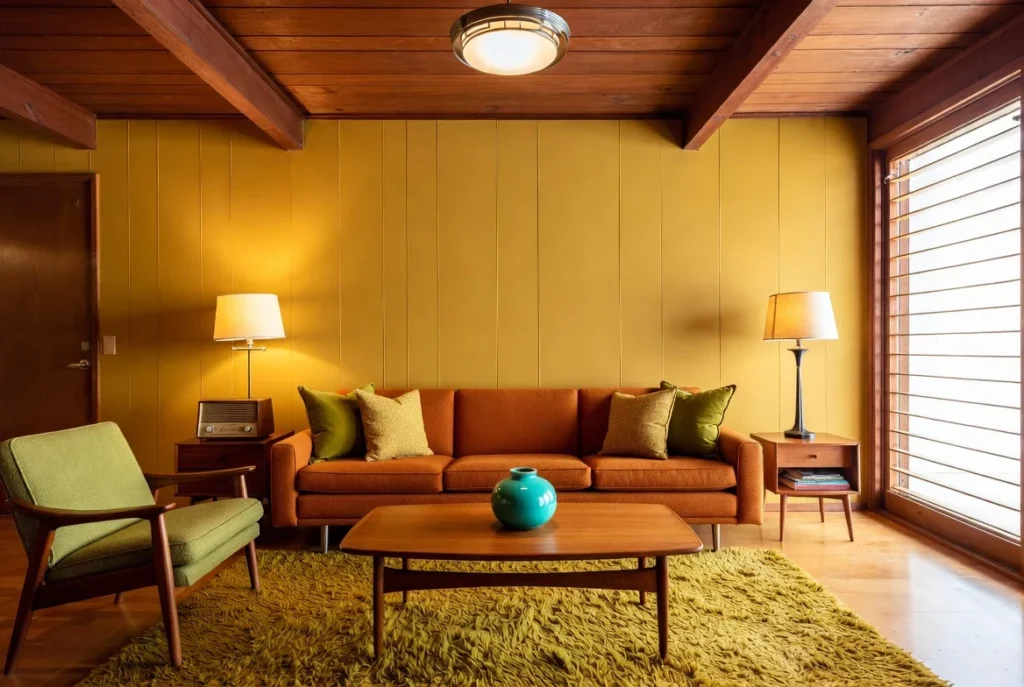
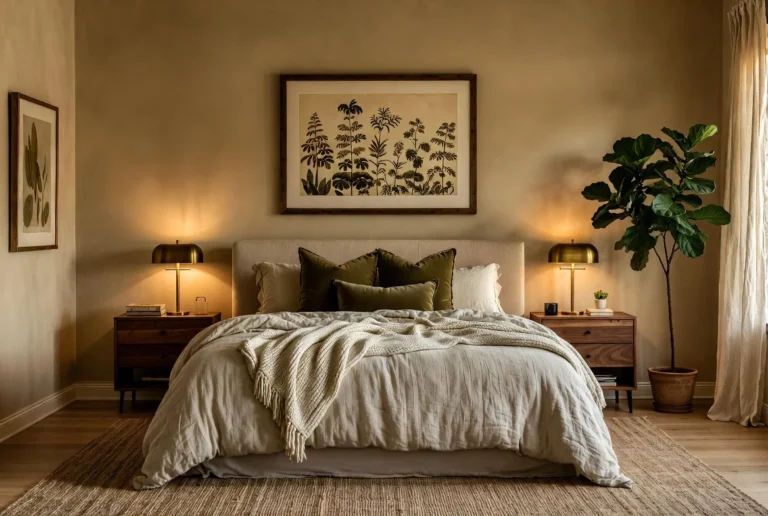
Organic color schemes in ochre, burnt orange, avocado green, harvest gold, and teak brown create cozy atmospheres while honoring period authenticity. Paint walls in warm neutrals like beige, tan, or cream providing versatile backdrops for colorful accents. Add jewel tone pops through turquoise, coral, or mustard accessories bringing mid-century vibrancy. These warm palettes emerged from desire to make modernist spaces feel welcoming and lived-in rather than museum-like. Avoid stark white walls and cool grays that feel more contemporary minimalist than authentic mid-century. Natural wood tones act as warm neutrals unifying color schemes.
Feature Mixed Materials
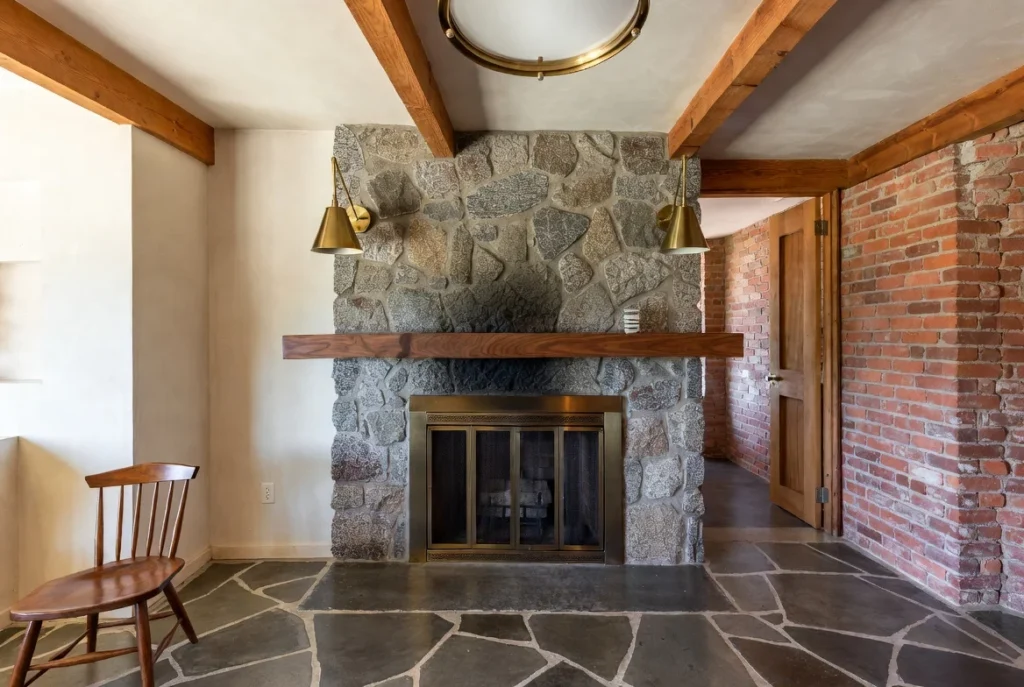
Contrasting textures and materials create visual richness within minimalist frameworks. Combine smooth wood with rough stone, polished metal with matte concrete, or soft textiles with hard glass. Exposed brick interior walls add industrial texture while stone fireplaces bring natural elements indoors. Metal accents in brass, copper, or steel provide functional hardware and decorative touches. This material mixing celebrates honest construction where structural materials remain visible rather than concealed. Terrazzo flooring combines colored aggregate in concrete creating durable and beautiful surfaces. Cork or linoleum flooring offers sustainable and period-appropriate alternatives to hardwood.
Design Built-In Storage Solutions
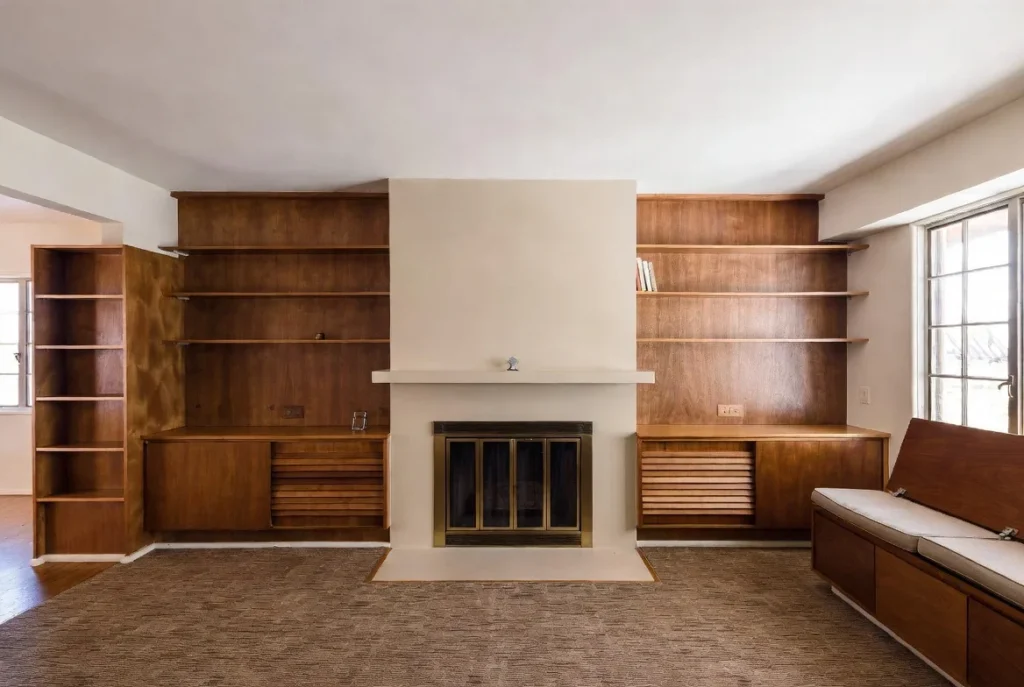
Integrated cabinetry maintains clean lines while providing essential storage without freestanding furniture clutter. Install floor-to-ceiling built-ins flanking fireplaces or along walls creating architectural features housing books, media, and decorative objects. Room dividers with open shelving separate spaces without blocking light or views. Window seats with storage underneath combine seating and storage efficiently. These built-in solutions reflect mid-century emphasis on thoughtful space planning and multi-functional design. Choose sliding doors on cabinets rather than swinging doors saving floor space. Open shelving displays curated collections while closed storage conceals everyday clutter.
Add Statement Lighting Fixtures
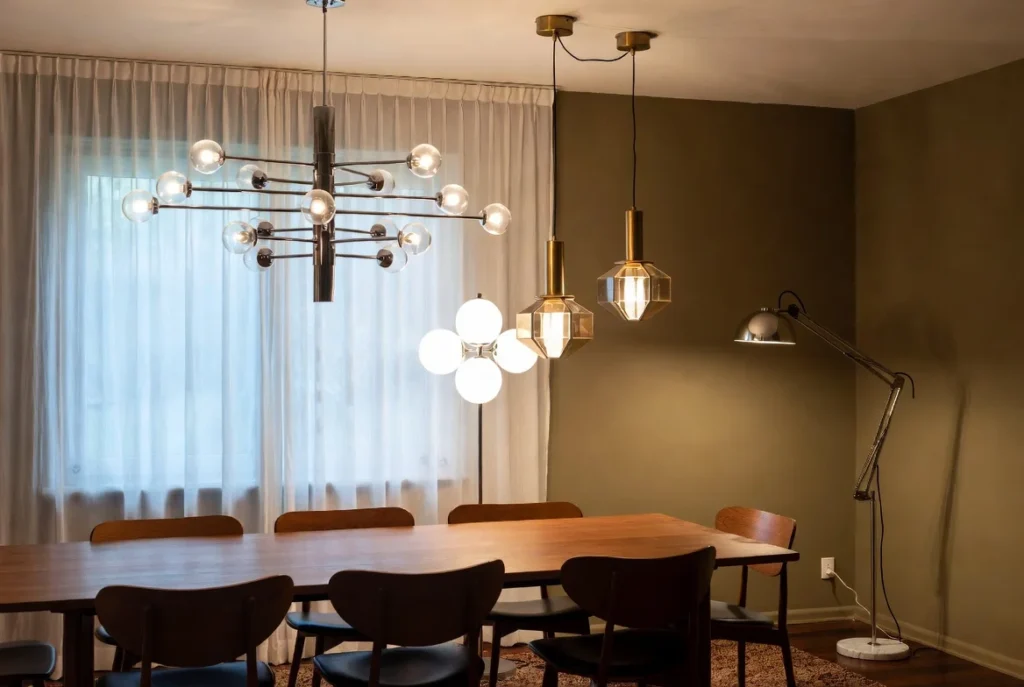
Sculptural lighting serves as functional art celebrating mid-century design innovation. Install Sputnik chandeliers, George Nelson bubble lamps, or Arco floor lamps adding dramatic focal points. Pendant lights with geometric glass shades or brass fittings bring period character. Track lighting offers flexible illumination while its visible mechanics align with honest design principles. Recessed lighting provides ambient glow without fixtures interrupting clean ceiling planes. Layer multiple light sources at varying heights creating dimensional illumination. These statement pieces prove that utilitarian objects can deliver aesthetic delight.
Create Conversation Pits
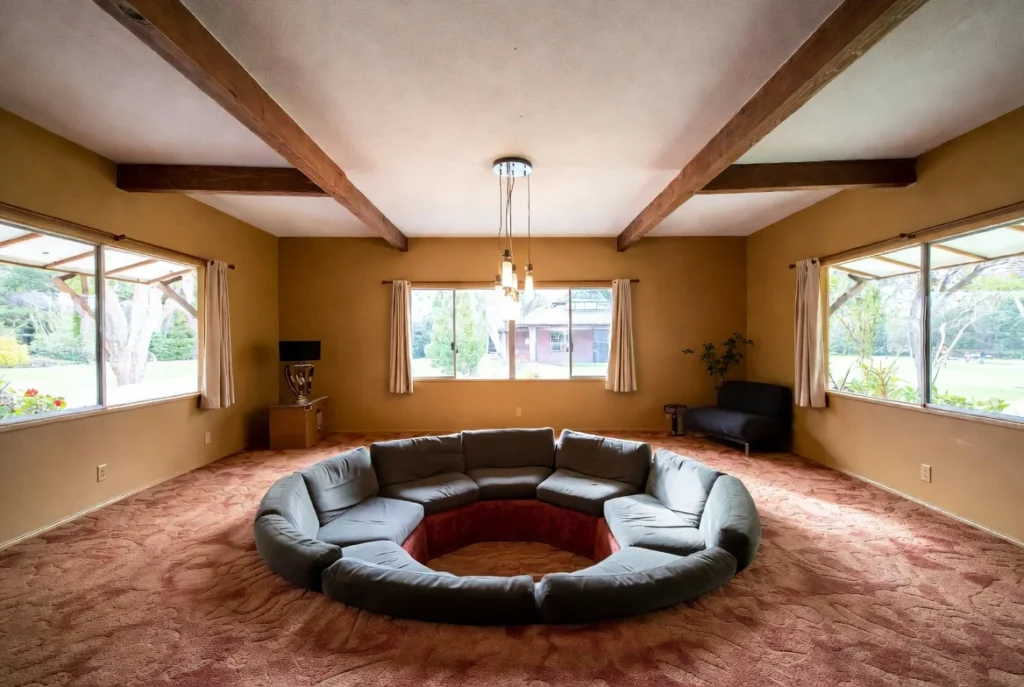
Sunken seating areas make gathering spaces feel intimate and special within open floor plans. Lower living room floors by 12 to 18 inches installing built-in seating around perimeters. This spatial device became mid-century signature creating room within a room without walls. Cushioned platforms provide flexible seating accommodating larger groups. Circular or square configurations encourage face-to-face interaction rather than television-focused arrangements. While conversation pits require significant renovation, they deliver authentic mid-century character impossible through furniture alone. Modern versions incorporate accessibility considerations through careful step design.
Use Horizontal Lines
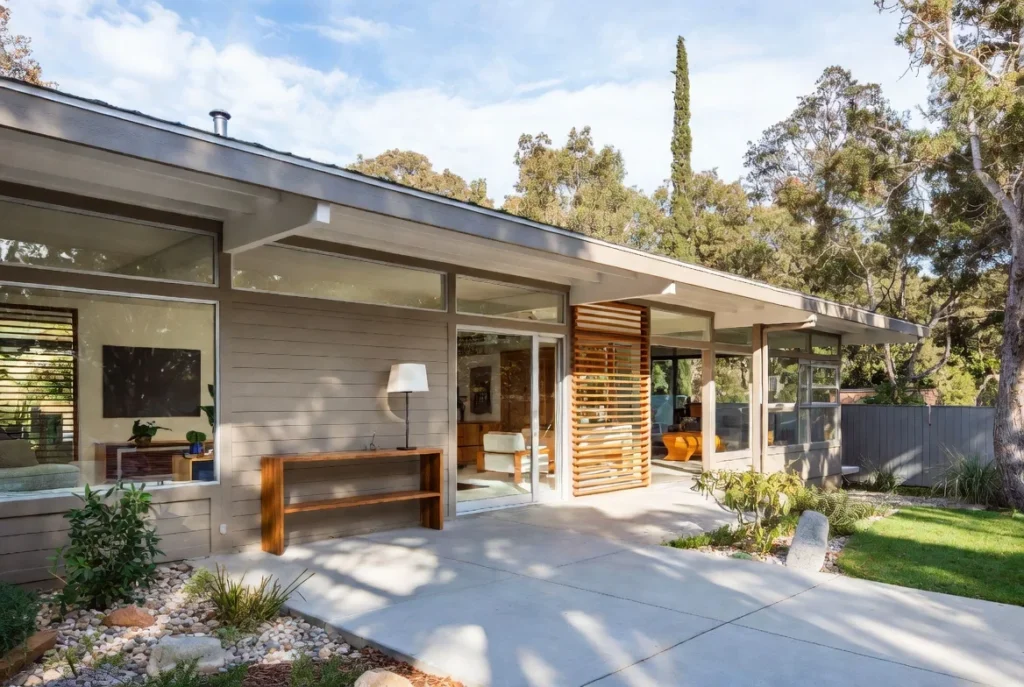
Emphasized horizontal elements create visual calm and spatial expansiveness characteristic of mid-century design. Install horizontal wood siding or slatted screens reinforcing low-slung proportions. Choose long low furniture rather than tall vertical pieces. Floating cabinets and console tables extend horizontal emphasis while raising furniture off floors lightens visual weight. Continuous window bands stretch horizontally even around corners. This horizontal bias emerged from Prairie School influence through Frank Lloyd Wright celebrating natural landscape rather than competing with it. Striped patterns in textiles and wallpaper reinforce horizontal movement.
Integrate Art and Sculpture
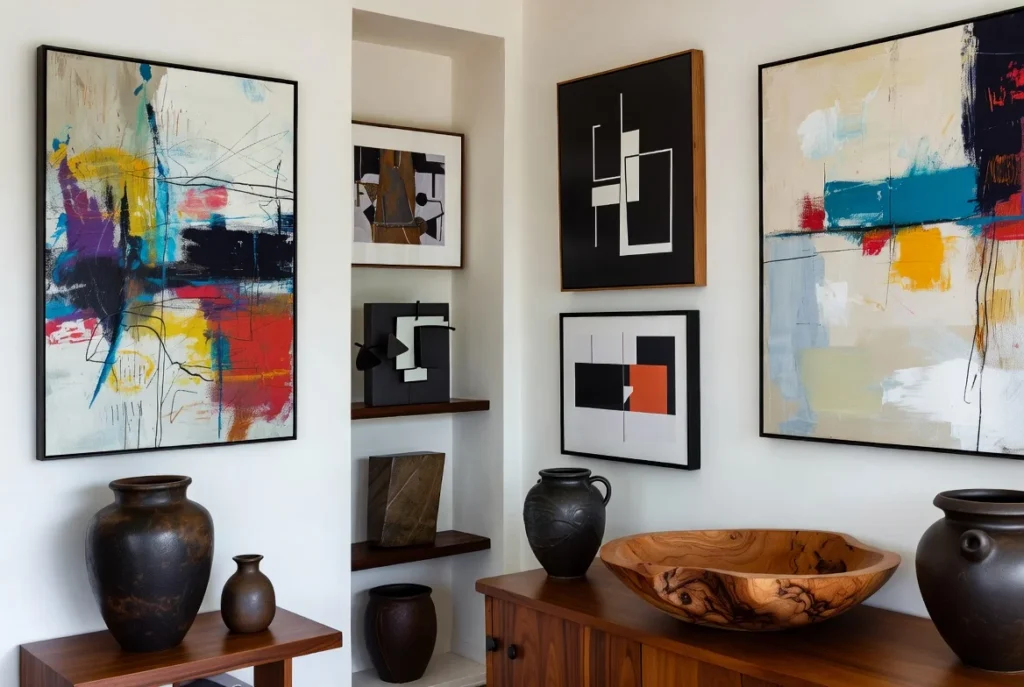
Curated artwork and sculptural objects personalize minimalist spaces while celebrating mid-century artistic movements. Feature abstract expressionist prints, pop art pieces, or modernist photography reflecting period cultural zeitgeist. Display ceramic vessels, wooden bowls, or metal sculptures as functional art objects. Wall-mounted sculptures add three-dimensional interest without consuming floor space. This art integration reflects mid-century belief that good design extends beyond architecture and furniture to encompass all visual arts. Create gallery walls with simple black frames or floating frames maintaining modern aesthetic. Rotate displayed pieces preventing spaces from feeling static.
Choose Split-Level Configurations
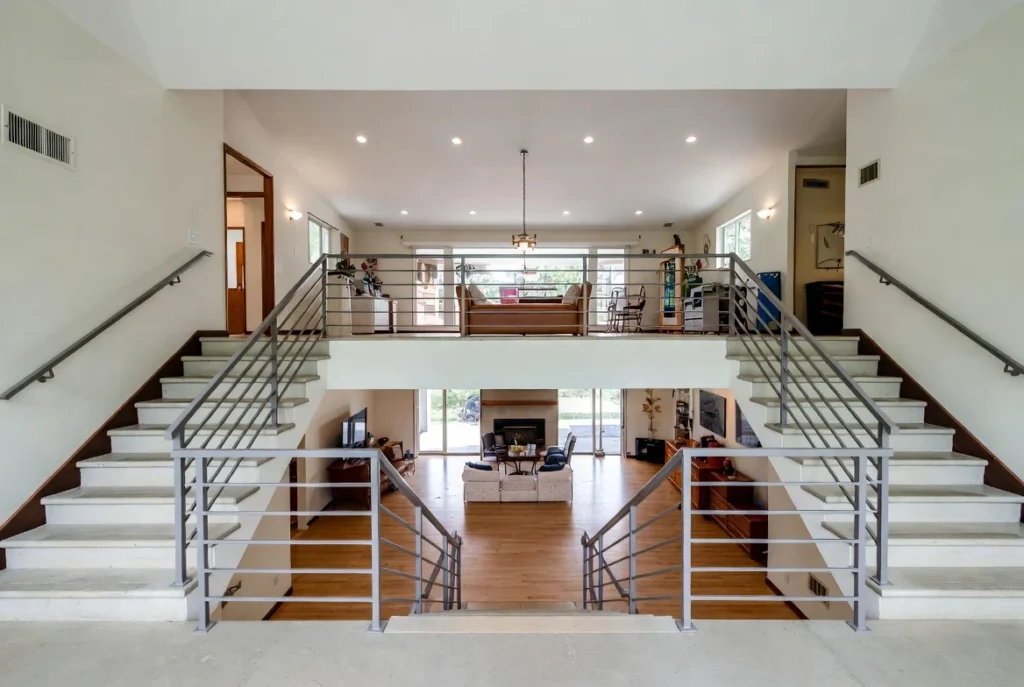
Multi-level floor plans create spatial variety and defined zones without full-height walls. Position living areas on main levels with bedrooms raised or lowered by half stories. Split foyers with stairs leading both up and down make dramatic entries. This configuration emerged from sloped lot design but became stylistic choice even on flat sites. Level changes provide architectural interest while ceiling height variations add spatial drama. Modern interpretations must address accessibility concerns through careful planning. Open railings with simple metal balusters maintain visual transparency across levels.
Conclusion
Creating mid-century modern homes that feel genuinely timeless and stylish requires understanding that this enduring design movement balances architectural innovation with human comfort, minimalist restraint with warm materials, and historical authenticity with contemporary livability. The 15 ideas presented throughout this guide prove that successful mid-century spaces honor 1940s-1960s principles while adapting to modern life through updated materials and flexible floor plans.
The most valuable insight to carry forward is that mid-century modern design remains relevant precisely because it prioritizes honest materials, functional layouts, and connection to nature over superficial decoration. Open floor plans, expansive glazing, natural wood, iconic furniture, and warm color palettes each contribute to creating homes feeling both historically significant and refreshingly modern.
Begin your mid-century transformation by identifying which architectural elements and design choices genuinely resonate with your lifestyle and existing home structure. Perhaps you start with new windows, furniture upgrades, or material updates. These foundational changes create momentum while proving that your home holds remarkable potential to become the timeless mid-century sanctuary you envision.
Your home deserves the enduring elegance and functional beauty that mid-century modern design provides, creating spaces where architectural integrity and comfortable living coexist in perfect harmony for generations to come.
Frequently Asked Questions
What defines a mid-century modern home?
Mid-century modern homes are characterized by open floor plans, large floor-to-ceiling windows, flat or low-pitched rooflines, clean lines, natural materials like wood and stone, and seamless indoor-outdoor connections. Built primarily between the 1940s and 1960s, these homes emphasize minimalist aesthetics, honest structural expression, and integration with nature. Iconic features include post-and-beam construction, exposed wood ceilings, geometric patterns, warm earth tone color palettes, and built-in storage. The style emerged from post-WWII optimism and technological advancement, prioritizing functional beauty over decorative excess while celebrating craftsmanship through simple elegant forms.
Can you build a new mid-century modern home today?
Absolutely! Many architects and builders specialize in new construction honoring mid-century principles while incorporating modern building codes, energy efficiency, and contemporary amenities. New mid-century homes feature updated insulation, high-performance windows maintaining period aesthetics, sustainable materials, and open floor plans adapted for current lifestyles. Costs typically range from two hundred to five hundred dollars per square foot depending on materials, location, and customization. Numerous online resources offer mid-century modern house plans that can be customized to your needs while maintaining authentic design elements like flat roofs, extensive glazing, and natural material integration.
What are the best colors for mid-century modern interiors?
Warm earth tones form ideal mid-century palettes including ochre, burnt orange, avocado green, harvest gold, teak brown, and rust. Add neutral bases through beige, tan, cream, or warm whites allowing colorful accents to shine. Incorporate jewel tone pops like turquoise, coral, mustard yellow, or burnt sienna through furniture, artwork, and accessories. Avoid stark whites and cool grays that feel more contemporary minimalist than authentic mid-century. The period celebrated warm inviting colors inspired by natural materials rather than the sterile white aesthetic associated with later modernism. Balance bold accent colors with natural wood tones acting as warm neutrals throughout spaces.
Who were the most influential mid-century modern architects?
Frank Lloyd Wright pioneered organic architecture influencing the movement through his emphasis on natural integration and horizontal lines. Charles and Ray Eames revolutionized furniture design while their California home became an icon. Richard Neutra brought European modernism to California creating elegant glass-walled homes. Eero Saarinen designed both buildings and iconic furniture pieces. Joseph Eichler developed affordable modernist tract homes making the style accessible to middle-class families. Other key figures include Pierre Koenig, John Lautner, and Rudolph Schindler. These architects shared commitment to clean lines, natural materials, indoor-outdoor connection, and democratic design accessible beyond wealthy clients.
How do I decorate a mid-century modern home on a budget?
Start with paint in warm earth tones and neutrals creating authentic backdrops affordably. Shop vintage stores, estate sales, and online marketplaces for original mid-century furniture pieces often available at reasonable prices compared to new reproductions. Choose quality reproductions of iconic pieces for high-impact areas while mixing in affordable contemporary furniture with clean lines. DIY built-in storage using plywood and simple construction techniques. Use geometric wallpaper on single accent walls for period character without expensive full-room applications. Incorporate plants as natural decor. Focus budget on statement lighting fixtures and one or two quality furniture pieces while filling remaining spaces with budget-conscious selections maintaining appropriate style and proportions.
You May Also Like This Post:
15 Cozy Boho Living Room Ideas to Create a Warm and Stylish Space
One Comment