
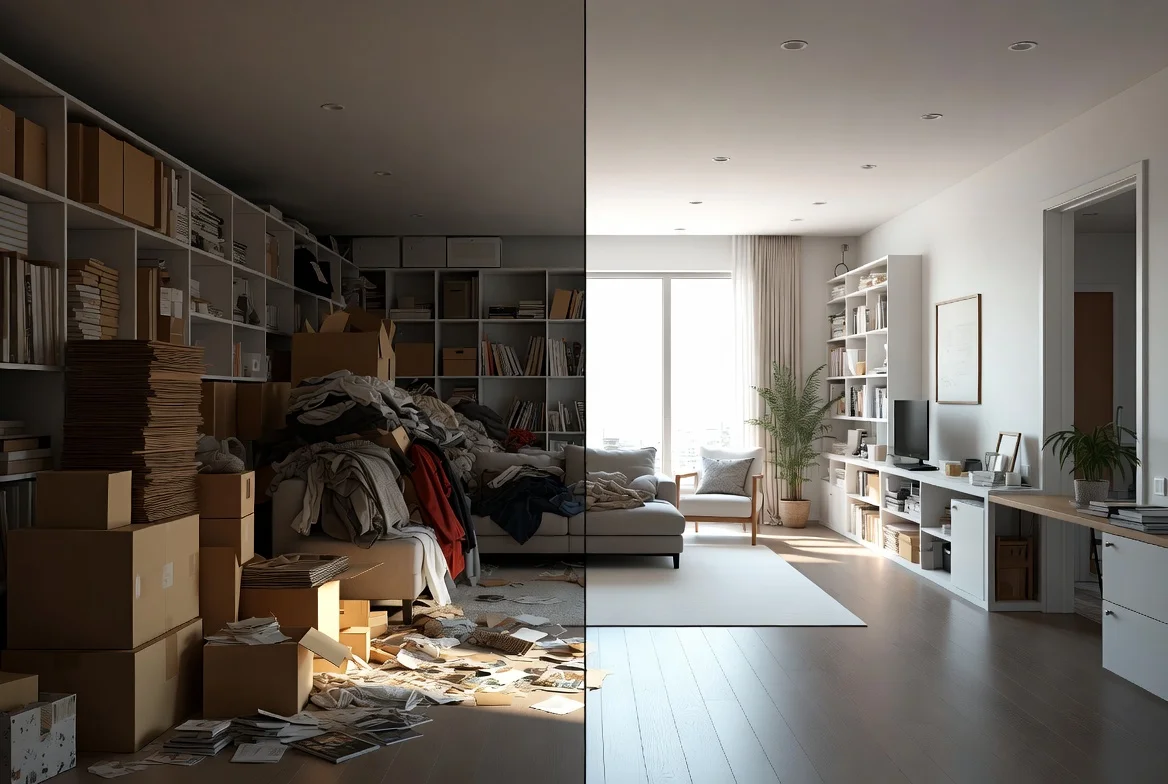
How to Declutter Your Home Without Feeling Overwhelmed: 30 Ideas (Step-by-Step Guide)
Why Your Home Feels Like It Is Working Against You
Picture this. You walk in after a long day expecting comfort, and instead you feel your shoulders tighten. Stacks of mail on the counter. Clothes draped over chairs. A closet that no longer closes. That feeling is not just inconvenience. Research from the Princeton Neuroscience Institute confirms that physical clutter competes for your attention, reduces your ability to focus, and significantly increases cortisol, the primary stress hormone in the human body.
What is more surprising? Most people spend an estimated 2.5 days per year searching for lost items in cluttered homes. Clutter is not a personality flaw. It is a structural problem, and it has a structural solution.
This guide gives you 30 proven, actionable ideas to declutter your home without feeling overwhelmed, whether you are tackling a single drawer or a house that has accumulated years of possessions. Follow the step-by-step approach, apply the methods that fit your personality, and build the clutter-free home environment you actually want to live in.
Understand Why Clutter Accumulates in the First Place
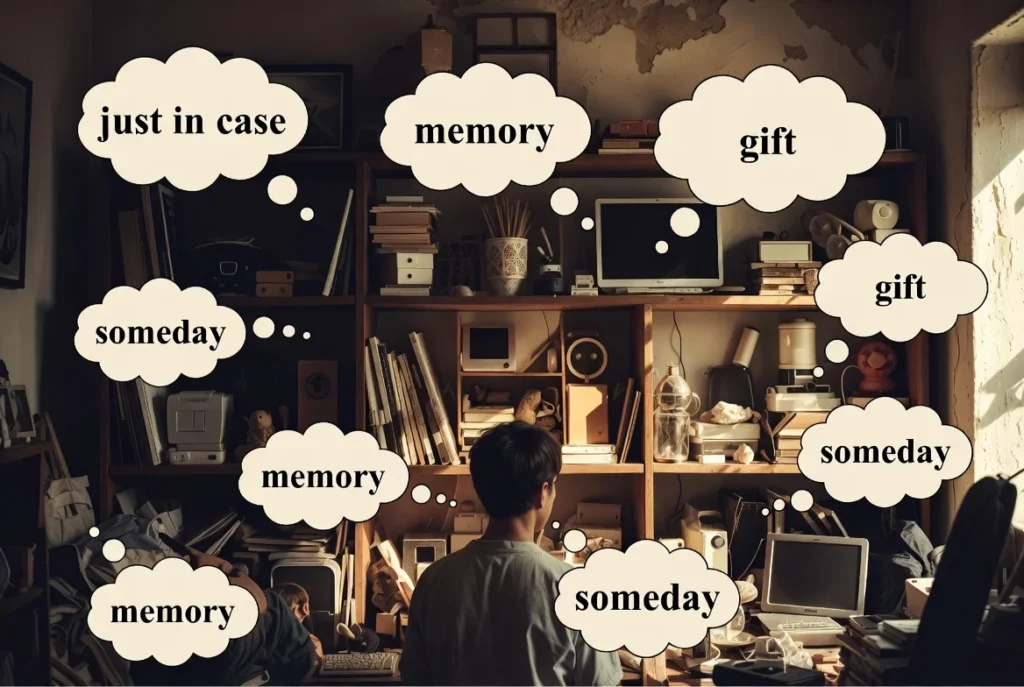
Before you move a single item, understanding the psychology of clutter gives you a lasting advantage. Clutter is, at its core, a collection of postponed decisions. Every object without a clear home or purpose represents an unmade choice.
Common clutter triggers include:
- Emotional attachment to objects tied to memories or identity
- The fear of needing something later, the just-in-case mindset
- Gifts that feel obligatory to keep regardless of usefulness
- Aspirational items tied to a version of yourself you plan to become
- Disorganized systems that make piling easier than putting away
Identifying your personal clutter patterns is the most powerful first step in any successful home decluttering project.
Set a Clear Intention Before You Touch a Single Item

The most successful decluttering projects begin with a clear motivating vision. Ask yourself honestly: what do I want my home to feel like? Calm? Open? Functional? Creative? Writing that down in one sentence gives you an anchor when decisions get difficult.
For example: “I want my kitchen to feel like a place I enjoy cooking in, not somewhere I dread entering.” That intention drives every decision about what stays and what goes. This is the foundation of intentional home organization rather than reactive tidying.
Start Small: The 15-Minute Daily Declutter Method
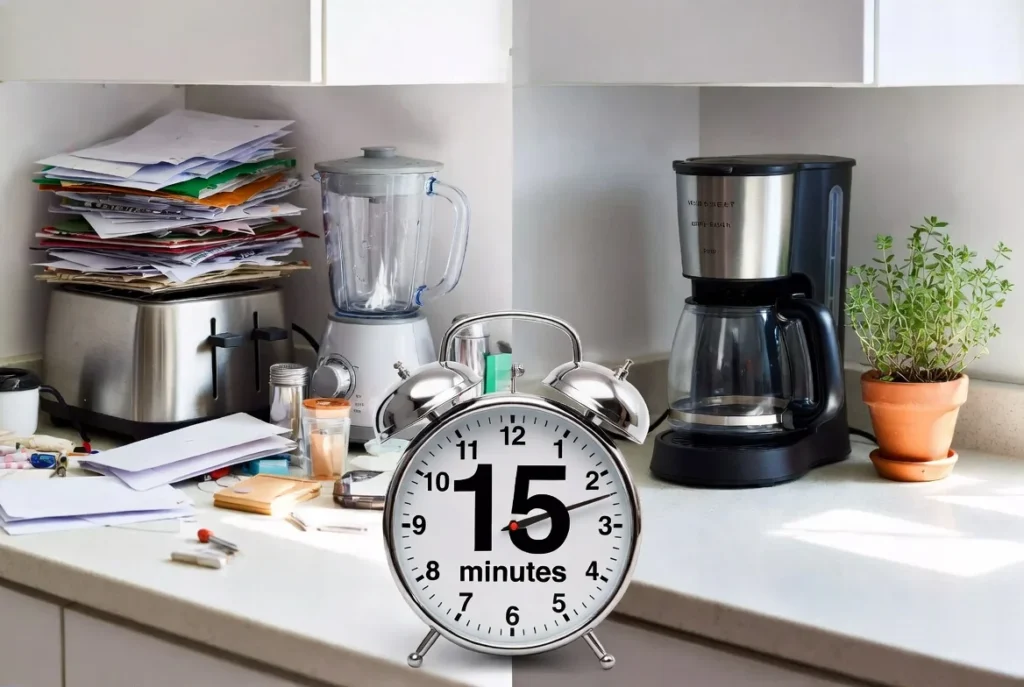
Overwhelm is the number one reason people stop before they start. The most effective antidote is dramatically lowering the bar for entry. Set a timer for 15 minutes and work only on one small, clearly defined area each session.
- Day 1: The kitchen junk drawer
- Day 2: The bathroom counter
- Day 3: The entry table or coat hooks
- Day 4: One shelf in the pantry
- Day 5: The bedside table
These small wins build momentum, rewire your daily habits, and produce visible results without requiring you to sacrifice an entire weekend. Studies in behavioral psychology confirm that small, consistent actions outperform sporadic large efforts in creating lasting change.
Use the 4-Box Decluttering Method

The 4-Box Method is one of the most practical and widely recommended decluttering strategies available. Label four boxes or areas as:
- Keep: Items you actively use and genuinely value
- Donate or Sell: Items in good condition that no longer serve you
- Trash: Broken, expired, or unsalvageable items
- Relocate: Items that belong in a different room
The critical rule: every item you pick up must be placed in one of those four categories immediately. No maybe piles. No setting things aside to decide later. This single constraint eliminates the most common cause of decluttering paralysis.
Declutter Room by Room, Not All at Once
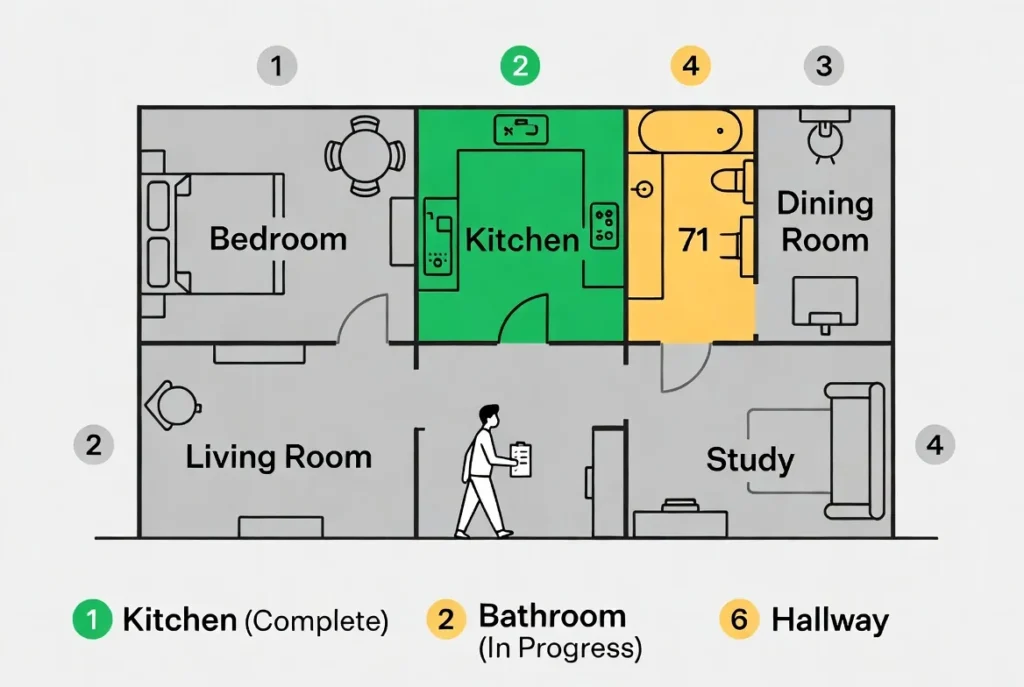
Attempting to declutter your entire home in a single day is a reliable path to burnout and abandonment. Instead, divide your home into manageable zones and complete one before starting the next. A practical room-by-room decluttering order:
- Kitchen and pantry first for quick, motivating wins
- Bathrooms for rapid visible transformation
- Bedroom and closets for daily quality-of-life improvement
- Living room for communal comfort
- Home office or study for productivity gains
- Garage, basement, and storage areas last
This room-by-room decluttering approach ensures you experience the satisfaction of completion in each space before moving forward.
Apply the KonMari Method: Declutter by Category, Not Location

Marie Kondo’s KonMari method asks one deceptively powerful question about every possession: does this spark joy? If the answer is no, you thank it for its service and release it. While the language sounds simple, the method works because it reframes decluttering as an act of active choosing rather than reluctant discarding.
The KonMari method also recommends decluttering by category rather than by room. Gather every item of clothing from your entire home into one pile before making decisions. The sheer visual volume of what you own is often genuinely revelatory and powerfully motivating.
Tackle the Kitchen: High Impact, High Return
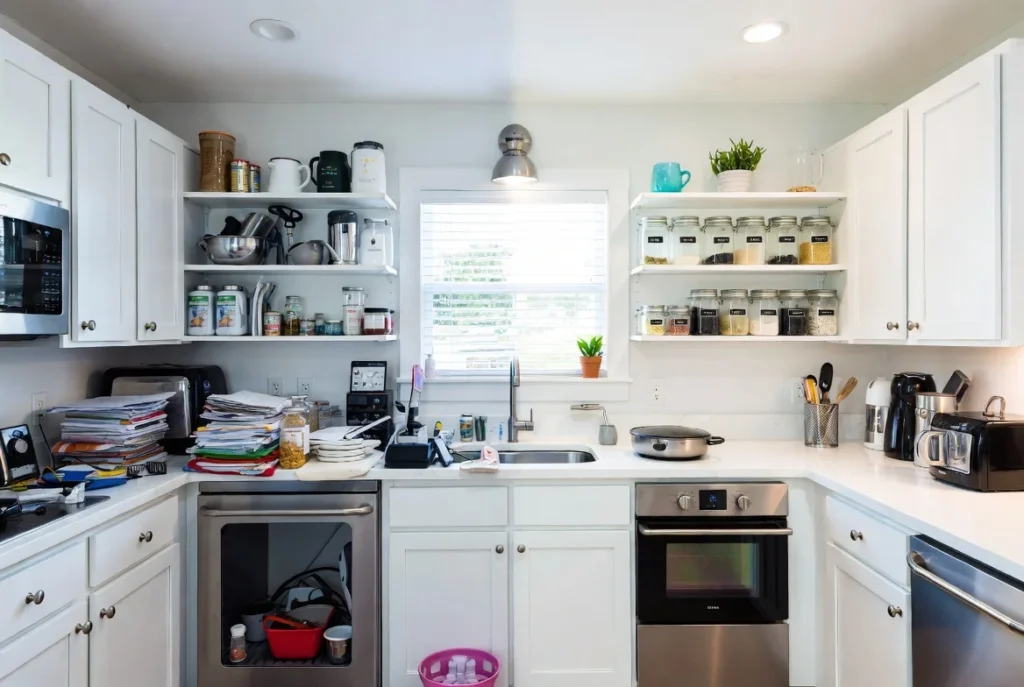
The kitchen is one of the most clutter-prone rooms in any home. Expired pantry items, duplicate utensils, gadgets used twice a year, and appliances that were impulse purchases all accumulate quietly. A thorough kitchen declutter yields some of the most satisfying results of any room.
Practical Kitchen Decluttering Tips
- Remove every expired pantry item and condiment with zero hesitation
- Donate kitchen gadgets unused in the past 12 months
- Eliminate duplicates: four spatulas is three too many
- Store only what fits without cramming
- Clear countertops of everything except daily-use appliances
Environmental psychology research shows that clear kitchen counters correlate with healthier food choices, lower perceived stress, and greater enjoyment of cooking. The physical and psychological payoffs are measurable and immediate.
Conquer Closet Clutter With the One-Year Rule

Clothing clutter carries unique emotional weight. The one-year rule cuts through that emotion cleanly: if you have not worn it in the past 12 months, it leaves. Exceptions apply to formal wear and genuinely seasonal items, but the rule governs the vast majority of a typical wardrobe.
Apply the hanger reversal technique for ongoing monitoring: hang all clothing with hangers facing backward. When you wear and wash something, rehang it correctly. In six months, anything still hanging backward has not been touched and is a prime candidate for donation.
Create a One-In, One-Out Policy for Permanent Prevention
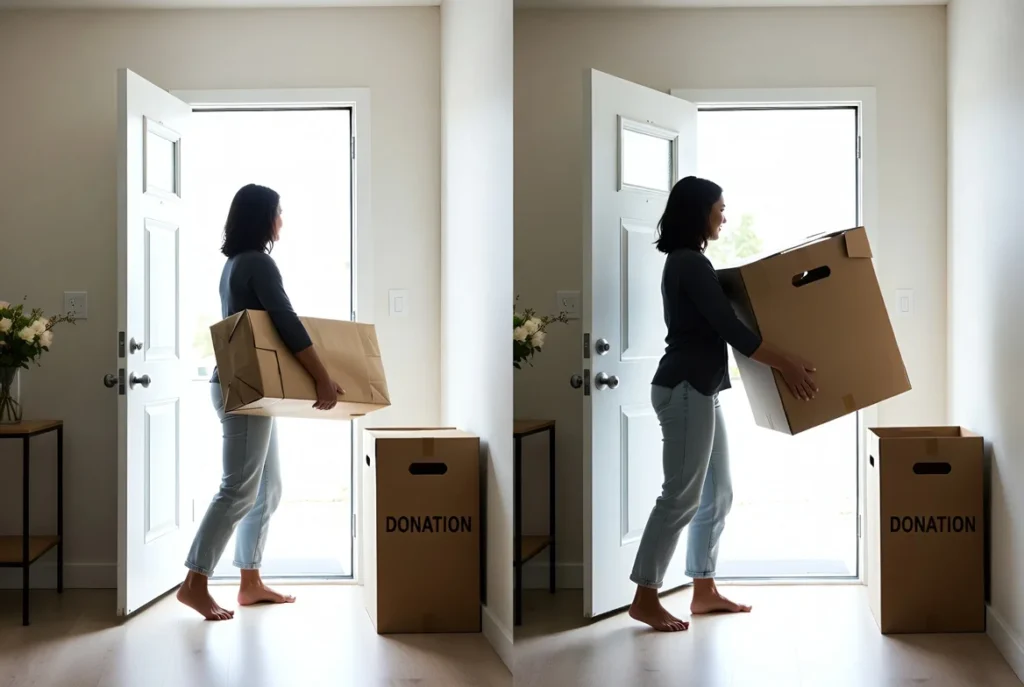
Decluttering is not a one-time project. Without a system to prevent re-accumulation, you will return to the same situation within months. The one-in-one-out policy solves this sustainably: whenever something new enters your home, something equivalent must leave.
Buy a new book? Donate one from your shelf. Get a new kitchen appliance? Rehome the old one. Practiced consistently, this habit keeps your home in natural equilibrium without requiring another major decluttering effort.
Handle Sentimental Items With Intention, Not Avoidance

Sentimental clutter is often the final and most challenging frontier of any serious decluttering project. Old birthday cards, children’s first drawings, gifts from loved ones. These feel impossible to release because they seem to contain the memories themselves.
A practical solution: create one designated memory box per household member. Every sentimental item must fit within that box. This forces meaningful curation while honoring the emotional value of genuinely significant objects. For children’s artwork, photograph each piece and compile it into a printed photo book. The memory is fully preserved. The physical space is reclaimed.
Declutter Your Digital Space in Parallel

Digital clutter creates exactly the same cognitive load as physical clutter. A desktop covered in disorganized files, an inbox with thousands of unread emails, and a phone full of blurry photos all contribute to the same mental drain.
As part of your home organization process, schedule a parallel digital declutter. Delete unused applications. Unsubscribe from email lists. Organize photos into dated albums. Delete duplicate files. A clean digital environment supports and reinforces the calm, ordered physical environment you are working to create.
Use Smart Storage Solutions to Maintain Order
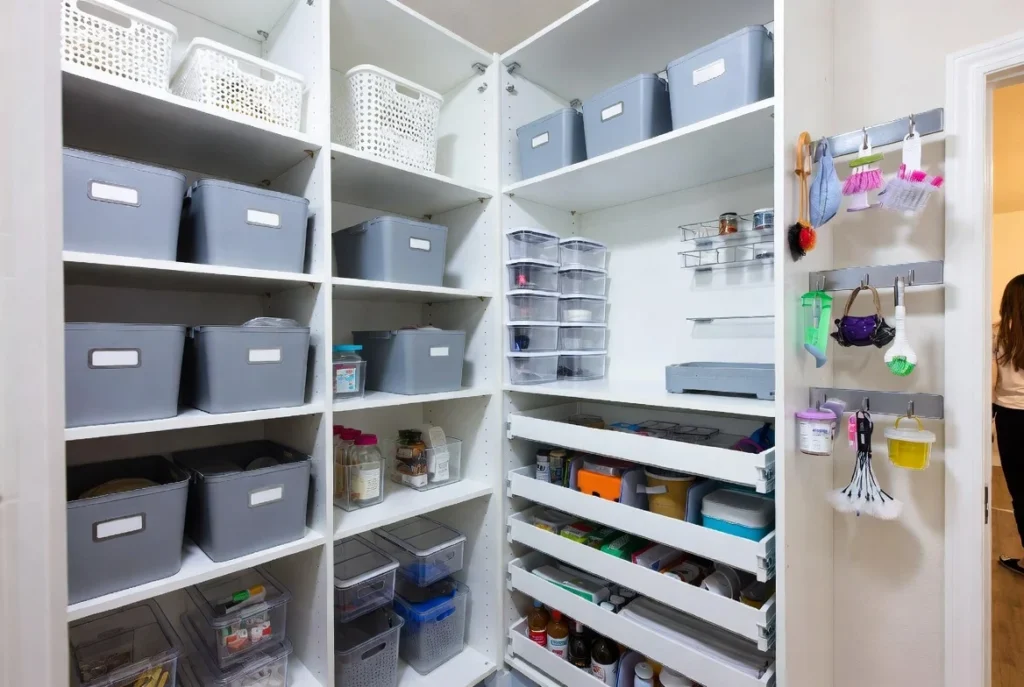
Once you have decluttered, intelligent storage solutions are essential for maintaining the result. The foundational principle is simple: give every item a clearly defined home so that putting things away is as effortless as taking them out.
- Use vertical space with floating shelves and stackable containers
- Label everything including bins, baskets, and drawer organizers
- Use under-bed storage for seasonal or infrequently used items
- Install hooks on door backs for bags, robes, and accessories
- Use drawer dividers in kitchen and bathroom drawers
Involve Your Entire Household in the Process

Decluttering is most sustainable as a household habit rather than a solo project. Engage your family by making the process collaborative and age-appropriate rather than a top-down exercise in authority.
For children, frame decluttering as generosity: “Let’s find toys to give to children who would love them.” For partners, have honest conversations about shared spaces and establish agreed thresholds for each area. Shared ownership of the standard is what makes the standard last.
Schedule a Monthly Maintenance Declutter
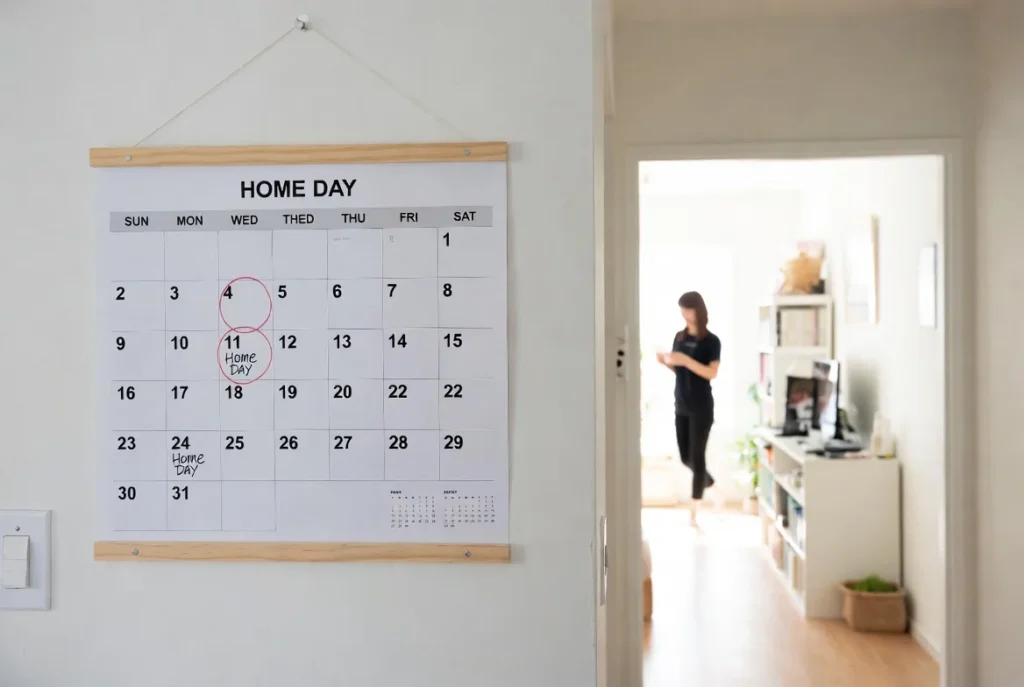
Maintenance is what separates lasting transformation from temporary tidiness. Set aside 30 to 60 minutes once per month to walk through your home with fresh, evaluative eyes. Look for items that have drifted from designated spots, new additions that have not been evaluated, and areas beginning to feel heavy again.
A monthly review prevents the gradual, invisible accumulation that makes clutter feel overwhelming in the first place. Prevention is exponentially easier than recovery.
Know When to Ask for Professional Help

There is no weakness in seeking support. Professional organizers bring emotional neutrality, proven systems, and genuine accountability to the decluttering process. They are particularly valuable for those managing significant accumulation, chronic disorganization, or decision fatigue. The National Association of Productivity and Organizing Professionals connects clients with certified specialists.
Alternatively, ask a trusted friend who can offer the emotional detachment your own belongings prevent you from having.
Quick-Fire Decluttering Ideas That Actually Work
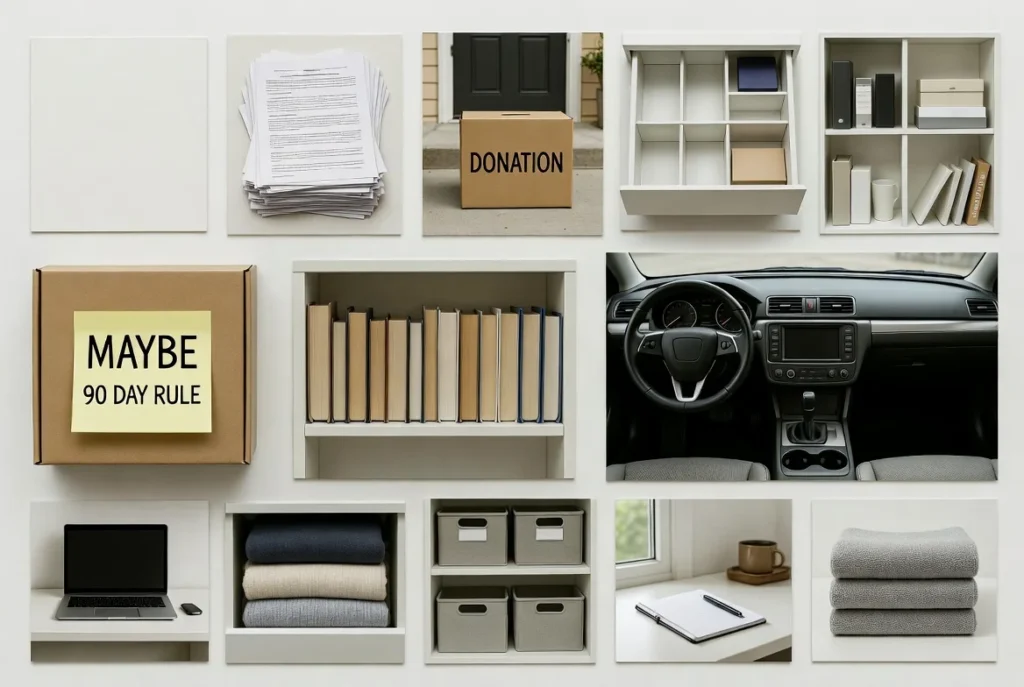
Here are 15 more powerful, actionable decluttering ideas to complete your full toolkit:
- Do a flat surface challenge and clear every horizontal surface in one room completely
- Tackle the doom pile or doom corner that has been avoided for months
- Cancel subscriptions for physical goods you no longer use
- Go paperless by scanning important documents and shredding physical copies
- Donate duplicate items immediately upon discovery
- Rethink the junk drawer entirely: nothing essential should live there
- Sell items you no longer want through local marketplaces or online platforms
- Apply the 20-20 rule: if it costs under 20 dollars and can be replaced in 20 minutes, let it go
- Declutter your medicine cabinet and responsibly dispose of expired medications
- Curate your book collection to only those you would genuinely reread or recommend to others
- Create a maybe box for genuinely uncertain items, store for 90 days, donate anything untouched
- Address the guest room that has quietly become a full-time storage room
- Clear out your car as an extension of your home environment
- Audit decorative items and keep only what you truly love, not what you merely tolerate
- Reward yourself meaningfully after completing each major area to reinforce the behavior
Conclusion:
A Clutter-Free Home Is a Daily Choice, Not a One-Time Achievement
Decluttering your home is not about achieving a magazine-perfect interior. It is about creating an environment that actively supports the life you want to live. Every item you release is a decision to prioritize your present peace over your attachment to the past.
The 30 ideas in this guide address every dimension of the home decluttering process, from the psychology of why clutter accumulates to practical room-by-room strategies to the habits that prevent it from returning. The tools are here. The only remaining question is where you will begin.
Choose one small action. Set a timer for 15 minutes. Begin today. You will be surprised how quickly a decluttered, organized home changes not just how your space looks, but how you think, feel, and live within it.
Frequently Asked Questions:
Where is the best place to start when decluttering your home?
Start with the area causing your greatest daily frustration. For most people that is the kitchen counter, the bathroom, or the entryway. High-visibility areas deliver immediate, motivating results that build momentum for the rest of your home.
How long does it realistically take to declutter an entire home?
For an average-sized home, working 15 to 30 minutes daily, expect 4 to 6 weeks. Larger homes or years of accumulated belongings may take longer. Consistency matters far more than speed.
How do I let go of sentimental items without regret?
Create one designated memory box per person in your household and curate sentimental items down to what fits inside it. Photograph children’s artwork and compile it into printed photo books. The memory survives intact. The physical burden does not.
How do I prevent clutter from coming back after I have finished?
Implement the one-in-one-out rule for all new purchases. Schedule a monthly maintenance review. Practice mindful consumption by asking, before any new purchase, whether it genuinely adds value to your life or simply adds to your load.
Is hiring a professional organizer worth the investment?
For many people, genuinely yes. A certified professional organizer provides emotional neutrality, proven systems, and accountability. They are especially valuable for those managing chronic disorganization, hoarding tendencies, or significant decision fatigue. Many clients describe the experience as genuinely life-changing.
You May Also Like This Post:
How to Organize a Small Bedroom Without Buying New Furniture: 15 Smart Ideas





One Comment