
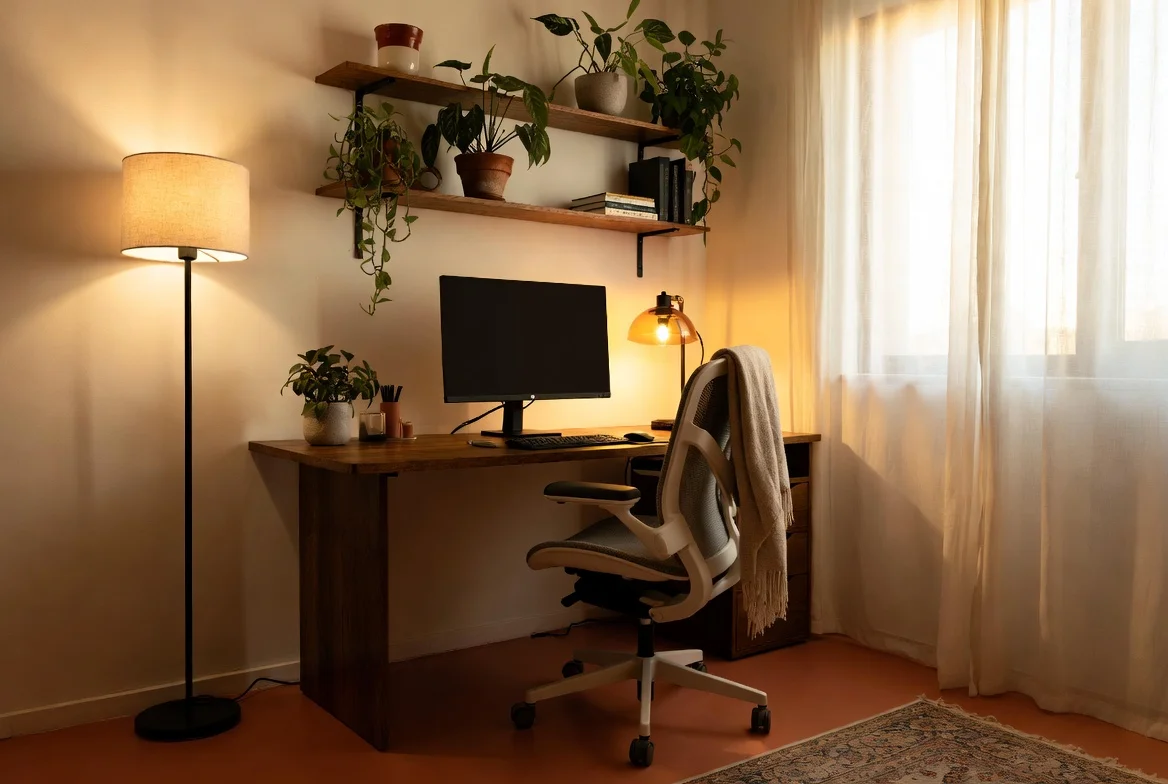
12 Cozy Home Office Ideas for a Warm, Productive and Stylish Workspace
When Work Feels Like Home, Everything Changes
There is a particular moment that happens in well-designed home offices, a moment when the boundary between obligation and enjoyment blurs into something genuinely pleasant. You settle into your chair with morning coffee, glance around the space you have created, and realize that work no longer feels like an imposition but rather an activity happening in a place you actively want to be. That transformation from functional workspace to cozy sanctuary represents the difference between merely working from home and thriving in a home office designed with intention and care.
Research from environmental psychology reveals that our physical surroundings dramatically impact both productivity levels and mental wellbeing, with studies showing that comfortable, personalized workspaces increase focus by up to 32 percent while reducing work-related stress. Yet most home offices remain afterthoughts, spare bedrooms filled with mismatched furniture, harsh lighting, and the lingering feeling that this space exists purely for function rather than comfort. The gap between wanting a workspace that feels warm and inviting and actually creating one stems from believing that professional productivity requires sacrificing personal comfort.
The truth is that the most productive home offices are often the coziest ones. Warm lighting that reduces eye strain, soft textiles that make long hours comfortable, natural materials that connect us to calming elements, and personal touches that remind us why we work in the first place all contribute to spaces where focus comes naturally and creativity flows freely. Interior designers consistently emphasize that cozy does not mean cluttered or unprofessional. Instead, it means thoughtfully designed environments that support both the practical demands of work and the human need for comfort, beauty, and emotional warmth.
This comprehensive guide presents twelve proven cozy home office ideas that transform standard workspaces into warm, productive, and genuinely stylish environments. From foundational elements like lighting and color to finishing touches involving scent and personal meaning, these strategies will help you create the home office you deserve, one that makes every working day feel just a little bit better.
Layer Warm Lighting at Multiple Levels
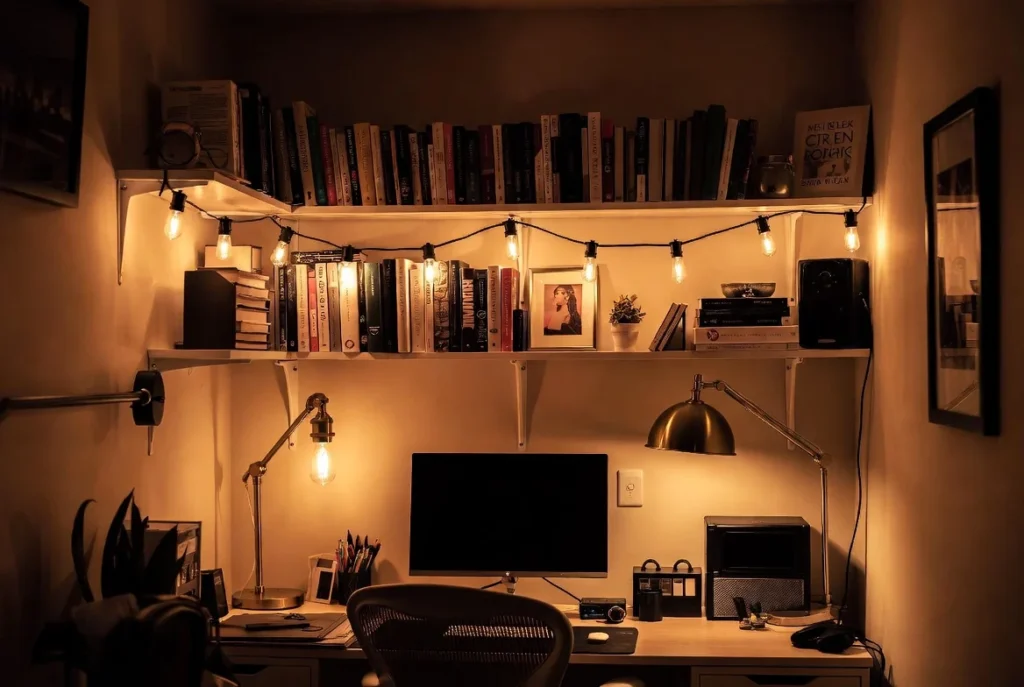
The fastest way to make any home office feel instantly cozier is replacing harsh overhead lighting with layered lighting at multiple heights and intensities. Overhead fluorescent bulbs or bright white LEDs create the cold, clinical atmosphere of corporate offices, while warm-toned lighting between 2700K and 3000K mimics the gentle glow of natural sunlight and candlelight, making spaces feel immediately more inviting and comfortable.
Create a three-tier lighting system combining ambient, task, and accent lighting. Install a ceiling fixture with a dimmer switch for adjustable ambient light, add a quality desk lamp with warm bulbs for focused task lighting during detailed work, and include a floor lamp or table lamp in a corner creating pools of soft accent light. Consider adding string lights along shelves or around windows for a whimsical touch that provides gentle evening illumination without the harshness of overhead lights.
The psychological impact of proper lighting extends beyond mere aesthetics. Warm lighting reduces eye strain during long working hours, helps regulate circadian rhythms by mimicking natural daylight patterns, and creates the sense of safety and comfort that the human brain associates with home rather than workplace. This lighting strategy proves that something as simple as changing bulbs and adding lamps can fundamentally transform how a space feels.
Incorporate Soft Textiles and Plush Fabrics
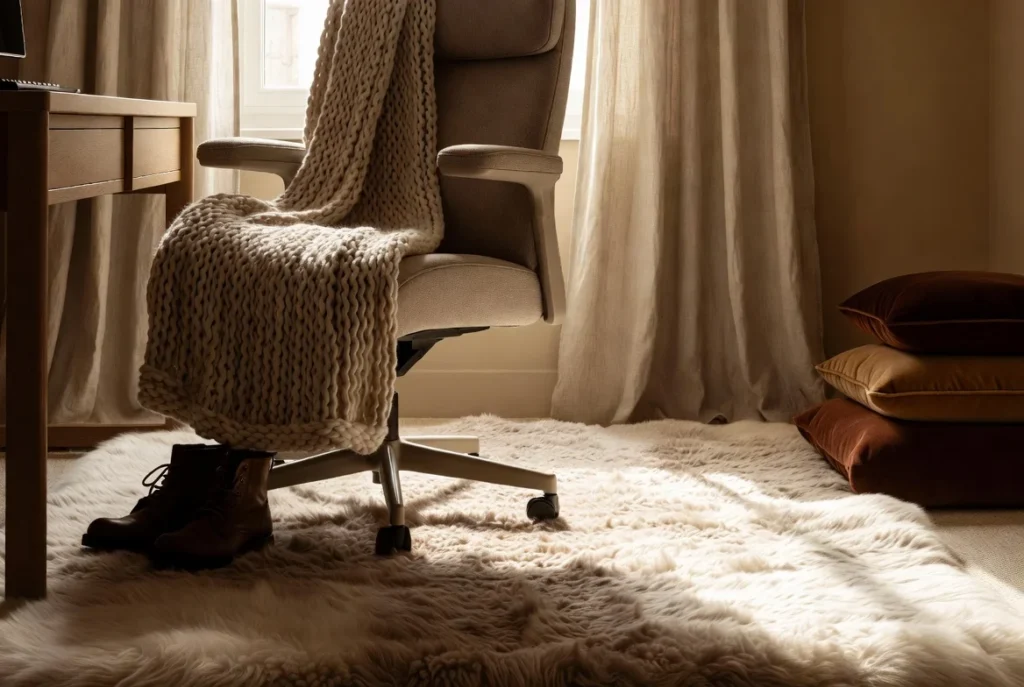
Soft textiles transform hard, utilitarian offices into spaces that feel genuinely warm and touchable. Layer your workspace with materials that invite physical comfort: drape a chunky knit throw blanket over the back of your chair for chilly mornings, place a thick area rug beneath your desk adding warmth underfoot while absorbing sound, and add velvet or linen cushions to your seating creating back support and visual softness.
The magic of textiles lies in their ability to add warmth without consuming space or requiring major changes. A single plush rug can make cold hardwood or tile floors feel immediately more inviting. Throw pillows in warm earth tones or soft neutrals add color and comfort to otherwise plain seating. Heavy curtains in natural fabrics like linen or wool not only control light but also add acoustic dampening, making spaces feel quieter and more peaceful.
Choose fabrics in varying textures to create visual and tactile interest. Mix smooth cotton with nubby wool, combine sleek velvet with rough jute, or pair soft fleece with crisp linen. These textured layers create depth and richness that prevent spaces from feeling one-dimensional while adding the physical warmth that makes working through long afternoons genuinely comfortable.
Choose a Warm and Inviting Color Palette
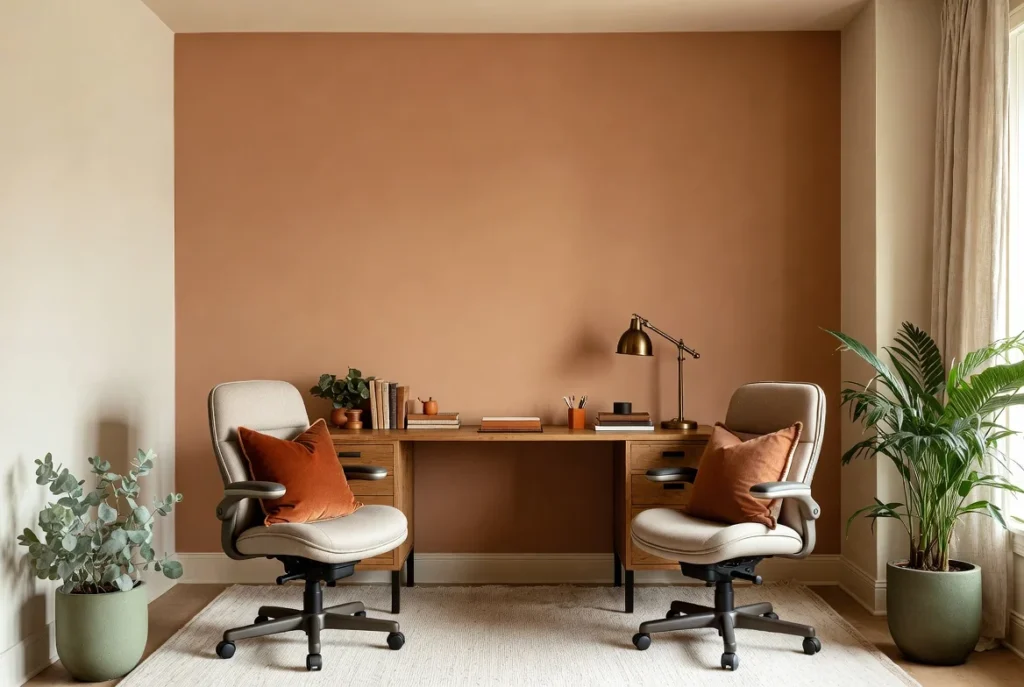
Color dramatically influences mood and productivity in ways we process subconsciously. Warm color palettes featuring earthy tones, soft neutrals, and muted hues create psychologically comforting environments that support both focus and relaxation. Consider painting walls in warm beige, soft terracotta, gentle sage green, or creamy off-white rather than stark white or cool grey that can feel institutional.
Earthy tones such as burnt orange, deep rust, warm brown, and clay create grounding, comforting atmospheres that feel both professional and inviting. These colors work particularly well as accent walls or through desk accessories, artwork, and storage solutions, adding personality without overwhelming small spaces. Pair warm wall colors with natural wood furniture in honey, walnut, or oak tones to reinforce the organic, welcoming aesthetic.
If painting walls feels too permanent for rental spaces or if you prefer flexibility, introduce warm colors through easily changeable elements. A terracotta desk mat, rust-colored filing boxes, warm-toned artwork, or burnt orange throw pillows all add color psychology benefits without long-term commitment. The goal is creating visual warmth that makes your brain associate the workspace with comfort rather than cold corporate environments.
Invest in Comfortable and Ergonomic Seating
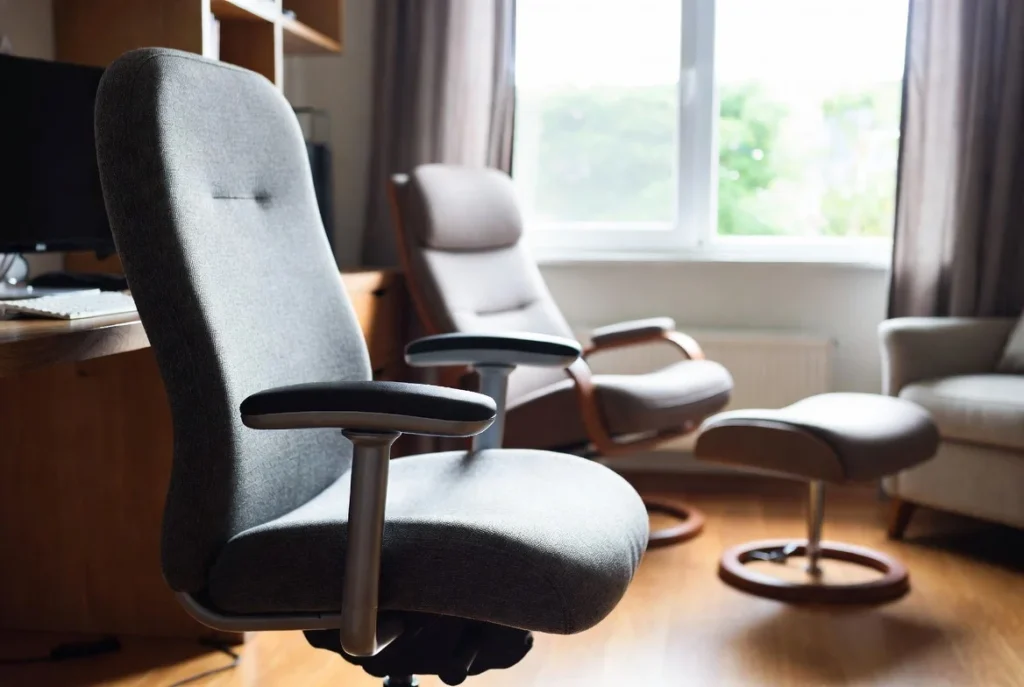
You cannot create a truly cozy home office without addressing the piece of furniture you interact with most: your chair. An ergonomic office chair that also happens to be beautiful represents one of the single best investments for both comfort and productivity. Look for chairs with proper lumbar support, adjustable height and armrests, breathable fabric or leather upholstery, and aesthetics that match your desired workspace vibe.
Beyond the primary desk chair, consider adding a comfortable reading chair or small loveseat in a corner of your office creating an alternative work spot for phone calls, reading, or brainstorming sessions. This secondary seating transforms your office from a single-purpose desk area into a flexible workspace accommodating different types of work and providing the option to move when sitting at the desk becomes uncomfortable.
The physical comfort of proper seating directly impacts how long you can work productively without fatigue or pain. An uncomfortable chair makes you count the minutes until you can leave your workspace, while truly comfortable seating makes hours pass unnoticed. This investment in physical comfort pays dividends daily through reduced back pain, improved posture, and the simple pleasure of working in a space where your body feels genuinely supported.
Add Natural Elements and Living Greenery
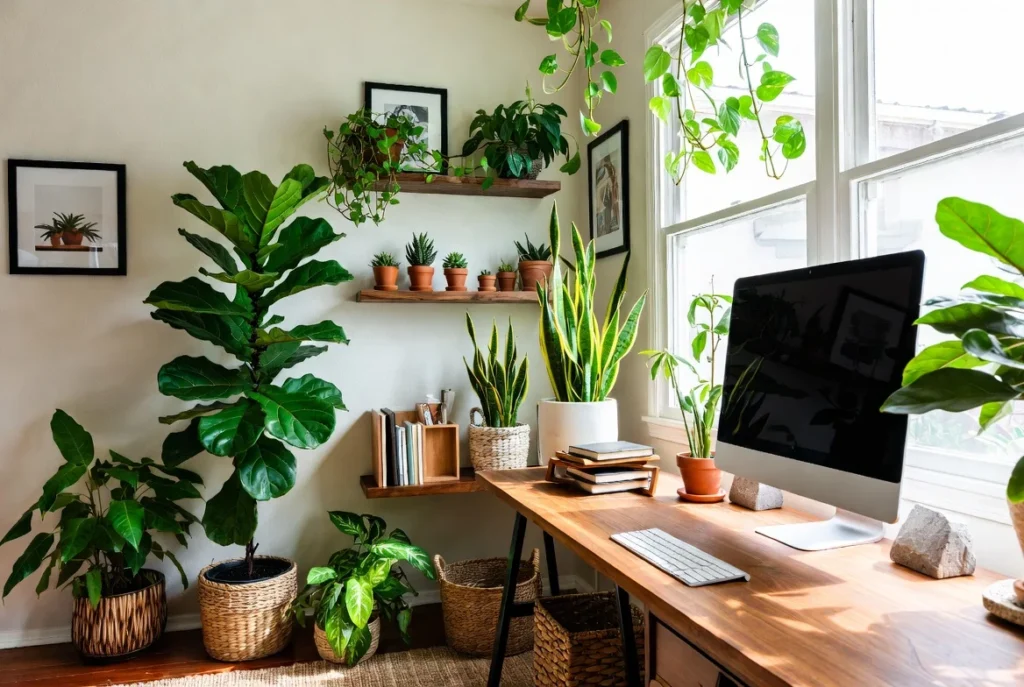
Houseplants and natural materials bring organic warmth to home offices while providing documented mental health and air quality benefits. Position a tall plant like a fiddle leaf fig or snake plant in a corner adding vertical interest, place small succulents or pothos on your desk or shelves, or create a hanging plant display with trailing varieties like string of pearls bringing life to unused overhead space.
Plants do more than simply look nice. Studies show that indoor plants reduce stress hormones, improve air quality by filtering toxins, increase humidity in dry heated spaces, and provide living elements that our brains instinctively find calming. The act of caring for plants also provides gentle breaks from screen time, offering moments of nurturing activity that reset focus.
Beyond living plants, incorporate natural materials through wooden desk accessories, stone bookends, woven baskets for storage, jute or sisal rugs, and linen window treatments. These organic textures create visual and tactile warmth that synthetic materials cannot replicate, connecting your indoor workspace to the calming influence of the natural world. The combination of living plants and natural materials creates biophilic design that fundamentally changes how spaces feel.
Create a Dedicated Reading or Relaxation Nook
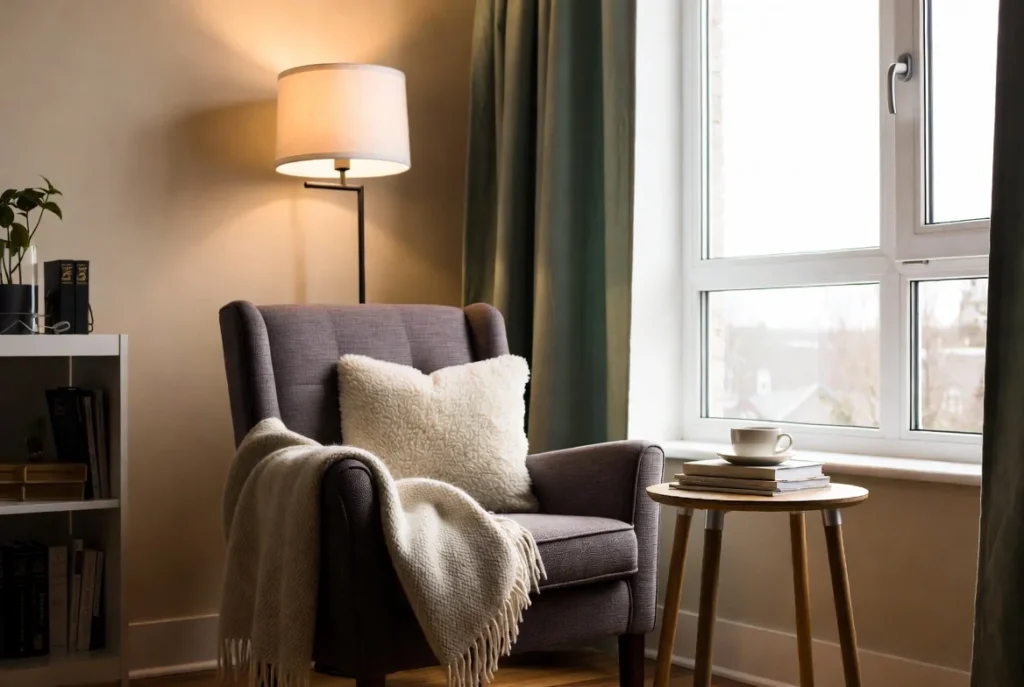
Transform your home office into a multi-functional retreat by carving out a cozy reading nook within the larger workspace. Position a comfortable armchair near a window with a small side table, add a floor lamp providing warm reading light, and include a small bookshelf or magazine rack keeping reading materials organized and accessible. Drape a soft throw over the chair arm and add a plush cushion for lumbar support.
This dedicated relaxation zone serves multiple purposes beyond simply looking inviting. It provides an alternative workspace for tasks that do not require a desk, offers a comfortable spot for phone calls or video meetings where standing or sitting at a desk feels too formal, and creates a genuine break space where you can step away from your computer while remaining in your office rather than leaving the room entirely.
The psychological benefit of having distinct zones within your office cannot be overstated. Moving from your desk to your reading chair signals a mental shift, helping your brain separate different types of work or transition from working to genuinely resting. This spatial division proves that even small offices can accommodate multiple functions when furniture placement is intentional and thoughtful.
Organize with Stylish and Functional Storage
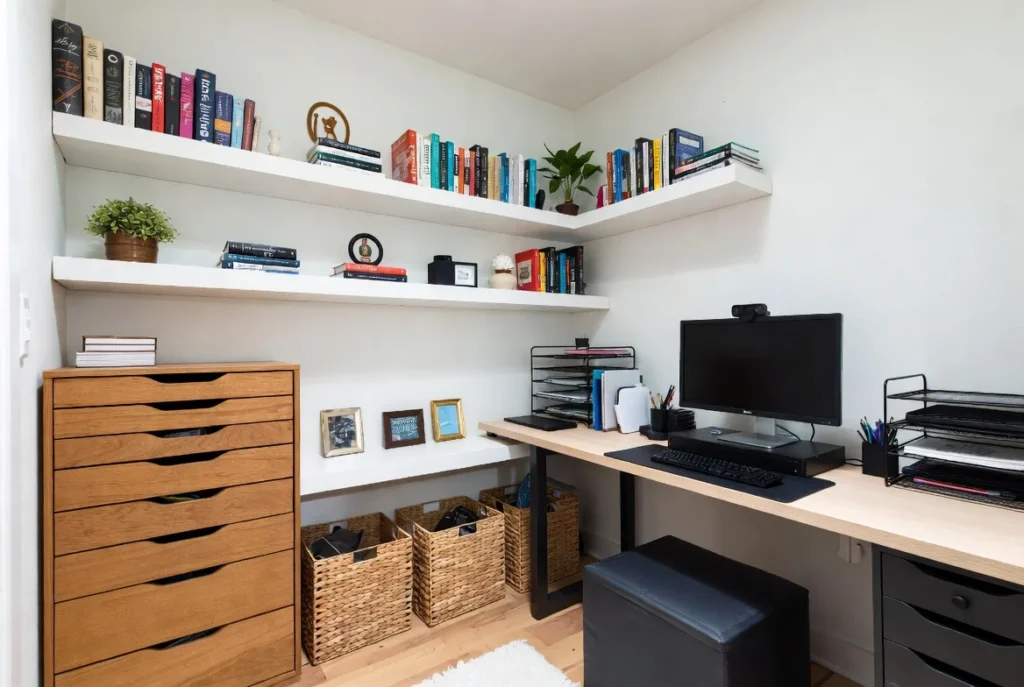
Clutter destroys coziness faster than almost any other factor. Organized storage solutions that are both functional and beautiful maintain the visual calm essential for cozy spaces while keeping necessary supplies accessible and tidy. Choose storage that matches your office aesthetic: woven baskets for a natural look, wooden filing cabinets for traditional spaces, or sleek minimalist organizers for contemporary offices.
Invest in desk organizers that corral pens, paper clips, and small supplies preventing desktop chaos. Add floating shelves displaying a curated mix of books, decorative objects, and practical storage boxes. Use drawer dividers keeping filing cabinets organized internally. Consider a storage ottoman that provides both extra seating and concealed storage for items you need but do not want visible.
The key is making storage part of your decor rather than an afterthought. Beautiful storage solutions contribute to the overall aesthetic while serving essential practical functions. When everything has a designated home and items are stored in attractive containers or behind closed cabinet doors, your workspace maintains the visual serenity that allows your brain to relax rather than constantly processing visual clutter.
Incorporate Personal Touches and Meaningful Decor
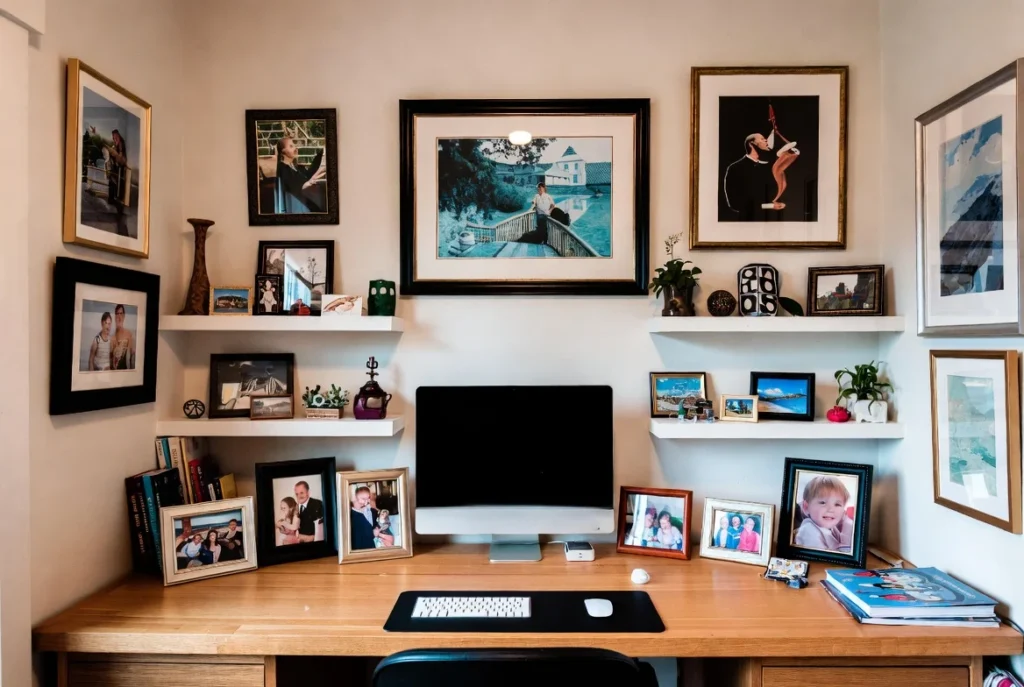
The difference between a generic office and a genuinely cozy one often comes down to personal touches that make the space uniquely yours. Display family photographs in beautiful frames, hang artwork that genuinely moves you rather than generic prints, show collections of meaningful objects, or include handmade items from people you love. These personal elements transform workspaces from functional rooms into extensions of your personality and values.
Personal decor serves practical psychological purposes beyond simple decoration. Surrounding yourself with images and objects that carry positive associations and memories triggers gentle mood boosts throughout working days. Photographs of loved ones remind you why you work. Art that inspires you provides creative fuel during challenging projects. Objects from travels or meaningful life events ground you in larger contexts beyond immediate deadlines.
Balance is essential when adding personal touches. Too many items create visual clutter, while too few make spaces feel cold and impersonal. Curate carefully, choosing pieces that genuinely matter and rotating seasonal items to keep the space feeling fresh. The goal is creating an environment that feels lived-in and loved rather than staged or overly minimal.
Use Area Rugs to Define Space and Add Warmth
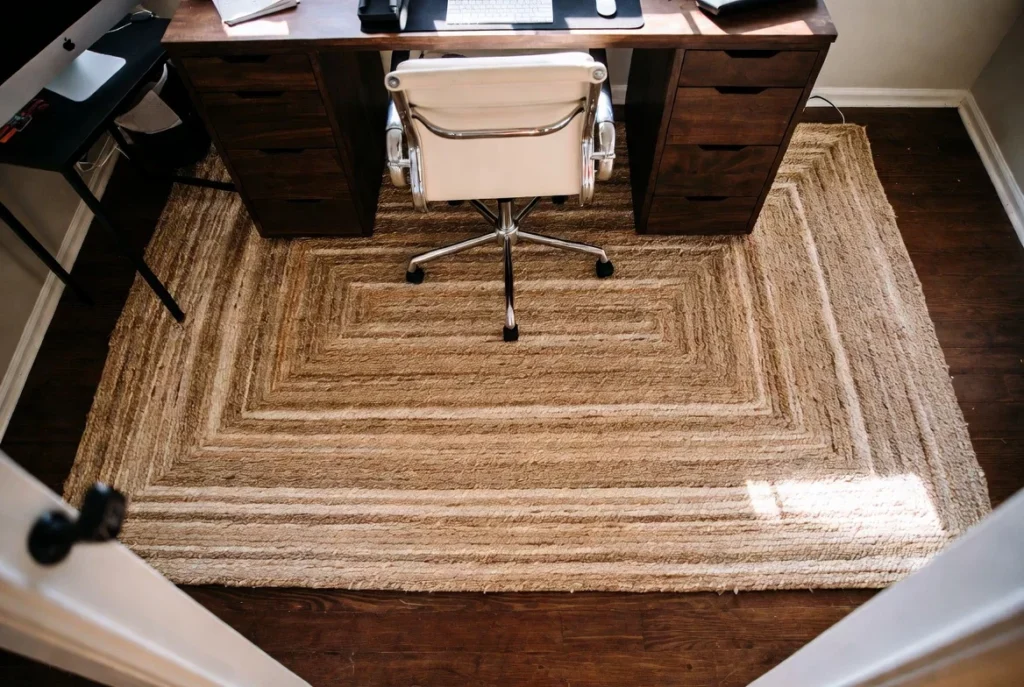
An area rug beneath your desk serves multiple cozy-making purposes simultaneously. It defines your workspace as a distinct zone within a larger room, adds physical warmth underfoot particularly important on cold tile or hardwood floors, provides sound absorption making the space feel quieter and more peaceful, and introduces color, pattern, and texture that contribute significantly to overall aesthetics.
Choose rugs large enough that your desk and chair both fit comfortably on the surface with room to roll your chair without catching edges. Natural fiber rugs in jute or sisal add organic texture and work well in casual or coastal-inspired offices. Plush wool or synthetic rugs provide maximum softness and warmth ideal for colder climates or minimalist spaces needing texture. Patterned rugs in warm tones add visual interest while neutral solid rugs provide versatile foundations.
The transformative power of the right rug should not be underestimated. A single well-chosen rug can tie together disparate furniture pieces, introduce a color palette that informs other decor choices, and make cold, hard floors feel immediately more inviting. This relatively affordable addition delivers outsized impact on how cozy and finished your office feels.
Incorporate Scent Through Candles or Diffusers
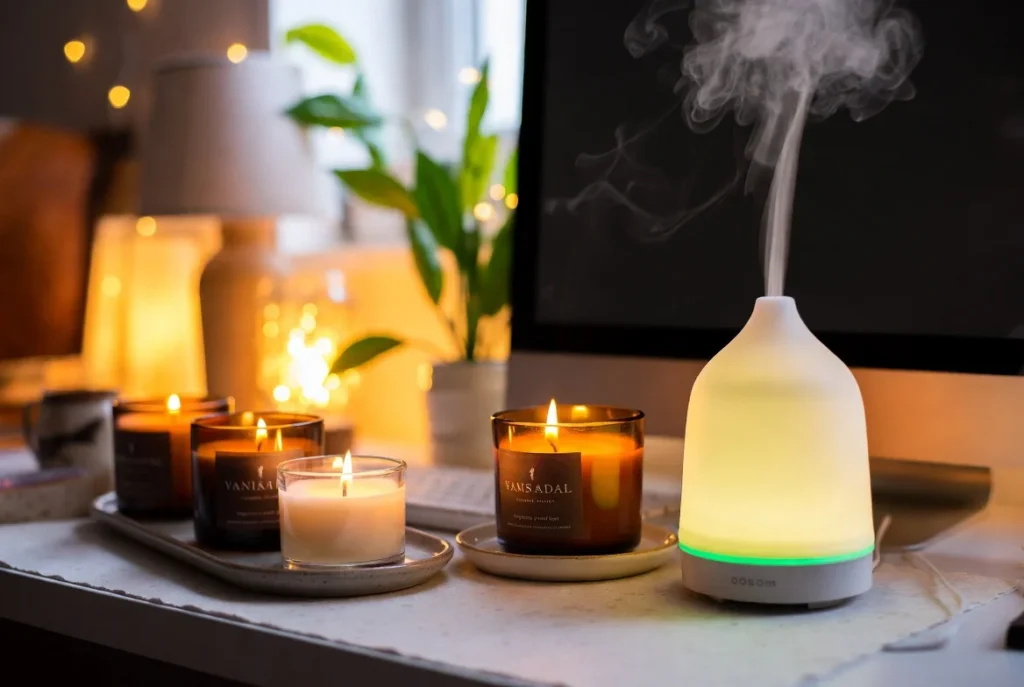
Scent is the most underutilized tool in creating cozy home offices despite being perhaps the most powerful sense for triggering emotional responses and memories. A quality scented candle in warm fragrances like vanilla, sandalwood, cedar, or cinnamon creates instant cozy atmosphere while the flickering flame adds gentle visual interest. Alternatively, use essential oil diffusers dispersing calming scents like lavender, eucalyptus, or bergamot throughout your space.
The psychological impact of pleasant scent extends beyond simply smelling nice. Research shows that certain aromas reduce stress hormones, improve focus and concentration, enhance mood, and create positive associations with spaces. When your office smells wonderful, your brain begins associating work with pleasant sensory experiences rather than purely as obligation, making you more likely to feel positive about entering and staying in the space.
Choose scents carefully based on desired effects. Peppermint and citrus scents energize and promote alertness ideal for morning work sessions. Lavender and chamomile calm and soothe perfect for stressful deadline work. Woody scents like cedar and sandalwood create grounding, focusing atmospheres. Rotate scents seasonally or match them to specific tasks creating scent-based productivity cues your brain recognizes over time.
Maximize Natural Light While Controlling Glare
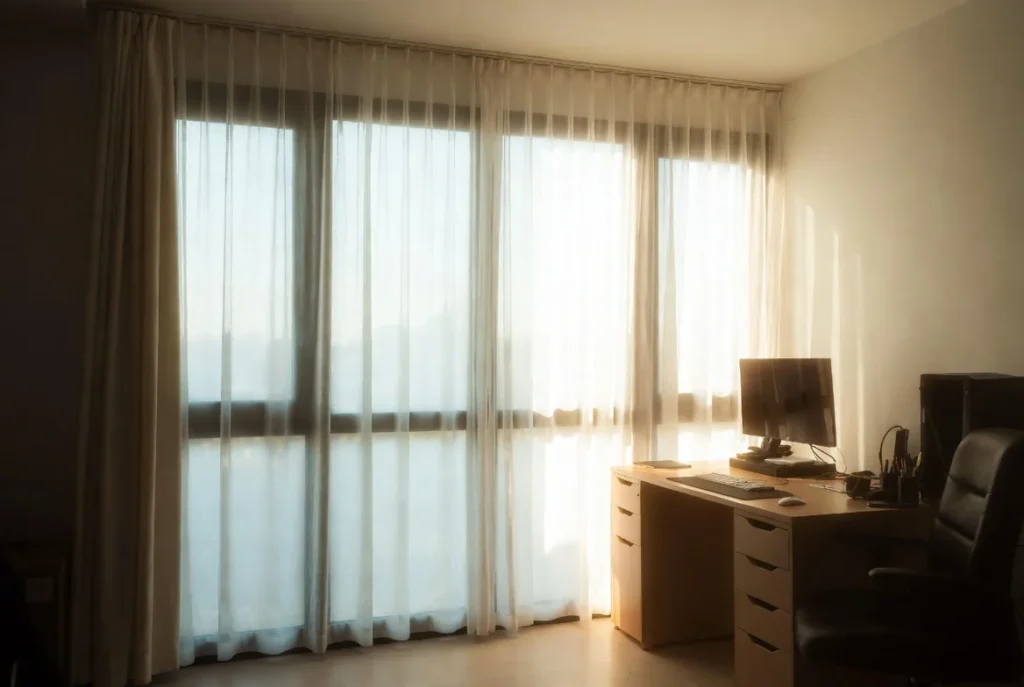
Natural light represents the gold standard for home office lighting, providing full-spectrum illumination that supports circadian rhythms, reduces eye strain, and creates the bright, airy quality that makes spaces feel larger and more inviting. Position your desk near windows allowing maximum daylight, ideally with windows to your side rather than directly in front or behind preventing screen glare while maintaining light benefits.
Control natural light appropriately for different times of day using adjustable window treatments. Sheer curtains filter harsh midday sun while maintaining brightness. Layered curtains combining sheers with heavier drapes provide flexibility adjusting light levels throughout the day. Roller shades or blinds offer precise control. The goal is harnessing natural light benefits while preventing the glare and heat that make working near windows uncomfortable during certain hours.
If your office lacks adequate natural light, compensate through strategic artificial lighting and reflective surfaces. Place mirrors opposite windows doubling available light. Paint walls in light, reflective colors. Choose glass or acrylic furniture allowing light to pass through rather than solid pieces that create shadows. These strategies help even poorly lit spaces feel brighter and more cheerful despite architectural limitations.
Add Warm Flooring or Strategic Floor Coverings
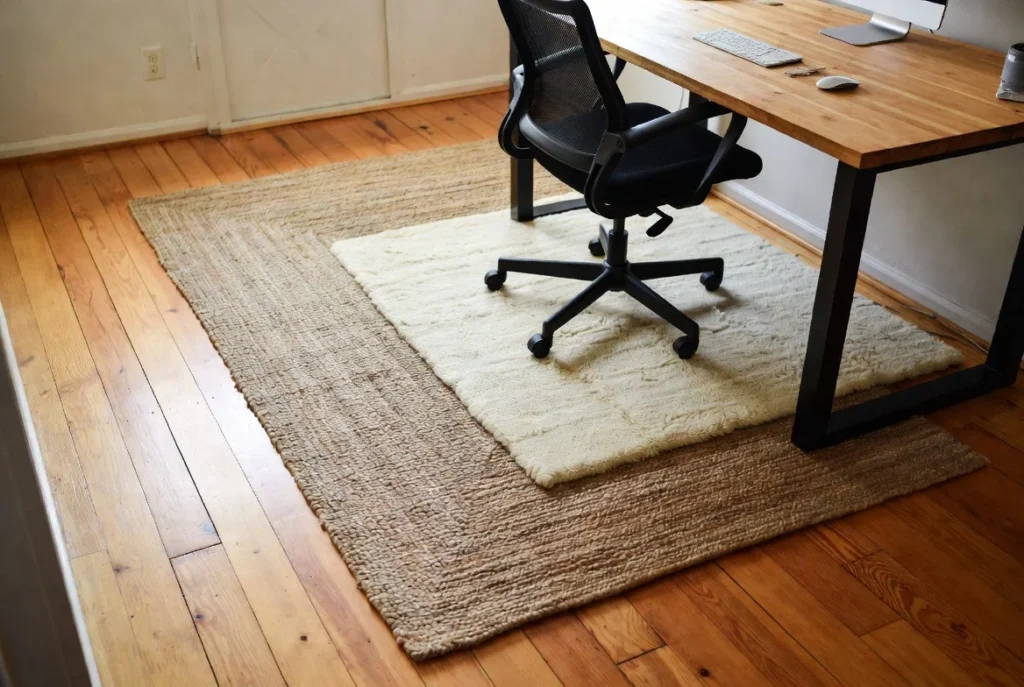
Cold floors undermine cozy atmospheres no matter how well everything else is executed. If you have control over flooring choices, warm wood floors in honey, medium brown, or reddish tones create inviting foundations that contribute significantly to overall warmth. If existing flooring is cold tile or concrete, layer strategically with rugs and consider adding foam floor mats beneath your desk chair providing cushioning and insulation.
For renters or those unable to change existing flooring, layered rugs create warmth and visual interest. Place a large neutral jute or sisal rug as a base layer, then add a smaller plush wool or faux fur rug in your immediate desk area creating a luxuriously soft spot for your feet. This layering technique adds depth and texture while providing practical warmth and comfort.
Consider the psychological impact of what is beneath your feet. Cold, hard surfaces make spaces feel uninviting and can contribute to physical discomfort during long working hours. Warm, soft surfaces create immediate physical comfort that translates to mental comfort, making you more likely to settle into work rather than constantly feeling the urge to leave your workspace.
Conclusion: When Cozy Meets Productive, Magic Happens
Creating a cozy home office for a warm, productive, and stylish workspace requires understanding that comfort and professionalism are not opposing forces but rather complementary elements that enhance one another. The twelve ideas presented throughout this guide prove that well-designed home offices support both the practical demands of focused work and the human needs for beauty, comfort, and emotional warmth.
The most valuable insight to carry forward is that cozy does not mean compromised. Warm lighting reduces eye strain while making spaces beautiful. Soft textiles provide physical comfort that supports longer, more productive work sessions. Personal touches create emotional connections that make you want to spend time in your office. Natural elements connect you to calming influences even when working indoors all day. Each element serves both aesthetic and functional purposes, proving that the most effective workspaces are designed holistically.
Begin your home office transformation by identifying which of these twelve ideas resonates most strongly with your specific space constraints, work style, and personal preferences. Perhaps you start with lighting improvements and adding a plush rug. Perhaps you bring in plants and invest in a truly comfortable chair. Perhaps you simply add a throw blanket and some personal photographs. These seemingly small changes compound into workspaces that feel fundamentally different, proving that cozy home offices are built through layered, intentional decisions rather than single dramatic gestures.
Your home office deserves to be a place where you genuinely enjoy spending time, where work feels less like obligation and more like purposeful activity happening in a space designed with care. When comfort, beauty, and function align, productivity follows naturally, and the line between working and living blurs into something genuinely sustainable and pleasant.
Frequently Asked Questions
How can I make my home office cozy on a budget?
Start with affordable changes that deliver maximum impact: replace harsh light bulbs with warm-toned LEDs, add a soft throw blanket from discount stores, bring in houseplants propagated from existing plants or purchased inexpensively, hang string lights for ambient glow, and add personal photos in thrifted frames. Use what you already own creatively by moving comfortable furniture from other rooms, repurposing decorative items as office decor, and painting walls in warm tones with leftover paint. Focus on textiles, lighting, and personal touches which cost little but transform how spaces feel.
What colors make a home office feel warm and cozy?
Warm colors that create cozy home offices include soft terracotta, warm beige, gentle sage green, creamy off-white, burnt orange, rust, warm taupe, and honey tones. Earth-inspired palettes featuring browns, warm greys, and muted oranges create grounding, comforting environments. Accent with deeper tones like burgundy, forest green, or navy for richness. Avoid stark white, cool grey, or bright white which feel institutional. If painting feels too permanent, introduce warm colors through desk accessories, artwork, rugs, and textiles maintaining flexibility.
How do I keep my cozy home office professional looking?
Balance comfort with professionalism through edited styling: choose quality furniture with clean lines even if upholstered in soft fabrics, maintain organized visible storage using matching containers or closed cabinets, select a cohesive color palette avoiding too many competing colors, keep surfaces relatively clear with only essential items visible, and ensure lighting is adequate for video calls. Cozy does not mean cluttered. Well-designed cozy offices feature comfortable elements like soft seating and warm lighting while maintaining the visual organization and intentionality associated with professional spaces.
What is the best lighting for a cozy home office?
The best lighting for cozy home offices combines three types: ambient lighting from ceiling fixtures with warm 2700K to 3000K bulbs on dimmer switches, task lighting from adjustable desk lamps positioned to illuminate work surfaces without glare, and accent lighting from floor lamps, table lamps, or string lights creating pools of warm glow. Avoid harsh overhead fluorescent lights or cool white LEDs. Layer multiple light sources at different heights allowing you to adjust brightness and ambiance throughout the day. Natural light from windows provides ideal daytime illumination when paired with adjustable window treatments controlling glare.
How can renters create cozy home offices without permanent changes?
Renters can create cozy offices through non-permanent additions: add area rugs for warmth and color, use removable wallpaper or wall decals for visual interest, hang curtains on tension rods controlling light and adding softness, bring in freestanding furniture like bookcases or comfortable chairs, use command strips for artwork and shelving, add floor and table lamps supplementing existing lighting, incorporate plants in decorative pots, and layer textiles through throw blankets and cushions. Focus on elements that personalize and warm the space without requiring paint, permanent fixtures, or structural changes. Everything should be removable when moving without damage to walls or floors.
You May Also Like This Post:
15+ Apartment Living Room Ideas for a Stylish and Space-Saving Design


One Comment