
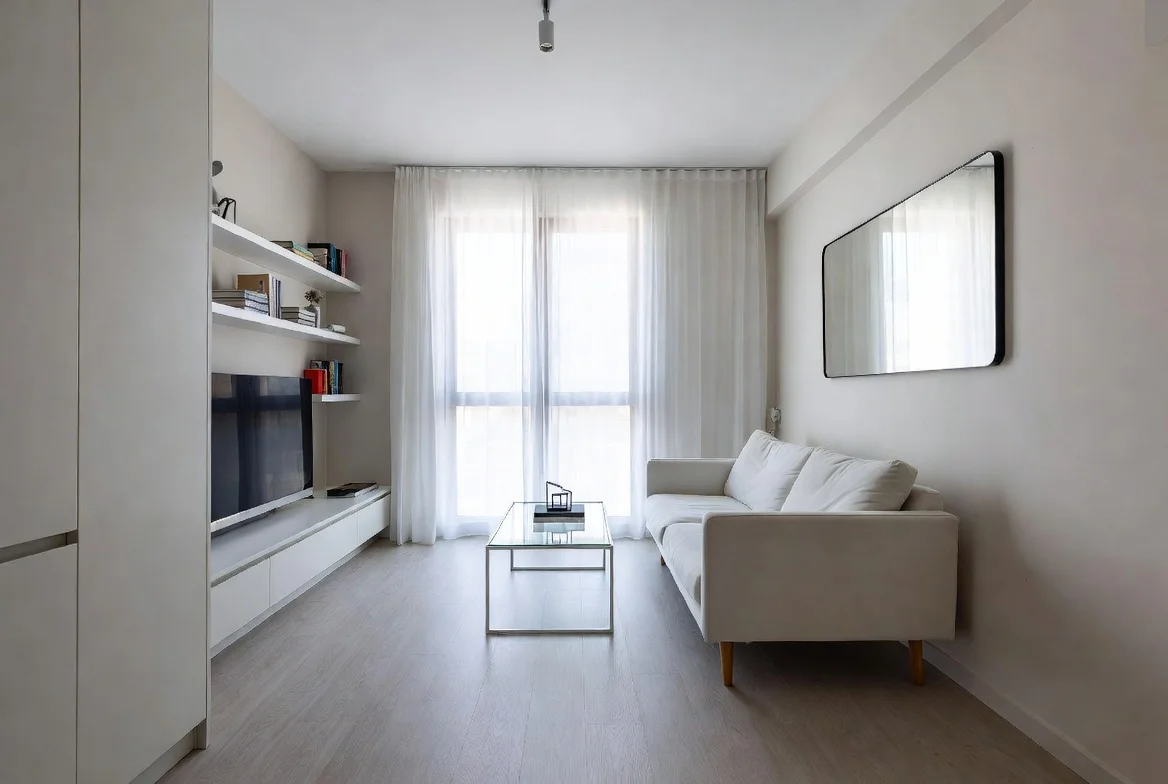
25 Small Living Room Ideas That Make Your Space Look Bigger & More Stylish
Small Spaces, Unlimited Possibilities
Walk into any genuinely well-designed small living room and you notice something unexpected. The room does not feel small. It feels intentional. It feels considered. It feels, if anything, more stylish than many larger spaces you have stood in. The walls are not closing in. The furniture does not crowd. There is light, there is air, and there is a sense that every single element in the room has earned its place.
That transformation is not the result of luck or expensive renovations. It is the result of understanding how small living room design actually works. It is knowing which visual tricks genuinely expand a space and which ones are myths that waste time and money. It is choosing multifunctional furniture, using light strategically, and arranging everything with surgical precision so that every square inch contributes to the feeling of openness rather than constriction.
Whether you are living in a compact city flat, a cosy cottage, or a studio apartment where the living room serves five different functions simultaneously, the principles remain consistent. Through strategic use of colour, clever furniture choices, light reflectance, and ruthless decluttering, any small living room can be made to feel significantly larger, brighter, and infinitely more stylish than its measurements suggest. This guide provides twenty-five of the most effective, designer-approved strategies for achieving exactly that transformation.
Choose Light, Neutral Colors to Reflect More Light
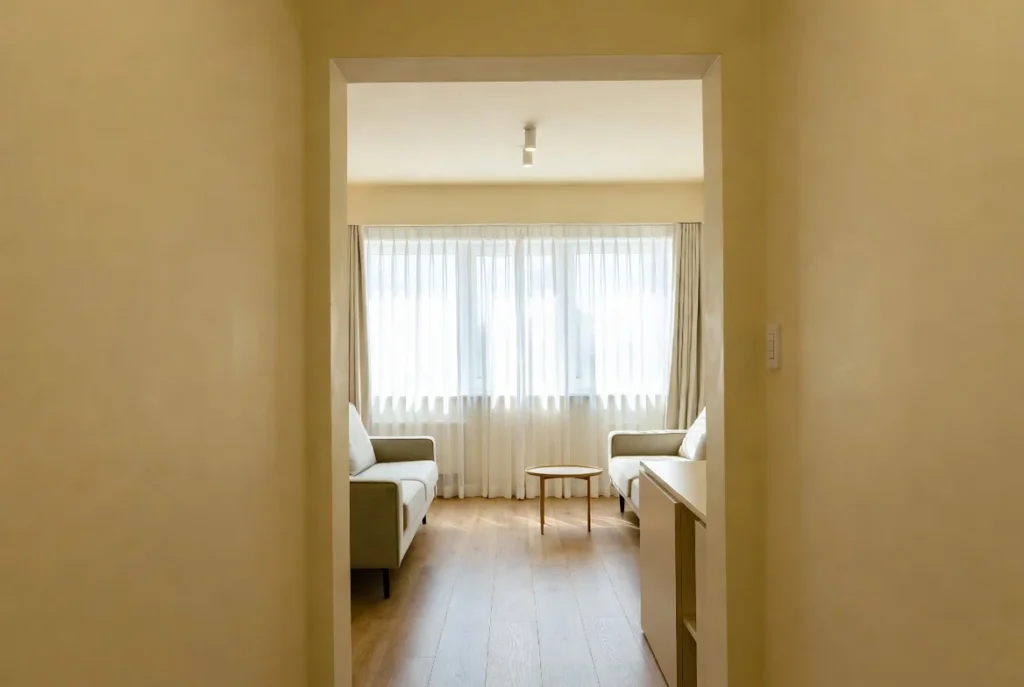
Colour is the foundation of every successful small living room makeover, and the rule here is straightforward. Light colours with a high Light Reflectance Value, typically 65 and above, keep a room feeling bright and open by bouncing ambient light around the space. Soft whites, warm beiges, pale greys, gentle creams, and subtle pastels all work beautifully to create the visual impression of significantly more space.
This does not mean every small living room must be painted stark white. That is both untrue and unnecessary. What matters is avoiding dark, saturated colours that absorb light and visually contract the walls inward. Interior designer Liz Potarazu recommends painting walls, ceiling, and trim in the same colour to eliminate visual divides and make the room appear larger. Without a focal point where the paint colour changes, the eye reads the space as one continuous, uninterrupted surface rather than a series of smaller, boxed-in sections.
If you love colour and cannot bear the thought of an entirely neutral living room, introduce bright, bold accent colours through cushions, throws, artwork, and soft furnishings rather than wall paint. This allows personality and vibrancy without sacrificing the open, airy quality that lighter walls provide.
Hang Large Mirrors Strategically to Double the Light
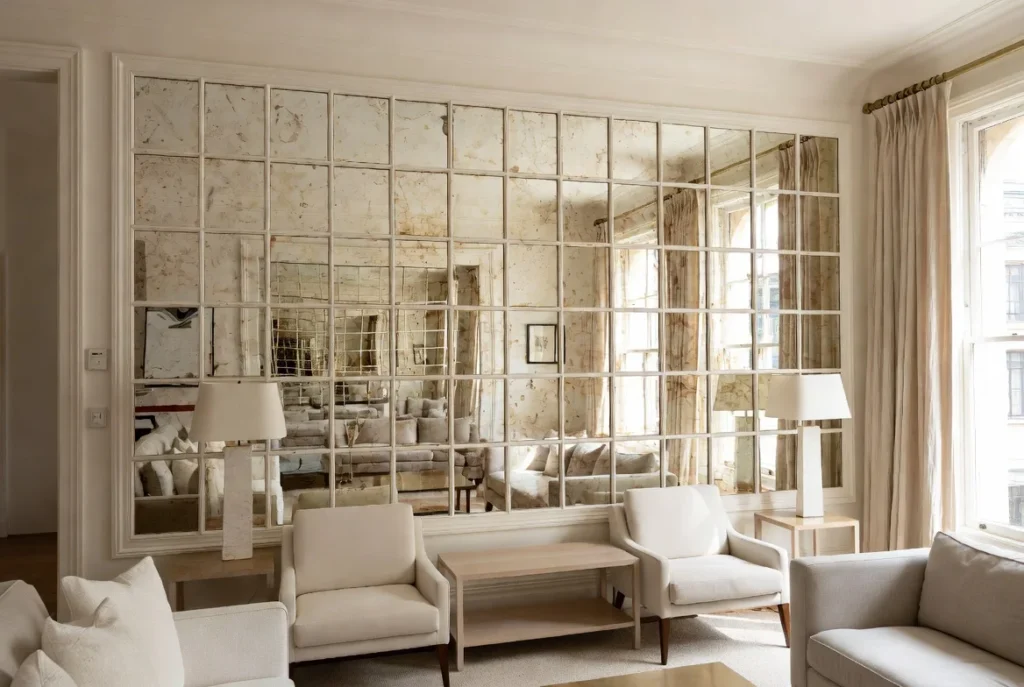
Mirrors are the single most effective visual trick for making a small living room feel dramatically larger, and interior designers use them consistently in compact spaces for exactly that reason. A large mirror positioned opposite or adjacent to a window reflects natural light back into the room, effectively doubling the amount of daylight the space receives and creating an immediate sense of brightness and expansion.
The most effective approach is to use one substantial mirror rather than several smaller decorative ones. A single oversized mirror positioned on a key wall creates the illusion of an additional window or even an entire additional room beyond the wall. Architectural-style mirrors with windowpane detailing are particularly effective because they mimic the appearance of real windows and genuinely trick the eye.
Mirrored furniture, such as mirrored console tables, end tables, and sideboards, extends this principle throughout the room. The reflective surfaces bounce light from multiple angles and reduce the visual weight of the furniture itself, making the pieces feel less intrusive despite their functional presence.
Choose Furniture with Exposed Legs to Create Visual Lightness
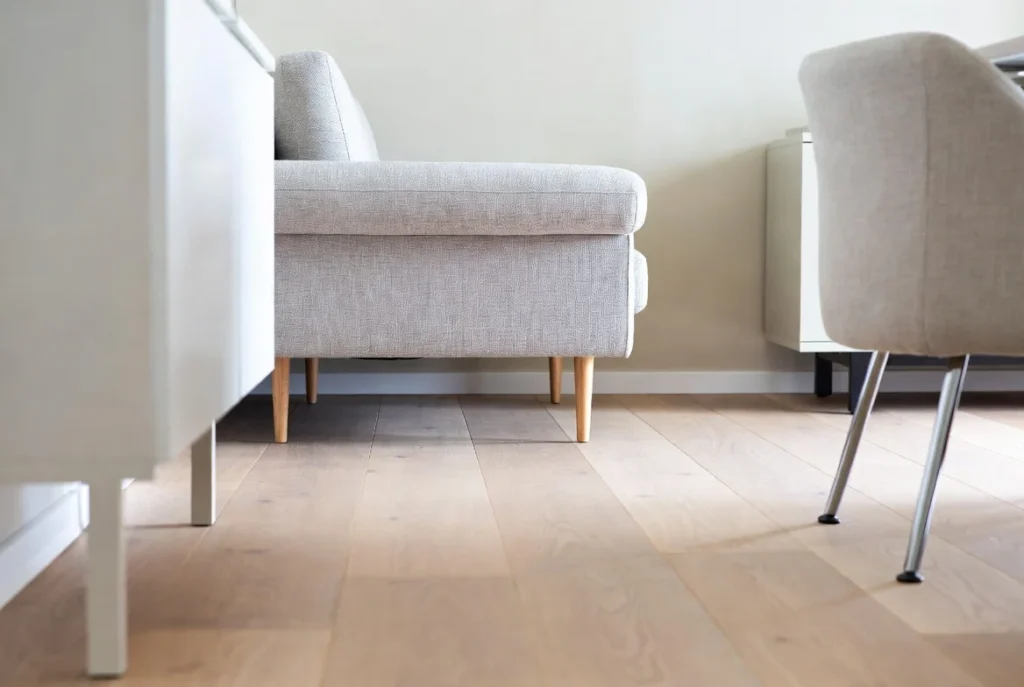
One of the simplest and most immediately effective small living room furniture tips is to select pieces that sit on raised legs rather than flush to the floor. Furniture with visible legs allows light and sightlines to pass underneath and through the room, creating an instant sense of airness and visual lightness that skirted or solid-base furniture simply cannot achieve.
A sofa, armchair, or sideboard raised on slender legs shows more of the floor beneath it, and that visible floor space translates directly into the perception of a larger room. The effect is surprisingly powerful. Designer Emily Henderson notes that raised furniture is ideal for small rooms specifically because it creates the illusion of more space without requiring you to sacrifice actual functional pieces.
When shopping for small living room seating, prioritise sofas and chairs with thin, tapered legs in wood or metal. Avoid heavy, blocky furniture that sits directly on the floor. The difference in how the room feels is immediate and dramatic.
Use Glass or Lucite Furniture to Keep Sightlines Open
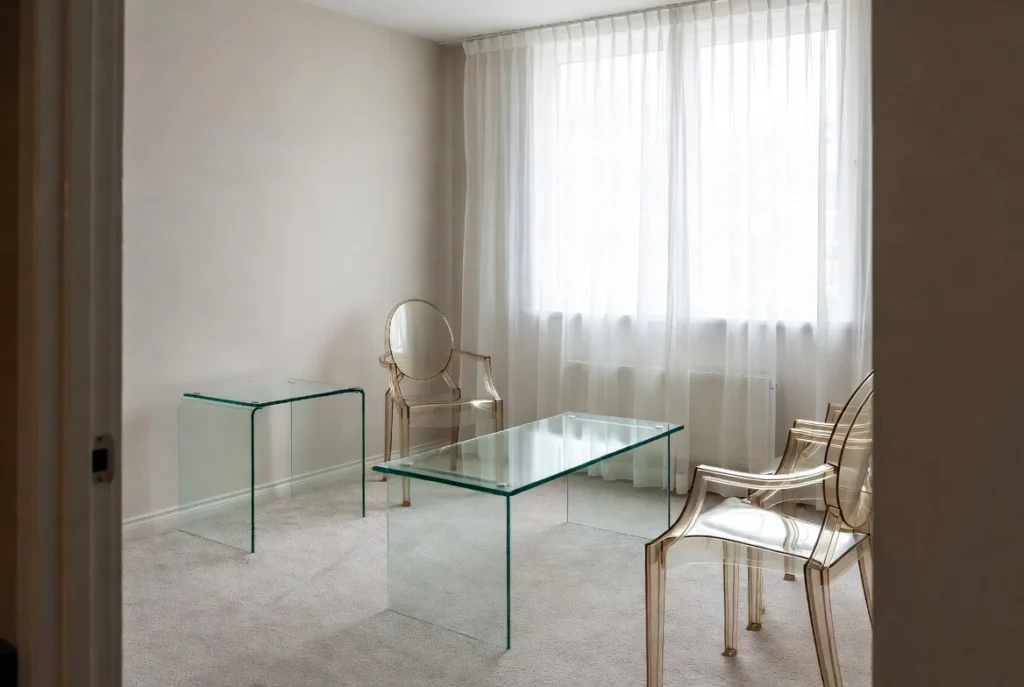
Glass coffee tables, lucite side tables, and acrylic chairs are among the most effective furniture choices for small living rooms because they are functionally present but visually almost invisible. The see-through quality of these materials allows sightlines to pass straight through them, maintaining an uninterrupted view across the entire room.
This transparency prevents the visual clutter that solid, opaque furniture inevitably creates in a small space. A glass coffee table paired with a decorative area rug beneath it has the added benefit of displaying the rug fully, creating another layer of visual interest without adding weight or bulk. Lucite furniture brings a modern, elegant quality to the room while solving the practical challenge of furnishing a tight space without making it feel crowded.
The key is balance. You do not need every piece of furniture to be transparent, but incorporating one or two glass or acrylic pieces among solid furnishings creates a lighter, more open composition than an entirely solid arrangement.
Maximize Natural Light with Sheer or High-Hanging Curtains
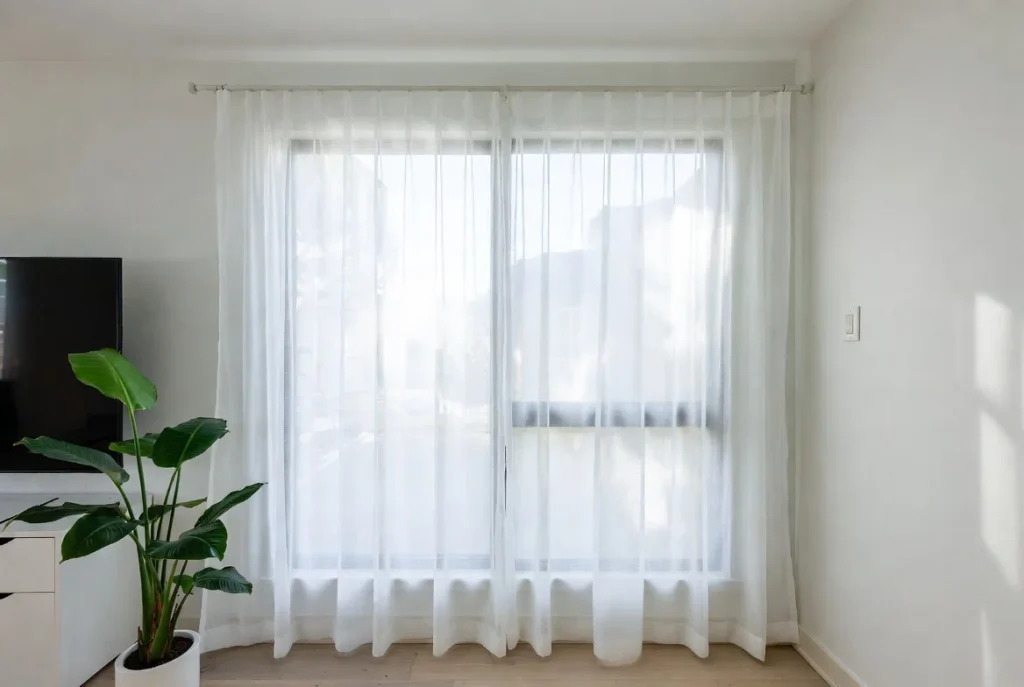
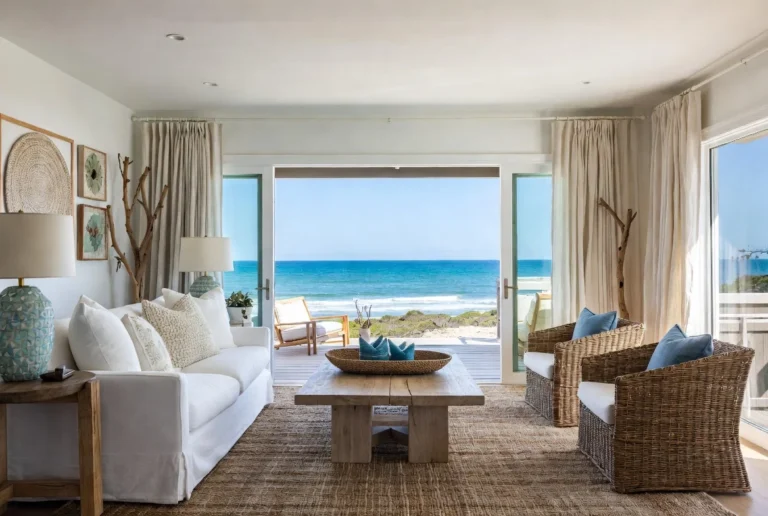
Natural light is the most powerful tool available for making any small living room feel open, welcoming, and significantly larger than its actual dimensions. The more daylight you can bring into the space, the more expansive it will feel. Sheer curtains or lightweight mesh drapes allow maximum sunlight to flood the room while still offering privacy during the day.
If privacy is less of a concern, consider removing window treatments entirely and leaving windows completely bare. The unobstructed glass allows every available photon of daylight into the room and removes the visual frame that curtains create, which can make windows feel smaller.
For rooms where curtains are necessary, use the designer trick of hanging the curtain rod as close to the ceiling as possible and allowing the drapes to fall all the way to the floor. This vertical line draws the eye upward and creates the impression of significantly taller ceilings and larger windows, both of which contribute to the perception of a more spacious room.
Paint the Ceiling the Same Color as the Walls
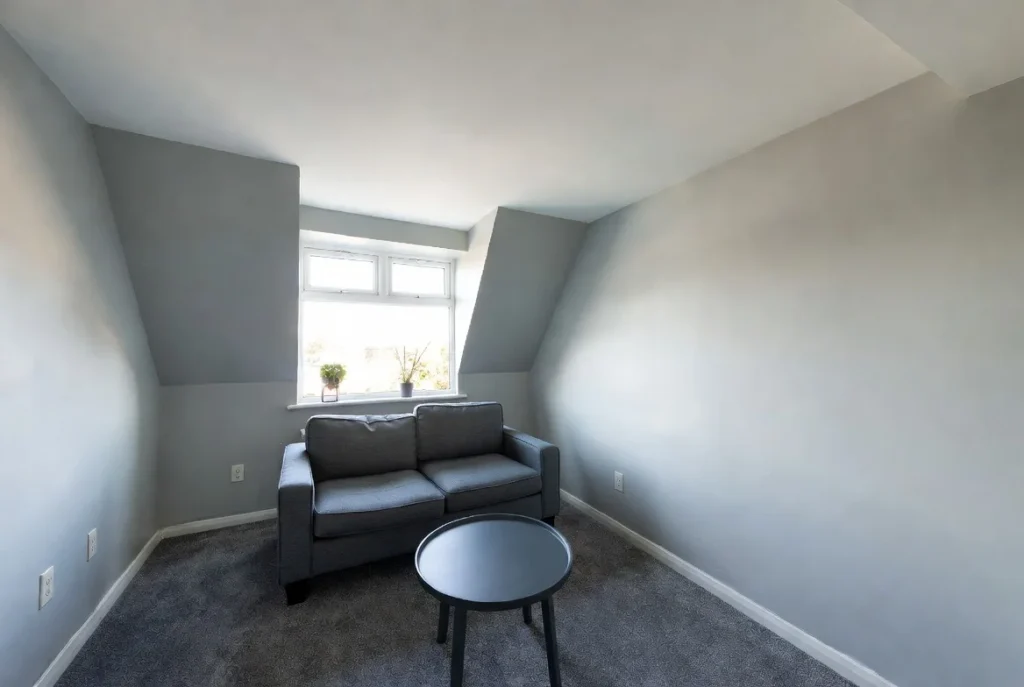
One of the most underutilized techniques in small living room design is the practice of colour-drenching, which involves painting the ceiling, walls, and trim in the same continuous shade. This eliminates the visual breaks that occur when ceilings are left white or painted a contrasting colour, and it allows the eye to read the room as a single, uninterrupted volume rather than a series of smaller, boxed segments.
Interior designers frequently use this technique in compact spaces specifically because it blurs the edges of the room and creates a sense of expansiveness that traditional white ceilings actively work against. A gloss or semi-gloss finish on the ceiling adds an additional layer of light reflectance, bouncing ambient light back into the room and giving the space an immediate lift.
If painting the entire room a single colour feels too bold, choose a slightly lighter shade for the ceiling than the walls and a slightly darker shade for the trim. This graduated tonal approach maintains visual continuity while adding subtle depth.
Use Vertical Space with Floor-to-Ceiling Storage
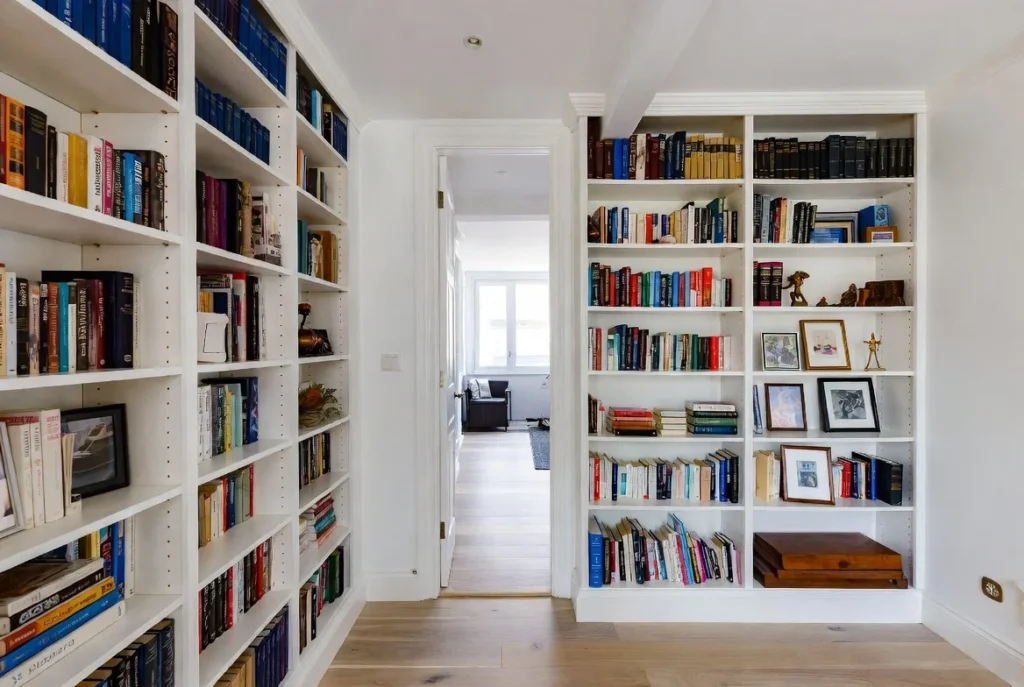
When floor space is limited, the solution is always to build upward. Vertical storage solutions such as floor-to-ceiling bookshelves, tall cabinets, and wall-mounted shelving maximize storage capacity while occupying the smallest possible footprint on the floor. This approach is both practical and visually effective because it draws the eye upward, emphasizing the height of the room and making the space feel taller and more expansive.
Built-in shelving flanking a fireplace or television is one of the most elegant ways to introduce significant storage without adding furniture that protrudes into the room. The shelves become part of the architecture itself rather than freestanding pieces that occupy valuable floor space. In awkward nooks or corners, custom floor-to-ceiling units can transform otherwise wasted space into highly functional storage zones.
The key is keeping the shelving relatively open rather than entirely enclosed behind solid doors. Open shelving maintains visual lightness and allows the eye to move through the space, whereas solid cabinets can feel heavy and box the room in.
Declutter Ruthlessly and Keep Surfaces Clear
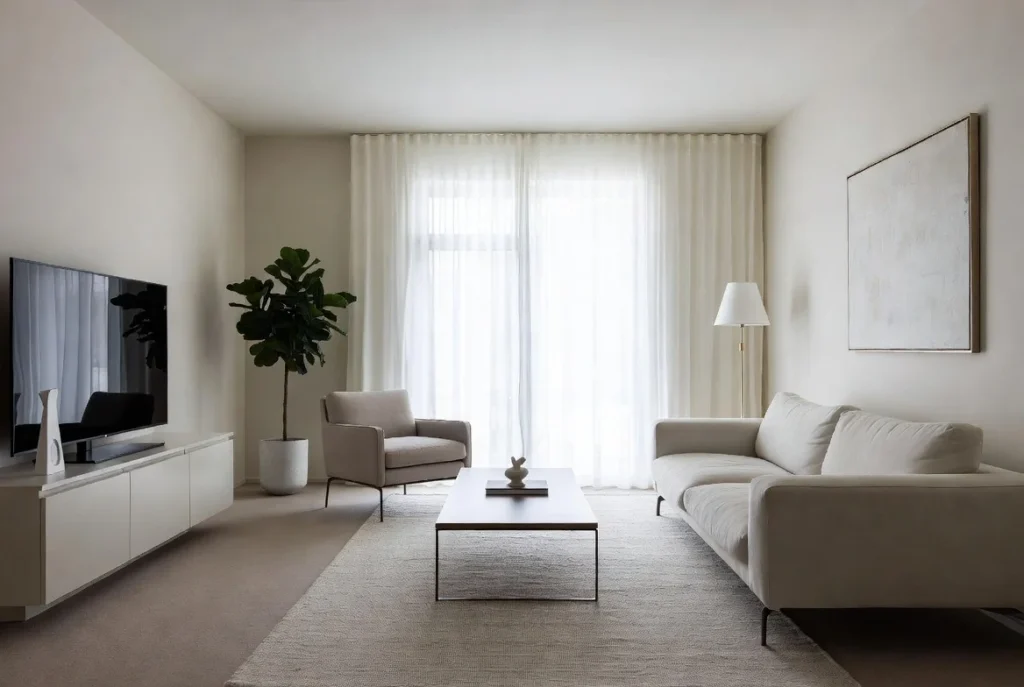
No amount of clever design can compensate for a cluttered room. Decluttering is not simply good housekeeping. It is one of the most powerful and immediate ways to make a small living room feel visibly larger. The more objects you can remove from visible surfaces, the more dramatic the transformation will be.
Start with a ruthless edit of everything currently in the room. Remove old ornaments, unnecessary decorative objects, and any furniture that is not actively earning its place. Every object left in the room should serve a clear purpose, whether functional, sentimental, or genuinely beautiful. Everything else is visual noise that makes the space feel smaller and more chaotic.
Use decorative storage boxes, woven baskets, and hidden compartments to conceal remotes, magazines, chargers, and other everyday clutter. The goal is to create a room where surfaces are as clear as possible, allowing the eye to rest and the space to breathe. A daily tidying habit, where everything is returned to its designated storage spot at the end of each day, maintains this sense of openness long term.
Choose Multipurpose Furniture to Maximize Function
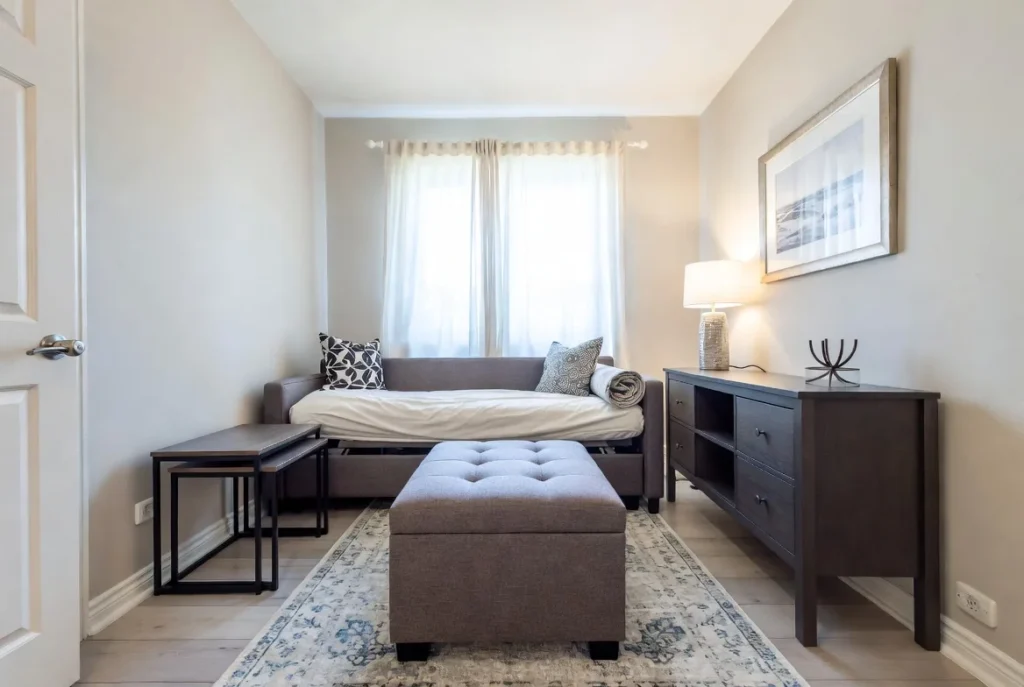
In a small living room, every piece of furniture must justify its presence by doing more than one job. Multifunctional furniture is the cornerstone of successful small space living because it allows you to maintain full functionality without crowding the room with single-purpose pieces.
An upholstered storage ottoman can serve as a coffee table, additional seating for guests, and hidden storage for throws, books, or games. A sofa bed transforms the living room into a guest bedroom when needed without requiring a dedicated spare room. Nesting tables can be tucked away when not in use and pulled out only when extra surface space is needed. A console table with drawers behind the sofa provides both display space and concealed storage.
The goal is to furnish the room with pieces that adapt to multiple needs rather than dedicating separate furniture to each function. This approach dramatically reduces the number of individual items in the room, which directly translates to a more open, less cluttered space.
Use One Large Rug Rather Than Multiple Small Ones
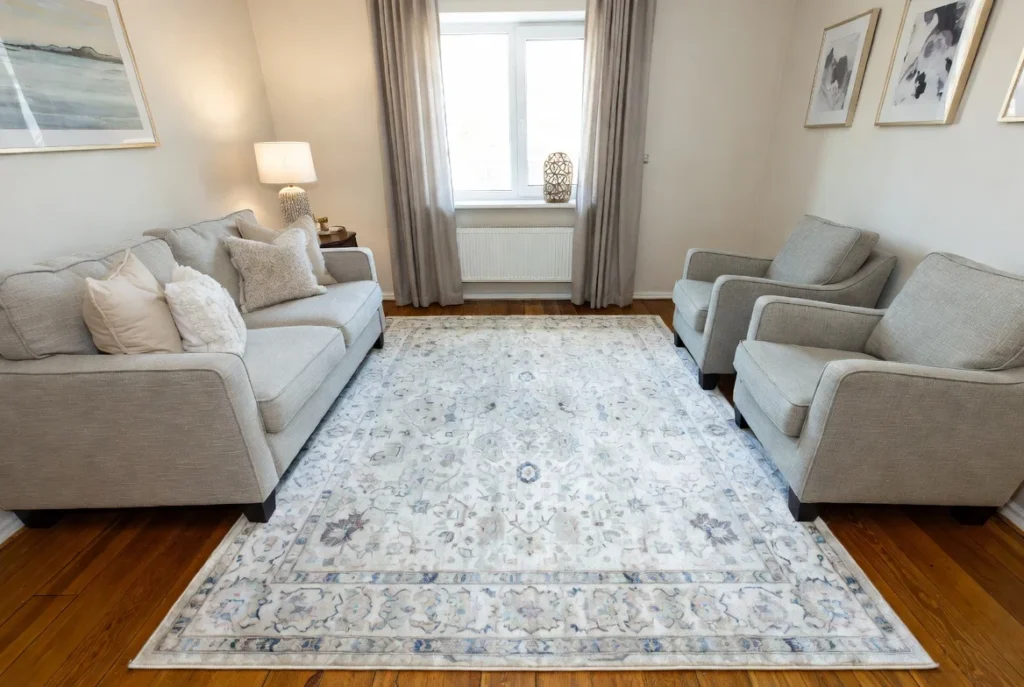
The size and placement of your area rug has an outsized impact on how large a small living room feels. One of the most common mistakes in small living room layout is choosing a rug that is too small for the space. A tiny rug floating in the centre of the room creates the visual impression of an even smaller floor area and makes the entire room feel disjointed and cramped.
The correct approach is to use one large area rug that extends beneath all or most of the main seating pieces. Ideally, the front legs of every sofa and chair should sit on the rug, anchoring the furniture grouping and creating a cohesive visual zone. This makes the seating area feel unified and expansive rather than fragmented.
Light-coloured rugs in soft neutrals reflect more light than dark rugs and contribute to the overall sense of brightness and openness. If the existing flooring is attractive, consider a custom-cut sisal or jute rug that covers most of the floor, creating an effect similar to wall-to-wall carpeting and making the room feel more cohesive and complete.
Hang Artwork and Mirrors High to Draw the Eye Upward
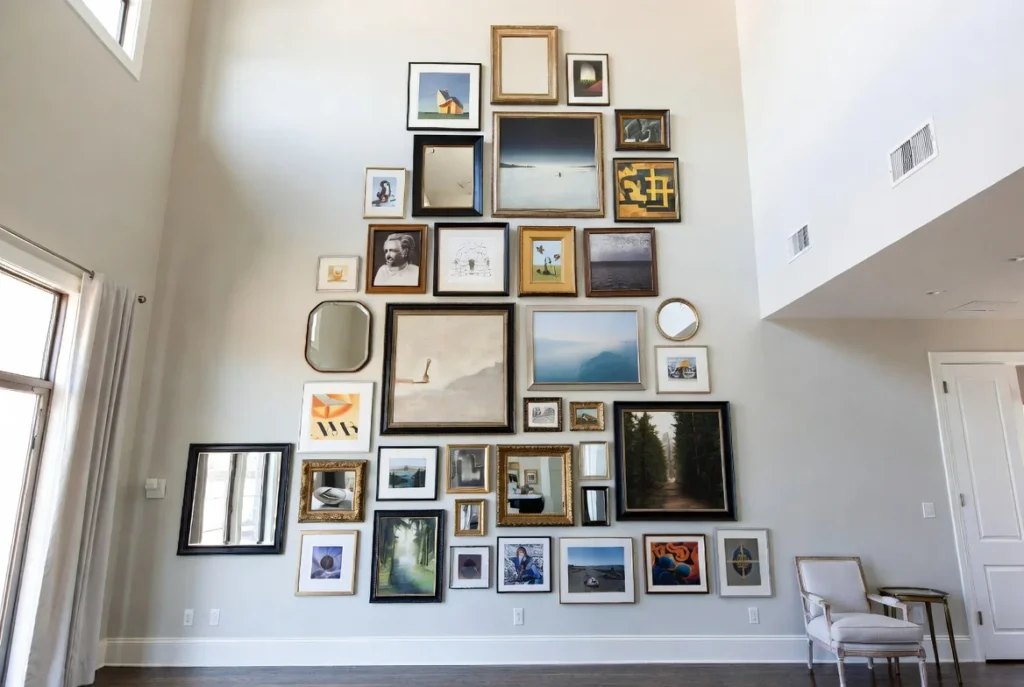
Height matters in small spaces. The higher you can draw the eye, the taller and more expansive the room will feel. Hanging artwork, mirrors, and decorative objects higher than the standard eye level is a simple but highly effective technique for creating the illusion of additional vertical space.
If you have reasonably tall ceilings, take a gallery wall all the way to the ceiling rather than stopping at the conventional height. This continuous vertical arrangement emphasizes the full height of the room and makes the walls feel significantly taller. The same principle applies to mirrors. A tall vertical mirror or a collection of smaller mirrors arranged in a vertical composition leads the eye upward and makes the ceiling feel farther away.
Floating shelves installed at varying heights up the wall serve both storage and visual purposes, creating layered interest while reinforcing the verticality of the space. The goal is always to encourage the eye to travel upward rather than staying focused on the limited horizontal floor space.
Choose Furniture at the Right Scale, Not Just Small Furniture
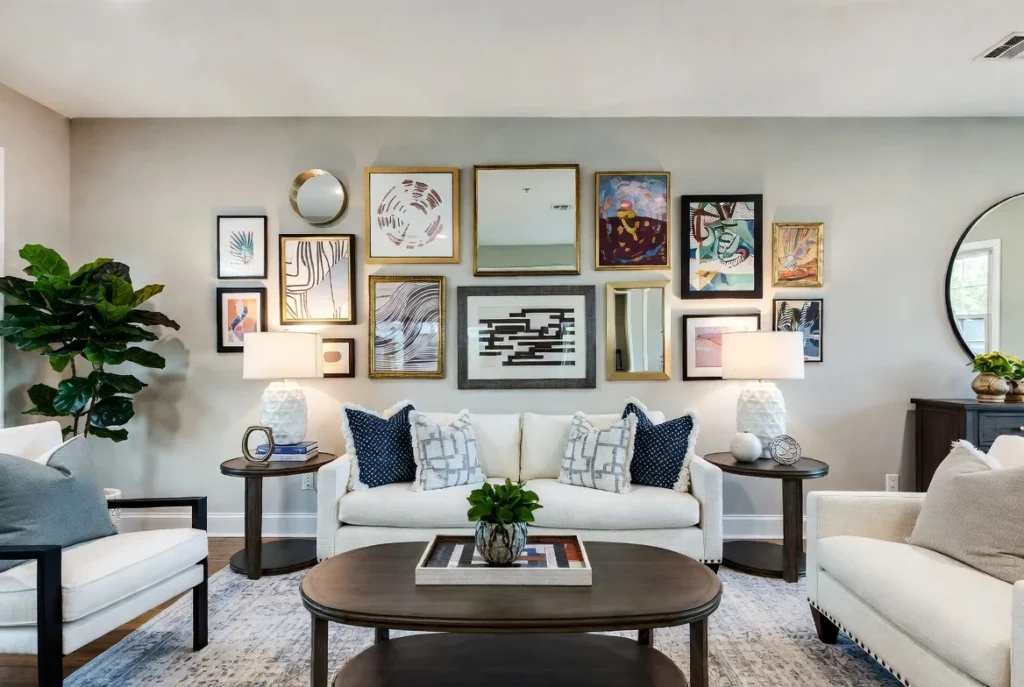
There is a persistent myth in small living room design that small rooms require the smallest possible furniture. This is misleading and often counterproductive. Furniture that is too small for a room makes the space feel truncated and poorly proportioned rather than spacious. The better principle is to choose normal-sized, appropriately scaled furniture rather than miniature pieces.
Designer Emily Henderson addresses this directly, explaining that she chose an 84-inch sofa for her small living room rather than a 72-inch version because the slightly larger piece made the room feel intentional and well-furnished rather than cramped with undersized furniture. Interior designer Nate Berkus reinforces this advice, noting that appropriately sized furniture creates better visual balance in compact spaces.
The key is selecting fewer, larger, well-chosen pieces rather than filling the room with many small items. One substantial sofa paired with a couple of streamlined armchairs creates a more expansive, sophisticated feel than a collection of small, delicate pieces that collectively read as cluttered.
Keep the Color Palette Monochromatic for Visual Cohesion
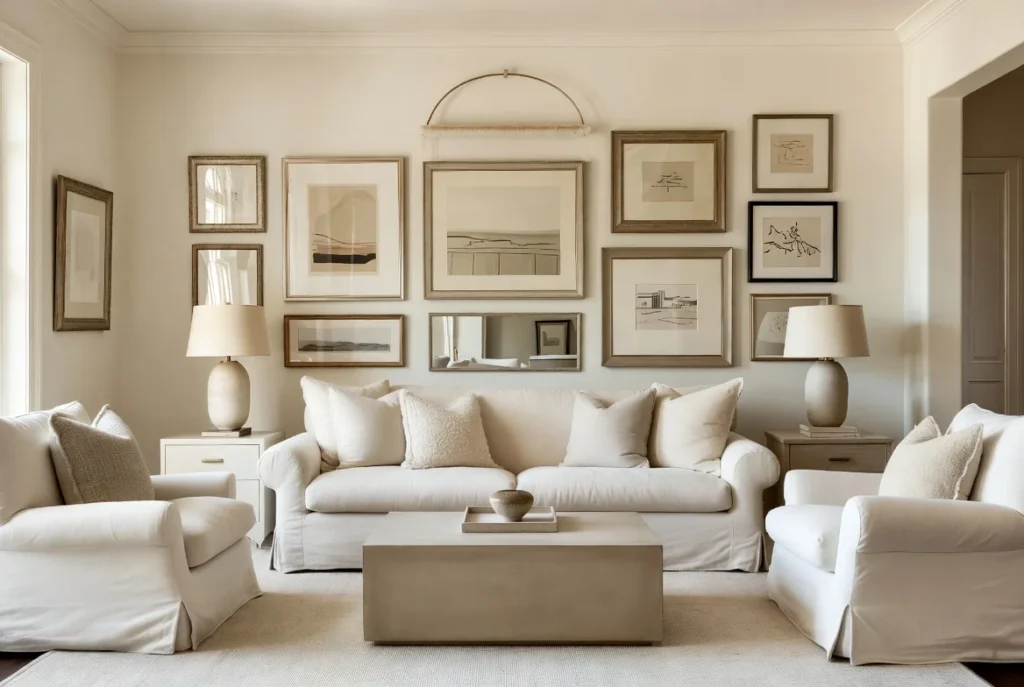
A monochromatic colour scheme in which walls, large furniture pieces, trim, and major textiles are all within the same tonal family creates a sense of visual calm and spaciousness that busy, contrasting palettes simply cannot achieve in small rooms. When the eye does not have to stop and process multiple competing colours, it reads the space as larger and more unified.
This does not mean the room must be bland or colourless. Tone-on-tone layering using different shades of the same hue, such as cream walls with ivory furniture and beige cushions, creates depth and interest while maintaining the visual cohesion that makes the room feel open. You can introduce accent colours through smaller decorative elements like cushions, throws, artwork, and plants without disrupting the overall sense of calm.
Rooms with busy, contrasting colour palettes tend to feel more cramped and visually noisy, whereas neutral, cohesive schemes allow the architecture and space itself to be the focus.
Use Stripes and Linear Patterns to Create Directional Illusions
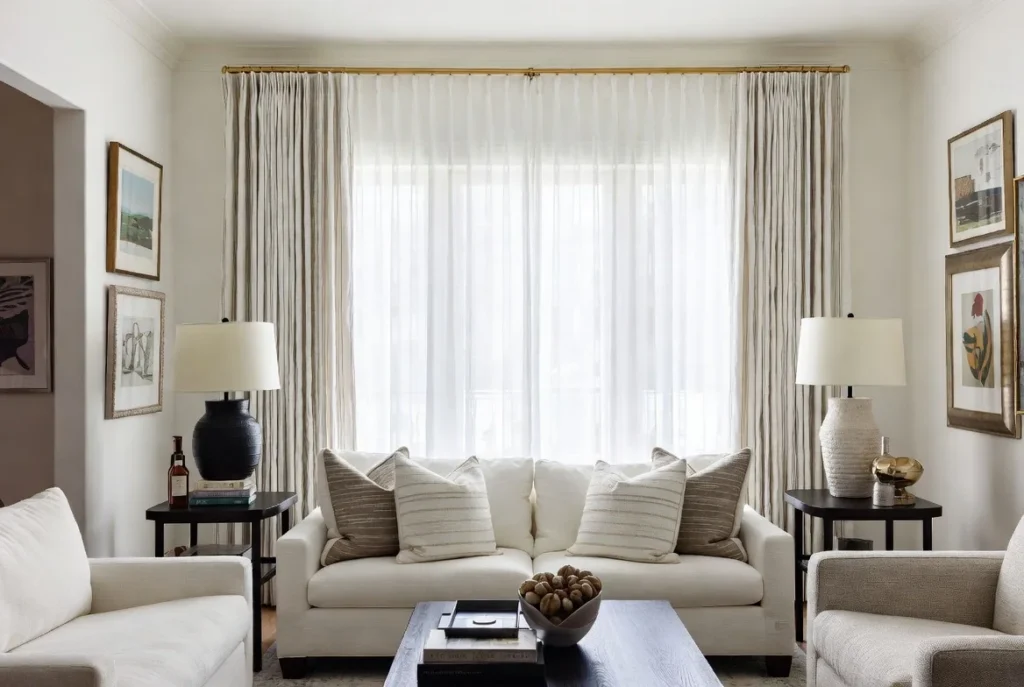
Patterns can be challenging in small living rooms because large, bold prints tend to overwhelm the space and make it feel even smaller. However, subtle linear patterns, particularly vertical or horizontal stripes, can be used strategically to create helpful visual illusions.
Vertical stripes on curtains, wallpaper, or upholstery draw the eye upward and make the ceiling appear taller. Horizontal stripes on a feature wall or rug can make a narrow room feel wider. The key is subtlety. Thin, understated stripes in neutral tones create the desired directional effect without becoming visually dominant or overwhelming.
Small-scale patterns on cushions and accent pieces add visual interest without the heaviness that large-scale prints bring. The general rule is that patterns should be proportional to the size of the room. In a small space, keep patterns small, subtle, and used sparingly.
Install Wall-Mounted or Floating Furniture
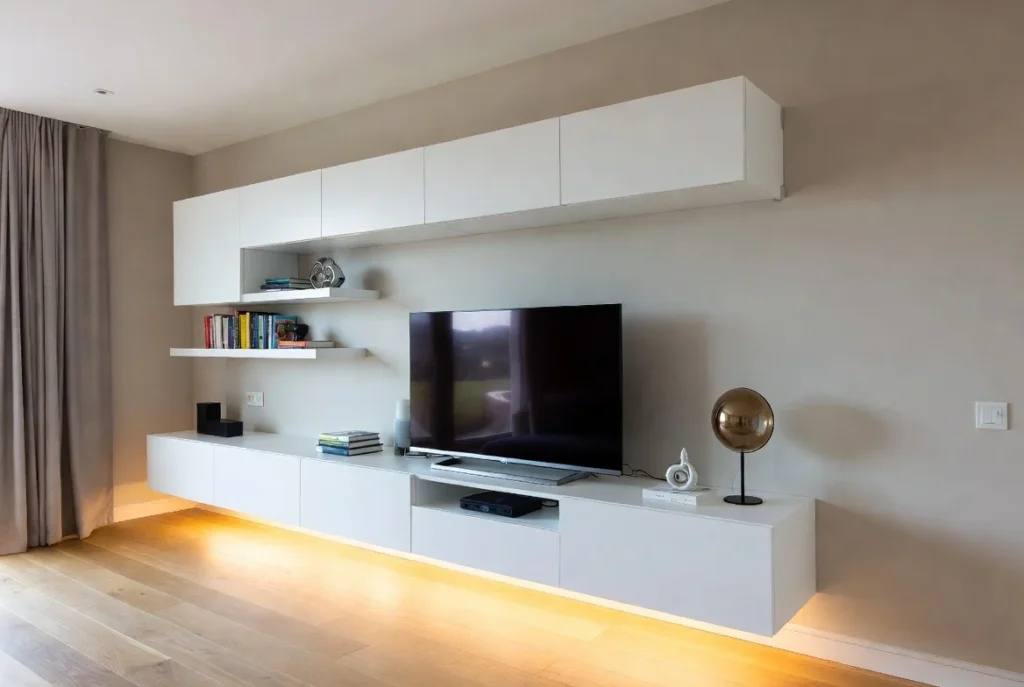
Wall-mounted furniture such as floating shelves, wall-mounted desks, and floating media consoles are among the most effective space-saving solutions for small living rooms because they free up valuable floor space and create the visual impression of a lighter, airier room. The visible floor beneath wall-mounted pieces allows light and sightlines to flow unobstructed, which makes the room feel more open.
A floating TV console replaces a bulky traditional media unit and creates a sleek, modern look that minimizes visual weight. Wall-mounted shelving provides display and storage space without requiring floor-standing bookcases that protrude into the room. A wall-mounted fold-down desk can provide a workspace when needed and fold flat against the wall when not in use, preserving precious floor area.
The additional benefit of wall-mounted furniture is that it makes cleaning significantly easier, as there are no legs or bases to navigate around on the floor.
Extend Curtain Rods Wider Than the Window Frame
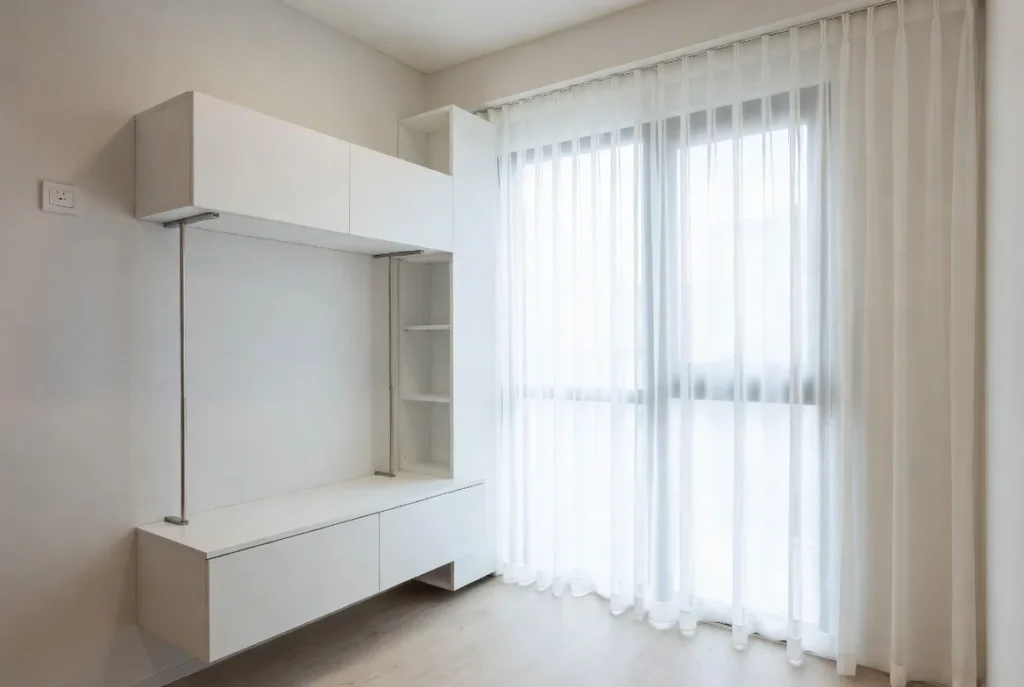
This is one of the simplest and most effective visual tricks for making a small living room feel larger. By installing the curtain rod wider than the actual window frame, extending it 15 to 30 centimeters beyond the window on each side, you create the visual illusion of significantly larger windows.
When the curtains are drawn open, they stack entirely outside the window frame rather than covering the edges of the glass, which allows maximum daylight into the room and makes the window itself appear much wider. The combined effect of what appears to be a larger window makes the entire room feel more spacious and better proportioned.
This technique works best when paired with the practice of hanging the rod close to the ceiling, which simultaneously makes the windows appear taller. Together, these two adjustments create the impression of grand, expansive windows even if the actual windows are relatively modest.
Use Built-In Seating to Maximize Awkward Spaces
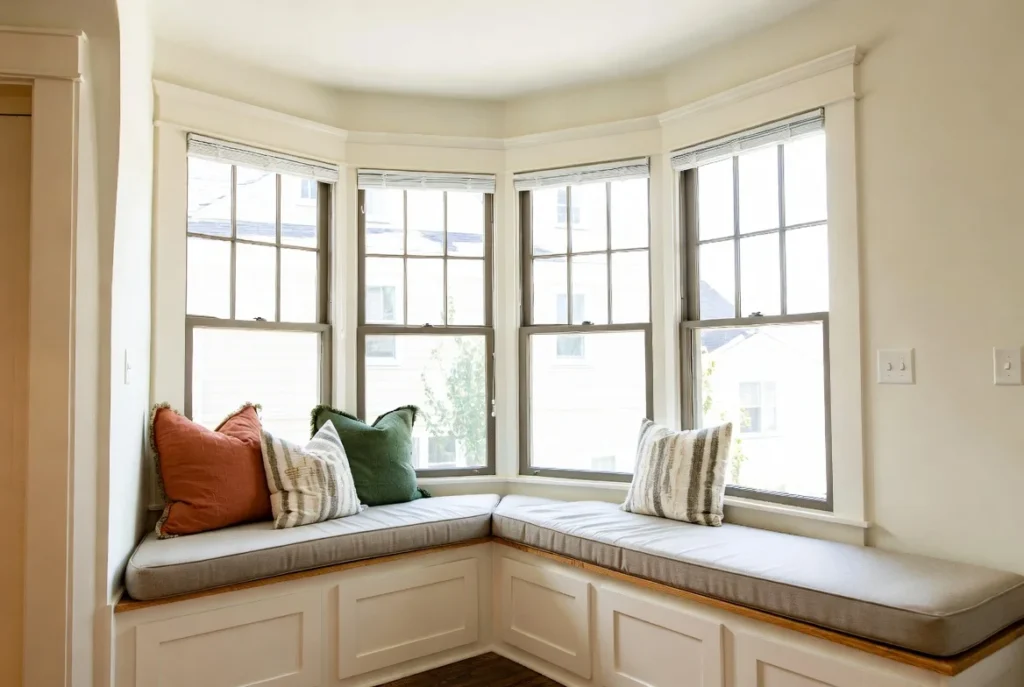
Awkward corners, window alcoves, and unused nooks in small living rooms are prime opportunities for built-in seating that transforms wasted space into functional, stylish zones. A window seat with storage beneath makes use of an otherwise empty area under a window while providing both seating and hidden storage for cushions, throws, books, or games.
Built-in benches along one wall can replace traditional armchairs, taking up less visual space while offering generous seating capacity. The key is integrating the seating into the architecture of the room rather than adding freestanding furniture that protrudes into the limited floor space.
Built-ins also offer the opportunity to create continuity with the walls by painting or finishing them in the same colour as the surrounding architecture, which helps them blend seamlessly and reduces visual clutter.
Choose Round or Oval Furniture to Improve Flow
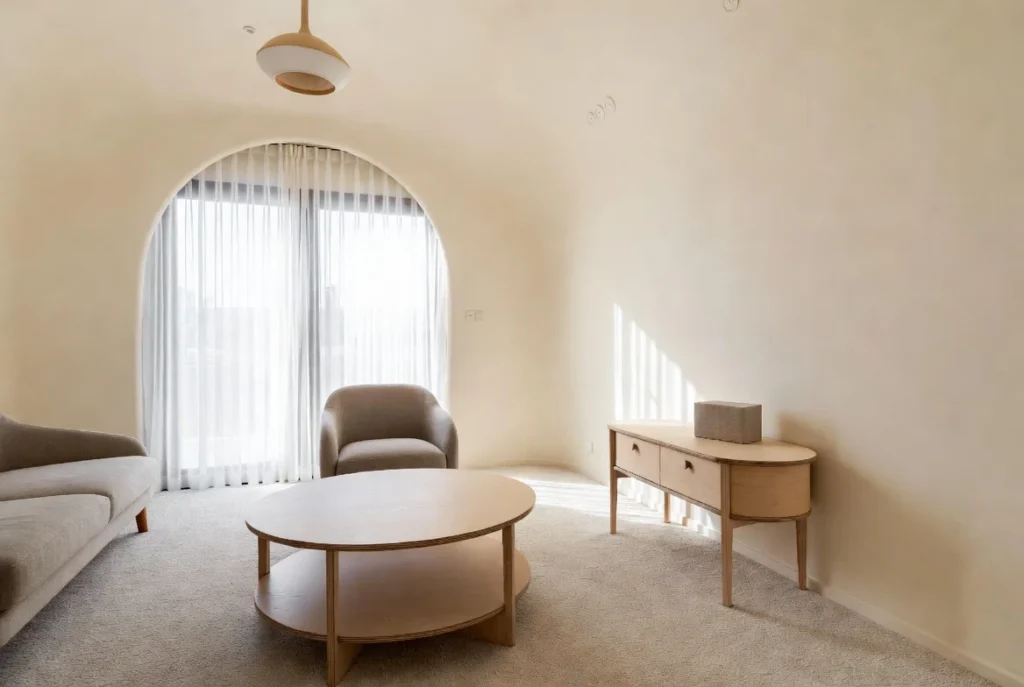
Sharp corners and angular furniture create visual and physical obstacles in small spaces, whereas round or oval furniture allows easier movement and creates a softer, more flowing aesthetic. A round coffee table or oval dining table takes up less perceived space than a rectangular equivalent because the curved edges do not visually cut the room into hard segments.
Round furniture also improves the practical flow of movement through the room. There are no sharp corners to navigate around, which makes the space feel more comfortable and less constricted. In particularly tight layouts, a round ottoman or circular side table can be more functional than a square alternative simply because it is easier to move around.
This is not to say that all furniture in a small living room must be round, but incorporating one or two curved pieces among more angular furnishings softens the overall composition and makes the room feel less boxy.
Layer Lighting at Multiple Levels
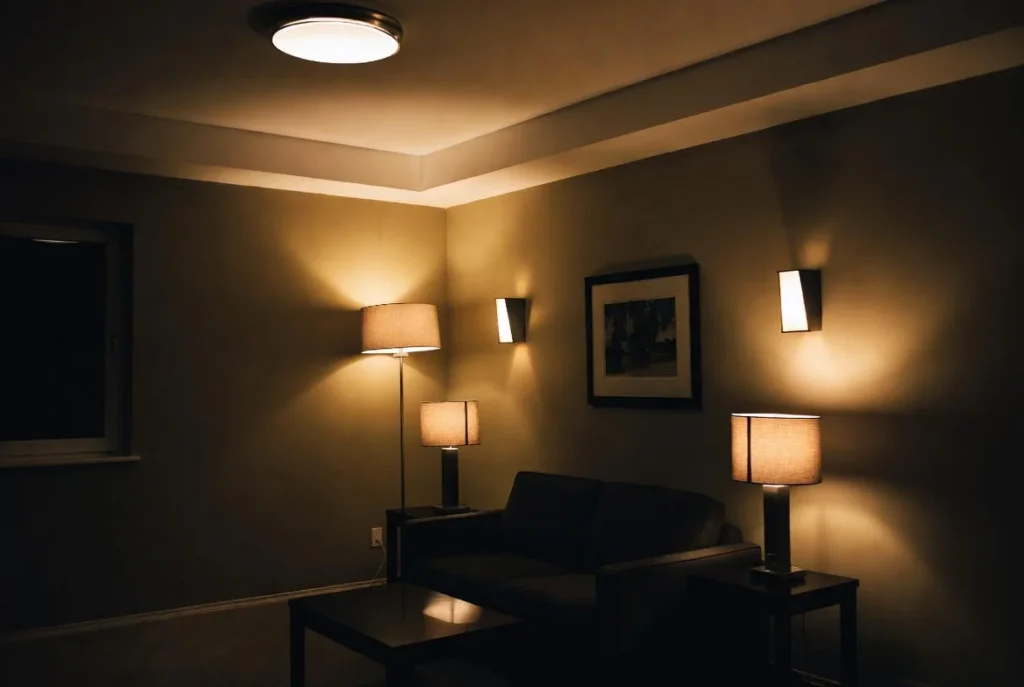
A small living room lit by a single overhead fixture feels flat, harsh, and smaller than it actually is. Layered lighting at multiple levels throughout the room creates depth, warmth, and the perception of significantly more space. Combine ambient lighting from ceiling fixtures or recessed lights with task lighting from table and floor lamps and accent lighting from wall sconces or LED strips.
The goal is to illuminate the room from several angles and heights, which creates visual interest and allows you to adjust the lighting to suit different times of day and activities. Dimmer switches on all light sources give you complete control over the atmosphere, allowing you to lower the lighting in the evening for a cosy feel or brighten it during the day for maximum openness.
Avoid relying solely on overhead lighting. It casts harsh shadows and flattens the room. Distributed lighting at eye level and below creates a much more welcoming, dimensional space.
Use Console Tables Instead of Traditional End Tables
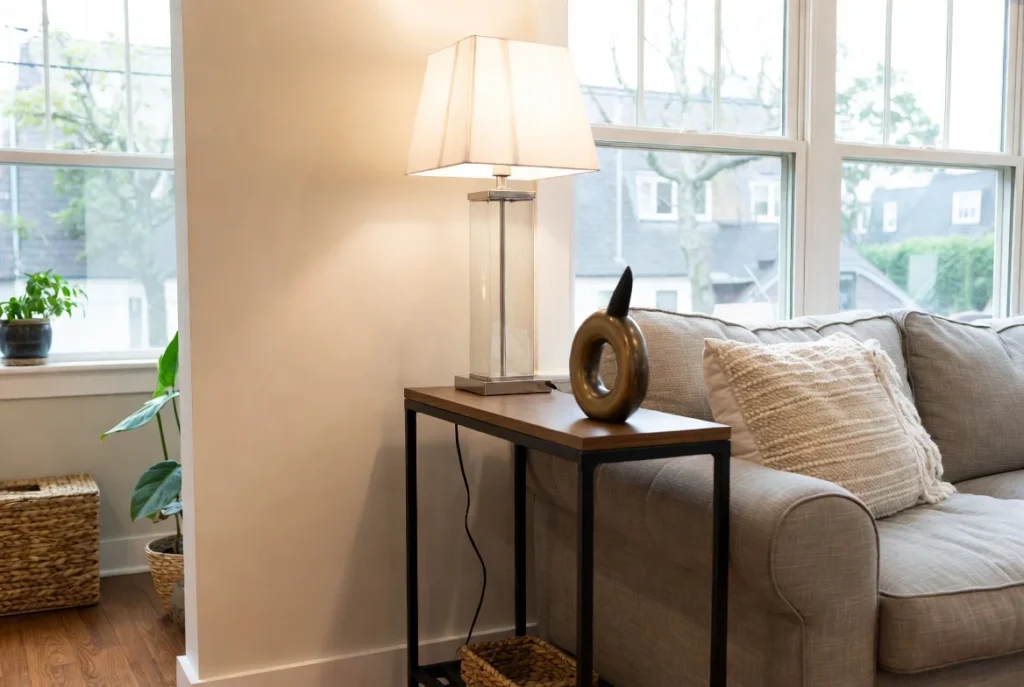
In small living rooms where space is genuinely tight, console tables offer a more versatile and space-efficient alternative to traditional end tables. A narrow console table positioned behind the sofa or against a wall provides surface space for lamps, decorative objects, and storage without occupying the footprint that side tables beside each end of the sofa would require.
Mirrored console tables positioned in front of windows or on feature walls add both function and light reflectance, serving double duty as furniture and visual expanders. In awkward layouts where standard furniture arrangements simply do not work, console tables allow you to introduce necessary surface area in unconventional locations.
The slim profile of console tables makes them particularly well-suited to narrow rooms or spaces where traditional furniture placement is impossible.
Embrace Open Shelving Instead of Closed Cabinets
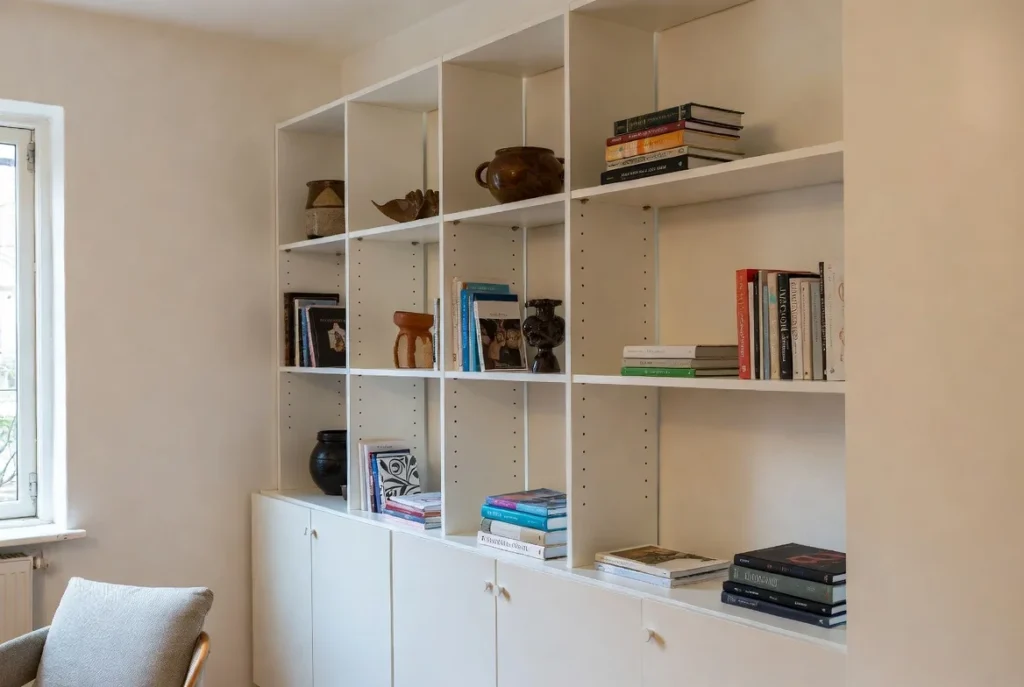
While closed storage has its place, open shelving creates a lighter, more visually expansive feel in small living rooms than solid cabinets. Floor-to-ceiling open shelves allow the eye to move through the space rather than stopping at a solid wall of cabinetry, which makes the room feel larger and less enclosed.
The key to successful open shelving in a small space is restraint. Display only curated, beautiful objects rather than using the shelves as general storage for miscellaneous items. Mix books with decorative objects, plants, and empty space to create a composition that is interesting but not cluttered.
Ladder shelving or leaning bookcases are particularly effective in small rooms because their angled, open design takes up minimal floor space while providing substantial vertical storage.
Create Zones Without Walls Using Rugs and Furniture
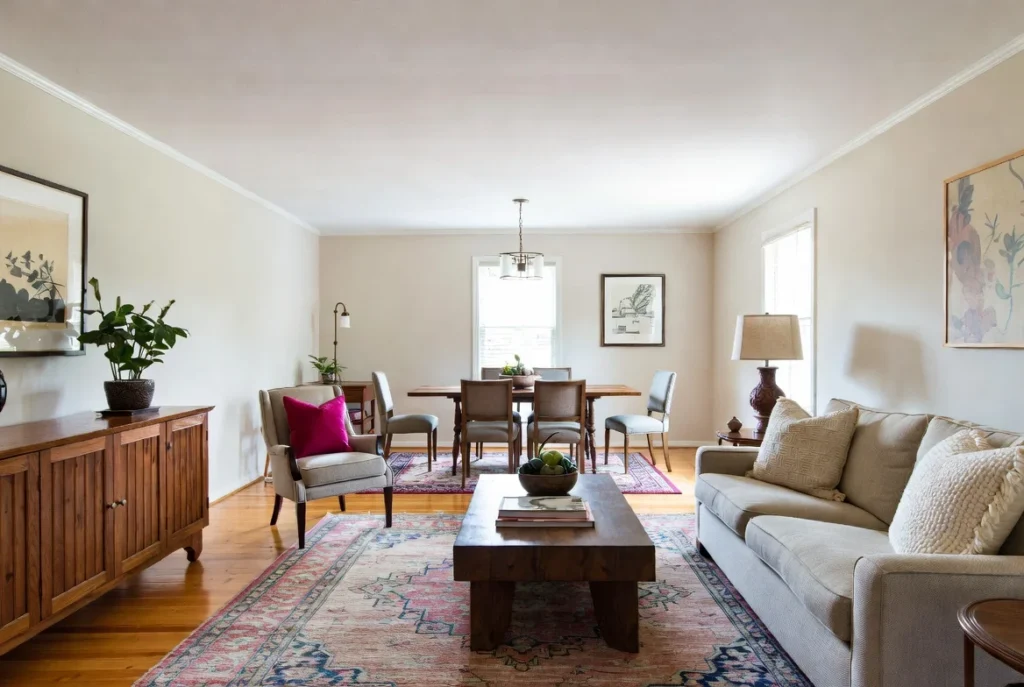
If your small living room serves multiple functions, such as living space, dining area, and workspace, you can create distinct zones without building walls or installing dividers that would make the space feel even smaller. Area rugs are the most effective tool for defining separate zones within a single room.
Position a rug beneath the seating area to define the living zone, and use a different rug or no rug beneath the dining table to differentiate that area. Furniture placement reinforces these zones. Position the sofa with its back toward the dining area to create a subtle psychological division between the two spaces without interrupting sightlines or blocking light.
See-through room dividers such as open shelving units or glass partitions can also separate zones while maintaining the visual openness of the overall space.
Use Low-Profile Furniture to Keep Sightlines Open
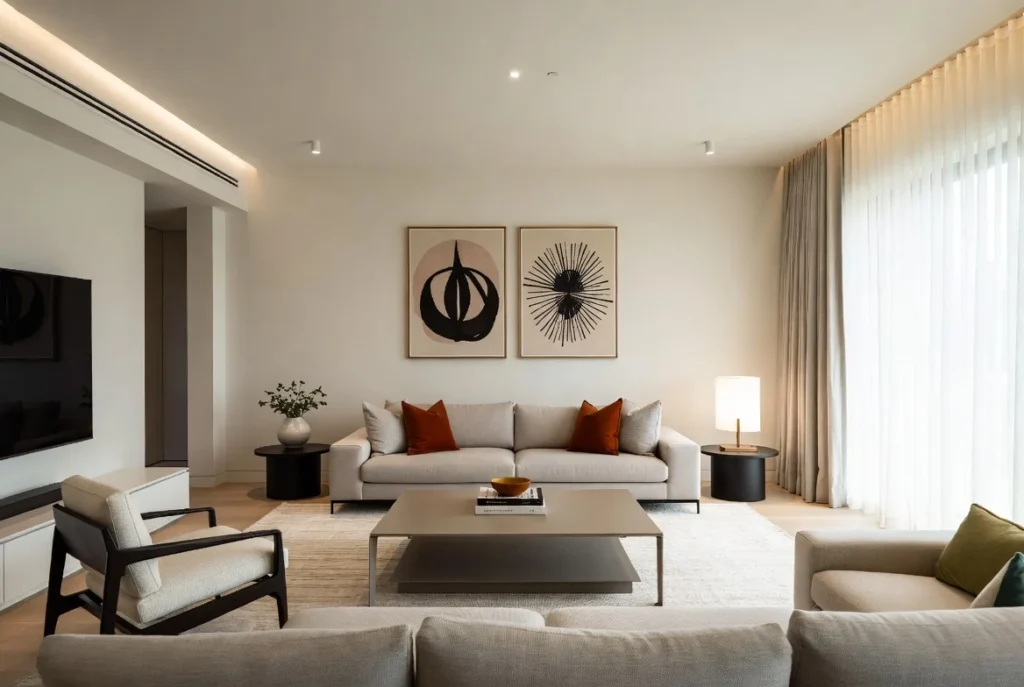
Low-profile furniture with lower backs and shallower proportions maintains open sightlines across the room and prevents the space from feeling visually blocked or segmented. A low-backed sofa allows you to see across and over the furniture rather than having your view stopped by a high, solid back.
This is particularly effective in open-plan spaces where the living room flows into adjacent areas. Keeping furniture low maintains visual continuity between zones and makes the entire space feel more connected and expansive.
Low coffee tables, armless chairs, and streamlined media consoles all contribute to this effect, creating a room that feels open and unobstructed despite being fully furnished.
Add One Statement Piece Rather Than Many Small Decorations
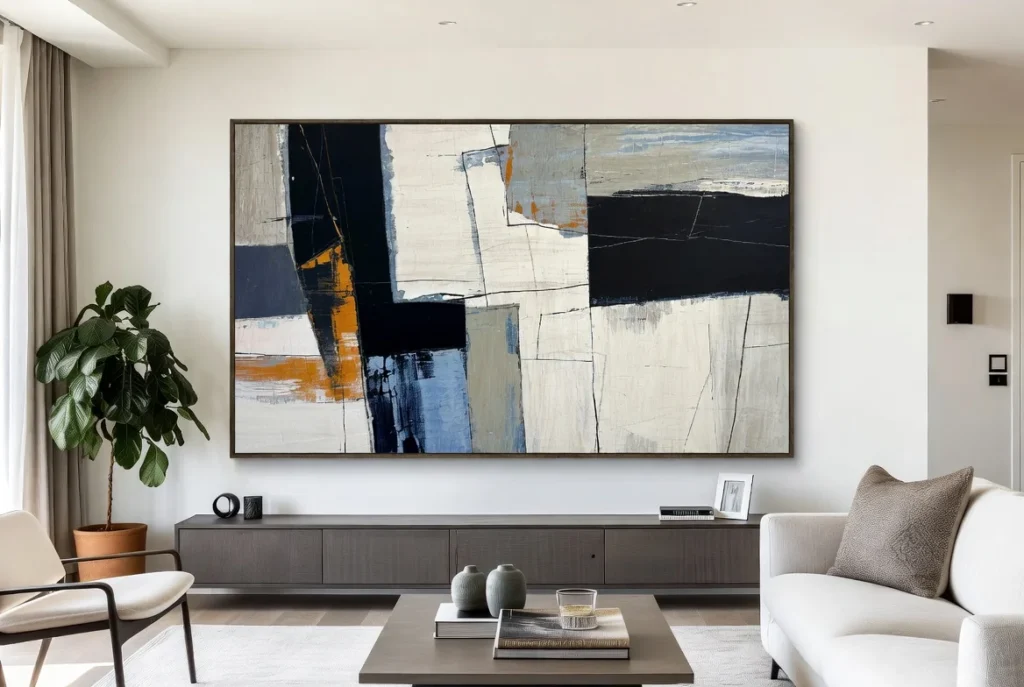
In small living rooms, one large-scale piece of art or a single substantial decorative object creates a more sophisticated, spacious feel than a collection of many small decorative items. A large piece of artwork makes the room feel grander in scale and draws the eye to a single focal point rather than scattering attention across multiple small elements.
This principle, sometimes called the cantaloupe rule, suggests that decorative objects should be at least the size of a cantaloupe to have visual impact without contributing to clutter. Smaller objects should be grouped together in a clear container or on a tray to create a single larger visual element rather than multiple competing small ones.
The overall effect is a room that feels more intentional, more curated, and significantly less cluttered than one filled with many small decorative pieces.
Refresh Seasonally to Prevent Visual Staleness
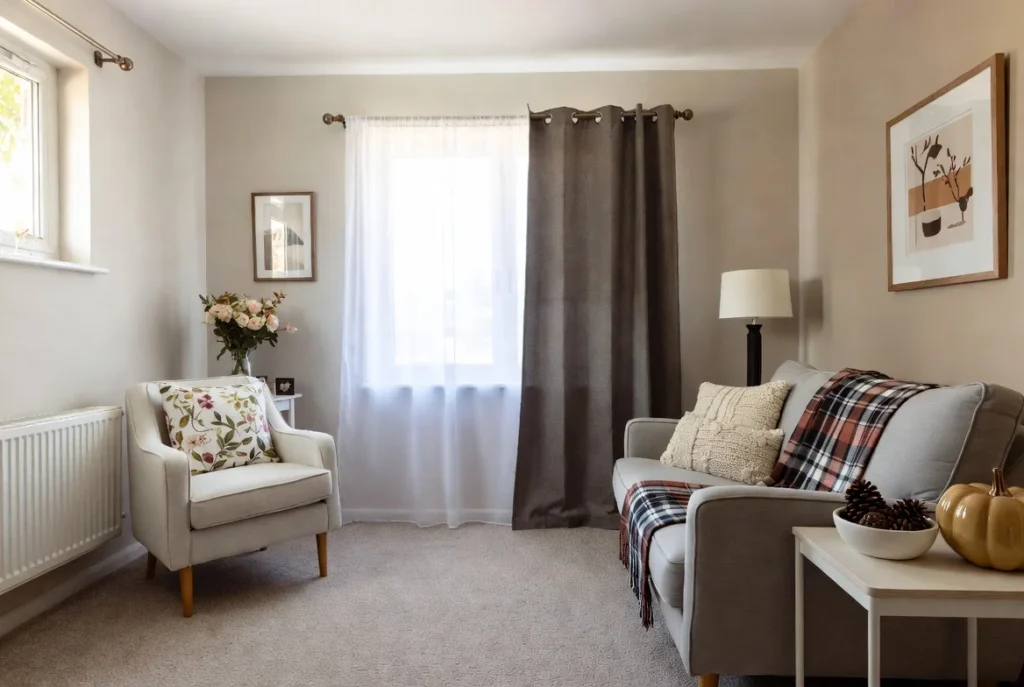
Even the most perfectly designed small living room benefits from occasional seasonal refreshes that keep the space feeling intentional, alive, and loved rather than static and forgotten. This does not require major changes or significant expense. Simply swapping out cushion covers, throws, and small decorative objects as the seasons change keeps the room feeling fresh and prevents the visual staleness that comes from looking at exactly the same arrangement month after month.
In spring and summer, introduce lighter fabrics in fresh tones and bring in seasonal flowers or potted herbs. In autumn and winter, layer in heavier textiles in warmer colours and add seasonal botanicals like branches of berries or bowls of pine cones. These small, thoughtful updates signal that the space is actively cared for and continually considered, which is one of the hallmarks of a genuinely well-designed home.
Conclusion:
Small Rooms Are Not a Design Limitation, They Are a Design Opportunity
Living in a small space does not mean compromising on style, comfort, or functionality. With the right combination of strategic colour choices, clever furniture selection, light maximization, and ruthless decluttering, any small living room can be transformed into a space that feels open, inviting, and significantly larger than its actual dimensions suggest.
You do not need to implement all twenty-five of these ideas at once. Start with the strategies that address your room’s most pressing challenges. Perhaps it is hanging new mirrors to bounce light around. Perhaps it is finally replacing that oversized sofa with appropriately scaled seating. Perhaps it is simply clearing the clutter and keeping surfaces clean and open.
Small changes accumulate into dramatic transformations. A room that once felt cramped and claustrophobic becomes one that feels intentional, stylish, and genuinely welcoming. And when guests walk into your small living room and comment on how spacious it feels, you will understand that great design is never about how much space you have. It is always about how intelligently you use it.
Frequently Asked Questions
What colors make a small living room look bigger?
Light, neutral colors with high Light Reflectance Values make small living rooms look bigger by reflecting more ambient light throughout the space. Soft whites, warm beiges, pale greys, gentle creams, and subtle pastels are all excellent choices. Avoid dark, saturated colours that absorb light and make walls feel closer. For maximum effect, paint walls, ceiling, and trim in the same colour to eliminate visual breaks and create one continuous surface.
Should I use small furniture in a small living room?
Not necessarily. Appropriately scaled furniture often works better than miniature pieces. Furniture that is too small makes the room feel poorly proportioned rather than spacious. Choose fewer, well-sized pieces rather than filling the room with many small items. The key is selecting furniture with exposed legs or transparent materials like glass or lucite, which creates visual lightness regardless of the actual size of the piece.
How do mirrors make a room look bigger?
Mirrors create the illusion of more space by reflecting light and views back into the room, effectively doubling the visual information your eye receives. A large mirror positioned opposite or adjacent to a window reflects natural light throughout the space and can create the impression of an additional window or even another room beyond the wall. Architectural mirrors with windowpane detailing are particularly effective because they genuinely trick the eye.
What is the biggest mistake people make in small living room design?
The biggest mistake is choosing a rug that is too small for the space. A tiny rug floating in the centre of the room makes the floor area appear even smaller and creates visual fragmentation. Use one large area rug that extends beneath all or most of the seating, with at least the front legs of every piece sitting on it. The second most common mistake is cluttering the space with too many decorative objects and furniture pieces that do not serve a clear purpose.
How can I make my small living room functional and stylish at the same time?
Focus on multifunctional furniture that serves multiple purposes without adding visual clutter. Storage ottomans, sofa beds, nesting tables, and console tables with drawers all maximize functionality while maintaining a clean, stylish appearance. Use vertical storage solutions like floor-to-ceiling shelving to maximize storage capacity without occupying valuable floor space. Keep the colour palette cohesive and neutral, introduce personality through carefully chosen accent pieces, and maintain ruthless decluttering habits to ensure the room always feels open and intentional rather than cramped and chaotic.
One Comment