
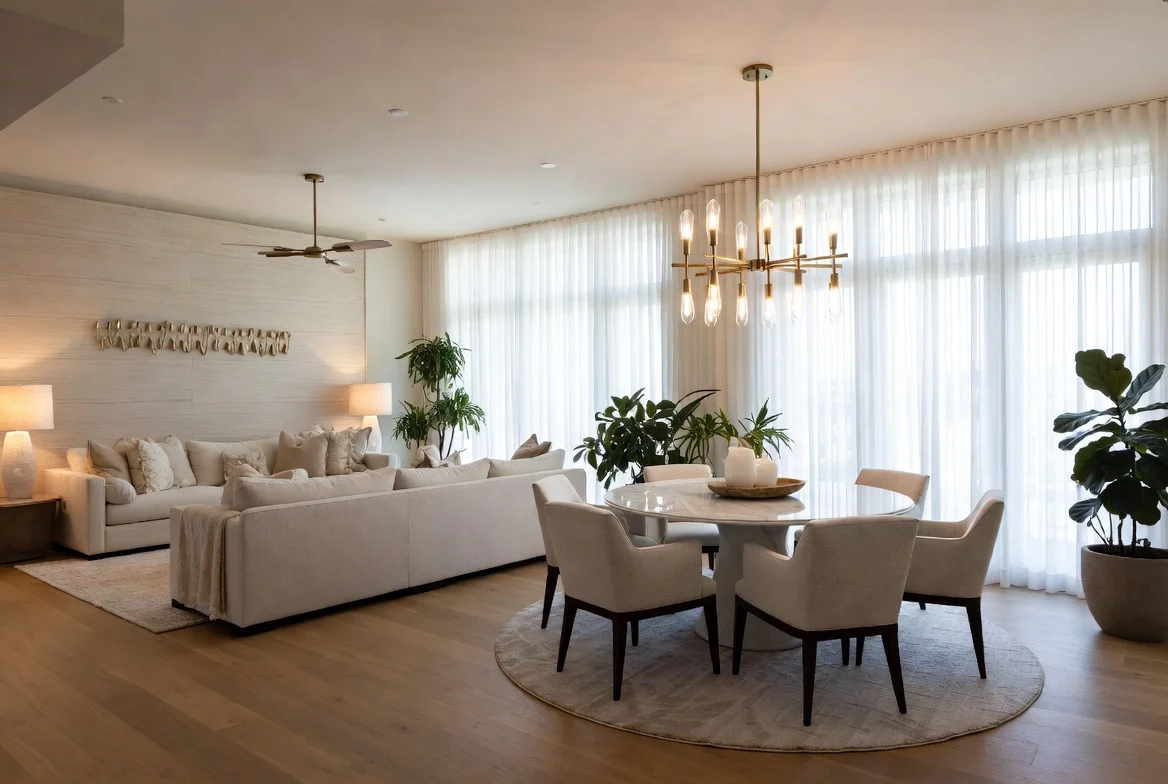
25 Living Room Dining Room Combo Layout Ideas That Maximize Space and Style
Imagine stepping into a home where the living and dining areas flow together so effortlessly that the entire space feels both larger and more intentional than any divided room ever could. This is the magic of a well-planned living room dining room combo layout, and it represents one of the most exciting design opportunities available to modern homeowners. Whether you are working with a compact apartment, a cozy starter home, or an expansive open-floor-plan property, the way you configure this shared space determines how your entire home feels and functions.
The demand for open concept living spaces has never been stronger. Families want connection. Hosts want conversation to flow naturally between cooking, dining, and relaxing. Designers understand that removing walls and combining spaces creates an atmosphere of warmth, community, and generous proportions that closed-off rooms simply cannot match. Yet without thoughtful planning, combined spaces can feel cluttered, confusing, and chaotic rather than cohesive and calm.
This comprehensive guide presents 25 powerful living dining room layout ideas that prove you can have both beauty and functionality without sacrificing either. Each idea draws from proven interior design principles while remaining accessible for real homeowners with real budgets. Whether you are starting from scratch or reworking an existing layout, these strategies will transform your combined space into the most impressive room in your home.
Understanding the Fundamentals of Combined Living Dining Spaces
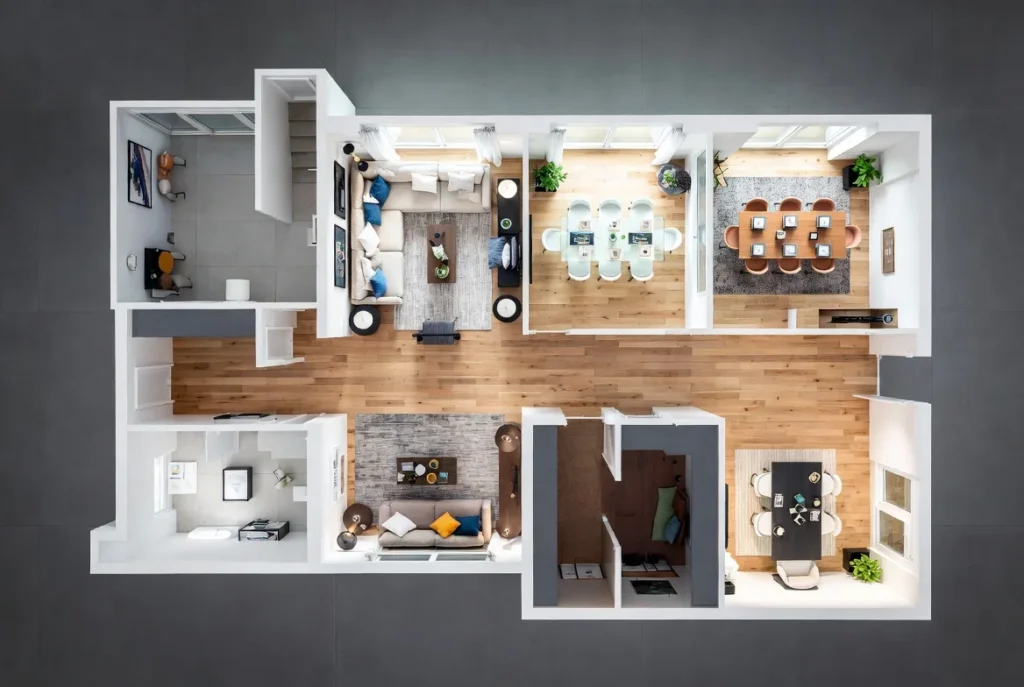
Before exploring specific layout ideas, understanding the core principles that govern successful open floor plan design saves time and prevents costly mistakes. Every great combo layout rests on three foundational elements working in harmony: visual zoning, traffic flow management, and design cohesion.
Visual zoning refers to the technique of creating distinct areas within an open space without using physical walls. This can be achieved through furniture arrangement, area rugs, lighting choices, and color variations. When done correctly, each zone feels purposeful and defined while the overall space remains connected and open.
Traffic flow determines how people move through and between the two areas. Generous pathways of at least 36 inches between furniture pieces prevent the cramped feeling that plagues poorly planned combo rooms. Always map out foot traffic patterns before purchasing or arranging furniture, paying particular attention to the path between kitchen, dining area, and living seating.
Design cohesion ensures that despite serving different functions, both areas feel like they belong to the same space. Repeating colors, materials, and finishes throughout both zones creates visual harmony that makes the combined area feel intentional rather than accidental.
Layout Ideas 1 Through 5: Defining Zones Through Furniture Placement
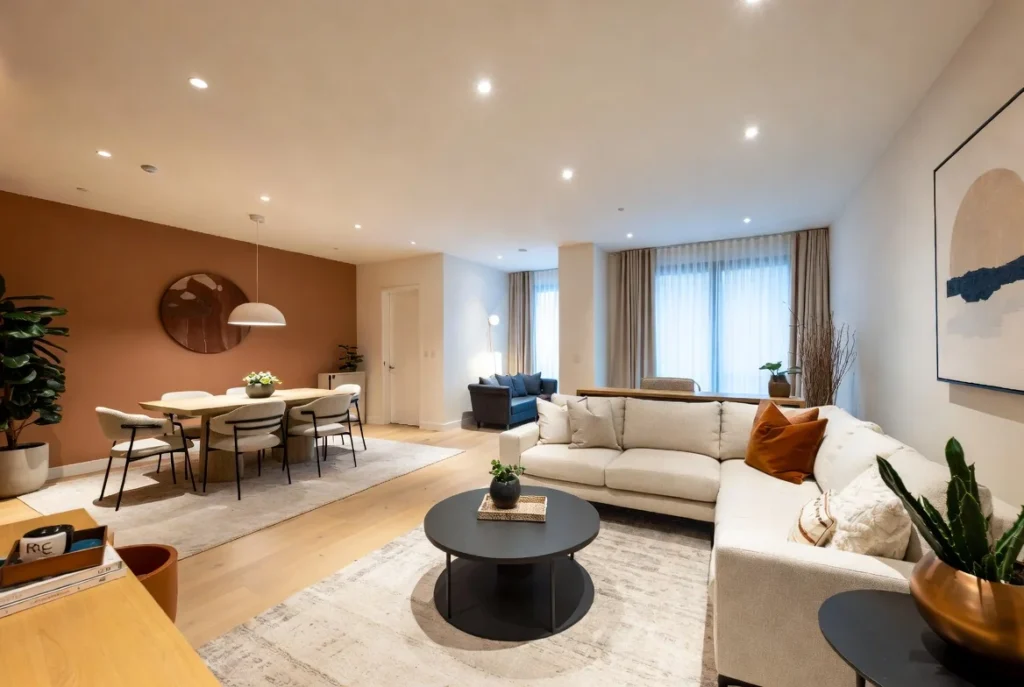
The Parallel Arrangement
Placing your dining table parallel to your sofa creates a natural division between the two spaces while maintaining visual connection. Position the sofa with its back subtly facing the dining area, creating a psychological boundary that separates functions without interrupting the open feel. This layout works exceptionally well in rectangular rooms where length allows adequate space for both zones.
The Angled Sofa Divider
Positioning a sectional sofa at a slight angle does double duty by defining the living zone and directing traffic flow simultaneously. The angled placement creates a natural entry point into the living area while visually separating it from the dining space. This approach adds dynamic energy to the room and breaks the monotony of purely parallel arrangements.
Back to Back Functionality
A console table placed behind the sofa serves as both a boundary marker and functional surface. Style it with lamps, plants, or decorative objects to create a finished transition point between dining and living zones. This technique is particularly valuable in spaces where the sofa faces away from the dining area, providing a visual anchor that grounds the seating arrangement.
The L-Shaped Living Configuration
Configuring living room furniture in an L-shaped arrangement naturally carves out a dining area in the remaining space. This layout maximizes seating capacity in the living zone while leaving a clean, uncluttered area for the dining table and chairs. L-shaped arrangements also encourage conversation by bringing seating closer together, making the living portion feel warm and intimate.
Central Dining Island Concept
In larger combined spaces, positioning the dining table centrally rather than against a wall creates a dramatic statement while allowing traffic to flow freely around it. This approach works beautifully when ceilings are high enough to accommodate a statement chandelier directly above, creating a natural ceiling-to-floor anchor for the dining zone.
Layout Ideas 6 Through 10: Using Area Rugs as Zone Definers
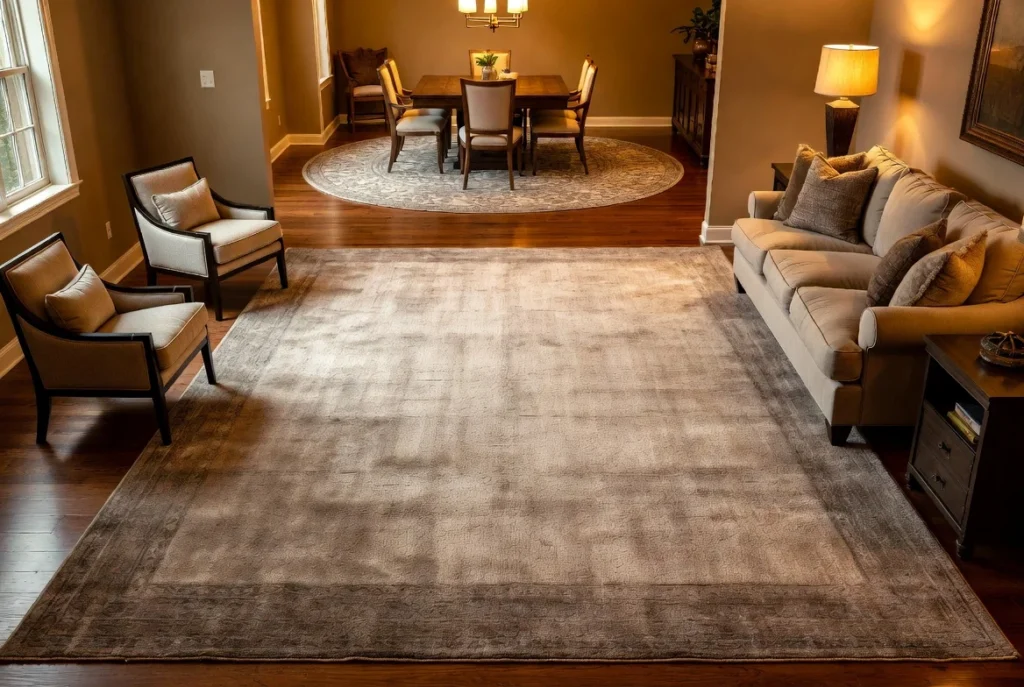
Area rugs represent perhaps the most powerful and affordable tool available for defining spaces in open floor plans. A well-chosen rug instantly signals where one zone ends and another begins, creating visual boundaries that feel natural rather than forced.
The Double Rug Strategy
Using two separate area rugs, one anchoring the living seating arrangement and another beneath the dining table, creates unmistakable zone definition while allowing you to introduce complementary patterns and textures. Choose rugs that share at least one color to maintain cohesion, but vary their patterns for visual interest that rewards closer inspection.
The Oversized Living Rug
Selecting a generously proportioned area rug for the living zone that extends well beyond the sofa and chairs creates an immediate sense of luxury and definition. The dining area, without a rug or with a more modest one, becomes visually distinct simply through contrast. This approach works best when your flooring is hard surface material like hardwood or tile.
Layered Rug Technique
Layering a smaller patterned rug over a larger neutral base rug in the living area adds texture and personality while reinforcing the zoned layout. This technique gained significant popularity in contemporary interior design because it creates depth and dimension that elevate the entire room’s sophistication level.
Contrasting Rug Shapes
Using a round rug in the dining area and a rectangular rug in the living zone creates subtle but effective distinction between the two spaces. The shape contrast reinforces the different functions of each area while adding visual variety that prevents the combined space from feeling monotonous.
Rug-Free Dining Zone
In some layouts, deliberately leaving the dining area rug-free while using a substantial rug in the living zone creates clean, practical distinction. This approach is particularly sensible for families with young children or messy eaters, as bare floors around the dining table simplify cleanup while the rug-defined living area feels soft and welcoming.
Layout Ideas 11 Through 15: Lighting as a Zoning Tool
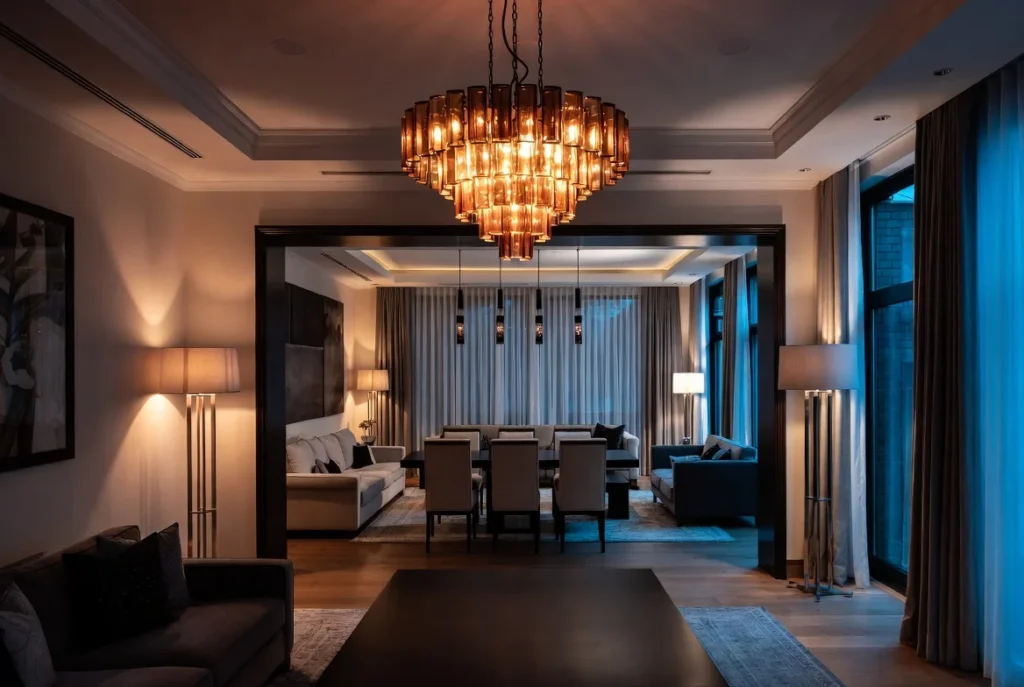
Strategic lighting design transforms how combined living dining spaces feel at different times of day and for different occasions. Lighting does more than illuminate; it defines atmosphere, signals function, and creates visual hierarchy within open spaces.
Statement Dining Chandelier
Hanging a dramatic chandelier or pendant light directly above the dining table creates an unmistakable zone declaration. The fixture draws the eye upward and downward simultaneously, anchoring the dining area in three dimensions. Choose a fixture whose scale relates to both the table size and the overall room proportions, typically hanging 30 to 36 inches above the table surface.
Recessed Lighting Zones
Programming separate recessed lighting circuits for the living and dining areas allows you to illuminate each zone independently. Bright task lighting over the dining table suits meals and detailed activities, while softer ambient lighting in the living area creates relaxation. This electrical investment pays dividends in flexibility and atmosphere control.
Floor Lamp Anchors
Placing tall floor lamps at the corners or edges of the living seating arrangement creates a soft perimeter of light that defines the zone beautifully after dark. The warmth of lamplight draws people toward the living area while visually separating it from the more brightly lit dining space.
Under-Cabinet and Accent Lighting
When the combined space connects to an open kitchen, under-cabinet lighting and accent fixtures create a light gradient that transitions naturally between the cooking, dining, and living zones. Each area has its own lighting personality while the spaces remain visually connected through consistent warmth and fixture finish.
Pendant Lights Over Transition Zones
Installing pendant lights at the transition point between living and dining areas marks the boundary between zones with style. A row of two or three small pendants at different heights creates an artistic installation that functions as a soft divider without blocking sight lines or interrupting the open feeling.
Layout Ideas 16 Through 20: Color and Material Zoning Strategies
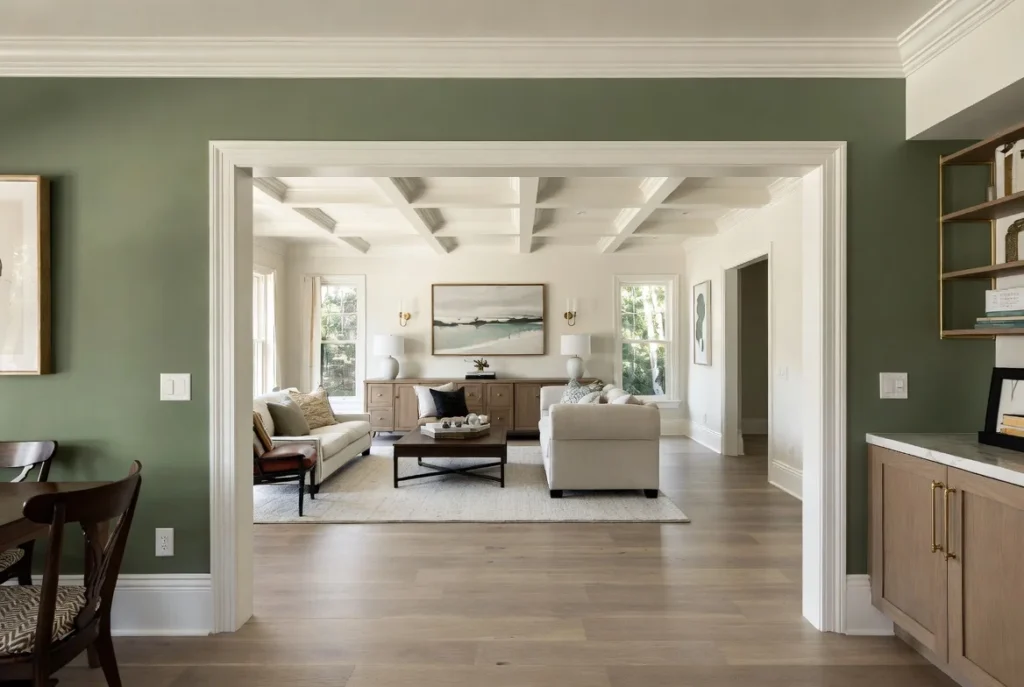
Color represents one of the most powerful yet subtlest tools available for creating distinction within combined spaces. Used thoughtfully, color creates zones that feel deliberate and designed rather than divided and disconnected.
Accent Wall Zone Markers
Painting an accent wall behind the dining area in a shade that differs from the living zone walls immediately signals a transition between spaces. Choose colors from the same family for harmony or use complementary tones for drama. This technique works exceptionally well when structural elements like columns or archways already partially define the transition.
Consistent Trim Color Cohesion
While wall colors may vary between zones, maintaining consistent trim, ceiling, and molding colors throughout the combined space creates the visual thread that keeps everything feeling connected. Bright white trim against varying wall colors is a classic combination that celebrates both distinction and unity.
Material Continuity Across Zones
Selecting flooring, furniture legs, and hardware finishes that repeat across both zones creates subliminal cohesion that ties the spaces together. If your dining chairs feature brass hardware, introduce brass accents in the living area through lamp bases, picture frames, or decorative objects. These material echoes speak quietly but powerfully to the subconscious.
Two-Tone Wall Strategy
Painting walls in the living area a slightly lighter shade of the same color used in the dining zone creates sophisticated tonal variation that distinguishes the spaces without creating jarring contrast. This approach is particularly refined in neutral palettes where warm whites, creams, and taupes blend seamlessly while still providing definition.
Statement Ceiling Treatment
Applying a bold ceiling treatment to just one zone, such as painted wooden beams over the dining area or a coffered ceiling detail in the living space, creates architectural distinction that adds both character and zone definition. Ceiling treatments are often overlooked but deliver extraordinary impact in combined spaces.
Layout Ideas 21 Through 25: Furniture and Decor Dividers
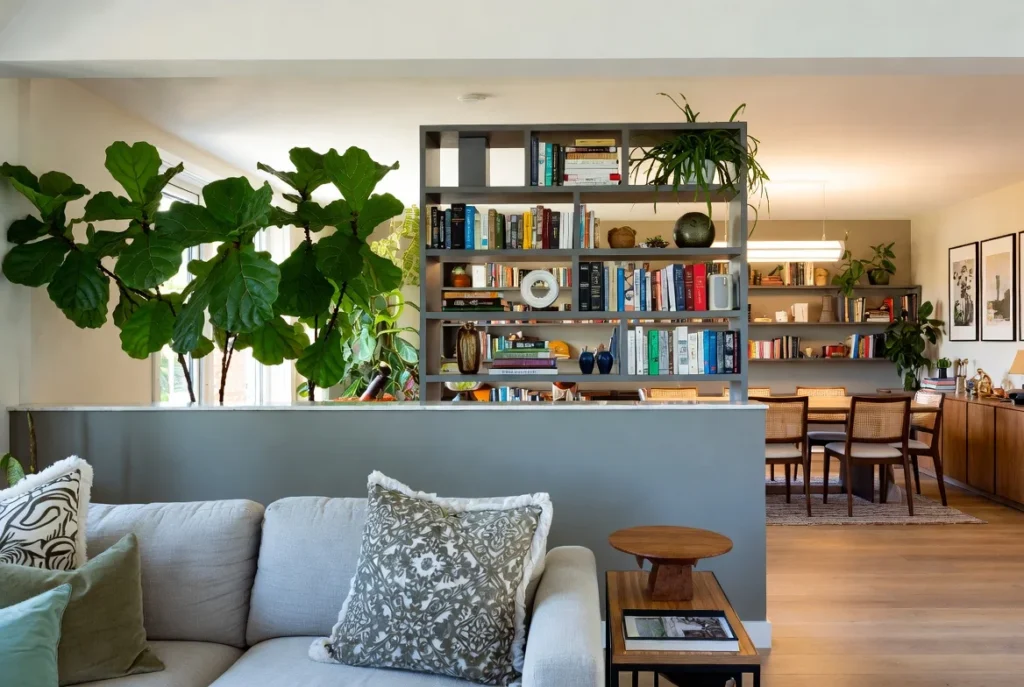
Physical elements that divide space without closing it off completely provide both practical and aesthetic solutions for combined room layout challenges. These ideas range from furniture-based solutions to architectural additions that add character while serving functional purposes.
Open Bookshelf Room Divider
Positioning a tall open bookshelf between the living and dining areas creates separation while maintaining the airy quality of open-plan living. Accessible from both sides, these shelves provide storage and display space while their open construction allows light and sight lines to pass through. Style them with books, plants, and decorative objects for a curated, lived-in look.
Sofa Table Transition Piece
A long narrow sofa table or sideboard placed at the back of the sofa and facing the dining area serves as both a buffer between zones and a practical surface for styling. This piece anchors the sofa within the living zone while creating a visual back to the seating that makes the arrangement feel complete and contained.
Half-Wall or Partial Partition
Installing a partial wall extending to approximately waist height creates clear zone definition while preserving the open, connected feeling of combined spaces. Top these partial walls with shelving, glass panels, or decorative elements for added functionality. This semi-permanent solution suits homeowners who want more definition than furniture alone provides.
Plant Wall and Greenery Dividers
Using tall plants and lush greenery arrangements to create a natural boundary between living and dining zones introduces organic texture and life into the space simultaneously. A row of tall fiddle-leaf figs, snake plants, or decorative trees creates a living divider that softens the boundary beautifully while improving air quality.
Decorative Screen or Room Divider Panel
A freestanding decorative screen positioned at the transition point between zones provides flexible, movable division that can be repositioned as needs change. These pieces come in styles ranging from traditional carved wood to contemporary laser-cut metal, allowing you to express personality while solving a functional design challenge. The flexibility of movable dividers is particularly appealing in rental properties where permanent modifications are restricted.
Conclusion
Creating a living room dining room combo layout that feels both spacious and purposeful requires nothing more than thoughtful application of the principles outlined throughout this guide. The 25 ideas presented here cover every aspect of combined space design, from fundamental furniture arrangement strategies to nuanced lighting and color techniques that professional designers use in luxury projects.
The most important insight to carry forward is that successful open plan living depends not on expensive renovations or complete furniture replacement but on intentional decision-making about how each element within the space relates to every other element. A single well-placed area rug, a thoughtfully hung pendant light, or a strategically positioned bookshelf can completely transform how a combined space looks and feels.
Begin by identifying which zoning strategies resonate most strongly with your personal style and practical needs. Start with foundational changes like furniture repositioning and rug placement before investing in lighting upgrades or architectural modifications. Document changes with photographs to track your progress and maintain perspective on how far the transformation has come.
Your combined living and dining space holds remarkable potential waiting to be unlocked. With the right layout approach, this shared area becomes not just a functional compromise but a genuinely beautiful centerpiece of your home, one that welcomes family, impresses guests, and brings daily joy to everyone who inhabits it.
Frequently Asked Questions
How do you separate a living room and dining room in an open floor plan without walls?
The most effective separation techniques include area rugs placed strategically under each furniture grouping, statement lighting fixtures hung above the dining table, furniture arrangements that create natural boundaries, open shelving units positioned between zones, and color or material variations that signal different functions. Using two or three of these techniques simultaneously creates compelling zone definition without any physical walls.
What size dining table works best in a combined living dining space?
The dining table size should reflect both the available space and your typical entertaining needs. As a general rule, allow at least 36 inches between the table edge and surrounding walls or furniture for comfortable chair movement. In smaller combined spaces, round or oval tables allow better traffic flow than rectangular options, while extension tables offer flexibility for occasional larger gatherings without consuming space daily.
How do you make a small living dining room combo feel larger?
Several design strategies create the illusion of greater space. Use light, neutral colors on walls and larger furniture pieces. Choose furniture with exposed legs rather than solid bases, as this allows light to pass underneath and makes pieces appear to float. Maximize natural light by keeping window treatments minimal. Use mirrors strategically to reflect light and depth. Select a dining table and chairs in transparent materials like glass and acrylic for visual lightness that reduces the perceived mass of furniture.
What furniture arrangement works best for a rectangular living dining combo room?
Rectangular rooms benefit most from parallel arrangement where the dining table occupies one end and the living seating group occupies the other. Position the sofa with its back toward the dining area to create a natural psychological boundary. Use a console table behind the sofa to reinforce this transition. Place area rugs under each grouping and ensure adequate traffic pathways of at least 36 inches run along the length of the room connecting both zones.
Should living room and dining room furniture match in an open plan space?
Perfect matching is neither required nor recommended in most contemporary design approaches. Instead, aim for coordination through shared colors, finishes, and materials rather than identical pieces. Your dining chairs and living room accent chairs might share the same fabric, or your coffee table and dining table might feature matching wood tones with different leg styles. This approach creates cohesion while allowing each zone to have its own distinct character, resulting in a more sophisticated and layered overall aesthetic.
You may also like this post: 20 Stunning Interior Design Living Room Ideas for Every Style & Budget


One Comment