
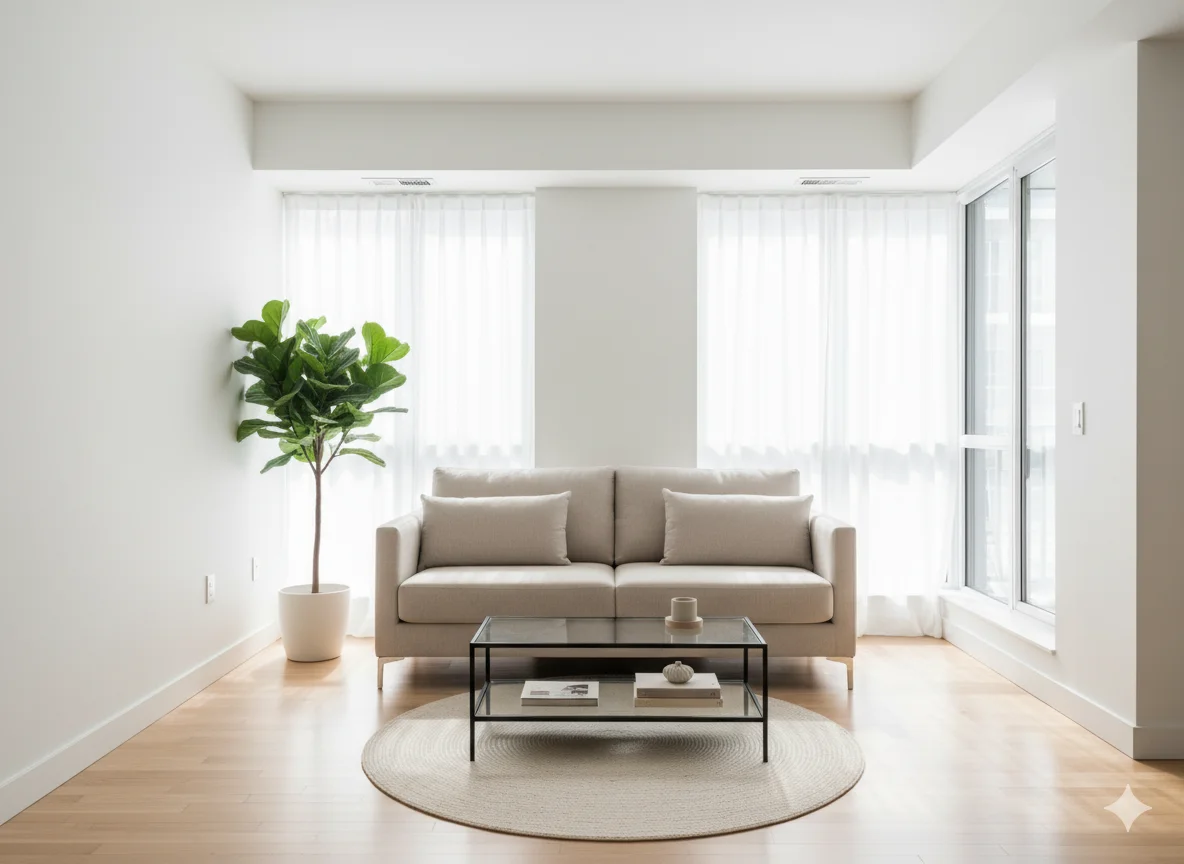
Modern Minimalist Living Room: 27 Design Ideas for Small Spaces
When you step into a thoughtfully designed modern minimalist living room, something remarkable happens. The chaos of daily life seems to dissolve, replaced by a sense of calm that settles over you like morning light through unadorned windows. This isn’t about deprivation or stark emptiness. Rather, it’s about creating a space where every element serves a purpose, where intentional living meets sophisticated design, and where small square footage transforms into a sanctuary of streamlined aesthetics.
The beauty of minimalist design lies in its democratic nature. Whether you’re working with a cramped studio apartment or a modest townhouse, the principles remain universally applicable. By embracing clean lines, neutral color palettes, and functional furniture, you can craft a living space that feels twice its actual size while reflecting the kind of contemporary design that never goes out of style.
This comprehensive guide presents 27 actionable design ideas that will help you transform your compact living area into a masterpiece of modern minimalism. From strategic furniture placement to the subtle art of texture layering, each suggestion builds upon timeless principles while addressing the unique challenges of small space living.
Understanding the Minimalist Philosophy
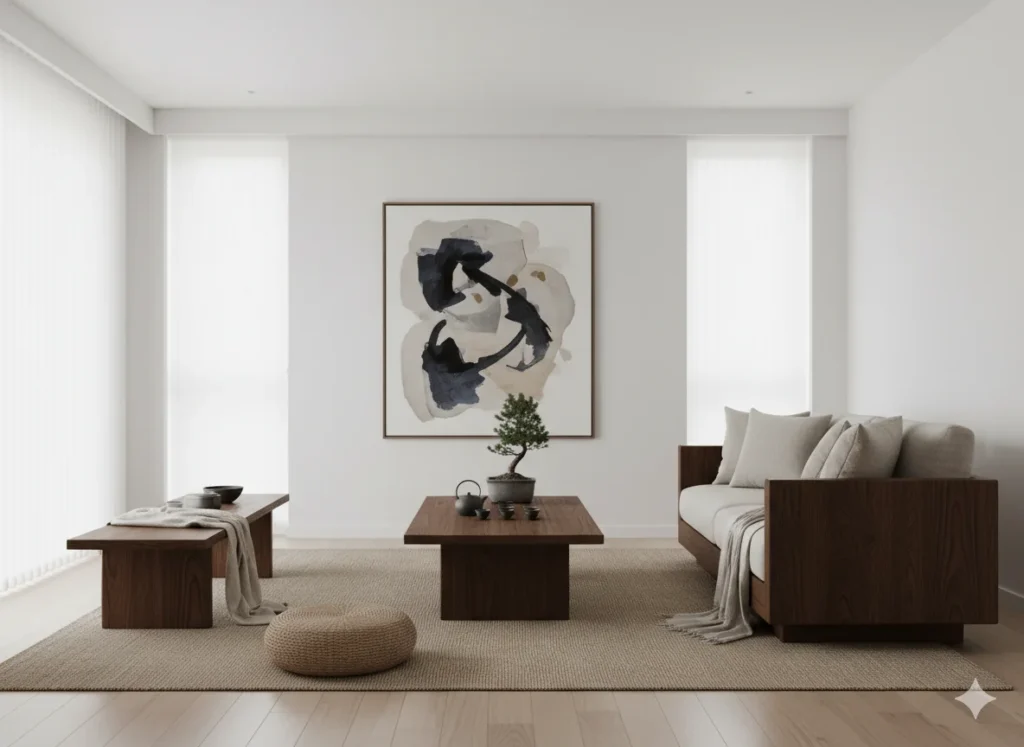
Before diving into specific design strategies, it’s essential to grasp what minimalist living truly means. This approach isn’t about owning as little as possible or creating cold, unwelcoming spaces. Instead, it’s rooted in the principle of quality over quantity, where each item in your living room earns its place through either function or genuine aesthetic value.
The minimalist philosophy draws inspiration from multiple cultural traditions. Japanese minimalism emphasizes negative space and the beauty of simplicity, while Scandinavian design incorporates warmth through natural materials and texture. When these influences merge with contemporary Western design, the result is a clutter-free environment that feels both modern and timeless.
For small spaces specifically, minimalism becomes more than a style choice. It’s a practical solution to the challenge of limited square footage. By removing visual noise and focusing on essential pieces, you create the illusion of spaciousness while maintaining full functionality.
Color Foundations That Expand Your Space
1. The Power of All-White Foundations
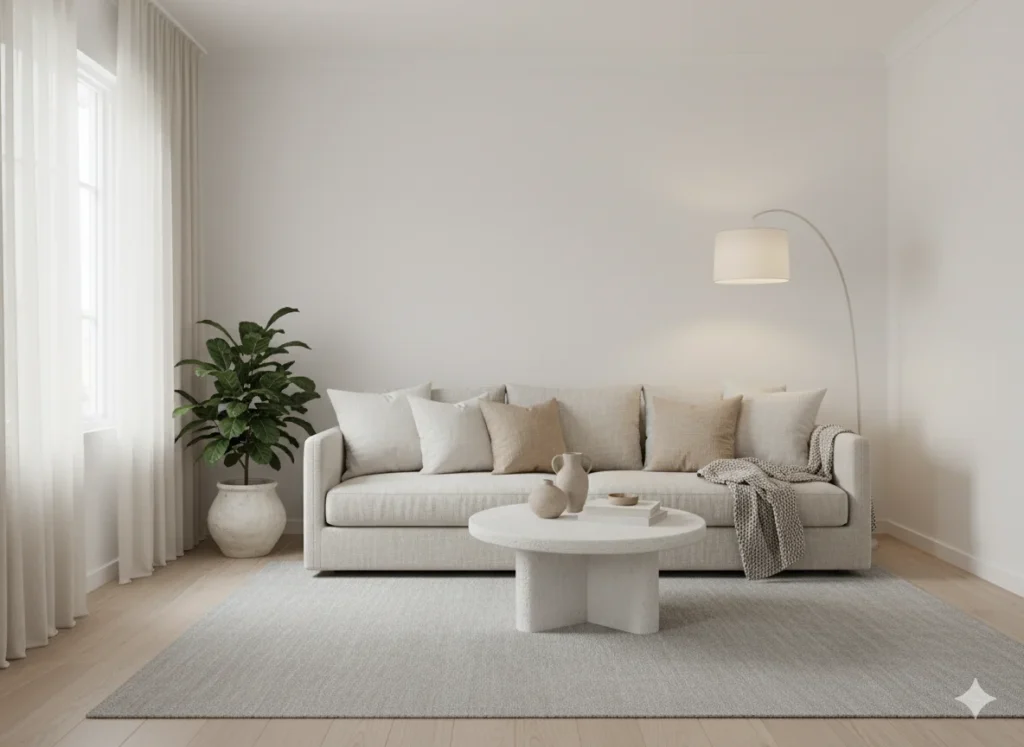
Starting with white walls remains the most reliable strategy for making small living rooms feel expansive. Pure white reflects natural light throughout the day, creating a sense of airiness that darker colors simply cannot achieve. This doesn’t mean your space needs to feel sterile. Layer different white tones, from warm ivory to cool bright white, to add subtle depth without introducing visual clutter.
2. Embrace Monochromatic Color Schemes
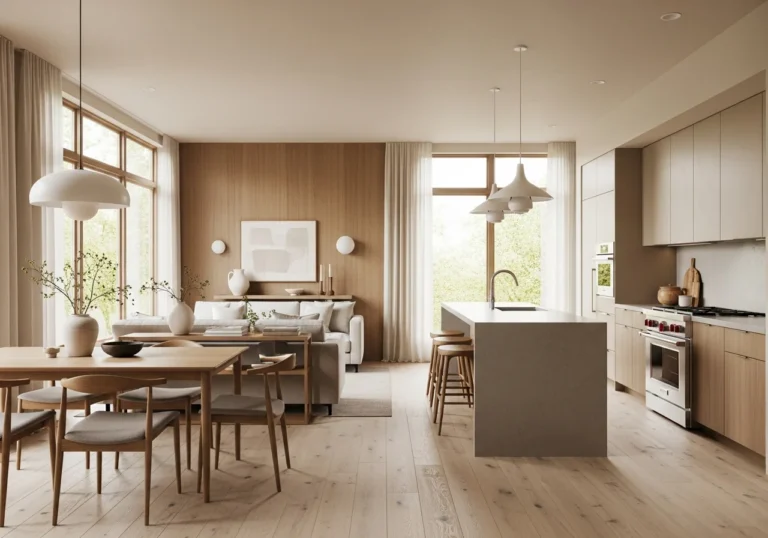
A monochromatic palette using varying shades of a single color creates visual continuity that makes walls seem to recede. Consider working with soft grays, warm beiges, or even muted blues. The key is maintaining tonal consistency across furniture, textiles, and decorative elements.
3. Strategic Accent Wall Placement
If your small space craves personality, one carefully chosen accent wall in a deeper shade can add drama without overwhelming the room. Place this feature wall behind your sofa or entertainment center to create a focal point that draws the eye without fragmentating the space.
4. Incorporate Earth Tones for Warmth
Natural hues like sand, stone, and clay bring warmth to minimalist spaces while maintaining the neutral color palette essential to the aesthetic. These organic colors create psychological warmth without the visual weight of bold pigments.
Smart Furniture Selection for Compact Spaces
5. Invest in Low-Profile Seating
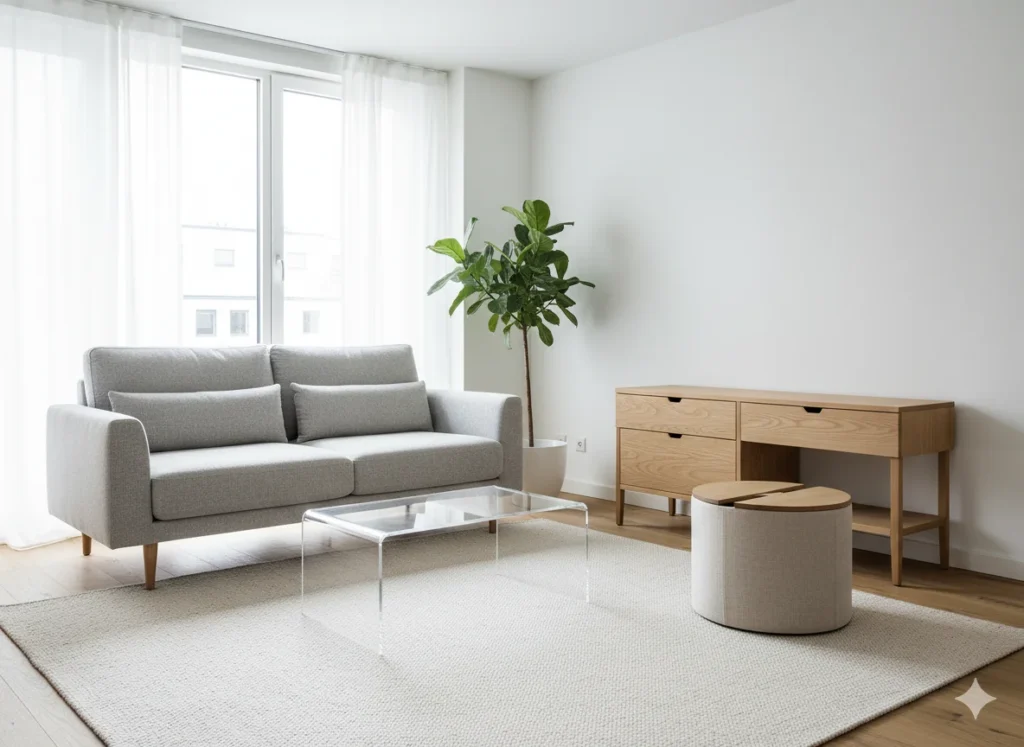
Minimalist furniture with low profiles creates the illusion of higher ceilings and more open floor space. Choose sofas and chairs that sit closer to the ground, allowing your eyes to travel unobstructed across the room.
6. Select Multifunctional Pieces
Every item in a small minimalist living room should work overtime. Ottomans with hidden storage, coffee tables that lift to dining height, and sofa beds that accommodate overnight guests exemplify the functional design central to minimalism.
7. Embrace Transparent and Reflective Surfaces
Glass coffee tables, acrylic chairs, and mirrored surfaces practically disappear visually while remaining fully functional. These elements allow light to pass through or reflect around the room, maintaining that crucial sense of spaciousness.
8. Choose Furniture with Exposed Legs
Pieces that sit on visible legs rather than solid bases allow your eyes to see the floor beneath, creating the perception of more space. This small detail makes a surprisingly significant impact in tight quarters.
9. Opt for Streamlined Profiles
Avoid furniture with excessive ornamentation, thick arms, or bulky cushions. Clean-lined pieces with geometric shapes and tailored upholstery maintain the minimalist aesthetic while maximizing usable floor area.
Maximizing Storage Without Adding Clutter
10. Install Floating Shelves
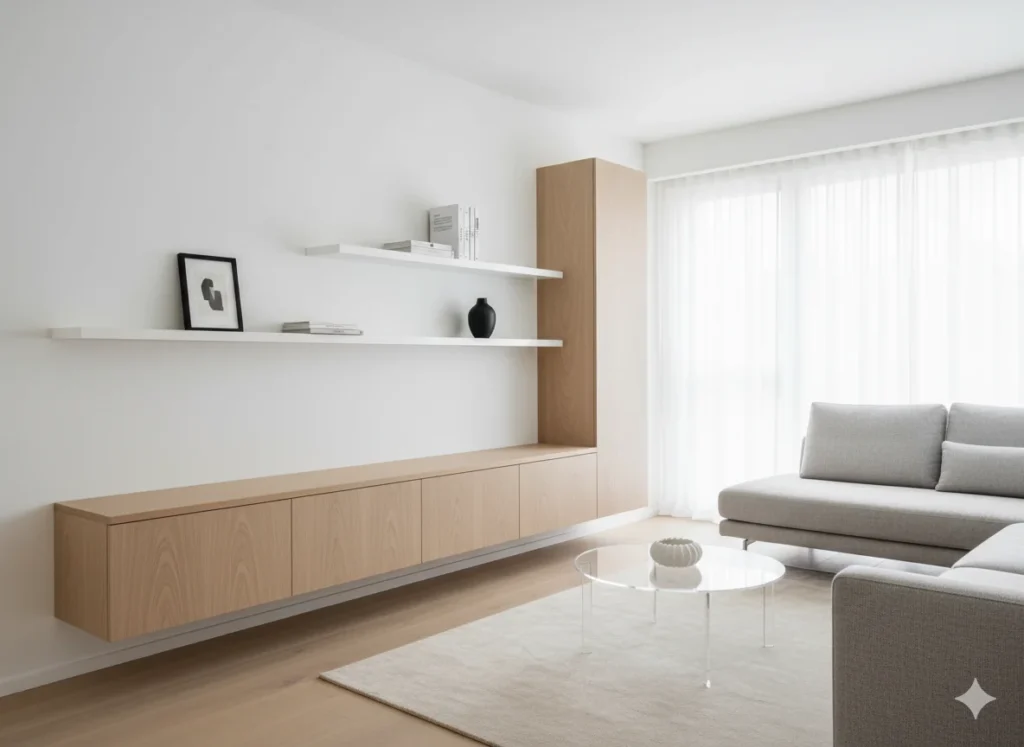
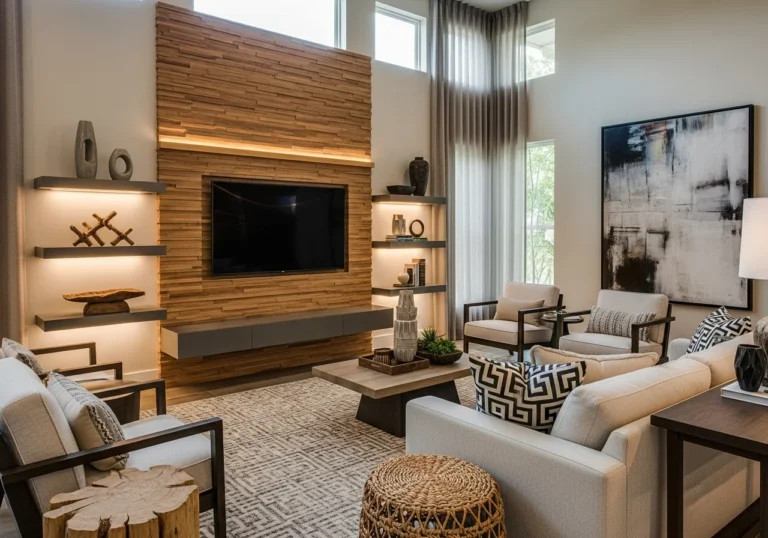
Wall-mounted storage eliminates the need for bulky bookcases while providing display space for carefully curated items. Keep these shelves sparingly decorated to maintain the minimalist principle of negative space.
11. Utilize Vertical Space Completely
In small rooms, thinking vertically becomes essential. Tall, narrow storage solutions draw the eye upward while maximizing every inch of available wall space without encroaching on precious floor area.
12. Conceal Electronics and Cables
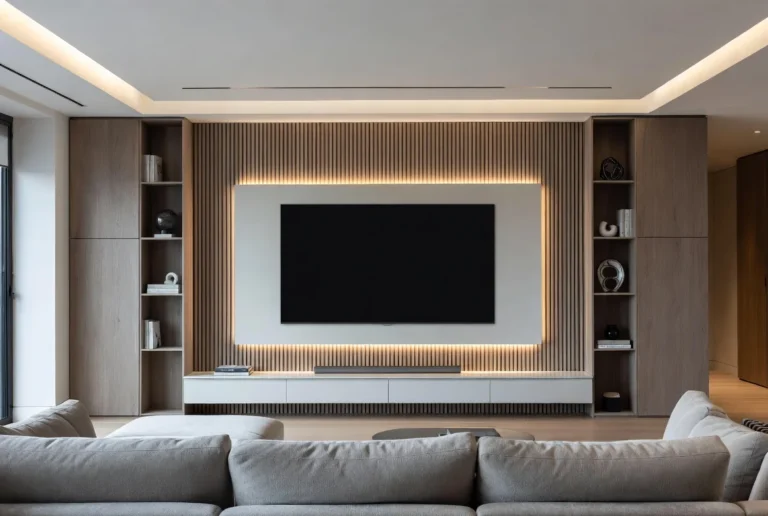
Modern minimalism demands that technology stays invisible when not in use. Built-in media centers, cable management systems, and furniture designed to hide electronics maintain the clean aesthetic essential to the style.
13. Choose Closed Storage Over Open Shelving
While open shelving can work in minimalist spaces, closed storage cabinets in small rooms help maintain the clutter-free environment by hiding everyday items behind clean facades.
Lighting Strategies That Transform Small Spaces
14. Maximize Natural Light Sources
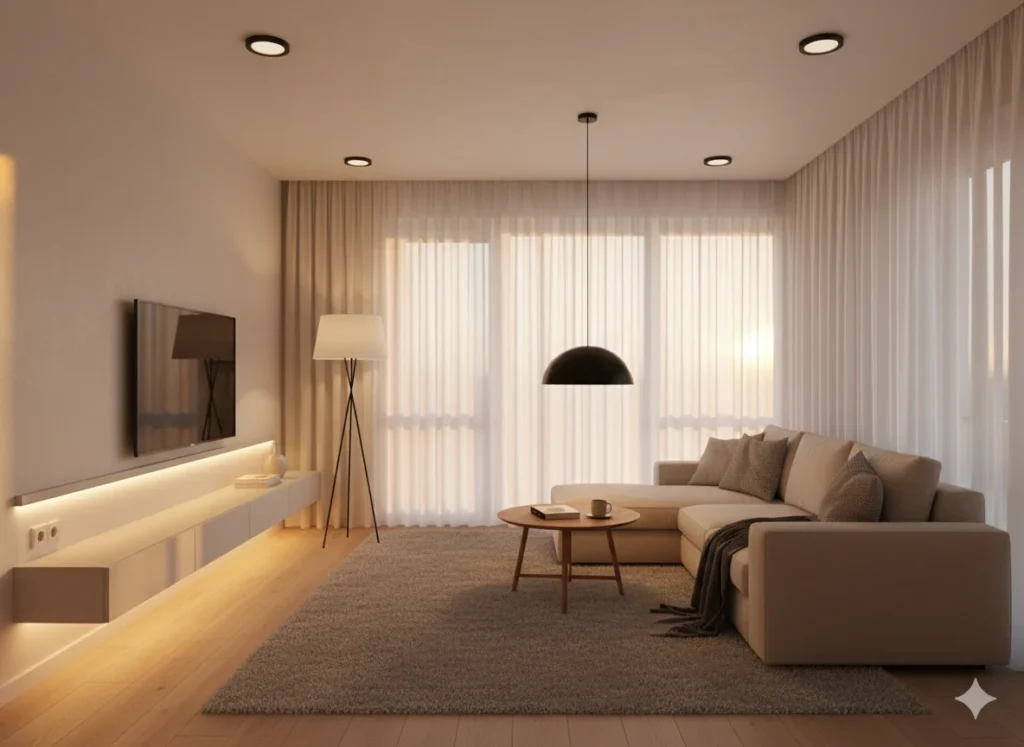
Remove heavy window treatments in favor of sheer fabrics or simple roller shades that can completely disappear when raised. Natural light is the minimalist’s best friend, making spaces feel larger and more inviting.
15. Layer Different Light Sources
Combine ambient lighting, task lighting, and accent lighting to create depth and functionality. Recessed ceiling lights, floor lamps with slim profiles, and wall sconces provide illumination without taking up valuable surface space.
16. Use Statement Lighting Sparingly
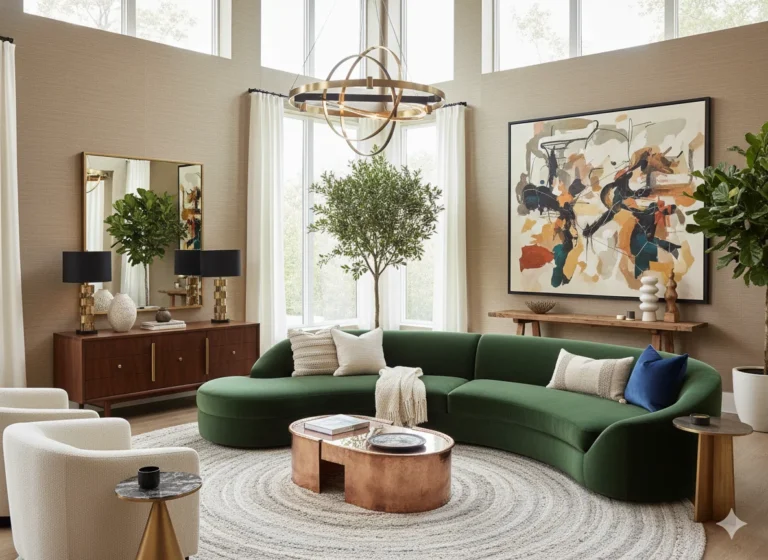
One dramatic pendant light or sculptural floor lamp can serve as both functional illumination and the room’s primary art piece, eliminating the need for additional decorative objects.
17. Incorporate LED Strip Lighting
Hidden LED strips beneath floating shelves, behind televisions, or along baseboards create ambient glow that makes walls recede while adding contemporary flair to the space.
Texture and Material Choices
18. Mix Natural Materials
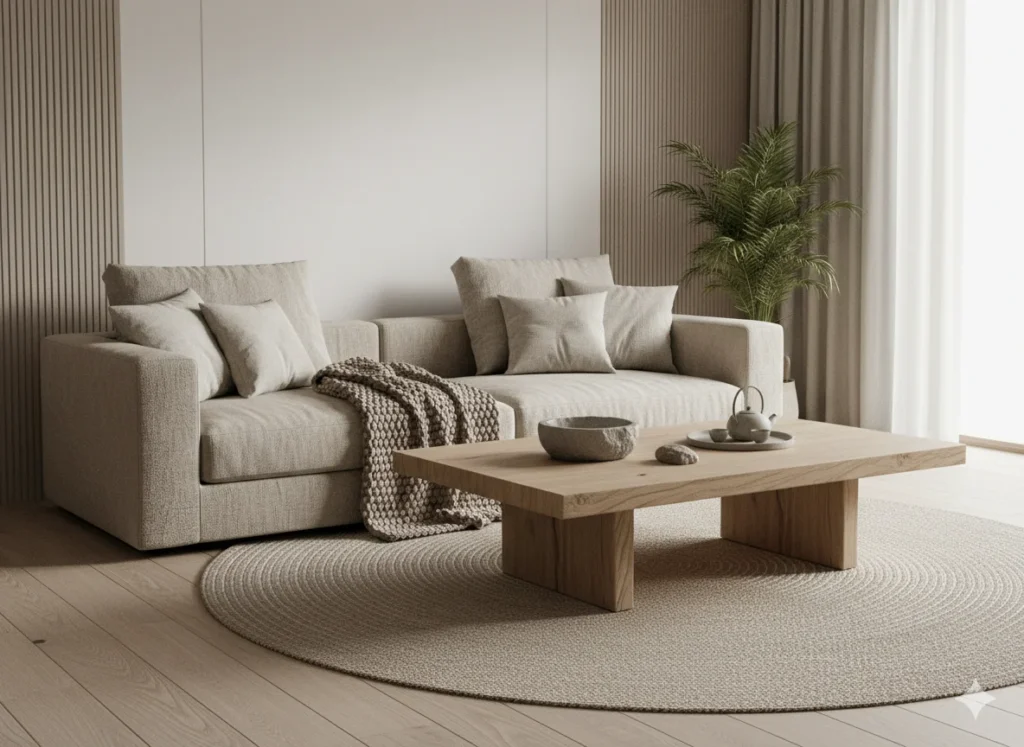
Combine wood, stone, linen, and cotton to add warmth and dimension without introducing pattern or color complexity. These sustainable materials bring organic beauty to minimalist interiors.
19. Introduce Subtle Texture Through Textiles
Woven throws, nubby pillows, and textured rugs add tactile interest that prevents minimalist spaces from feeling cold or unwelcoming. Stick to neutral tones while varying the surface quality of fabrics.
20. Balance Hard and Soft Elements
Metal accents, glass surfaces, and polished wood need counterbalancing with soft textiles and upholstered furniture to create a space that feels livable rather than showroom-perfect.
Decorative Restraint and Intentional Styling
21. Follow the One-In-One-Out Rule
Maintain your minimalist living room by replacing rather than accumulating. When you bring in a new item, remove something existing to prevent gradual clutter accumulation.
22. Create a Single Focal Point
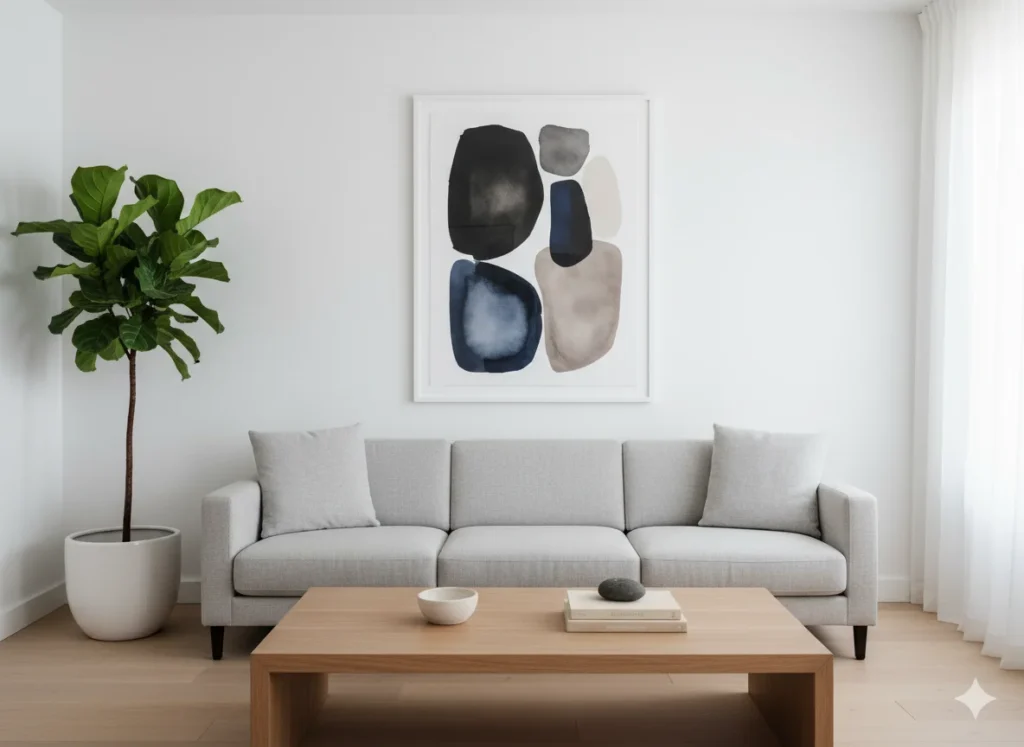
Rather than scattering attention across multiple decorative elements, choose one statement piece—a striking piece of art, a sculptural plant, or a unique furniture item—to anchor the room’s visual interest.
23. Embrace Empty Wall Space
Not every wall needs decoration. Negative space is a design element itself in minimalism, giving the eyes places to rest and contributing to the overall sense of calm.
24. Use Plants as Living Sculpture
One or two carefully chosen plants in simple planters bring life and organic shape to minimalist spaces without the visual noise of multiple small decorative objects.
Spatial Arrangement and Flow
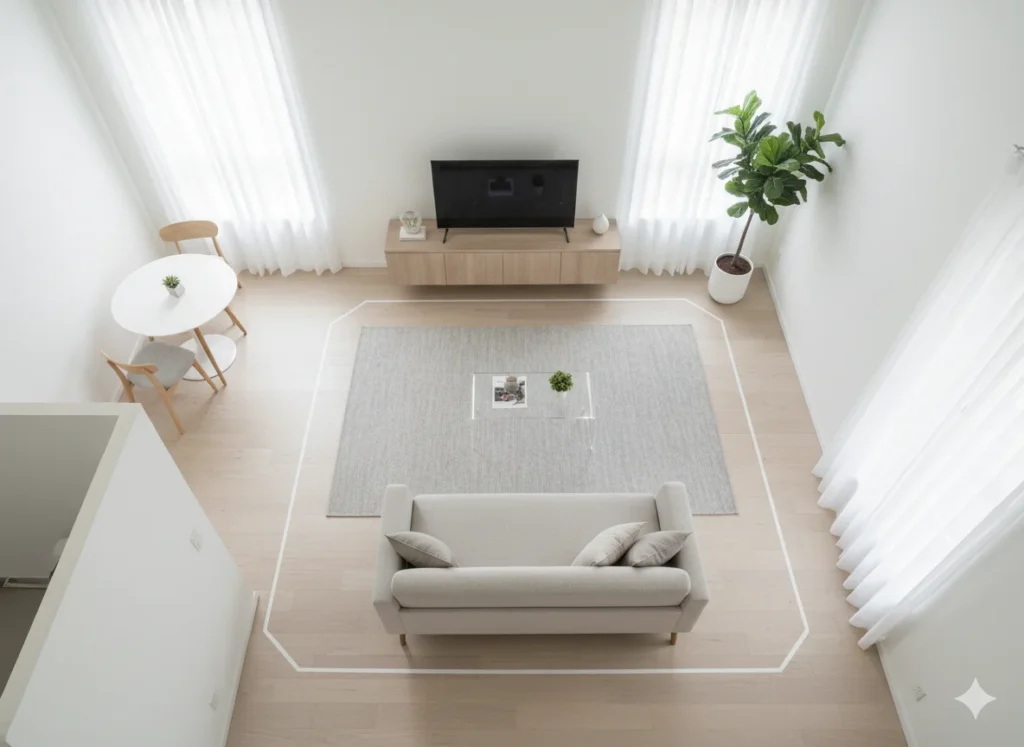
25. Create Clear Pathways
Arrange furniture to establish obvious traffic patterns through the room. This open floor plan approach prevents the space from feeling cramped while improving functionality.
26. Float Furniture Away from Walls
Counterintuitively, pulling your sofa slightly away from the wall can make a small room feel larger by creating dimension and breaking up the box-like quality of tight spaces.
27. Define Zones Without Physical Barriers
In studio apartments or open concept spaces, use area rugs, lighting changes, or subtle furniture arrangement to delineate different functional areas without adding space-consuming dividers.
Maintaining Your Minimalist Sanctuary
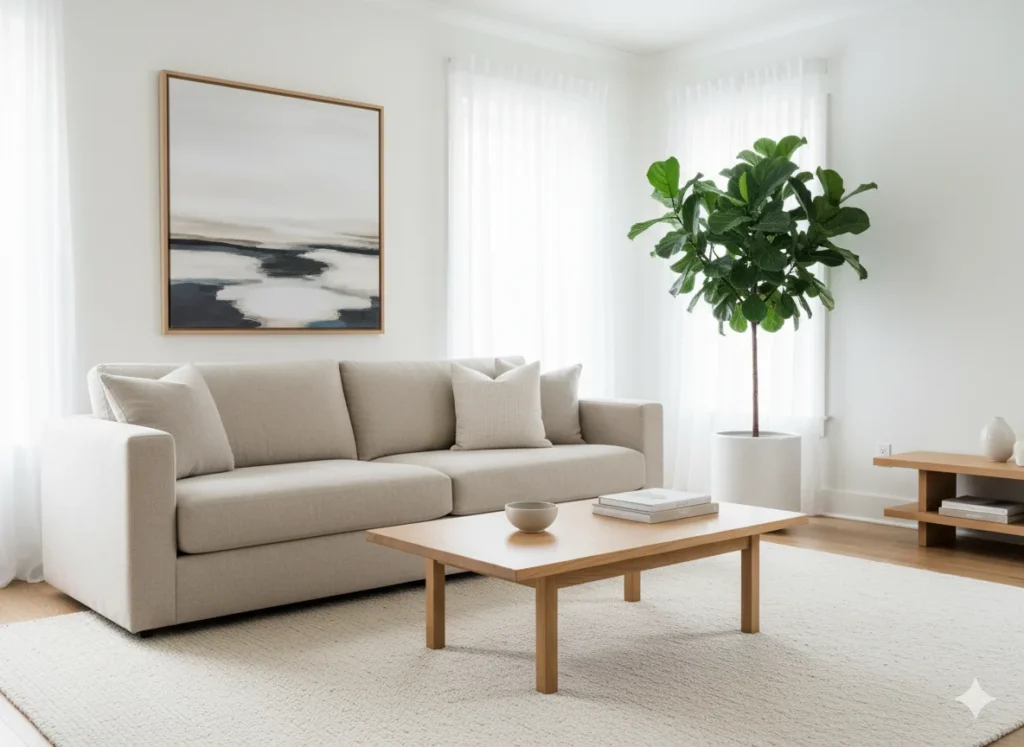
Creating a modern minimalist living room is just the beginning. The real challenge lies in maintaining the intentional simplicity you’ve worked to achieve. Develop daily habits that support your minimalist lifestyle: return items to their designated spots immediately, reassess possessions seasonally, and resist impulse purchases that don’t serve clear purposes.
Consider implementing a three-month rule for new items. Before purchasing decorative objects or furniture, wait three months. If you still feel the item would genuinely enhance your space after this cooling-off period, it’s likely a worthwhile addition rather than temporary desire.
Regular editing sessions help prevent gradual accumulation. Every season, walk through your living room with fresh eyes, removing items that no longer serve you or bring joy. This practice keeps your space aligned with minimalist principles while allowing your design aesthetic to evolve naturally.
The Psychological Benefits of Minimalist Living
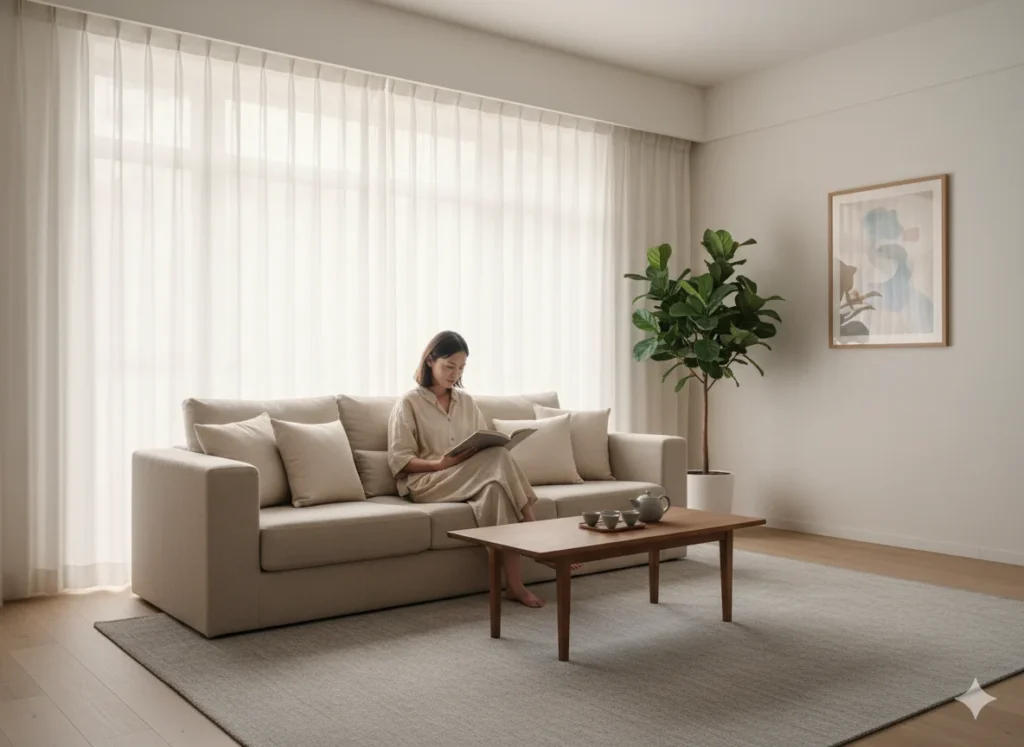
Beyond aesthetics, minimalist living rooms offer tangible psychological benefits particularly valuable in our overstimulated world. Research consistently shows that clutter-free environments reduce stress, improve focus, and enhance overall wellbeing. When your living space contains only items you consciously chose and genuinely value, you create a zen atmosphere that supports mental clarity.
Small spaces designed with minimalist principles prove that square footage doesn’t determine quality of life. By prioritizing functionality, beauty, and intentionality, even the most modest living room can feel luxurious and spacious. The constraint of limited space actually becomes a gift, forcing you to make deliberate choices that ultimately create more satisfying environments than larger spaces filled mindlessly.
The journey toward a modern minimalist living room isn’t about perfection or rigid adherence to rules. It’s about discovering what truly matters to you and creating a space that reflects those values. Small spaces designed with minimalist sensibility demonstrate that luxury isn’t measured in square feet or number of possessions, but in the quality of thought and care invested in creating your environment.
As you implement these 27 design ideas, remember that minimalism is inherently personal. What feels essential to one person might be unnecessary to another. Trust your instincts, embrace the process of refinement, and create a living room that serves as both beautiful retreat and functional space for daily life. The result will be a home that feels distinctly yours while embodying the timeless elegance of modern minimalist design.
Frequently Asked Questions
What is the best color for a minimalist living room?
White and soft neutral tones work best for minimalist living rooms, particularly in small spaces. These colors reflect light, create visual continuity, and provide a calm backdrop that makes rooms feel larger. Warm whites, light grays, and beige tones add warmth while maintaining the clean aesthetic essential to minimalist design.
How do I make my small living room look minimalist without it feeling empty?
Focus on texture layering rather than object accumulation. Use varied natural materials like wood, linen, and stone in similar color tones. Add one or two substantial plants, incorporate textured textiles through pillows and throws, and ensure adequate layered lighting. The key is creating warmth through material diversity rather than quantity of items.
What furniture is essential for a minimalist living room?
Essential pieces include a comfortable sofa or sectional, a coffee table with storage capability, adequate seating for your household size, and appropriate lighting. Choose multifunctional furniture that serves multiple purposes, and avoid single-use items that occupy space without adding significant value to daily life.
Can minimalist living rooms work with kids and pets?
Absolutely. Minimalist design actually works beautifully for families because it emphasizes durable materials, easy-to-clean surfaces, and functional storage solutions. Choose performance fabrics, incorporate closed storage for toys and pet supplies, and select furniture with washable or replaceable components. The clutter-free foundation makes cleanup easier and creates safer spaces for children and animals.
How much does it cost to create a minimalist living room?
Minimalist living rooms can suit any budget because the philosophy emphasizes quality over quantity. Rather than buying many inexpensive items, invest in fewer, better-quality pieces that will last. Start with paint and decluttering, which cost little, then gradually add key furniture pieces as budget allows. The minimalist approach often saves money long-term by preventing unnecessary purchases and emphasizing timeless design over trendy items.
You may also like this post: Living Room Decor Ideas 2026 | 18 Trending Styles & Inspiration
One Comment