
15 Backyard Privacy Wall Ideas to Block Neighbors and Create a Cozy Space
Reclaiming Your Outdoor Sanctuary
There is something deeply unsettling about stepping into your backyard for morning coffee only to make accidental eye contact with your neighbor who is doing exactly the same thing. That moment when you both awkwardly wave, retreat inside, or pretend to be fascinated by something on your phone highlights a universal truth about modern living: our outdoor spaces have become extensions of our homes, yet they often lack the basic privacy we expect indoors.
A privacy wall transforms your backyard from an exposed, uncomfortable space into a genuine outdoor sanctuary where you can relax, entertain, and enjoy nature without feeling watched. Whether you live in a densely populated urban neighborhood with houses mere feet apart, a suburban development with cookie-cutter lots, or even a rural area where second-story windows provide clear sightlines into your yard, the need for backyard privacy crosses all geographic and economic boundaries.
The beauty of modern privacy solutions lies in their remarkable diversity. Gone are the days when your only option was a boring wooden fence that made your yard feel like a prison yard. Today’s privacy wall ideas range from living walls bursting with greenery to sleek contemporary screens, rustic stone barriers to elegant fabric panels. These solutions not only block neighbors view but also add genuine aesthetic value, increase property worth, reduce noise pollution, and create distinct outdoor rooms that make your yard feel larger and more purposeful.
This comprehensive guide presents 15 proven backyard privacy ideas spanning every budget, style preference, and installation skill level. From quick weekend projects requiring minimal tools to more substantial investments that transform your entire outdoor space, these solutions will help you create the private backyard oasis you deserve, one where you can finally enjoy your outdoor living space without constantly wondering who might be watching.
Solid Wood Privacy Fence with Decorative Elements
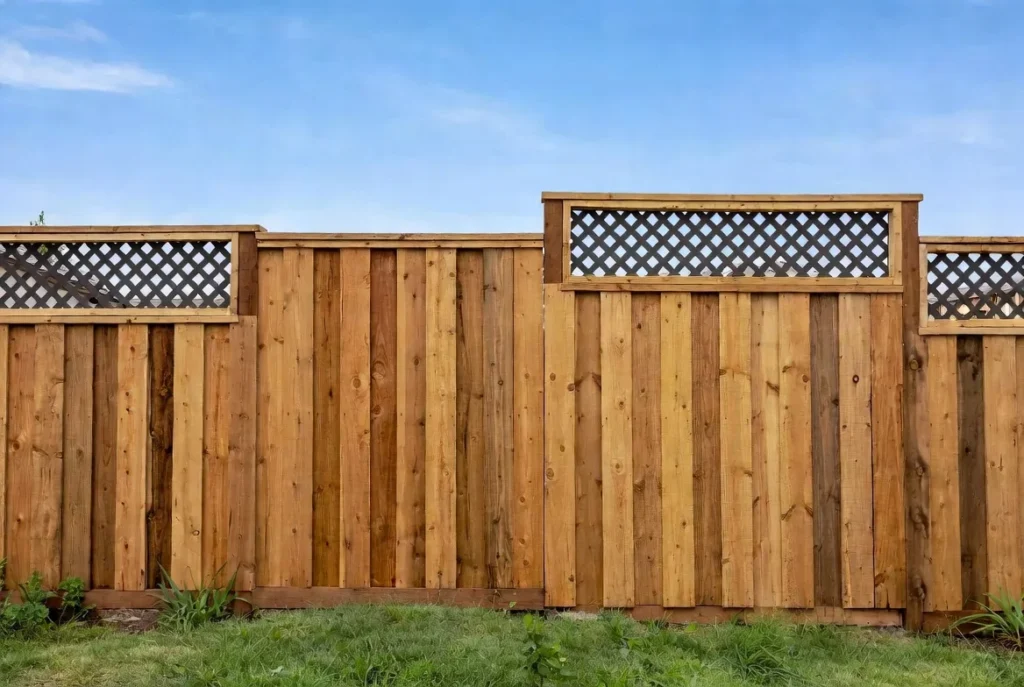
The traditional privacy fence remains popular for good reason. A solid wood fence constructed from cedar, pine, or redwood boards installed vertically with no gaps creates immediate, complete visual screening while also providing a sound barrier against noisy neighbors or street traffic. The key to making this classic option feel modern and attractive lies in adding decorative elements that transform utilitarian screening into genuine design features.
Consider alternating board heights to create a staggered top edge that adds visual interest while maintaining privacy. Install horizontal trim boards at varying heights to break up the expanse of vertical planks. Add a lattice topper that extends the fence height beyond standard six feet without creating a solid wall feeling. Paint or stain the fence in colors that complement your home rather than standard brown, with options ranging from sophisticated charcoal grey to warm natural tones or even bold colors that make the fence a focal point.
The property line placement of traditional fencing provides maximum yard space while clearly delineating boundaries. Check local building codes regarding fence height restrictions, setback requirements from property lines, and whether permits are necessary before installation. Most areas allow six-foot fences without permits, though some neighborhoods restrict height to four feet, requiring creative solutions like the lattice toppers mentioned above.
Living Wall with Climbing Vines and Vertical Gardens
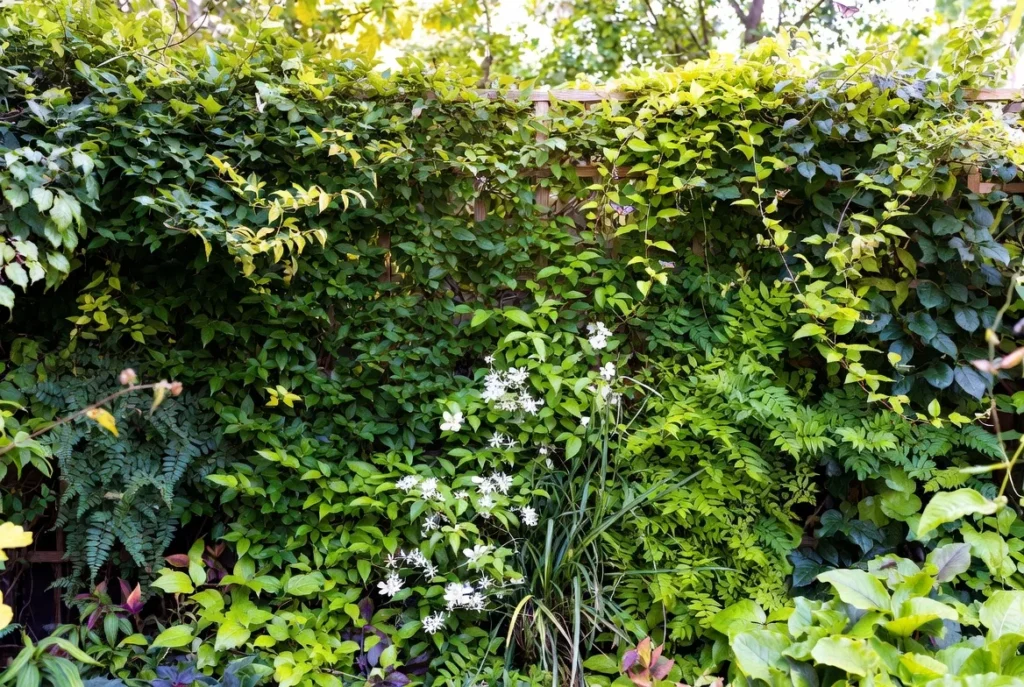
A living wall created through climbing vines trained on supports provides natural beauty while delivering excellent privacy. This approach softens hard architectural elements, provides habitat for beneficial insects and birds, attracts pollinators, and creates ever-changing seasonal interest as plants bloom, fruit, and change colors.
Start with a sturdy structure capable of supporting mature vine weight. Options include heavy-duty cattle panels attached to wooden posts, welded wire fencing stretched between metal stakes, or purpose-built trellis systems. Plant fast-growing vines like clematis, jasmine, honeysuckle, climbing roses, or Boston ivy at the base. These vigorous growers quickly cover structures, with some varieties adding 10 to 15 feet of growth in a single season.
For year-round coverage in most climates, combine evergreen vines like Carolina jessamine or star jasmine with deciduous flowering varieties. The evergreens maintain winter privacy while flowering vines provide spring and summer color. Install vines in properly prepared soil with adequate organic matter and establish regular watering until roots develop. Once established, most climbing vines require minimal maintenance beyond annual pruning to control growth and remove dead wood.
True vertical gardens take this concept further by covering entire wall surfaces with pocket planters, living wall systems, or modular panels filled with small plants, succulents, ferns, and trailing varieties. While more expensive and maintenance-intensive than simple vines, vertical gardens create stunning focal points that provide maximum privacy in minimum space.
Bamboo Screening for Fast Natural Privacy
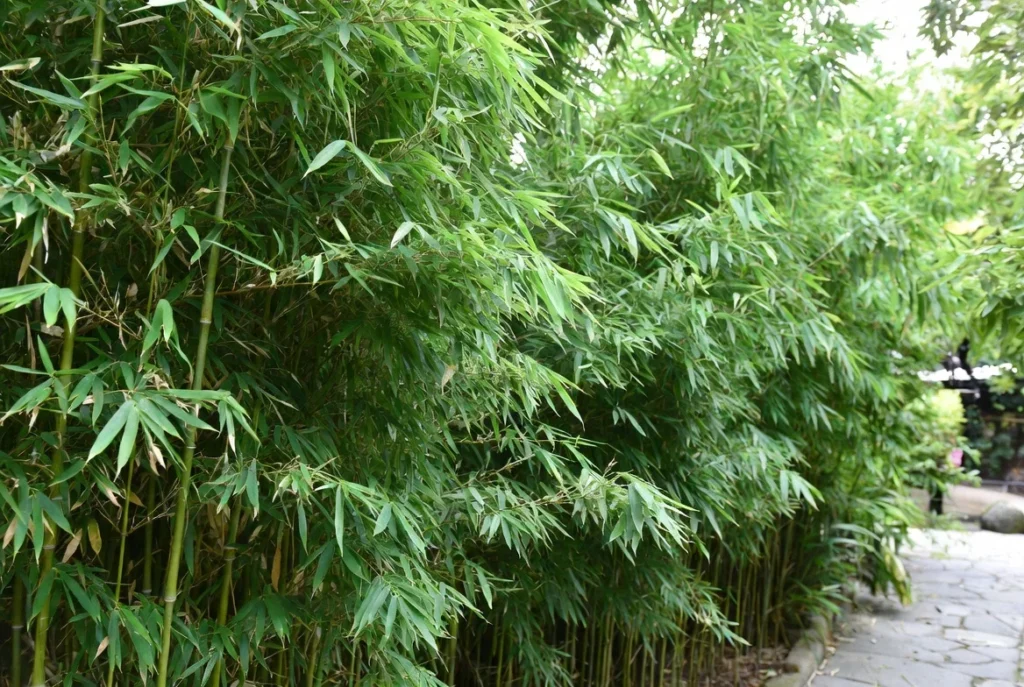
Bamboo screening offers one of the fastest natural privacy solutions available. Clumping bamboo varieties grow 3 to 5 feet annually, reaching mature heights of 8 to 15 feet within just a few years. Unlike running bamboo that spreads aggressively and invades neighboring properties, clumping varieties stay contained, making them good neighbor-friendly options.
Plant bamboo in a single row along fence lines or property boundaries for a privacy hedge effect. Space plants 3 to 5 feet apart for quick coverage or further apart if you prefer slower, more spaced growth. Bamboo thrives in most soil conditions, tolerates both sun and partial shade, and requires minimal care once established. Its dense foliage and vertical growth habit create excellent visual screening while the rustling leaves provide pleasant background sound.
Alternatively, use bamboo reed fencing attached to existing structures for instant privacy. These rolled panels of dried bamboo stalks tied together with wire come in various heights and can be quickly secured to existing fences, deck railings, or pergola sides. While not living plants, bamboo screening panels provide immediate coverage at minimal cost, typically running $50 to $100 for an 8-foot by 4-foot panel at home improvement stores.
Modern Horizontal Slat Wall with Gaps
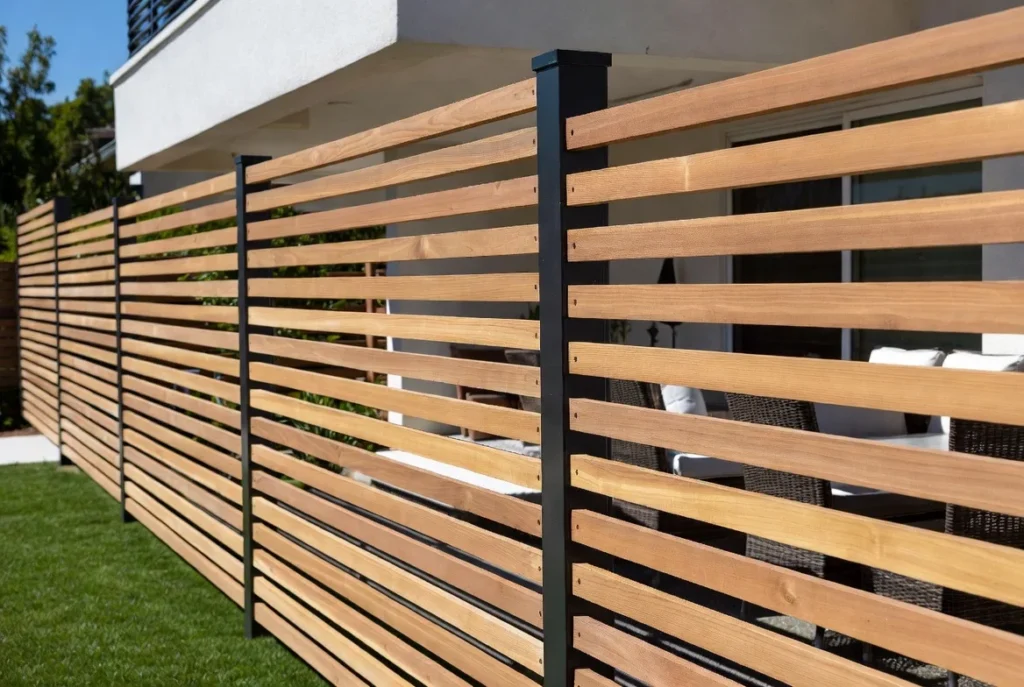
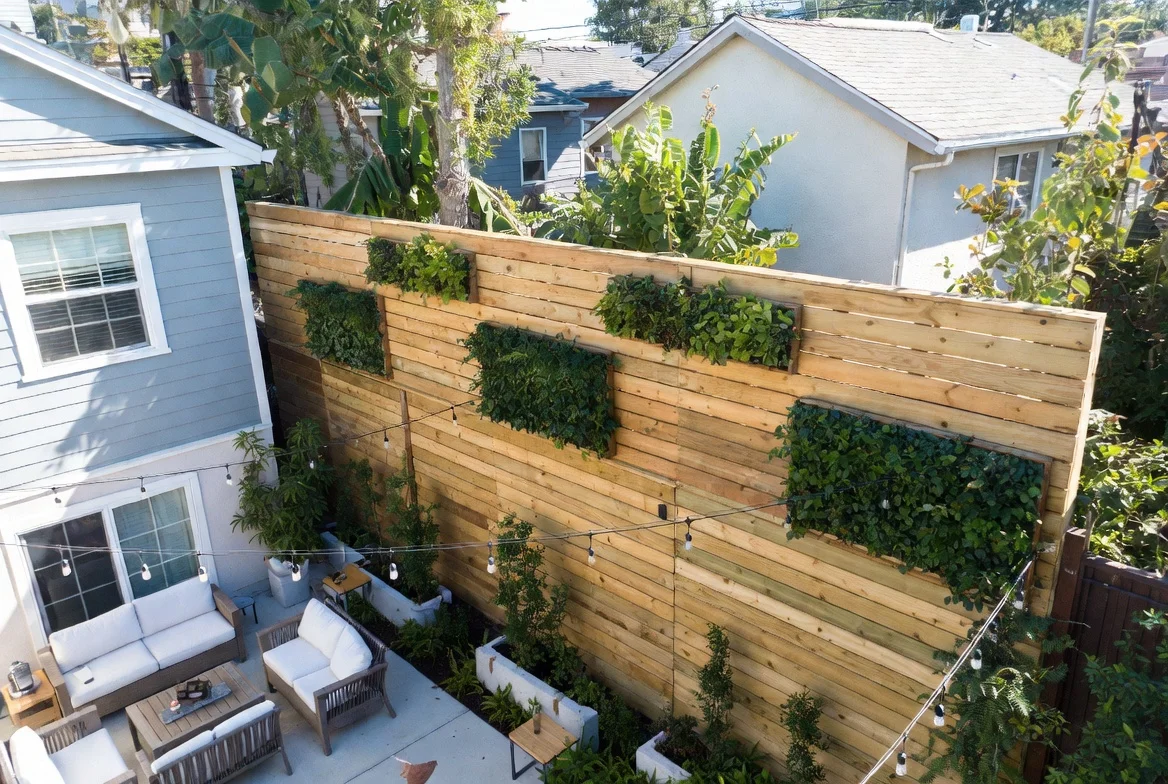
Contemporary outdoor privacy screens featuring horizontal wooden slats spaced with small gaps offer a sophisticated alternative to solid fencing. This design allows air circulation preventing the claustrophobic feeling of solid walls while still blocking direct sightlines through angular placement. When you stand at an angle to the fence, the overlapping slats create visual screening even with gaps between boards.
Construct these walls using 1×4 or 1×6 boards in cedar, composite materials, or pressure-treated lumber. Space slats 1 to 2 inches apart and attach to sturdy vertical posts sunk in concrete. The horizontal orientation creates clean contemporary lines that complement modern architecture while the spacing reduces material costs compared to solid fencing.
Finish options include natural wood oil that enhances grain while protecting against weather, solid stain in colors from soft greys to dark espressos, or paint in bold hues. Some homeowners create visual interest by alternating slat widths, varying spacing, or mixing stained and painted boards in complementary colors. Install integrated LED strip lighting between slats for dramatic nighttime illumination that highlights the wall’s architectural qualities.
Stone or Brick Masonry Privacy Wall
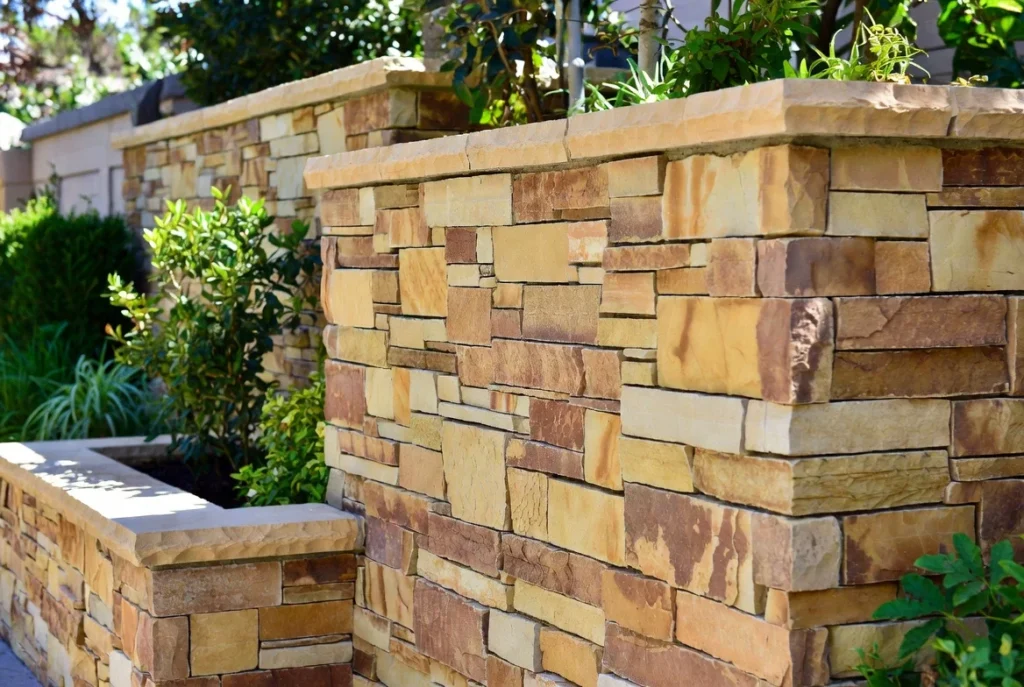
A stone wall or brick privacy barrier represents the ultimate permanent solution, providing unmatched durability, timeless beauty, and genuine property value increases. While expensive and labor-intensive to install, properly constructed masonry walls last generations with minimal maintenance, making them worthwhile investments for homeowners planning to stay in their properties long-term.
Natural stone stacked dry without mortar creates rustic charm perfect for cottage or country gardens. Mortared stone or brick walls allow taller construction with integrated elements like built-in planters, seating ledges, or lighting niches. Combine stone bases topped with wood or metal fencing for height without excessive cost, as lower stone walls cost significantly more per linear foot than upper fence sections.
Consider hiring professional masons for walls above 3 feet to ensure proper footing, drainage, and structural integrity. Poorly constructed walls can shift, crack, or even collapse under freeze-thaw cycles or water pressure. Professional installation costs $25 to $75 per square foot depending on materials and complexity, but the investment delivers beauty and permanence unmatched by other options.
Outdoor Curtains for Flexible Patio Privacy
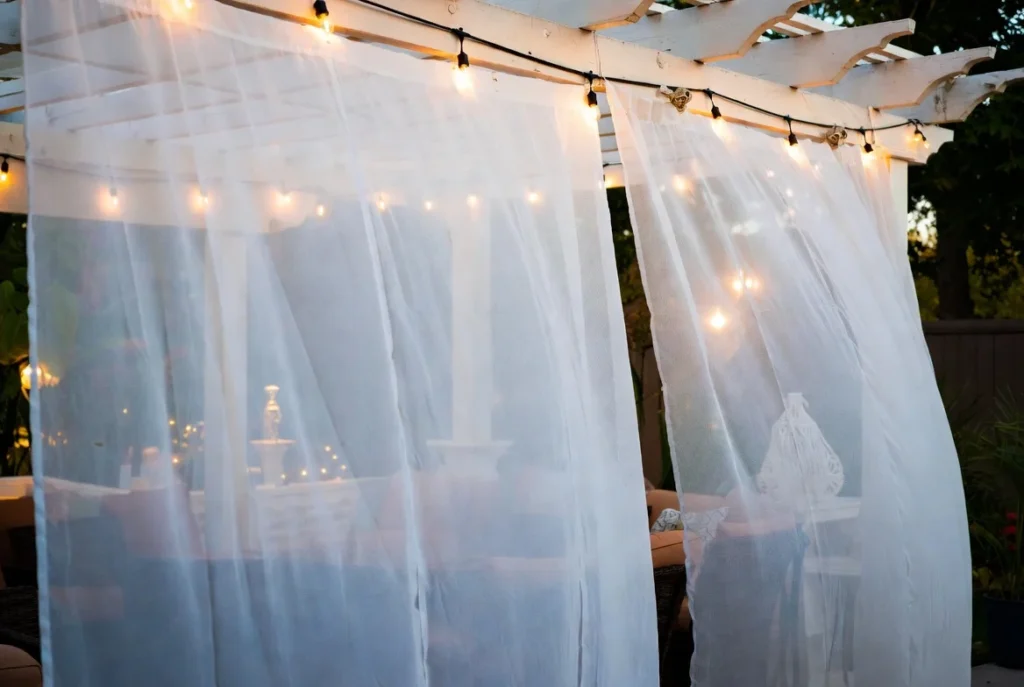
Outdoor curtains provide the most flexible patio privacy solution available. Hang weather-resistant fabric panels from rods or cables around pergolas, covered porches, or freestanding structures to create instant enclosures that can be opened when privacy is not needed or closed for intimate gatherings.
Choose fabrics specifically designed for outdoor use made from solution-dyed acrylic, polyester blends, or vinyl-coated materials that resist fading, mildew, and weather damage. Colors range from neutral whites and beiges to bold patterns and saturated hues. Opt for light-filtering fabrics that allow ambient light while blocking views, or blackout materials for complete privacy.
Install curtain rods or cable systems around existing structures using eye hooks, cable tensioners, and weatherproof hardware. Panels can be tied back with decorative holdbacks when not in use or removed entirely during winter months for storage. This flexibility makes curtains ideal for renters or those who want seasonal privacy control.
The budget-friendliness of this option cannot be overstated. Quality outdoor curtain panels cost $20 to $60 each, with most patio enclosures requiring 4 to 8 panels. Hardware adds another $50 to $150, making complete patio privacy achievable for well under $500 in most applications.
Pergola with Lattice Panels and Overhead Coverage
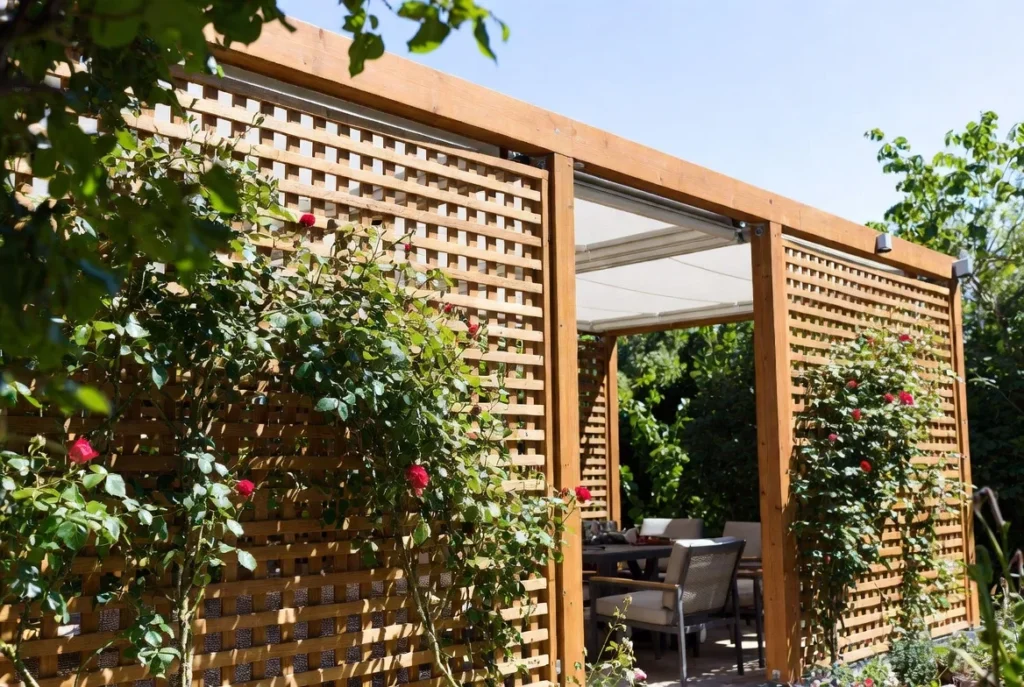
A pergola topped with lattice panels or retractable canopies creates architectural interest while providing both overhead and side privacy. This privacy structure defines outdoor living spaces, adds shade, increases property value, and creates the framework for climbing plants that enhance screening over time.
Standard pergolas feature open-beam roofs that provide minimal privacy. Enhance privacy by installing lattice panels on one or more sides, adding retractable shade canopies on top, or combining both approaches. The lattice allows air flow and filtered light while disrupting sightlines from neighboring properties. Train climbing vines on the lattice for living privacy that improves each season.
Build pergolas from pressure-treated lumber, cedar, or composite materials for longevity. Kit options from home improvement stores provide all necessary materials with detailed instructions for DIY installation, with costs ranging from $500 for basic small pergolas to $3,000 or more for larger structures with premium materials. Custom-built pergolas by contractors start around $3,000 and can exceed $10,000 for elaborate designs with integrated lighting, built-in seating, and decorative elements.
Tall Ornamental Grasses for Natural Screening
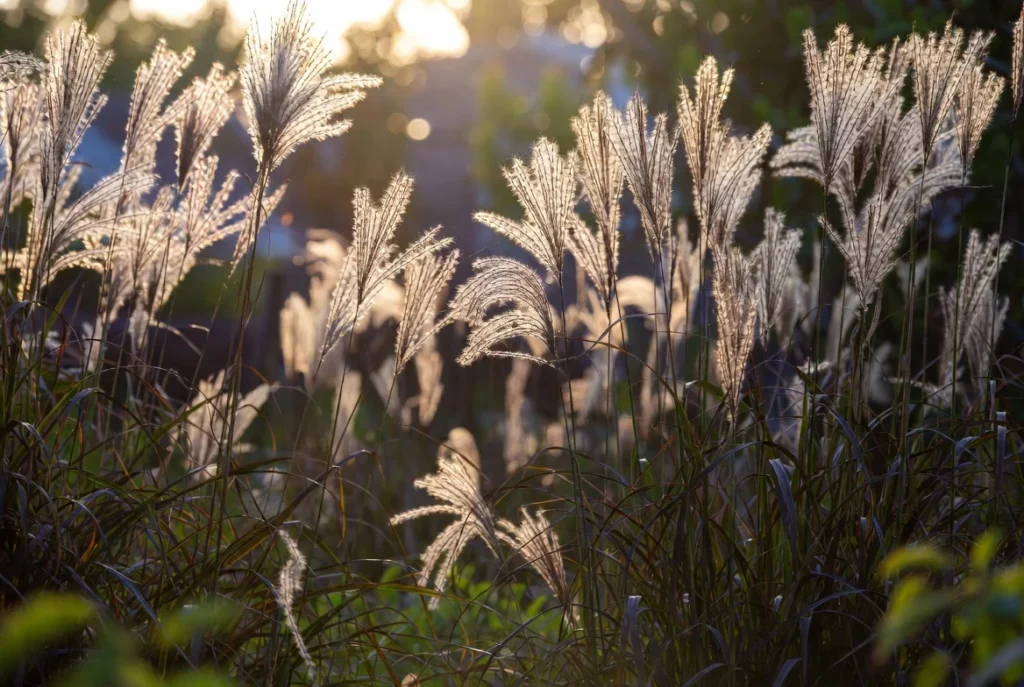
Tall grasses like miscanthus, pampas grass, and fountain grass create soft, natural privacy barriers that move gracefully in breezes while providing excellent visual screening. These screening plants grow quickly, require minimal maintenance, tolerate various soil conditions, and add texture and movement that static fences cannot match.
Plant grasses in staggered rows or clumps along property lines or around seating areas. Most ornamental grasses reach mature heights of 4 to 8 feet within 2 to 3 growing seasons. Space plants 3 to 4 feet apart for relatively quick coverage while allowing each plant room to develop its natural arching form.
Miscanthus varieties offer particularly good screening with dense foliage and heights reaching 6 to 8 feet. Pampas grass creates dramatic plumes in late summer and fall while providing year-round structure. Fountain grass stays shorter at 3 to 5 feet but works well as foreground planting combined with taller options behind.
Cut grasses back to ground level in late winter or early spring before new growth emerges. This annual maintenance takes just minutes per plant and keeps grasses vigorous and full. Most varieties are hardy, drought-tolerant once established, and resist deer browsing, making them low-maintenance privacy landscaping options.
Freestanding Privacy Screens and Partitions
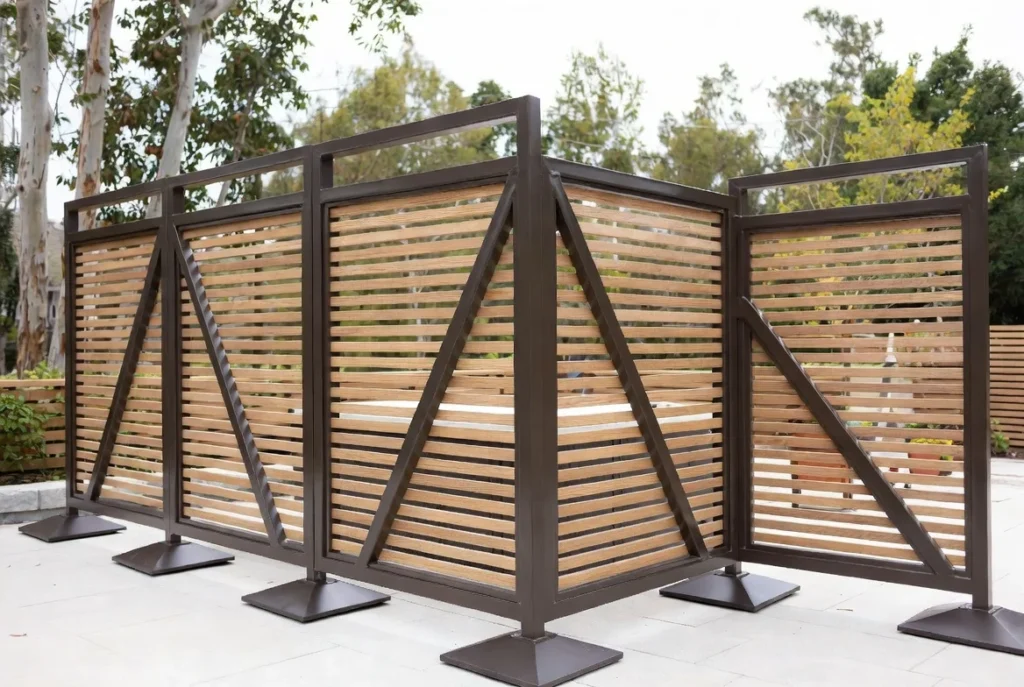
Portable freestanding screens provide instant privacy without permanent installation, making them ideal for renters, seasonal use, or creating temporary privacy for specific events. These movable partitions range from simple folding screens to substantial panel systems on weighted bases.
Outdoor privacy screens come in materials including wood, metal, resin, and fabric. Choose weather-resistant options designed specifically for outdoor use rather than indoor room dividers. Weighted bases or ground stakes provide stability in wind. Heights range from 4 feet for deck railing toppers to 8 feet for complete visual screening.
Position screens strategically to block specific sightlines rather than trying to enclose entire areas. A well-placed 6-foot screen can provide complete privacy for a hot tub, dining area, or lounge space while using minimal materials and allowing flexibility to move or remove screens as needed.
Costs for quality freestanding privacy screens range from $100 for basic folding panels to $500 or more for substantial multi-panel systems in premium materials. The portability and flexibility justify the investment for those unwilling or unable to install permanent solutions.
Evergreen Privacy Hedge with Layered Planting
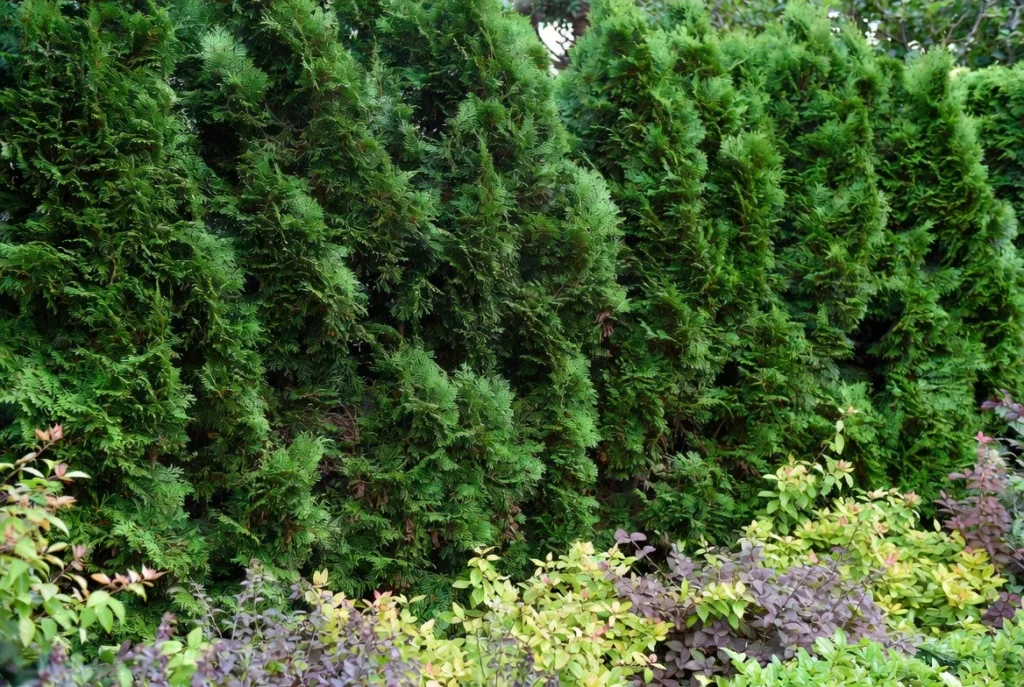
A privacy hedge composed of evergreen trees and shrubs provides year-round screening that grows more effective over time. Popular varieties include arborvitae, Leyland cypress, English laurel, and boxwood, all offering dense foliage that blocks views while creating living green walls.
Plant hedges in straight rows for formal screening or stagger plantings in multiple rows for a layered, natural look. Space plants according to mature width recommendations, typically 3 to 5 feet apart for most hedge varieties. Closer spacing provides faster coverage but requires more plants and eventual thinning as crowding occurs.
Combine fast-growing trees like Leyland cypress that add 3 to 4 feet annually with slower-growing but denser options like arborvitae for the best of both worlds. Add flowering shrubs, decorative grasses, and perennials in front of hedge plantings to create depth and visual interest while the hedge develops.
Maintain hedges through annual pruning that encourages dense branching and keeps heights manageable. Most hedge varieties respond well to shearing, allowing you to maintain specific heights and widths. Established hedges require minimal care beyond pruning and occasional deep watering during drought.
Corrugated Metal Panels for Industrial Style
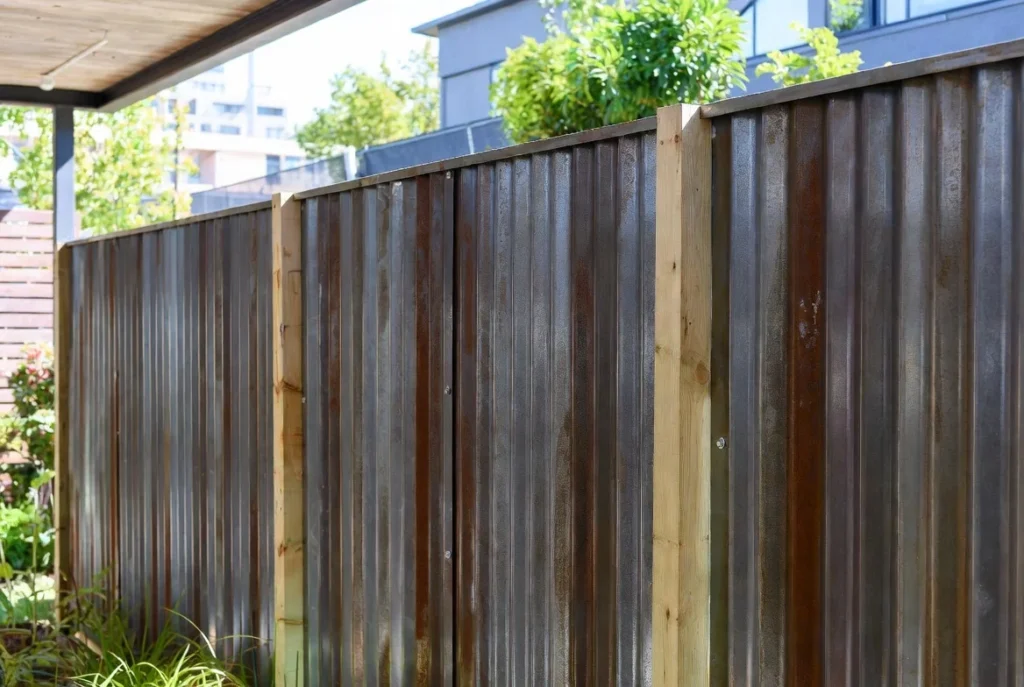
Corrugated metal panels create striking contemporary privacy walls perfect for modern, industrial, or minimalist landscapes. These privacy panels install quickly, require virtually no maintenance, last decades without deterioration, and provide complete visual screening with excellent weather resistance.
Frame metal panels with wooden or metal posts for clean, architectural looks. Panels come in various profiles from subtle waves to deep corrugations and finishes including galvanized metal, powder-coated colors, and weathering steel that develops attractive rust patinas over time. Heights up to 8 feet are available, with panels easily cut to custom sizes.
The industrial aesthetic works particularly well in urban settings, alongside contemporary architecture, or contrasted against lush plantings. Soften the hard edges by planting climbers at the base, adding container gardens in front, or combining metal with wood elements for material contrast.
Installation costs less than many alternatives at $10 to $30 per linear foot for materials. The durability and minimal maintenance make this a cost-effective long-term solution despite the modern appearance that some find too utilitarian for traditional settings.
Combination Stone Wall with Fence Topper
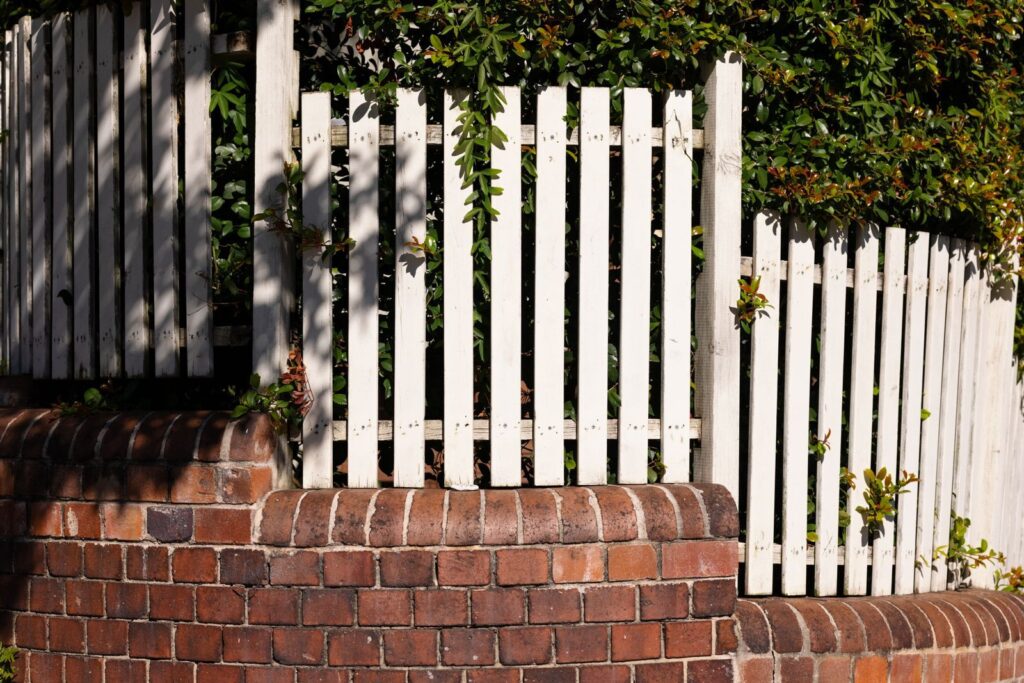
Combining a stone wall base with fence or lattice topper creates balanced privacy solutions that deliver permanence and beauty without excessive cost or claustrophobic solid barriers. The stone base typically runs 2 to 3 feet tall while the fence section adds another 3 to 4 feet of height.
This combination offers several advantages beyond cost savings. The open fence topper maintains air circulation and prevents the heavy feeling of tall solid walls. The stone base provides seating surfaces, raised planting beds, or simply an attractive architectural foundation. The varying materials add visual interest that single-material walls cannot match.
Build stone bases from stacked natural stone, manufactured stone veneers, or poured concrete with stone facings. Top with wood picket fencing, vinyl privacy panels, iron railings, or lattice depending on the desired look and privacy level. Some homeowners incorporate planters into the stone base and train vines on the fence above for living privacy.
Professional installation of combination walls typically costs $40 to $80 per linear foot depending on materials and complexity, significantly less than solid stone walls of equivalent height while delivering comparable aesthetic impact.
Water Features for Visual and Sound Screening
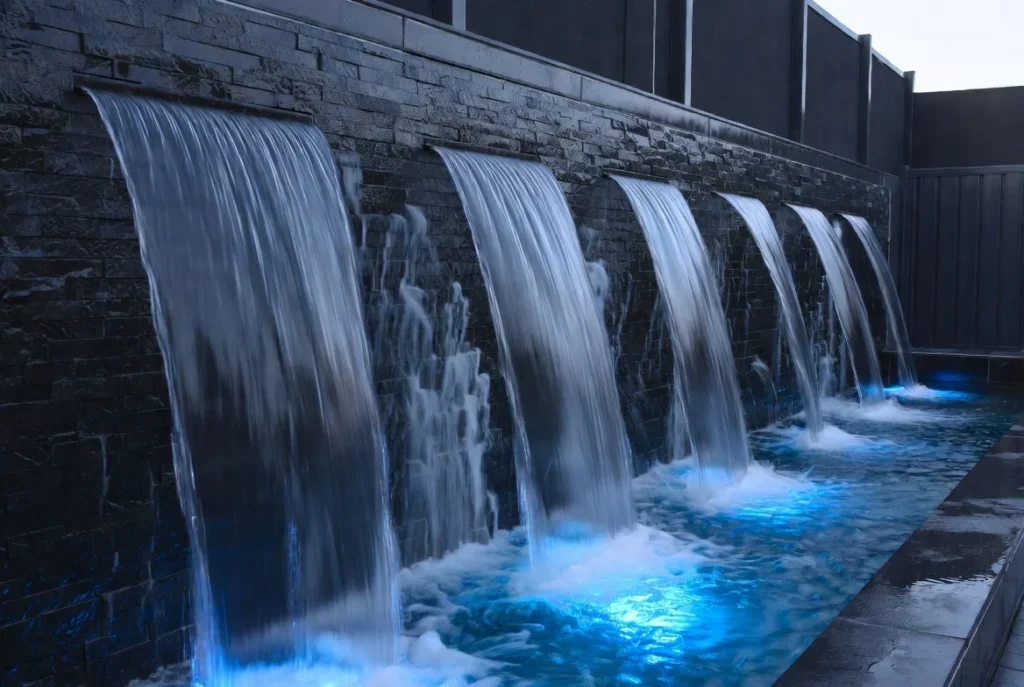
While not providing physical visual barriers, water features create psychological privacy through sound masking that makes conversations unintelligible to neighbors while the flowing water adds peaceful ambiance to outdoor spaces. Fountains, waterfalls, and water walls contribute to the overall sense of seclusion that completes private outdoor rooms.
Large water walls with sheets of water flowing down stone or metal surfaces provide both visual interest and substantial sound. Position these features strategically to block specific sightlines while the water sound prevents conversations from carrying to neighboring properties. Freestanding fountains work well in smaller spaces, with bubbling or cascading styles producing the most effective sound masking.
Combine water features with physical privacy barriers for comprehensive screening. For example, a metal panel privacy wall with integrated water feature provides both visual blocking and sound coverage in a single design element. Add underwater lighting for dramatic nighttime effects that enhance the feature’s role as a focal point.
Professional water feature installation ranges from $500 for simple bubbling fountains to $5,000 or more for elaborate multi-tiered waterfalls with professional plumbing and lighting.
Raised Planter Boxes Creating Elevated Screens
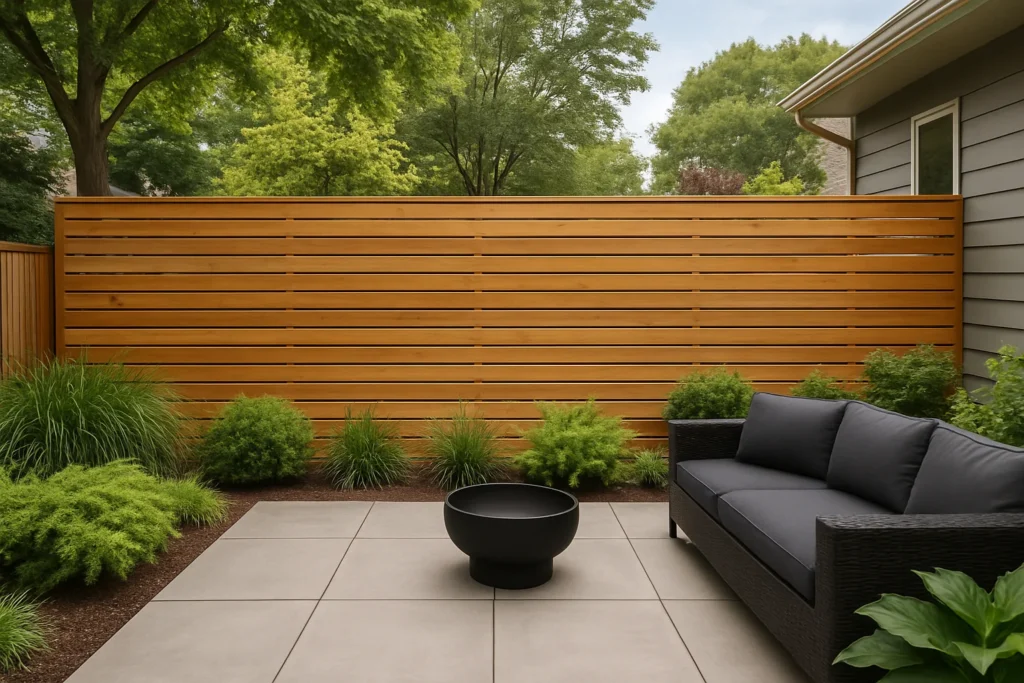
Raised planters filled with tall plants create effective privacy barriers that add vertical growing space, define outdoor areas, and provide opportunities for gardening even in spaces with poor soil. Build planters from wood, composite materials, galvanized metal, or stone to match your landscape style.
Design planters 2 to 3 feet tall and 1 to 2 feet deep to provide adequate root space for shrubs, small trees, ornamental grasses, and perennial flowers. Fill with quality potting soil and install plants that reach 4 to 6 feet at maturity for total screening heights of 6 to 9 feet. Stagger multiple planter boxes at varying heights for more naturalistic looks.
Popular plants for raised planter privacy include bamboo, ornamental grasses like miscanthus, flowering shrubs like hydrangeas or lilacs, evergreen shrubs like boxwood or holly, and even small trees like Japanese maples. Combine multiple varieties for seasonal interest and varying heights.
The portability of this solution appeals to renters or those who want flexibility. Planters can move with you or be reconfigured as landscape needs change. Costs range from $100 to $500 per planter box depending on size and materials, with plants adding another $50 to $200 per box.
Salvaged Materials for Budget DIY Privacy
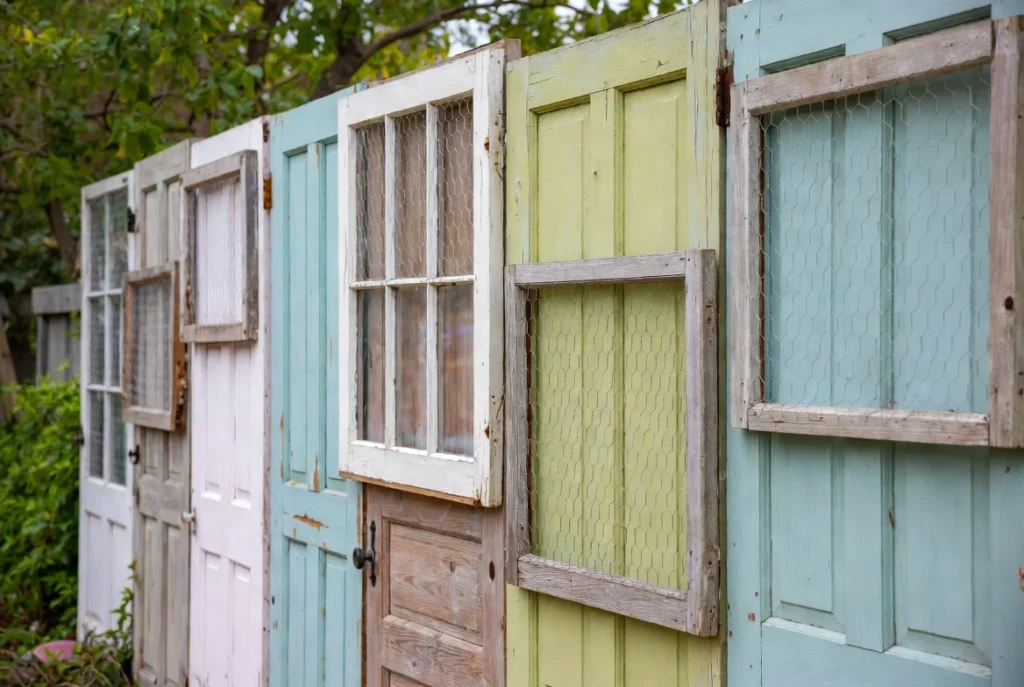
Creative use of salvaged materials creates unique DIY privacy solutions at minimal cost while adding character impossible to achieve with new materials. Old doors, windows, shutters, pallets, barn wood, and metal panels become one-of-a-kind privacy walls limited only by imagination.
Collect materials from demolition sites, salvage yards, online marketplaces, or your own renovation projects. Attach them to frames constructed from new lumber for stability while the salvaged elements provide visual interest and privacy screening. Paint in coordinating colors for cohesive looks or leave materials in varied finishes for eclectic charm.
Old window frames with glass removed and chicken wire or lattice inserted create see-through elements that allow light while disrupting views. Vintage doors hung side by side form solid barriers with architectural details. Corrugated tin panels from old outbuildings add rustic industrial character. Mixed materials combined intentionally create artistic installations that serve as privacy barriers and outdoor art simultaneously.
Material costs approach zero for truly salvaged items, with frame lumber, hardware, and finishing adding $100 to $300 for typical projects. The sweat equity required is substantial, but the results are genuinely unique and deeply satisfying for DIY enthusiasts.
Sail Shades and Sun Screens for Overhead Privacy
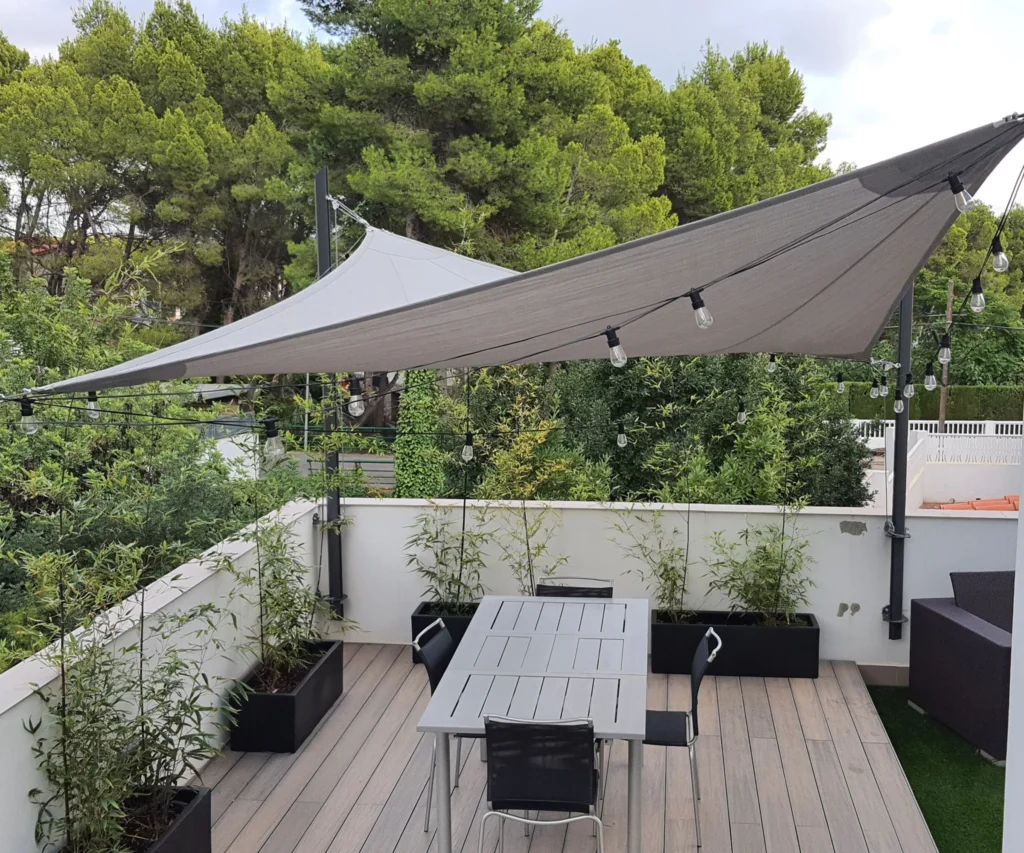
Sail shades and retractable sun screens address overhead privacy concerns particularly relevant for urban environments with neighboring multi-story buildings providing views down into yards. These fabric panels stretched between posts or attached to structures block aerial sightlines while adding shade and contemporary style.
Triangle, square, or rectangular shade sails come in UV-resistant fabrics in colors from neutral tans and greys to vibrant blues, greens, and oranges. Install multiple sails at varying heights and angles for complete overhead coverage and dynamic visual interest. Hardware kits include everything needed for installation, with costs ranging from $50 for small sails to $300 for large premium options.
Retractable screens offer flexibility for weather and season changes. Extend screens during summer months for shade and privacy, then retract in fall and winter for sun exposure. Mount to pergolas, patio covers, or house walls using brackets that allow smooth operation. Quality retractable screens cost $200 to $600 but deliver years of reliable service with proper care.
Conclusion: Creating Your Private Outdoor Haven
Transforming your backyard from an exposed, uncomfortable space into a genuine private sanctuary requires thoughtful planning, appropriate solutions for your specific needs and budget, and commitment to creating the outdoor living space you deserve. The 15 privacy wall ideas presented throughout this guide demonstrate that effective backyard privacy comes in countless forms, from living green barriers to architectural structures, budget DIY projects to premium permanent installations.
The most successful privacy solutions often combine multiple approaches. A privacy hedge provides the foundation while decorative screens create focal points. Outdoor curtains add flexibility while stone walls deliver permanence. Water features contribute sound masking while raised planters define spaces. This layered approach creates depth, interest, and comprehensive screening that single solutions cannot achieve.
Begin your privacy project by identifying your highest priority areas requiring screening. Focus resources there first rather than trying to enclose your entire property at once. Add additional privacy layers over time as budget allows and your landscape matures. Remember that living solutions like hedges and climbing vines improve each season while structural elements provide immediate results.
Your backyard should be a place where you feel completely comfortable, where entertaining feels intimate rather than exposed, and where relaxation comes easily because you are not constantly aware of neighboring sightlines. These 15 privacy wall ideas provide the roadmap for creating that space, ensuring your outdoor living areas deliver the privacy, comfort, and beauty they deserve.
Frequently Asked Questions
What is the cheapest way to create backyard privacy?
The cheapest privacy solutions include planting fast-growing hedges from small nursery stock, installing bamboo reed screening rolls on existing fences or structures, using outdoor curtains around patios, building with salvaged materials like old pallets or doors, or creating simple lattice frames for climbing vines. Costs for these options typically range from $50 to $300 for small to medium areas. Plant-based solutions cost less initially but take time to develop, while structural options like bamboo screening or curtains provide immediate privacy at minimal investment.
How tall can I build a privacy wall or fence?
Privacy wall and fence height regulations vary significantly by location. Most municipalities allow 6-foot fences in rear yards without permits, while front yards typically restrict heights to 3 or 4 feet. Some communities have additional restrictions through homeowners associations or historic district requirements. Always check local building codes and obtain necessary permits before construction. In areas with strict height limits, consider alternatives like freestanding screens placed within your yard rather than on property lines, or structures like pergolas that may have different regulations than solid fences.
What are the fastest growing plants for privacy screening?
The fastest privacy screening plants include Leyland cypress trees growing 3 to 4 feet annually, bamboo adding 3 to 5 feet per year, arborvitae gaining 1 to 3 feet yearly, privet hedges growing 2 to 3 feet annually, and fast-growing vines like clematis or honeysuckle that can add 10 to 15 feet in a season. Among ornamental grasses, miscanthus and pampas grass reach mature heights of 6 to 8 feet within 2 to 3 growing seasons. Combine fast growers for quick results with slower but denser options for long-term effectiveness.
How do I create privacy from second-story neighbors?
Blocking views from elevated neighboring windows requires overhead screening solutions. Install sail shades or retractable canopies over patios and seating areas to block downward sightlines. Plant tall trees that create overhead canopy screening as they mature. Build pergolas with lattice roofs or retractable shade systems. Position privacy screens closer to your seating areas rather than at property lines, as screens near the viewing area block more effectively than distant tall fences. Combine multiple approaches for comprehensive overhead privacy.
Can I install a privacy wall if I rent my home?
Renters can create privacy using non-permanent solutions that do not damage property. Freestanding privacy screens on weighted bases require no installation. Outdoor curtains hang from existing structures without permanent hardware. Container gardens with tall plants create movable privacy barriers. Bamboo reed screening attaches to existing fences with zip ties rather than screws. Always check your lease agreement and discuss plans with landlords before installing anything. Many landlords approve temporary improvements that enhance property appearance and can remain when tenants leave.
You May Also Like This Post:
12 Cozy Home Office Ideas for a Warm, Productive and Stylish Workspace
One Comment